Seller Profit Guard · How it works · CSV privacy
Etsy category fit checker for physical and digital listings
Enter the selected Etsy category, the actual item format, verified product identity, material or file types, buyer use, variation structure, and current editor evidence. The checker returns five separate fit checks plus a pass, correct, hold, or block decision; it does not guess a category or promise search placement.
Maintained by Seller Profit Guard Editorial Team. Last reviewed: 2026-07-25.
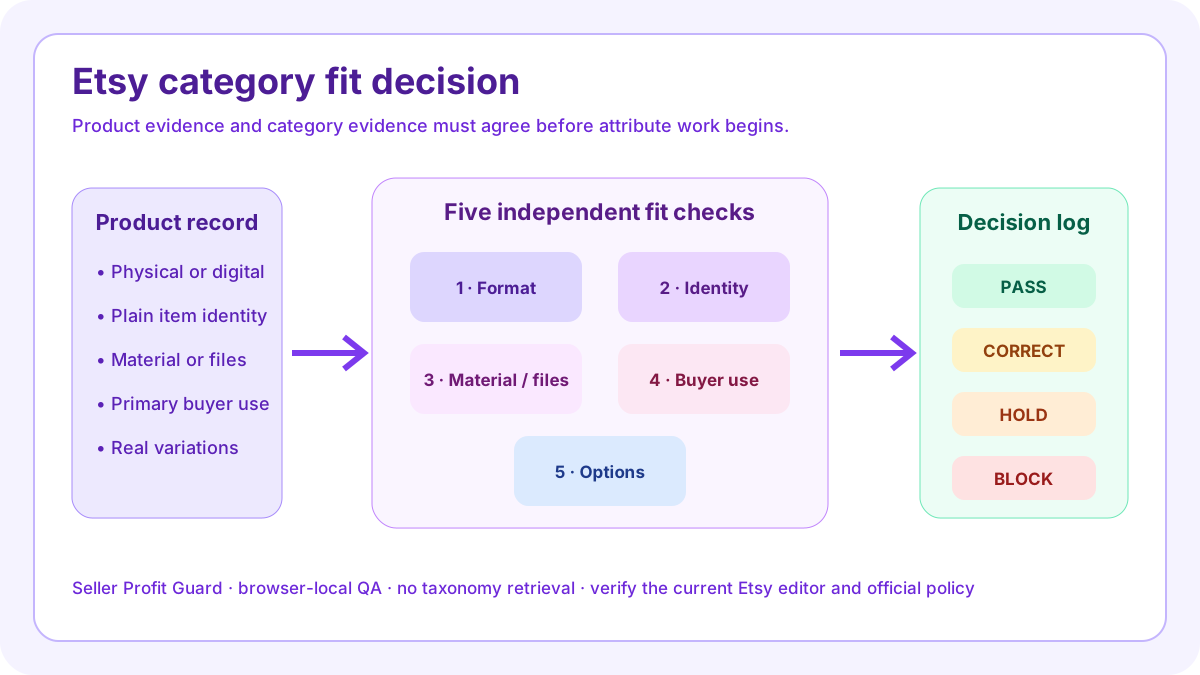
Why category fit is a separate listing decision
Etsy's current listing flow asks the seller to confirm the closest category and separately identify whether the item is physical or digital. Etsy also explains that category affects where the listing appears in its marketplace and which attributes become available. That makes category selection an upstream product-classification decision, not a spare keyword field.
This checker is intentionally different from the Attribute Coverage Checker. Category fit asks whether the chosen branch represents the product at all. Attribute coverage starts only after that branch is accepted and asks whether its relevant structured fields are complete and truthful. A perfect attribute score cannot rescue a fundamentally wrong physical, digital, product-type, or use classification.
- Confirm the actual item is physical or digital.
- Write the complete selected category path.
- Describe the product without keyword padding.
- Record material or deliverable file evidence.
- Confirm the category supports real buyer options.
How the five fit checks work
The tool evaluates item format, product identity, material or file scope, primary buyer use, and variation support as separate controls. Format must agree exactly unless the recorded category evidence explicitly supports both formats. The remaining checks compare meaningful words in the seller-entered product record with the documented scope of the selected category.
Token overlap is a review trigger, not a taxonomy engine. A low result means the words and evidence entered by the seller do not demonstrate fit; it does not mean another category was automatically proven. Inspect the current editor, public category path, product specification, files, photos, and options before changing the listing.
| Fit layer | Product evidence | Category evidence |
|---|---|---|
| Format | Physical or digital | Supported item format |
| Identity | Plain product noun | Category coverage |
| Material / files | Bill of materials or manifest | Relevant scope |
| Use | Primary buyer purpose | Category purpose |
| Options | Actual variations | Editor controls |
Physical handmade pendant example
A handmade sterling-silver pendant necklace is recorded as a physical item. The selected path ends in pendant necklaces; its scope describes wearable necklace jewelry; the material evidence lists sterling silver, chain, and stone; the primary use is wearing a necklace; and the editor supports jewelry attributes plus chain-length variations.
All five checks pass when those facts agree and the evidence note identifies the current editor review and product specification. The result does not certify that the item satisfies every Etsy policy, that sterling silver has been independently assayed, or that the category will rank. It confirms that this privacy-safe decision record is internally coherent enough for normal listing QA.
Digital invitation template contrast
An editable wedding invitation supplied as PDF or template files must be recorded as digital. Etsy's help documentation distinguishes digital files in the listing flow and separates instant downloads from made-to-order downloads. Etsy's Creativity Standards also place sellers' original digital designs under designed-by-a-seller requirements.
Putting that file product under a physical pendant-necklace category fails format, identity, file scope, use, and option checks. The correct action is not to massage keywords until the score rises. Block the listing, return to the live category chooser, select the closest branch shown for the actual digital product, and then review files, personalization, delivery mode, attributes, title, tags, images, and public preview.
Pass, correct, hold, and block decisions
Pass requires five aligned checks and a dated evidence note. Correct means the product may belong in the category but one or more descriptions or option records are incomplete. Hold is appropriate when the fit appears coherent but the category or product evidence has not been dated and verified. Block applies when format conflicts or the basic product identity has no meaningful relationship to the category scope.
These decisions prevent a blended score from hiding a critical mismatch. Four plausible secondary fields cannot offset a digital-versus-physical conflict. Likewise, a high text-overlap score cannot prove eligibility under Creativity Standards, prohibited-items rules, intellectual-property obligations, production-partner disclosure, or other current marketplace policies.
Use an explicit input contract
Treat every text box as a named evidence field rather than free-form SEO copy. Selected category should contain the path shown in the current editor, with levels separated by greater-than signs. Actual item format and category format must resolve to physical, digital, or an explicitly documented scope that supports both. Product identity should use a plain noun phrase, while category identity should state what the branch covers without pasting the product title into both sides.
Material or file scope and buyer use need independent evidence because a shared product noun can hide a different deliverable. Record actual variations exactly as buyers choose them and explain which category controls support those options. Finish with a source note containing an explicit YYYY-MM-DD date. The checker normalizes capitalization and punctuation, but it does not repair missing evidence or assume that similar marketing language means the same product.
| Input | Acceptable evidence | Reject or review |
|---|---|---|
| Category path | Current editor hierarchy | Guessed leaf keyword |
| Item format | Physical or digital | Download described as physical |
| Product identity | Verified product noun | Keyword list |
| Material / files | Specification or file manifest | Unsupported claim |
| Buyer use | Primary use statement | Unrelated occasion terms |
| Options | Current editor controls | Invented variation |
| Evidence note | Source plus YYYY-MM-DD | Undated memory |
Why the full category path matters
A leaf label without its parents can be ambiguous and cannot show which branch was actually reviewed. The checker therefore exposes category path depth and asks for more than an isolated label. The path is evidence for the review, not a command sent to Etsy: the tool never looks up, validates, or changes the marketplace taxonomy. If the editor displays a different hierarchy later, preserve the old path, date the new observation, and rerun the complete record.
Do not choose a broader or unrelated branch merely because it appears to contain a valuable phrase. Etsy's current listing instructions tell sellers to select the option that is the closest match for what they are listing. A defensible path should align with the real deliverable before title, tags, attributes, or search considerations are reviewed. Category evidence that depends on repeating the target phrase rather than describing the product should remain Correct or Block.
Digital listings have a hard variation boundary
Etsy currently says listing variations are unavailable for digital listings. The checker therefore blocks a digital fixture that enters a multi-value variation, even when the category-support field claims that file-format variations exist. This hard boundary prevents vague text such as “supports options” from overriding a current platform limitation. A PDF and SVG bundle can be described as the actual deliverable; it should not be modeled as a buyer-selectable Etsy listing variation.
For an instant or made-to-order digital item, verify the current digital listing workflow, file manifest, delivery mode, personalization fields, and public preview separately. A digital format pass does not prove that the files were designed by the seller, that their contents are lawful, or that the product satisfies Creativity Standards. Those are independent policy and evidence reviews, not category-score components.
Default fixture calculation
The default fixture records Jewelry & Accessories greater-than Necklaces greater-than Pendant Necklaces, a physical sterling-silver pendant necklace, jewelry material scope, wearable-necklace use, and chain-length variations supported by current editor controls. Format matches exactly. Identity, material, and use each clear their declared token-overlap review thresholds. Variation support is recorded and no digital variation conflict exists.
That produces five passing fit checks. Because the evidence note cites the current listing editor, product specification, public category path, and 2026-07-28 review date, the decision is Pass. The result is reproducible from the visible inputs, but it is not an Etsy category recommendation or factual certification. Replacing the product with a digital invitation while keeping the jewelry scope produces a Block rather than an averaged near-pass.
Boundary and stress tests
Run at least three fixtures before relying on the workflow. First, use one fully aligned physical item with an explicit path and dated evidence. Second, use a fully aligned digital item with no listing variations and a current file manifest. Third, introduce one critical conflict: digital versus physical format, an unrelated product identity, or digital listing variations. A critical conflict must remain visible even when material or use text shares a few words.
Also test an otherwise aligned record with an undated note; it should return Hold rather than Pass. Test a single unverified leaf category; it should request the complete path. Test a physical product with real variations but no documented category option support; it should return Correct. These cases verify the decision contract and expose which input changed the result instead of treating a score as unexplained authority.
Category fit is not policy eligibility
A product can fit a category and still be ineligible for sale. Etsy's Creativity Standards separately describe items made, designed, handpicked, or sourced by a seller, while prohibited-item, intellectual-property, image, production-partner, and other rules can impose additional requirements. The checker deliberately does not convert category similarity into a policy approval. Keep the category record and eligibility review as separate signed decisions.
For example, a mass-produced ready-to-use product might resemble a craft-related category in language while failing the applicable seller-role requirements. An original digital design may fit a digital category but still require accurate authorship, file, disclosure, and rights evidence. When eligibility is uncertain, stop publication and consult the current official rules or qualified advice rather than editing fields to force a Pass.
Questions to answer before publication
Can another reviewer identify the exact current category path, actual item format, verified product noun, material or file manifest, primary use, and option structure from the saved record? Does the evidence note include a real review date and current first-party sources? If the item is digital, are listing variations absent? If it is physical and has variations, are the required controls available in the current category? Would the same decision survive after removing title and tag keywords from the evidence?
A Pass is ready for the next QA stage, not automatic publication. Continue through attribute, variation, SKU, description, photo, title, tag, claim, pricing, and public-preview checks. Correct means repair the entered scope or record. Hold means verify and date the evidence. Block means stop the category-dependent release until the critical format, identity, or digital-variation conflict is resolved.
Evidence to save before changing category
Save a privacy-safe snapshot containing listing alias, current category path, item format, product identity, material or file manifest, primary use, variation dimensions, available category controls, review date, source URLs, reviewer, and unresolved questions. Do not copy buyer names, emails, messages, addresses, order exports, credentials, or raw customer data into this tool.
A category change can alter attributes and option behavior. Preserve the old category and field set so the change is reversible. After selecting a new category, rerun category fit, attribute coverage, variation and SKU checks, title and tag review, image and description QA, then inspect the public buyer view.
A bounded release and rollback routine
Test one representative listing first. Confirm that the correct Etsy account and listing are open, record the before state, make only the approved category-related change set, inspect all newly exposed or removed fields, save, and verify the public page on mobile and desktop. A saved editor state is not proof that the buyer-facing listing is correct.
Rollback if the wrong product, profile, category, format, attributes, variations, price, images, or claims appear. Safe-stop on login or CAPTCHA ambiguity, platform warnings, a wrong profile, or missing target context. Restore the prior category and field values, confirm the public state, and keep the failed change record for diagnosis.
- Freeze the before-state evidence.
- Run one passing and one failing fixture.
- Confirm the account, listing, and target category.
- Apply one bounded classification change.
- Recheck attributes, options, and public presentation.
- Record approval, live verification, and rollback values.
What this category checker cannot prove
The checker does not access Etsy, retrieve the live taxonomy, recommend a guaranteed category, test intellectual-property rights, verify Creativity Standards, certify a material, determine tax treatment, or predict impressions, clicks, conversion, sales, or AdSense approval. It only evaluates the entered evidence with deterministic rules in the browser.
Etsy can change its editor, category branches, fields, and policies. Verify the current official help and legal pages at the time of publication. Seller Profit Guard is unaffiliated with Etsy, and this page is operational listing QA rather than legal, tax, accounting, safety, accessibility, marketplace-compliance, or ranking advice.
Sources and further reading
- Etsy Help: How to create a listing: Official category selection, physical-versus-digital item format, item details, options, and publishing workflow.
- Etsy Help: How to use attributes: Official explanation that category determines available attributes and sellers should choose relevant values.
- Etsy Help: How to manage digital listings: Official distinction between instant and made-to-order downloads and current file-listing workflow.
- Etsy Help: How to add variations: Official category-dependent variation workflow and current digital-listing variation limitation.
- Etsy Creativity Standards: Official made, designed, handpicked, and sourced item standards, including original digital designs.
- Seller Profit Guard methodology: Evidence hierarchy, privacy boundary, uncertainty labels, correction controls, and verification discipline.
Related Seller Profit Guard tools
- Etsy CSV profit calculator: Run a local order profit check with editable fee and SKU cost assumptions.
- Payment reconciliation tool: Compare order rows with statement activity and flag unmatched rows.
- SKU cost library: Save or import material, labor, packaging, shipping, and target margin assumptions.
- Variant risk checker: Find missing SKUs and variation cost risks before a listing scales.
- Etsy title checker: Review listing-title clarity, repetition, keyword chains, and mobile scanning.
- Etsy tag checker: Review all 13 tag slots for duplicates, repeated meaning, and truthful coverage.
- Free shipping threshold calculator: Estimate when a shipping subsidy can still meet a target margin.
- Return window loss estimator: Model expected reverse shipping, restock work, recovery, and replacement loss.
- Etsy Ads break-even calculator: Estimate target-safe Etsy Ads spend, ACOS, and ROAS after fees, fulfillment, and expected return loss.
- CSV data privacy: Understand what the local-first workflow needs and what it does not need.
- Etsy Category Fit Formula: Exact Inputs: Build an Etsy category-fit formula from item format, product identity, material or files, buyer use, variations, and dated editor evidence.
- Etsy Category Fit: Physical Jewelry Example: Follow a handmade pendant necklace through category path, physical format, identity, materials, use, options, evidence, and release checks.
- Etsy Category Fit for a Digital Download: Review a seller-designed digital invitation across file format, product identity, instant or made-to-order delivery, category scope, and evidence.
- 12 Etsy Category Fit Mistakes to Avoid: Diagnose twelve Etsy category errors involving format, nouns, materials, use, attributes, variations, keyword substitution, and stale evidence.
- Etsy Category Fit Evidence Sources: Map category decisions to the live editor, public category path, product specification, file manifest, photos, variations, and policy sources.
- Etsy Category Fit Pass and Block Rules: Set pass, correct, hold, and block rules for Etsy category format, product identity, material or file scope, use, options, and evidence.
- Physical vs Digital Etsy Category Fit: Compare a handmade pendant and digital invitation with the same five category-fit dimensions while preserving their different evidence and delivery.
- Weekly Etsy Category Fit Audit Routine: Run a risk-based Etsy category audit with change sampling, source refresh, fixtures, bounded edits, public verification, and rollback.
- Interpret Etsy Category Fit Results: Read five Etsy category-fit checks without treating token overlap as taxonomy proof, policy certification, ranking probability, or sales evidence.
- Etsy Category Fit Audit Template: Use a privacy-safe Etsy category fit checklist with before state, five checks, sources, fixtures, approval, public verification, and rollback.
Use the interactive tool
Enable JavaScript to open the calculator and process browser-local inputs. The explanatory content and source links remain available without JavaScript.
Related guide: Review category-dependent variations and SKU consistency.
This tool provides operating estimates, not tax, accounting, legal, financial, or marketplace-policy advice. Verify current official sources and your own records before changing prices or operations.