Etsy variation SKU checklist before publishing
Last updated: 2026-07-23
Written and reviewed by Seller Profit Guard Editorial Team.
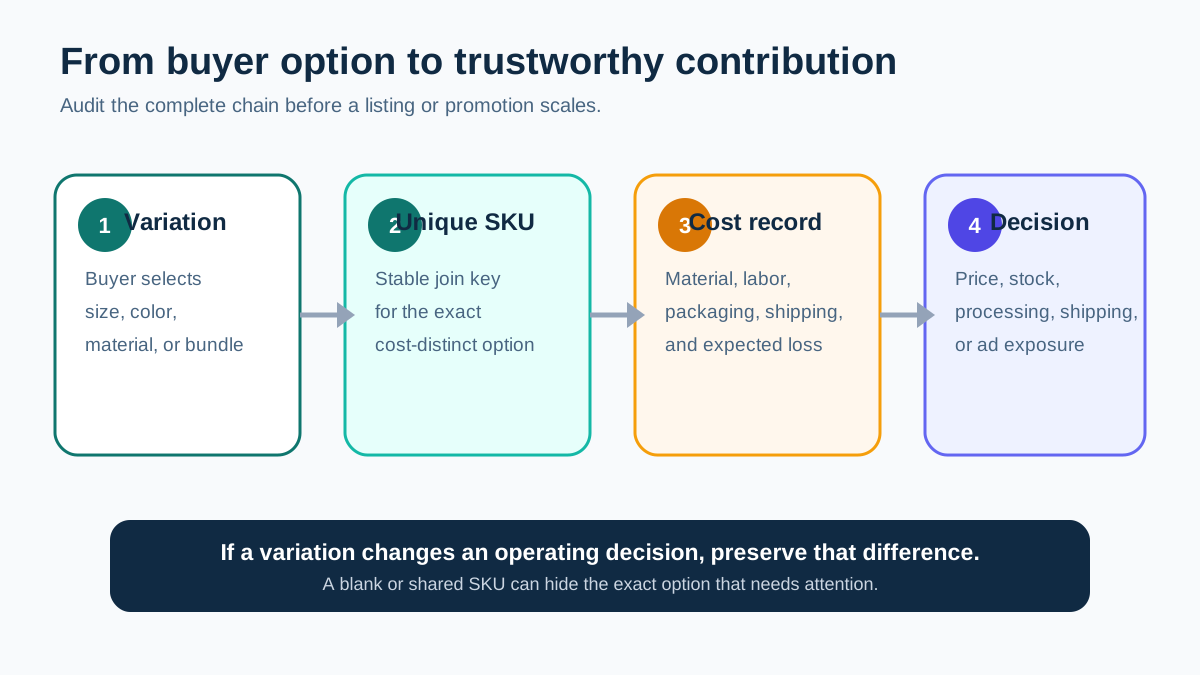
An Etsy variation needs its own SKU when it changes price, quantity, material cost, labor, processing, packaging, shipping weight, or replacement risk. Before publishing, verify every option has a unique, readable SKU, a matching cost record, the correct variation price, and a photo or fulfillment note where the option could be confused.
What should an Etsy variation SKU checklist include?
A useful checklist connects the customer-facing option to four operating records: the Etsy listing, the SKU, the seller's cost library, and the sold-order row. The listing tells the buyer what can be selected. The SKU identifies the exact option internally. The cost record explains what that option consumes. The sold-order row shows which option actually generated revenue.
Etsy currently allows up to two item attributes as listing variations. A seller can choose whether price, quantity, processing profile, or SKU differs by variation. Those switches are operational decisions, not merely listing decoration. If a larger size has a different total price and a heavier package, the SKU and cost record should preserve both differences.
Use the checklist before publishing, after any variation edit, and again when order exports show blanks or naming drift. It is designed for physical listings and operating review. Etsy says listing variations are not currently supported for digital items, so digital-file options need a different fulfillment and naming workflow.
| Check | Evidence to confirm | Failure signal |
|---|---|---|
| Variation setup | Every buyer-selectable option appears in the listing editor | An option is sold through notes or messages but is absent from the variation list |
| SKU uniqueness | Each cost-distinct option has one stable SKU | Blank SKU, duplicate SKU, or one SKU reused across different costs |
| Price and quantity | The total variation price and available quantity match the option | A surcharge is treated as the full price or sold-out stock remains available |
| Processing and shipping | Processing profile, packed weight, and packaging match the option | Heavy, fragile, or personalized options inherit the lightest assumption |
| Cost library | Material, labor, packaging, shipping, and risk assumptions map to the SKU | The order appears profitable only because the variation has no cost record |
Which Etsy variation settings should you audit?
Start with Etsy's listing editor rather than a spreadsheet template. Etsy's current variation workflow can vary price, quantity, processing profile, and SKU. The price shown for an option is the total price of that version, not an extra charge added to the base listing price. That distinction matters when a seller compares listing prices with exported revenue.
Audit visible differences as well as cost differences. Etsy lets sellers link photos to visible variations such as color. If a buyer can select walnut, oak, or painted white but the listing image does not visibly follow the choice, fulfillment and replacement risk can rise even when the SKU itself is correct.
Custom variations require extra care. Etsy notes that buyers cannot filter Etsy search results by custom variations. Use a custom variation because it describes a real buyer choice, not as a substitute for the most relevant category or available attribute. Keep search attributes, variation labels, SKUs, and internal cost records aligned but do not force them to use identical wording.
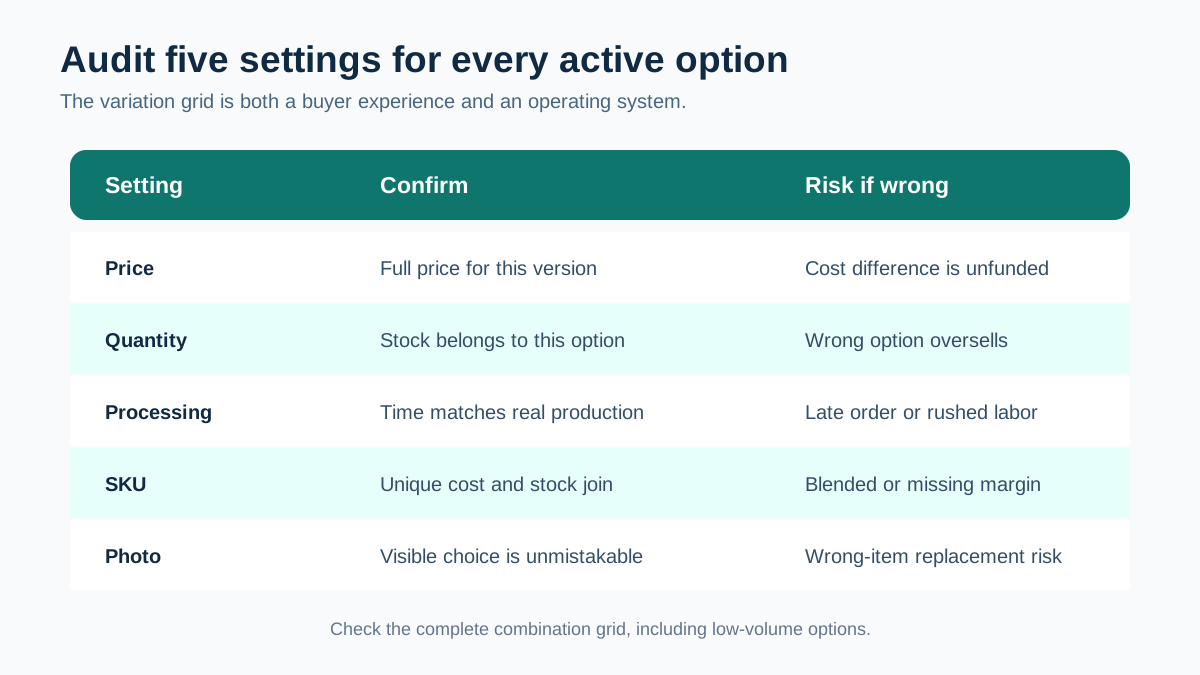
| Etsy setting | Question to answer | Margin or fulfillment consequence |
|---|---|---|
| Variation name | Does the buyer-facing label describe the actual choice? | Ambiguous labels increase wrong-item and support risk |
| Price | Is this the full selling price for this option? | An understated option can erase the cost difference |
| Quantity | Can stock be tracked separately for this option? | Shared quantity can hide which option is unavailable |
| Processing profile | Does the option need different production time? | Personalized or complex variants may miss realistic handling time |
| SKU | Can the exact option join to inventory and cost records? | Blank or duplicated identifiers make contribution analysis unreliable |
| Linked photo | Can the buyer and fulfiller see the selected visible option? | Visual mismatch can increase replacement and refund exposure |
A seven-step variation SKU check before publishing
Run the checklist on the complete variation grid, not only the default option shown first. A two-attribute listing can create many combinations, and the least common combination is often where a blank SKU, wrong price, or stale quantity survives. Export or copy the grid into a private working sheet if that makes row-by-row comparison easier.
Keep the test operational. You do not need buyer information, real addresses, or private messages. Use listing settings, made-up test values, SKU cost assumptions, and a public dummy order row. The goal is to prove that each selectable option can travel from listing to cost record to report without losing its identity.
- List every active combination and mark the default option separately.
- Confirm each cost-distinct combination has one unique SKU and no SKU is blank.
- Confirm the variation price is the complete price the buyer pays for that version.
- Match quantity and processing profile to the option's real stock and production time.
- Link a clear photo when color, finish, material, or another visible feature changes.
- Join each SKU to material, labor, packaging, shipping, and expected-loss assumptions.
- Run one dummy order through the Variant Risk and Profit tools before sending traffic.
How should variation SKUs encode cost differences?
A SKU should be readable enough to distinguish the option and stable enough to remain useful after a listing edit. Etsy's current SKU guidance recommends short identifiers for most inventory, using letters to reduce duplicates, avoiding easily confused characters such as O and I, and avoiding punctuation that can confuse spreadsheet software. Treat those as starting points, then document the pattern your own shop uses.
Do not try to encode every cost number into the identifier. The SKU is the join key; the cost library holds the changing values. A pattern such as product family, material or finish, size, and bundle count is usually more durable than a code containing today's material price or shipping rate.
If two options share the same inventory, cost, weight, packaging, production time, and fulfillment steps, they may not need separate cost records. If any of those inputs differ enough to change a business decision, separate them. The test is whether combining the options would hide a price, stock, margin, or fulfillment problem.
| Option | Example SKU | Cost record difference |
|---|---|---|
| Natural / small | ORN-NAT-S | Base wood, 12 labor minutes, small mailer |
| Natural / large | ORN-NAT-L | More wood, 16 labor minutes, heavier label |
| Metallic / small | ORN-MET-S | Metallic finish, drying time, higher defect allowance |
| Metallic / large | ORN-MET-L | Higher material, labor, packaging, shipping, and replacement risk |
Worked example: one popular finish hides a margin problem
Consider an ornament listing with a $28 natural finish and a $31 metallic finish. Both versions pay the same marketplace fee assumptions, but the metallic version uses $1.40 more finish, eight extra labor minutes at a $24 hourly labor rate, and $0.60 more expected replacement loss. The additional operating cost is $5.20 before any fee effect on the higher selling price.
If both versions use `ORN-01`, the cost library may apply the natural version's cost to every order. The metallic option then appears roughly $5.20 healthier than it is. A seller might scale an ad, extend a coupon, or keep a price that does not support the actual work because the average listing result looks acceptable.
Separate SKUs make the decision visible. The natural option can retain its current cost record while the metallic option receives its own finish, labor, and expected-loss inputs. The result does not automatically mean the metallic option should be removed. It shows whether the seller needs a higher price, a different processing profile, a packaging change, or lower paid exposure.
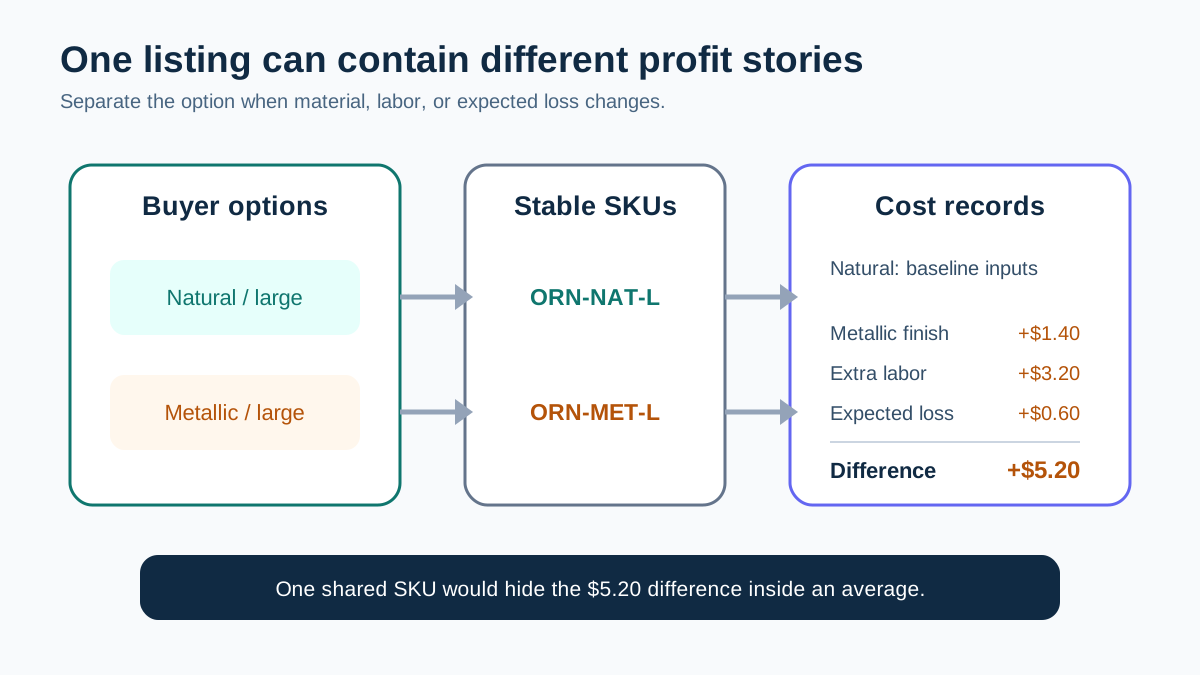
| Input | Natural finish | Metallic finish |
|---|---|---|
| Selling price | $28.00 | $31.00 |
| Extra finish cost | $0.00 | $1.40 |
| Extra labor | $0.00 | $3.20 |
| Extra expected replacement loss | $0.00 | $0.60 |
| Difference before fee effect | Baseline | $5.20 more operating cost |
What should you scan after Etsy orders are exported?
Etsy provides downloadable spreadsheets for sold transactions. Use the order-item data locally to scan for blank SKUs, high-volume SKUs without cost records, duplicate identifiers, and option-name drift. The first pass is data hygiene, not automatic repricing. A report cannot make a reliable margin recommendation when it cannot identify the sold variation.
Review by frequency and consequence. A blank SKU on one low-volume order is a cleanup task. A high-volume option with no cost record is a measurement priority. A cost-different variation sharing another option's SKU is a structural error because it blends margins every time either option sells.
Keep buyer names, addresses, messages, and payment identifiers out of this audit. Variation, SKU, quantity, revenue, fee, and private cost assumptions are enough for the operating check. If you need to share a support example, reproduce the issue with the public dummy CSV and made-up SKU names.
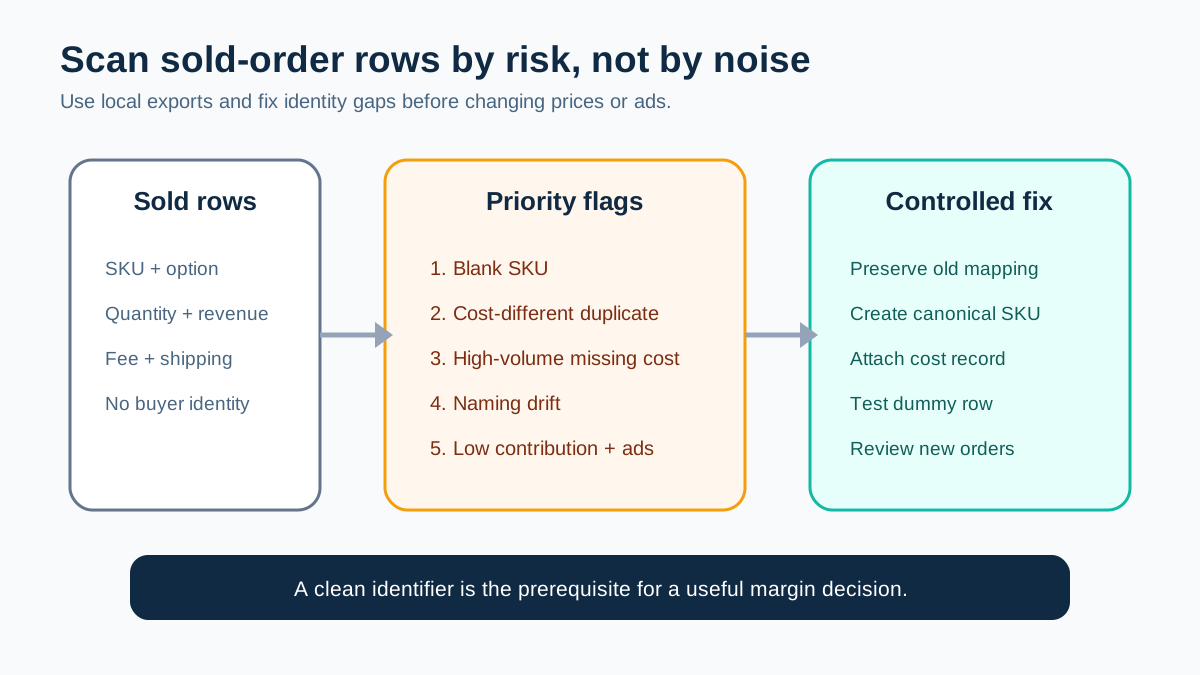
| Export signal | Likely problem | Next action |
|---|---|---|
| Blank SKU on a sold item | No stable join to a cost record | Add the listing SKU and document how historical rows will be mapped |
| One SKU on cost-different options | Blended contribution | Split the SKU or create a documented variation-specific mapping |
| Different SKUs for the same option | Naming drift | Choose the canonical SKU and preserve an old-to-new mapping |
| High-volume SKU missing costs | Profit likely overstated | Add costs before pricing, promotion, or ad decisions |
| Low-contribution SKU with ad exposure | Traffic may scale a weak option | Verify price, cost, shipping, and ad assumptions before changing spend |
How to fix variation SKU problems without losing history
Do not delete or rename identifiers blindly. Historical order exports retain the values used when the sale occurred, while a current listing may use a newer SKU. Keep a private mapping from the old identifier to the new canonical SKU so past orders remain understandable and cost records can be reconciled consistently.
Fix the highest-risk gap first: blank identifiers, cost-different duplicates, and high-volume SKUs without cost records. Then normalize formatting and option names. Changing every SKU at once creates unnecessary fulfillment risk, especially if printed labels, inventory bins, supplier records, or another sales channel still uses the old system.
After cleanup, run one controlled dummy row for each cost-distinct option. Confirm the Variant Risk checker recognizes the SKU, the cost library returns the expected inputs, and the profit result changes when a higher-cost variation is selected. Preserve the previous mapping and cost export as the rollback reference.
- Export or record the current SKU-to-option map before editing.
- Choose one canonical SKU for each cost-distinct variation.
- Retain an old-to-new mapping for historical orders and other channels.
- Update the Etsy listing, cost library, inventory location, and fulfillment notes together.
- Test with dummy data before using the result for pricing or advertising decisions.
- Review new sold-order rows after the change and close only confirmed gaps.
Etsy variation SKU checklist FAQ
Does every Etsy variation need a different SKU? No. Use a separate SKU when the option needs distinct inventory, price, processing, cost, weight, packaging, fulfillment, or risk tracking. If two buyer-facing labels are operationally identical, a documented shared cost rule may be enough.
Can variation prices be entered as surcharges? Etsy's current help says the price entered for each option is the total price of that version, not an amount added to the base price. Audit the full selling price for every option before publishing.
How many variation attributes can an Etsy listing use? Etsy currently documents up to two item attributes for listing variations. Because combinations multiply quickly, audit the complete grid rather than only one size or color.
Should personalization use a variation SKU? Personalization and variations solve different buyer-input problems. When personalization changes labor, material, processing, or replacement risk, capture that difference in a SKU, cost rule, or documented workflow instead of assuming every personalized order has the base cost.
How often should variation SKUs be checked? Check before publishing, after any listing or cost change, and during a weekly or monthly sold-order scan depending on volume. Recheck before a promotion, Offsite Ads exposure, or seasonal surge can scale an unresolved gap.
Related resources
- Run the variant risk checker: Find missing SKUs and variation cost gaps.
- Build a SKU cost library: Attach costs to each cost-distinct variation.
- Calculate SKU-level profit: Use clean SKUs for better profit review.
- Read the Etsy SKU naming guide: Create short, unique, documented identifiers without losing old mappings.
Sources and further reading
- Etsy Help: How to Add Variations for Your Listings: Official variation limits, price, quantity, processing profile, SKU, photo-linking, visibility, and digital-item guidance.
- Etsy Help: How to Use SKU for Your Inventory: Official SKU purpose, listing workflow, naming examples, inventory use, and formatting tips.
- Etsy Help: How to Create a Listing: Official listing, variation, personalization, attributes, price, inventory, processing, and shipping overview.
- Etsy Help: How to Download a Spreadsheet of Your Sold Transactions: Official CSV export workflow for order items, orders, Etsy Payments sales, and deposits.
Related Seller Profit Guard tools
- What is an Etsy SKU?: Design and document a stable SKU system before mapping variations.
- Calculate SKU-level Etsy profit: Join sold SKUs to material, labor, packaging, shipping, fees, and target contribution.
- Variant risk checker: Find blank SKUs and cost-record gaps in a local browser workflow.
- SKU cost library: Maintain cost assumptions for each cost-distinct option.
- CSV data privacy: Keep buyer identity and private order data out of support examples.
- Etsy Variant Risk: 5 Checks Before Margin Review: Map Etsy variation names, SKUs, quantity, order count, and SKU cost coverage into five deterministic risk checks before pricing or margin analysis.
- Etsy Size Variation Audit: One SKU, Two Labels: Follow a complete Etsy size-variation example that exposes one SKU mapped to two labels, a missing SKU, and a high-volume cost gap.
- Etsy Material Variations: One Label, Two SKUs: Audit a material-based Etsy variation where one item-and-option label maps to multiple SKUs and material cost coverage differs.
- Etsy Title Checker: Five Inputs That Matter: Use five evidence-backed Etsy title inputs to review item clarity, objective traits, mobile scanning, repetition, and change context.
- Etsy Title Checker Example: Personalized Item: Rewrite a 21-word personalized necklace title into a clear 10-word version while preserving facts, tags, baseline evidence, and rollback.
- Etsy Title Checker for Material-Led Products: Review a material-led moonstone ring title where verified stone, metal, color, and construction matter more than generic gifting language.
- Etsy Tag Checker: Six Inputs That Matter: Review six evidence-backed Etsy tag inputs to check 13-slot use, 20-character limits, phrase variety, listing-field overlap, and change context.
- Etsy Tag Checker Example: Gift Listing: Follow a 13-slot gift-listing tag review that removes exact duplication, protects product truth, adds regional and recipient variety, and preserves a baseline.
- Etsy Tag Checker for a Style-Led Listing: Build a style-led Etsy tag set for a linen table runner by separating visual style, use, material, size, recipient, and structured attribute coverage.
- Etsy Attribute Coverage Formula: Exact Inputs: Build an exact Etsy attribute coverage formula from relevant category fields, selected values, verified facts, variations, titles, and tags.
- Etsy Attribute Checker: A 4/4 Jewelry Example: Follow a 4/4 pendant-necklace attribute review through category scope, exact pairs, product facts, title and tag visibility, and variations.
- Etsy Attribute Audit for a Wall Hanging: Audit a home-decor wall hanging with category-specific material, color, room, dimensions, natural variation, and a documented hold decision.
- Etsy Category Fit Formula: Exact Inputs: Build an Etsy category-fit formula from item format, product identity, material or files, buyer use, variations, and dated editor evidence.
- Etsy Category Fit: Physical Jewelry Example: Follow a handmade pendant necklace through category path, physical format, identity, materials, use, options, evidence, and release checks.
- Etsy Category Fit for a Digital Download: Review a seller-designed digital invitation across file format, product identity, instant or made-to-order delivery, category scope, and evidence.
- Etsy Description Clarity Formula: 10 Inputs: Define the exact inputs, coverage checks, evidence requirements, and precedence rules for a reproducible Etsy description clarity review.
- Etsy Description Checker: Personalized Example: Follow a personalized sterling-silver necklace from product evidence through description checks, buyer instructions, release, and rollback.
- Etsy Description Checker for Made-to-Order Items: Review a made-to-order ceramic sign with production stages, personalization inputs, proof decisions, dimensions, care, and timing evidence.
- Etsy Photo Coverage Formula: 10 Inputs: Define the gallery inventory, seven buyer-evidence checks, known-gap gate, provenance note, and deterministic decision logic.
- Etsy Photo Checklist: Variation-Heavy Example: Follow a personalized necklace with finish and chain options from product evidence through gallery mapping, checks, release, and recovery.
- Etsy Photo Checklist for Size-Sensitive Art: Build a materially different size-sensitive wall-art gallery with room scale, exact dimensions, crop boundaries, packaging, and frame exclusions.
- Etsy Variation Naming Formula and Inputs: Define axes, values, selector text, photo and total-price maps, complete SKU combinations, known issues, and a dated evidence contract.
- Etsy Variation Names: Size and Color Example: Follow a tote bag with three sizes and two colors from the product option contract through photos, total prices, six SKUs, release, and recovery.
- Etsy Material and Personalization Options: Separate set-list material choices from buyer-entered engraving instructions, then audit photos, prices, SKUs, processing, and public behavior.
- Etsy Personalization Instructions: Inputs and Checks: Define customization scope, focused fields, buyer instructions, format limits, examples, proofing, exceptions, processing, issues, and evidence.
- Etsy Engraving Instructions Worked Example: Build a two-field engraved-name workflow with exact text, font options, limits, examples, no-proof handling, processing, release, and recovery.
- Etsy Custom Portrait Input Instructions: Translate a custom portrait workflow into subject, composition, file, approval, revision, missing-input, processing, and privacy-safe controls.
- Etsy Production Partner Disclosure Inputs: Define item path, seller design, partner production, public identity and location, relationship copy, listing links, dispatch origin, issues, and evidence.
- Etsy POD Production Partner Example: Follow an original botanical tote through print-on-demand production, partner profile, listing links, dispatch origin, release, and recovery.
- Etsy Specialist Fabrication Partner Example: Model seller-designed jewelry made by a specialist fabricator, with drawings, samples, finishing boundaries, public disclosure, and dispatch evidence.
- Etsy Listing Claims Checker: 9 Inputs: Define the listing boundary, claim rows, evidence families, visual reconciliation, qualifications, risk review, and approval record.
- Etsy Material Claim: A Component Example: Follow a pendant, chain, size, and engraving statement from component records through public wording, images, approval, and rollback.
- Etsy Compatibility Claim: A Sleeve Example: Test a laptop-sleeve fit statement without turning one measured envelope into universal compatibility, waterproofing, or shock protection.
- Etsy Seasonal Readiness: 9 Inputs and Formula: Define the dated window, capacity, processing, seller cutoff, listing alignment, variation, photo, promotion, and approval inputs.
- Etsy Holiday Listing Cutoff: Worked Example: Calculate and audit a personalized ornament listing from inventory and production capacity through a dated seller cutoff and public verification.
- Etsy Wedding-Season Listing Readiness: Plan a wedding-favor listing around event lead time, proof approval, batch production, color variants, and a staged order window.
- SKU Naming Generator Formula and Inputs: Build reversible canonical SKUs from a codebook, variant attributes, sequence, length limits, reserved values, and optional channel aliases.
- SKU Naming Generator Worked Example: Follow a simple tote-bag variant from codebook and attributes to TB-C-N-L-007, decoding, uniqueness review, and approval evidence.
- SKU Naming for a Multi-Channel Catalog: Create one canonical variant code plus Etsy and Shopify aliases without duplicating the underlying inventory identity or counts.
- Variation SKU Formula and Input Rules: Expand parent and option codes into unique variation SKUs with explicit row limits, length rules, reserved values, evidence, and rollback.
- Variation SKU Worked Example: Size and Color: Expand three sizes and two colors into six traceable T-shirt SKUs, then verify counts, decoding, length, uniqueness, and reserved values.
- Variation SKU Sets for Material and Finish: Generate and review four pen variants from walnut or maple materials crossed with matte or gloss finishes and one parent code.
Next step: Run the variant risk checker.
This is operational planning help, not tax, accounting, legal, financial, or platform-policy advice. Review the Terms and disclaimer, and verify current platform rules and fee assumptions before changing prices.