Where to get reliable reorder point data
Last updated: 2026-07-31
Written and reviewed by Seller Profit Guard Editorial Team.
Reliable reorder-point evidence comes from SKU-location sales or consumption history, stockout periods, purchase-order and usable-receipt timestamps, an approved safety-stock policy, current inventory counts, dated inbound supply, commitments and backorders, transfer records, supplier minimums and multiples, and a versioned inventory-definition map kept outside public pages.
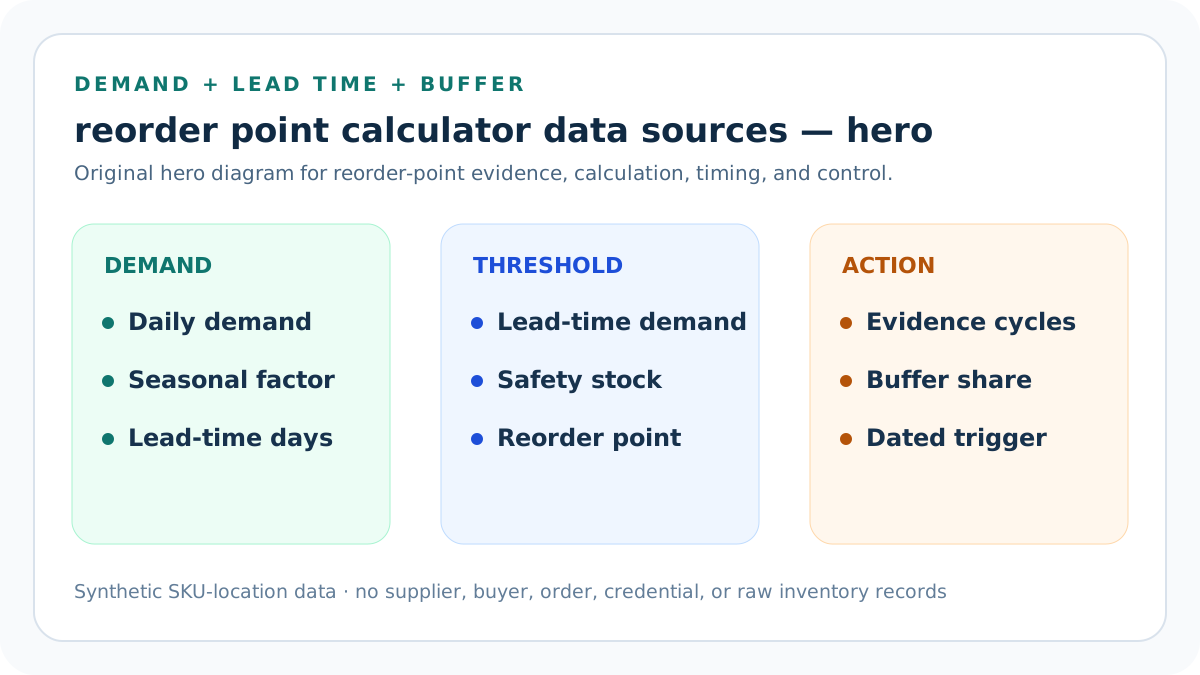
Use SKU-location demand history
Source one stable product-location transaction grain. The inventory evidence register should retain formula grain, three dated checkpoints, field definition, intermediate calculation, demand-evidence cycles, safety-stock share, seller-owned limits, confirmation status, evidence owner, exception status, approval, and previous value needed for a source-backed replenishment packet.
Exclude tests and explain corrections. At checkpoint 1, compare the stable synthetic worksheet, the seasonal worksheet, a missing-commitment defect, a delayed-receipt case, and a corrected packet. State which part is arithmetic and which part still needs inventory, supplier, purchasing, or receipt evidence.
Use stockout records
Mark unavailable intervals beside sales. The inventory evidence register should retain formula grain, three dated checkpoints, field definition, intermediate calculation, demand-evidence cycles, safety-stock share, seller-owned limits, confirmation status, evidence owner, exception status, approval, and previous value needed for a source-backed replenishment packet.
Silence in sales is not always zero demand. At checkpoint 2, compare the stable synthetic worksheet, the seasonal worksheet, a missing-commitment defect, a delayed-receipt case, and a corrected packet. State which part is arithmetic and which part still needs inventory, supplier, purchasing, or receipt evidence.
Use dated receipts
Measure replenishment to usable receipt, not invoice creation alone. The inventory evidence register should retain formula grain, three dated checkpoints, field definition, intermediate calculation, demand-evidence cycles, safety-stock share, seller-owned limits, confirmation status, evidence owner, exception status, approval, and previous value needed for a source-backed replenishment packet.
Quality holds can extend effective lead time. At checkpoint 3, compare the stable synthetic worksheet, the seasonal worksheet, a missing-commitment defect, a delayed-receipt case, and a corrected packet. State which part is arithmetic and which part still needs inventory, supplier, purchasing, or receipt evidence.
Use approved safety-stock policy
Record quantity, owner, purpose, and effective date. The inventory evidence register should retain formula grain, three dated checkpoints, field definition, intermediate calculation, demand-evidence cycles, safety-stock share, seller-owned limits, confirmation status, evidence owner, exception status, approval, and previous value needed for a source-backed replenishment packet.
The buffer is a decision input. At checkpoint 4, compare the stable synthetic worksheet, the seasonal worksheet, a missing-commitment defect, a delayed-receipt case, and a corrected packet. State which part is arithmetic and which part still needs inventory, supplier, purchasing, or receipt evidence.
Use current inventory definitions
Map on hand, available, committed, inbound, and transfer fields. The inventory evidence register should retain formula grain, three dated checkpoints, field definition, intermediate calculation, demand-evidence cycles, safety-stock share, seller-owned limits, confirmation status, evidence owner, exception status, approval, and previous value needed for a source-backed replenishment packet.
Names differ across systems. At checkpoint 5, compare the stable synthetic worksheet, the seasonal worksheet, a missing-commitment defect, a delayed-receipt case, and a corrected packet. State which part is arithmetic and which part still needs inventory, supplier, purchasing, or receipt evidence.
Use supplier constraints
Retain minimums, multiples, calendars, and cancellation states. The inventory evidence register should retain formula grain, three dated checkpoints, field definition, intermediate calculation, demand-evidence cycles, safety-stock share, seller-owned limits, confirmation status, evidence owner, exception status, approval, and previous value needed for a source-backed replenishment packet.
They affect action after the trigger. At checkpoint 6, compare the stable synthetic worksheet, the seasonal worksheet, a missing-commitment defect, a delayed-receipt case, and a corrected packet. State which part is arithmetic and which part still needs inventory, supplier, purchasing, or receipt evidence.
Use versioned private pointers
Keep raw inventory and purchase records access-controlled. The inventory evidence register should retain formula grain, three dated checkpoints, field definition, intermediate calculation, demand-evidence cycles, safety-stock share, seller-owned limits, confirmation status, evidence owner, exception status, approval, and previous value needed for a source-backed replenishment packet.
Public pages use synthetic evidence. At checkpoint 7, compare the stable synthetic worksheet, the seasonal worksheet, a missing-commitment defect, a delayed-receipt case, and a corrected packet. State which part is arithmetic and which part still needs inventory, supplier, purchasing, or receipt evidence.
Reorder Point Data Sources and Evidence: grain and definition control
Record one SKU, location, unit, inventory-field map, inventory review date, official-source review date, policy effective date, and timezone. Control 1 declares the exact source, unit, date, pass condition, reviewer, failure owner, correction deadline, and restoration trigger before the threshold can influence an alert or purchasing review.
Mixed grains, impossible dates, and future-effective evidence are blocked. Apply this control to the concrete inventory evidence register; keep reorder point separate from purchase quantity, projected trigger separate from delivery or stockout date, and aggregate public evidence separate from private SKU, supplier, and order records.
Reorder Point Data Sources and Evidence: demand and stockout control
Retain the demand window, lead-time-cycle coverage, exclusions, unavailable days, raw rate, seasonal factor, and event scope. Control 2 declares the exact source, unit, date, pass condition, reviewer, failure owner, correction deadline, and restoration trigger before the threshold can influence an alert or purchasing review.
Observed sales can be constrained, and weak cycle coverage moves to Review. Apply this control to the concrete inventory evidence register; keep reorder point separate from purchase quantity, projected trigger separate from delivery or stockout date, and aggregate public evidence separate from private SKU, supplier, and order records.
Reorder Point Data Sources and Evidence: lead-time and buffer control
Pair recognition dates with usable receipts, keep approved safety stock separate, and compare its share of reorder point with the seller-owned maximum. Control 3 declares the exact source, unit, date, pass condition, reviewer, failure owner, correction deadline, and restoration trigger before the threshold can influence an alert or purchasing review.
Promises, buffers, and review thresholds require named owners. Apply this control to the concrete inventory evidence register; keep reorder point separate from purchase quantity, projected trigger separate from delivery or stockout date, and aggregate public evidence separate from private SKU, supplier, and order records.
Reorder Point Data Sources and Evidence: position and timing control
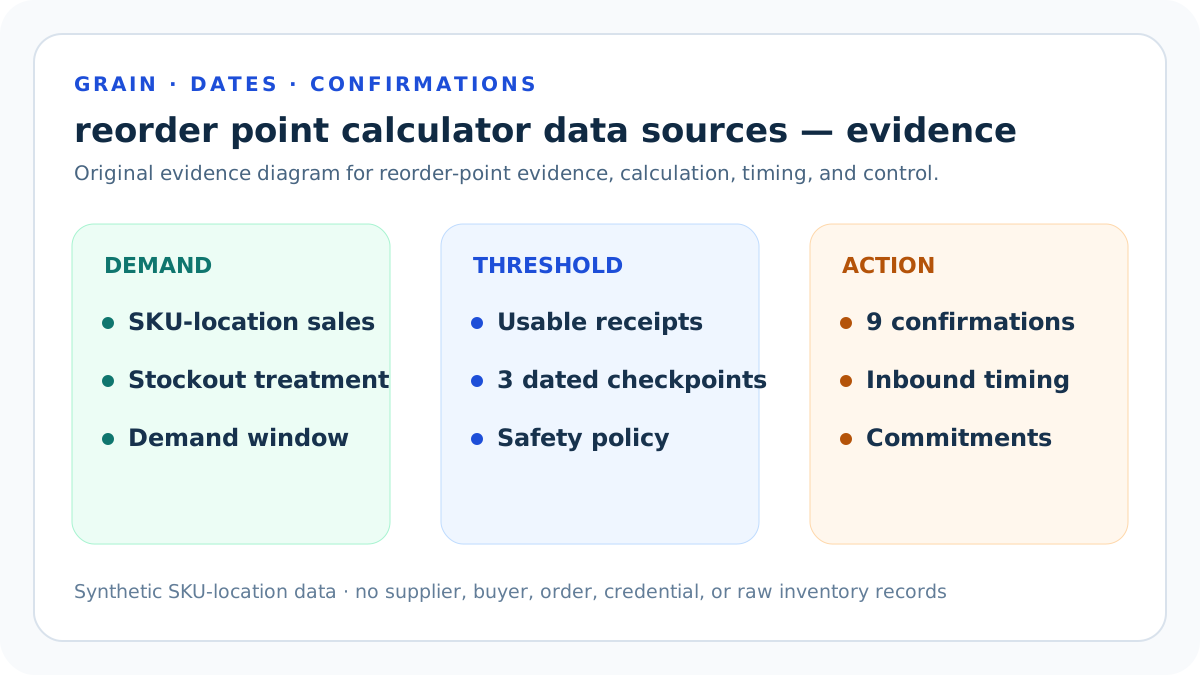
Reconcile on hand, eligible inbound, commitments, transfers, holds, time-phased availability, and the nine evidence confirmations. Control 4 declares the exact source, unit, date, pass condition, reviewer, failure owner, correction deadline, and restoration trigger before the threshold can influence an alert or purchasing review.
Aggregate totals can hide timing defects, while missing confirmations block outputs. Apply this control to the concrete inventory evidence register; keep reorder point separate from purchase quantity, projected trigger separate from delivery or stockout date, and aggregate public evidence separate from private SKU, supplier, and order records.
Reorder Point Data Sources and Evidence: privacy and recovery control
Keep raw inventory and purchasing records private; retain two materially distinct scenarios, the prior threshold, alert, approval, stop rule, and restoration packet. Control 5 declares the exact source, unit, date, pass condition, reviewer, failure owner, correction deadline, and restoration trigger before the threshold can influence an alert or purchasing review.
Public evidence remains synthetic and duplicate scenarios are rejected. Apply this control to the concrete inventory evidence register; keep reorder point separate from purchase quantity, projected trigger separate from delivery or stockout date, and aggregate public evidence separate from private SKU, supplier, and order records.
Use SKU-location demand history: replenishment exercise 1
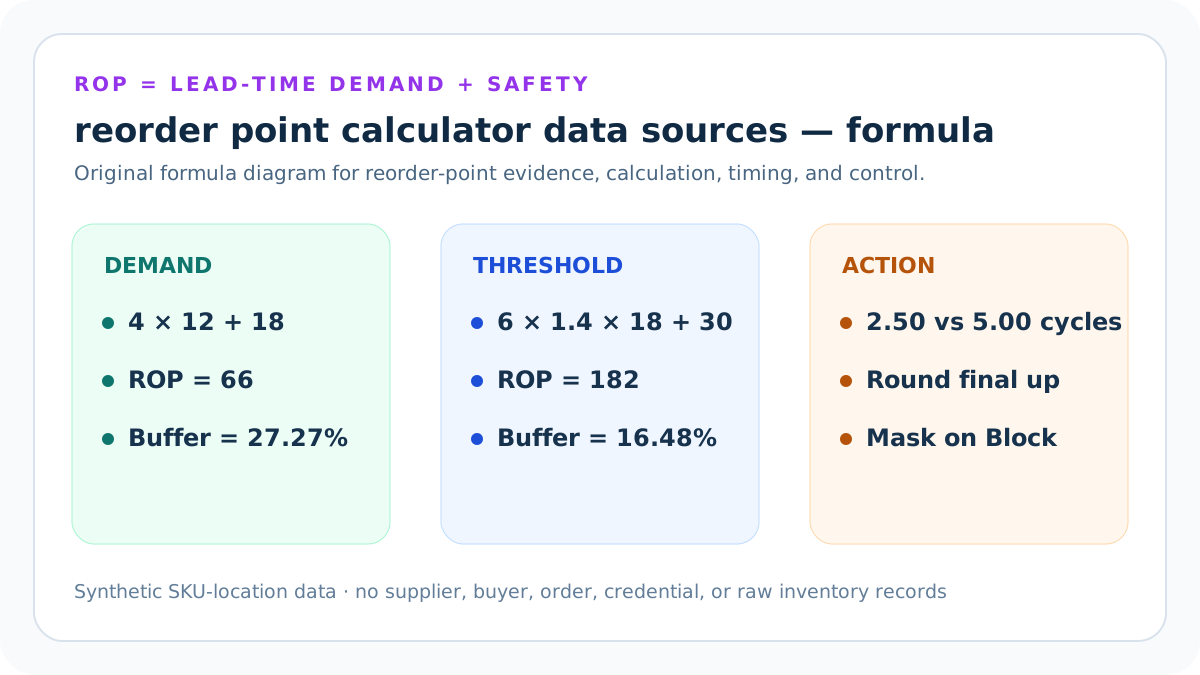
Recalculate the relevant result from the 66-unit stable threshold and the 182-unit seasonal threshold. Source one stable product-location transaction grain. Also reproduce the 2.50 versus 5.00 demand-evidence cycles and the 27.27% versus 16.48% safety-stock shares. Change one input only, preserve all other assumptions, list the affected intermediate values, and record the expected Block, Review, or Ready state.
Exclude tests and explain corrections. The exercise should test a stockout-distorted demand window, stale lead time, missing commitment, ineligible inbound receipt, changed safety stock, seasonal event, and restored prior threshold. Name the external inventory and purchasing evidence still required.
Use stockout records: replenishment exercise 2
Recalculate the relevant result from the 66-unit stable threshold and the 182-unit seasonal threshold. Mark unavailable intervals beside sales. Also reproduce the 2.50 versus 5.00 demand-evidence cycles and the 27.27% versus 16.48% safety-stock shares. Change one input only, preserve all other assumptions, list the affected intermediate values, and record the expected Block, Review, or Ready state.
Silence in sales is not always zero demand. The exercise should test a stockout-distorted demand window, stale lead time, missing commitment, ineligible inbound receipt, changed safety stock, seasonal event, and restored prior threshold. Name the external inventory and purchasing evidence still required.
Use dated receipts: replenishment exercise 3
Recalculate the relevant result from the 66-unit stable threshold and the 182-unit seasonal threshold. Measure replenishment to usable receipt, not invoice creation alone. Also reproduce the 2.50 versus 5.00 demand-evidence cycles and the 27.27% versus 16.48% safety-stock shares. Change one input only, preserve all other assumptions, list the affected intermediate values, and record the expected Block, Review, or Ready state.
Quality holds can extend effective lead time. The exercise should test a stockout-distorted demand window, stale lead time, missing commitment, ineligible inbound receipt, changed safety stock, seasonal event, and restored prior threshold. Name the external inventory and purchasing evidence still required.
Use approved safety-stock policy: replenishment exercise 4
Recalculate the relevant result from the 66-unit stable threshold and the 182-unit seasonal threshold. Record quantity, owner, purpose, and effective date. Also reproduce the 2.50 versus 5.00 demand-evidence cycles and the 27.27% versus 16.48% safety-stock shares. Change one input only, preserve all other assumptions, list the affected intermediate values, and record the expected Block, Review, or Ready state.
The buffer is a decision input. The exercise should test a stockout-distorted demand window, stale lead time, missing commitment, ineligible inbound receipt, changed safety stock, seasonal event, and restored prior threshold. Name the external inventory and purchasing evidence still required.
Use current inventory definitions: replenishment exercise 5
Recalculate the relevant result from the 66-unit stable threshold and the 182-unit seasonal threshold. Map on hand, available, committed, inbound, and transfer fields. Also reproduce the 2.50 versus 5.00 demand-evidence cycles and the 27.27% versus 16.48% safety-stock shares. Change one input only, preserve all other assumptions, list the affected intermediate values, and record the expected Block, Review, or Ready state.
Names differ across systems. The exercise should test a stockout-distorted demand window, stale lead time, missing commitment, ineligible inbound receipt, changed safety stock, seasonal event, and restored prior threshold. Name the external inventory and purchasing evidence still required.
Use supplier constraints: replenishment exercise 6
Recalculate the relevant result from the 66-unit stable threshold and the 182-unit seasonal threshold. Retain minimums, multiples, calendars, and cancellation states. Also reproduce the 2.50 versus 5.00 demand-evidence cycles and the 27.27% versus 16.48% safety-stock shares. Change one input only, preserve all other assumptions, list the affected intermediate values, and record the expected Block, Review, or Ready state.
They affect action after the trigger. The exercise should test a stockout-distorted demand window, stale lead time, missing commitment, ineligible inbound receipt, changed safety stock, seasonal event, and restored prior threshold. Name the external inventory and purchasing evidence still required.
Use versioned private pointers: replenishment exercise 7
Recalculate the relevant result from the 66-unit stable threshold and the 182-unit seasonal threshold. Keep raw inventory and purchase records access-controlled. Also reproduce the 2.50 versus 5.00 demand-evidence cycles and the 27.27% versus 16.48% safety-stock shares. Change one input only, preserve all other assumptions, list the affected intermediate values, and record the expected Block, Review, or Ready state.
Public pages use synthetic evidence. The exercise should test a stockout-distorted demand window, stale lead time, missing commitment, ineligible inbound receipt, changed safety stock, seasonal event, and restored prior threshold. Name the external inventory and purchasing evidence still required.
Map each input to an authoritative system field
Create a field-level lineage map rather than a screenshot collection. For demand, identify the transaction timestamp, quantity sign, cancellation rule, fulfillment location, and stockout flag. For lead time, pair the accepted purchase-order event with the first usable receipt after quality or transfer holds. For inventory position, document which system states count as on hand, eligible inbound, committed, quarantined, damaged, or unavailable.
Give every mapping an owner, extraction timestamp, timezone, refresh cadence, effective date, and retirement rule. A source name alone is insufficient: the register must explain how raw states become the exact calculator input and which transformations can be reproduced from a protected workspace.
Test source freshness, completeness, and reconciliation
Measure the latest available transaction date, missing SKU-location keys, duplicate receipt identifiers, unmatched purchase orders, negative quantities, stale expected dates, and differences between physical counts and system balances. Record aggregate exception counts and preserve row-level evidence privately.
A source is usable only when its freshness matches the review date and its exceptions have owners. If the demand feed is current but commitments lag, the inventory position remains incomplete; if receipts are missing usable dates, the lead-time sample cannot support an automated threshold.
Evidence boundary for a source-backed replenishment packet
The packet can demonstrate entered demand normalization, seasonal multiplication, lead-time extension, safety-stock addition, whole-unit rounding, demand-evidence-cycle coverage, safety-stock share, declared inventory-position arithmetic, headroom, and a straight-line trigger date under two distinct synthetic inputs.
It cannot forecast unconstrained demand, prove inventory accuracy or exact receipt timing, choose an optimal buffer or order quantity, reserve cash or capacity, place a purchase order, guarantee supplier performance, or prevent stockouts.
Release, monitor, and restore the inventory evidence register
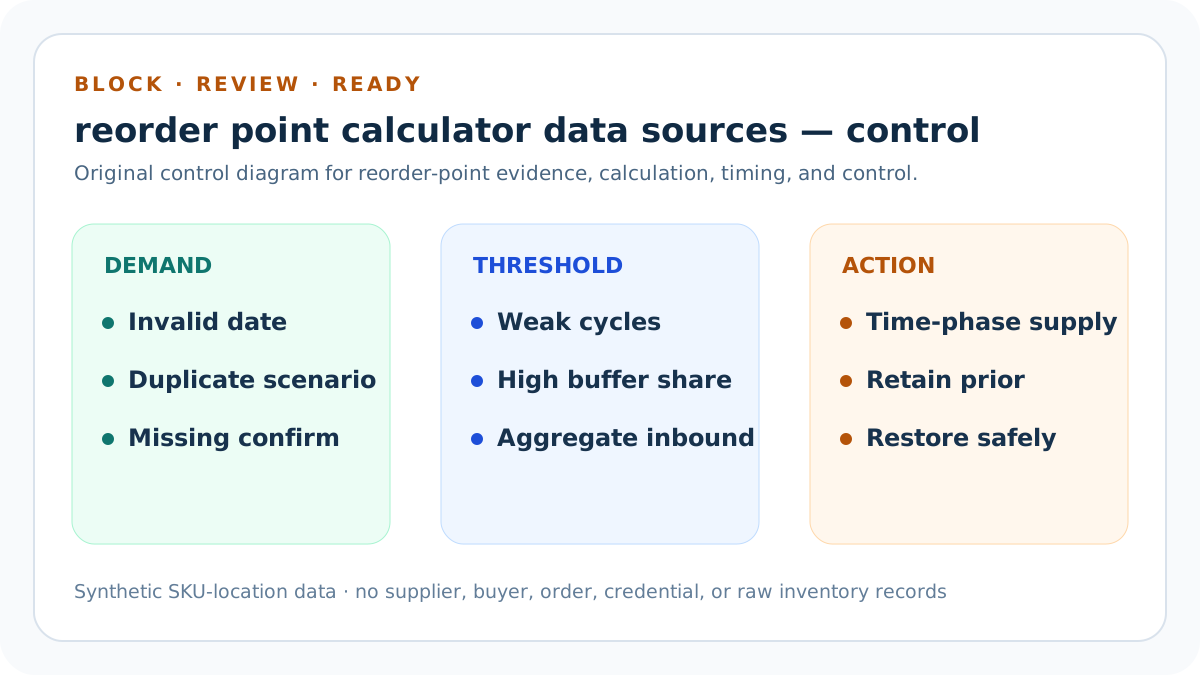
Block invalid scope, real dates, demand, lead time, safety stock, inventory fields, thresholds, scenario distinction, confirmations, privacy, or open conflicts, and mask every derived result. Review short histories, weak evidence-cycle coverage, high safety-stock share, extreme seasonal adjustments, and aggregate inbound timing. Ready clears only the entered simple model.
Before indexing or operational use, retain source and rollback artifacts, run typecheck, unit, integration, build, content, similarity, SEO, image, link, mobile, strict-404, deployment, and live checks, then measure delayed discovery and later planning error without claiming same-period causality.
Reorder Point Data Sources and Evidence: concrete working record
Build a source register with system, table or report, field definition, SKU key, location key, unit, timezone, update cadence, owner, access date, completeness, exclusions, and private pointer. Demand evidence records transactions and unavailable days. Lead-time evidence pairs purchase-order recognition or placement with usable receipt. Inventory evidence distinguishes on hand, available, committed, damaged, quarantined, transfer, and inbound. Policy evidence records safety stock, approval, effective date, service rationale, and retirement. Supplier evidence records minimums, multiples, calendars, blackout dates, and reliability. Public artifacts expose only formulas, synthetic rows, and aggregate counts.
Sources and further reading
- Seller Profit Guard methodology: Evidence, formula, privacy, correction, release, and rollback rules.
- Seller Profit Guard data privacy: Local-first boundaries for inventory, supplier, order, buyer, and raw catalog data.
- Shopify Help: Low stock: Official lead-time and sales-per-day reorder-point example, depletion context, and Stocky retirement notice.
- Microsoft Learn: Handling reordering policies: Official projected-inventory, safety-stock, time-bucket, and replenishment-policy boundaries.
- Microsoft Learn: Reordering policy best practices: Official boundary between replenishment timing, quantity, and order modifiers.
- NetSuite Help: Inventory Optimization: Official item-location demand history, service-level, and lead-time variability context.
- NetSuite Help: Lead Time and Safety Stock Per Location: Official receipt-derived lead-time and location-specific safety-stock context.
- Microsoft Learn: Inventory Availability report: Official on-hand, expected supply, demand, purchase-order, transfer, and SKU availability boundaries.
- Square Support: Create inventory alerts: Official location-level low-stock threshold and alert behavior.
Related Seller Profit Guard tools
- Reorder Point Calculator: Calculate lead-time demand, safety-stock threshold, inventory position, and trigger date.
- Variation SKU Generator: Create stable variation identities before location-level replenishment planning.
- SKU Naming Generator: Define a canonical product-variant identity.
- Listing Cost Library Calculator: Keep inventory thresholds separate from product-cost evidence.
- CSV Import Validator: Review a redacted file structure before private inventory work.
- Methodology: Review evidence, formula, privacy, correction, release, and rollback.
- Data Privacy: Protect inventory, supplier, order, buyer, credential, and raw export data.
- Reorder Point Formula and Input Rules: Define SKU-location demand, lead time, safety stock, inventory position, seasonality, evidence, and trigger-date assumptions.
- Reorder Point Worked Example: Stable Demand: Calculate a 66-unit reorder point and dated trigger for a stable SKU with four daily units, twelve lead-time days, and safety stock.
- Seasonal Reorder Point Worked Example: Convert monthly demand, apply a 1.40 seasonal factor, and calculate a 182-unit threshold for a longer replenishment lead time.
- Reorder Point Mistakes That Cause Stockouts: Correct mixed locations, sales-window bias, missing commitments, false inbound, stale lead time, double-counted buffers, and wrong date labels.
- Reorder Point Decision and Release Gates: Separate data-validity, model, trigger, time-phased receipt, purchasing, approval, monitoring, rollback, and exception gates.
- Stable vs Seasonal Reorder Points Compared: Compare a 66-unit stable threshold with a 182-unit seasonal threshold at one SKU-location, evidence, and inventory-position grain.
- Weekly Reorder Point Review Routine: Run a repeatable SKU-location review for counts, commitments, receipts, demand windows, safety stock, alerts, exceptions, and restoration.
- How to Interpret Reorder Point Results: Read lead-time demand, safety stock, inventory position, headroom, trigger days, and status without claiming forecast or order proof.
- Reorder Point Audit and Change Log: Audit SKU-location grain, demand, lead time, safety stock, inventory position, trigger, purchasing action, monitoring, and restoration.
Next step: Open Seller Profit Guard.
This is operational planning help, not tax, accounting, legal, financial, or platform-policy advice. Review the Terms and disclaimer, and verify current platform rules and fee assumptions before changing prices.