How to set safe Etsy seasonal readiness thresholds
Last updated: 2026-07-30
Written and reviewed by Seller Profit Guard Editorial Team.
Ready requires all eight checks, current dates, a conservative cutoff, spare capacity, aligned public surfaces, enforceable promotion stops, and no known conflict. Revise means a controllable layer is incomplete. Hold means a required authority or observation is unavailable. Block applies to stale deadlines, over-capacity plans, misleading delivery claims, or promoted options known to be unavailable.

non-compensating readiness thresholds: scope and decision
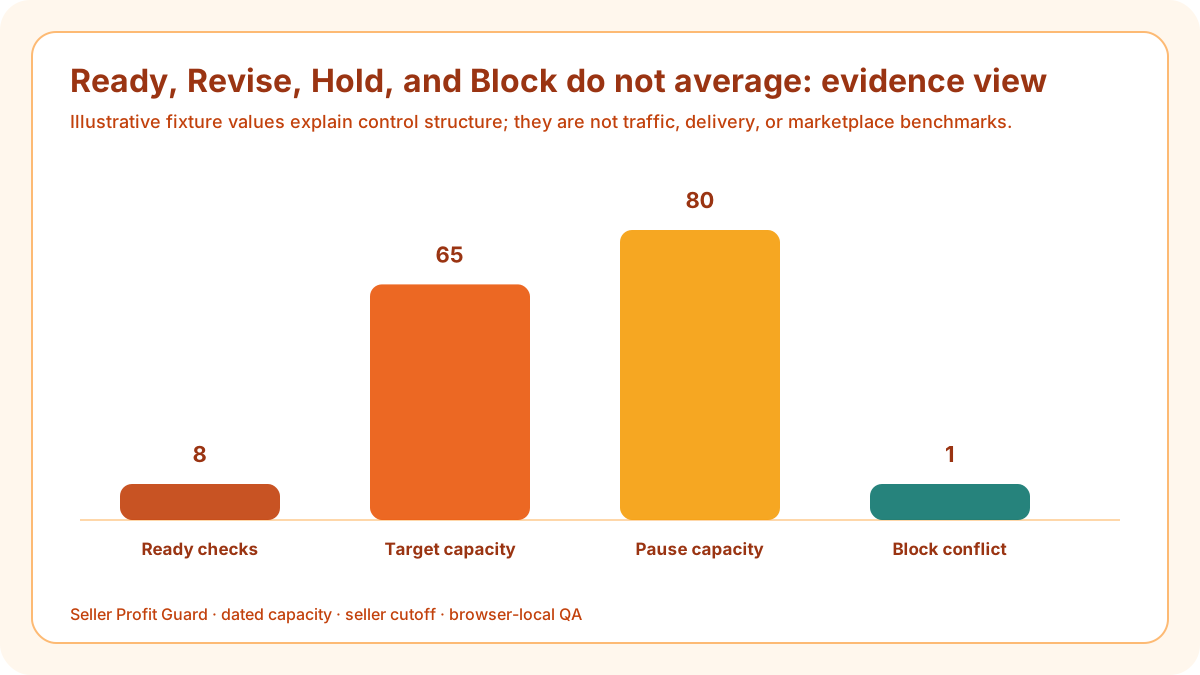
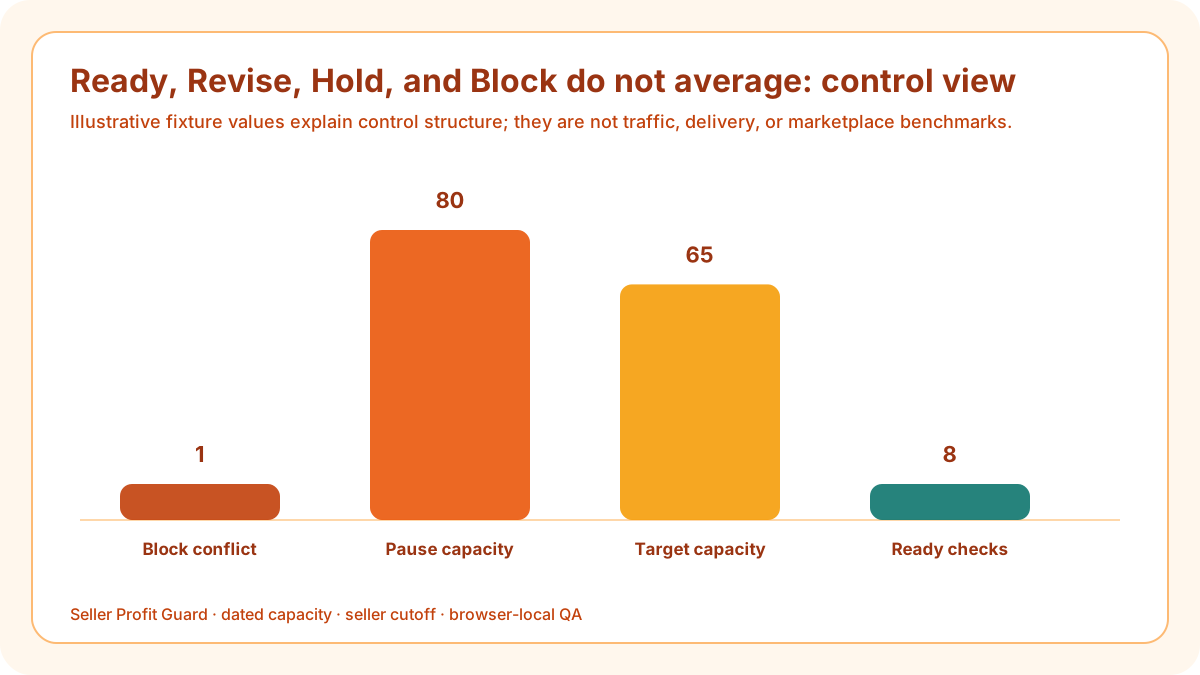
A readiness score should not average away time-critical failure. Capacity, processing, cutoff, public copy, variation evidence, and promotion controls are separate gates. One advertised option with no capacity can cause harm even when every other option is ready.
Ready permits backup and public QA. It does not predict demand, guarantee arrival, certify policy compliance, approve an advertisement, or prove that a seasonal launch will rank or convert. Measurement begins after the operating packet is safely released.
Build the seasonal decision ladder before editing
Revise is for an accountable gap the seller can correct now: missing reserve, incomplete mapping, unclear after-cutoff wording, or an unbound campaign. Hold is for a necessary observation or authority that cannot yet be obtained, such as an unavailable public delivery view.
Block is non-compensating. Use it for a copied stale date, known oversold variation, intentionally shortened processing profile, unsupported arrival promise, promotion beyond the documented stop line, or any declared conflict that would mislead a buyer or overload fulfillment.
Ready threshold
Require an exact review date; three valid dates in demand-watch, selling-end, and need-by order; allocable inventory; sustainable capacity; current processing and schedule evidence; a cutoff that matches the recomputed calendar; aligned public surfaces; promotion stops; and an exact dated approval with rollback.
Apply the “Ready threshold” threshold before reading the total. The seasonal decision ladder keeps a high average hiding one cutoff defect non-compensating and lets all eight layers with reserve advance only with current dates, reserve, processing, cutoff arithmetic, public alignment, enforceable stops, and no declared conflict. That supports an explicit next operating action, not a demand or delivery guarantee.
Stress “Ready threshold” with an optimistic, target, and adverse case. The adverse case lowers daily output, lengthens processing and carrier planning, consumes reserve, and advances the promotion stop. Record which single change moves all eight layers with reserve from Ready to Revise, Hold, or Block. Keep a high average hiding one cutoff defect non-compensating. If the public plan works only under the optimistic case, the responsible next action is to narrow scope or pause exposure rather than describe an explicit next operating action more confidently.
Capacity target threshold
Keep an operating reserve rather than planning to the theoretical maximum. The fixture begins promotion below 65 percent of sustainable weekly capacity and pauses at 48 open orders, exactly 80 percent of its 60-order weekly ceiling, or earlier at the inventory stop.
Apply the “Capacity target threshold” threshold before reading the total. The seasonal decision ladder keeps a high average hiding one cutoff defect non-compensating and lets all eight layers with reserve advance only with current dates, reserve, processing, cutoff arithmetic, public alignment, enforceable stops, and no declared conflict. That supports an explicit next operating action, not a demand or delivery guarantee.
Stress “Capacity target threshold” with an optimistic, target, and adverse case. The adverse case lowers daily output, lengthens processing and carrier planning, consumes reserve, and advances the promotion stop. Record which single change moves all eight layers with reserve from Ready to Revise, Hold, or Block. Keep a high average hiding one cutoff defect non-compensating. If the public plan works only under the optimistic case, the responsible next action is to narrow scope or pause exposure rather than describe an explicit next operating action more confidently.
Cutoff stress threshold
Recalculate with a longer carrier buffer, maximum processing time, lower daily capacity, a failed-unit allowance, and an added contingency day. If the public promise only works in the optimistic case, do not release it.
Apply the “Cutoff stress threshold” threshold before reading the total. The seasonal decision ladder keeps a high average hiding one cutoff defect non-compensating and lets all eight layers with reserve advance only with current dates, reserve, processing, cutoff arithmetic, public alignment, enforceable stops, and no declared conflict. That supports an explicit next operating action, not a demand or delivery guarantee.
Stress “Cutoff stress threshold” with an optimistic, target, and adverse case. The adverse case lowers daily output, lengthens processing and carrier planning, consumes reserve, and advances the promotion stop. Record which single change moves all eight layers with reserve from Ready to Revise, Hold, or Block. Keep a high average hiding one cutoff defect non-compensating. If the public plan works only under the optimistic case, the responsible next action is to narrow scope or pause exposure rather than describe an explicit next operating action more confidently.
Revise threshold
Use Revise when dates exist but one controllable field is incomplete or inconsistent: missing reserve, an option without linked evidence, after-cutoff copy absent, or promotion scope not tied to capacity.
Apply the “Revise threshold” threshold before reading the total. The seasonal decision ladder keeps a high average hiding one cutoff defect non-compensating and lets all eight layers with reserve advance only with current dates, reserve, processing, cutoff arithmetic, public alignment, enforceable stops, and no declared conflict. That supports an explicit next operating action, not a demand or delivery guarantee.
Stress “Revise threshold” with an optimistic, target, and adverse case. The adverse case lowers daily output, lengthens processing and carrier planning, consumes reserve, and advances the promotion stop. Record which single change moves all eight layers with reserve from Ready to Revise, Hold, or Block. Keep a high average hiding one cutoff defect non-compensating. If the public plan works only under the optimistic case, the responsible next action is to narrow scope or pause exposure rather than describe an explicit next operating action more confidently.
Hold threshold
Use Hold when a necessary platform view, carrier fact, material availability, production test, or human approval is unresolved. Preserve the candidate; do not guess or quietly replace the missing value.
Apply the “Hold threshold” threshold before reading the total. The seasonal decision ladder keeps a high average hiding one cutoff defect non-compensating and lets all eight layers with reserve advance only with current dates, reserve, processing, cutoff arithmetic, public alignment, enforceable stops, and no declared conflict. That supports an explicit next operating action, not a demand or delivery guarantee.
Stress “Hold threshold” with an optimistic, target, and adverse case. The adverse case lowers daily output, lengthens processing and carrier planning, consumes reserve, and advances the promotion stop. Record which single change moves all eight layers with reserve from Ready to Revise, Hold, or Block. Keep a high average hiding one cutoff defect non-compensating. If the public plan works only under the optimistic case, the responsible next action is to narrow scope or pause exposure rather than describe an explicit next operating action more confidently.

Block threshold
Use Block when a seller declares stale, conflicting, over-capacity, misleading, or unavailable state. Removing the issue from the input is not remediation; correct the accountable record and rerun the broken fixture.
Apply the “Block threshold” threshold before reading the total. The seasonal decision ladder keeps a high average hiding one cutoff defect non-compensating and lets all eight layers with reserve advance only with current dates, reserve, processing, cutoff arithmetic, public alignment, enforceable stops, and no declared conflict. That supports an explicit next operating action, not a demand or delivery guarantee.
Stress “Block threshold” with an optimistic, target, and adverse case. The adverse case lowers daily output, lengthens processing and carrier planning, consumes reserve, and advances the promotion stop. Record which single change moves all eight layers with reserve from Ready to Revise, Hold, or Block. Keep a high average hiding one cutoff defect non-compensating. If the public plan works only under the optimistic case, the responsible next action is to narrow scope or pause exposure rather than describe an explicit next operating action more confidently.
Release threshold
After Ready, create narrow backups, confirm the exact account and listing, apply one bounded packet, inspect public desktop and mobile state, and restore when any critical date, option, image, profile, or promise differs.
Apply the “Release threshold” threshold before reading the total. The seasonal decision ladder keeps a high average hiding one cutoff defect non-compensating and lets all eight layers with reserve advance only with current dates, reserve, processing, cutoff arithmetic, public alignment, enforceable stops, and no declared conflict. That supports an explicit next operating action, not a demand or delivery guarantee.
Stress “Release threshold” with an optimistic, target, and adverse case. The adverse case lowers daily output, lengthens processing and carrier planning, consumes reserve, and advances the promotion stop. Record which single change moves all eight layers with reserve from Ready to Revise, Hold, or Block. Keep a high average hiding one cutoff defect non-compensating. If the public plan works only under the optimistic case, the responsible next action is to narrow scope or pause exposure rather than describe an explicit next operating action more confidently.
Measurement threshold
Track aggregate engagement, tool use, qualified consented intent, fulfillment performance, and corrections after release. Do not use same-day traffic as evidence that the cutoff, capacity, or delivery assumption was correct.
Apply the “Measurement threshold” threshold before reading the total. The seasonal decision ladder keeps a high average hiding one cutoff defect non-compensating and lets all eight layers with reserve advance only with current dates, reserve, processing, cutoff arithmetic, public alignment, enforceable stops, and no declared conflict. That supports an explicit next operating action, not a demand or delivery guarantee.
Stress “Measurement threshold” with an optimistic, target, and adverse case. The adverse case lowers daily output, lengthens processing and carrier planning, consumes reserve, and advances the promotion stop. Record which single change moves all eight layers with reserve from Ready to Revise, Hold, or Block. Keep a high average hiding one cutoff defect non-compensating. If the public plan works only under the optimistic case, the responsible next action is to narrow scope or pause exposure rather than describe an explicit next operating action more confidently.
Verification, release, and rollback controls
Before changing a listing or promotion, preserve the seasonal decision ladder, title, tags, attributes, description, personalization, quantities, prices, variations, SKUs, images, processing profiles, shipping settings, public date observations, campaign scope, approval, and rollback identifier. Confirm the correct account and target. Safe-stop on login or CAPTCHA ambiguity, warning, wrong profile, missing context, or unexpected editor behavior.
After one bounded change, verify all eight layers with reserve on desktop and mobile and deliberately revisit a high average hiding one cutoff defect. Inspect the public buyer delivery range, every promoted option, image, deadline, processing statement, promotion term, and capacity stop. Restore the previous approved packet when a critical observation does not support an explicit next operating action.
Limits, privacy boundary, and next action
This guide and checker use seller-entered dates, counts, summaries, and synthetic fixtures. They do not retrieve Etsy account data, authenticate inventory, measure production, query carriers, predict demand, guarantee delivery, pause advertising, certify policy or legal compliance, determine ranking, or prove clicks, conversion, sales, income, qualified intent, or AdSense approval.
Keep buyer identities, emails, addresses, messages, order IDs, labels, payment data, supplier credentials, private designs, tokens, OAuth material, and raw CSV rows outside the seasonal decision ladder. Repair the accountable source, rerun complete and broken fixtures, obtain required review, release only the approved packet, inspect public state, and record verified closure or rollback.
Sources and further reading
- Etsy Help: Processing Profiles and Ship-by Dates: Current definitions for processing time, ready-to-ship and made-to-order profiles, operating schedules, variation-level profiles, holidays, and ship-by dates.
- Etsy Help: Estimated Delivery Dates: Current explanation of processing, carrier, historical, origin, shipping-profile, and buyer-visible estimated-delivery inputs.
- Etsy Help: Create a Listing: Current listing controls for title, description, quantity, variations, personalization, attributes, tags, images, shipping, and processing.
- Etsy Help: Use Tags to Get Found: Current tag limit and relevance guidance; a seasonal term should remain accurate for the item and buyer intent.
- Etsy Seller Handbook: New Listing Title Guidance: Current title guidance: identify the item once, use objective descriptors, avoid repetition, and include an occasion only when essential.
- Etsy Seller Service Level Standards: Current expectations for accurate descriptions and images, manageable order volume, processing performance, communication, and buyer experience.
- Etsy Seller Policy: Current seller responsibility for accurate shop content, commitments, processing, dispatch, pricing, promotions, and applicable law.
- Etsy Advertising and Marketing Policy: Current Etsy Ads, Offsite Ads, sales, coupons, seller-set promotion terms, and seller responsibility boundaries.
- Seller Profit Guard methodology: Evidence hierarchy, local-first inputs, deterministic fixtures, uncertainty, bounded release, public verification, correction, and rollback.
Related Seller Profit Guard tools
- Open the Etsy Seasonal Listing Readiness Checker: Turn one dated seasonal packet into eight visible readiness checks.
- Check Etsy title clarity: Keep the item noun and objective traits clear while using occasion terms only where essential.
- Check Etsy tags: Review up to thirteen accurate tags without treating seasonal phrases as guaranteed demand.
- Check variation names and mappings: Align every promoted option with stock, price, photo, processing, and SKU evidence.
- Check photo coverage: Confirm seasonal styling does not replace actual-item, scale, variation, or package evidence.
- Read the local-first methodology: Use synthetic examples, bounded changes, public QA, and rollback without private buyer or order data.
- Etsy Seasonal Readiness: 9 Inputs and Formula: Continue the seasonal formula, example, evidence, threshold, routine, interpretation, or audit workflow.
- Etsy Holiday Listing Cutoff: Worked Example: Continue the seasonal formula, example, evidence, threshold, routine, interpretation, or audit workflow.
- Etsy Wedding-Season Listing Readiness: Continue the seasonal formula, example, evidence, threshold, routine, interpretation, or audit workflow.
- 12 Etsy Seasonal Listing Mistakes to Block: Continue the seasonal formula, example, evidence, threshold, routine, interpretation, or audit workflow.
- Reliable Data for Etsy Seasonal Readiness: Continue the seasonal formula, example, evidence, threshold, routine, interpretation, or audit workflow.
Next step: Open the Etsy Seasonal Listing Readiness Checker.
This is operational planning help, not tax, accounting, legal, financial, or platform-policy advice. Review the Terms and disclaimer, and verify current platform rules and fee assumptions before changing prices.