Combined shipping margin audit checklist
Last updated: 2026-07-31
Written and reviewed by Seller Profit Guard Editorial Team.
Audit item groups, prices, costs, weights, finished parcel, buyer shipping, postage state, packaging, handling, fee base, separate-shipment comparability, formula identity, threshold precedence, privacy, accessibility, static SEO, release evidence, live scenarios, correction, and rollback. Record exact proof with Pass, Fail, Unknown, or Not Applicable.
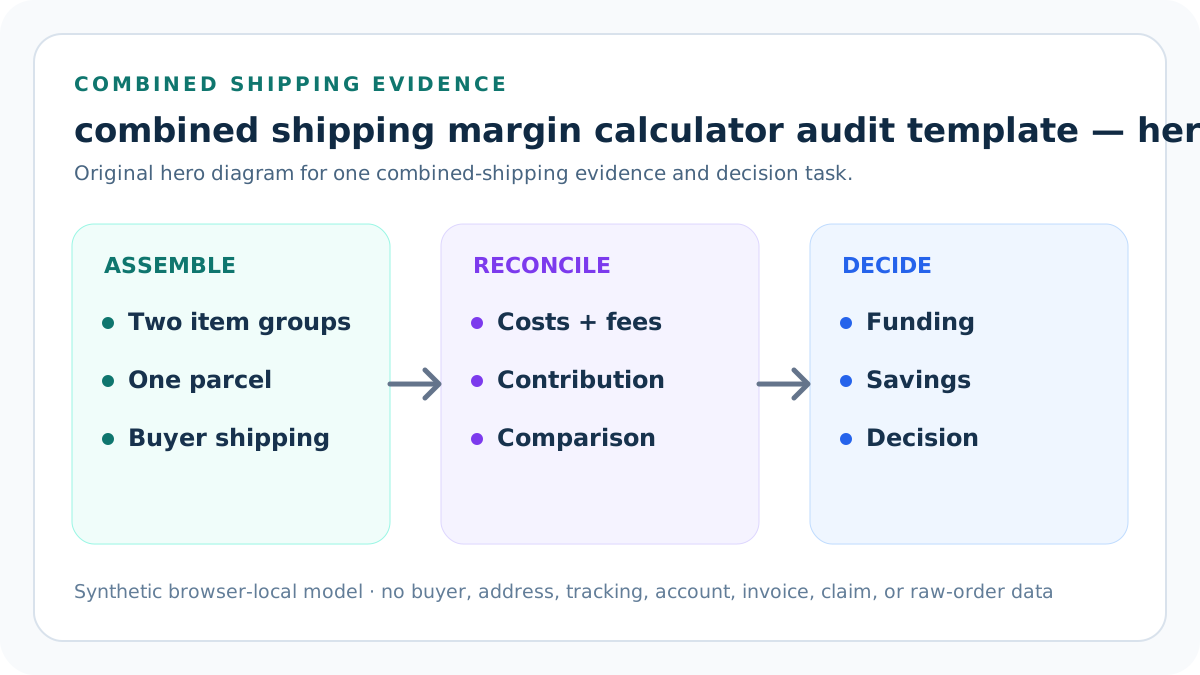
Audit order identity
Audit control 1: Verify aliases, quantities, transaction state, currency, period, and shipping collection. This assurance role requires Pass, Fail, Unknown, or Not Applicable with exact order, parcel, calculation, content, release, and live proof. Save source state, full-precision value, display value, currency or physical unit, order state, package state, reviewer, and review date.
Test the closest passing boundary and closest failure. State how a mismatch changes an independently reproducible combined-order release decision, which evidence resolves it, who owns correction, and whether the packet must be blocked, reviewed, limited, superseded, or restored.
Audit item economics
Audit control 2: Verify unit price, direct cost, product weight, cost version, and effective date by group. This assurance role requires Pass, Fail, Unknown, or Not Applicable with exact order, parcel, calculation, content, release, and live proof. Save source state, full-precision value, display value, currency or physical unit, order state, package state, reviewer, and review date.
Test the closest passing boundary and closest failure. State how a mismatch changes an independently reproducible combined-order release decision, which evidence resolves it, who owns correction, and whether the packet must be blocked, reviewed, limited, superseded, or restored.
Audit parcel identity
Audit control 3: Verify finished weight, dimensions, package, protection, service, destination class, and evidence state. This assurance role requires Pass, Fail, Unknown, or Not Applicable with exact order, parcel, calculation, content, release, and live proof. Save source state, full-precision value, display value, currency or physical unit, order state, package state, reviewer, and review date.
Test the closest passing boundary and closest failure. State how a mismatch changes an independently reproducible combined-order release decision, which evidence resolves it, who owns correction, and whether the packet must be blocked, reviewed, limited, superseded, or restored.
Audit monetary identity
Audit control 4: Recompute gross amount, all costs, fees, contribution, margin, per-unit result, funding, savings, and headroom. This assurance role requires Pass, Fail, Unknown, or Not Applicable with exact order, parcel, calculation, content, release, and live proof. Save source state, full-precision value, display value, currency or physical unit, order state, package state, reviewer, and review date.
Test the closest passing boundary and closest failure. State how a mismatch changes an independently reproducible combined-order release decision, which evidence resolves it, who owns correction, and whether the packet must be blocked, reviewed, limited, superseded, or restored.
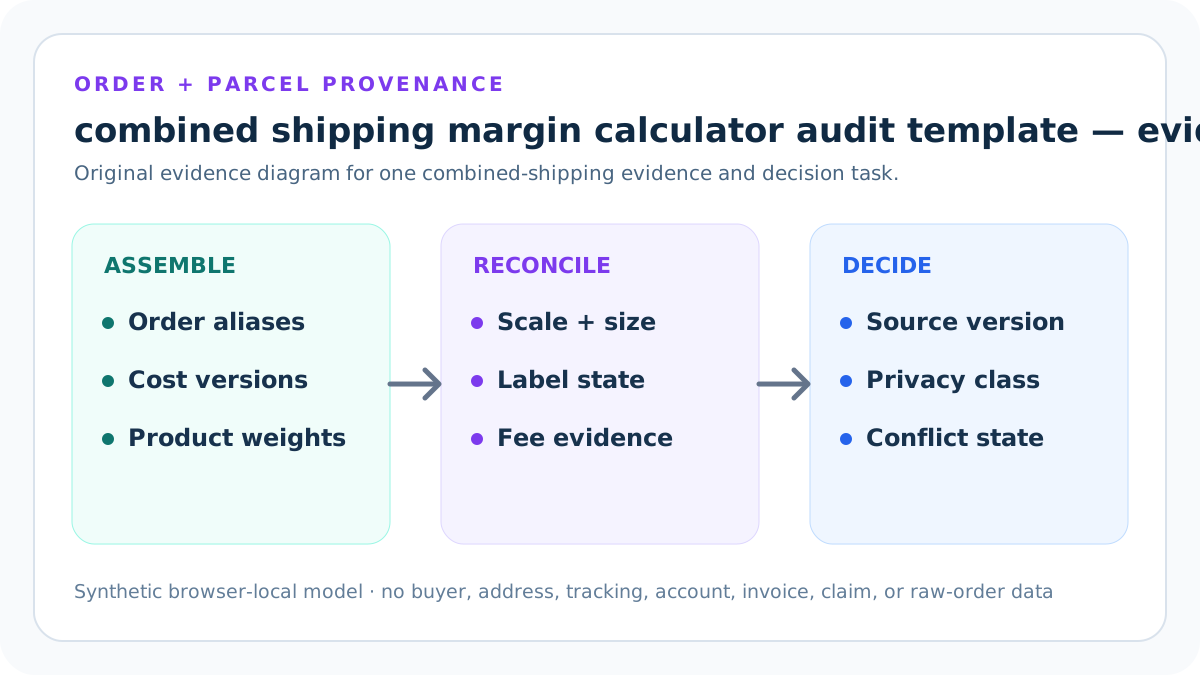
Audit comparison identity
Audit control 5: Verify both separate parcels are qualified and comparable to consolidation. This assurance role requires Pass, Fail, Unknown, or Not Applicable with exact order, parcel, calculation, content, release, and live proof. Save source state, full-precision value, display value, currency or physical unit, order state, package state, reviewer, and review date.
Test the closest passing boundary and closest failure. State how a mismatch changes an independently reproducible combined-order release decision, which evidence resolves it, who owns correction, and whether the packet must be blocked, reviewed, limited, superseded, or restored.
Audit decision precedence
Audit control 6: Prove structural failures Block before target, funding, or postage Review. This assurance role requires Pass, Fail, Unknown, or Not Applicable with exact order, parcel, calculation, content, release, and live proof. Save source state, full-precision value, display value, currency or physical unit, order state, package state, reviewer, and review date.
Test the closest passing boundary and closest failure. State how a mismatch changes an independently reproducible combined-order release decision, which evidence resolves it, who owns correction, and whether the packet must be blocked, reviewed, limited, superseded, or restored.
Audit privacy and accessibility
Audit control 7: Check public artifacts, keyboard, mobile, contrast, alt text, links, and protected data boundaries. This assurance role requires Pass, Fail, Unknown, or Not Applicable with exact order, parcel, calculation, content, release, and live proof. Save source state, full-precision value, display value, currency or physical unit, order state, package state, reviewer, and review date.
Test the closest passing boundary and closest failure. State how a mismatch changes an independently reproducible combined-order release decision, which evidence resolves it, who owns correction, and whether the packet must be blocked, reviewed, limited, superseded, or restored.
Audit release and rollback
Audit control 8: Check backups, release mode, canonical, schema, index state, sitemap, purge, live fixtures, correction, and restore. This assurance role requires Pass, Fail, Unknown, or Not Applicable with exact order, parcel, calculation, content, release, and live proof. Save source state, full-precision value, display value, currency or physical unit, order state, package state, reviewer, and review date.
Test the closest passing boundary and closest failure. State how a mismatch changes an independently reproducible combined-order release decision, which evidence resolves it, who owns correction, and whether the packet must be blocked, reviewed, limited, superseded, or restored.
Use the combined-shipping audit worksheet at one combined-order grain
Open the calculator after the combined-shipping audit worksheet identifies seller alias, two item-group aliases, whole quantities, prices, direct costs, product weights, finished parcel, buyer shipping, final postage, qualified separate-postage comparison, package and handling allocations, fee convention, three seller thresholds, real source-review date, nine evidence confirmations, currency, units, month, scope, and unresolved issues. Use only synthetic or aggregate values publicly.
Save merchandise revenue, gross buyer amount, direct cost, percentage and fixed fees, contribution, margin, per-unit result, shipping-side contribution, postage savings and rate, target headroom, summed item weight, package weight allowance and share, thresholds, confirmations, decision, and issues. Preserve the prior packet whenever evidence changes.
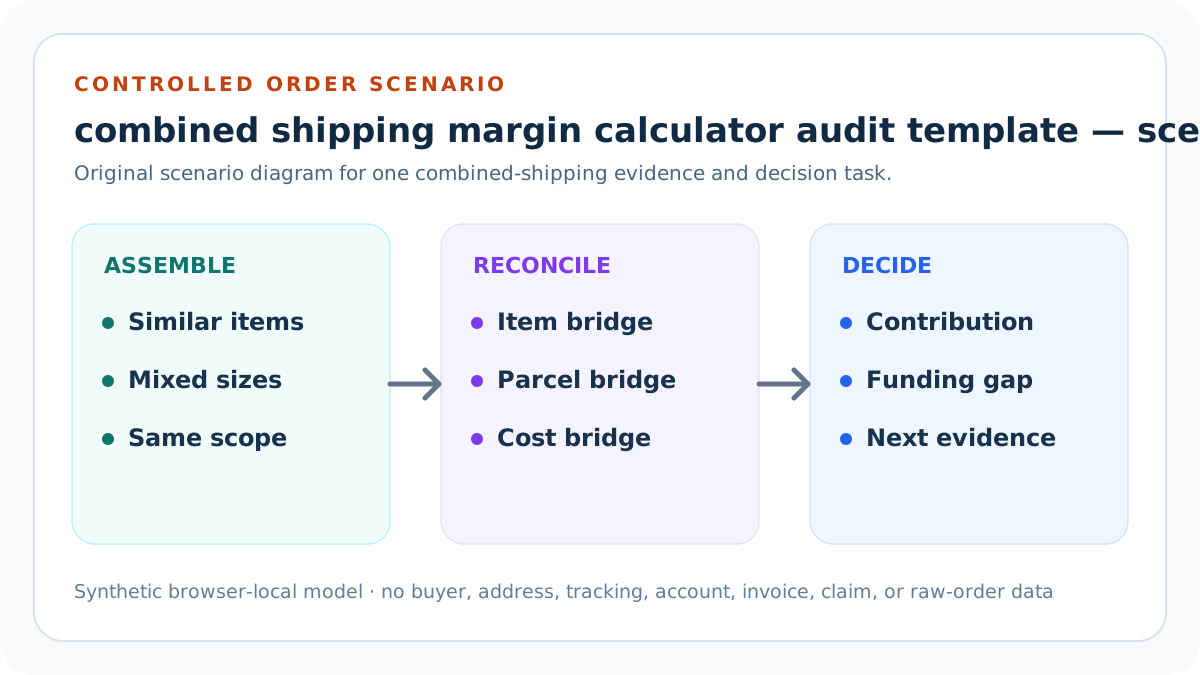
Apply evidence gates before an independently reproducible combined-order release decision
Block blank, non-finite, nonpositive, fractional-quantity, or structurally invalid evidence; negative costs or target; invalid thresholds, fee percentage, currency, units, source date, month, scope; incomplete confirmations; package weight below item weight; or declared conflicts. A favorable total cannot repair invalid structure.
After structure passes, Review contribution below target, shipping-side funding below zero, postage saving below the seller-entered minimum, or packaging-weight share above the seller-entered maximum. Ready clears only those declared gates and does not certify net profit, carrier price, package acceptance, delivery, demand, or tax treatment.
Separate physical, monetary, and counterfactual changes
Change one item quantity, price, direct cost, product weight, package weight, dimension, buyer charge, postage, package cost, handling cost, fee, separate-postage total, or target at a time. A physical change affects contribution only after evidenced currency costs change.
Record before state, isolated change, group extensions, parcel evidence, cost movement, fee interaction, contribution movement, funding movement, savings movement, decision, confidence, owner, and next evidence action. Do not blend different services or order states into one reassuring average.
Protect buyer, shipment, account, invoice, and raw-order data
Public examples are synthetic. Keep buyer names, addresses, tracking numbers, labels, payment data, credentials, carrier and marketplace account identifiers, negotiated rates, invoices, claims, disputes, messages, and raw exports outside the combined-shipping audit worksheet.
Use aliases, aggregate values, redacted pointers, and access-controlled records. An authorized reviewer should reproduce order grain, parcel identity, arithmetic, comparison, and decision without exposing personal or confidential commercial information.
Release, observe, correct, and restore the combined-shipping asset
Before release, preserve narrow local and remote backups and a rollback identifier. Run typecheck, focused and full tests, integration, build, content and duplicate audits, SEO and static-route validation, mobile and keyboard QA, image and link checks, source review, and local calculator scenarios.
After release, verify status, canonical, indexability, schema, answer blocks, images, hub discovery, strict 404, sitemap policy, events, and production behavior. Record Day 0/7/14/28 evidence and restore the prior version if formula, privacy, accessibility, routing, content, or health regresses.
Select a risk-based sample
Include similar, mixed-size, free-shipping, fragile, heavy, dimensional, upgraded, adjusted, returned, split, target-breach, and invalid-weight packets.
State the unique failure each sample can expose and freeze source, formula, content, visual, test, and release versions before inspection.
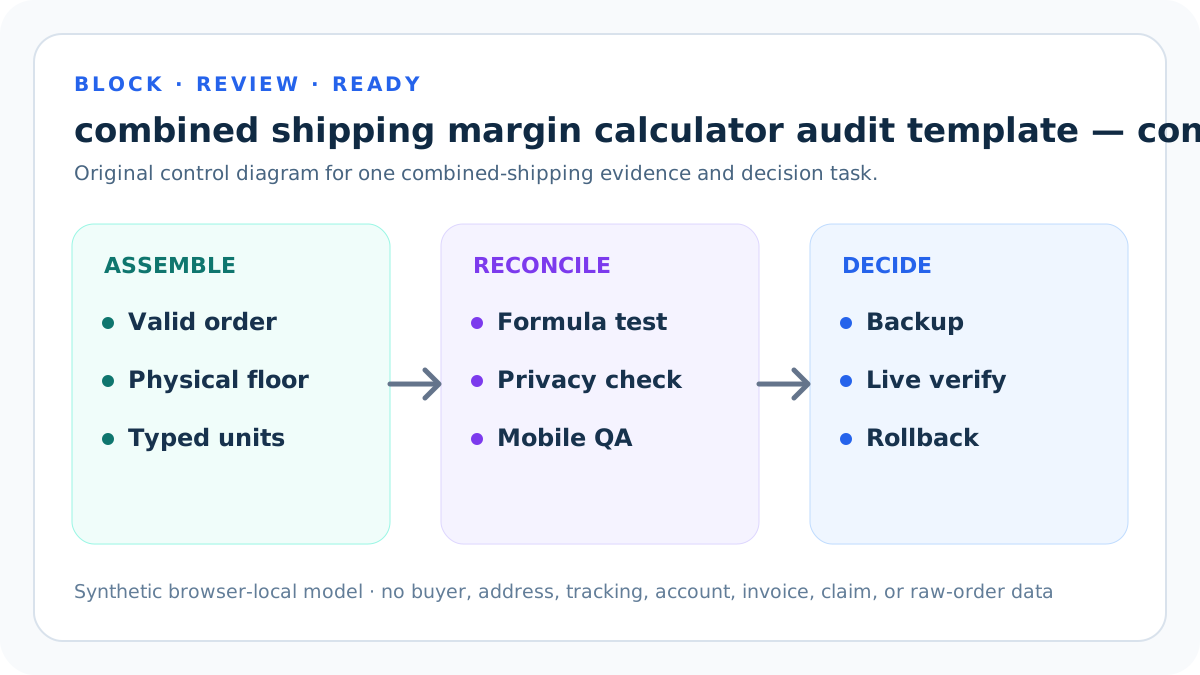
Trace one result backward and one source forward
Trace USD 35.20 backward through every cost, fee, revenue, group, parcel, and source; then trace one postage invoice forward through storage, input, output, static copy, release, correction, and close.
The two traces must reconcile without exposing buyer, address, tracking, account, invoice, credential, claim, or raw order data publicly.
Issue findings and obtain independent closure
Write condition, criterion, cause, effect, population, version, severity, containment, owner, due date, evidence requirement, and rollback implication.
Closure requires corrected source evidence, repeated focused and full checks, regenerated affected assets, live proof, and reviewer signoff independent of the correction.
Reperform the arithmetic from protected evidence
Independently extend each group quantity by price, direct cost, and weight; sum merchandise, direct cost, and item weight; rebuild gross buyer amount; calculate percentage and fixed fees; then subtract postage, package, and handling.
Recompute contribution, gross-amount margin, per-unit contribution, shipping-fee share, shipping-side contribution, saving amount and rate, target headroom, package weight allowance, and packaging-weight share. Compare full precision before display rounding and record every variance.
Inspect the counterfactual evidence symmetrically
For the combined side and each separate side, inspect package identity, service objective, destination band, seller eligibility, quote or invoice state, timestamp, currency, adjustments, refund state, and exclusions using the same checklist.
A benchmark fails if one side uses final invoiced postage while the other uses a stale retail quote, if packages cannot protect the same items, or if delivery objectives differ. Record the first failed symmetry criterion and stop the savings assertion.
Perform a public-artifact redaction challenge
Search rendered HTML, screenshots, image text, structured data, source notes, test artifacts, analytics payloads, reports, and staged distribution drafts for buyer names, addresses, tracking, order numbers, label barcodes, account identifiers, invoices, messages, and negotiated rates.
Use only synthetic values, aliases, aggregates, and protected pointers. A privacy finding is a release blocker even when calculations pass; remove the exposure, rotate affected artifacts if necessary, rebuild, and repeat the challenge before closure.
Sample completeness
Cover Ready, each Review driver, every structural Block family, and late adjustments. Deep check 1 stores order alias, item-group aliases, source versions, protected pointers, full-precision transformations, display outputs, decision, reviewer, expiry, and correction route. Another reviewer must not guess cost scope, package state, fee base, units, comparison identity, or formula signs.
Find the nearest counterexample and state why it invalidates or narrows an independently reproducible combined-order release decision. Preserve competing item, package, carrier, cost, fee, target, period, or service evidence as named scenarios instead of smoothing uncertainty into one average.
Backward trace
Reproduce one output through every formula line and protected source. Deep check 2 stores order alias, item-group aliases, source versions, protected pointers, full-precision transformations, display outputs, decision, reviewer, expiry, and correction route. Another reviewer must not guess cost scope, package state, fee base, units, comparison identity, or formula signs.
Find the nearest counterexample and state why it invalidates or narrows an independently reproducible combined-order release decision. Preserve competing item, package, carrier, cost, fee, target, period, or service evidence as named scenarios instead of smoothing uncertainty into one average.
Forward trace
Follow one source through capture, storage, calculation, publication, and correction. Deep check 3 stores order alias, item-group aliases, source versions, protected pointers, full-precision transformations, display outputs, decision, reviewer, expiry, and correction route. Another reviewer must not guess cost scope, package state, fee base, units, comparison identity, or formula signs.
Find the nearest counterexample and state why it invalidates or narrows an independently reproducible combined-order release decision. Preserve competing item, package, carrier, cost, fee, target, period, or service evidence as named scenarios instead of smoothing uncertainty into one average.
Finding quality
Require condition, criterion, cause, effect, scope, severity, owner, due date, and rollback. Deep check 4 stores order alias, item-group aliases, source versions, protected pointers, full-precision transformations, display outputs, decision, reviewer, expiry, and correction route. Another reviewer must not guess cost scope, package state, fee base, units, comparison identity, or formula signs.
Find the nearest counterexample and state why it invalidates or narrows an independently reproducible combined-order release decision. Preserve competing item, package, carrier, cost, fee, target, period, or service evidence as named scenarios instead of smoothing uncertainty into one average.
Independent closure
Require corrected evidence, repeated tests, live proof, and separate signoff. Deep check 5 stores order alias, item-group aliases, source versions, protected pointers, full-precision transformations, display outputs, decision, reviewer, expiry, and correction route. Another reviewer must not guess cost scope, package state, fee base, units, comparison identity, or formula signs.
Find the nearest counterexample and state why it invalidates or narrows an independently reproducible combined-order release decision. Preserve competing item, package, carrier, cost, fee, target, period, or service evidence as named scenarios instead of smoothing uncertainty into one average.
Sources and further reading
- Seller Profit Guard methodology: Comparable-order evidence, deterministic calculations, validation, correction, release, and rollback.
- Seller Profit Guard data privacy: Local-first boundaries for buyer, address, tracking, account, invoice, credential, claim, and raw order data.
- Etsy: How to Set Up Calculated Shipping: Official Etsy explanation reviewed 2026-07-31 for order weight, item dimensions, package preferences, buyer location, and calculated shipping.
- Etsy Fees & Payments Policy: Official Etsy policy reviewed 2026-07-31 for fee bases that can include shipping; sellers must enter the applicable current convention.
- UPS: Shipping Dimensions and Weight: Official U.S. UPS context reviewed 2026-07-31 for finished-package measurements, actual weight, dimensional weight, and billable-weight rules.
- FedEx: What Is Dimensional Weight?: Official U.S. FedEx context reviewed 2026-07-31 for package measurement, dimensional weight, and actual-weight comparison.
Related Seller Profit Guard tools
- Open the Combined Shipping Margin Calculator: Model two item groups sharing one parcel and one fee convention.
- Dimensional Weight Calculator: Test whether the combined parcel changes billable-weight exposure.
- Shipping Subsidy Calculator: Inspect shipping-side funding at one order grain.
- Bundle Margin Calculator: Keep product-bundle economics distinct from fulfillment consolidation.
- Packaging Cost per Order Calculator: Build a defensible package allocation.
- Contribution Margin Calculator: Carry evidenced order contribution into a broader decision.
- Methodology: Review evidence, privacy, formulas, tests, release, correction, and rollback.
- Combined Shipping Margin Formula and Inputs: Continue with a distinct combined-shipping formula, example, source, threshold, comparison, operating, interpretation, or audit task.
- Combined Shipping Margin Worked Example: Continue with a distinct combined-shipping formula, example, source, threshold, comparison, operating, interpretation, or audit task.
- Combined Shipping Margin for Mixed-Size Items: Continue with a distinct combined-shipping formula, example, source, threshold, comparison, operating, interpretation, or audit task.
- Combined Shipping Margin Calculator Mistakes: Continue with a distinct combined-shipping formula, example, source, threshold, comparison, operating, interpretation, or audit task.
- Combined Shipping Margin Data Sources: Continue with a distinct combined-shipping formula, example, source, threshold, comparison, operating, interpretation, or audit task.
Next step: Open the Combined Shipping Margin Calculator.
This is operational planning help, not tax, accounting, legal, financial, or platform-policy advice. Review the Terms and disclaimer, and verify current platform rules and fee assumptions before changing prices.