Variation SKU formula, inputs, and combination rules
Last updated: 2026-07-31
Written and reviewed by Seller Profit Guard Editorial Team.
Variation SKU generation takes one parent code and two mapped option-value sets, creates their Cartesian product, and joins each pair with a supported separator. Validate option labels and codes, expected row count, generated uniqueness, reserved collisions, maximum length, readability, evidence scope, and unresolved catalog conflicts.
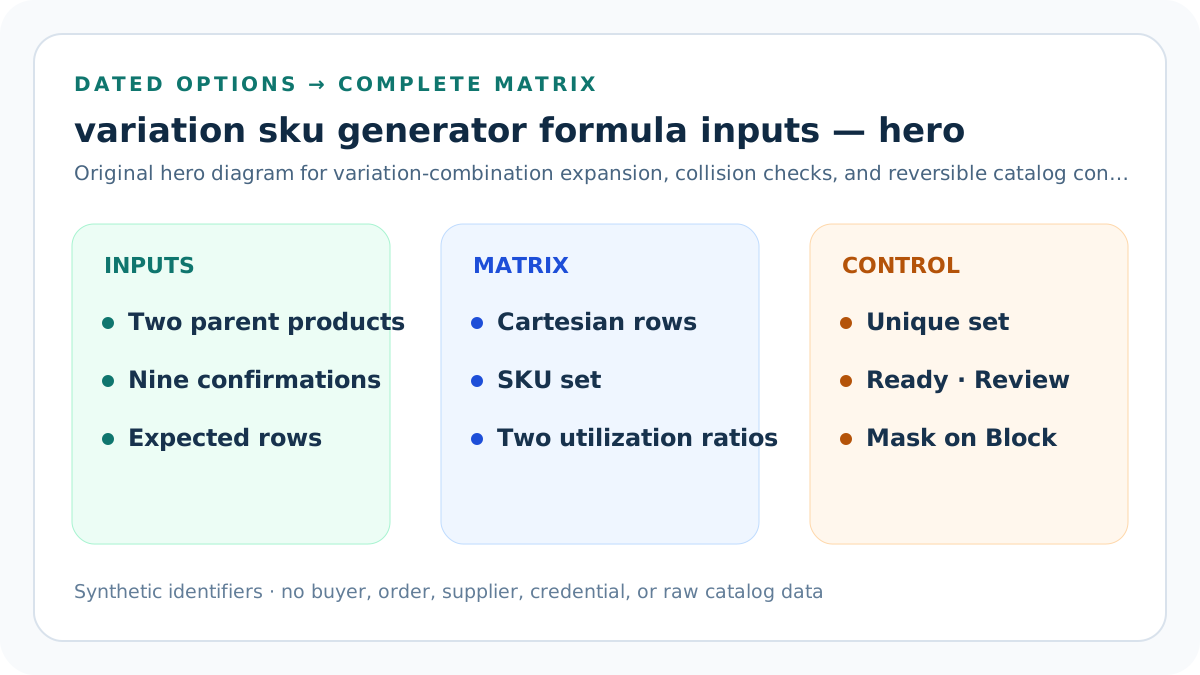
Define one parent-product grain
Confirm that every generated row belongs to one fixed product whose option pairs represent inventory variants. The variation matrix specification must retain the parent grain, option position, human value, generated code, expected combination count, source version, tested endpoint, owner, reviewer, exception state, and effective date needed for a collision-checked option-combination set.
Personalization and sale-time modifiers stay outside the matrix. For checkpoint 1, compare a valid matrix, a collision case, an excluded impossible pair, a corrected mapping, and the prior restorable set. Explain why the evidence supports only a collision-checked option-combination set, not catalog truth, inventory accuracy, platform acceptance, or migration completion.
Name two independent options
Record the first and second dimensions in the same order used by the catalog. The variation matrix specification must retain the parent grain, option position, human value, generated code, expected combination count, source version, tested endpoint, owner, reviewer, exception state, and effective date needed for a collision-checked option-combination set.
Duplicate option names block the packet. For checkpoint 2, compare a valid matrix, a collision case, an excluded impossible pair, a corrected mapping, and the prior restorable set. Explain why the evidence supports only a collision-checked option-combination set, not catalog truth, inventory accuracy, platform acceptance, or migration completion.
Map LABEL=CODE rows
Give every supported option value one human label and one alphanumeric code. The variation matrix specification must retain the parent grain, option position, human value, generated code, expected combination count, source version, tested endpoint, owner, reviewer, exception state, and effective date needed for a collision-checked option-combination set.
Missing or shared codes destroy reversibility. For checkpoint 3, compare a valid matrix, a collision case, an excluded impossible pair, a corrected mapping, and the prior restorable set. Explain why the evidence supports only a collision-checked option-combination set, not catalog truth, inventory accuracy, platform acceptance, or migration completion.
Calculate expected rows
Multiply the first option's value count by the second option's count. The variation matrix specification must retain the parent grain, option position, human value, generated code, expected combination count, source version, tested endpoint, owner, reviewer, exception state, and effective date needed for a collision-checked option-combination set.
Possible combinations still need sellability review. For checkpoint 4, compare a valid matrix, a collision case, an excluded impossible pair, a corrected mapping, and the prior restorable set. Explain why the evidence supports only a collision-checked option-combination set, not catalog truth, inventory accuracy, platform acceptance, or migration completion.
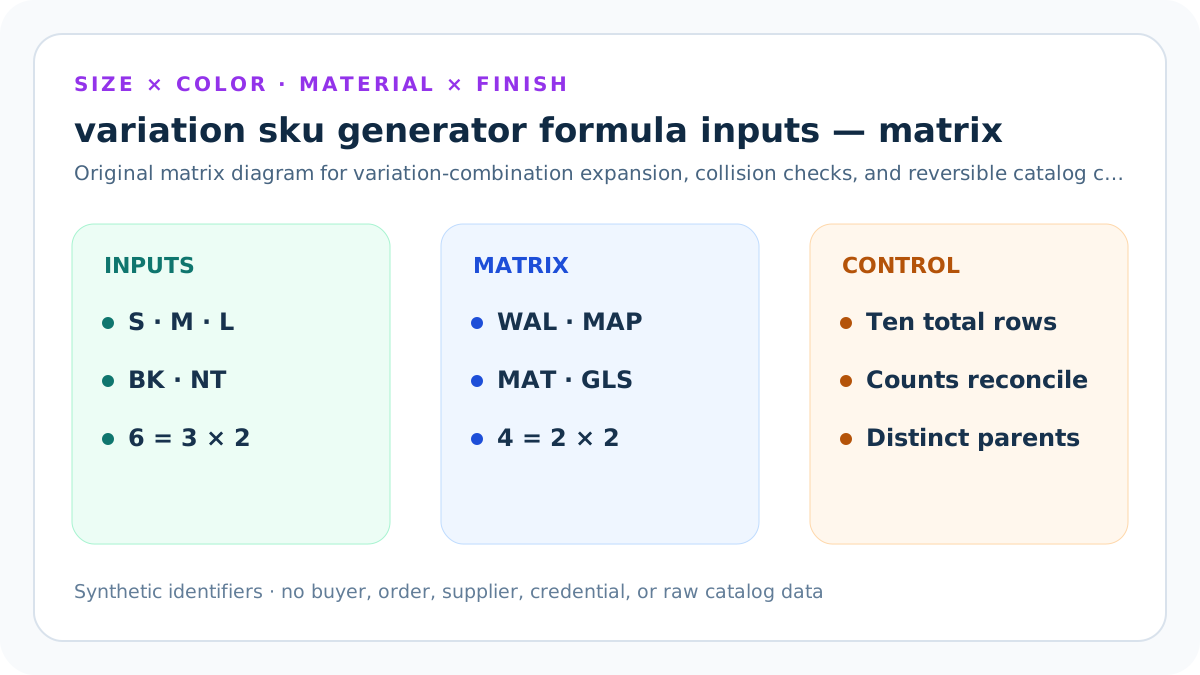
Build every identifier
Join parent, first value code, and second value code with the declared delimiter. The variation matrix specification must retain the parent grain, option position, human value, generated code, expected combination count, source version, tested endpoint, owner, reviewer, exception state, and effective date needed for a collision-checked option-combination set.
Preserve labels beside the string. For checkpoint 5, compare a valid matrix, a collision case, an excluded impossible pair, a corrected mapping, and the prior restorable set. Explain why the evidence supports only a collision-checked option-combination set, not catalog truth, inventory accuracy, platform acceptance, or migration completion.
Check the entire set
Test duplicates, reserved matches, maximum length, row ceiling, and ambiguous characters after expansion. The variation matrix specification must retain the parent grain, option position, human value, generated code, expected combination count, source version, tested endpoint, owner, reviewer, exception state, and effective date needed for a collision-checked option-combination set.
A preview row cannot represent the matrix. For checkpoint 6, compare a valid matrix, a collision case, an excluded impossible pair, a corrected mapping, and the prior restorable set. Explain why the evidence supports only a collision-checked option-combination set, not catalog truth, inventory accuracy, platform acceptance, or migration completion.
Classify the result
Block structural failures, Review readability risk, and mark Ready only when both matrices pass entered controls. The variation matrix specification must retain the parent grain, option position, human value, generated code, expected combination count, source version, tested endpoint, owner, reviewer, exception state, and effective date needed for a collision-checked option-combination set.
Ready does not create variants. For checkpoint 7, compare a valid matrix, a collision case, an excluded impossible pair, a corrected mapping, and the prior restorable set. Explain why the evidence supports only a collision-checked option-combination set, not catalog truth, inventory accuracy, platform acceptance, or migration completion.
Variation SKU Formula and Input Rules: matrix completeness control
Record option counts, expected multiplication, intentional exclusions, generated count, sellable count, and active count. Guardrail 1 declares its measurement, source, uniqueness scope, row limit, pass condition, failure owner, correction deadline, and rollback trigger before a generated set can move forward.
Unexplained gaps block bulk action. Apply the guardrail to the concrete variation matrix specification; keep fixed variants separate from modifiers, canonical identifiers separate from barcodes, and public aggregate evidence separate from private catalog rows.
Variation SKU Formula and Input Rules: collision and reservation control
Compare normalized rows within and across matrices plus active, archived, pending, reserved, and alias registries. Guardrail 2 declares its measurement, source, uniqueness scope, row limit, pass condition, failure owner, correction deadline, and rollback trigger before a generated set can move forward.
One collision is material. Apply the guardrail to the concrete variation matrix specification; keep fixed variants separate from modifiers, canonical identifiers separate from barcodes, and public aggregate evidence separate from private catalog rows.
Variation SKU Formula and Input Rules: variant relationship control
Map each generated row to parent, option labels, price, quantity, image, fulfillment, return, label, and report records. Guardrail 3 declares its measurement, source, uniqueness scope, row limit, pass condition, failure owner, correction deadline, and rollback trigger before a generated set can move forward.
A code is not the relationship. Apply the guardrail to the concrete variation matrix specification; keep fixed variants separate from modifiers, canonical identifiers separate from barcodes, and public aggregate evidence separate from private catalog rows.
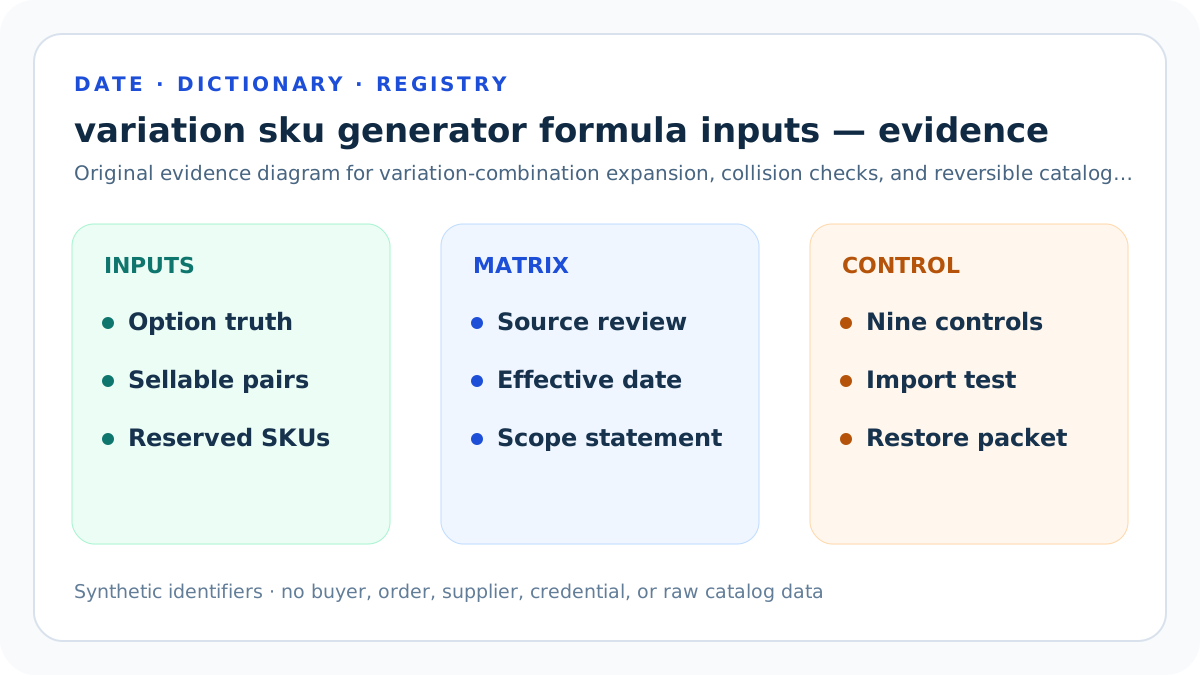
Variation SKU Formula and Input Rules: endpoint compatibility control
Test delimiters, lengths, case, imports, errors, POS, ERP, 3PL, labels, scanners, and downstream exports. Guardrail 4 declares its measurement, source, uniqueness scope, row limit, pass condition, failure owner, correction deadline, and rollback trigger before a generated set can move forward.
Use exact system versions. Apply the guardrail to the concrete variation matrix specification; keep fixed variants separate from modifiers, canonical identifiers separate from barcodes, and public aggregate evidence separate from private catalog rows.
Variation SKU Formula and Input Rules: privacy and recovery control
Keep raw catalogs private, publish aggregates, retain the original export, crosswalk, approval, stop rule, and restore packet. Guardrail 5 declares its measurement, source, uniqueness scope, row limit, pass condition, failure owner, correction deadline, and rollback trigger before a generated set can move forward.
Never expose buyer or credential data. Apply the guardrail to the concrete variation matrix specification; keep fixed variants separate from modifiers, canonical identifiers separate from barcodes, and public aggregate evidence separate from private catalog rows.
Define one parent-product grain: combination exercise 1
Regenerate the relevant rows using the six-row TEE size-color matrix and four-row PEN material-finish matrix. Confirm that every generated row belongs to one fixed product whose option pairs represent inventory variants. Change exactly one input, recalculate the Cartesian product, list every affected identifier, and record the expected Block, Review, or Ready result.
Personalization and sale-time modifiers stay outside the matrix. Exercise 1 records the source-review date, dictionary-effective date, expected sellable-row count, one of the nine confirmations, and both length and matrix utilization for this exact “Define one parent-product grain” decision. Include a hard failure whose generated rows are masked, a corrected dictionary, and the external platform, inventory, image, fulfillment, return, reporting, and restore evidence still required.
Name two independent options: combination exercise 2
Regenerate the relevant rows using the six-row TEE size-color matrix and four-row PEN material-finish matrix. Record the first and second dimensions in the same order used by the catalog. Change exactly one input, recalculate the Cartesian product, list every affected identifier, and record the expected Block, Review, or Ready result.
Duplicate option names block the packet. Exercise 2 records the source-review date, dictionary-effective date, expected sellable-row count, one of the nine confirmations, and both length and matrix utilization for this exact “Name two independent options” decision. Include a hard failure whose generated rows are masked, a corrected dictionary, and the external platform, inventory, image, fulfillment, return, reporting, and restore evidence still required.
Map LABEL=CODE rows: combination exercise 3
Regenerate the relevant rows using the six-row TEE size-color matrix and four-row PEN material-finish matrix. Give every supported option value one human label and one alphanumeric code. Change exactly one input, recalculate the Cartesian product, list every affected identifier, and record the expected Block, Review, or Ready result.
Missing or shared codes destroy reversibility. Exercise 3 records the source-review date, dictionary-effective date, expected sellable-row count, one of the nine confirmations, and both length and matrix utilization for this exact “Map LABEL=CODE rows” decision. Include a hard failure whose generated rows are masked, a corrected dictionary, and the external platform, inventory, image, fulfillment, return, reporting, and restore evidence still required.
Calculate expected rows: combination exercise 4
Regenerate the relevant rows using the six-row TEE size-color matrix and four-row PEN material-finish matrix. Multiply the first option's value count by the second option's count. Change exactly one input, recalculate the Cartesian product, list every affected identifier, and record the expected Block, Review, or Ready result.
Possible combinations still need sellability review. Exercise 4 records the source-review date, dictionary-effective date, expected sellable-row count, one of the nine confirmations, and both length and matrix utilization for this exact “Calculate expected rows” decision. Include a hard failure whose generated rows are masked, a corrected dictionary, and the external platform, inventory, image, fulfillment, return, reporting, and restore evidence still required.
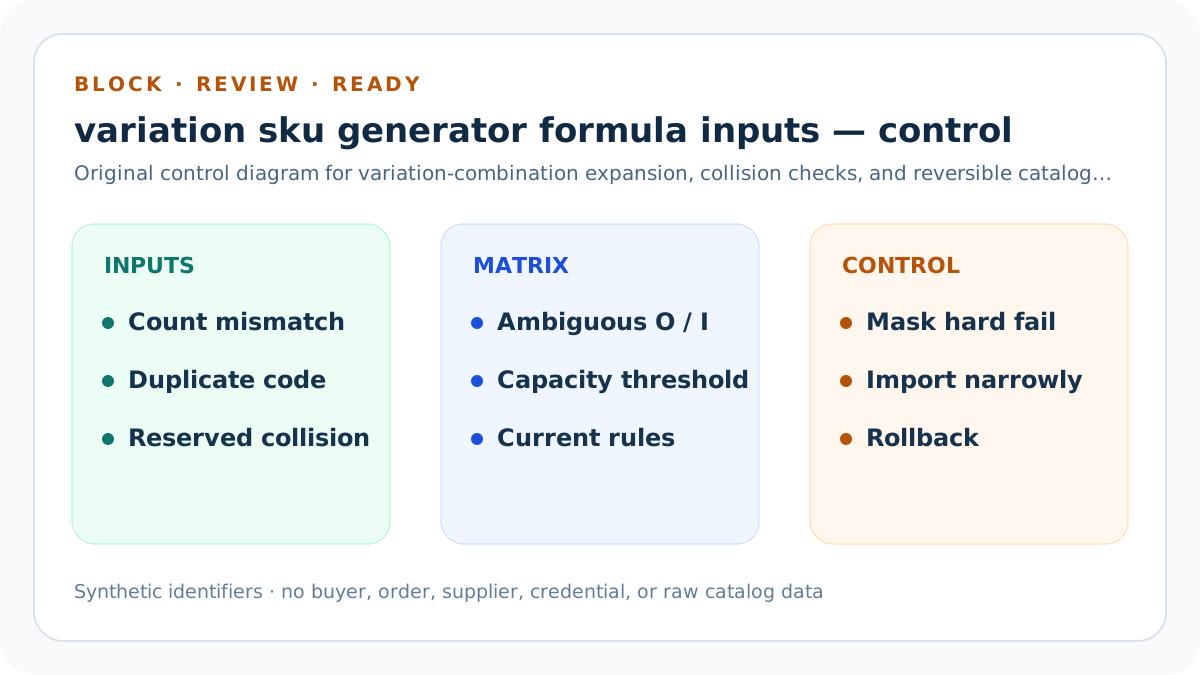
Build every identifier: combination exercise 5
Regenerate the relevant rows using the six-row TEE size-color matrix and four-row PEN material-finish matrix. Join parent, first value code, and second value code with the declared delimiter. Change exactly one input, recalculate the Cartesian product, list every affected identifier, and record the expected Block, Review, or Ready result.
Preserve labels beside the string. Exercise 5 records the source-review date, dictionary-effective date, expected sellable-row count, one of the nine confirmations, and both length and matrix utilization for this exact “Build every identifier” decision. Include a hard failure whose generated rows are masked, a corrected dictionary, and the external platform, inventory, image, fulfillment, return, reporting, and restore evidence still required.
Check the entire set: combination exercise 6
Regenerate the relevant rows using the six-row TEE size-color matrix and four-row PEN material-finish matrix. Test duplicates, reserved matches, maximum length, row ceiling, and ambiguous characters after expansion. Change exactly one input, recalculate the Cartesian product, list every affected identifier, and record the expected Block, Review, or Ready result.
A preview row cannot represent the matrix. Exercise 6 records the source-review date, dictionary-effective date, expected sellable-row count, one of the nine confirmations, and both length and matrix utilization for this exact “Check the entire set” decision. Include a hard failure whose generated rows are masked, a corrected dictionary, and the external platform, inventory, image, fulfillment, return, reporting, and restore evidence still required.
Classify the result: combination exercise 7
Regenerate the relevant rows using the six-row TEE size-color matrix and four-row PEN material-finish matrix. Block structural failures, Review readability risk, and mark Ready only when both matrices pass entered controls. Change exactly one input, recalculate the Cartesian product, list every affected identifier, and record the expected Block, Review, or Ready result.
Ready does not create variants. Exercise 7 records the source-review date, dictionary-effective date, expected sellable-row count, one of the nine confirmations, and both length and matrix utilization for this exact “Classify the result” decision. Include a hard failure whose generated rows are masked, a corrected dictionary, and the external platform, inventory, image, fulfillment, return, reporting, and restore evidence still required.
Evidence boundary for a collision-checked option-combination set
The generated packet can demonstrate option-value multiplication, deterministic row construction, local duplicate detection, entered reserved-value comparison, declared length checks, and a reproducible status under synthetic inputs.
It cannot demonstrate that every variation exists or is sellable, that option claims and images are accurate, that price and stock are reconciled, that a platform or integration accepts the values, that a barcode is valid, or that historical orders survive migration.
Release, monitor, and restore the variation matrix specification
Block malformed or duplicate option mappings, generated collisions, reserved matches, fake dates, sellable-row mismatches, incomplete nine-control evidence, private exposure, and open conflicts, then mask derived rows. Review readability ambiguity or seller-set capacity thresholds. Ready clears only the two distinct local matrices.
Before public indexing or private import, retain source and rollback artifacts, run typecheck, tests, build, content, similarity, SEO, image, link, mobile, strict-404, deployment, and live checks, then measure delayed discovery and tool use without claiming same-period causality.
Variation SKU Formula and Input Rules: concrete working record
Record the formula signature as PARENT + separator + OPTION_ONE_CODE + separator + OPTION_TWO_CODE. Beside it, store the two option names, ordered LABEL=CODE dictionaries, first count, second count, expected product, generated count, longest row, maximum length, row ceiling, normalization rule, reserved-registry date, evidence period, scope, open-conflict count, and decision. A reviewer should be able to rebuild the same set from those fields without guessing segment order. Test an empty mapping, duplicate code, repeated label, reserved match, excessive parent, excessive row product, and O or I ambiguity separately. Preserve excluded pairs outside the generator and explain whether they are impossible, discontinued, temporarily unavailable, or merely not reviewed.
Sources and further reading
- Seller Profit Guard methodology: Evidence versions, formulas, privacy, correction, release, and rollback.
- Seller Profit Guard data privacy: Local-first boundaries for catalog, buyer, order, supplier, credential, and raw-record data.
- Shopify Help: Variants: Official definition of variants as combinations of option values with variant-level inventory context.
- Shopify Help: Using SKUs to manage your inventory: Official SKU uniqueness, character, length, consistency, growth, fulfillment, and barcode boundaries.
- Shopify Help: Adding variants: Reviewed July 31, 2026: up to three options and 2,048 variants per product, with theme, app, channel, media, and legacy-tool caveats above 100 variants.
- Etsy Help: How to Add Variations for Your Listings: Reviewed July 31, 2026: up to two variation attributes, with price, quantity, processing profile, photo, and SKU controls.
- Etsy Help: How to Use SKU for Your Inventory: Official SKU purpose, shop search, multi-channel, short-code, ambiguous-character, and symbol guidance.
- Square Support: Create and edit item options and variations: Reviewed July 31, 2026: reusable option sets can generate all combinations and each variation can carry cost, price, and SKU.
- Square Support: Bulk import items: Official variation-level SKU uniqueness and pre-import export guidance.
- Shopify Help: Exporting products: Official product-export workflow for a private pre-change catalog snapshot.
Related Seller Profit Guard tools
- Variation SKU Generator: Expand two option sets and collision-check every generated row.
- SKU Naming Generator: Design the canonical naming architecture used by each matrix.
- Etsy Variation Naming Checker: Review buyer-facing option labels separately.
- Etsy Photo Coverage Checklist: Review visible option-image relationships.
- CSV Import Validator: Review a redacted structure before private import.
- Methodology: Review evidence, formulas, privacy, correction, release, and rollback.
- Data Privacy: Protect catalog, supplier, buyer, order, credential, and raw-record data.
- Variation SKU Worked Example: Size and Color: Expand three sizes and two colors into six traceable T-shirt SKUs, then verify counts, decoding, length, uniqueness, and reserved values.
- Variation SKU Sets for Material and Finish: Generate and review four pen variants from walnut or maple materials crossed with matte or gloss finishes and one parent code.
- Variation SKU Collision Mistakes and Fixes: Correct duplicate option codes, incomplete matrices, impossible pairs, overlong rows, retired collisions, segment drift, and unsafe imports.
- Variation SKU Evidence and Data Sources: Source parent products, options, value dictionaries, existing identifiers, platform constraints, operational mappings, and migration evidence.
- Variation SKU Acceptance and Import Gates: Separate option completeness, row-count, uniqueness, reserved, length, readability, sellability, integration, and rollback thresholds.
- Variation SKU Matrices: Options Compared: Compare a six-row size-color matrix with a four-row material-finish matrix at the same parent, mapping, length, and evidence grain.
- Weekly Variation SKU Control Routine: Operate a repeatable review for parent changes, option dictionaries, matrix counts, collisions, mappings, imports, exceptions, and restoration.
- How to Interpret Variation SKU Sets: Read combination counts, generated identifiers, collisions, length, reserved checks, and status without claiming catalog or import proof.
- Variation SKU Audit and Change Log Template: Audit parents, option dictionaries, combination counts, generated rows, collisions, mappings, operational tests, migration, and restoration.
Next step: Open Seller Profit Guard.
This is operational planning help, not tax, accounting, legal, financial, or platform-policy advice. Review the Terms and disclaimer, and verify current platform rules and fee assumptions before changing prices.