How to interpret stockout cost without false precision
Last updated: 2026-07-31
Written and reviewed by Seller Profit Guard Editorial Team.
Interpret stockout cost as a bounded probability-weighted operating estimate. Affected demand is not proven lost sales, substitution and recovery depend on declared evidence, and per-unit contribution is not retail price. Focus on source lineage, sensitivity, threshold headroom, duration, location, competing explanations, and actual-versus-estimated monitoring before changing inventory policy.
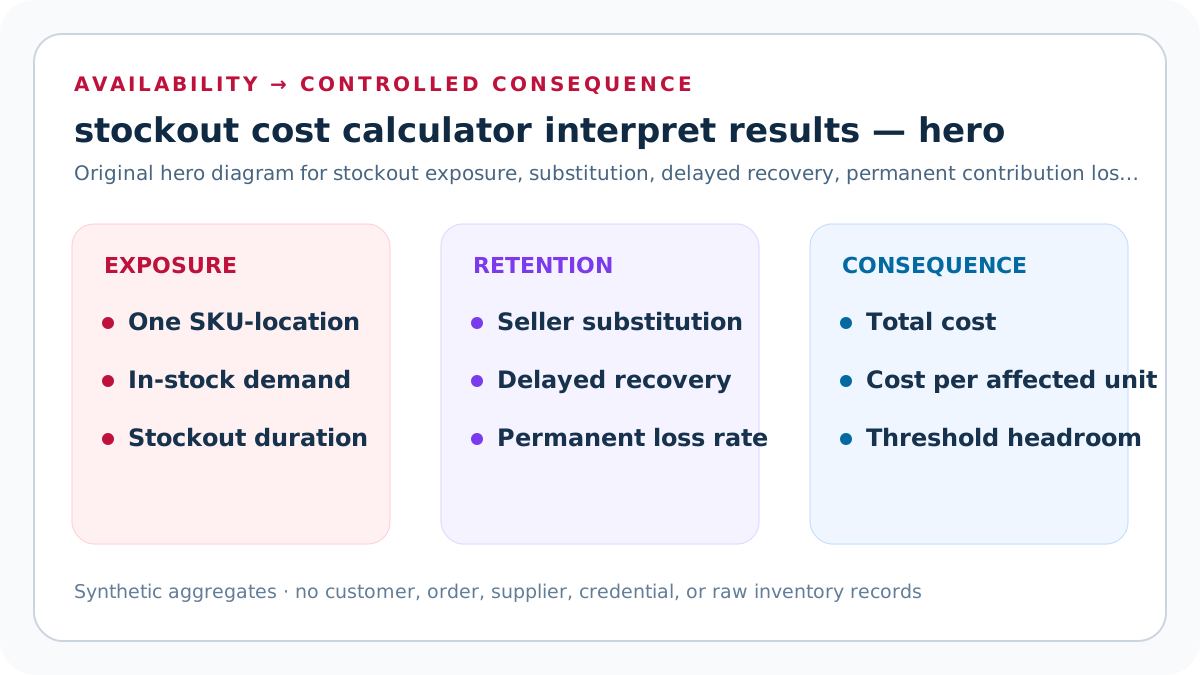
Read affected demand
Treat it as comparable-demand exposure, not observed lost sales. The stockout interpretation memo records source, location, availability rule, period, unit, currency, transformation, timestamp, owner, reviewer, exception, and prior accepted value needed for a decision-safe reading.
State the baseline. At checkpoint 1, reperform both fixtures, identify the changed stockout-cost term, and state which inventory, purchasing, accounting, customer, policy, or privacy conclusion remains outside the calculator.
Read substitution
Confirm the alternative retains contribution inside the seller boundary. The stockout interpretation memo records source, location, availability rule, period, unit, currency, transformation, timestamp, owner, reviewer, exception, and prior accepted value needed for a decision-safe reading.
Product mix can change. At checkpoint 2, reperform both fixtures, identify the changed stockout-cost term, and state which inventory, purchasing, accounting, customer, policy, or privacy conclusion remains outside the calculator.
Read delayed recovery
Use expected values and cohort evidence without identity exposure. The stockout interpretation memo records source, location, availability rule, period, unit, currency, transformation, timestamp, owner, reviewer, exception, and prior accepted value needed for a decision-safe reading.
Later timing is not proof. At checkpoint 3, reperform both fixtures, identify the changed stockout-cost term, and state which inventory, purchasing, accounting, customer, policy, or privacy conclusion remains outside the calculator.
Read permanent loss
Recognize residual units as probability-weighted. The stockout interpretation memo records source, location, availability rule, period, unit, currency, transformation, timestamp, owner, reviewer, exception, and prior accepted value needed for a decision-safe reading.
Do not add lifetime value. At checkpoint 4, reperform both fixtures, identify the changed stockout-cost term, and state which inventory, purchasing, accounting, customer, policy, or privacy conclusion remains outside the calculator.
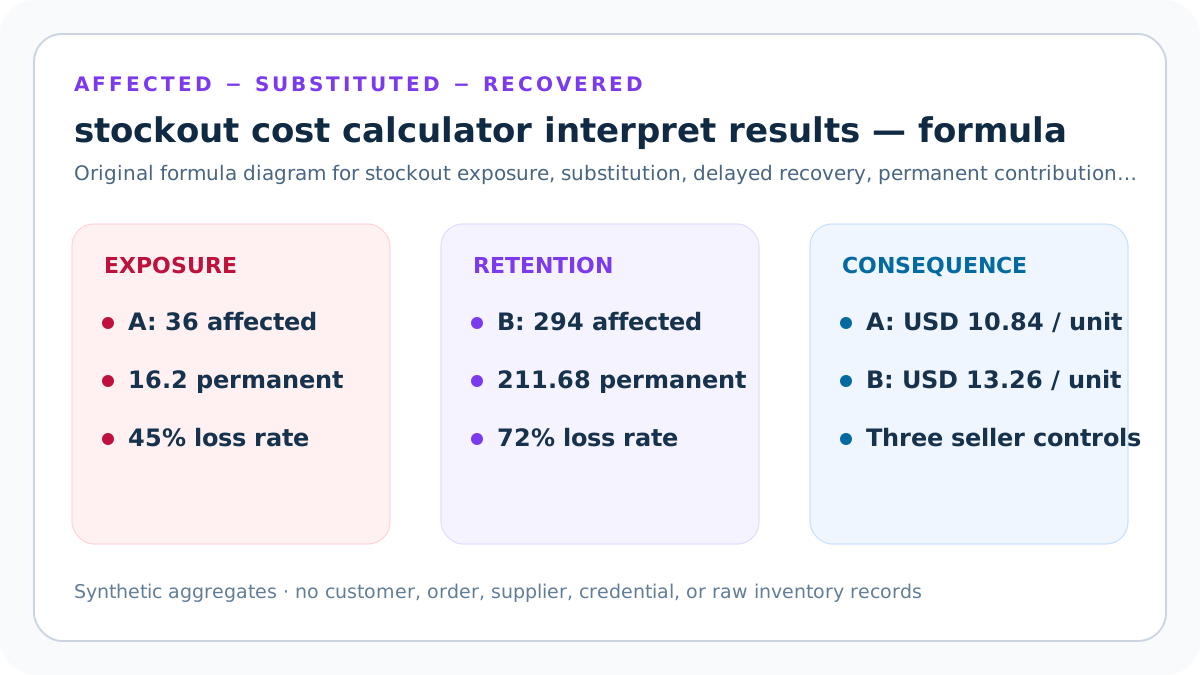
Read contribution loss
Confirm the per-unit cost dictionary and period. The stockout interpretation memo records source, location, availability rule, period, unit, currency, transformation, timestamp, owner, reviewer, exception, and prior accepted value needed for a decision-safe reading.
Retail value is different. At checkpoint 5, reperform both fixtures, identify the changed stockout-cost term, and state which inventory, purchasing, accounting, customer, policy, or privacy conclusion remains outside the calculator.
Read response costs
Separate unit-variable and fixed amounts. The stockout interpretation memo records source, location, availability rule, period, unit, currency, transformation, timestamp, owner, reviewer, exception, and prior accepted value needed for a decision-safe reading.
Check duplicates. At checkpoint 6, reperform both fixtures, identify the changed stockout-cost term, and state which inventory, purchasing, accounting, customer, policy, or privacy conclusion remains outside the calculator.
Read cost per day
Use it for normalized review, not as a causal rate. The stockout interpretation memo records source, location, availability rule, period, unit, currency, transformation, timestamp, owner, reviewer, exception, and prior accepted value needed for a decision-safe reading.
Long outages can change demand. At checkpoint 7, reperform both fixtures, identify the changed stockout-cost term, and state which inventory, purchasing, accounting, customer, policy, or privacy conclusion remains outside the calculator.
Read threshold status
Block, Review, and Ready describe worksheet controls only. The stockout interpretation memo records source, location, availability rule, period, unit, currency, transformation, timestamp, owner, reviewer, exception, and prior accepted value needed for a decision-safe reading.
They do not authorize action. At checkpoint 8, reperform both fixtures, identify the changed stockout-cost term, and state which inventory, purchasing, accounting, customer, policy, or privacy conclusion remains outside the calculator.
Read sensitivity
Identify which assumptions can reverse the classification. The stockout interpretation memo records source, location, availability rule, period, unit, currency, transformation, timestamp, owner, reviewer, exception, and prior accepted value needed for a decision-safe reading.
Small headroom is fragile. At checkpoint 9, reperform both fixtures, identify the changed stockout-cost term, and state which inventory, purchasing, accounting, customer, policy, or privacy conclusion remains outside the calculator.
Read actual outcomes
Compare restored availability and realized aggregates with the accepted scenario. The stockout interpretation memo records source, location, availability rule, period, unit, currency, transformation, timestamp, owner, reviewer, exception, and prior accepted value needed for a decision-safe reading.
Avoid unsupported causality. At checkpoint 10, reperform both fixtures, identify the changed stockout-cost term, and state which inventory, purchasing, accounting, customer, policy, or privacy conclusion remains outside the calculator.
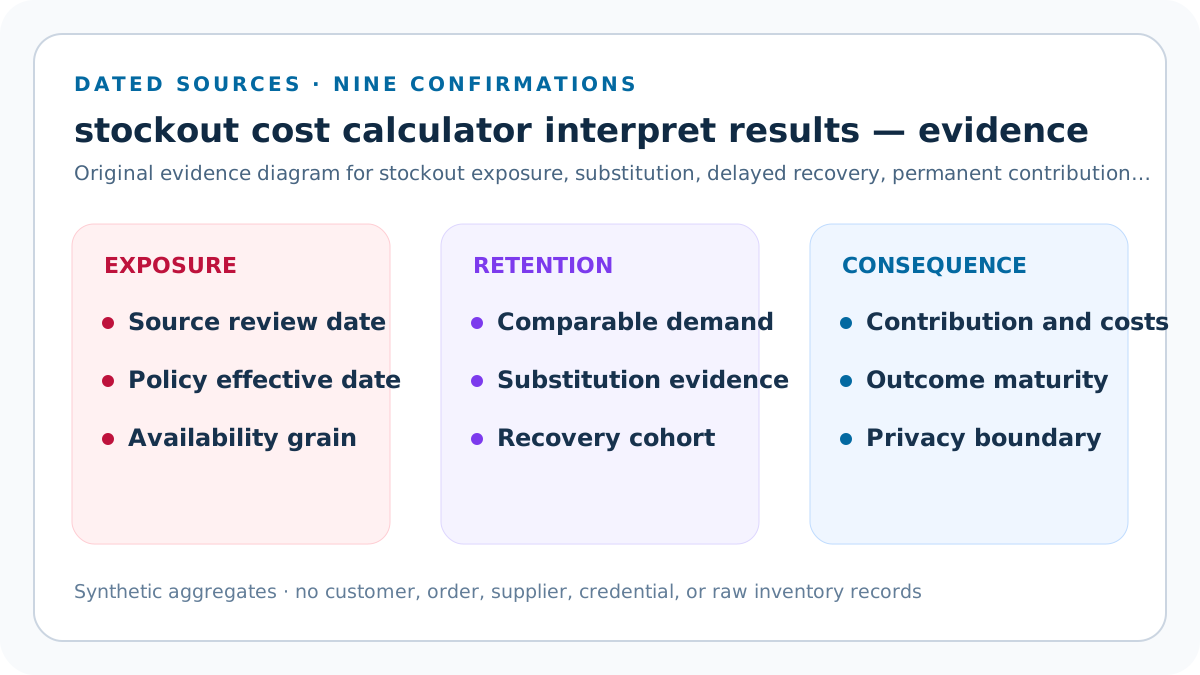
Interpret Stockout Cost Results: availability integrity control
Keep one SKU-location, sellability state, daily boundary, channel, and reason code. Control 1 defines a pass condition, evidence owner, independent reviewer, correction deadline, sensitivity range, monitoring signal, stop condition, and restoration trigger for a decision-safe reading.
False stockouts block. Apply it while keeping affected demand, substitution, delayed recovery, permanent loss, contribution, response costs, threshold, and approval authority separate.
Interpret Stockout Cost Results: demand and recovery lineage control
Record comparable in-stock demand, substitution scope, delayed-recovery rule, and evidence window. Control 2 defines a pass condition, evidence owner, independent reviewer, correction deadline, sensitivity range, monitoring signal, stop condition, and restoration trigger for a decision-safe reading.
Unsupported rates review. Apply it while keeping affected demand, substitution, delayed recovery, permanent loss, contribution, response costs, threshold, and approval authority separate.
Interpret Stockout Cost Results: contribution and cost separation control
Use one contribution dictionary and map recovery, remediation, and mitigation once. Control 3 defines a pass condition, evidence owner, independent reviewer, correction deadline, sensitivity range, monitoring signal, stop condition, and restoration trigger for a decision-safe reading.
Duplicates block. Apply it while keeping affected demand, substitution, delayed recovery, permanent loss, contribution, response costs, threshold, and approval authority separate.
Interpret Stockout Cost Results: three seller controls control
Compare total cost, permanent-loss rate, and comparable-demand days with three independently entered thresholds. Control 4 defines a pass condition, evidence owner, independent reviewer, correction deadline, sensitivity range, monitoring signal, stop condition, and restoration trigger for a decision-safe reading.
One passing control cannot override another. Apply it while keeping affected demand, substitution, delayed recovery, permanent loss, contribution, response costs, threshold, and approval authority separate.
Interpret Stockout Cost Results: dated evidence governance control
Record real source-review and policy-effective dates, with the policy no later than the reviewed evidence. Control 5 defines a pass condition, evidence owner, independent reviewer, correction deadline, sensitivity range, monitoring signal, stop condition, and restoration trigger for a decision-safe reading.
Impossible or reversed dates block. Apply it while keeping affected demand, substitution, delayed recovery, permanent loss, contribution, response costs, threshold, and approval authority separate.
Interpret Stockout Cost Results: nine confirmations control
Confirm availability grain, demand, substitution, delayed recovery, contribution, response costs, outcome maturity, privacy, and planning boundaries. Control 6 defines a pass condition, evidence owner, independent reviewer, correction deadline, sensitivity range, monitoring signal, stop condition, and restoration trigger for a decision-safe reading.
Any missing confirmation blocks. Apply it while keeping affected demand, substitution, delayed recovery, permanent loss, contribution, response costs, threshold, and approval authority separate.
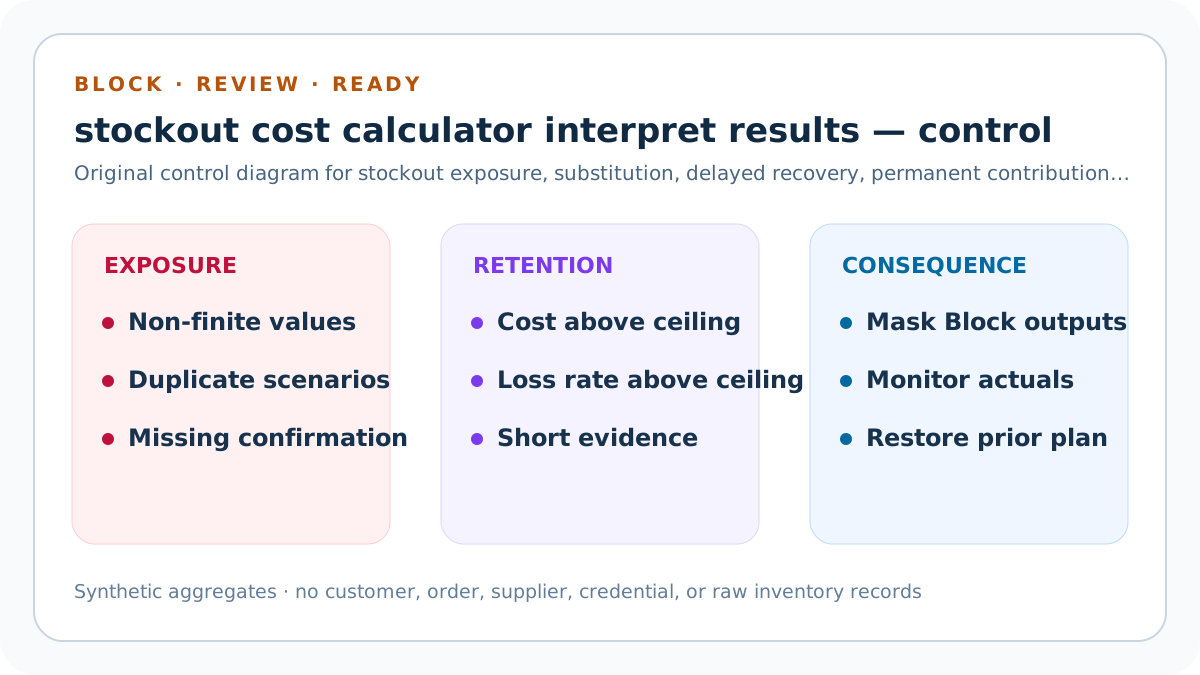
Interpret Stockout Cost Results: distinct scenarios control
Change at least one demand, duration, multiplier, recovery, contribution, response-cost, or evidence assumption between cases. Control 7 defines a pass condition, evidence owner, independent reviewer, correction deadline, sensitivity range, monitoring signal, stop condition, and restoration trigger for a decision-safe reading.
A copied scenario is not a stress test. Apply it while keeping affected demand, substitution, delayed recovery, permanent loss, contribution, response costs, threshold, and approval authority separate.
Interpret Stockout Cost Results: output masking control
Mask derived units, money, rates, per-unit values, and threshold gaps whenever structural validation returns Block. Control 8 defines a pass condition, evidence owner, independent reviewer, correction deadline, sensitivity range, monitoring signal, stop condition, and restoration trigger for a decision-safe reading.
Never use partial invalid arithmetic. Apply it while keeping affected demand, substitution, delayed recovery, permanent loss, contribution, response costs, threshold, and approval authority separate.
Interpret Stockout Cost Results: decision boundary control
Separate consequence estimation from forecasting, safety stock, reorder point, quantity, purchasing, accounting, and customer-value claims. Control 9 defines a pass condition, evidence owner, independent reviewer, correction deadline, sensitivity range, monitoring signal, stop condition, and restoration trigger for a decision-safe reading.
Arithmetic cannot authorize. Apply it while keeping affected demand, substitution, delayed recovery, permanent loss, contribution, response costs, threshold, and approval authority separate.
Interpret Stockout Cost Results: privacy and restoration control
Use aggregates, protect source rows, monitor actuals, retain prior settings, and define rollback. Control 10 defines a pass condition, evidence owner, independent reviewer, correction deadline, sensitivity range, monitoring signal, stop condition, and restoration trigger for a decision-safe reading.
Public buyer data is prohibited. Apply it while keeping affected demand, substitution, delayed recovery, permanent loss, contribution, response costs, threshold, and approval authority separate.
Read affected demand: stockout lab 1
Recalculate the relevant outputs from both fixtures. Treat it as comparable-demand exposure, not observed lost sales. Change one input only, preserve the remaining scope and cost assumptions, and record affected units, permanent units, lost contribution, response costs, total cost, cost per day, and status.
State the baseline. Test low, base, and high demand, duration, substitution, recovery, contribution, and cost values. Explain the dominant driver and protected evidence still required before any operational action.
Read substitution: stockout lab 2
Recalculate the relevant outputs from both fixtures. Confirm the alternative retains contribution inside the seller boundary. Change one input only, preserve the remaining scope and cost assumptions, and record affected units, permanent units, lost contribution, response costs, total cost, cost per day, and status.
Product mix can change. Test low, base, and high demand, duration, substitution, recovery, contribution, and cost values. Explain the dominant driver and protected evidence still required before any operational action.
Read delayed recovery: stockout lab 3
Recalculate the relevant outputs from both fixtures. Use expected values and cohort evidence without identity exposure. Change one input only, preserve the remaining scope and cost assumptions, and record affected units, permanent units, lost contribution, response costs, total cost, cost per day, and status.
Later timing is not proof. Test low, base, and high demand, duration, substitution, recovery, contribution, and cost values. Explain the dominant driver and protected evidence still required before any operational action.
Read permanent loss: stockout lab 4
Recalculate the relevant outputs from both fixtures. Recognize residual units as probability-weighted. Change one input only, preserve the remaining scope and cost assumptions, and record affected units, permanent units, lost contribution, response costs, total cost, cost per day, and status.
Do not add lifetime value. Test low, base, and high demand, duration, substitution, recovery, contribution, and cost values. Explain the dominant driver and protected evidence still required before any operational action.
Read contribution loss: stockout lab 5
Recalculate the relevant outputs from both fixtures. Confirm the per-unit cost dictionary and period. Change one input only, preserve the remaining scope and cost assumptions, and record affected units, permanent units, lost contribution, response costs, total cost, cost per day, and status.
Retail value is different. Test low, base, and high demand, duration, substitution, recovery, contribution, and cost values. Explain the dominant driver and protected evidence still required before any operational action.
Read response costs: stockout lab 6
Recalculate the relevant outputs from both fixtures. Separate unit-variable and fixed amounts. Change one input only, preserve the remaining scope and cost assumptions, and record affected units, permanent units, lost contribution, response costs, total cost, cost per day, and status.
Check duplicates. Test low, base, and high demand, duration, substitution, recovery, contribution, and cost values. Explain the dominant driver and protected evidence still required before any operational action.
Read cost per day: stockout lab 7
Recalculate the relevant outputs from both fixtures. Use it for normalized review, not as a causal rate. Change one input only, preserve the remaining scope and cost assumptions, and record affected units, permanent units, lost contribution, response costs, total cost, cost per day, and status.
Long outages can change demand. Test low, base, and high demand, duration, substitution, recovery, contribution, and cost values. Explain the dominant driver and protected evidence still required before any operational action.
Read threshold status: stockout lab 8
Recalculate the relevant outputs from both fixtures. Block, Review, and Ready describe worksheet controls only. Change one input only, preserve the remaining scope and cost assumptions, and record affected units, permanent units, lost contribution, response costs, total cost, cost per day, and status.
They do not authorize action. Test low, base, and high demand, duration, substitution, recovery, contribution, and cost values. Explain the dominant driver and protected evidence still required before any operational action.
Read sensitivity: stockout lab 9
Recalculate the relevant outputs from both fixtures. Identify which assumptions can reverse the classification. Change one input only, preserve the remaining scope and cost assumptions, and record affected units, permanent units, lost contribution, response costs, total cost, cost per day, and status.
Small headroom is fragile. Test low, base, and high demand, duration, substitution, recovery, contribution, and cost values. Explain the dominant driver and protected evidence still required before any operational action.
Read actual outcomes: stockout lab 10
Recalculate the relevant outputs from both fixtures. Compare restored availability and realized aggregates with the accepted scenario. Change one input only, preserve the remaining scope and cost assumptions, and record affected units, permanent units, lost contribution, response costs, total cost, cost per day, and status.
Avoid unsupported causality. Test low, base, and high demand, duration, substitution, recovery, contribution, and cost values. Explain the dominant driver and protected evidence still required before any operational action.
Interpret Stockout Cost Results: intent-specific implementation walkthrough
stockout interpretation memo checkpoint 1 addresses read affected demand for a decision-safe reading. Treat it as comparable-demand exposure, not observed lost sales. Record the source decision, formula effect, failed alternative, reviewer question, correction owner, monitoring signal, and restoration value. State the baseline.
stockout interpretation memo checkpoint 2 addresses read substitution for a decision-safe reading. Confirm the alternative retains contribution inside the seller boundary. Record the source decision, formula effect, failed alternative, reviewer question, correction owner, monitoring signal, and restoration value. Product mix can change.
stockout interpretation memo checkpoint 3 addresses read delayed recovery for a decision-safe reading. Use expected values and cohort evidence without identity exposure. Record the source decision, formula effect, failed alternative, reviewer question, correction owner, monitoring signal, and restoration value. Later timing is not proof.
stockout interpretation memo checkpoint 4 addresses read permanent loss for a decision-safe reading. Recognize residual units as probability-weighted. Record the source decision, formula effect, failed alternative, reviewer question, correction owner, monitoring signal, and restoration value. Do not add lifetime value.
stockout interpretation memo checkpoint 5 addresses read contribution loss for a decision-safe reading. Confirm the per-unit cost dictionary and period. Record the source decision, formula effect, failed alternative, reviewer question, correction owner, monitoring signal, and restoration value. Retail value is different.
stockout interpretation memo checkpoint 6 addresses read response costs for a decision-safe reading. Separate unit-variable and fixed amounts. Record the source decision, formula effect, failed alternative, reviewer question, correction owner, monitoring signal, and restoration value. Check duplicates.
stockout interpretation memo checkpoint 7 addresses read cost per day for a decision-safe reading. Use it for normalized review, not as a causal rate. Record the source decision, formula effect, failed alternative, reviewer question, correction owner, monitoring signal, and restoration value. Long outages can change demand.
stockout interpretation memo checkpoint 8 addresses read threshold status for a decision-safe reading. Block, Review, and Ready describe worksheet controls only. Record the source decision, formula effect, failed alternative, reviewer question, correction owner, monitoring signal, and restoration value. They do not authorize action.
stockout interpretation memo checkpoint 9 addresses read sensitivity for a decision-safe reading. Identify which assumptions can reverse the classification. Record the source decision, formula effect, failed alternative, reviewer question, correction owner, monitoring signal, and restoration value. Small headroom is fragile.
stockout interpretation memo checkpoint 10 addresses read actual outcomes for a decision-safe reading. Compare restored availability and realized aggregates with the accepted scenario. Record the source decision, formula effect, failed alternative, reviewer question, correction owner, monitoring signal, and restoration value. Avoid unsupported causality.
Evidence boundary for a decision-safe reading
The short-interruption fixture uses 12 average daily units, three stockout days, a 1.0 multiplier, 25 percent substitution, 40 percent delayed recovery, USD 18 contribution, USD 3 recovery cost, USD 1 remediation per permanent loss, and USD 50 fixed mitigation. It estimates 16.2 permanently lost units and USD 390.20 total stockout cost. The seasonal fixture uses 30 average daily units, seven stockout days, a 1.4 multiplier, 10 percent substitution, 20 percent delayed recovery, USD 14 contribution, USD 4 recovery cost, USD 2 remediation per permanent loss, and USD 300 fixed mitigation. It estimates 211.68 permanently lost units and USD 3,898.56 total stockout cost.
The enhanced packet also shows permanent-loss rates of 45 and 72 percent, retained-or-recovered rates of 55 and 28 percent, and stockout cost per affected unit of USD 10.84 and USD 13.26. It demonstrates entered arithmetic and sensitivity but cannot prove unconstrained demand, causal lost sales, customer churn, optimal inventory, service level, supplier performance, accounting profit, tax treatment, or the correct business action.
Release, monitor, and restore the stockout interpretation memo
Block invalid or non-finite demand, duration, multipliers, rates, contribution, costs, dates, confirmations, duplicated scenarios, evidence, scope, currency, privacy, or conflicts, and mask every derived output. Review short evidence, extended outages, cost above the seller ceiling, or permanent-loss rate above its seller ceiling. Ready clears only all three thresholds, nine confirmations, and the remaining entered controls.
Before indexing or operational use, preserve evidence and rollback artifacts; run typecheck, unit, integration, build, content, similarity, SEO, image, link, mobile, strict-route, deployment, and live checks; then compare later evidence without claiming same-period causality.
Interpret Stockout Cost Results: concrete working record
Record the full stockout interpretation memo: SKU-location, availability definition, outage dates, comparable demand, exclusions, multiplier, substitution, recovery, contribution dictionary, response costs, formula version, sensitivity, threshold, owners, approvals, monitoring, exceptions, stop rules, and restoration evidence for a decision-safe reading.
Sources and further reading
- Seller Profit Guard methodology: Evidence, formula, privacy, correction, release, monitoring, and rollback rules.
- Seller Profit Guard data privacy: Local-first boundaries for inventory, supplier, customer, order, and raw export data.
- Shopify Help: Analytics data points reference: Official definitions for days out of stock, days in stock, daily units, and location-aware availability.
- Shopify Help: Inventory reports: Official Available, Committed, Incoming, daily sales, sell-through, days remaining, overselling, adjustment, and processing-limit context.
- Microsoft Business Central: Inventory Availability: Current official on-hand, sales-order, purchase-order, transfer, expected-supply, expected-demand, and projected-shortage context.
- Oracle Retail Inventory Planning User Guide: Current official out-of-stock alert, forecasted-sales, order-point, order-up-to-level, safety-stock, and service-level planning boundaries.
Related Seller Profit Guard tools
- Stockout Cost Calculator: Estimate permanent contribution loss and bounded recovery, remediation, and mitigation costs.
- Safety Stock Calculator: Estimate a variability buffer separately from an outage consequence.
- Reorder Point Calculator: Calculate an inventory-position trigger separately from stockout loss.
- Inventory Carrying Cost Calculator: Compare availability risk with the annual burden of holding stock.
- Methodology: Review evidence, formula, privacy, correction, release, and rollback.
- Data Privacy: Protect inventory, supplier, customer, order, and raw export data.
- Stockout Cost Formula and Inputs: Define affected demand, stockout days, substitution, delayed recovery, contribution, response costs, scope, and evidence.
- Stockout Cost Calculator Worked Example: Reperform a three-day interruption through affected demand, substitution, delayed recovery, permanent loss, and total cost.
- Seasonal Stockout Cost Scenario: Reperform a seasonal stockout with elevated demand, lower substitution and recovery, contribution loss, remediation, and mitigation.
- Stockout Cost Modeling Mistakes: Find availability, demand, substitution, recovery, contribution, duplication, duration, privacy, and decision errors with corrections.
- Stockout Cost Calculator Data Sources: Map availability days, in-stock demand, substitution, delayed recovery, contribution, remediation, and mitigation to controlled evidence.
- Stockout Cost Decision Threshold: Set a seller-owned cost threshold, evidence floor, sensitivity range, approval boundary, monitoring rule, and restoration trigger.
- Short vs Seasonal Stockout Cost: Compare short and seasonal stockouts across demand, duration, substitution, recovery, contribution, response cost, uncertainty, and controls.
- Weekly Stockout Cost Review Routine: Run a weekly availability reconciliation, scenario update, review, mitigation, monitoring, exception, and rollback cycle.
- Stockout Cost Calculator Audit Template: Audit availability, demand, substitution, recovery, contribution, costs, formula, approvals, monitoring, privacy, and rollback.
Next step: Open Seller Profit Guard.
This is operational planning help, not tax, accounting, legal, financial, or platform-policy advice. Review the Terms and disclaimer, and verify current platform rules and fee assumptions before changing prices.