How to set safe seasonal promotion margin thresholds
Last updated: 2026-07-31
Written and reviewed by Seller Profit Guard Editorial Team.
Set a zero-contribution floor, seller-owned target margin, maximum plan-to-stress contribution decline, and hard period capacity. Block invalid numbers, dates, confirmations, or scope. Review any scenario below target, above capacity, or beyond the decline threshold; Ready still requires dated sources, stop criteria, and executable rollback.
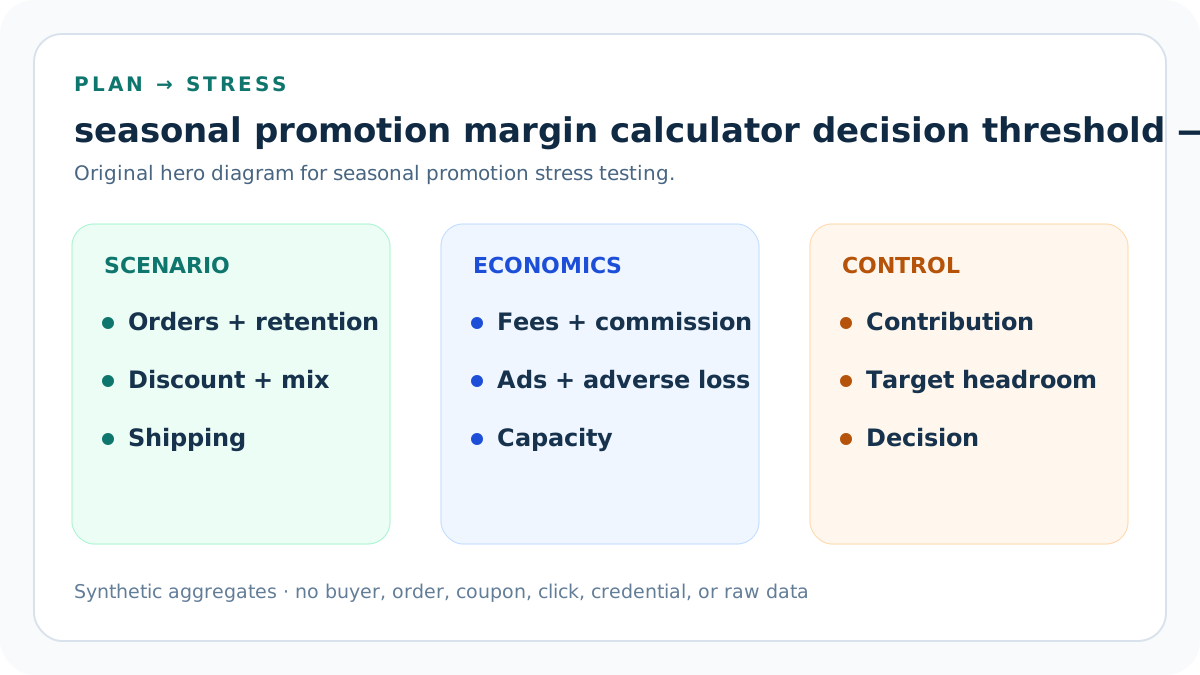
Set the break-even floor
Require scenario contribution to remain nonnegative. In the promotion threshold policy, record the value, unit, source version, evidence date, maturity state, owner, reviewer, and declared uncertainty. Recompute from a clean aggregate or synthetic packet before formatting any revenue, rate, cost, boundary, or decision.
Break-even leaves no operating reserve. Topic 1 includes a supported input, a broken input, a correction path, and the reason the conclusion belongs to a governed seasonal campaign decision rather than a prediction or universal promotion rule.
Set the contribution target
Reserve a percentage of collected scenario revenue. In the promotion threshold policy, record the value, unit, source version, evidence date, maturity state, owner, reviewer, and declared uncertainty. Recompute from a clean aggregate or synthetic packet before formatting any revenue, rate, cost, boundary, or decision.
Choose it from seller economics, not a universal benchmark. Topic 2 includes a supported input, a broken input, a correction path, and the reason the conclusion belongs to a governed seasonal campaign decision rather than a prediction or universal promotion rule.
Set the stress case
Change supported volume, retention, discount, mix, shipping, ad, and adverse-loss assumptions. In the promotion threshold policy, record the value, unit, source version, evidence date, maturity state, owner, reviewer, and declared uncertainty. Recompute from a clean aggregate or synthetic packet before formatting any revenue, rate, cost, boundary, or decision.
Avoid arbitrary catastrophe inputs. Topic 3 includes a supported input, a broken input, a correction path, and the reason the conclusion belongs to a governed seasonal campaign decision rather than a prediction or universal promotion rule.
Set the stress-decline ceiling
Compare nonnegative contribution decline with a dated seller-owned maximum. In the promotion threshold policy, record the value, unit, source version, evidence date, maturity state, owner, reviewer, and declared uncertainty. Recompute from a clean aggregate or synthetic packet before formatting any revenue, rate, cost, boundary, or decision.
The synthetic 55% default is not an industry benchmark. Topic 4 includes a supported input, a broken input, a correction path, and the reason the conclusion belongs to a governed seasonal campaign decision rather than a prediction or universal promotion rule.
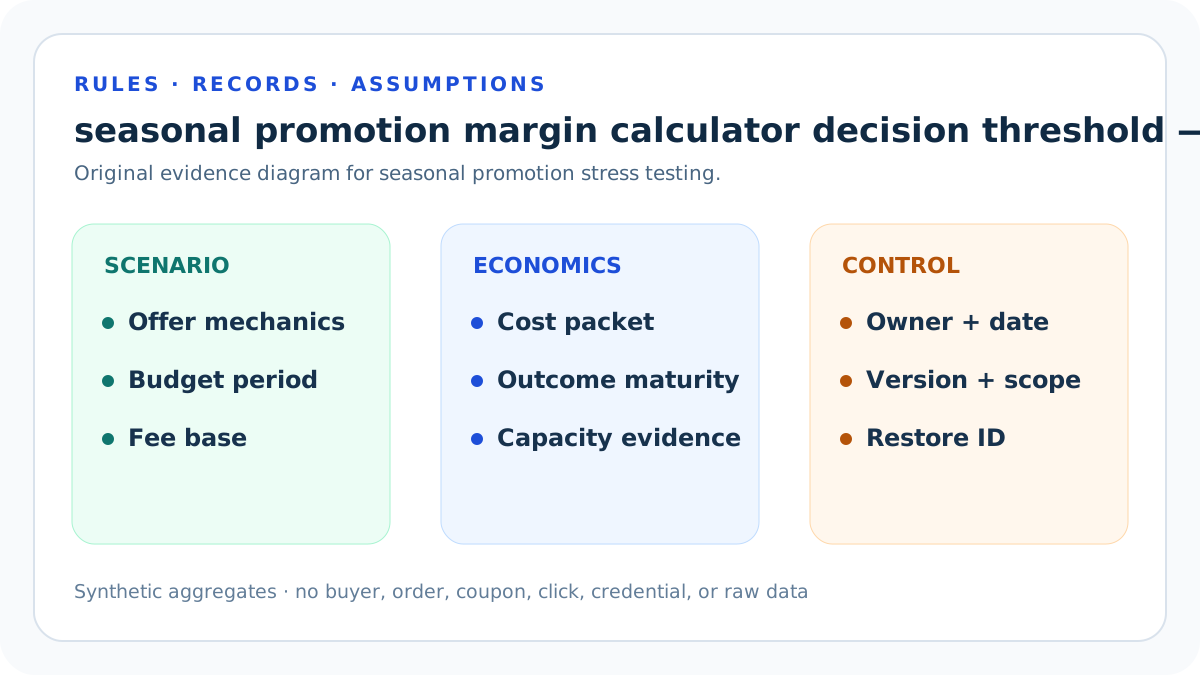
Set the capacity limit
Name maximum placed orders for the same period and service promise. In the promotion threshold policy, record the value, unit, source version, evidence date, maturity state, owner, reviewer, and declared uncertainty. Recompute from a clean aggregate or synthetic packet before formatting any revenue, rate, cost, boundary, or decision.
Capacity breaches require Review even with priced overage. Topic 5 includes a supported input, a broken input, a correction path, and the reason the conclusion belongs to a governed seasonal campaign decision rather than a prediction or universal promotion rule.
Set evidence blockers
Block missing mechanics, stale costs, incompatible periods, private exposure, or declared conflicts. In the promotion threshold policy, record the value, unit, source version, evidence date, maturity state, owner, reviewer, and declared uncertainty. Recompute from a clean aggregate or synthetic packet before formatting any revenue, rate, cost, boundary, or decision.
Do not polish around invalid evidence. Topic 6 includes a supported input, a broken input, a correction path, and the reason the conclusion belongs to a governed seasonal campaign decision rather than a prediction or universal promotion rule.
Set operating stops
Name margin, spend, cancellation, return, fulfillment, and carrier triggers. In the promotion threshold policy, record the value, unit, source version, evidence date, maturity state, owner, reviewer, and declared uncertainty. Recompute from a clean aggregate or synthetic packet before formatting any revenue, rate, cost, boundary, or decision.
Assign owner and response time. Topic 7 includes a supported input, a broken input, a correction path, and the reason the conclusion belongs to a governed seasonal campaign decision rather than a prediction or universal promotion rule.
Set restoration conditions
Preserve prior offer settings, assets, budget, staffing plan, and evidence packet. In the promotion threshold policy, record the value, unit, source version, evidence date, maturity state, owner, reviewer, and declared uncertainty. Recompute from a clean aggregate or synthetic packet before formatting any revenue, rate, cost, boundary, or decision.
Rollback must be executable. Topic 8 includes a supported input, a broken input, a correction path, and the reason the conclusion belongs to a governed seasonal campaign decision rather than a prediction or universal promotion rule.
Platform rule boundary: safe seasonal promotion margin thresholds
Separate official discount, combination, shipping, commission, and budget rules from seller-editable assumptions. Control 1 names the authority, owner, review frequency, exception code, threshold, expiry, correction trigger, and prior restorable campaign packet.
Never universalize one platform's mechanics. Apply the control specifically to a governed seasonal campaign decision; distinguish platform settings, seller records, formulas, estimates, and scenario assumptions in the evidence ledger.
Privacy and access: safe seasonal promotion margin thresholds
Use aggregate inputs, synthetic fixtures, redacted pointers, access controls, retention, and deletion rules. Control 2 names the authority, owner, review frequency, exception code, threshold, expiry, correction trigger, and prior restorable campaign packet.
Exclude raw buyer, order, coupon, click, payment, credential, token, and OAuth data. Apply the control specifically to a governed seasonal campaign decision; distinguish platform settings, seller records, formulas, estimates, and scenario assumptions in the evidence ledger.
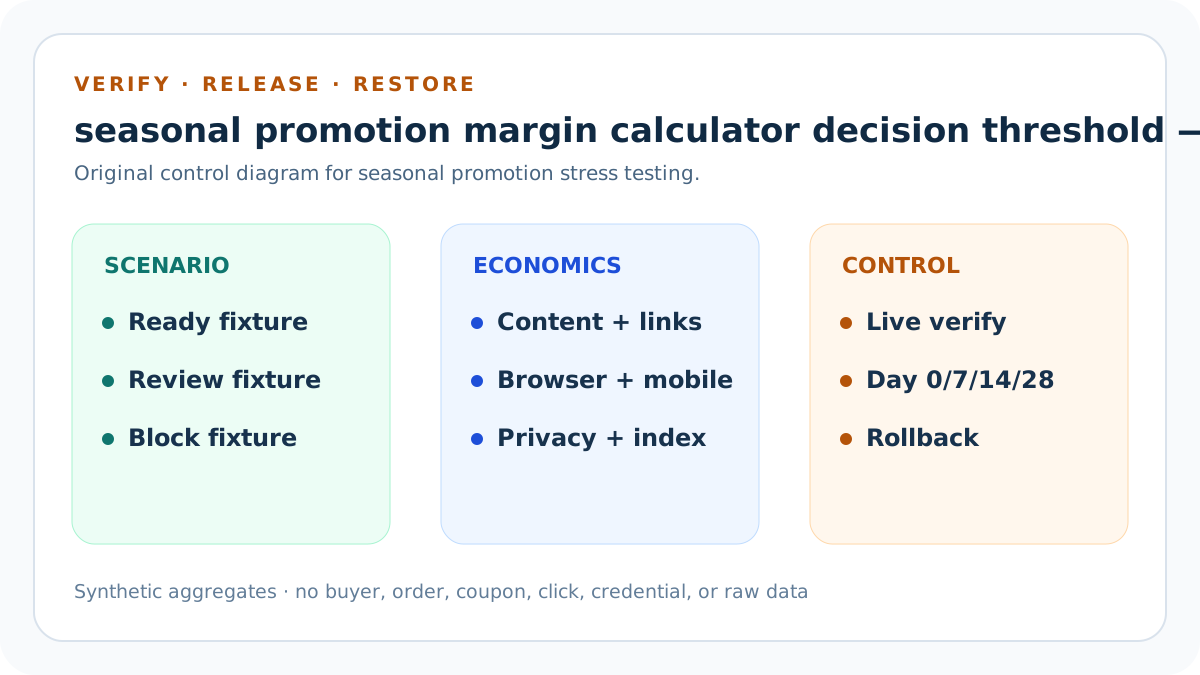
Release and restoration: safe seasonal promotion margin thresholds
Require typecheck, unit, integration, build, content, similarity, SEO, images, browser, mobile, privacy, live, and rollback evidence. Control 3 names the authority, owner, review frequency, exception code, threshold, expiry, correction trigger, and prior restorable campaign packet.
Restore on formula, routing, privacy, accessibility, or health regression. Apply the control specifically to a governed seasonal campaign decision; distinguish platform settings, seller records, formulas, estimates, and scenario assumptions in the evidence ledger.
Maturity and timing: safe seasonal promotion margin thresholds
Close the campaign reporting, cancellation, refund, return, dispute, and cost-ingestion windows. Control 4 names the authority, owner, review frequency, exception code, threshold, expiry, correction trigger, and prior restorable campaign packet.
Keep provisional outcomes explicit. Apply the control specifically to a governed seasonal campaign decision; distinguish platform settings, seller records, formulas, estimates, and scenario assumptions in the evidence ledger.
Sensitivity and counterexample: safe seasonal promotion margin thresholds
Change one supported scenario input while preserving all declared held variables. Control 5 names the authority, owner, review frequency, exception code, threshold, expiry, correction trigger, and prior restorable campaign packet.
Retain failed, below-target, and above-capacity fixtures. Apply the control specifically to a governed seasonal campaign decision; distinguish platform settings, seller records, formulas, estimates, and scenario assumptions in the evidence ledger.
Set the break-even floor: scenario drill
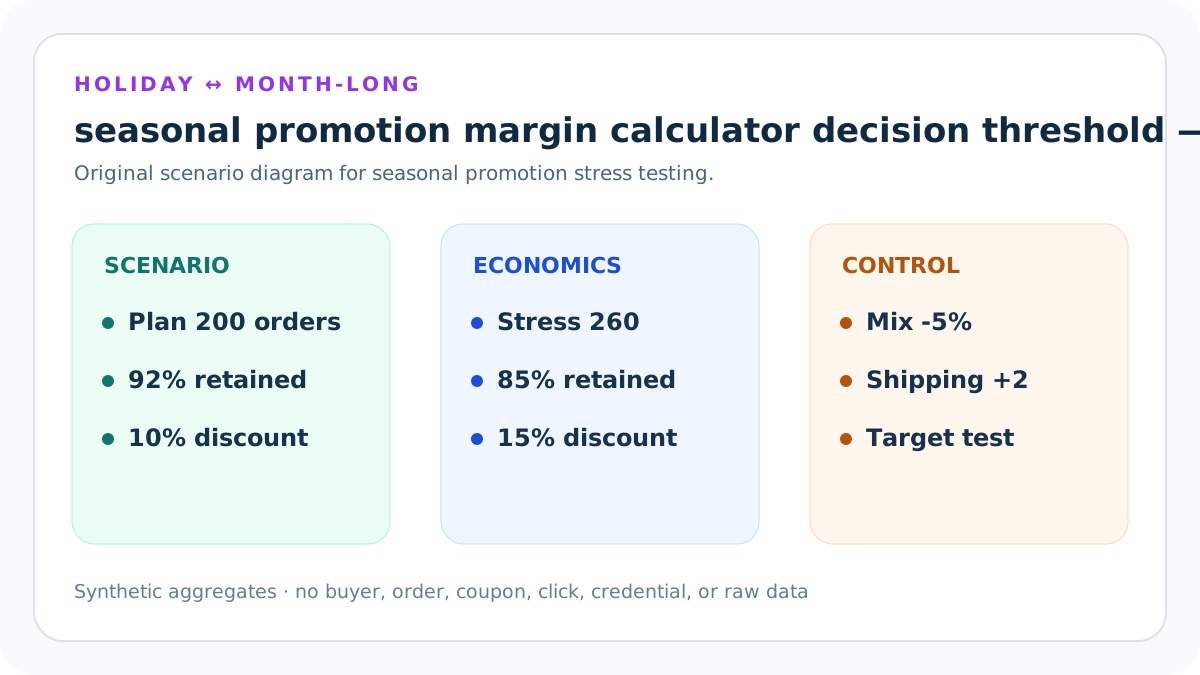
Recreate “Set the break-even floor” from the synthetic holiday-weekend and month-long fixtures. Require scenario contribution to remain nonnegative. Change one supported input, preserve the original packet, show the contribution bridge, and attach the expected Block, Review, or Ready state to the promotion threshold policy.
Break-even leaves no operating reserve. Drill 1 includes a normal plan, adverse stress, below-target, above-capacity, invalid, and corrected case. Explain which input changed, which values remained fixed, which threshold moved, and what evidence permits the next action.
Set the contribution target: scenario drill
Recreate “Set the contribution target” from the synthetic holiday-weekend and month-long fixtures. Reserve a percentage of collected scenario revenue. Change one supported input, preserve the original packet, show the contribution bridge, and attach the expected Block, Review, or Ready state to the promotion threshold policy.
Choose it from seller economics, not a universal benchmark. Drill 2 includes a normal plan, adverse stress, below-target, above-capacity, invalid, and corrected case. Explain which input changed, which values remained fixed, which threshold moved, and what evidence permits the next action.
Set the stress case: scenario drill
Recreate “Set the stress case” from the synthetic holiday-weekend and month-long fixtures. Change supported volume, retention, discount, mix, shipping, ad, and adverse-loss assumptions. Change one supported input, preserve the original packet, show the contribution bridge, and attach the expected Block, Review, or Ready state to the promotion threshold policy.
Avoid arbitrary catastrophe inputs. Drill 3 includes a normal plan, adverse stress, below-target, above-capacity, invalid, and corrected case. Explain which input changed, which values remained fixed, which threshold moved, and what evidence permits the next action.
Set the stress-decline ceiling: scenario drill
Recreate “Set the stress-decline ceiling” from the synthetic holiday-weekend and month-long fixtures. Compare nonnegative contribution decline with a dated seller-owned maximum. Change one supported input, preserve the original packet, show the contribution bridge, and attach the expected Block, Review, or Ready state to the promotion threshold policy.
The synthetic 55% default is not an industry benchmark. Drill 4 includes a normal plan, adverse stress, below-target, above-capacity, invalid, and corrected case. Explain which input changed, which values remained fixed, which threshold moved, and what evidence permits the next action.
Set the capacity limit: scenario drill
Recreate “Set the capacity limit” from the synthetic holiday-weekend and month-long fixtures. Name maximum placed orders for the same period and service promise. Change one supported input, preserve the original packet, show the contribution bridge, and attach the expected Block, Review, or Ready state to the promotion threshold policy.
Capacity breaches require Review even with priced overage. Drill 5 includes a normal plan, adverse stress, below-target, above-capacity, invalid, and corrected case. Explain which input changed, which values remained fixed, which threshold moved, and what evidence permits the next action.
Set evidence blockers: scenario drill
Recreate “Set evidence blockers” from the synthetic holiday-weekend and month-long fixtures. Block missing mechanics, stale costs, incompatible periods, private exposure, or declared conflicts. Change one supported input, preserve the original packet, show the contribution bridge, and attach the expected Block, Review, or Ready state to the promotion threshold policy.
Do not polish around invalid evidence. Drill 6 includes a normal plan, adverse stress, below-target, above-capacity, invalid, and corrected case. Explain which input changed, which values remained fixed, which threshold moved, and what evidence permits the next action.
Set operating stops: scenario drill
Recreate “Set operating stops” from the synthetic holiday-weekend and month-long fixtures. Name margin, spend, cancellation, return, fulfillment, and carrier triggers. Change one supported input, preserve the original packet, show the contribution bridge, and attach the expected Block, Review, or Ready state to the promotion threshold policy.
Assign owner and response time. Drill 7 includes a normal plan, adverse stress, below-target, above-capacity, invalid, and corrected case. Explain which input changed, which values remained fixed, which threshold moved, and what evidence permits the next action.
Set restoration conditions: scenario drill
Recreate “Set restoration conditions” from the synthetic holiday-weekend and month-long fixtures. Preserve prior offer settings, assets, budget, staffing plan, and evidence packet. Change one supported input, preserve the original packet, show the contribution bridge, and attach the expected Block, Review, or Ready state to the promotion threshold policy.
Rollback must be executable. Drill 8 includes a normal plan, adverse stress, below-target, above-capacity, invalid, and corrected case. Explain which input changed, which values remained fixed, which threshold moved, and what evidence permits the next action.
What a governed seasonal campaign decision can and cannot prove
It can prove that entered aggregate assumptions follow the declared campaign dates, order grain, promotion mechanics, revenue and cost bases, scenario changes, target, capacity, formula version, and evidence scope.
It cannot predict demand, conversion, product mix, buyer behavior, attribution, incremental sales, inventory availability, labor performance, carrier service, accounting profit, liquidity, tax treatment, or future campaign results.
Block, review, release, and restore the promotion threshold policy
Block invalid percentages, negative values, private exposure, missing mechanics, incompatible periods, stale scope, or declared conflicts. Review either scenario below target or above capacity. Ready means both entered cases preserve target within documented capacity.
Release only a reversible public model with synthetic defaults, first-party sources, original diagrams, accessible labels, canonical, Article and Breadcrumb schema, internal links, strict 404 behavior, correction policy, and rollback evidence.
Sources and further reading
- Seller Profit Guard methodology: Evidence versions, formulas, privacy, correction, release, and rollback.
- Seller Profit Guard data privacy: Local-first boundaries for buyer, order, promotion, advertising, payment, and raw-record data.
- Shopify Help: Combining discounts: Official discount classes, combination eligibility, application order, and best-combination behavior. Reviewed July 31, 2026.
- Etsy Help: Set up sales and discounts: Official sales, promo-code, bundle, targeted-offer, usage-limit, and non-stacking context. Reviewed July 31, 2026.
- Google Ads Help: Campaign total budgets: Official campaign-total budget, start/end-date, pacing, availability, and average-daily-budget distinctions. Reviewed July 31, 2026.
Related Seller Profit Guard tools
- Seasonal Promotion Margin Calculator: Compare a dated plan and stress scenario.
- Maximum Discount Calculator: Solve one order's discount boundary separately.
- Break-Even ROAS Calculator: Isolate ad-spend efficiency.
- Ad Attribution Reconciliation Checker: Reconcile mature attributed outcomes after a campaign.
- Shipping Subsidy Calculator: Verify parcel-level seller-funded shipping.
- Methodology: Review evidence, formulas, privacy, correction, release, and rollback.
- Data Privacy: Protect buyer, order, promotion, advertising, payment, and credential data.
- Seasonal Promotion Margin Formula and Inputs: Build plan and stress contribution formulas from retained orders, discount, mix, shipping, ads, returns, commission, and capacity.
- Holiday Weekend Promotion Margin Example: Follow a 200-order synthetic holiday weekend through retained revenue, campaign costs, capacity, contribution, and target headroom.
- Month-Long Seasonal Promotion Stress Test: Stress a month-long campaign with more orders, weaker retention and mix, deeper discount, shipping pressure, and higher ad spend.
- Seasonal Promotion Margin Mistakes: Correct order-grain, stacking, mix, budget, fee, commission, return, capacity, timing, and false-precision errors before launch.
- Seasonal Promotion Margin Data Sources: Map promotion mechanics, order outcomes, revenue mix, shipping, ads, commissions, returns, costs, and capacity to dated evidence.
- Holiday Weekend vs Month-Long Promotion: Compare a holiday weekend and month-long promotion at the same economic grain to isolate volume, retention, mix, shipping, and ads.
- Weekly Seasonal Promotion Margin Routine: Run a repeatable cycle from campaign packet and source refresh through stress testing, approval, monitoring, correction, and rollback.
- Interpret Seasonal Promotion Margin Results: Read plan and stress contribution, target headroom, capacity, discount boundary, sensitivity, and uncertainty without false precision.
- Seasonal Promotion Margin Audit Template: Use a standalone checklist and dated change log for campaign scope, formulas, sources, scenarios, thresholds, release, and rollback.
Next step: Open Seller Profit Guard.
This is operational planning help, not tax, accounting, legal, financial, or platform-policy advice. Review the Terms and disclaimer, and verify current platform rules and fee assumptions before changing prices.