Which reports support a payout anomaly check?
Last updated: 2026-07-31
Written and reviewed by Seller Profit Guard Editorial Team.
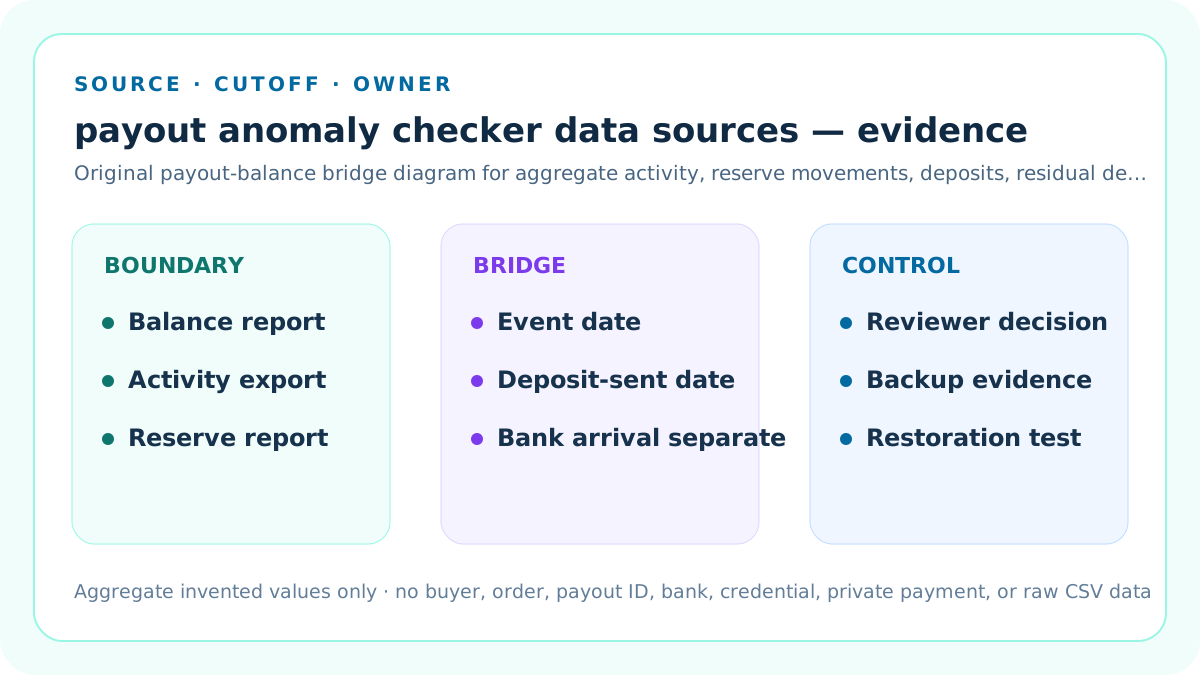
Use the platform balance or payout report for opening and closing definitions, dated transaction activity for sales and debits, reserve reports for holds and releases, payout records for deposits sent, and protected bank evidence only for arrival. Record report versions and never paste private identifiers into this public worksheet.
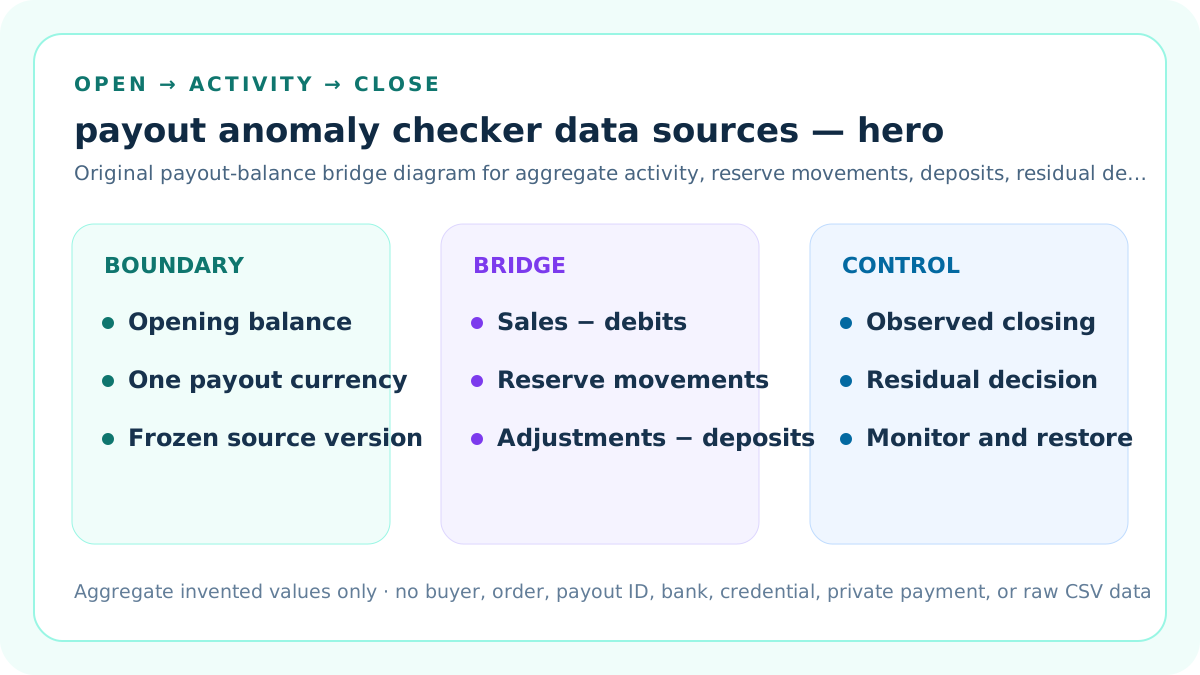
Balance report
Capture opening and closing definitions. The source register records platform, account, payout currency, balance convention, source fingerprint, event window, opening balance, category total, sign, cutoff, residual, tolerance, owner, reviewer, exception, and prior accepted value needed for a source-complete bridge.
At checkpoint 1, reperform the weekly and month-end synthetic bridges plus one counterexample. Explain why the evidence supports Ready, Review, or Block and identify the exact source, cutoff, classification, privacy, correction, monitoring, or restoration conclusion that remains outside the aggregate worksheet.
Transaction export
Obtain dated sales and debit activity. The source register records platform, account, payout currency, balance convention, source fingerprint, event window, opening balance, category total, sign, cutoff, residual, tolerance, owner, reviewer, exception, and prior accepted value needed for a source-complete bridge.
At checkpoint 2, reperform the weekly and month-end synthetic bridges plus one counterexample. Explain why the evidence supports Ready, Review, or Block and identify the exact source, cutoff, classification, privacy, correction, monitoring, or restoration conclusion that remains outside the aggregate worksheet.
Fee detail
Separate fee families and credits. The source register records platform, account, payout currency, balance convention, source fingerprint, event window, opening balance, category total, sign, cutoff, residual, tolerance, owner, reviewer, exception, and prior accepted value needed for a source-complete bridge.
At checkpoint 3, reperform the weekly and month-end synthetic bridges plus one counterexample. Explain why the evidence supports Ready, Review, or Block and identify the exact source, cutoff, classification, privacy, correction, monitoring, or restoration conclusion that remains outside the aggregate worksheet.
Refund report
Capture posting, reversal, and dispute states. The source register records platform, account, payout currency, balance convention, source fingerprint, event window, opening balance, category total, sign, cutoff, residual, tolerance, owner, reviewer, exception, and prior accepted value needed for a source-complete bridge.
At checkpoint 4, reperform the weekly and month-end synthetic bridges plus one counterexample. Explain why the evidence supports Ready, Review, or Block and identify the exact source, cutoff, classification, privacy, correction, monitoring, or restoration conclusion that remains outside the aggregate worksheet.
Reserve report
Track negative and positive reserve transactions. The source register records platform, account, payout currency, balance convention, source fingerprint, event window, opening balance, category total, sign, cutoff, residual, tolerance, owner, reviewer, exception, and prior accepted value needed for a source-complete bridge.
At checkpoint 5, reperform the weekly and month-end synthetic bridges plus one counterexample. Explain why the evidence supports Ready, Review, or Block and identify the exact source, cutoff, classification, privacy, correction, monitoring, or restoration conclusion that remains outside the aggregate worksheet.
Adjustment detail
Preserve source category and sign. The source register records platform, account, payout currency, balance convention, source fingerprint, event window, opening balance, category total, sign, cutoff, residual, tolerance, owner, reviewer, exception, and prior accepted value needed for a source-complete bridge.
At checkpoint 6, reperform the weekly and month-end synthetic bridges plus one counterexample. Explain why the evidence supports Ready, Review, or Block and identify the exact source, cutoff, classification, privacy, correction, monitoring, or restoration conclusion that remains outside the aggregate worksheet.
Payout list
Record scheduled and sent transfers. The source register records platform, account, payout currency, balance convention, source fingerprint, event window, opening balance, category total, sign, cutoff, residual, tolerance, owner, reviewer, exception, and prior accepted value needed for a source-complete bridge.
At checkpoint 7, reperform the weekly and month-end synthetic bridges plus one counterexample. Explain why the evidence supports Ready, Review, or Block and identify the exact source, cutoff, classification, privacy, correction, monitoring, or restoration conclusion that remains outside the aggregate worksheet.
Bank evidence
Verify arrival separately in protected storage. The source register records platform, account, payout currency, balance convention, source fingerprint, event window, opening balance, category total, sign, cutoff, residual, tolerance, owner, reviewer, exception, and prior accepted value needed for a source-complete bridge.
At checkpoint 8, reperform the weekly and month-end synthetic bridges plus one counterexample. Explain why the evidence supports Ready, Review, or Block and identify the exact source, cutoff, classification, privacy, correction, monitoring, or restoration conclusion that remains outside the aggregate worksheet.
Policy notice
Archive reserve or hold terms. The source register records platform, account, payout currency, balance convention, source fingerprint, event window, opening balance, category total, sign, cutoff, residual, tolerance, owner, reviewer, exception, and prior accepted value needed for a source-complete bridge.
At checkpoint 9, reperform the weekly and month-end synthetic bridges plus one counterexample. Explain why the evidence supports Ready, Review, or Block and identify the exact source, cutoff, classification, privacy, correction, monitoring, or restoration conclusion that remains outside the aggregate worksheet.
Schema fingerprint
Record columns, filters, and row count. The source register records platform, account, payout currency, balance convention, source fingerprint, event window, opening balance, category total, sign, cutoff, residual, tolerance, owner, reviewer, exception, and prior accepted value needed for a source-complete bridge.
At checkpoint 10, reperform the weekly and month-end synthetic bridges plus one counterexample. Explain why the evidence supports Ready, Review, or Block and identify the exact source, cutoff, classification, privacy, correction, monitoring, or restoration conclusion that remains outside the aggregate worksheet.
Owner register
Assign each evidence source. The source register records platform, account, payout currency, balance convention, source fingerprint, event window, opening balance, category total, sign, cutoff, residual, tolerance, owner, reviewer, exception, and prior accepted value needed for a source-complete bridge.
At checkpoint 11, reperform the weekly and month-end synthetic bridges plus one counterexample. Explain why the evidence supports Ready, Review, or Block and identify the exact source, cutoff, classification, privacy, correction, monitoring, or restoration conclusion that remains outside the aggregate worksheet.
Privacy register
Exclude identifiers from public fixtures. The source register records platform, account, payout currency, balance convention, source fingerprint, event window, opening balance, category total, sign, cutoff, residual, tolerance, owner, reviewer, exception, and prior accepted value needed for a source-complete bridge.
At checkpoint 12, reperform the weekly and month-end synthetic bridges plus one counterexample. Explain why the evidence supports Ready, Review, or Block and identify the exact source, cutoff, classification, privacy, correction, monitoring, or restoration conclusion that remains outside the aggregate worksheet.
Marketplace Payout Data Source Map: source and cutoff integrity control
Keep platform, account, payout currency, report version, balance definition, transaction-event window, deposit-sent cutoff, and bank-arrival evidence distinct. Control 1 defines a pass condition, evidence pointer, reviewer question, correction deadline, failed alternative, monitoring signal, stop condition, and restoration trigger for a source-complete bridge.
Mixed boundaries Block. Keep payout arithmetic, row matching, bank receipt, contribution, accounting treatment, tax, platform error, and correction authority separate.
Marketplace Payout Data Source Map: sign and category integrity control
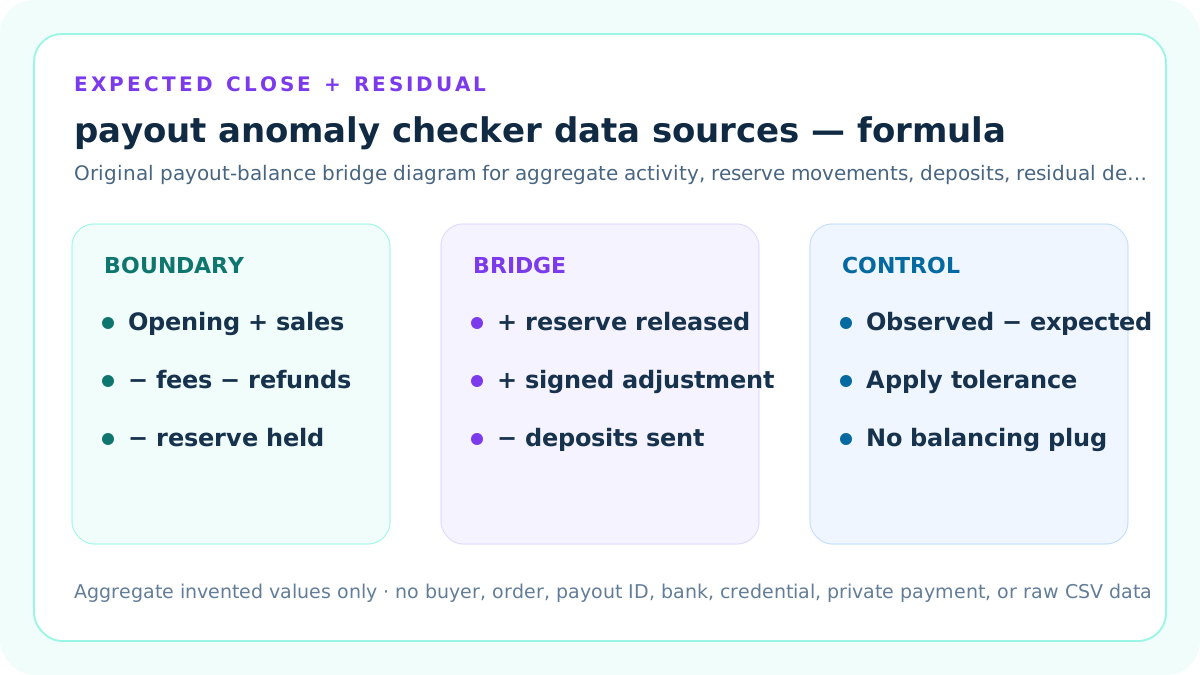
Add sales and reserve releases; subtract fees, refunds, new reserve holds, and deposits; use only the signed adjustment field for supported corrections. Control 2 defines a pass condition, evidence pointer, reviewer question, correction deadline, failed alternative, monitoring signal, stop condition, and restoration trigger for a source-complete bridge.
No balancing plugs. Keep payout arithmetic, row matching, bank receipt, contribution, accounting treatment, tax, platform error, and correction authority separate.
Marketplace Payout Data Source Map: privacy and output minimization control
Use invented aggregate values publicly and retain orders, buyers, payout identifiers, bank records, credentials, and raw exports only in authorized systems. Control 3 defines a pass condition, evidence pointer, reviewer question, correction deadline, failed alternative, monitoring signal, stop condition, and restoration trigger for a source-complete bridge.
Never echo private values. Keep payout arithmetic, row matching, bank receipt, contribution, accounting treatment, tax, platform error, and correction authority separate.
Marketplace Payout Data Source Map: human review authority control
Require named evidence owners, independent reviewer, correction approver, monitoring owner, stop authority, and restoration owner. Control 4 defines a pass condition, evidence pointer, reviewer question, correction deadline, failed alternative, monitoring signal, stop condition, and restoration trigger for a source-complete bridge.
Ready cannot post a correction. Keep payout arithmetic, row matching, bank receipt, contribution, accounting treatment, tax, platform error, and correction authority separate.
Marketplace Payout Data Source Map: monitoring and escalation control
Track residual amount, age, recurrence, category, source drift, reserve changes, reversed decisions, and returned payouts. Control 5 defines a pass condition, evidence pointer, reviewer question, correction deadline, failed alternative, monitoring signal, stop condition, and restoration trigger for a source-complete bridge.
Stop on an unexplained discontinuity. Keep payout arithmetic, row matching, bank receipt, contribution, accounting treatment, tax, platform error, and correction authority separate.
Marketplace Payout Data Source Map: backup and restoration control
Preserve source fingerprints, mapping rules, category totals, prior bridge, exception log, downstream state, and tested recovery. Control 6 defines a pass condition, evidence pointer, reviewer question, correction deadline, failed alternative, monitoring signal, stop condition, and restoration trigger for a source-complete bridge.
Rollback evidence is mandatory. Keep payout arithmetic, row matching, bank receipt, contribution, accounting treatment, tax, platform error, and correction authority separate.
Marketplace Payout Data Source Map: versioned governance control
Record a source-review date covering the evidence month, a nonfuture review date, policy-effective date, minimum evidence duration, reserve-movement threshold, nine required confirmations, and distinct weekly versus month-end packets. Control 7 defines a pass condition, evidence pointer, reviewer question, correction deadline, failed alternative, monitoring signal, stop condition, and restoration trigger for a source-complete bridge.
Invalid or stale controls mask derived outputs. Keep payout arithmetic, row matching, bank receipt, contribution, accounting treatment, tax, platform error, and correction authority separate.
Balance report: payout bridge lab 1
Reperform both aggregate packets. Capture opening and closing definitions. Change one opening balance, sales, fee, refund, reserve hold, reserve release, signed adjustment, deposit, closing balance, tolerance, currency, cutoff, evidence term, or scope statement only; preserve all other values and record the resulting residual and decision.
Use invented amounts only. Test clean, boundary, positive, negative, malformed, and conflict states, then state the protected operational evidence, named authority, downstream check, monitoring signal, and restoration action required before acting.
Transaction export: payout bridge lab 2
Reperform both aggregate packets. Obtain dated sales and debit activity. Change one opening balance, sales, fee, refund, reserve hold, reserve release, signed adjustment, deposit, closing balance, tolerance, currency, cutoff, evidence term, or scope statement only; preserve all other values and record the resulting residual and decision.
Use invented amounts only. Test clean, boundary, positive, negative, malformed, and conflict states, then state the protected operational evidence, named authority, downstream check, monitoring signal, and restoration action required before acting.
Fee detail: payout bridge lab 3
Reperform both aggregate packets. Separate fee families and credits. Change one opening balance, sales, fee, refund, reserve hold, reserve release, signed adjustment, deposit, closing balance, tolerance, currency, cutoff, evidence term, or scope statement only; preserve all other values and record the resulting residual and decision.
Use invented amounts only. Test clean, boundary, positive, negative, malformed, and conflict states, then state the protected operational evidence, named authority, downstream check, monitoring signal, and restoration action required before acting.
Refund report: payout bridge lab 4
Reperform both aggregate packets. Capture posting, reversal, and dispute states. Change one opening balance, sales, fee, refund, reserve hold, reserve release, signed adjustment, deposit, closing balance, tolerance, currency, cutoff, evidence term, or scope statement only; preserve all other values and record the resulting residual and decision.
Use invented amounts only. Test clean, boundary, positive, negative, malformed, and conflict states, then state the protected operational evidence, named authority, downstream check, monitoring signal, and restoration action required before acting.
Reserve report: payout bridge lab 5
Reperform both aggregate packets. Track negative and positive reserve transactions. Change one opening balance, sales, fee, refund, reserve hold, reserve release, signed adjustment, deposit, closing balance, tolerance, currency, cutoff, evidence term, or scope statement only; preserve all other values and record the resulting residual and decision.
Use invented amounts only. Test clean, boundary, positive, negative, malformed, and conflict states, then state the protected operational evidence, named authority, downstream check, monitoring signal, and restoration action required before acting.
Adjustment detail: payout bridge lab 6
Reperform both aggregate packets. Preserve source category and sign. Change one opening balance, sales, fee, refund, reserve hold, reserve release, signed adjustment, deposit, closing balance, tolerance, currency, cutoff, evidence term, or scope statement only; preserve all other values and record the resulting residual and decision.
Use invented amounts only. Test clean, boundary, positive, negative, malformed, and conflict states, then state the protected operational evidence, named authority, downstream check, monitoring signal, and restoration action required before acting.
Payout list: payout bridge lab 7
Reperform both aggregate packets. Record scheduled and sent transfers. Change one opening balance, sales, fee, refund, reserve hold, reserve release, signed adjustment, deposit, closing balance, tolerance, currency, cutoff, evidence term, or scope statement only; preserve all other values and record the resulting residual and decision.
Use invented amounts only. Test clean, boundary, positive, negative, malformed, and conflict states, then state the protected operational evidence, named authority, downstream check, monitoring signal, and restoration action required before acting.
Bank evidence: payout bridge lab 8
Reperform both aggregate packets. Verify arrival separately in protected storage. Change one opening balance, sales, fee, refund, reserve hold, reserve release, signed adjustment, deposit, closing balance, tolerance, currency, cutoff, evidence term, or scope statement only; preserve all other values and record the resulting residual and decision.
Use invented amounts only. Test clean, boundary, positive, negative, malformed, and conflict states, then state the protected operational evidence, named authority, downstream check, monitoring signal, and restoration action required before acting.
Policy notice: payout bridge lab 9
Reperform both aggregate packets. Archive reserve or hold terms. Change one opening balance, sales, fee, refund, reserve hold, reserve release, signed adjustment, deposit, closing balance, tolerance, currency, cutoff, evidence term, or scope statement only; preserve all other values and record the resulting residual and decision.
Use invented amounts only. Test clean, boundary, positive, negative, malformed, and conflict states, then state the protected operational evidence, named authority, downstream check, monitoring signal, and restoration action required before acting.
Schema fingerprint: payout bridge lab 10
Reperform both aggregate packets. Record columns, filters, and row count. Change one opening balance, sales, fee, refund, reserve hold, reserve release, signed adjustment, deposit, closing balance, tolerance, currency, cutoff, evidence term, or scope statement only; preserve all other values and record the resulting residual and decision.
Use invented amounts only. Test clean, boundary, positive, negative, malformed, and conflict states, then state the protected operational evidence, named authority, downstream check, monitoring signal, and restoration action required before acting.
Owner register: payout bridge lab 11
Reperform both aggregate packets. Assign each evidence source. Change one opening balance, sales, fee, refund, reserve hold, reserve release, signed adjustment, deposit, closing balance, tolerance, currency, cutoff, evidence term, or scope statement only; preserve all other values and record the resulting residual and decision.
Use invented amounts only. Test clean, boundary, positive, negative, malformed, and conflict states, then state the protected operational evidence, named authority, downstream check, monitoring signal, and restoration action required before acting.
Privacy register: payout bridge lab 12
Reperform both aggregate packets. Exclude identifiers from public fixtures. Change one opening balance, sales, fee, refund, reserve hold, reserve release, signed adjustment, deposit, closing balance, tolerance, currency, cutoff, evidence term, or scope statement only; preserve all other values and record the resulting residual and decision.
Use invented amounts only. Test clean, boundary, positive, negative, malformed, and conflict states, then state the protected operational evidence, named authority, downstream check, monitoring signal, and restoration action required before acting.
Marketplace Payout Data Source Map: intent-specific implementation walkthrough
source register checkpoint 1 addresses balance report for a source-complete bridge. Capture opening and closing definitions. Record the accepted classification, rejected shortcut, evidence owner, reviewer challenge, correction boundary, follow-up date, monitoring trigger, and rollback reference.
source register checkpoint 2 addresses transaction export for a source-complete bridge. Obtain dated sales and debit activity. Record the accepted classification, rejected shortcut, evidence owner, reviewer challenge, correction boundary, follow-up date, monitoring trigger, and rollback reference.
source register checkpoint 3 addresses fee detail for a source-complete bridge. Separate fee families and credits. Record the accepted classification, rejected shortcut, evidence owner, reviewer challenge, correction boundary, follow-up date, monitoring trigger, and rollback reference.
source register checkpoint 4 addresses refund report for a source-complete bridge. Capture posting, reversal, and dispute states. Record the accepted classification, rejected shortcut, evidence owner, reviewer challenge, correction boundary, follow-up date, monitoring trigger, and rollback reference.
source register checkpoint 5 addresses reserve report for a source-complete bridge. Track negative and positive reserve transactions. Record the accepted classification, rejected shortcut, evidence owner, reviewer challenge, correction boundary, follow-up date, monitoring trigger, and rollback reference.
source register checkpoint 6 addresses adjustment detail for a source-complete bridge. Preserve source category and sign. Record the accepted classification, rejected shortcut, evidence owner, reviewer challenge, correction boundary, follow-up date, monitoring trigger, and rollback reference.
source register checkpoint 7 addresses payout list for a source-complete bridge. Record scheduled and sent transfers. Record the accepted classification, rejected shortcut, evidence owner, reviewer challenge, correction boundary, follow-up date, monitoring trigger, and rollback reference.
source register checkpoint 8 addresses bank evidence for a source-complete bridge. Verify arrival separately in protected storage. Record the accepted classification, rejected shortcut, evidence owner, reviewer challenge, correction boundary, follow-up date, monitoring trigger, and rollback reference.
source register checkpoint 9 addresses policy notice for a source-complete bridge. Archive reserve or hold terms. Record the accepted classification, rejected shortcut, evidence owner, reviewer challenge, correction boundary, follow-up date, monitoring trigger, and rollback reference.
source register checkpoint 10 addresses schema fingerprint for a source-complete bridge. Record columns, filters, and row count. Record the accepted classification, rejected shortcut, evidence owner, reviewer challenge, correction boundary, follow-up date, monitoring trigger, and rollback reference.
source register checkpoint 11 addresses owner register for a source-complete bridge. Assign each evidence source. Record the accepted classification, rejected shortcut, evidence owner, reviewer challenge, correction boundary, follow-up date, monitoring trigger, and rollback reference.
source register checkpoint 12 addresses privacy register for a source-complete bridge. Exclude identifiers from public fixtures. Record the accepted classification, rejected shortcut, evidence owner, reviewer challenge, correction boundary, follow-up date, monitoring trigger, and rollback reference.
Evidence boundary for a source-complete bridge
The default weekly packet bridges USD 120 opening balance, 980 sales, 118 fees, 75 refunds, 90 newly held reserve, 30 released reserve, minus 7 adjustment, and 700 deposits to USD 140 closing balance. The month-end packet separately bridges a calendar cutoff to USD 305.
These invented totals demonstrate arithmetic only. They cannot prove source completeness, missing money, platform error, buyer activity, bank receipt, revenue, contribution, accounting correctness, tax treatment, fraud, or correction authority.
Release, monitor, and restore the source register
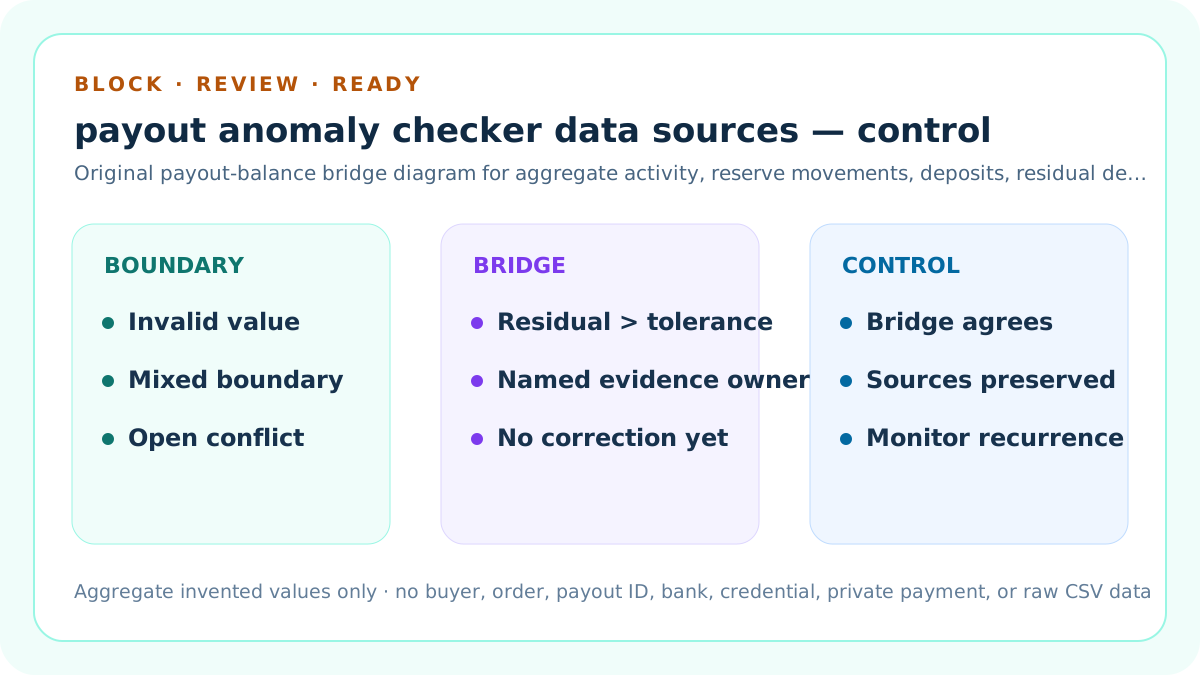
Block blank, non-finite, oversized, or negative unsigned movement values, short context, invalid tolerance, currency, stale or future source review, period, scope, privacy, or open conflicts. Preserve source-defined signed opening and closing balances. Review residuals above tolerance. Ready clears only the entered aggregate fixtures.
Before indexing or operational use, preserve backups and run type, unit, integration, build, content, similarity, SEO, image, link, privacy, mobile, deployment, and live checks; then monitor drift without claiming search or financial causality.
Sources and further reading
- Etsy Help: Manage your Payment account: Official available-fund, fee, tax, refund, reserve, negative-balance, and deposit context.
- Etsy Help: Calculate a deposit: Official Payment sales and account-activity deposit bridge.
- Etsy Help: Payment account reserve: Official reserve minimum, hold, release, refund, fee, and timing behavior.
- Shopify Help: Payout reconciliation report: Official transactions, fees, refunds, payouts, balance activity, currencies, and exports.
- Shopify Help: Reserves: Official reserved balances plus negative and positive reserve transactions.
- Shopify Help: Payout timing: Official schedules, holds, reserves, negative balances, weekends, holidays, and bank timing.
- Seller Profit Guard methodology: Evidence, correction, release, monitoring, and rollback controls.
- Seller Profit Guard data privacy: Aggregate public examples and protected operational-data boundaries.
Related Seller Profit Guard tools
- Marketplace Payout Anomaly Checker: Bridge aggregate platform activity and balances.
- Etsy Payment Reconciliation: Match individual Etsy activity before aggregate bridging.
- Duplicate Order Checker: Classify synthetic repeated rows before calculating populations.
- Seller CSV Column Mapper: Stabilize field and date semantics before aggregation.
- Contribution Margin Calculator: Keep payout cash separate from retained contribution.
- Guides: Browse related seller evidence workflows.
- How It Works: Understand browser-local processing boundaries.
- Methodology: Review source, formula, correction, monitoring, and rollback rules.
- Data Privacy: Protect orders, buyers, bank details, credentials, and raw exports.
- Changelog: Track dated public changes.
- Payout Anomaly Formula and Input Controls: Define the balance bridge, sign convention, source windows, reserve movements, tolerance, evidence packet, and reviewer controls.
- Weekly Payout Anomaly Worked Example: Reperform a weekly aggregate bridge with complete numbers, intermediate balances, residual, classification, and next action.
- Month-End Payout Anomaly Close: Close a calendar month without forcing reserve, refund, holiday, deposit, or subsequent-event timing differences into zero.
- Payout Anomaly Mistakes and Corrections: Diagnose sign, double-netting, balance-definition, reserve, refund, deposit, currency, and timing errors with corrected counterexamples.
- Safe Payout Anomaly Decision Thresholds: Set currency-precision, timing, recurrence, age, evidence, and materiality controls without hiding unresolved sources or escalation.
- Weekly vs Month-End Payout Review: Compare payout-centered and period-centered windows at the same currency, formula, and evidence grain with distinct cutoff controls.
- Weekly Payout Control Routine Checklist: Turn aggregate payout review into a repeatable source-preservation, bridge, exception, approval, monitoring, and restoration cycle.
- Interpret Payout Differences Carefully: Explain what positive, negative, zero, aged, recurring, or timing-classified residuals can and cannot prove, then define the next evidence action.
- Payout Anomaly Audit and Change Log: Provide a standalone source, formula, balance, threshold, exception, approval, monitoring, and restoration checklist for repeatable seller review.
Next step: Open Seller Profit Guard.
This is operational planning help, not tax, accounting, legal, financial, or platform-policy advice. Review the Terms and disclaimer, and verify current platform rules and fee assumptions before changing prices.