How to interpret packaging cost per order
Last updated: 2026-07-31
Written and reviewed by Seller Profit Guard Editorial Team.
Read packaging cost beside its package specification, component subtotal, waste allowance, shared allocation, completed-order count, target, currency, and evidence month. A Ready result confirms only a structurally valid packet below its seller-owned threshold; it does not prove postage, protection, compliance, sustainability, price, profit, or demand.
Read unit packaging cost
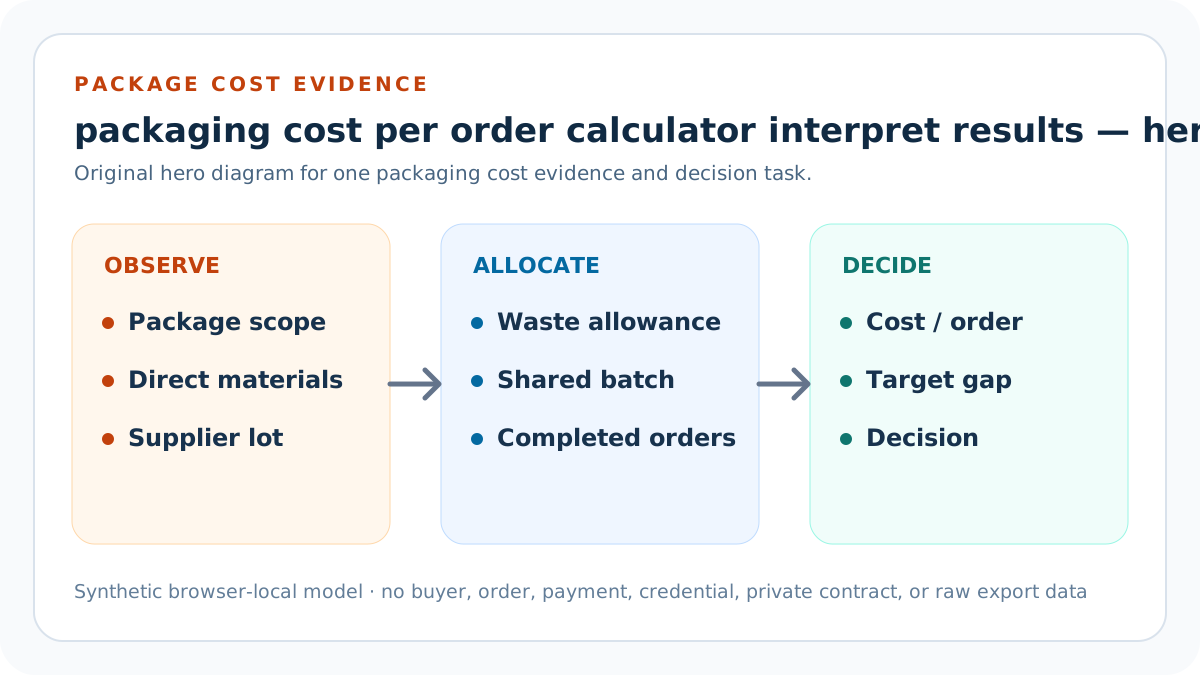
Treat the total as material plus waste plus shared allocation for one declared completed package. Interpretation item 1 stays beside its numerator, denominator, units, full-precision value, display rule, evidence range, and limitation. Do not detach the number from the package specification that produced it.
Write one supported statement, one prohibited inference, and one next evidence action for item 1. The supported language must remain narrow enough to preserve a bounded interpretation linked to the correct next evidence.
Read total batch cost
Use it to reconcile the modeled run while preserving inventory-purchase and timing differences. Interpretation item 2 stays beside its numerator, denominator, units, full-precision value, display rule, evidence range, and limitation. Do not detach the number from the package specification that produced it.
Write one supported statement, one prohibited inference, and one next evidence action for item 2. The supported language must remain narrow enough to preserve a bounded interpretation linked to the correct next evidence.
Read direct-material share
Identify component-cost concentration without assuming the largest share is automatically reducible. Interpretation item 3 stays beside its numerator, denominator, units, full-precision value, display rule, evidence range, and limitation. Do not detach the number from the package specification that produced it.
Write one supported statement, one prohibited inference, and one next evidence action for item 3. The supported language must remain narrow enough to preserve a bounded interpretation linked to the correct next evidence.
Read waste share
Investigate material handling and specification evidence without converting percentage into an environmental score. Interpretation item 4 stays beside its numerator, denominator, units, full-precision value, display rule, evidence range, and limitation. Do not detach the number from the package specification that produced it.
Write one supported statement, one prohibited inference, and one next evidence action for item 4. The supported language must remain narrow enough to preserve a bounded interpretation linked to the correct next evidence.
Read shared-cost share
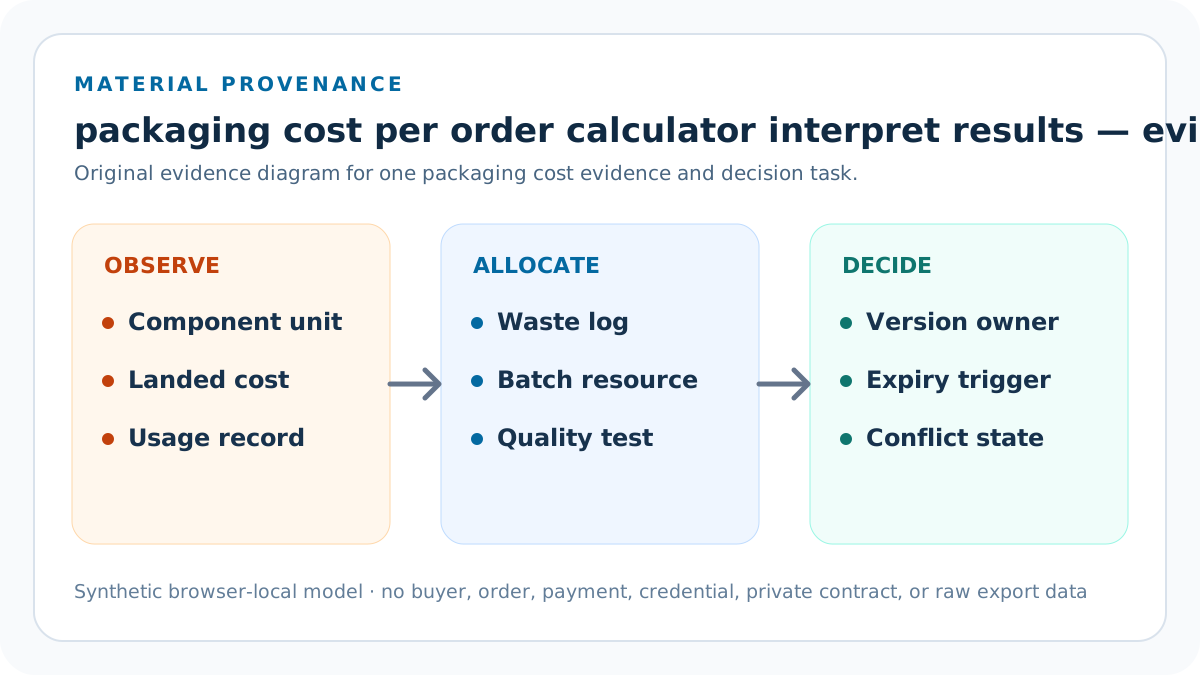
Review batch resource and denominator when allocation becomes large relative to direct materials. Interpretation item 5 stays beside its numerator, denominator, units, full-precision value, display rule, evidence range, and limitation. Do not detach the number from the package specification that produced it.
Write one supported statement, one prohibited inference, and one next evidence action for item 5. The supported language must remain narrow enough to preserve a bounded interpretation linked to the correct next evidence.
Read target headroom
Interpret positive or negative full-precision distance from one dated seller-owned threshold. Interpretation item 6 stays beside its numerator, denominator, units, full-precision value, display rule, evidence range, and limitation. Do not detach the number from the package specification that produced it.
Write one supported statement, one prohibited inference, and one next evidence action for item 6. The supported language must remain narrow enough to preserve a bounded interpretation linked to the correct next evidence.
Read decision state
Repair Block evidence, diagnose Review warnings, and pass Ready only as one cost-model input. Interpretation item 7 stays beside its numerator, denominator, units, full-precision value, display rule, evidence range, and limitation. Do not detach the number from the package specification that produced it.
Write one supported statement, one prohibited inference, and one next evidence action for item 7. The supported language must remain narrow enough to preserve a bounded interpretation linked to the correct next evidence.
Read uncertainty
Keep low, expected, and high scenarios when supplier, waste, or batch completion varies materially. Interpretation item 8 stays beside its numerator, denominator, units, full-precision value, display rule, evidence range, and limitation. Do not detach the number from the package specification that produced it.
Write one supported statement, one prohibited inference, and one next evidence action for item 8. The supported language must remain narrow enough to preserve a bounded interpretation linked to the correct next evidence.
Use the packaging result interpretation card with one controlled package packet
Open the calculator after the packaging result interpretation card has one package specification, direct component convention, waste basis, shared batch rule, completed-order denominator, target, currency, evidence month, owner, and quality boundary. Enter synthetic aggregates; do not paste buyer, address, email, order, message, payment, credential, private contract, or raw export data.
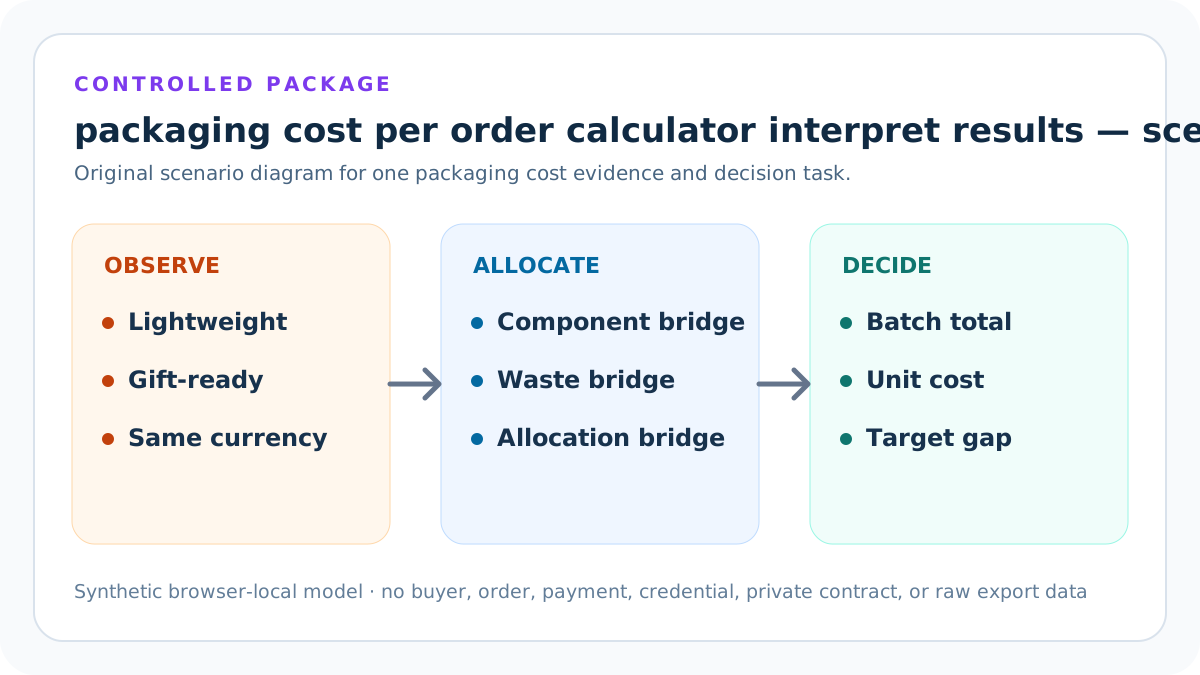
Save unrounded inputs and outputs beside the visible cents. Run the lightweight fixture, gift-ready fixture, below-target Review, and invalid Block conditions. Accept a changed input only when its source, package scope, effective date, owner, and replacement trigger are recorded.
Apply packaging evidence gates before a bounded interpretation linked to the correct next evidence
Block blank or nonfinite values, missing direct materials, negative costs, a non-whole or nonpositive denominator, waste outside 0% to below 100%, invalid seller thresholds, a nonpositive target, invalid currency, month, or source-review date, vague package scope, incomplete confirmations, or a declared conflict. Review above-target cost, waste or shared allocation above seller-entered process limits, stale evidence, or quality drift.
Ready confirms only a structurally valid package-cost packet below its seller-owned threshold. It does not determine postage, packing labor, damage protection, accessibility, labeling, food or dangerous-goods compliance, environmental benefit, tax treatment, market price, accounting profit, demand, revenue, or income.
Test sensitivity without changing the package story
Change one assumption at a time: component price or quantity, waste rate, shared batch amount, completed-order count, or target. Keep low, expected, and high cases when observed values vary. Never lower a protection or presentation standard invisibly to create favorable headroom.
For role 9, record before state, isolated change, direct subtotal, waste allowance, shared allocation, unit result, batch total, component shares, target headroom, decision, quality outcome, and next evidence action. Sensitivity locates a driver; it does not select a safe commercial response.
Protect package, supplier, and customer information
Public examples are synthetic. Keep buyer names, addresses, emails, order IDs, messages, payment data, customer files, credentials, private supplier prices or contracts, restricted product specifications, and raw exports outside the packaging result interpretation card.
Use package aliases, aggregates, ranges, and protected source pointers. An independent reviewer should reproduce the formula and decision contract without receiving personal, order-level, payment, credential, or supplier-confidential material.
Release, observe, correct, and roll back this packaging asset
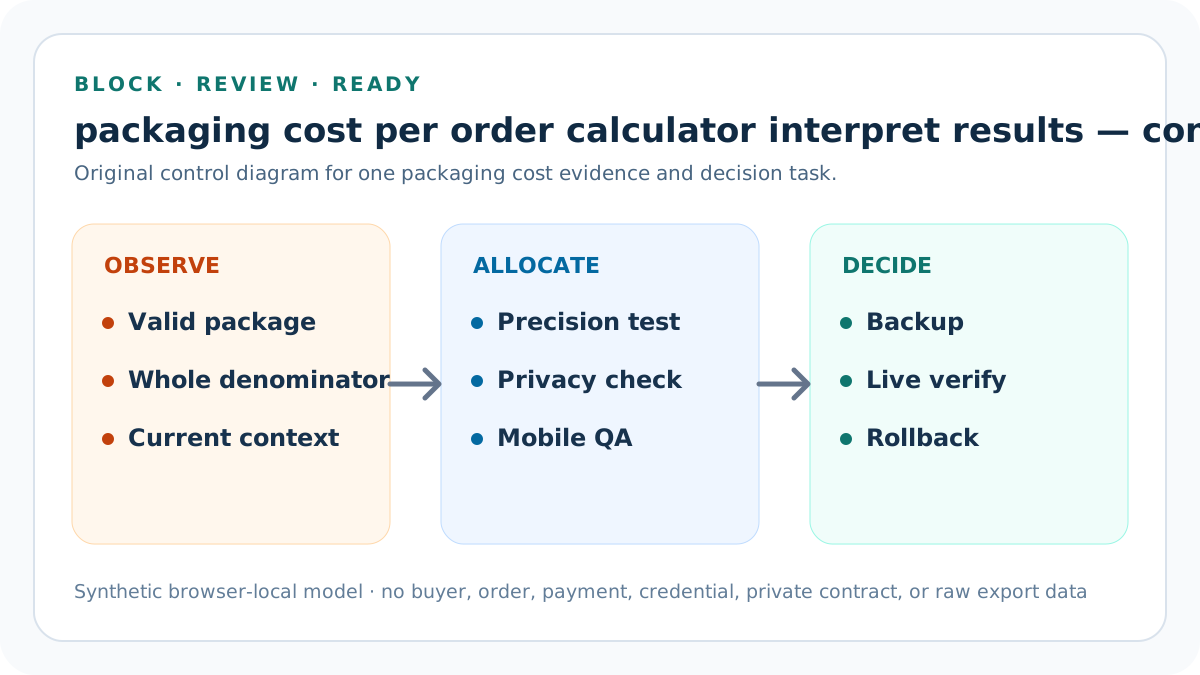
Before release, preserve narrow local and remote backups and a rollback identifier. Run syntax, typecheck, focused and full unit tests, integration, build, SEO and duplicate audits, static-route validation, mobile and keyboard QA, image and link checks, candidate-origin review, and live calculator scenarios.
After release, verify status, canonical, indexability, schema, answer blocks, images, hub discovery, strict 404, sitemap policy, and production behavior. Record Day 0/7/14/28 evidence without claiming same-day causality. Restore the prior version if formula, privacy, accessibility, content, routing, analytics, or live health regresses.
Translate component shares into questions, not automatic cuts
When direct material dominates, ask whether quantity, grade, supplier lot, or purchase convention changed. When waste dominates, inspect cutting, print setup, adhesive, storage, damage, and obsolescence. When shared allocation dominates, inspect the resource definition and completed-batch count.
The largest percentage is a diagnostic pointer, not permission to remove the component. Preserve compression, moisture, seal, fit, presentation, accessibility, labeling, and any applicable regulated handling requirements before testing a lower-cost alternative.
Explain a rounded result without inventing certainty
State both the visible amount and, when the boundary matters, the full-precision calculation. Explain that USD 3.33 represents USD 3.325 under the documented display rule and that target comparison uses the unrounded value. Do not infer that every future parcel costs exactly the displayed cents.
Report the observed range, component volatility, waste sample, completed-batch size, and expiry trigger beside the expected case. If uncertainty can reverse Ready and Review, present named scenarios and request better evidence instead of selecting the favorable rounded output.
Supported statement
Write exactly what the package packet and arithmetic show, including units, context, date, and rounding. Deep check 1 stores the package alias, relevant aggregate evidence, full-precision calculation, displayed result, decision, reviewer, review date, expiry condition, and correction path. It is incomplete when another reviewer must guess the component unit, waste basis, batch resource, denominator, target, or quality rule.
Find the nearest counterexample and state why it would invalidate or narrow a bounded interpretation linked to the correct next evidence. Preserve competing supplier, usage, waste, batch, quality, target, or period evidence as named scenarios rather than averaging it away; keep postage, labor, compliance, environmental, price, profit, demand, revenue, and income claims outside the result.
Unsupported inference
Name the postage, protection, compliance, green claim, price, profit, demand, or income conclusion the number cannot support. Deep check 2 stores the package alias, relevant aggregate evidence, full-precision calculation, displayed result, decision, reviewer, review date, expiry condition, and correction path. It is incomplete when another reviewer must guess the component unit, waste basis, batch resource, denominator, target, or quality rule.
Find the nearest counterexample and state why it would invalidate or narrow a bounded interpretation linked to the correct next evidence. Preserve competing supplier, usage, waste, batch, quality, target, or period evidence as named scenarios rather than averaging it away; keep postage, labor, compliance, environmental, price, profit, demand, revenue, and income claims outside the result.
Sensitivity statement
Change one component, waste rate, shared amount, denominator, or target at a time and report the isolated effect. Deep check 3 stores the package alias, relevant aggregate evidence, full-precision calculation, displayed result, decision, reviewer, review date, expiry condition, and correction path. It is incomplete when another reviewer must guess the component unit, waste basis, batch resource, denominator, target, or quality rule.
Find the nearest counterexample and state why it would invalidate or narrow a bounded interpretation linked to the correct next evidence. Preserve competing supplier, usage, waste, batch, quality, target, or period evidence as named scenarios rather than averaging it away; keep postage, labor, compliance, environmental, price, profit, demand, revenue, and income claims outside the result.
Counterexample
Identify a different package or quality result that would make the current interpretation unsafe. Deep check 4 stores the package alias, relevant aggregate evidence, full-precision calculation, displayed result, decision, reviewer, review date, expiry condition, and correction path. It is incomplete when another reviewer must guess the component unit, waste basis, batch resource, denominator, target, or quality rule.
Find the nearest counterexample and state why it would invalidate or narrow a bounded interpretation linked to the correct next evidence. Preserve competing supplier, usage, waste, batch, quality, target, or period evidence as named scenarios rather than averaging it away; keep postage, labor, compliance, environmental, price, profit, demand, revenue, and income claims outside the result.
Next evidence action
Connect the observed driver to supplier, usage, waste, quality, shipping, labor, price-floor, or contribution review. Deep check 5 stores the package alias, relevant aggregate evidence, full-precision calculation, displayed result, decision, reviewer, review date, expiry condition, and correction path. It is incomplete when another reviewer must guess the component unit, waste basis, batch resource, denominator, target, or quality rule.
Find the nearest counterexample and state why it would invalidate or narrow a bounded interpretation linked to the correct next evidence. Preserve competing supplier, usage, waste, batch, quality, target, or period evidence as named scenarios rather than averaging it away; keep postage, labor, compliance, environmental, price, profit, demand, revenue, and income claims outside the result.
Sources and further reading
- Seller Profit Guard methodology: Comparable-grain evidence, deterministic calculations, validation, correction, release, and rollback.
- Seller Profit Guard data privacy: Local-first boundaries for seller, customer, order, payment, contact, credential, supplier-confidential, and raw export data.
- USPS Domestic Mail Manual 601: Mailability: Primary U.S. postal standards for packaging and acceptable mailing containers; the calculator does not certify mailability.
- FTC: Environmental Claims — Summary of the Green Guides: Primary U.S. guidance on avoiding broad or unqualified environmental marketing claims.
- EPA: Sustainable Materials Management Waste Hierarchy: Primary U.S. context for materials-management priorities; the calculator does not score environmental impact.
- IRS Publication 334 (2025): Primary U.S. context for business records and cost questions; the calculator does not determine tax or accounting treatment.
Related Seller Profit Guard tools
- Open the Packaging Cost per Order Calculator: Allocate direct materials, waste, and shared batch cost to one completed package.
- Listing Cost Library: Version packaging and other unit-cost evidence without exposing private records.
- Product Price Floor Calculator: Use packaging as one input in a seller-owned price boundary.
- Contribution Margin Calculator: Review contribution for one observed order after packaging and other variable costs.
- Handmade Labor Cost Calculator: Keep packing labor separate from packaging materials.
- Methodology: Review evidence, privacy, formulas, tests, release, correction, and rollback.
- Packaging Cost per Order Formula and Inputs: Continue with a distinct packaging formula, example, source, threshold, comparison, operating, interpretation, or audit task.
- Lightweight Packaging Cost per Order Example: Continue with a distinct packaging formula, example, source, threshold, comparison, operating, interpretation, or audit task.
- Gift-Ready Packaging Cost Scenario: Continue with a distinct packaging formula, example, source, threshold, comparison, operating, interpretation, or audit task.
- Packaging Cost per Order Calculation Mistakes: Continue with a distinct packaging formula, example, source, threshold, comparison, operating, interpretation, or audit task.
- Reliable Packaging Cost per Order Data: Continue with a distinct packaging formula, example, source, threshold, comparison, operating, interpretation, or audit task.
Next step: Open the Packaging Cost per Order Calculator.
This is operational planning help, not tax, accounting, legal, financial, or platform-policy advice. Review the Terms and disclaimer, and verify current platform rules and fee assumptions before changing prices.