What belongs in a multi-channel currency audit?
Last updated: 2026-08-09
Written and reviewed by Seller Profit Guard Editorial Team.
Record channel and cohort identity, every currency role, gross retained revenue, source deductions, conversion-fee rate and base, exchange-rate direction and timestamp, normalized revenue, base-currency costs, contribution, retained orders, rounding policy, source versions, conflicts, owner, reviewer, prior packet, decision, monitoring trigger, stop rule, and restoration test.
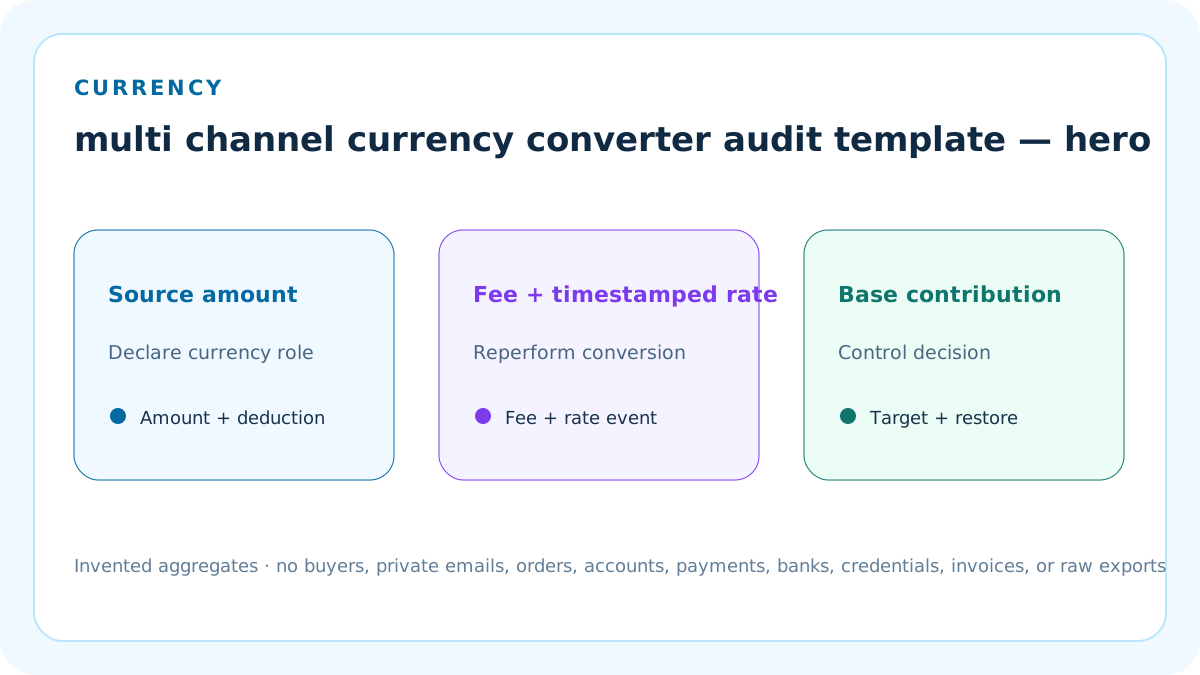
Record currency roles
Record channel and cohort identity, every currency role, gross retained revenue, source deductions, conversion-fee rate and base, exchange-rate direction and timestamp, normalized revenue, base-currency costs, contribution, retained orders, rounding policy, source versions, conflicts, owner, reviewer, prior packet, decision, monitoring trigger, stop rule, and restoration test. Preserve prior value, new value, reason, source, approver, expected effect, realized variance, and rollback result. Checkpoint 1 in the currency audit packet records channel, cohort, currency roles, amount layers, rate event, source version, owner, reviewer, and accepted formula before interpretation.
For record currency roles, keep gross source amount, deductions, fee percentage and base, exchange-rate direction, timestamp, normalized revenue, base costs, retained orders, target, conflict, backup, stop rule, and restoration separate.
Use invented or approved aggregate values only. Exclude private emails, buyer identities, addresses, order rows, account IDs, payment details, bank records, credentials, private invoices, campaign identifiers, and raw exports from the public currency audit packet.
Record cohort dates
Record channel and cohort identity, every currency role, gross retained revenue, source deductions, conversion-fee rate and base, exchange-rate direction and timestamp, normalized revenue, base-currency costs, contribution, retained orders, rounding policy, source versions, conflicts, owner, reviewer, prior packet, decision, monitoring trigger, stop rule, and restoration test. Preserve prior value, new value, reason, source, approver, expected effect, realized variance, and rollback result. Checkpoint 2 in the currency audit packet records channel, cohort, currency roles, amount layers, rate event, source version, owner, reviewer, and accepted formula before interpretation.
For record cohort dates, keep gross source amount, deductions, fee percentage and base, exchange-rate direction, timestamp, normalized revenue, base costs, retained orders, target, conflict, backup, stop rule, and restoration separate.
Use invented or approved aggregate values only. Exclude private emails, buyer identities, addresses, order rows, account IDs, payment details, bank records, credentials, private invoices, campaign identifiers, and raw exports from the public currency audit packet.
Record gross amount
Record channel and cohort identity, every currency role, gross retained revenue, source deductions, conversion-fee rate and base, exchange-rate direction and timestamp, normalized revenue, base-currency costs, contribution, retained orders, rounding policy, source versions, conflicts, owner, reviewer, prior packet, decision, monitoring trigger, stop rule, and restoration test. Preserve prior value, new value, reason, source, approver, expected effect, realized variance, and rollback result. Checkpoint 3 in the currency audit packet records channel, cohort, currency roles, amount layers, rate event, source version, owner, reviewer, and accepted formula before interpretation.
For record gross amount, keep gross source amount, deductions, fee percentage and base, exchange-rate direction, timestamp, normalized revenue, base costs, retained orders, target, conflict, backup, stop rule, and restoration separate.
Use invented or approved aggregate values only. Exclude private emails, buyer identities, addresses, order rows, account IDs, payment details, bank records, credentials, private invoices, campaign identifiers, and raw exports from the public currency audit packet.
Record deductions
Record channel and cohort identity, every currency role, gross retained revenue, source deductions, conversion-fee rate and base, exchange-rate direction and timestamp, normalized revenue, base-currency costs, contribution, retained orders, rounding policy, source versions, conflicts, owner, reviewer, prior packet, decision, monitoring trigger, stop rule, and restoration test. Preserve prior value, new value, reason, source, approver, expected effect, realized variance, and rollback result. Checkpoint 4 in the currency audit packet records channel, cohort, currency roles, amount layers, rate event, source version, owner, reviewer, and accepted formula before interpretation.
For record deductions, keep gross source amount, deductions, fee percentage and base, exchange-rate direction, timestamp, normalized revenue, base costs, retained orders, target, conflict, backup, stop rule, and restoration separate.
Use invented or approved aggregate values only. Exclude private emails, buyer identities, addresses, order rows, account IDs, payment details, bank records, credentials, private invoices, campaign identifiers, and raw exports from the public currency audit packet.
Record fee base
Record channel and cohort identity, every currency role, gross retained revenue, source deductions, conversion-fee rate and base, exchange-rate direction and timestamp, normalized revenue, base-currency costs, contribution, retained orders, rounding policy, source versions, conflicts, owner, reviewer, prior packet, decision, monitoring trigger, stop rule, and restoration test. Preserve prior value, new value, reason, source, approver, expected effect, realized variance, and rollback result. Checkpoint 5 in the currency audit packet records channel, cohort, currency roles, amount layers, rate event, source version, owner, reviewer, and accepted formula before interpretation.
For record fee base, keep gross source amount, deductions, fee percentage and base, exchange-rate direction, timestamp, normalized revenue, base costs, retained orders, target, conflict, backup, stop rule, and restoration separate.
Use invented or approved aggregate values only. Exclude private emails, buyer identities, addresses, order rows, account IDs, payment details, bank records, credentials, private invoices, campaign identifiers, and raw exports from the public currency audit packet.
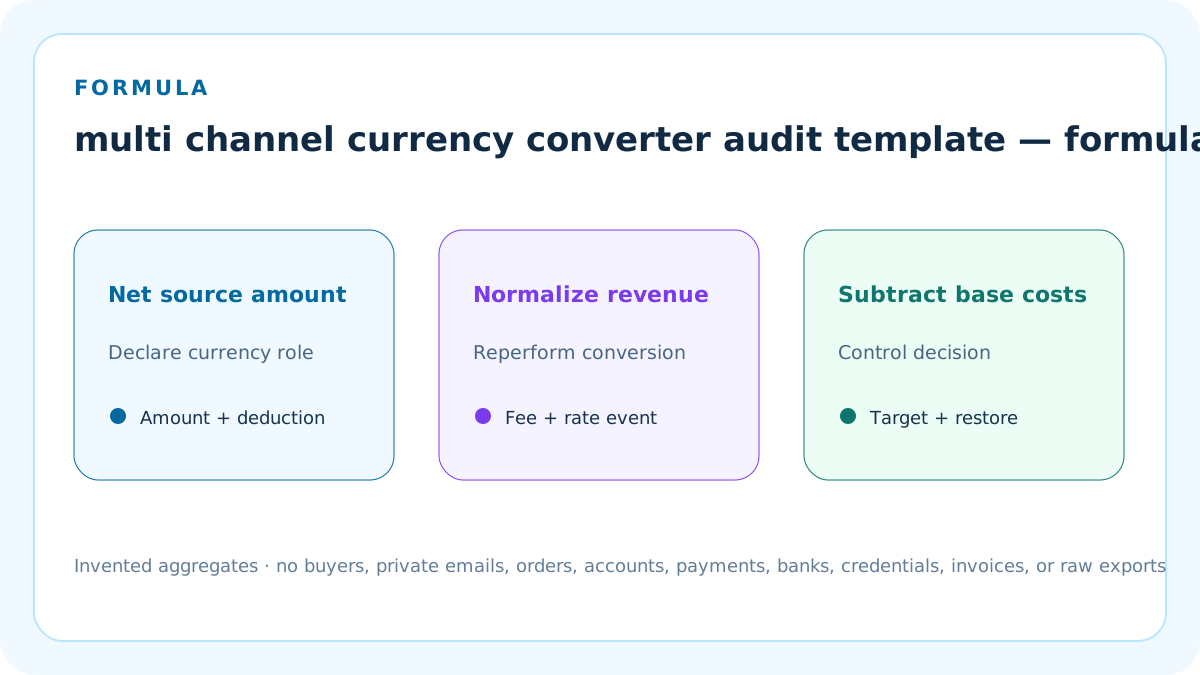
Record rate and timestamp
Record channel and cohort identity, every currency role, gross retained revenue, source deductions, conversion-fee rate and base, exchange-rate direction and timestamp, normalized revenue, base-currency costs, contribution, retained orders, rounding policy, source versions, conflicts, owner, reviewer, prior packet, decision, monitoring trigger, stop rule, and restoration test. Preserve prior value, new value, reason, source, approver, expected effect, realized variance, and rollback result. Checkpoint 6 in the currency audit packet records channel, cohort, currency roles, amount layers, rate event, source version, owner, reviewer, and accepted formula before interpretation.
For record rate and timestamp, keep gross source amount, deductions, fee percentage and base, exchange-rate direction, timestamp, normalized revenue, base costs, retained orders, target, conflict, backup, stop rule, and restoration separate.
Use invented or approved aggregate values only. Exclude private emails, buyer identities, addresses, order rows, account IDs, payment details, bank records, credentials, private invoices, campaign identifiers, and raw exports from the public currency audit packet.
Record base costs
Record channel and cohort identity, every currency role, gross retained revenue, source deductions, conversion-fee rate and base, exchange-rate direction and timestamp, normalized revenue, base-currency costs, contribution, retained orders, rounding policy, source versions, conflicts, owner, reviewer, prior packet, decision, monitoring trigger, stop rule, and restoration test. Preserve prior value, new value, reason, source, approver, expected effect, realized variance, and rollback result. Checkpoint 7 in the currency audit packet records channel, cohort, currency roles, amount layers, rate event, source version, owner, reviewer, and accepted formula before interpretation.
For record base costs, keep gross source amount, deductions, fee percentage and base, exchange-rate direction, timestamp, normalized revenue, base costs, retained orders, target, conflict, backup, stop rule, and restoration separate.
Use invented or approved aggregate values only. Exclude private emails, buyer identities, addresses, order rows, account IDs, payment details, bank records, credentials, private invoices, campaign identifiers, and raw exports from the public currency audit packet.
Record formulas and outputs
Record channel and cohort identity, every currency role, gross retained revenue, source deductions, conversion-fee rate and base, exchange-rate direction and timestamp, normalized revenue, base-currency costs, contribution, retained orders, rounding policy, source versions, conflicts, owner, reviewer, prior packet, decision, monitoring trigger, stop rule, and restoration test. Preserve prior value, new value, reason, source, approver, expected effect, realized variance, and rollback result. Checkpoint 8 in the currency audit packet records channel, cohort, currency roles, amount layers, rate event, source version, owner, reviewer, and accepted formula before interpretation.
For record formulas and outputs, keep gross source amount, deductions, fee percentage and base, exchange-rate direction, timestamp, normalized revenue, base costs, retained orders, target, conflict, backup, stop rule, and restoration separate.
Use invented or approved aggregate values only. Exclude private emails, buyer identities, addresses, order rows, account IDs, payment details, bank records, credentials, private invoices, campaign identifiers, and raw exports from the public currency audit packet.
Record conflicts and decision
Record channel and cohort identity, every currency role, gross retained revenue, source deductions, conversion-fee rate and base, exchange-rate direction and timestamp, normalized revenue, base-currency costs, contribution, retained orders, rounding policy, source versions, conflicts, owner, reviewer, prior packet, decision, monitoring trigger, stop rule, and restoration test. Preserve prior value, new value, reason, source, approver, expected effect, realized variance, and rollback result. Checkpoint 9 in the currency audit packet records channel, cohort, currency roles, amount layers, rate event, source version, owner, reviewer, and accepted formula before interpretation.
For record conflicts and decision, keep gross source amount, deductions, fee percentage and base, exchange-rate direction, timestamp, normalized revenue, base costs, retained orders, target, conflict, backup, stop rule, and restoration separate.
Use invented or approved aggregate values only. Exclude private emails, buyer identities, addresses, order rows, account IDs, payment details, bank records, credentials, private invoices, campaign identifiers, and raw exports from the public currency audit packet.
Record monitoring and restoration
Record channel and cohort identity, every currency role, gross retained revenue, source deductions, conversion-fee rate and base, exchange-rate direction and timestamp, normalized revenue, base-currency costs, contribution, retained orders, rounding policy, source versions, conflicts, owner, reviewer, prior packet, decision, monitoring trigger, stop rule, and restoration test. Preserve prior value, new value, reason, source, approver, expected effect, realized variance, and rollback result. Checkpoint 10 in the currency audit packet records channel, cohort, currency roles, amount layers, rate event, source version, owner, reviewer, and accepted formula before interpretation.
For record monitoring and restoration, keep gross source amount, deductions, fee percentage and base, exchange-rate direction, timestamp, normalized revenue, base costs, retained orders, target, conflict, backup, stop rule, and restoration separate.
Use invented or approved aggregate values only. Exclude private emails, buyer identities, addresses, order rows, account IDs, payment details, bank records, credentials, private invoices, campaign identifiers, and raw exports from the public currency audit packet.
Record currency roles: verification test 1
Create one synthetic counterexample for record currency roles. Change a single currency, amount, deduction, fee-base, rate, timestamp, refund, base-cost, retained-order, or threshold field; retain the prior packet; and show the normalized-revenue, contribution, margin, per-order, rate-gap, and Block, Review, or Ready effect.
Reconcile the counterexample against first-party transaction, order-timeline, payout, refund, chargeback, bank-conversion, base-cost, official-definition, source-version, owner, reviewer, protected-baseline, stop-trigger, and restored-result evidence.
Explain why the test does not prove a future rate, hedging value, timing advantage, channel superiority, demand, conversion, lifetime value, cash availability, accounting income, functional currency, tax treatment, or legal compliance.
Record cohort dates: verification test 2
Create one synthetic counterexample for record cohort dates. Change a single currency, amount, deduction, fee-base, rate, timestamp, refund, base-cost, retained-order, or threshold field; retain the prior packet; and show the normalized-revenue, contribution, margin, per-order, rate-gap, and Block, Review, or Ready effect.
Reconcile the counterexample against first-party transaction, order-timeline, payout, refund, chargeback, bank-conversion, base-cost, official-definition, source-version, owner, reviewer, protected-baseline, stop-trigger, and restored-result evidence.
Explain why the test does not prove a future rate, hedging value, timing advantage, channel superiority, demand, conversion, lifetime value, cash availability, accounting income, functional currency, tax treatment, or legal compliance.
Record gross amount: verification test 3
Create one synthetic counterexample for record gross amount. Change a single currency, amount, deduction, fee-base, rate, timestamp, refund, base-cost, retained-order, or threshold field; retain the prior packet; and show the normalized-revenue, contribution, margin, per-order, rate-gap, and Block, Review, or Ready effect.
Reconcile the counterexample against first-party transaction, order-timeline, payout, refund, chargeback, bank-conversion, base-cost, official-definition, source-version, owner, reviewer, protected-baseline, stop-trigger, and restored-result evidence.
Explain why the test does not prove a future rate, hedging value, timing advantage, channel superiority, demand, conversion, lifetime value, cash availability, accounting income, functional currency, tax treatment, or legal compliance.
Record deductions: verification test 4
Create one synthetic counterexample for record deductions. Change a single currency, amount, deduction, fee-base, rate, timestamp, refund, base-cost, retained-order, or threshold field; retain the prior packet; and show the normalized-revenue, contribution, margin, per-order, rate-gap, and Block, Review, or Ready effect.
Reconcile the counterexample against first-party transaction, order-timeline, payout, refund, chargeback, bank-conversion, base-cost, official-definition, source-version, owner, reviewer, protected-baseline, stop-trigger, and restored-result evidence.
Explain why the test does not prove a future rate, hedging value, timing advantage, channel superiority, demand, conversion, lifetime value, cash availability, accounting income, functional currency, tax treatment, or legal compliance.
Record fee base: verification test 5
Create one synthetic counterexample for record fee base. Change a single currency, amount, deduction, fee-base, rate, timestamp, refund, base-cost, retained-order, or threshold field; retain the prior packet; and show the normalized-revenue, contribution, margin, per-order, rate-gap, and Block, Review, or Ready effect.
Reconcile the counterexample against first-party transaction, order-timeline, payout, refund, chargeback, bank-conversion, base-cost, official-definition, source-version, owner, reviewer, protected-baseline, stop-trigger, and restored-result evidence.
Explain why the test does not prove a future rate, hedging value, timing advantage, channel superiority, demand, conversion, lifetime value, cash availability, accounting income, functional currency, tax treatment, or legal compliance.
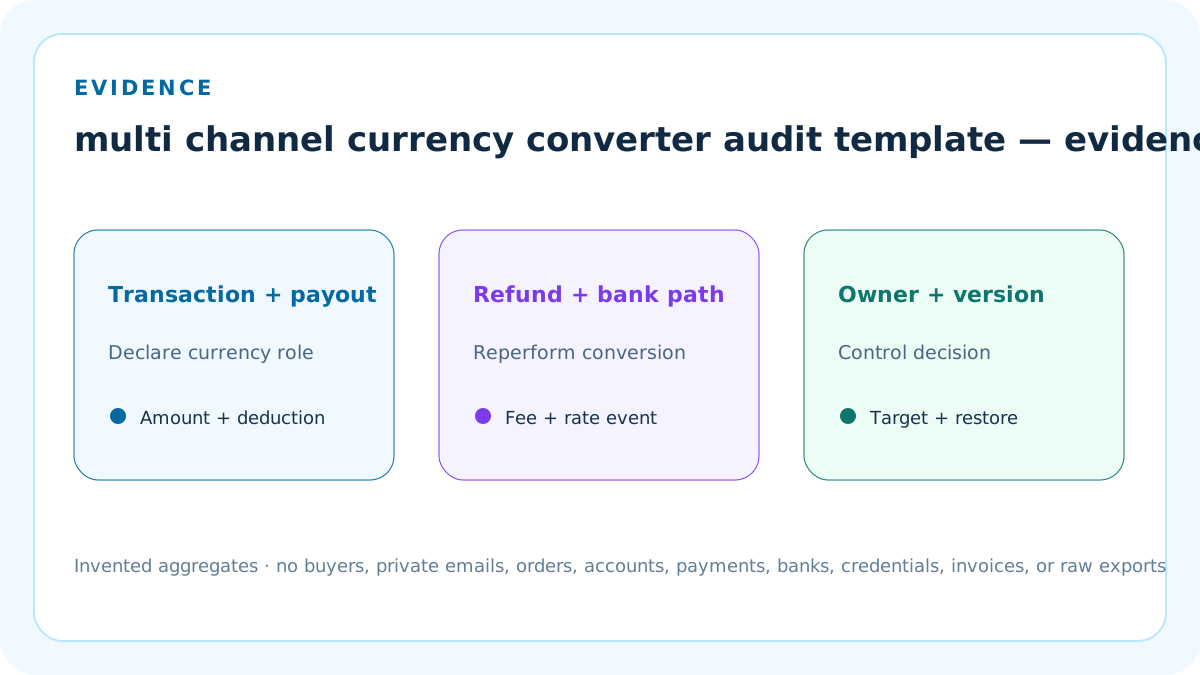
Record rate and timestamp: verification test 6
Create one synthetic counterexample for record rate and timestamp. Change a single currency, amount, deduction, fee-base, rate, timestamp, refund, base-cost, retained-order, or threshold field; retain the prior packet; and show the normalized-revenue, contribution, margin, per-order, rate-gap, and Block, Review, or Ready effect.
Reconcile the counterexample against first-party transaction, order-timeline, payout, refund, chargeback, bank-conversion, base-cost, official-definition, source-version, owner, reviewer, protected-baseline, stop-trigger, and restored-result evidence.
Explain why the test does not prove a future rate, hedging value, timing advantage, channel superiority, demand, conversion, lifetime value, cash availability, accounting income, functional currency, tax treatment, or legal compliance.
Record base costs: verification test 7
Create one synthetic counterexample for record base costs. Change a single currency, amount, deduction, fee-base, rate, timestamp, refund, base-cost, retained-order, or threshold field; retain the prior packet; and show the normalized-revenue, contribution, margin, per-order, rate-gap, and Block, Review, or Ready effect.
Reconcile the counterexample against first-party transaction, order-timeline, payout, refund, chargeback, bank-conversion, base-cost, official-definition, source-version, owner, reviewer, protected-baseline, stop-trigger, and restored-result evidence.
Explain why the test does not prove a future rate, hedging value, timing advantage, channel superiority, demand, conversion, lifetime value, cash availability, accounting income, functional currency, tax treatment, or legal compliance.
Record formulas and outputs: verification test 8
Create one synthetic counterexample for record formulas and outputs. Change a single currency, amount, deduction, fee-base, rate, timestamp, refund, base-cost, retained-order, or threshold field; retain the prior packet; and show the normalized-revenue, contribution, margin, per-order, rate-gap, and Block, Review, or Ready effect.
Reconcile the counterexample against first-party transaction, order-timeline, payout, refund, chargeback, bank-conversion, base-cost, official-definition, source-version, owner, reviewer, protected-baseline, stop-trigger, and restored-result evidence.
Explain why the test does not prove a future rate, hedging value, timing advantage, channel superiority, demand, conversion, lifetime value, cash availability, accounting income, functional currency, tax treatment, or legal compliance.
Record conflicts and decision: verification test 9
Create one synthetic counterexample for record conflicts and decision. Change a single currency, amount, deduction, fee-base, rate, timestamp, refund, base-cost, retained-order, or threshold field; retain the prior packet; and show the normalized-revenue, contribution, margin, per-order, rate-gap, and Block, Review, or Ready effect.
Reconcile the counterexample against first-party transaction, order-timeline, payout, refund, chargeback, bank-conversion, base-cost, official-definition, source-version, owner, reviewer, protected-baseline, stop-trigger, and restored-result evidence.
Explain why the test does not prove a future rate, hedging value, timing advantage, channel superiority, demand, conversion, lifetime value, cash availability, accounting income, functional currency, tax treatment, or legal compliance.
Record monitoring and restoration: verification test 10
Create one synthetic counterexample for record monitoring and restoration. Change a single currency, amount, deduction, fee-base, rate, timestamp, refund, base-cost, retained-order, or threshold field; retain the prior packet; and show the normalized-revenue, contribution, margin, per-order, rate-gap, and Block, Review, or Ready effect.
Reconcile the counterexample against first-party transaction, order-timeline, payout, refund, chargeback, bank-conversion, base-cost, official-definition, source-version, owner, reviewer, protected-baseline, stop-trigger, and restored-result evidence.
Explain why the test does not prove a future rate, hedging value, timing advantage, channel superiority, demand, conversion, lifetime value, cash availability, accounting income, functional currency, tax treatment, or legal compliance.
Multi-Channel Currency Audit Template: evidence exercise 1
Reperform record currency roles with invented same-day and delayed-payout cohorts. Hold source and base currency roles, gross amount, deduction definition, fee base, base costs, retained-order definition, rounding, and evidence controls constant where comparison requires them.
Archive the accepted packet before varying the field. Explain the resulting net source amount, conversion fee, normalized revenue, base costs, contribution, margin, per-order contribution, A-minus-B difference, rate gap, decision, monitoring trigger, and restoration path.
The exercise remains educational and source-linked. It does not fetch a live rate, recommend a transfer or hedge, predict a currency, approve a channel, determine accounting or tax treatment, or replace market-, region-, plan-, payment-, platform-, bank-, contract-, or professional review.
Multi-Channel Currency Audit Template: evidence exercise 2
Reperform record cohort dates with invented same-day and delayed-payout cohorts. Hold source and base currency roles, gross amount, deduction definition, fee base, base costs, retained-order definition, rounding, and evidence controls constant where comparison requires them.
Archive the accepted packet before varying the field. Explain the resulting net source amount, conversion fee, normalized revenue, base costs, contribution, margin, per-order contribution, A-minus-B difference, rate gap, decision, monitoring trigger, and restoration path.
The exercise remains educational and source-linked. It does not fetch a live rate, recommend a transfer or hedge, predict a currency, approve a channel, determine accounting or tax treatment, or replace market-, region-, plan-, payment-, platform-, bank-, contract-, or professional review.
Multi-Channel Currency Audit Template: evidence exercise 3
Reperform record gross amount with invented same-day and delayed-payout cohorts. Hold source and base currency roles, gross amount, deduction definition, fee base, base costs, retained-order definition, rounding, and evidence controls constant where comparison requires them.
Archive the accepted packet before varying the field. Explain the resulting net source amount, conversion fee, normalized revenue, base costs, contribution, margin, per-order contribution, A-minus-B difference, rate gap, decision, monitoring trigger, and restoration path.
The exercise remains educational and source-linked. It does not fetch a live rate, recommend a transfer or hedge, predict a currency, approve a channel, determine accounting or tax treatment, or replace market-, region-, plan-, payment-, platform-, bank-, contract-, or professional review.
Multi-Channel Currency Audit Template: evidence exercise 4
Reperform record deductions with invented same-day and delayed-payout cohorts. Hold source and base currency roles, gross amount, deduction definition, fee base, base costs, retained-order definition, rounding, and evidence controls constant where comparison requires them.
Archive the accepted packet before varying the field. Explain the resulting net source amount, conversion fee, normalized revenue, base costs, contribution, margin, per-order contribution, A-minus-B difference, rate gap, decision, monitoring trigger, and restoration path.
The exercise remains educational and source-linked. It does not fetch a live rate, recommend a transfer or hedge, predict a currency, approve a channel, determine accounting or tax treatment, or replace market-, region-, plan-, payment-, platform-, bank-, contract-, or professional review.
Multi-Channel Currency Audit Template: evidence exercise 5
Reperform record fee base with invented same-day and delayed-payout cohorts. Hold source and base currency roles, gross amount, deduction definition, fee base, base costs, retained-order definition, rounding, and evidence controls constant where comparison requires them.
Archive the accepted packet before varying the field. Explain the resulting net source amount, conversion fee, normalized revenue, base costs, contribution, margin, per-order contribution, A-minus-B difference, rate gap, decision, monitoring trigger, and restoration path.
The exercise remains educational and source-linked. It does not fetch a live rate, recommend a transfer or hedge, predict a currency, approve a channel, determine accounting or tax treatment, or replace market-, region-, plan-, payment-, platform-, bank-, contract-, or professional review.
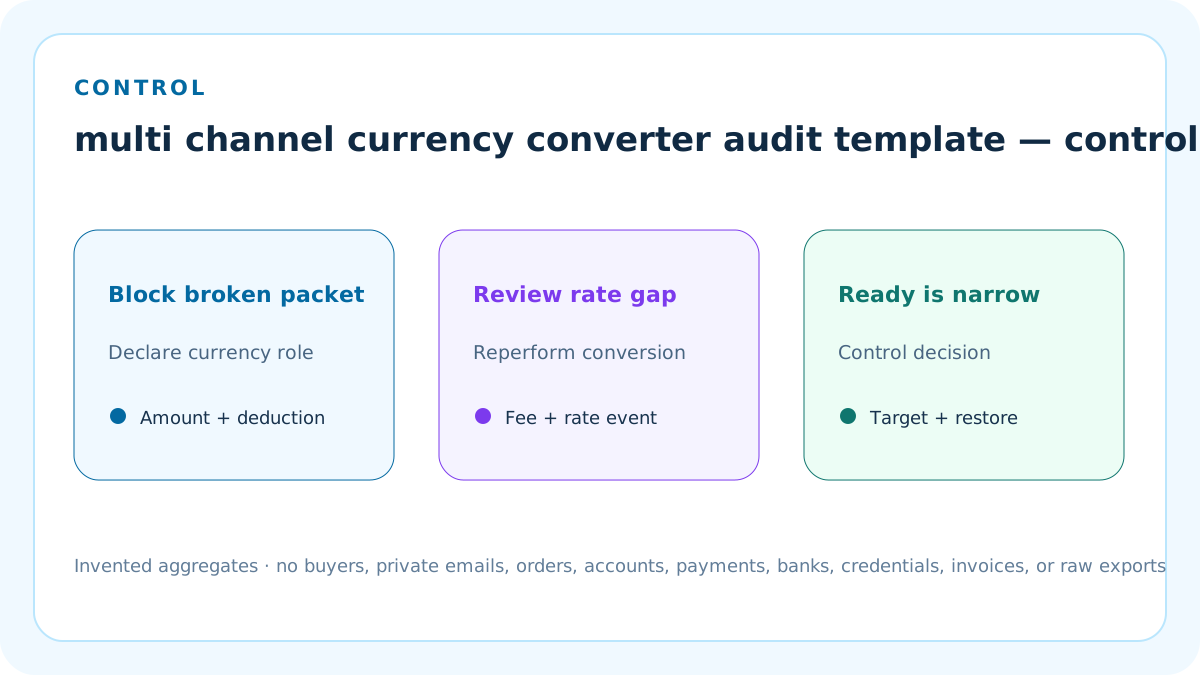
Multi-Channel Currency Audit Template: evidence exercise 6
Reperform record rate and timestamp with invented same-day and delayed-payout cohorts. Hold source and base currency roles, gross amount, deduction definition, fee base, base costs, retained-order definition, rounding, and evidence controls constant where comparison requires them.
Archive the accepted packet before varying the field. Explain the resulting net source amount, conversion fee, normalized revenue, base costs, contribution, margin, per-order contribution, A-minus-B difference, rate gap, decision, monitoring trigger, and restoration path.
The exercise remains educational and source-linked. It does not fetch a live rate, recommend a transfer or hedge, predict a currency, approve a channel, determine accounting or tax treatment, or replace market-, region-, plan-, payment-, platform-, bank-, contract-, or professional review.
Multi-Channel Currency Audit Template: evidence exercise 7
Reperform record base costs with invented same-day and delayed-payout cohorts. Hold source and base currency roles, gross amount, deduction definition, fee base, base costs, retained-order definition, rounding, and evidence controls constant where comparison requires them.
Archive the accepted packet before varying the field. Explain the resulting net source amount, conversion fee, normalized revenue, base costs, contribution, margin, per-order contribution, A-minus-B difference, rate gap, decision, monitoring trigger, and restoration path.
The exercise remains educational and source-linked. It does not fetch a live rate, recommend a transfer or hedge, predict a currency, approve a channel, determine accounting or tax treatment, or replace market-, region-, plan-, payment-, platform-, bank-, contract-, or professional review.
Multi-Channel Currency Audit Template: evidence exercise 8
Reperform record formulas and outputs with invented same-day and delayed-payout cohorts. Hold source and base currency roles, gross amount, deduction definition, fee base, base costs, retained-order definition, rounding, and evidence controls constant where comparison requires them.
Archive the accepted packet before varying the field. Explain the resulting net source amount, conversion fee, normalized revenue, base costs, contribution, margin, per-order contribution, A-minus-B difference, rate gap, decision, monitoring trigger, and restoration path.
The exercise remains educational and source-linked. It does not fetch a live rate, recommend a transfer or hedge, predict a currency, approve a channel, determine accounting or tax treatment, or replace market-, region-, plan-, payment-, platform-, bank-, contract-, or professional review.
Multi-Channel Currency Audit Template: evidence exercise 9
Reperform record conflicts and decision with invented same-day and delayed-payout cohorts. Hold source and base currency roles, gross amount, deduction definition, fee base, base costs, retained-order definition, rounding, and evidence controls constant where comparison requires them.
Archive the accepted packet before varying the field. Explain the resulting net source amount, conversion fee, normalized revenue, base costs, contribution, margin, per-order contribution, A-minus-B difference, rate gap, decision, monitoring trigger, and restoration path.
The exercise remains educational and source-linked. It does not fetch a live rate, recommend a transfer or hedge, predict a currency, approve a channel, determine accounting or tax treatment, or replace market-, region-, plan-, payment-, platform-, bank-, contract-, or professional review.
Multi-Channel Currency Audit Template: evidence exercise 10
Reperform record monitoring and restoration with invented same-day and delayed-payout cohorts. Hold source and base currency roles, gross amount, deduction definition, fee base, base costs, retained-order definition, rounding, and evidence controls constant where comparison requires them.
Archive the accepted packet before varying the field. Explain the resulting net source amount, conversion fee, normalized revenue, base costs, contribution, margin, per-order contribution, A-minus-B difference, rate gap, decision, monitoring trigger, and restoration path.
The exercise remains educational and source-linked. It does not fetch a live rate, recommend a transfer or hedge, predict a currency, approve a channel, determine accounting or tax treatment, or replace market-, region-, plan-, payment-, platform-, bank-, contract-, or professional review.
Version the April 2026 rule transition
The change log has one row for platform, rule name, old formula, new formula, effective date, market, plan, payment path, source URL, access date, and accepted cohort. For Shopify, the current page states that conversion-fee and Multi-Currency Payout fee calculations changed on April 6, 2026 to a gross-order basis.
A historical packet stores the formula actually applicable to its transaction dates. A current packet does not silently inherit an older net-order method. For Etsy, the row records listing currency, Payment account currency, sale-amount fee base, rate, and applied-rate evidence. TikTok rows distinguish ad-account reporting currency from shop and settlement evidence.
Any source revision triggers a controlled comparison with the prior accepted packet. The reviewer records which input or output changed and why, while preserving both versions. No rule update automatically changes a live shop, payout, bank, price, or accounting record.
Make the packet independently reproducible
The final audit packet records channel, closed dates, maturity, all currency roles, gross retained revenue, non-conversion deductions, fee base, fee rate, rate direction, event date, base costs, retained orders, formulas, unrounded intermediate values, displayed outputs, thresholds, confirmations, conflicts, and decision.
Each field maps to an official definition or seller-owned aggregate source with access and data-through dates. The reviewer redoes the fee and one-unit rate calculation, checks that 26 values quarantine on structural Block, verifies the prior packet and backup hashes, and confirms stop and restoration owners.
The public artifact excludes buyer, order, account, payment, bank, credential, invoice, campaign, and raw-export data. The durable change log contains only privacy-safe aggregate evidence and control metadata needed to reproduce the calculation and the decision.
Sources and further reading
- Etsy Help: Currency Conversion Fees: Official listing-currency, Payment-account-currency, sale-amount fee-base, and applied-rate context.
- Etsy Help: Currencies Supported for Etsy Payments: Official buyer, listing, deposit-currency, bank-location, and possible bank foreign-exchange context.
- Shopify Help: Currency conversions and exchange rates: Official store, presentment, payout, transaction-time, refund, chargeback, and timing-risk definitions.
- Shopify Help: Supported payout currencies: Official payout-currency, fee, historical-rate, and multi-currency payout context.
- Shopify Help: Currency conversion fee calculation: Official old and post-April 6, 2026 fee-base formulas, including the current gross-order basis.
- TikTok Ads: Product-level reporting: Official reporting-currency and shop-currency variation warning.
- TikTok Ads: Shop Ads reporting time: Official attributed-event versus real-time conversion reporting dates for cohort alignment.
- Seller Profit Guard methodology: Evidence, privacy, calculation, review, correction, release, and restoration controls.
Related Seller Profit Guard tools
- Multi-Channel Currency Margin Converter: Normalize two closed currency cohorts into one base currency.
- Etsy Currency Conversion Fee Calculator: Reconstruct one Etsy-specific fee packet.
- Sales Channel Contribution Calculator: Compare complete channel contribution after normalization.
- Marketplace Fee Comparison Calculator: Compare fee packets at retained-order grain.
- Methodology: Review evidence, privacy, calculation, correction, release, and restoration.
- Data Privacy: Protect seller, buyer, order, payment, bank, and raw-export data.
- Multi-Channel Currency Conversion Formula and Inputs: Define source, presentment, store, payout and base currencies, deductions, fee base, rate direction, timestamp, costs, retained orders, and formulas.
- Same-Day Etsy Currency Conversion Example: Reperform an invented EUR Etsy cohort through deductions, sale-amount fee base, same-day rate, USD costs, contribution, margin, and evidence.
- Delayed Shopify Payout Currency Example: Model a delayed payout with a later rate, gross-order fee base, refund timing, order timeline, payout evidence, and USD contribution.
- Multi-Channel Currency Conversion Mistakes: Diagnose reversed rates, mixed currency roles, fee-base errors, double conversion, timing mismatch, refunds, rounding, denominator, and interpretation errors.
- Reliable Multi-Channel Currency Data Sources: Map currencies, amounts, deductions, fee bases, rates, timestamps, refunds, payouts, costs, ownership, and restoration to first-party evidence.
- Multi-Channel Currency Decision Thresholds: Separate structural Block, economic Review, narrow Ready, rate-variance threshold, overrides, stop rules, monitoring, and restoration.
- Compare Same-Day and Delayed Currency Conversion: Hold revenue, deductions, fee base, base costs, retained orders, and currency roles constant while isolating fee and timing differences.
- Monthly Multi-Channel Currency Review Routine: Turn normalization into a repeatable transaction, payout, refund, bank, cost, review, exception, monitoring, and rollback cadence.
- Interpret Normalized Currency Contribution: Read normalized revenue, contribution, margin, per-order result, and rate gap without false precision or financial-advice claims.
Next step: Open Seller Profit Guard.
This is operational planning help, not tax, accounting, legal, financial, or platform-policy advice. Review the Terms and disclaimer, and verify current platform rules and fee assumptions before changing prices.