Maximum discount worked example for a sitewide sale
Last updated: 2026-07-31
Written and reviewed by Seller Profit Guard Editorial Team.
A USD 50 product with USD 5 buyer shipping, USD 26.30 fixed variable costs, a 10% variable fee, and a 20% target requires USD 37.57 charged revenue. Merchandise must contribute USD 32.57, making the target-safe discount USD 17.43, or 34.86%. Use synthetic, aggregate inputs—never buyer identities, emails, payments, orders, or raw CSV.
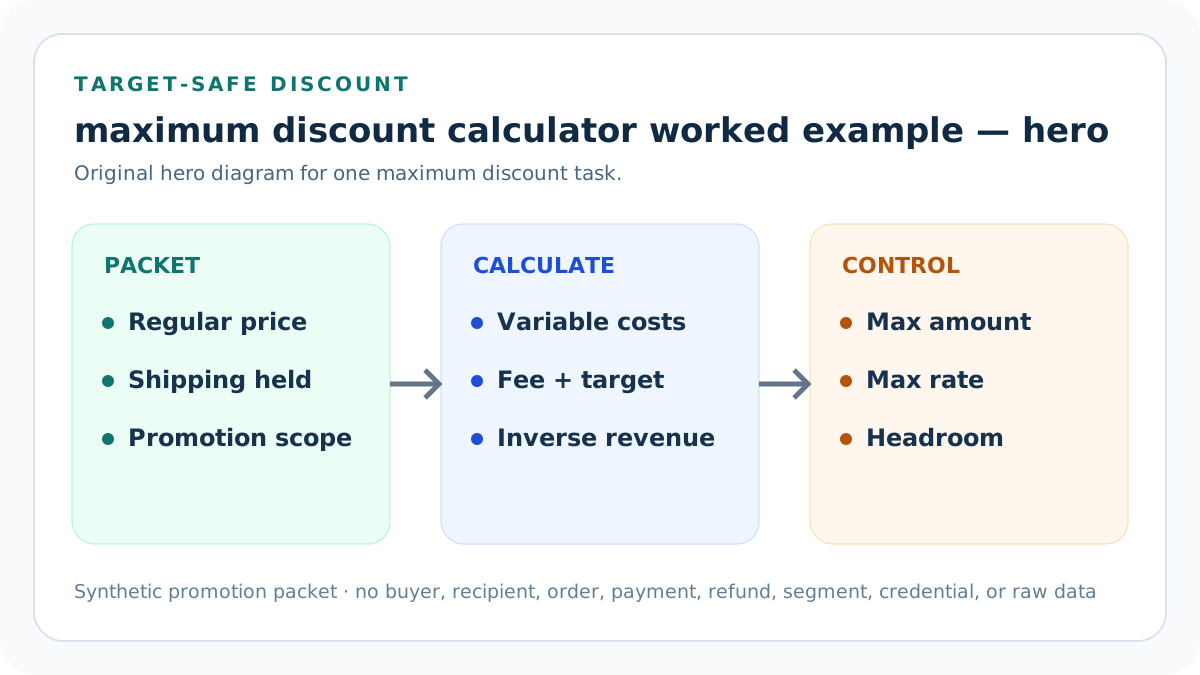
Confirm the USD 50 regular price
Use one ordinary merchandise price for the same product, market, currency, quantity, and nonpromoted treatment. Add the result to the sitewide-sale calculation worksheet with its product-profile alias, source version, evidence date, owner, currency, denominator, scope, and affected calculation field. That evidence makes a traceable numerical sale decision reproducible rather than dependent on memory, a marketing label, or an unversioned settings screen.
A crossed-out reference price or a different market cannot replace the actual baseline. Review point 1 must distinguish observed data, explicit assumptions, unresolved evidence, and decisions outside the calculator. Keep regular price, charged revenue, merchandise discount, shipping treatment, variable fee, fixed cost, expected loss, target, eligibility, stacking, and settlement state separate.
Keep USD 5 shipping charged
Treat buyer-paid shipping as unchanged revenue and keep the seller's USD 6 fulfillment cost in the cost pool. Add the result to the sitewide-sale calculation worksheet with its product-profile alias, source version, evidence date, owner, currency, denominator, scope, and affected calculation field. That evidence makes a traceable numerical sale decision reproducible rather than dependent on memory, a marketing label, or an unversioned settings screen.
Shipping revenue and shipping cost are separate lines with different evidence. Review point 2 must distinguish observed data, explicit assumptions, unresolved evidence, and decisions outside the calculator. Keep regular price, charged revenue, merchandise discount, shipping treatment, variable fee, fixed cost, expected loss, target, eligibility, stacking, and settlement state separate.
Assemble USD 26.30 cost
Add USD 15 product, USD 2 packaging, USD 6 fulfillment, USD 0.30 fixed fee, USD 2 expected loss, and USD 1 other variable cost. Add the result to the sitewide-sale calculation worksheet with its product-profile alias, source version, evidence date, owner, currency, denominator, scope, and affected calculation field. That evidence makes a traceable numerical sale decision reproducible rather than dependent on memory, a marketing label, or an unversioned settings screen.
Every component needs a version and must occur once. Review point 3 must distinguish observed data, explicit assumptions, unresolved evidence, and decisions outside the calculator. Keep regular price, charged revenue, merchandise discount, shipping treatment, variable fee, fixed cost, expected loss, target, eligibility, stacking, and settlement state separate.
Use the 70% inverse denominator
Subtract the 10% fee and 20% target from one, leaving 0.70. Add the result to the sitewide-sale calculation worksheet with its product-profile alias, source version, evidence date, owner, currency, denominator, scope, and affected calculation field. That evidence makes a traceable numerical sale decision reproducible rather than dependent on memory, a marketing label, or an unversioned settings screen.
This denominator converts the fixed variable-cost pool into required charged revenue. Review point 4 must distinguish observed data, explicit assumptions, unresolved evidence, and decisions outside the calculator. Keep regular price, charged revenue, merchandise discount, shipping treatment, variable fee, fixed cost, expected loss, target, eligibility, stacking, and settlement state separate.
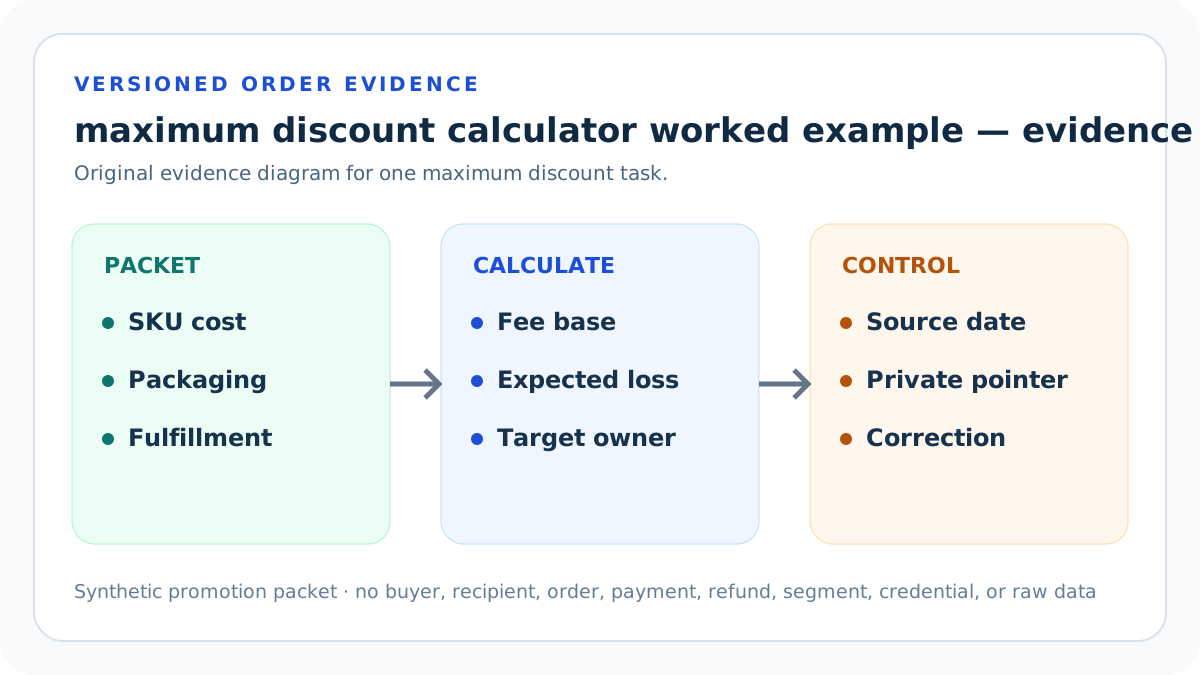
Calculate USD 37.57 required revenue
Divide USD 26.30 by 0.70 and retain full precision before display. Add the result to the sitewide-sale calculation worksheet with its product-profile alias, source version, evidence date, owner, currency, denominator, scope, and affected calculation field. That evidence makes a traceable numerical sale decision reproducible rather than dependent on memory, a marketing label, or an unversioned settings screen.
Prematurely rounding the denominator or required revenue changes the final cents and rate. Review point 5 must distinguish observed data, explicit assumptions, unresolved evidence, and decisions outside the calculator. Keep regular price, charged revenue, merchandise discount, shipping treatment, variable fee, fixed cost, expected loss, target, eligibility, stacking, and settlement state separate.
Calculate USD 17.43 discount capacity
Subtract USD 5 shipping from required revenue, then subtract the USD 32.57 merchandise requirement from regular price. Add the result to the sitewide-sale calculation worksheet with its product-profile alias, source version, evidence date, owner, currency, denominator, scope, and affected calculation field. That evidence makes a traceable numerical sale decision reproducible rather than dependent on memory, a marketing label, or an unversioned settings screen.
The merchandise-only boundary is 34.86% of USD 50. Review point 6 must distinguish observed data, explicit assumptions, unresolved evidence, and decisions outside the calculator. Keep regular price, charged revenue, merchandise discount, shipping treatment, variable fee, fixed cost, expected loss, target, eligibility, stacking, and settlement state separate.
Evaluate the proposed 15% sale
Discount merchandise by USD 7.50, charge USD 47.50 including shipping, pay USD 4.75 variable fee, and retain USD 16.45 contribution. Add the result to the sitewide-sale calculation worksheet with its product-profile alias, source version, evidence date, owner, currency, denominator, scope, and affected calculation field. That evidence makes a traceable numerical sale decision reproducible rather than dependent on memory, a marketing label, or an unversioned settings screen.
The proposal leaves 19.86 percentage points of target-safe discount headroom and routes to Ready. Review point 7 must distinguish observed data, explicit assumptions, unresolved evidence, and decisions outside the calculator. Keep regular price, charged revenue, merchandise discount, shipping treatment, variable fee, fixed cost, expected loss, target, eligibility, stacking, and settlement state separate.
Apply the seller thresholds
Compare 19.86 percentage points with the entered five-point operating minimum, then compare USD 6.95 contribution above target with the entered USD 2.00 currency minimum. Add the result to the sitewide-sale calculation worksheet with its product-profile alias, source version, evidence date, owner, currency, denominator, scope, and affected calculation field. That evidence makes a traceable numerical sale decision reproducible rather than dependent on memory, a marketing label, or an unversioned settings screen.
Both gates pass; a 32% proposal leaves only 2.86 points and USD 1.00, so it routes to Review before reaching the exact target-safe maximum. Review point 8 must distinguish observed data, explicit assumptions, unresolved evidence, and decisions outside the calculator. Keep regular price, charged revenue, merchandise discount, shipping treatment, variable fee, fixed cost, expected loss, target, eligibility, stacking, and settlement state separate.
Apply both seller headroom thresholds
Compare proposed discount headroom in percentage points with the seller-entered operating minimum, and compare contribution above target in currency with the seller-entered absolute minimum. Store both results in the sitewide-sale calculation worksheet; neither threshold is a universal benchmark or a substitute for current platform authority.
The default 15% example leaves 19.86 points and USD 6.95, clearing five points and USD 2.00. A 32% proposal leaves 2.86 points and USD 1.00, so it routes to Review even though it remains below the exact 34.86% target-safe boundary.
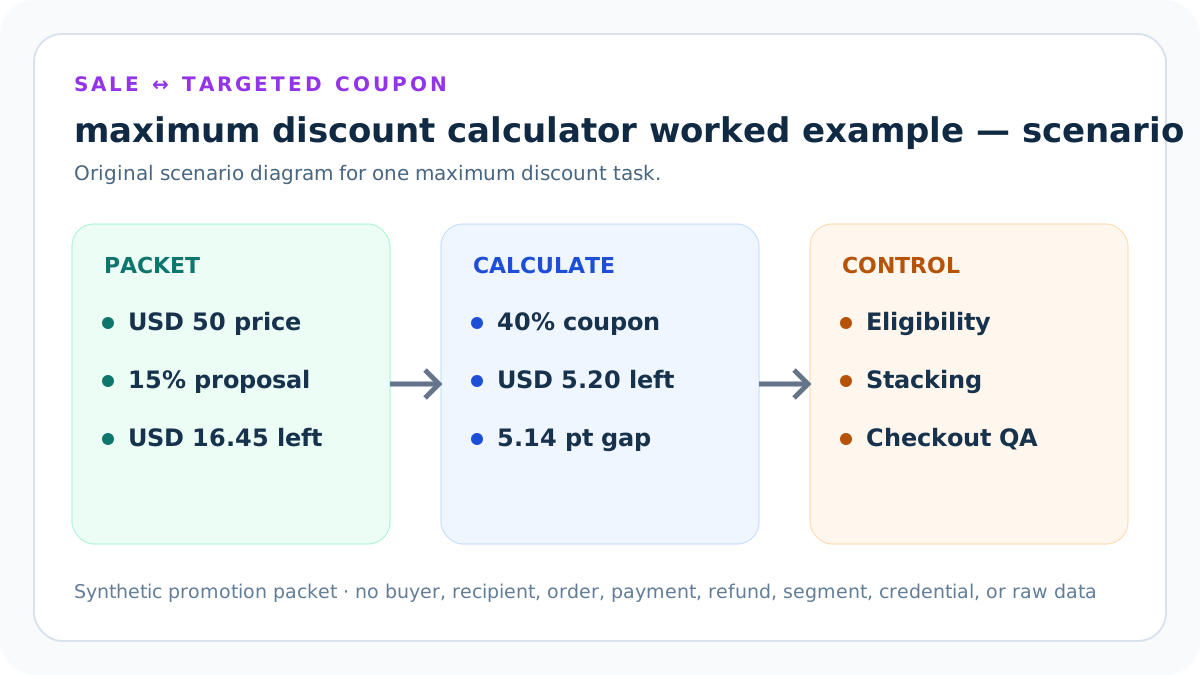
Keep promotion states separate
Track drafted, configured, eligible, displayed, entered, applied, combined, charged, paid, refunded, reversed, expired, paused, restored, and reconciled as distinct events. a traceable numerical sale decision can change when only one state advances, so never backfill later settlement evidence into an earlier snapshot without a dated correction.
Tie seller-funded discount, platform-funded value, shipping reduction, fixed amount, percentage amount, fee, refund, and reimbursement to actual state and source. Pending, expected, approved, applied, settled, failed, reversed, disputed, waived, and expired values are not interchangeable.
Recalculate at 12% fees
Hold every other field fixed and measure the boundary contraction. Deep review 1 for the sitewide-sale calculation worksheet stores the tested input, source state, numeric delta, authority boundary, reviewer, expiry, correction condition, and operational next action. Keep the counterexample even when it does not support the preferred promotion.
Compare the result with the declared a traceable numerical sale decision, not with a generic percentage or another product at a different grain. Explain which single driver moved, which fields stayed constant, what remains unknown, and whether the correct response is collect, correct, review, release, pause, close, or restore.
Recalculate without buyer shipping
Set shipping revenue to zero but keep fulfillment cost. Deep review 2 for the sitewide-sale calculation worksheet stores the tested input, source state, numeric delta, authority boundary, reviewer, expiry, correction condition, and operational next action. Keep the counterexample even when it does not support the preferred promotion.
Compare the result with the declared a traceable numerical sale decision, not with a generic percentage or another product at a different grain. Explain which single driver moved, which fields stayed constant, what remains unknown, and whether the correct response is collect, correct, review, release, pause, close, or restore.
Recalculate with higher return loss
Use a promotion-specific expected-loss cohort rather than the ordinary cohort. Deep review 3 for the sitewide-sale calculation worksheet stores the tested input, source state, numeric delta, authority boundary, reviewer, expiry, correction condition, and operational next action. Keep the counterexample even when it does not support the preferred promotion.
Compare the result with the declared a traceable numerical sale decision, not with a generic percentage or another product at a different grain. Explain which single driver moved, which fields stayed constant, what remains unknown, and whether the correct response is collect, correct, review, release, pause, close, or restore.
Compare target and break-even
Explain why 51.56% break-even is not the 34.86% operating limit. Deep review 4 for the sitewide-sale calculation worksheet stores the tested input, source state, numeric delta, authority boundary, reviewer, expiry, correction condition, and operational next action. Keep the counterexample even when it does not support the preferred promotion.
Compare the result with the declared a traceable numerical sale decision, not with a generic percentage or another product at a different grain. Explain which single driver moved, which fields stayed constant, what remains unknown, and whether the correct response is collect, correct, review, release, pause, close, or restore.
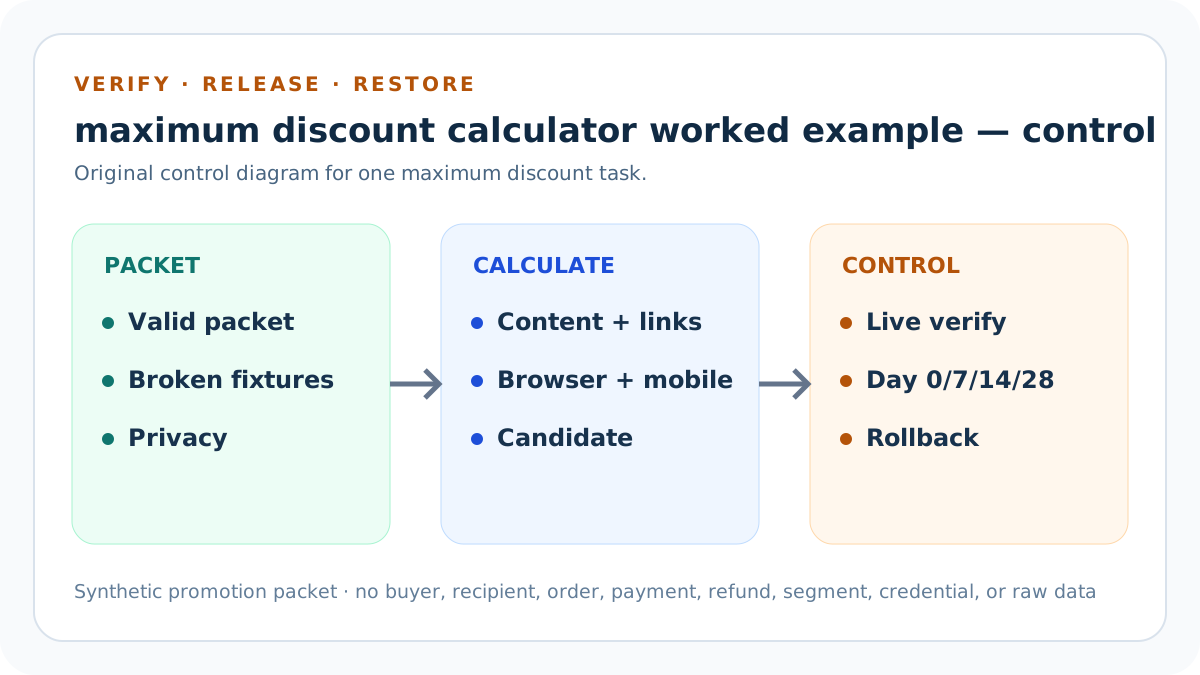
Reconcile realized orders
Compare aggregate charged revenue, fees, cost, and loss with the fixture after the window closes. Deep review 5 for the sitewide-sale calculation worksheet stores the tested input, source state, numeric delta, authority boundary, reviewer, expiry, correction condition, and operational next action. Keep the counterexample even when it does not support the preferred promotion.
Compare the result with the declared a traceable numerical sale decision, not with a generic percentage or another product at a different grain. Explain which single driver moved, which fields stayed constant, what remains unknown, and whether the correct response is collect, correct, review, release, pause, close, or restore.
Confirm the USD 50 regular price: verification drill
Recreate “Confirm the USD 50 regular price” from a clean synthetic promotion packet rather than copying the main example. Use one ordinary merchandise price for the same product, market, currency, quantity, and nonpromoted treatment. Change one driver, retain all other fields, calculate the before-and-after difference, and attach source state and expected outcome to the sitewide-sale calculation worksheet.
A crossed-out reference price or a different market cannot replace the actual baseline. Drill 1 must include a supported case, a broken case, a late-evidence case, and a correction case. Explain why each path produces Block, Review, Ready, zero discount, changed headroom, or a revised result for this specific a traceable numerical sale decision.
Keep USD 5 shipping charged: verification drill
Recreate “Keep USD 5 shipping charged” from a clean synthetic promotion packet rather than copying the main example. Treat buyer-paid shipping as unchanged revenue and keep the seller's USD 6 fulfillment cost in the cost pool. Change one driver, retain all other fields, calculate the before-and-after difference, and attach source state and expected outcome to the sitewide-sale calculation worksheet.
Shipping revenue and shipping cost are separate lines with different evidence. Drill 2 must include a supported case, a broken case, a late-evidence case, and a correction case. Explain why each path produces Block, Review, Ready, zero discount, changed headroom, or a revised result for this specific a traceable numerical sale decision.
Assemble USD 26.30 cost: verification drill
Recreate “Assemble USD 26.30 cost” from a clean synthetic promotion packet rather than copying the main example. Add USD 15 product, USD 2 packaging, USD 6 fulfillment, USD 0.30 fixed fee, USD 2 expected loss, and USD 1 other variable cost. Change one driver, retain all other fields, calculate the before-and-after difference, and attach source state and expected outcome to the sitewide-sale calculation worksheet.
Every component needs a version and must occur once. Drill 3 must include a supported case, a broken case, a late-evidence case, and a correction case. Explain why each path produces Block, Review, Ready, zero discount, changed headroom, or a revised result for this specific a traceable numerical sale decision.
Use the 70% inverse denominator: verification drill
Recreate “Use the 70% inverse denominator” from a clean synthetic promotion packet rather than copying the main example. Subtract the 10% fee and 20% target from one, leaving 0.70. Change one driver, retain all other fields, calculate the before-and-after difference, and attach source state and expected outcome to the sitewide-sale calculation worksheet.
This denominator converts the fixed variable-cost pool into required charged revenue. Drill 4 must include a supported case, a broken case, a late-evidence case, and a correction case. Explain why each path produces Block, Review, Ready, zero discount, changed headroom, or a revised result for this specific a traceable numerical sale decision.
Sources and further reading
- Seller Profit Guard methodology: Contribution equations, evidence versions, privacy, correction, release, and rollback.
- Seller Profit Guard data privacy: Local-first boundaries for buyer, coupon-recipient, order, payment, refund, segment, credential, and raw-record data.
- Shopify Help: Discount types: Official current amount-off, Buy X get Y, and shipping-discount classes and their supported scopes.
- Shopify Help: Combining discounts: Official current combination settings, eligibility boundaries, calculation order, limits, and best-discount behavior.
- Etsy Help: Set Up Sales and Discounts: Official current sales, promo-code, discounted-bundle, targeted-offer, and documented non-stacking context.
Related Seller Profit Guard tools
- Maximum Discount Calculator: Run the browser-local target-safe merchandise discount calculation.
- Coupon Stack Margin Checker: Test a known combined promotion stack after selecting a discount boundary.
- Product Bundle Margin Calculator: Model component quantities and bundle-specific costs separately.
- Volume Discount Calculator: Compare target-safe discount boundaries across quantity tiers.
- Methodology: Review evidence, privacy, calculation, correction, release, and rollback.
- Data Privacy: Protect buyer, coupon-recipient, order, payment, refund, segment, and credential data.
- Maximum Discount Formula and Inputs: Continue with a distinct formula, example, scenario, error, source, threshold, comparison, routine, interpretation, or audit task.
- Maximum Discount for Targeted Coupons: Continue with a distinct formula, example, scenario, error, source, threshold, comparison, routine, interpretation, or audit task.
- Maximum Discount Calculator Mistakes: Continue with a distinct formula, example, scenario, error, source, threshold, comparison, routine, interpretation, or audit task.
- Maximum Discount Evidence Sources: Continue with a distinct formula, example, scenario, error, source, threshold, comparison, routine, interpretation, or audit task.
- Set a Safe Maximum Discount Threshold: Continue with a distinct formula, example, scenario, error, source, threshold, comparison, routine, interpretation, or audit task.
Next step: Open the Maximum Discount Calculator.
This is operational planning help, not tax, accounting, legal, financial, or platform-policy advice. Review the Terms and disclaimer, and verify current platform rules and fee assumptions before changing prices.