How to set a safe maximum discount threshold
Last updated: 2026-07-31
Written and reviewed by Seller Profit Guard Editorial Team.
Use the target-safe maximum as the normal operating boundary, not break-even. Add a stress case for higher fees, fulfillment, or return loss; require positive headroom after rounding and evidence uncertainty; set an expiry and decision owner; and stop the promotion when realized per-order economics or mechanics leave the approved range.
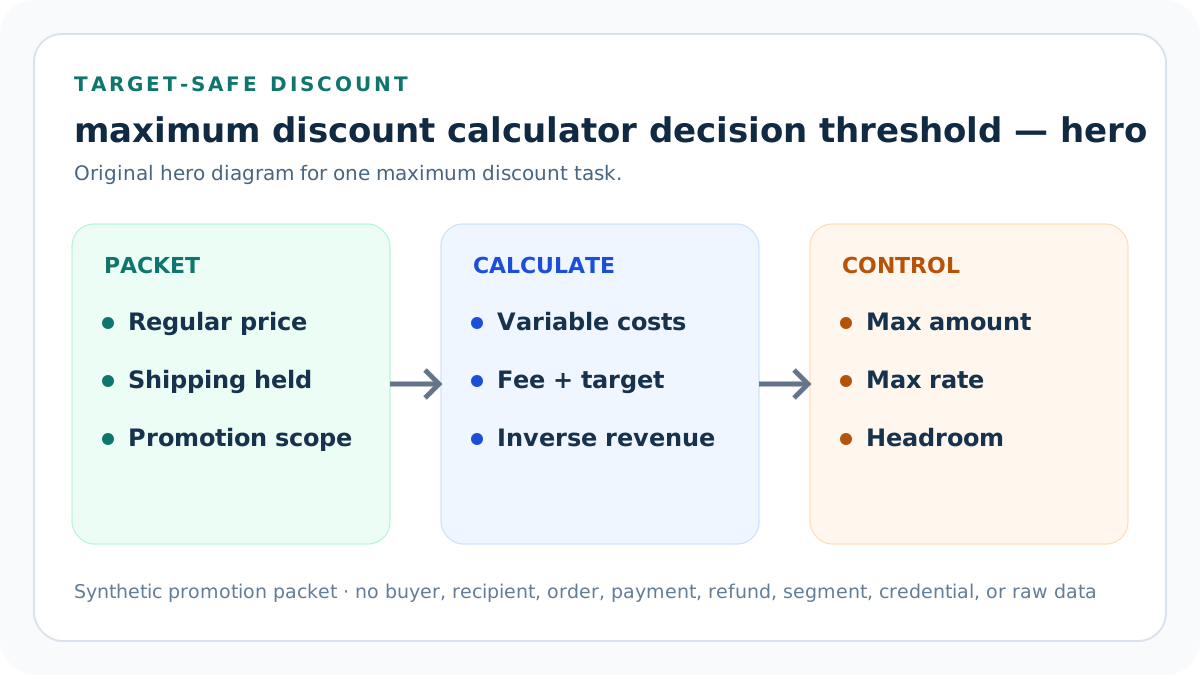
Choose the target-safe boundary
Use the inverse equation with the seller-approved contribution rate. Add the result to the discount threshold policy with its product-profile alias, source version, evidence date, owner, currency, denominator, scope, and affected calculation field. That evidence makes a governed promotion limit reproducible rather than dependent on memory, a marketing label, or an unversioned settings screen.
This boundary reserves contribution after modeled variable costs. Review point 1 must distinguish observed data, explicit assumptions, unresolved evidence, and decisions outside the calculator. Keep regular price, charged revenue, merchandise discount, shipping treatment, variable fee, fixed cost, expected loss, target, eligibility, stacking, and settlement state separate.
Keep break-even as an outer stop
Calculate the zero-target limit for diagnostic comparison only. Add the result to the discount threshold policy with its product-profile alias, source version, evidence date, owner, currency, denominator, scope, and affected calculation field. That evidence makes a governed promotion limit reproducible rather than dependent on memory, a marketing label, or an unversioned settings screen.
Crossing it produces negative modeled contribution under the entered packet. Review point 2 must distinguish observed data, explicit assumptions, unresolved evidence, and decisions outside the calculator. Keep regular price, charged revenue, merchandise discount, shipping treatment, variable fee, fixed cost, expected loss, target, eligibility, stacking, and settlement state separate.
Create a stress boundary
Raise uncertain fee, fulfillment, return-loss, and special-handling inputs using supported adverse values. Add the result to the discount threshold policy with its product-profile alias, source version, evidence date, owner, currency, denominator, scope, and affected calculation field. That evidence makes a governed promotion limit reproducible rather than dependent on memory, a marketing label, or an unversioned settings screen.
A stress scenario should change identified drivers rather than apply an arbitrary haircut. Review point 3 must distinguish observed data, explicit assumptions, unresolved evidence, and decisions outside the calculator. Keep regular price, charged revenue, merchandise discount, shipping treatment, variable fee, fixed cost, expected loss, target, eligibility, stacking, and settlement state separate.
Require operating headroom
Keep the approved promotion below the target-safe result by a dated buffer appropriate to evidence quality and rounding. Add the result to the discount threshold policy with its product-profile alias, source version, evidence date, owner, currency, denominator, scope, and affected calculation field. That evidence makes a governed promotion limit reproducible rather than dependent on memory, a marketing label, or an unversioned settings screen.
Zero displayed headroom can conceal small unrounded overruns. Review point 4 must distinguish observed data, explicit assumptions, unresolved evidence, and decisions outside the calculator. Keep regular price, charged revenue, merchandise discount, shipping treatment, variable fee, fixed cost, expected loss, target, eligibility, stacking, and settlement state separate.
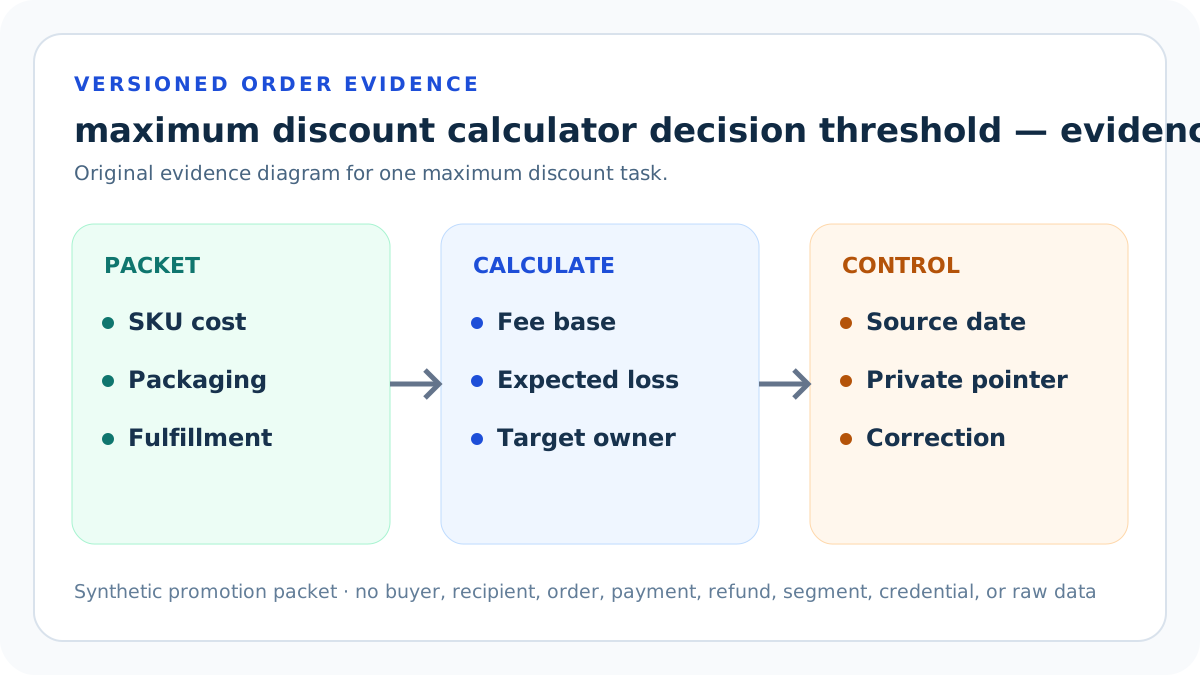
Set scope and expiry
Name eligible products, markets, shipping treatment, stacking, dates, owners, and evidence refresh triggers. Add the result to the discount threshold policy with its product-profile alias, source version, evidence date, owner, currency, denominator, scope, and affected calculation field. That evidence makes a governed promotion limit reproducible rather than dependent on memory, a marketing label, or an unversioned settings screen.
A boundary should not survive a price, cost, fee, policy, or campaign change automatically. Review point 5 must distinguish observed data, explicit assumptions, unresolved evidence, and decisions outside the calculator. Keep regular price, charged revenue, merchandise discount, shipping treatment, variable fee, fixed cost, expected loss, target, eligibility, stacking, and settlement state separate.
Define stop conditions
Pause on checkout mismatch, unexpected stacking, cost drift, fee drift, return-loss drift, negative contribution, or target overrun. Add the result to the discount threshold policy with its product-profile alias, source version, evidence date, owner, currency, denominator, scope, and affected calculation field. That evidence makes a governed promotion limit reproducible rather than dependent on memory, a marketing label, or an unversioned settings screen.
Do not wait for a total campaign loss when per-order evidence already contradicts the approved packet. Review point 6 must distinguish observed data, explicit assumptions, unresolved evidence, and decisions outside the calculator. Keep regular price, charged revenue, merchandise discount, shipping treatment, variable fee, fixed cost, expected loss, target, eligibility, stacking, and settlement state separate.
Separate financial and authority gates
Require both contribution readiness and valid platform, legal, inventory, customer, and public-copy review. Add the result to the discount threshold policy with its product-profile alias, source version, evidence date, owner, currency, denominator, scope, and affected calculation field. That evidence makes a governed promotion limit reproducible rather than dependent on memory, a marketing label, or an unversioned settings screen.
Passing one gate cannot compensate for failure in another. Review point 7 must distinguish observed data, explicit assumptions, unresolved evidence, and decisions outside the calculator. Keep regular price, charged revenue, merchandise discount, shipping treatment, variable fee, fixed cost, expected loss, target, eligibility, stacking, and settlement state separate.
Apply Block, Review, and Ready consistently
Block when finite numbers, price, cost, percentage, promotion context, source date, nine confirmations, currency, month, scope, or conflict evidence is invalid. Review when regular price misses the target, the proposed rate exceeds the target-safe maximum, contribution becomes negative, discount headroom falls below its minimum, or contribution headroom falls below its minimum. Ready requires every structural, target, threshold, and evidence gate to pass.
Ready is arithmetic readiness only. Record the rule version, target owner, evidence timestamp, exact failed or passed condition, and next action. Do not use it to approve lawful reference pricing, platform eligibility, customer segmentation, discount combinations, inventory, campaign copy, tax, or accounting treatment.
Confirm the dated promotion packet
Require one real source-review date plus yes confirmations for regular price, shipping treatment, variable costs, fee and expected-loss evidence, contribution target, promotion mechanics, checkout combinations, source lineage, and the planning boundary. Record each owner, effective date, source pointer, currency, correction state, and expiry in the discount threshold policy.
A configuration screen is not charged-order evidence. Block on a blank or impossible date, incomplete confirmation, mixed product or currency scope, unresolved combination behavior, or stale source. Keep private buyer, coupon-recipient, order, payment, and raw export records in their authorized systems.
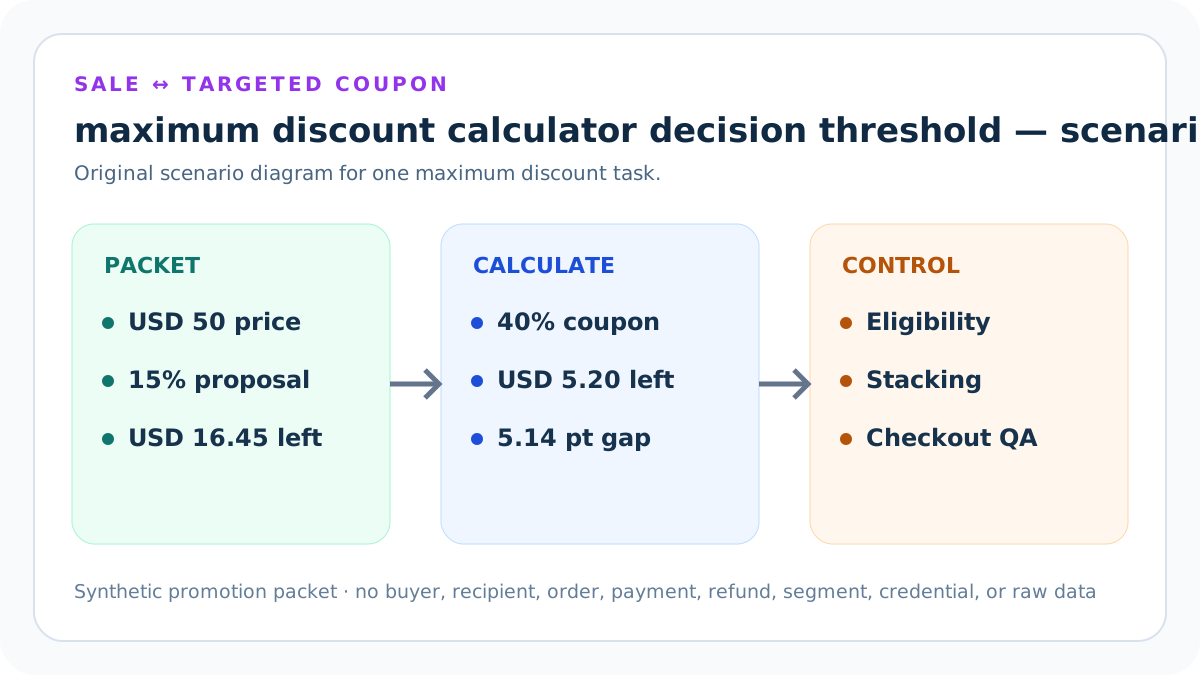
Test one-cent rounding
Compare the full-precision boundary with the checkout-displayed amount. Deep review 1 for the discount threshold policy stores the tested input, source state, numeric delta, authority boundary, reviewer, expiry, correction condition, and operational next action. Keep the counterexample even when it does not support the preferred promotion.
Compare the result with the declared a governed promotion limit, not with a generic percentage or another product at a different grain. Explain which single driver moved, which fields stayed constant, what remains unknown, and whether the correct response is collect, correct, review, release, pause, close, or restore.
Test weak evidence
Reduce the operating limit or hold release when source coverage is incomplete. Deep review 2 for the discount threshold policy stores the tested input, source state, numeric delta, authority boundary, reviewer, expiry, correction condition, and operational next action. Keep the counterexample even when it does not support the preferred promotion.
Compare the result with the declared a governed promotion limit, not with a generic percentage or another product at a different grain. Explain which single driver moved, which fields stayed constant, what remains unknown, and whether the correct response is collect, correct, review, release, pause, close, or restore.
Test low-ticket products
Measure fixed-fee sensitivity before applying a storewide rate. Deep review 3 for the discount threshold policy stores the tested input, source state, numeric delta, authority boundary, reviewer, expiry, correction condition, and operational next action. Keep the counterexample even when it does not support the preferred promotion.
Compare the result with the declared a governed promotion limit, not with a generic percentage or another product at a different grain. Explain which single driver moved, which fields stayed constant, what remains unknown, and whether the correct response is collect, correct, review, release, pause, close, or restore.
Test campaign extension
Require a new review rather than silently extending dates. Deep review 4 for the discount threshold policy stores the tested input, source state, numeric delta, authority boundary, reviewer, expiry, correction condition, and operational next action. Keep the counterexample even when it does not support the preferred promotion.
Compare the result with the declared a governed promotion limit, not with a generic percentage or another product at a different grain. Explain which single driver moved, which fields stayed constant, what remains unknown, and whether the correct response is collect, correct, review, release, pause, close, or restore.
Test rollback readiness
Preserve the prior configuration and exact restore path. Deep review 5 for the discount threshold policy stores the tested input, source state, numeric delta, authority boundary, reviewer, expiry, correction condition, and operational next action. Keep the counterexample even when it does not support the preferred promotion.
Compare the result with the declared a governed promotion limit, not with a generic percentage or another product at a different grain. Explain which single driver moved, which fields stayed constant, what remains unknown, and whether the correct response is collect, correct, review, release, pause, close, or restore.
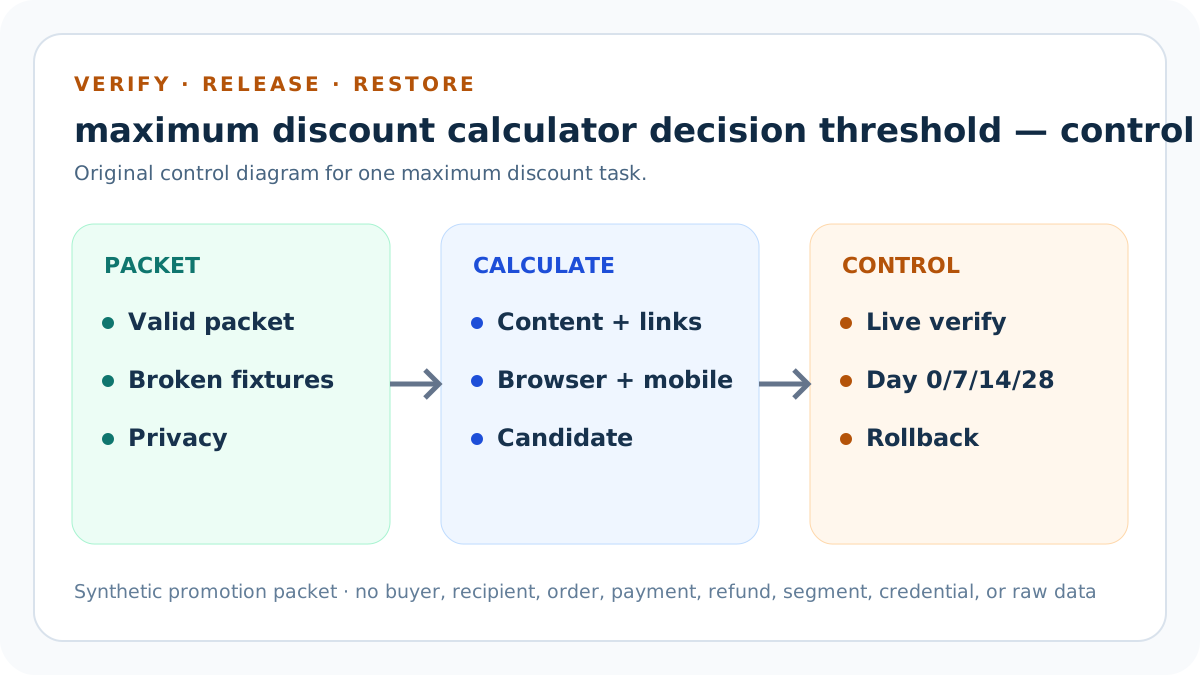
Choose the target-safe boundary: verification drill
Recreate “Choose the target-safe boundary” from a clean synthetic promotion packet rather than copying the main example. Use the inverse equation with the seller-approved contribution rate. Change one driver, retain all other fields, calculate the before-and-after difference, and attach source state and expected outcome to the discount threshold policy.
This boundary reserves contribution after modeled variable costs. Drill 1 must include a supported case, a broken case, a late-evidence case, and a correction case. Explain why each path produces Block, Review, Ready, zero discount, changed headroom, or a revised result for this specific a governed promotion limit.
Keep break-even as an outer stop: verification drill
Recreate “Keep break-even as an outer stop” from a clean synthetic promotion packet rather than copying the main example. Calculate the zero-target limit for diagnostic comparison only. Change one driver, retain all other fields, calculate the before-and-after difference, and attach source state and expected outcome to the discount threshold policy.
Crossing it produces negative modeled contribution under the entered packet. Drill 2 must include a supported case, a broken case, a late-evidence case, and a correction case. Explain why each path produces Block, Review, Ready, zero discount, changed headroom, or a revised result for this specific a governed promotion limit.
Create a stress boundary: verification drill
Recreate “Create a stress boundary” from a clean synthetic promotion packet rather than copying the main example. Raise uncertain fee, fulfillment, return-loss, and special-handling inputs using supported adverse values. Change one driver, retain all other fields, calculate the before-and-after difference, and attach source state and expected outcome to the discount threshold policy.
A stress scenario should change identified drivers rather than apply an arbitrary haircut. Drill 3 must include a supported case, a broken case, a late-evidence case, and a correction case. Explain why each path produces Block, Review, Ready, zero discount, changed headroom, or a revised result for this specific a governed promotion limit.
Require operating headroom: verification drill
Recreate “Require operating headroom” from a clean synthetic promotion packet rather than copying the main example. Keep the approved promotion below the target-safe result by a dated buffer appropriate to evidence quality and rounding. Change one driver, retain all other fields, calculate the before-and-after difference, and attach source state and expected outcome to the discount threshold policy.
Zero displayed headroom can conceal small unrounded overruns. Drill 4 must include a supported case, a broken case, a late-evidence case, and a correction case. Explain why each path produces Block, Review, Ready, zero discount, changed headroom, or a revised result for this specific a governed promotion limit.
Sources and further reading
- Seller Profit Guard methodology: Contribution equations, evidence versions, privacy, correction, release, and rollback.
- Seller Profit Guard data privacy: Local-first boundaries for buyer, coupon-recipient, order, payment, refund, segment, credential, and raw-record data.
- Shopify Help: Discount types: Official current amount-off, Buy X get Y, and shipping-discount classes and their supported scopes.
- Shopify Help: Combining discounts: Official current combination settings, eligibility boundaries, calculation order, limits, and best-discount behavior.
- Etsy Help: Set Up Sales and Discounts: Official current sales, promo-code, discounted-bundle, targeted-offer, and documented non-stacking context.
Related Seller Profit Guard tools
- Maximum Discount Calculator: Run the browser-local target-safe merchandise discount calculation.
- Coupon Stack Margin Checker: Test a known combined promotion stack after selecting a discount boundary.
- Product Bundle Margin Calculator: Model component quantities and bundle-specific costs separately.
- Volume Discount Calculator: Compare target-safe discount boundaries across quantity tiers.
- Methodology: Review evidence, privacy, calculation, correction, release, and rollback.
- Data Privacy: Protect buyer, coupon-recipient, order, payment, refund, segment, and credential data.
- Maximum Discount Formula and Inputs: Continue with a distinct formula, example, scenario, error, source, threshold, comparison, routine, interpretation, or audit task.
- Maximum Discount Worked Example: Continue with a distinct formula, example, scenario, error, source, threshold, comparison, routine, interpretation, or audit task.
- Maximum Discount for Targeted Coupons: Continue with a distinct formula, example, scenario, error, source, threshold, comparison, routine, interpretation, or audit task.
- Maximum Discount Calculator Mistakes: Continue with a distinct formula, example, scenario, error, source, threshold, comparison, routine, interpretation, or audit task.
- Maximum Discount Evidence Sources: Continue with a distinct formula, example, scenario, error, source, threshold, comparison, routine, interpretation, or audit task.
Next step: Open the Maximum Discount Calculator.
This is operational planning help, not tax, accounting, legal, financial, or platform-policy advice. Review the Terms and disclaimer, and verify current platform rules and fee assumptions before changing prices.