Maximum discount audit checklist and change log
Last updated: 2026-07-31
Written and reviewed by Seller Profit Guard Editorial Team.
Audit one promotion packet by recording product scope, regular price, shipping treatment, direct and order-variable costs, percentage and fixed fees, expected-loss cohort, contribution target, discount basis, eligibility, stacking, dates, formula fixtures, privacy controls, approval, backup, checkout QA, realized aggregate evidence, corrections, and rollback outcome in a dated change log.
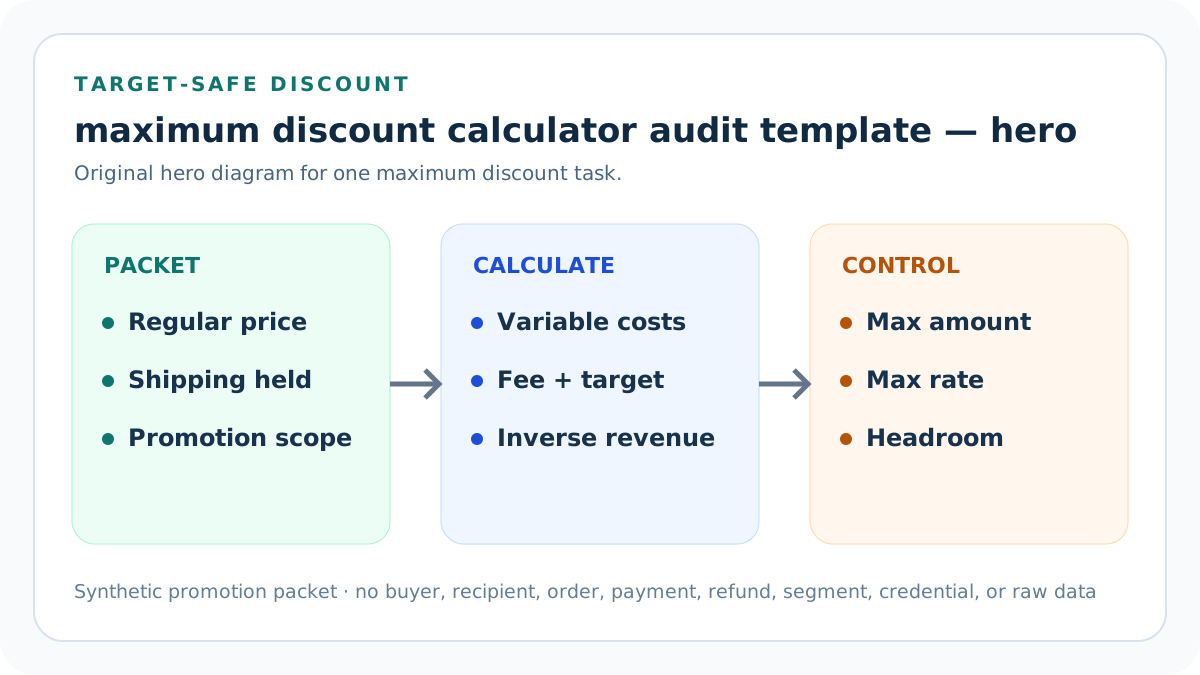
Identify the packet
Record alias, product or order profile, market, currency, quantity, ordinary treatment, promotion type, version, period, and scope. Add the result to the maximum-discount audit packet with its product-profile alias, source version, evidence date, owner, currency, denominator, scope, and affected calculation field. That evidence makes a reviewable promotion calculation history reproducible rather than dependent on memory, a marketing label, or an unversioned settings screen.
Keep buyer, recipient, and raw order identifiers in authorized systems. Review point 1 must distinguish observed data, explicit assumptions, unresolved evidence, and decisions outside the calculator. Keep regular price, charged revenue, merchandise discount, shipping treatment, variable fee, fixed cost, expected loss, target, eligibility, stacking, and settlement state separate.
Inventory source evidence
List price, cost, packaging, fulfillment, fee, expected loss, target, mechanics, checkout, and settlement pointers. Add the result to the maximum-discount audit packet with its product-profile alias, source version, evidence date, owner, currency, denominator, scope, and affected calculation field. That evidence makes a reviewable promotion calculation history reproducible rather than dependent on memory, a marketing label, or an unversioned settings screen.
Include timestamps, owners, evidence states, and retention boundaries. Review point 2 must distinguish observed data, explicit assumptions, unresolved evidence, and decisions outside the calculator. Keep regular price, charged revenue, merchandise discount, shipping treatment, variable fee, fixed cost, expected loss, target, eligibility, stacking, and settlement state separate.
Record formula outputs
Store cost pool, denominators, required revenue, maximum amount and rate, proposed contribution and margin, break-even, headroom, and shortfall. Add the result to the maximum-discount audit packet with its product-profile alias, source version, evidence date, owner, currency, denominator, scope, and affected calculation field. That evidence makes a reviewable promotion calculation history reproducible rather than dependent on memory, a marketing label, or an unversioned settings screen.
Retain full precision plus displayed values. Review point 3 must distinguish observed data, explicit assumptions, unresolved evidence, and decisions outside the calculator. Keep regular price, charged revenue, merchandise discount, shipping treatment, variable fee, fixed cost, expected loss, target, eligibility, stacking, and settlement state separate.
Record authority boundaries
Name platform configuration, lawful pricing, customer terms, inventory, public copy, finance, and release owners. Add the result to the maximum-discount audit packet with its product-profile alias, source version, evidence date, owner, currency, denominator, scope, and affected calculation field. That evidence makes a reviewable promotion calculation history reproducible rather than dependent on memory, a marketing label, or an unversioned settings screen.
State every decision the calculator is not allowed to make. Review point 4 must distinguish observed data, explicit assumptions, unresolved evidence, and decisions outside the calculator. Keep regular price, charged revenue, merchandise discount, shipping treatment, variable fee, fixed cost, expected loss, target, eligibility, stacking, and settlement state separate.
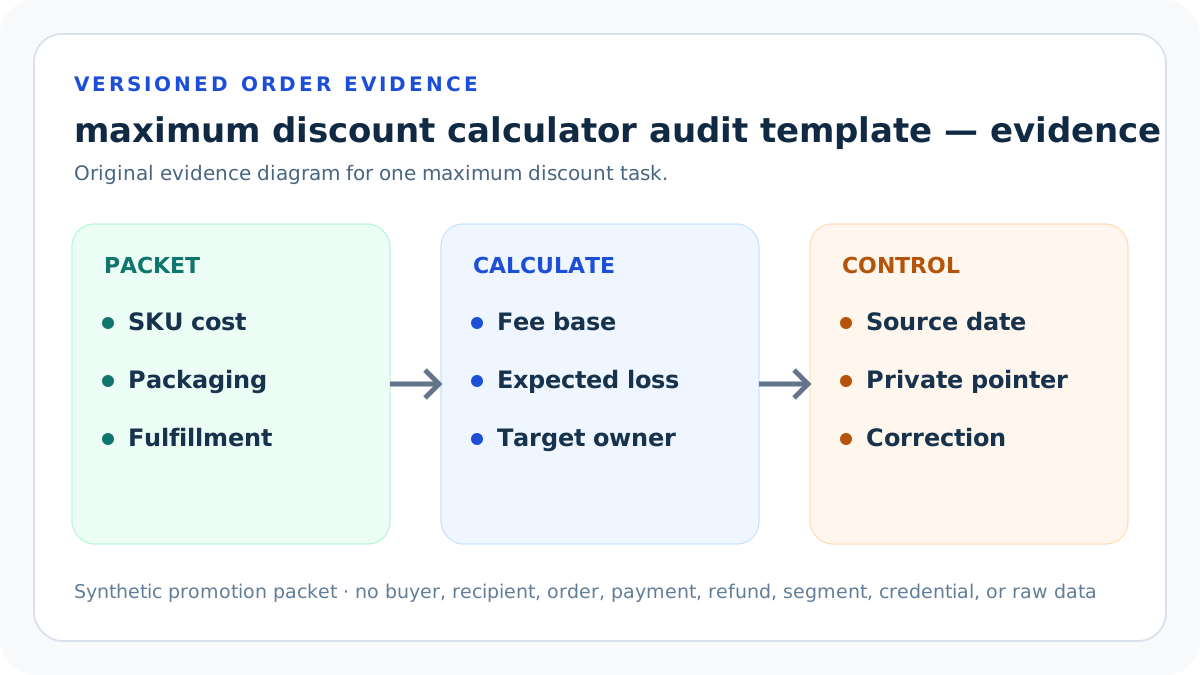
Record regression fixtures
Include default Ready, coupon target overrun, regular-price shortfall, shipping-basis change, invalid structure, and conflict cases. Add the result to the maximum-discount audit packet with its product-profile alias, source version, evidence date, owner, currency, denominator, scope, and affected calculation field. That evidence makes a reviewable promotion calculation history reproducible rather than dependent on memory, a marketing label, or an unversioned settings screen.
Expected issue text and decision state belong with numeric outputs. Review point 5 must distinguish observed data, explicit assumptions, unresolved evidence, and decisions outside the calculator. Keep regular price, charged revenue, merchandise discount, shipping treatment, variable fee, fixed cost, expected loss, target, eligibility, stacking, and settlement state separate.
Record release evidence
Store local and remote backup, rollback identifier, tests, build, content, duplicate, SEO, browser, candidate, origin, purge, routes, sitemap, and events. Add the result to the maximum-discount audit packet with its product-profile alias, source version, evidence date, owner, currency, denominator, scope, and affected calculation field. That evidence makes a reviewable promotion calculation history reproducible rather than dependent on memory, a marketing label, or an unversioned settings screen.
Stop on the first critical failure. Review point 6 must distinguish observed data, explicit assumptions, unresolved evidence, and decisions outside the calculator. Keep regular price, charged revenue, merchandise discount, shipping treatment, variable fee, fixed cost, expected loss, target, eligibility, stacking, and settlement state separate.
Record correction and restore
Log defect, affected packets and pages, corrected evidence, recalculation, reviewer, authorized customer action, retest, redeploy, and rollback. Add the result to the maximum-discount audit packet with its product-profile alias, source version, evidence date, owner, currency, denominator, scope, and affected calculation field. That evidence makes a reviewable promotion calculation history reproducible rather than dependent on memory, a marketing label, or an unversioned settings screen.
Never silently erase the earlier decision record. Review point 7 must distinguish observed data, explicit assumptions, unresolved evidence, and decisions outside the calculator. Keep regular price, charged revenue, merchandise discount, shipping treatment, variable fee, fixed cost, expected loss, target, eligibility, stacking, and settlement state separate.
Apply both seller headroom thresholds
Compare proposed discount headroom in percentage points with the seller-entered operating minimum, and compare contribution above target in currency with the seller-entered absolute minimum. Store both results in the maximum-discount audit packet; neither threshold is a universal benchmark or a substitute for current platform authority.
The default 15% example leaves 19.86 points and USD 6.95, clearing five points and USD 2.00. A 32% proposal leaves 2.86 points and USD 1.00, so it routes to Review even though it remains below the exact 34.86% target-safe boundary.
Keep promotion states separate
Track drafted, configured, eligible, displayed, entered, applied, combined, charged, paid, refunded, reversed, expired, paused, restored, and reconciled as distinct events. a reviewable promotion calculation history can change when only one state advances, so never backfill later settlement evidence into an earlier snapshot without a dated correction.
Tie seller-funded discount, platform-funded value, shipping reduction, fixed amount, percentage amount, fee, refund, and reimbursement to actual state and source. Pending, expected, approved, applied, settled, failed, reversed, disputed, waived, and expired values are not interchangeable.
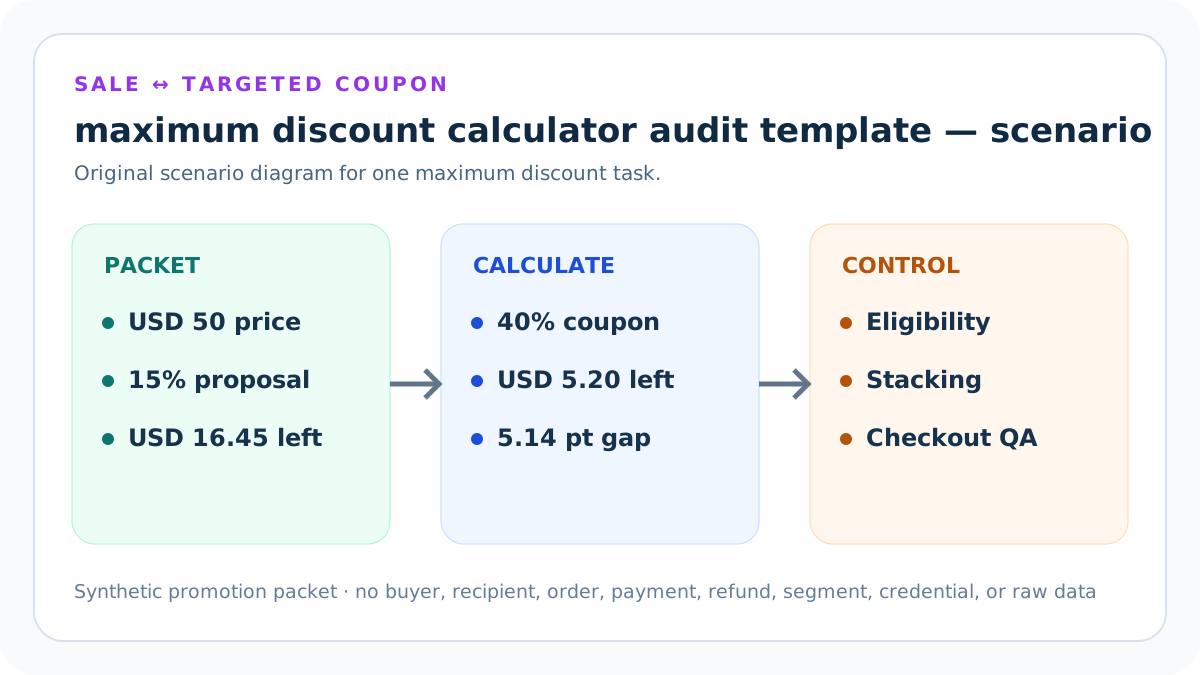
Audit completeness
Every field needs a value, explicit zero, not-applicable reason, or unresolved owner. Deep review 1 for the maximum-discount audit packet stores the tested input, source state, numeric delta, authority boundary, reviewer, expiry, correction condition, and operational next action. Keep the counterexample even when it does not support the preferred promotion.
Compare the result with the declared a reviewable promotion calculation history, not with a generic percentage or another product at a different grain. Explain which single driver moved, which fields stayed constant, what remains unknown, and whether the correct response is collect, correct, review, release, pause, close, or restore.
Audit arithmetic independently
Recalculate inverse boundaries and proposed contribution outside the UI. Deep review 2 for the maximum-discount audit packet stores the tested input, source state, numeric delta, authority boundary, reviewer, expiry, correction condition, and operational next action. Keep the counterexample even when it does not support the preferred promotion.
Compare the result with the declared a reviewable promotion calculation history, not with a generic percentage or another product at a different grain. Explain which single driver moved, which fields stayed constant, what remains unknown, and whether the correct response is collect, correct, review, release, pause, close, or restore.
Audit checkout behavior
Test eligible and ineligible carts, amount, shipping, stacking, dates, and currency. Deep review 3 for the maximum-discount audit packet stores the tested input, source state, numeric delta, authority boundary, reviewer, expiry, correction condition, and operational next action. Keep the counterexample even when it does not support the preferred promotion.
Compare the result with the declared a reviewable promotion calculation history, not with a generic percentage or another product at a different grain. Explain which single driver moved, which fields stayed constant, what remains unknown, and whether the correct response is collect, correct, review, release, pause, close, or restore.
Audit public privacy
Search content, images, schema, logs, analytics, and downloads for prohibited data. Deep review 4 for the maximum-discount audit packet stores the tested input, source state, numeric delta, authority boundary, reviewer, expiry, correction condition, and operational next action. Keep the counterexample even when it does not support the preferred promotion.
Compare the result with the declared a reviewable promotion calculation history, not with a generic percentage or another product at a different grain. Explain which single driver moved, which fields stayed constant, what remains unknown, and whether the correct response is collect, correct, review, release, pause, close, or restore.
Audit observation windows
Record Day 0/7/14/28 evidence without claiming same-day causality. Deep review 5 for the maximum-discount audit packet stores the tested input, source state, numeric delta, authority boundary, reviewer, expiry, correction condition, and operational next action. Keep the counterexample even when it does not support the preferred promotion.
Compare the result with the declared a reviewable promotion calculation history, not with a generic percentage or another product at a different grain. Explain which single driver moved, which fields stayed constant, what remains unknown, and whether the correct response is collect, correct, review, release, pause, close, or restore.
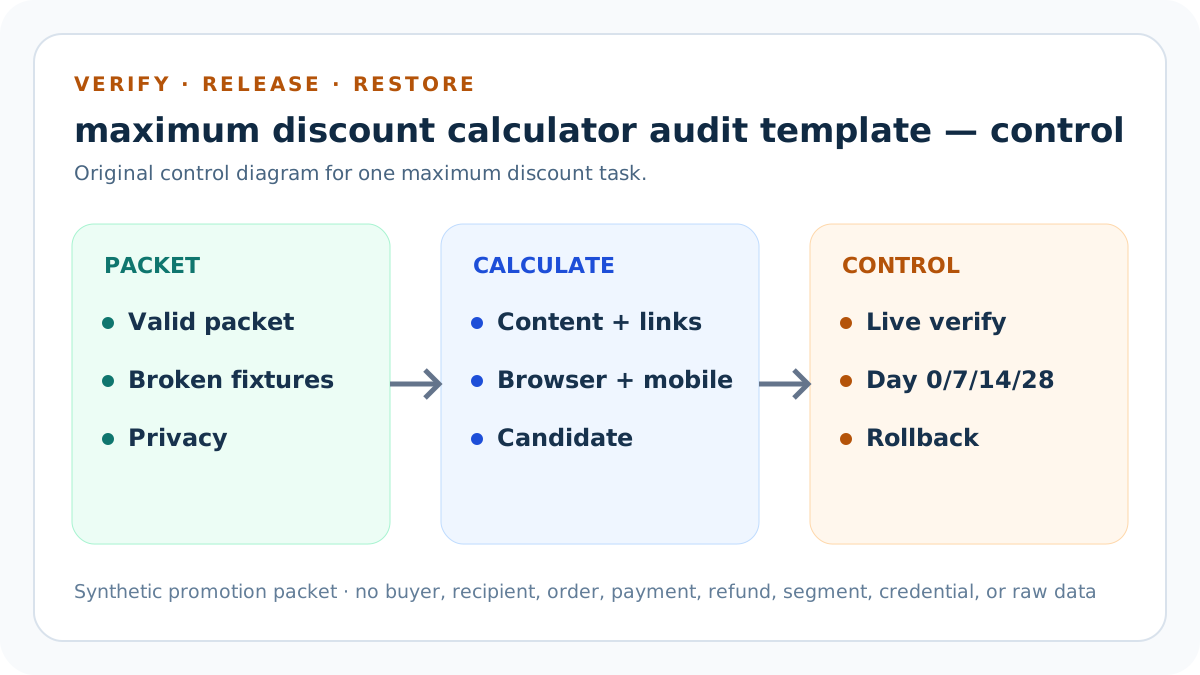
Identify the packet: verification drill
Recreate “Identify the packet” from a clean synthetic promotion packet rather than copying the main example. Record alias, product or order profile, market, currency, quantity, ordinary treatment, promotion type, version, period, and scope. Change one driver, retain all other fields, calculate the before-and-after difference, and attach source state and expected outcome to the maximum-discount audit packet.
Keep buyer, recipient, and raw order identifiers in authorized systems. Drill 1 must include a supported case, a broken case, a late-evidence case, and a correction case. Explain why each path produces Block, Review, Ready, zero discount, changed headroom, or a revised result for this specific a reviewable promotion calculation history.
Inventory source evidence: verification drill
Recreate “Inventory source evidence” from a clean synthetic promotion packet rather than copying the main example. List price, cost, packaging, fulfillment, fee, expected loss, target, mechanics, checkout, and settlement pointers. Change one driver, retain all other fields, calculate the before-and-after difference, and attach source state and expected outcome to the maximum-discount audit packet.
Include timestamps, owners, evidence states, and retention boundaries. Drill 2 must include a supported case, a broken case, a late-evidence case, and a correction case. Explain why each path produces Block, Review, Ready, zero discount, changed headroom, or a revised result for this specific a reviewable promotion calculation history.
Record formula outputs: verification drill
Recreate “Record formula outputs” from a clean synthetic promotion packet rather than copying the main example. Store cost pool, denominators, required revenue, maximum amount and rate, proposed contribution and margin, break-even, headroom, and shortfall. Change one driver, retain all other fields, calculate the before-and-after difference, and attach source state and expected outcome to the maximum-discount audit packet.
Retain full precision plus displayed values. Drill 3 must include a supported case, a broken case, a late-evidence case, and a correction case. Explain why each path produces Block, Review, Ready, zero discount, changed headroom, or a revised result for this specific a reviewable promotion calculation history.
Record authority boundaries: verification drill
Recreate “Record authority boundaries” from a clean synthetic promotion packet rather than copying the main example. Name platform configuration, lawful pricing, customer terms, inventory, public copy, finance, and release owners. Change one driver, retain all other fields, calculate the before-and-after difference, and attach source state and expected outcome to the maximum-discount audit packet.
State every decision the calculator is not allowed to make. Drill 4 must include a supported case, a broken case, a late-evidence case, and a correction case. Explain why each path produces Block, Review, Ready, zero discount, changed headroom, or a revised result for this specific a reviewable promotion calculation history.
Sources and further reading
- Seller Profit Guard methodology: Contribution equations, evidence versions, privacy, correction, release, and rollback.
- Seller Profit Guard data privacy: Local-first boundaries for buyer, coupon-recipient, order, payment, refund, segment, credential, and raw-record data.
- Shopify Help: Discount types: Official current amount-off, Buy X get Y, and shipping-discount classes and their supported scopes.
- Shopify Help: Combining discounts: Official current combination settings, eligibility boundaries, calculation order, limits, and best-discount behavior.
- Etsy Help: Set Up Sales and Discounts: Official current sales, promo-code, discounted-bundle, targeted-offer, and documented non-stacking context.
Related Seller Profit Guard tools
- Maximum Discount Calculator: Run the browser-local target-safe merchandise discount calculation.
- Coupon Stack Margin Checker: Test a known combined promotion stack after selecting a discount boundary.
- Product Bundle Margin Calculator: Model component quantities and bundle-specific costs separately.
- Volume Discount Calculator: Compare target-safe discount boundaries across quantity tiers.
- Methodology: Review evidence, privacy, calculation, correction, release, and rollback.
- Data Privacy: Protect buyer, coupon-recipient, order, payment, refund, segment, and credential data.
- Maximum Discount Formula and Inputs: Continue with a distinct formula, example, scenario, error, source, threshold, comparison, routine, interpretation, or audit task.
- Maximum Discount Worked Example: Continue with a distinct formula, example, scenario, error, source, threshold, comparison, routine, interpretation, or audit task.
- Maximum Discount for Targeted Coupons: Continue with a distinct formula, example, scenario, error, source, threshold, comparison, routine, interpretation, or audit task.
- Maximum Discount Calculator Mistakes: Continue with a distinct formula, example, scenario, error, source, threshold, comparison, routine, interpretation, or audit task.
- Maximum Discount Evidence Sources: Continue with a distinct formula, example, scenario, error, source, threshold, comparison, routine, interpretation, or audit task.
Next step: Open the Maximum Discount Calculator.
This is operational planning help, not tax, accounting, legal, financial, or platform-policy advice. Review the Terms and disclaimer, and verify current platform rules and fee assumptions before changing prices.