Influencer campaign payback: one post versus multiple assets
Last updated: 2026-07-31
Written and reviewed by Seller Profit Guard Editorial Team.
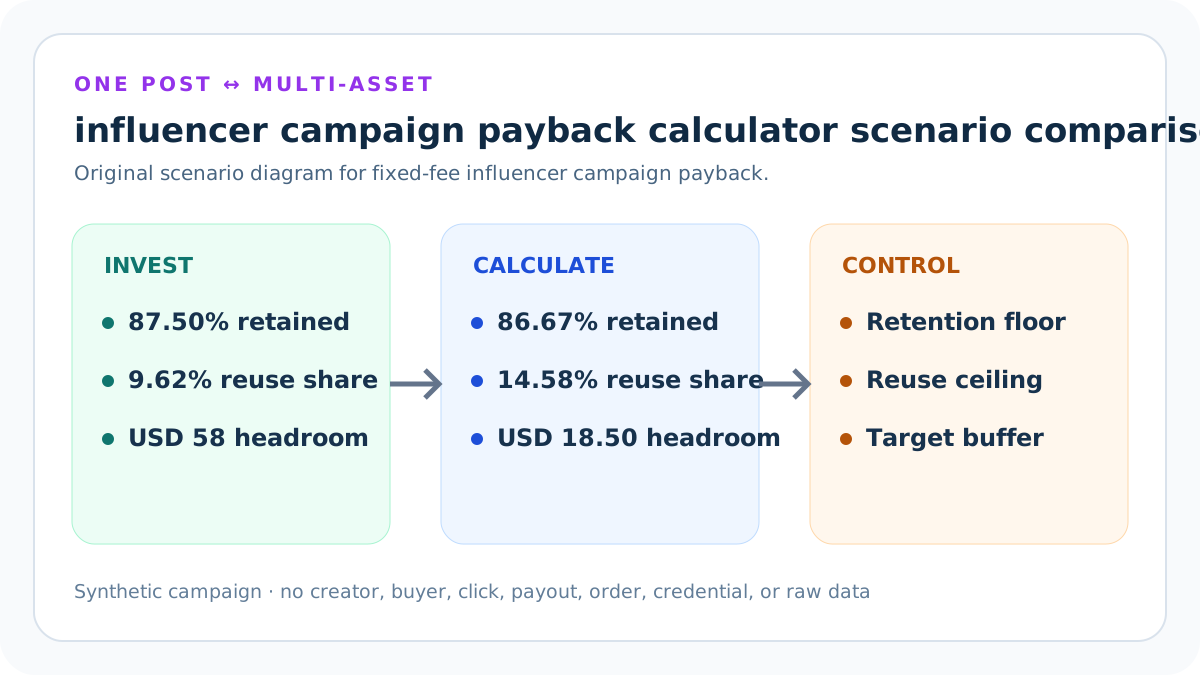
Compare fixed-fee influencer campaigns only after normalizing contribution per retained attributed order, maturity, attribution, rights valuation, and target buffer. The synthetic post needs 34 target orders and leaves USD 58 headroom; the four-asset packet needs 104 orders and leaves USD 18.50, despite greater recognized reuse.
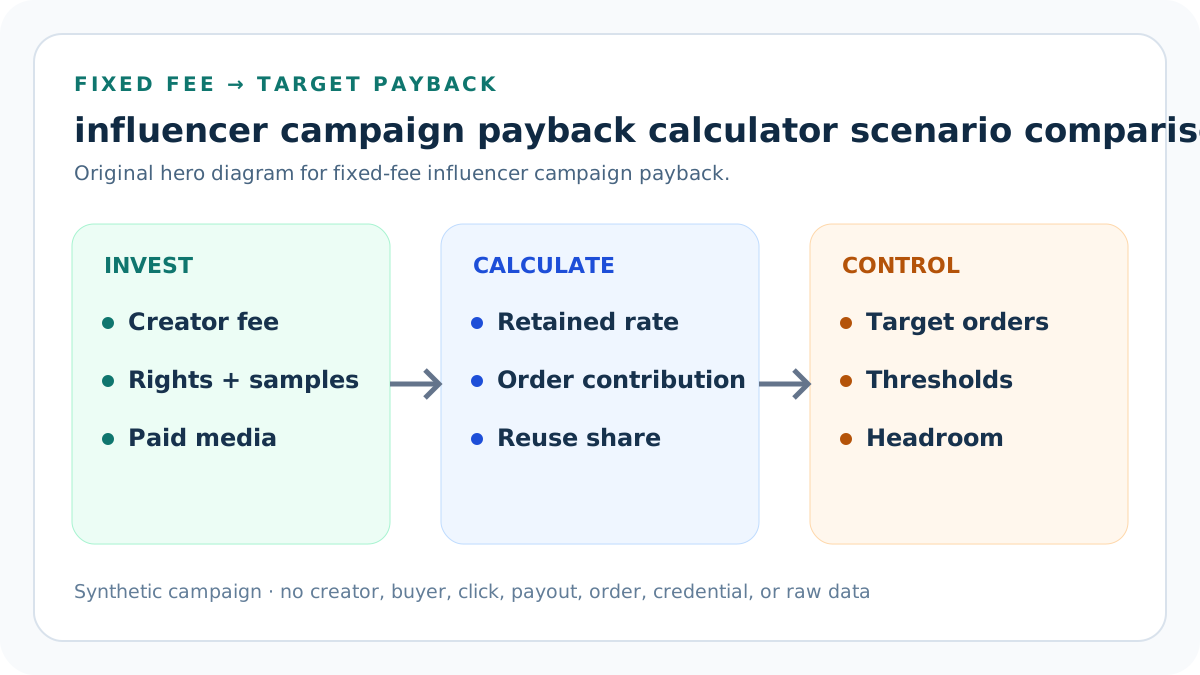
Hold contribution constant
Use USD 30 per mature retained attributed order in both synthetic scenarios. In the same-grain campaign comparison, record the amount or count, unit, denominator, evidence source, version, date, maturity or approval state, owner, reviewer, uncertainty, and expiry before calculating a driver-based influencer campaign comparison.
Different product mixes require a new comparison. Topic 1 preserves a supported case, a defective case, the correction, and the reason the conclusion belongs to a driver-based influencer campaign comparison rather than creator selection, attribution proof, a platform promise, or an accounting valuation.
Hold attribution and maturity constant
Use the same order event, windows, exclusions, and duplicate rule. In the same-grain campaign comparison, record the amount or count, unit, denominator, evidence source, version, date, maturity or approval state, owner, reviewer, uncertainty, and expiry before calculating a driver-based influencer campaign comparison.
Platform reports can differ. Topic 2 preserves a supported case, a defective case, the correction, and the reason the conclusion belongs to a driver-based influencer campaign comparison rather than creator selection, attribution proof, a platform promise, or an accounting valuation.
Compare complete investment
Separate fee, rights, sample, media, and other costs for each packet. In the same-grain campaign comparison, record the amount or count, unit, denominator, evidence source, version, date, maturity or approval state, owner, reviewer, uncertainty, and expiry before calculating a driver-based influencer campaign comparison.
Total cost and cost per asset answer different questions. Topic 3 preserves a supported case, a defective case, the correction, and the reason the conclusion belongs to a driver-based influencer campaign comparison rather than creator selection, attribution proof, a platform promise, or an accounting valuation.
Compare approved deliverables
Use one approved asset versus four approved assets under explicit rights. In the same-grain campaign comparison, record the amount or count, unit, denominator, evidence source, version, date, maturity or approval state, owner, reviewer, uncertainty, and expiry before calculating a driver-based influencer campaign comparison.
Count utility, not file quantity alone. Topic 4 preserves a supported case, a defective case, the correction, and the reason the conclusion belongs to a driver-based influencer campaign comparison rather than creator selection, attribution proof, a platform promise, or an accounting valuation.
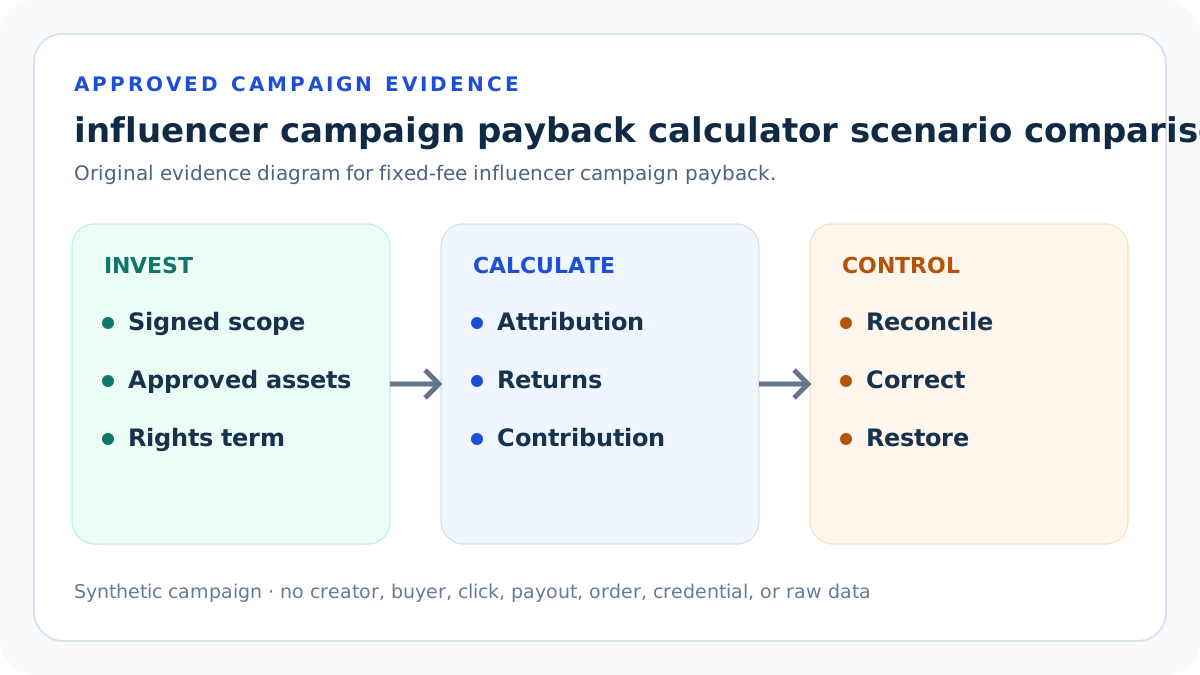
Compare recognized reuse
Keep gross reusable value and recognition rate visible. In the same-grain campaign comparison, record the amount or count, unit, denominator, evidence source, version, date, maturity or approval state, owner, reviewer, uncertainty, and expiry before calculating a driver-based influencer campaign comparison.
A larger credit needs stronger rights evidence. Topic 5 preserves a supported case, a defective case, the correction, and the reason the conclusion belongs to a driver-based influencer campaign comparison rather than creator selection, attribution proof, a platform promise, or an accounting valuation.
Compare target order thresholds
Read 34 versus 104 orders alongside observed retained outcomes. In the same-grain campaign comparison, record the amount or count, unit, denominator, evidence source, version, date, maturity or approval state, owner, reviewer, uncertainty, and expiry before calculating a driver-based influencer campaign comparison.
Do not compare gross revenue. Topic 6 preserves a supported case, a defective case, the correction, and the reason the conclusion belongs to a driver-based influencer campaign comparison rather than creator selection, attribution proof, a platform promise, or an accounting valuation.
Compare target headroom
Read USD 58 versus USD 18.50 and test adverse order or reuse changes. In the same-grain campaign comparison, record the amount or count, unit, denominator, evidence source, version, date, maturity or approval state, owner, reviewer, uncertainty, and expiry before calculating a driver-based influencer campaign comparison.
Narrow headroom requires tighter monitoring. Topic 7 preserves a supported case, a defective case, the correction, and the reason the conclusion belongs to a driver-based influencer campaign comparison rather than creator selection, attribution proof, a platform promise, or an accounting valuation.
Disclosure and truthfulness control: influencer payback: one post vs multi-asset campaign
Record material connection, exact disclosure placement, platform declaration, claims substantiation, product restrictions, audience, jurisdiction, and reviewer. Control 1 names the authority, owner, review frequency, exception code, threshold, expiry, correction trigger, and prior restorable campaign packet.
A calculator cannot validate a post. Apply the control specifically to a driver-based influencer campaign comparison; distinguish signed terms, platform behavior, seller settings, aggregate records, calculator formulas, valuation assumptions, and observed reuse.
Attribution and maturity control: influencer payback: one post vs multi-asset campaign
Record event, model, window, precedence, duplicates, cancellations, refunds, returns, disputes, and reporting delay. Control 2 names the authority, owner, review frequency, exception code, threshold, expiry, correction trigger, and prior restorable campaign packet.
Attributed orders are not causal proof. Apply the control specifically to a driver-based influencer campaign comparison; distinguish signed terms, platform behavior, seller settings, aggregate records, calculator formulas, valuation assumptions, and observed reuse.
Rights and deliverable control: influencer payback: one post vs multi-asset campaign
Record format, quantity, acceptance, revision, publication, paid-use, editing, territory, term, likeness, exclusivity, renewal, and approved status. Control 3 names the authority, owner, review frequency, exception code, threshold, expiry, correction trigger, and prior restorable campaign packet.
Unclear rights block reuse credit. Apply the control specifically to a driver-based influencer campaign comparison; distinguish signed terms, platform behavior, seller settings, aggregate records, calculator formulas, valuation assumptions, and observed reuse.
Cost and contribution control: influencer payback: one post vs multi-asset campaign
Version fee, rights, sample, media, other cost, per-order contribution, and performance-payout convention. Control 4 names the authority, owner, review frequency, exception code, threshold, expiry, correction trigger, and prior restorable campaign packet.
Classify each amount once. Apply the control specifically to a driver-based influencer campaign comparison; distinguish signed terms, platform behavior, seller settings, aggregate records, calculator formulas, valuation assumptions, and observed reuse.
Retention and reuse threshold control: influencer payback: one post vs multi-asset campaign
Compare mature retained-attributed-order rate with a seller-owned minimum and recognized reuse share with a seller-owned maximum. Control 5 names the authority, owner, review frequency, exception code, threshold, expiry, correction trigger, and prior restorable campaign packet.
A valid threshold exception is Review, not hidden Ready evidence. Apply the control specifically to a driver-based influencer campaign comparison; distinguish signed terms, platform behavior, seller settings, aggregate records, calculator formulas, valuation assumptions, and observed reuse.
Hold contribution constant: campaign scenario drill
Recreate “Hold contribution constant” from the synthetic sponsored-post and multi-asset fixtures. Use USD 30 per mature retained attributed order in both synthetic scenarios. Change one supported input, preserve the original packet, show the investment-to-credit bridge, and attach the expected Block, Review, or Ready state to the same-grain campaign comparison.
Different product mixes require a new comparison. Drill 1 includes a supported case, below-target case, zero-reuse case, invalid case, corrected case, deliverable mismatch, contribution change, and cost change. Explain what moved, what stayed fixed, and what evidence permits the next step.
Hold attribution and maturity constant: campaign scenario drill
Recreate “Hold attribution and maturity constant” from the synthetic sponsored-post and multi-asset fixtures. Use the same order event, windows, exclusions, and duplicate rule. Change one supported input, preserve the original packet, show the investment-to-credit bridge, and attach the expected Block, Review, or Ready state to the same-grain campaign comparison.
Platform reports can differ. Drill 2 includes a supported case, below-target case, zero-reuse case, invalid case, corrected case, deliverable mismatch, contribution change, and cost change. Explain what moved, what stayed fixed, and what evidence permits the next step.
Compare complete investment: campaign scenario drill
Recreate “Compare complete investment” from the synthetic sponsored-post and multi-asset fixtures. Separate fee, rights, sample, media, and other costs for each packet. Change one supported input, preserve the original packet, show the investment-to-credit bridge, and attach the expected Block, Review, or Ready state to the same-grain campaign comparison.
Total cost and cost per asset answer different questions. Drill 3 includes a supported case, below-target case, zero-reuse case, invalid case, corrected case, deliverable mismatch, contribution change, and cost change. Explain what moved, what stayed fixed, and what evidence permits the next step.
Compare approved deliverables: campaign scenario drill
Recreate “Compare approved deliverables” from the synthetic sponsored-post and multi-asset fixtures. Use one approved asset versus four approved assets under explicit rights. Change one supported input, preserve the original packet, show the investment-to-credit bridge, and attach the expected Block, Review, or Ready state to the same-grain campaign comparison.
Count utility, not file quantity alone. Drill 4 includes a supported case, below-target case, zero-reuse case, invalid case, corrected case, deliverable mismatch, contribution change, and cost change. Explain what moved, what stayed fixed, and what evidence permits the next step.
Compare recognized reuse: campaign scenario drill
Recreate “Compare recognized reuse” from the synthetic sponsored-post and multi-asset fixtures. Keep gross reusable value and recognition rate visible. Change one supported input, preserve the original packet, show the investment-to-credit bridge, and attach the expected Block, Review, or Ready state to the same-grain campaign comparison.
A larger credit needs stronger rights evidence. Drill 5 includes a supported case, below-target case, zero-reuse case, invalid case, corrected case, deliverable mismatch, contribution change, and cost change. Explain what moved, what stayed fixed, and what evidence permits the next step.
Compare target order thresholds: campaign scenario drill
Recreate “Compare target order thresholds” from the synthetic sponsored-post and multi-asset fixtures. Read 34 versus 104 orders alongside observed retained outcomes. Change one supported input, preserve the original packet, show the investment-to-credit bridge, and attach the expected Block, Review, or Ready state to the same-grain campaign comparison.
Do not compare gross revenue. Drill 6 includes a supported case, below-target case, zero-reuse case, invalid case, corrected case, deliverable mismatch, contribution change, and cost change. Explain what moved, what stayed fixed, and what evidence permits the next step.
Compare target headroom: campaign scenario drill
Recreate “Compare target headroom” from the synthetic sponsored-post and multi-asset fixtures. Read USD 58 versus USD 18.50 and test adverse order or reuse changes. Change one supported input, preserve the original packet, show the investment-to-credit bridge, and attach the expected Block, Review, or Ready state to the same-grain campaign comparison.
Narrow headroom requires tighter monitoring. Drill 7 includes a supported case, below-target case, zero-reuse case, invalid case, corrected case, deliverable mismatch, contribution change, and cost change. Explain what moved, what stayed fixed, and what evidence permits the next step.
What a driver-based influencer campaign comparison can and cannot prove
It can prove that entered aggregate assumptions follow the declared dates, fixed compensation, rights, contracted and approved assets, sample and media cost, attribution and maturity convention, per-order contribution, reuse basis, recognition rate, retained-rate and reuse-share thresholds, confirmations, formula version, and evidence scope.
It cannot prove creator causality, incrementality, truthful claims, disclosure compliance, platform eligibility, asset quality, contract enforceability, intellectual-property ownership, future reuse, accounting value, tax treatment, liquidity, or campaign performance.
Block, review, release, and restore the same-grain campaign comparison
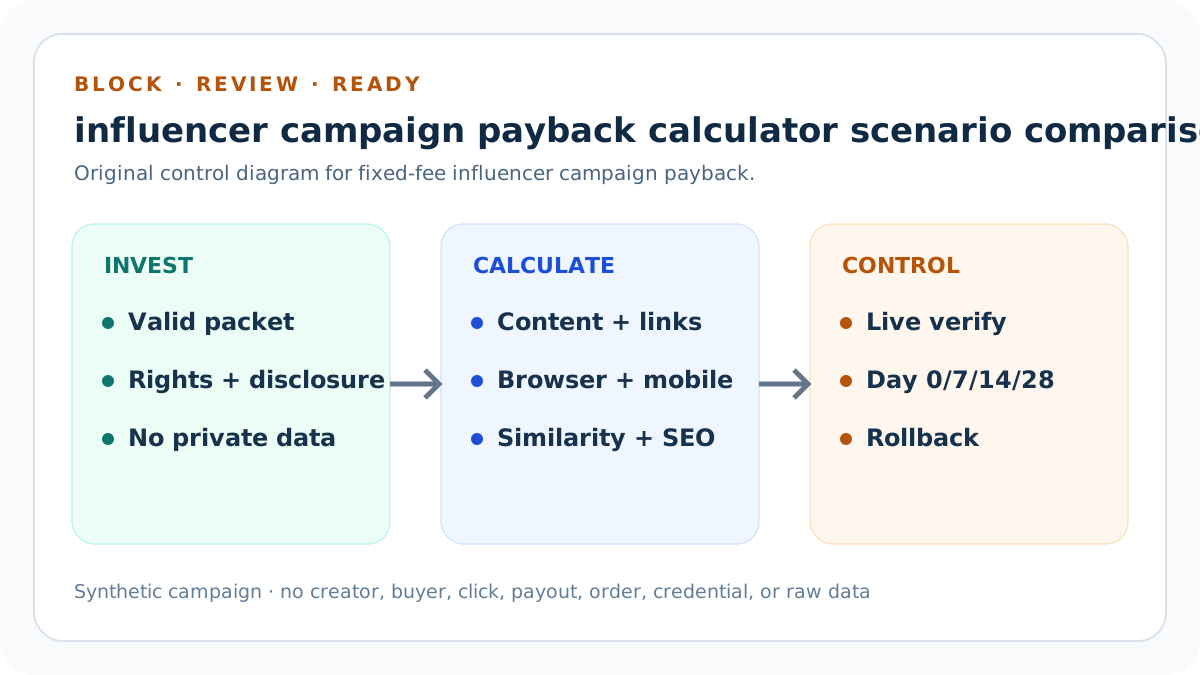
Block invalid counts, nonpositive contribution, incomplete deliverables, disputed rights, private exposure, missing dates or confirmations, incompatible periods, stale scope, or declared conflicts. Review a valid scenario below buffered payback, below the retained-order-rate floor, or above the recognized-reuse-share ceiling. Ready means both packets clear every seller-owned threshold.
Release only a reversible public model with synthetic defaults, first-party sources, original diagrams, accessible labels, self-canonical, Article and Breadcrumb schema, contextual links, strict 404 behavior, correction policy, and rollback evidence.
Sources and further reading
- Seller Profit Guard methodology: Evidence versions, formulas, privacy, correction, release, and rollback.
- Seller Profit Guard data privacy: Local-first boundaries for creator, buyer, order, advertising, contract, payment, and raw-record data.
- FTC: Disclosures 101 for Social Media Influencers: Reviewed July 31, 2026: official material-connection, clear-disclosure, placement, truthfulness, and audience-context guidance.
- FTC: Endorsement Guides — What People Are Asking: Reviewed July 31, 2026: official advertiser review, monitoring, material-connection, platform-tool, and endorsement-compliance context.
- YouTube Help: Add paid product placements, sponsorships & endorsements: Reviewed July 31, 2026: official paid-promotion declaration, platform-policy, and local-law responsibility boundaries.
- Google Ads Help: Creator partnerships boost: Reviewed July 31, 2026: official creator-video linking, organic metrics, experiment guidance, and advertiser responsibility for sufficient usage rights.
- YouTube Creator Partnerships Open Call program policies: Reviewed July 31, 2026: one program-specific example of asset selection, rights, likeness, a 180-day usage period, and advertiser review; it is not a universal campaign contract.
Related Seller Profit Guard tools
- Influencer Campaign Payback Calculator: Compare one sponsored post with a multi-asset fixed-fee campaign.
- Creator Sample Payback Calculator: Model sample-led creator investment and commission separately.
- Affiliate Commission Calculator: Model performance payouts rather than fixed content production.
- Ad Attribution Reconciliation Checker: Reconcile reported attributed rows before payback modeling.
- Paid CPA Limit Calculator: Keep acquisition capacity separate from asset recovery.
- Methodology: Review evidence, formulas, privacy, correction, release, and rollback.
- Data Privacy: Protect creator, buyer, order, contract, payout, credential, and raw-record data.
- Influencer Campaign Payback Formula and Inputs: Build fixed-fee influencer payback from complete investment, approved assets, retained contribution, reuse recognition, and target headroom.
- Influencer Campaign Payback Example: One Sponsored Post: Follow one sponsored post through creator fee, rights, sample, media, retained contribution, recognized reuse, and target payback.
- Influencer Campaign Payback for a Multi-Asset Campaign: Model a four-asset campaign with larger creator fee, rights, samples, paid amplification, approved assets, reuse, and target recovery.
- Influencer Campaign Payback Mistakes and Corrections: Correct fixed-fee campaign errors involving incomplete costs, gross orders, disputed assets, speculative reuse, attribution, and target math.
- Influencer Campaign Payback Data Sources: Map creator fees, rights, assets, samples, media, retained contribution, attribution, reuse, and maturity to reviewable evidence.
- Influencer Campaign Payback Decision Thresholds: Separate cash break-even, buffered target payback, order-only recovery, reusable-asset credit, and evidence failure thresholds.
- Weekly Influencer Campaign Payback Routine: Run a repeatable fixed-fee campaign review across assets, rights, costs, attribution, returns, contribution, reuse, exceptions, and rollback.
- How to Interpret Influencer Campaign Payback: Read payback orders, target headroom, cost per retained order, cost per asset, and reuse value without causal or accounting overclaim.
- Influencer Campaign Payback Audit Template: Audit fixed compensation, rights, deliverables, samples, media, attribution, contribution, reuse, thresholds, disclosure, and change history.
Next step: Open Seller Profit Guard.
This is operational planning help, not tax, accounting, legal, financial, or platform-policy advice. Review the Terms and disclaimer, and verify current platform rules and fee assumptions before changing prices.