Where to get reliable handmade labor cost inputs
Last updated: 2026-07-31
Written and reviewed by Seller Profit Guard Editorial Team.
Use observed time studies for active task minutes, changeover logs for setup and cleanup, inspection and completion records for sellable units, correction logs for rework, a documented seller policy for the hourly costing rate and target, and a versioned task specification for product, tools, material, quality, currency, and evidence period.
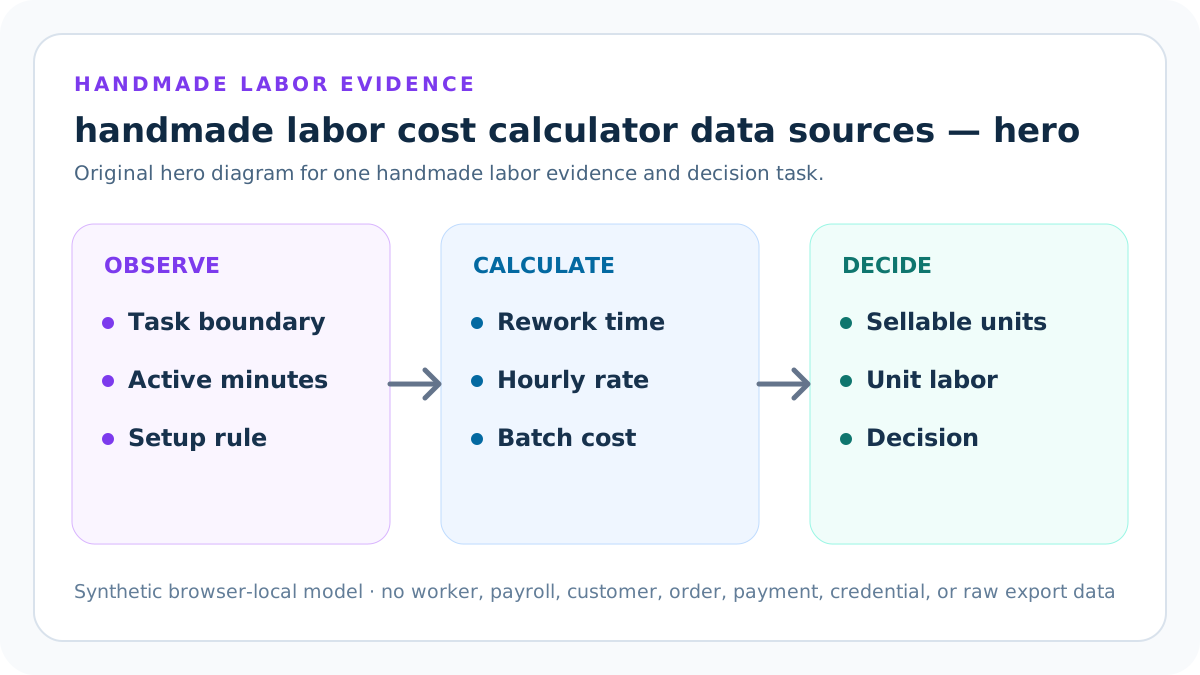
Source the task specification
Use a versioned product, material, tool, finish, quality, and packaging definition. Register source row 1 with authority grade, protected location, observation method, effective date, owner, update cadence, expiry trigger, and the exact field it is allowed to populate in the handmade labor input provenance map.
Challenge the source with one stale, missing, conflicting, or differently scoped record. Keep both versions as named evidence until reconciled, and explain why only the current comparable record can support traceable labor inputs at one task grain.
Source active task minutes
Use repeated observations with declared start-stop rules, operator class, interruptions, and outliers. Register source row 2 with authority grade, protected location, observation method, effective date, owner, update cadence, expiry trigger, and the exact field it is allowed to populate in the handmade labor input provenance map.
Challenge the source with one stale, missing, conflicting, or differently scoped record. Keep both versions as named evidence until reconciled, and explain why only the current comparable record can support traceable labor inputs at one task grain.
Source setup and cleanup
Use changeover, staging, calibration, fixture, template, reset, and sanitation logs. Register source row 3 with authority grade, protected location, observation method, effective date, owner, update cadence, expiry trigger, and the exact field it is allowed to populate in the handmade labor input provenance map.
Challenge the source with one stale, missing, conflicting, or differently scoped record. Keep both versions as named evidence until reconciled, and explain why only the current comparable record can support traceable labor inputs at one task grain.
Source sellable units
Use completed inspection records rather than pieces started or scheduled. Register source row 4 with authority grade, protected location, observation method, effective date, owner, update cadence, expiry trigger, and the exact field it is allowed to populate in the handmade labor input provenance map.
Challenge the source with one stale, missing, conflicting, or differently scoped record. Keep both versions as named evidence until reconciled, and explain why only the current comparable record can support traceable labor inputs at one task grain.
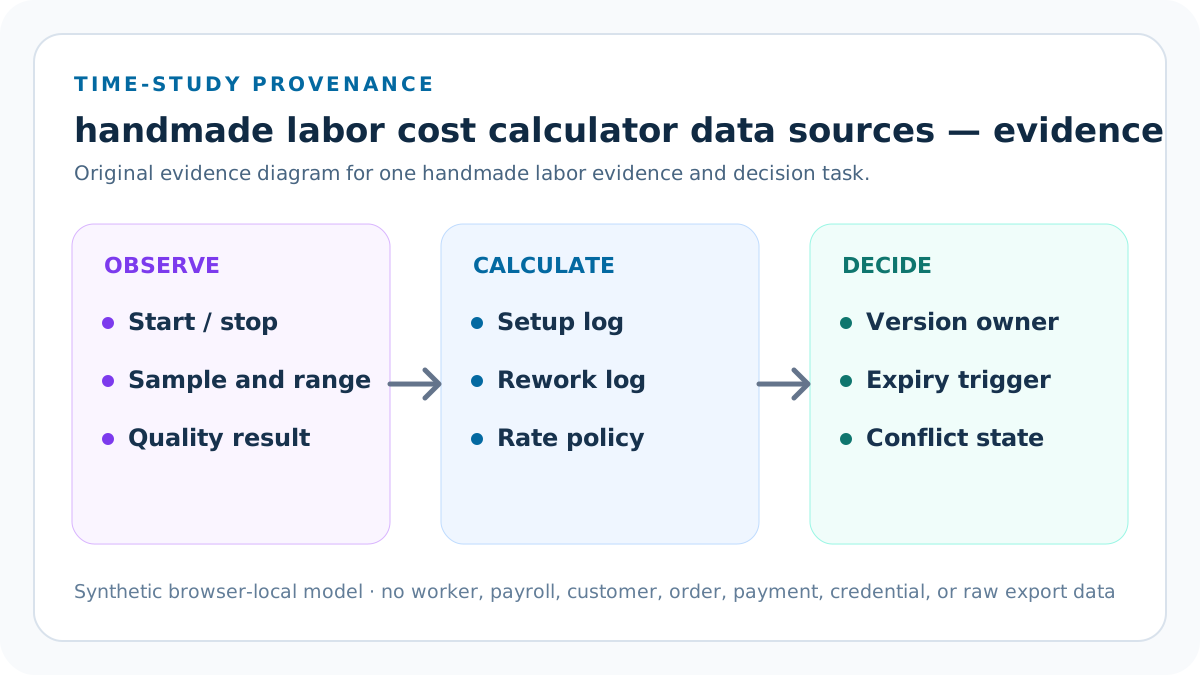
Source attempted units
Preserve this count separately to explain yield without corrupting the sellable denominator. Register source row 5 with authority grade, protected location, observation method, effective date, owner, update cadence, expiry trigger, and the exact field it is allowed to populate in the handmade labor input provenance map.
Challenge the source with one stale, missing, conflicting, or differently scoped record. Keep both versions as named evidence until reconciled, and explain why only the current comparable record can support traceable labor inputs at one task grain.
Source rework minutes
Use recoverable defect and correction records tied to the same task and quality standard. Register source row 6 with authority grade, protected location, observation method, effective date, owner, update cadence, expiry trigger, and the exact field it is allowed to populate in the handmade labor input provenance map.
Challenge the source with one stale, missing, conflicting, or differently scoped record. Keep both versions as named evidence until reconciled, and explain why only the current comparable record can support traceable labor inputs at one task grain.
Source the hourly rate
Use a dated seller-owned costing policy that states purpose, inclusions, exclusions, owner, and review trigger. Register source row 7 with authority grade, protected location, observation method, effective date, owner, update cadence, expiry trigger, and the exact field it is allowed to populate in the handmade labor input provenance map.
Challenge the source with one stale, missing, conflicting, or differently scoped record. Keep both versions as named evidence until reconciled, and explain why only the current comparable record can support traceable labor inputs at one task grain.
Source the target
Tie the unit labor threshold to a declared product-cost or contribution policy. Register source row 8 with authority grade, protected location, observation method, effective date, owner, update cadence, expiry trigger, and the exact field it is allowed to populate in the handmade labor input provenance map.
Challenge the source with one stale, missing, conflicting, or differently scoped record. Keep both versions as named evidence until reconciled, and explain why only the current comparable record can support traceable labor inputs at one task grain.
Source currency and period
Record the calculation currency and YYYY-MM evidence month on every input packet. Register source row 9 with authority grade, protected location, observation method, effective date, owner, update cadence, expiry trigger, and the exact field it is allowed to populate in the handmade labor input provenance map.
Challenge the source with one stale, missing, conflicting, or differently scoped record. Keep both versions as named evidence until reconciled, and explain why only the current comparable record can support traceable labor inputs at one task grain.
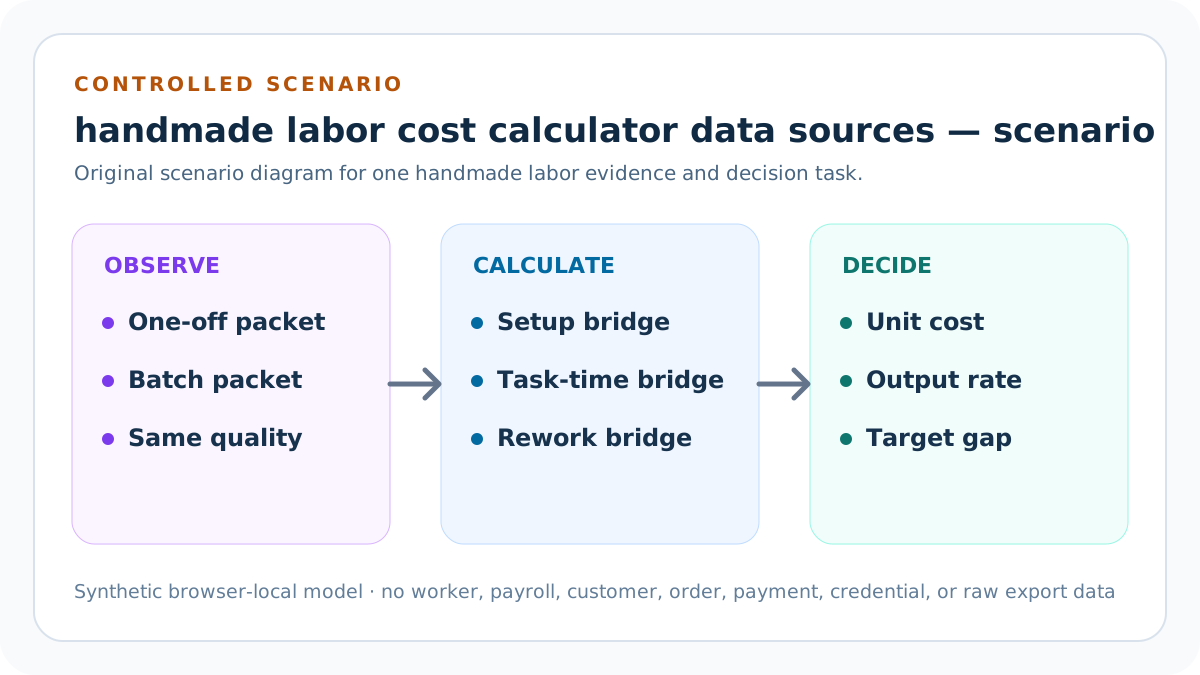
Use DOL hours-worked guidance only as a legal boundary
A production timer rule does not determine compensable time; waiting, monitored, preparation, correction, and other work questions depend on the facts and applicable law. Register source row 10 with authority grade, protected location, observation method, effective date, owner, update cadence, expiry trigger, and the exact field it is allowed to populate in the handmade labor input provenance map.
Challenge the source with one stale, missing, conflicting, or differently scoped record. Keep both versions as named evidence until reconciled, and explain why only the current comparable record can support traceable labor inputs at one task grain.
Use IRS manufacturing-labor guidance only as tax context
Publication 334 distinguishes labor allocable to finished saleable product from other labor, but this operating calculator does not classify tax or inventory treatment. Register source row 11 with authority grade, protected location, observation method, effective date, owner, update cadence, expiry trigger, and the exact field it is allowed to populate in the handmade labor input provenance map.
Challenge the source with one stale, missing, conflicting, or differently scoped record. Keep both versions as named evidence until reconciled, and explain why only the current comparable record can support traceable labor inputs at one task grain.
Use Schedule C instructions only as record context
The IRS says not to deduct the value of an owner's own labor; this operating rate is a management assumption and not a claimed tax deduction. Register source row 12 with authority grade, protected location, observation method, effective date, owner, update cadence, expiry trigger, and the exact field it is allowed to populate in the handmade labor input provenance map.
Challenge the source with one stale, missing, conflicting, or differently scoped record. Keep both versions as named evidence until reconciled, and explain why only the current comparable record can support traceable labor inputs at one task grain.
Use BLS wage estimates only as external context
OEWS occupational estimates may support a dated comparison, but they do not establish a seller's all-in costing rate, owner compensation, payroll burden, or lawful wage. Register source row 13 with authority grade, protected location, observation method, effective date, owner, update cadence, expiry trigger, and the exact field it is allowed to populate in the handmade labor input provenance map.
Challenge the source with one stale, missing, conflicting, or differently scoped record. Keep both versions as named evidence until reconciled, and explain why only the current comparable record can support traceable labor inputs at one task grain.
Grade observation authority
Separate observed, logged, estimated, inherited, inferred, and unsupported values. Register source row 14 with authority grade, protected location, observation method, effective date, owner, update cadence, expiry trigger, and the exact field it is allowed to populate in the handmade labor input provenance map.
Challenge the source with one stale, missing, conflicting, or differently scoped record. Keep both versions as named evidence until reconciled, and explain why only the current comparable record can support traceable labor inputs at one task grain.
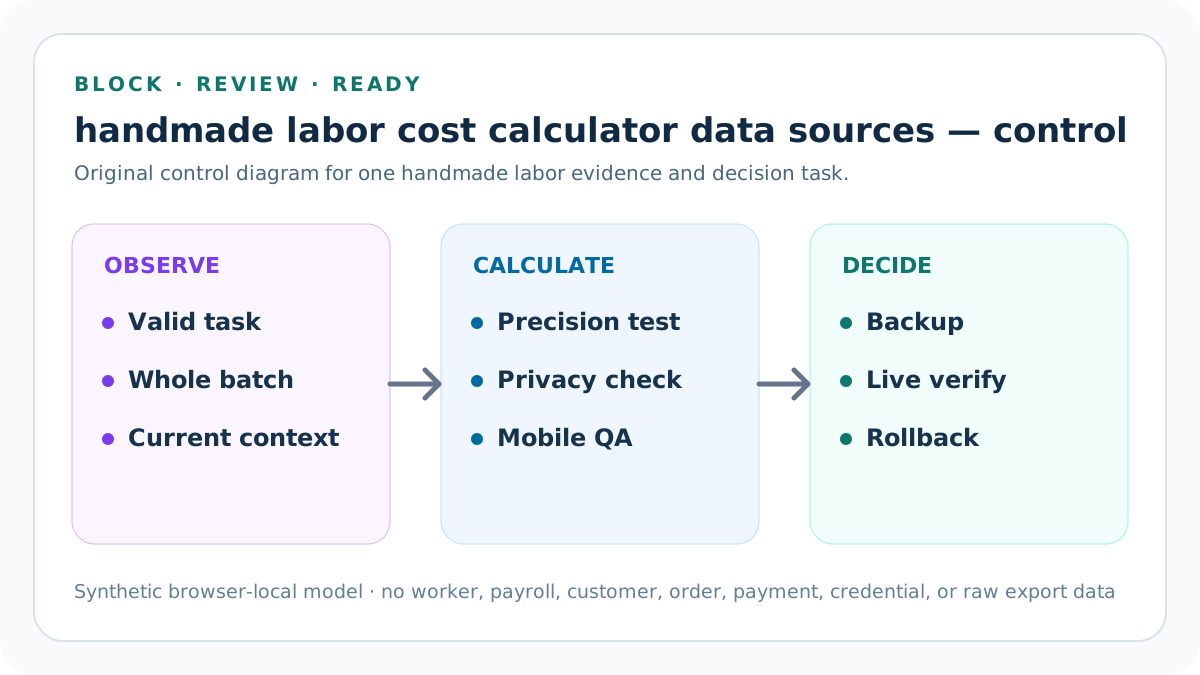
Build an expiry calendar
Track task redesign, tool change, material lot, training, rate review, and quality change triggers. Register source row 15 with authority grade, protected location, observation method, effective date, owner, update cadence, expiry trigger, and the exact field it is allowed to populate in the handmade labor input provenance map.
Challenge the source with one stale, missing, conflicting, or differently scoped record. Keep both versions as named evidence until reconciled, and explain why only the current comparable record can support traceable labor inputs at one task grain.
Protect identities
Use aggregate task records and protected pointers instead of names, schedules, payroll, or performance files. Register source row 16 with authority grade, protected location, observation method, effective date, owner, update cadence, expiry trigger, and the exact field it is allowed to populate in the handmade labor input provenance map.
Challenge the source with one stale, missing, conflicting, or differently scoped record. Keep both versions as named evidence until reconciled, and explain why only the current comparable record can support traceable labor inputs at one task grain.
Use the calculator with a controlled packet
Open the parent tool only after the handmade labor input provenance map has one task, product, quality standard, start-stop rule, sellable-unit definition, rate purpose, currency, and evidence month. Enter aggregate values; do not paste worker identity, payroll, schedules, customer data, order rows, private product files, credentials, or raw exports.
Save full-precision inputs and outputs beside the visible rounded result. Run the default one-off fixture, the twelve-unit batch fixture, the below-target Review, seller-threshold boundary cases, and invalid finite-number, date, confirmation, and structural Block cases. A changed value is accepted only when its source, owner, scope, effective date, and replacement trigger are recorded.
Apply non-compensating quality gates
Block blank, nonfinite, negative, or invalid task time, batch structure, rate, target, rework range, seller thresholds, source date, confirmations, currency, period, scope, or declared conflict before interpreting cost. After structure passes, Review labor above target, rework above its seller maximum, setup share above its seller maximum, stale evidence, quality drift, or a scenario whose product and process boundaries no longer match.
Ready means the current inputs produce traceable labor inputs at one task grain under one declared model. It does not determine a lawful wage, payroll treatment, worker classification, tax, safety, market price, accounting profit, capacity, customer demand, revenue, or income.
Document uncertainty and sensitivity
Change one assumption at a time: active task minutes, setup, attempted units, sellable units, rework, hourly rate, or target. Keep low, expected, and high scenarios when observations vary materially. Do not hide known conflict in a larger rework allowance or choose only the fastest run.
For scenario 5, record the full before state, the isolated change, the recalculated component costs, unit result, target headroom, decision, quality outcome, owner, and follow-up. Sensitivity explains what drives the result; it does not prove that the chosen change is safe or commercially desirable.
Keep public evidence private and non-identifying
Public examples are synthetic. Keep worker names, employee identifiers, schedules, medical or performance records, payroll, buyer names, addresses, emails, order IDs, messages, payment data, customer files, proprietary designs, supplier-confidential documents, credentials, and raw exports outside the handmade labor input provenance map.
Use non-identifying task aliases, aggregates, ranges, and protected source pointers. A reviewer should be able to reproduce the calculation contract without receiving personal, customer, payment, or confidential production data.
Release, monitor, correct, and roll back
Before public release, preserve narrow local and remote backups and a rollback identifier. Run syntax, typecheck, focused and full unit tests, integration, build, SEO and duplicate audits, mobile and keyboard QA, static-route validation, image and link checks, candidate-origin review, and live calculator scenarios.
After release, verify status, canonical, indexability, schema, answer blocks, images, hub discovery, strict 404, sitemap membership, and production behavior. Record Day 0/7/14/28 evidence without claiming same-day causality. Restore the prior verified state if formula, content, accessibility, analytics, routing, privacy, or live health regresses.
Time-study protocol
Record sample size, event rule, device, precision, operator class, median, range, and excluded observations. Store the task packet, relevant aggregate observation, unrounded calculation, displayed value, decision, owner, review date, expiry condition, and correction route. Deep check 1 is incomplete when a reviewer must guess the timer rule, sellable denominator, quality standard, rate purpose, or source version.
An independent review should reproduce why this check supports traceable labor inputs at one task grain and identify the closest counterexample. Preserve competing evidence as a named scenario instead of averaging it away, and keep wage, payroll, employment, tax, safety, price, profit, capacity, demand, revenue, and income claims outside the result.
Changeover taxonomy
Separate product, material, color, tool, fixture, maintenance, sanitation, and shutdown setup. Store the task packet, relevant aggregate observation, unrounded calculation, displayed value, decision, owner, review date, expiry condition, and correction route. Deep check 2 is incomplete when a reviewer must guess the timer rule, sellable denominator, quality standard, rate purpose, or source version.
An independent review should reproduce why this check supports traceable labor inputs at one task grain and identify the closest counterexample. Preserve competing evidence as a named scenario instead of averaging it away, and keep wage, payroll, employment, tax, safety, price, profit, capacity, demand, revenue, and income claims outside the result.
Quality ledger
Link sellable, reworked, scrapped, sampled, and unfinished counts to one acceptance rule. Store the task packet, relevant aggregate observation, unrounded calculation, displayed value, decision, owner, review date, expiry condition, and correction route. Deep check 3 is incomplete when a reviewer must guess the timer rule, sellable denominator, quality standard, rate purpose, or source version.
An independent review should reproduce why this check supports traceable labor inputs at one task grain and identify the closest counterexample. Preserve competing evidence as a named scenario instead of averaging it away, and keep wage, payroll, employment, tax, safety, price, profit, capacity, demand, revenue, and income claims outside the result.
Rate-governance note
Preserve purpose, owner, effective date, exclusions, approval, and superseded version. Store the task packet, relevant aggregate observation, unrounded calculation, displayed value, decision, owner, review date, expiry condition, and correction route. Deep check 4 is incomplete when a reviewer must guess the timer rule, sellable denominator, quality standard, rate purpose, or source version.
An independent review should reproduce why this check supports traceable labor inputs at one task grain and identify the closest counterexample. Preserve competing evidence as a named scenario instead of averaging it away, and keep wage, payroll, employment, tax, safety, price, profit, capacity, demand, revenue, and income claims outside the result.
Evidence conflict handling
Keep competing timer, quality, batch, or rate evidence as named scenarios until resolved. Store the task packet, relevant aggregate observation, unrounded calculation, displayed value, decision, owner, review date, expiry condition, and correction route. Deep check 5 is incomplete when a reviewer must guess the timer rule, sellable denominator, quality standard, rate purpose, or source version.
An independent review should reproduce why this check supports traceable labor inputs at one task grain and identify the closest counterexample. Preserve competing evidence as a named scenario instead of averaging it away, and keep wage, payroll, employment, tax, safety, price, profit, capacity, demand, revenue, and income claims outside the result.
Privacy review
Confirm public artifacts contain no worker, customer, order, payment, credential, or raw production record. Store the task packet, relevant aggregate observation, unrounded calculation, displayed value, decision, owner, review date, expiry condition, and correction route. Deep check 6 is incomplete when a reviewer must guess the timer rule, sellable denominator, quality standard, rate purpose, or source version.
An independent review should reproduce why this check supports traceable labor inputs at one task grain and identify the closest counterexample. Preserve competing evidence as a named scenario instead of averaging it away, and keep wage, payroll, employment, tax, safety, price, profit, capacity, demand, revenue, and income claims outside the result.
Sources and further reading
- Seller Profit Guard methodology: Comparable-grain evidence, deterministic calculations, validation, correction, release, and rollback.
- Seller Profit Guard data privacy: Local-first boundaries for worker, seller, customer, order, payment, contact, credential, and raw export data.
- U.S. Department of Labor: Hours Worked: Primary U.S. context for compensable-time questions; the calculator does not determine lawful hours or wages.
- IRS Publication 334 (2025): Primary U.S. context distinguishing manufacturing labor allocable to finished saleable product from other labor; the calculator does not determine tax or accounting treatment.
- IRS Schedule C instructions (2025): Primary U.S. record and cost-of-goods context, including the instruction not to deduct the value of an owner's own labor; the calculator does not determine tax or accounting treatment.
- U.S. Bureau of Labor Statistics: May 2025 Occupational Employment and Wages: Current primary U.S. occupational wage-estimate context; an OEWS estimate is not a seller-specific all-in cost rate, payroll calculation, or lawful wage.
Related Seller Profit Guard tools
- Open the Handmade Labor Cost Calculator: Convert setup, active task time, batch size, rework, and hourly rate into labor cost per sellable unit.
- Listing Cost Library: Version labor and other unit-cost evidence without exposing private records.
- Product Price Floor Calculator: Use labor as one cost input in a seller-owned price boundary.
- Contribution Margin Calculator: Review contribution for one observed order after labor and other variable costs.
- Custom Order Quote Calculator: Model customer-specific design, revision, rush, fulfillment, and quote decisions separately.
- Methodology: Review evidence, privacy, formulas, tests, release, correction, and rollback.
- Handmade Labor Cost Formula and Inputs: Continue with a distinct handmade labor formula, example, source, threshold, comparison, operating, interpretation, or audit task.
- One-Off Handmade Labor Cost Example: Continue with a distinct handmade labor formula, example, source, threshold, comparison, operating, interpretation, or audit task.
- Batch Handmade Labor Cost Scenario: Continue with a distinct handmade labor formula, example, source, threshold, comparison, operating, interpretation, or audit task.
- Handmade Labor Cost Calculation Mistakes: Continue with a distinct handmade labor formula, example, source, threshold, comparison, operating, interpretation, or audit task.
- Safe Handmade Labor Cost Thresholds: Continue with a distinct handmade labor formula, example, source, threshold, comparison, operating, interpretation, or audit task.
Next step: Open the Handmade Labor Cost Calculator.
This is operational planning help, not tax, accounting, legal, financial, or platform-policy advice. Review the Terms and disclaimer, and verify current platform rules and fee assumptions before changing prices.