How to interpret Etsy seller-fee VAT results
Last updated: 2026-07-30
Written and reviewed by Seller Profit Guard Editorial Team.
Read the decision first, then seller location, invoice treatment, fee-category VAT rows, eligible subtotal, gross VAT, credit note, modeled and actual net VAT, both differences, review threshold, period, scope, and declared issues. Ready confirms only the entered invoice packet. It does not prove tax registration, liability, return accuracy, payout, or product profit.
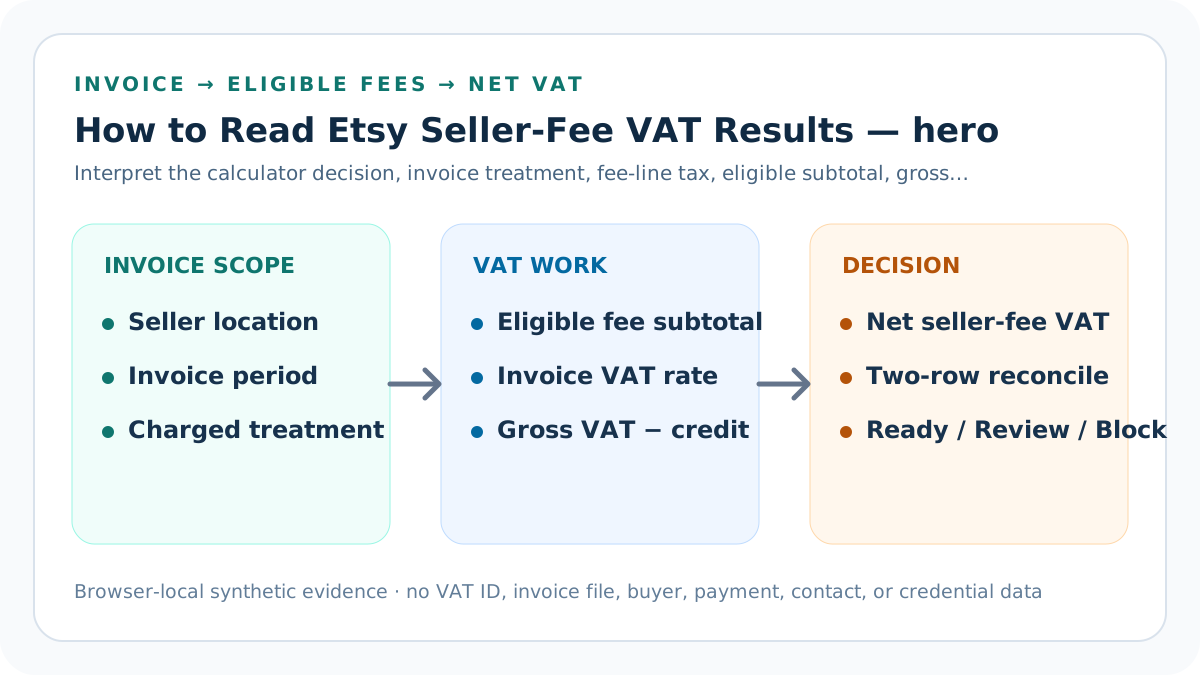
interpretation scope and direct decision
Begin with Block or Reconcile signals rather than the headline amount. Evidence defects outrank an attractive score, threshold, or displayed tax total.
Category VAT rows explain how each entered fee contributes when charged. The eligible subtotal explains the tax base; gross VAT, credit, and net VAT explain the period calculation.
Build the result-to-evidence interpretation map
The two difference rows reveal whether the model and invoice refer to the same fee packet. A zero net-VAT difference cannot compensate for a wrong eligible subtotal.
No result authenticates a seller, invoice, tax ID, order, payout, bank deposit, tax return, price, search performance, AdSense approval, qualified intent, revenue, or final profit.
Read the decision
Block means invalid or conflicted evidence; Reconcile means row drift; Review means a reconciled threshold breach; Ready means all entered gates pass.
Interpret each row by what it proves and explicitly name what remains outside the model. For “Read the decision,” record the accountable invoice-period field in the result-to-evidence interpretation map, its source version, currency, precision, modeled value, actual observation, tolerance, decision owner, and correction boundary. Reproduce a Ready EUR packet with zero subtotal and VAT differences; keep a low VAT amount with unknown treatment or mixed invoice periods isolated until evidence supports a bounded next action supported by the calculator's actual rows.
Verification for this control includes a supported charged fixture, a monthly credit-note fixture, a documented no-charge fixture, and an unknown-treatment fixture with declared conflicts. Test the 1 control without weakening other gates. Preserve exact values before display rounding, identify any changed assumption, and restore the previous packet when the correction cannot reproduce a bounded next action supported by the calculator's actual rows.
Read invoice treatment
Charged or not charged comes from seller-entered invoice evidence and is not the calculator's tax judgment.
Interpret each row by what it proves and explicitly name what remains outside the model. For “Read invoice treatment,” record the accountable invoice-period field in the result-to-evidence interpretation map, its source version, currency, precision, modeled value, actual observation, tolerance, decision owner, and correction boundary. Reproduce a Ready EUR packet with zero subtotal and VAT differences; keep a low VAT amount with unknown treatment or mixed invoice periods isolated until evidence supports a bounded next action supported by the calculator's actual rows.
Verification for this control includes a supported charged fixture, a monthly credit-note fixture, a documented no-charge fixture, and an unknown-treatment fixture with declared conflicts. Test the 2 control without weakening other gates. Preserve exact values before display rounding, identify any changed assumption, and restore the previous packet when the correction cannot reproduce a bounded next action supported by the calculator's actual rows.
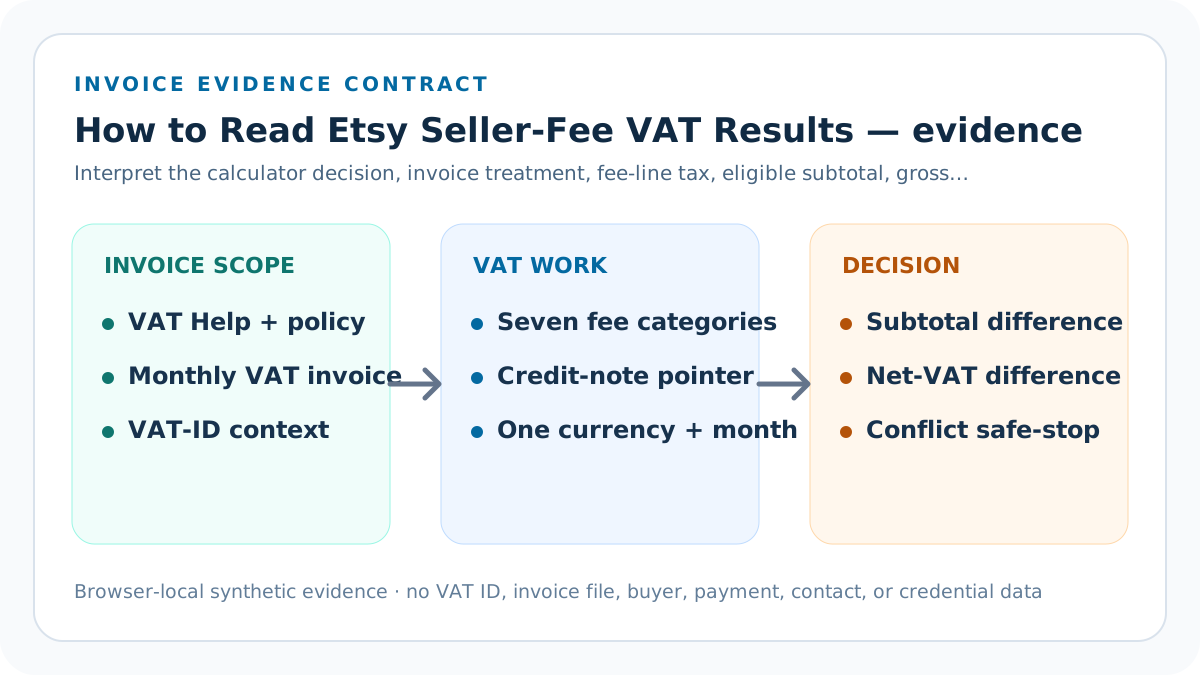
Read category VAT
Inspect which fee lines contribute to gross VAT and return to source evidence if one category is unexpected.
Interpret each row by what it proves and explicitly name what remains outside the model. For “Read category VAT,” record the accountable invoice-period field in the result-to-evidence interpretation map, its source version, currency, precision, modeled value, actual observation, tolerance, decision owner, and correction boundary. Reproduce a Ready EUR packet with zero subtotal and VAT differences; keep a low VAT amount with unknown treatment or mixed invoice periods isolated until evidence supports a bounded next action supported by the calculator's actual rows.
Verification for this control includes a supported charged fixture, a monthly credit-note fixture, a documented no-charge fixture, and an unknown-treatment fixture with declared conflicts. Test the 3 control without weakening other gates. Preserve exact values before display rounding, identify any changed assumption, and restore the previous packet when the correction cannot reproduce a bounded next action supported by the calculator's actual rows.
Read the eligible subtotal
Compare the same invoice-period fee base before evaluating tax, credits, or thresholds.
Interpret each row by what it proves and explicitly name what remains outside the model. For “Read the eligible subtotal,” record the accountable invoice-period field in the result-to-evidence interpretation map, its source version, currency, precision, modeled value, actual observation, tolerance, decision owner, and correction boundary. Reproduce a Ready EUR packet with zero subtotal and VAT differences; keep a low VAT amount with unknown treatment or mixed invoice periods isolated until evidence supports a bounded next action supported by the calculator's actual rows.
Verification for this control includes a supported charged fixture, a monthly credit-note fixture, a documented no-charge fixture, and an unknown-treatment fixture with declared conflicts. Test the 4 control without weakening other gates. Preserve exact values before display rounding, identify any changed assumption, and restore the previous packet when the correction cannot reproduce a bounded next action supported by the calculator's actual rows.
Read gross, credit, and net
Preserve the three values separately so a credit correction can be audited and reversed.
Interpret each row by what it proves and explicitly name what remains outside the model. For “Read gross, credit, and net,” record the accountable invoice-period field in the result-to-evidence interpretation map, its source version, currency, precision, modeled value, actual observation, tolerance, decision owner, and correction boundary. Reproduce a Ready EUR packet with zero subtotal and VAT differences; keep a low VAT amount with unknown treatment or mixed invoice periods isolated until evidence supports a bounded next action supported by the calculator's actual rows.
Verification for this control includes a supported charged fixture, a monthly credit-note fixture, a documented no-charge fixture, and an unknown-treatment fixture with declared conflicts. Test the 5 control without weakening other gates. Preserve exact values before display rounding, identify any changed assumption, and restore the previous packet when the correction cannot reproduce a bounded next action supported by the calculator's actual rows.
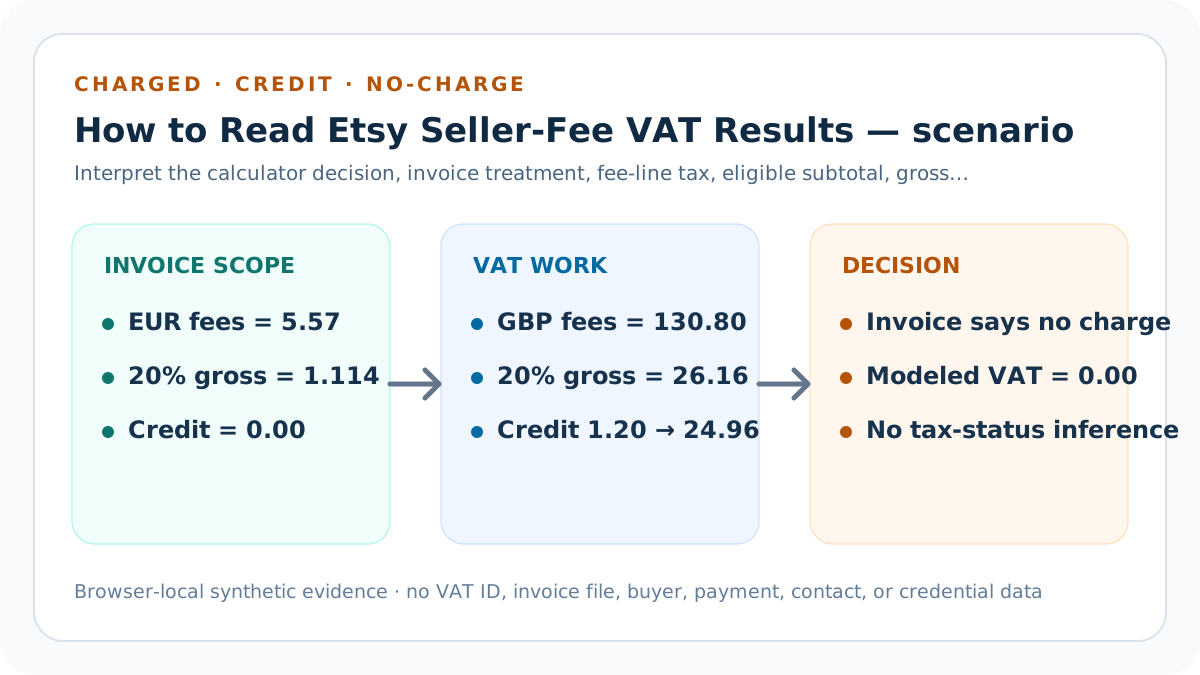
Read both differences
A difference above tolerance needs reconciliation at the corresponding subtotal or net-VAT row.
Interpret each row by what it proves and explicitly name what remains outside the model. For “Read both differences,” record the accountable invoice-period field in the result-to-evidence interpretation map, its source version, currency, precision, modeled value, actual observation, tolerance, decision owner, and correction boundary. Reproduce a Ready EUR packet with zero subtotal and VAT differences; keep a low VAT amount with unknown treatment or mixed invoice periods isolated until evidence supports a bounded next action supported by the calculator's actual rows.
Verification for this control includes a supported charged fixture, a monthly credit-note fixture, a documented no-charge fixture, and an unknown-treatment fixture with declared conflicts. Test the 6 control without weakening other gates. Preserve exact values before display rounding, identify any changed assumption, and restore the previous packet when the correction cannot reproduce a bounded next action supported by the calculator's actual rows.
Read the threshold
The seller ceiling is a review trigger, not a tax rule or profitability claim.
Interpret each row by what it proves and explicitly name what remains outside the model. For “Read the threshold,” record the accountable invoice-period field in the result-to-evidence interpretation map, its source version, currency, precision, modeled value, actual observation, tolerance, decision owner, and correction boundary. Reproduce a Ready EUR packet with zero subtotal and VAT differences; keep a low VAT amount with unknown treatment or mixed invoice periods isolated until evidence supports a bounded next action supported by the calculator's actual rows.
Verification for this control includes a supported charged fixture, a monthly credit-note fixture, a documented no-charge fixture, and an unknown-treatment fixture with declared conflicts. Test the 7 control without weakening other gates. Preserve exact values before display rounding, identify any changed assumption, and restore the previous packet when the correction cannot reproduce a bounded next action supported by the calculator's actual rows.
Read scope and uncertainty
Check location, period, currency, invoice scope, declared conflicts, exclusions, and professional-review needs.
Interpret each row by what it proves and explicitly name what remains outside the model. For “Read scope and uncertainty,” record the accountable invoice-period field in the result-to-evidence interpretation map, its source version, currency, precision, modeled value, actual observation, tolerance, decision owner, and correction boundary. Reproduce a Ready EUR packet with zero subtotal and VAT differences; keep a low VAT amount with unknown treatment or mixed invoice periods isolated until evidence supports a bounded next action supported by the calculator's actual rows.
Verification for this control includes a supported charged fixture, a monthly credit-note fixture, a documented no-charge fixture, and an unknown-treatment fixture with declared conflicts. Test the 8 control without weakening other gates. Preserve exact values before display rounding, identify any changed assumption, and restore the previous packet when the correction cannot reproduce a bounded next action supported by the calculator's actual rows.
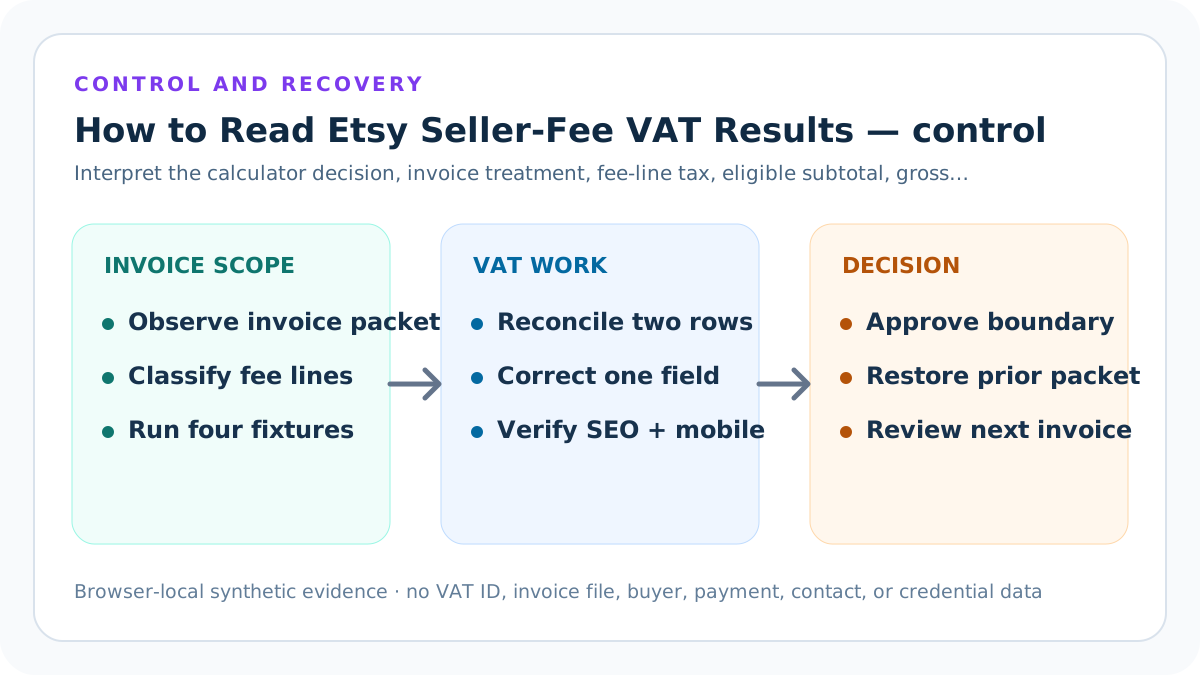
Verification, release, and invoice feedback
Before changing a fee-stack value, public route, source statement, or calculator default, preserve the result-to-evidence interpretation map, official-source versions, privacy-safe evidence pointers, current inputs, expected fixtures, tests, build output, route inventory, release manifest, and rollback identifier. Require real YYYY-MM-DD guidance and invoice-evidence review dates, the exact “One Etsy monthly VAT invoice” scope, and yes confirmations for seller location, invoice treatment, VAT-ID and business-status context, eligible fee lines, buyer-tax exclusions, credit-note period, and comparable actual rows. Confirm the target environment and safe-stop on unexpected account, authentication, warning, or production context.
After one bounded correction, rerun a Ready EUR packet with zero subtotal and VAT differences, a low VAT amount with unknown treatment or mixed invoice periods, the monthly credit packet, the no-charge packet, the non-compensating subtotal-and-tax-difference packet, and the invalid-evidence packet. Inspect exact and displayed amounts, category VAT, eligible subtotal, gross tax, credit, net tax, both differences, evidence dates and confirmations, threshold, mobile result layout, canonical, schema, original images, sources, internal links, and indexability.
Limits, privacy boundary, and next action
This guide and calculator use seller-entered summaries and synthetic fixtures. They do not retrieve Etsy data, authenticate invoices, accounts, VAT IDs, orders, payouts, or bank deposits, decide tax registration or liability, prepare a return, reproduce every jurisdiction, change marketplace state, or prove search ranking, traffic, qualified intent, AdSense approval, revenue, income, or final profit.
Keep buyer names, emails, addresses, messages, order and listing IDs, payment rows, bank details, tax identifiers, invoice files, contacts, labels, tokens, OAuth material, credentials, and raw exports outside the result-to-evidence interpretation map. Verify current Etsy sources and actual account evidence, reconcile a privacy-safe packet, and obtain qualified accounting, tax, or legal advice when material.
Sources and further reading
- Etsy Help: How VAT Is Collected on Seller Fees: Location, business-status and VAT-ID treatment, monthly VAT invoices issued for the prior statement, eligible Etsy Payments processing fees, and later-period credit-note context.
- Etsy Fees and Payments Policy: Current seller-fee policy, VAT-exclusive fee presentation, seller location and business-status boundary, and policy effective date.
- Etsy Help: Manage Your Payment Account: Monthly statement, downloadable VAT statement and credit-note evidence used for actual-row reconciliation.
- Etsy Help: Payment Processing Fees: Etsy Payments processing-fee scope and the locations where VAT can apply to that seller-fee line.
- Etsy Help: VAT ID Requirements: VAT-ID account context and the boundary between marketplace records and a seller's legal tax obligations.
- Seller Profit Guard methodology: Evidence precedence, synthetic fixtures, browser-local calculation, privacy boundaries, validation, release, correction, and rollback.
Related Seller Profit Guard tools
- Open the Etsy VAT on Seller Fees Calculator: Model eligible fee lines, gross VAT, a credit note, net VAT, actual rows, and a review threshold.
- Build the complete Etsy fee stack: Carry reconciled seller-fee VAT into the wider listing, transaction, processing, advertising, conversion, and operating-cost stack.
- Compare transaction and processing fees: Keep the two underlying seller-fee lines separate before applying invoice VAT.
- Estimate a Regulatory Operating fee: Calculate the regional seller fee before classifying any VAT charged on that fee.
- Reconcile the Payment account: Compare expected charges and credits with dated account evidence.
- Read the local-first methodology: Keep tax IDs, buyer records, orders, payment details, contacts, credentials, and raw exports outside public pages.
- Etsy VAT on Seller Fees Formula and Inputs: Continue the formula, example, source, threshold, comparison, routine, interpretation, or audit workflow.
- Etsy Seller-Fee VAT Worked Example: Continue the formula, example, source, threshold, comparison, routine, interpretation, or audit workflow.
- Monthly Etsy Seller-Fee VAT and Credit Note Example: Continue the formula, example, source, threshold, comparison, routine, interpretation, or audit workflow.
- 12 Etsy Seller-Fee VAT Mistakes: Continue the formula, example, source, threshold, comparison, routine, interpretation, or audit workflow.
- Etsy Seller-Fee VAT Data Sources: Continue the formula, example, source, threshold, comparison, routine, interpretation, or audit workflow.
Next step: Open the Etsy VAT on Seller Fees Calculator.
This is operational planning help, not tax, accounting, legal, financial, or platform-policy advice. Review the Terms and disclaimer, and verify current platform rules and fee assumptions before changing prices.