Variation-heavy versus size-sensitive Etsy photo coverage
Last updated: 2026-07-30
Written and reviewed by Seller Profit Guard Editorial Team.
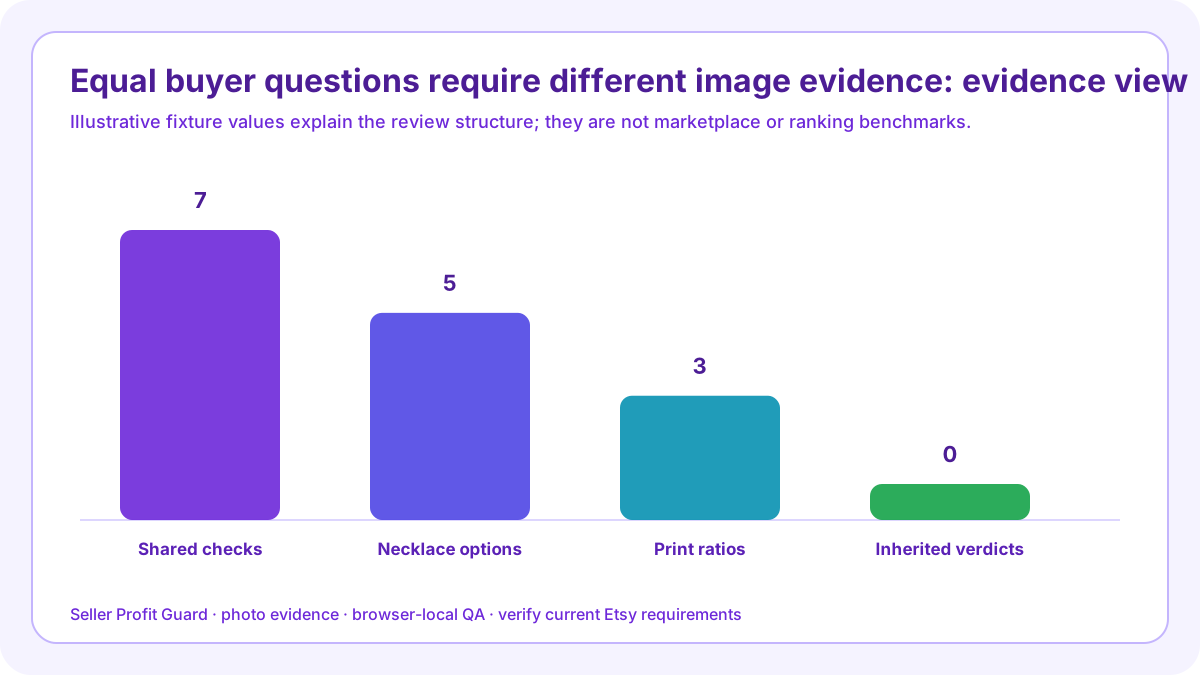
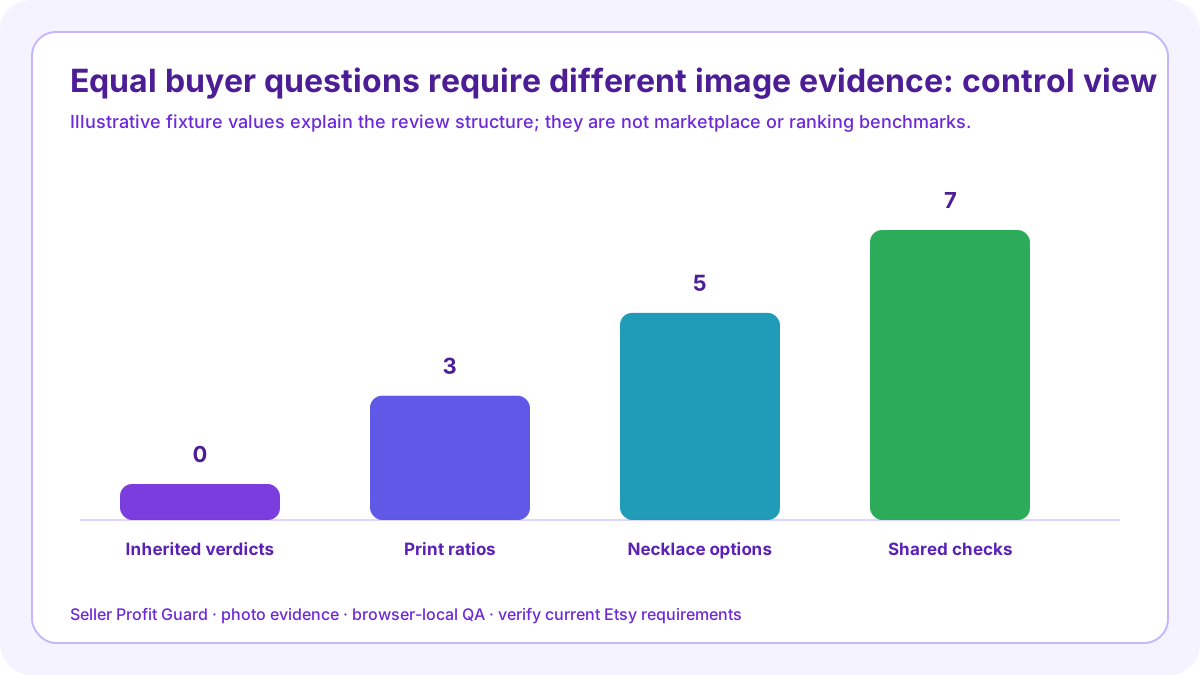
Compare both galleries using the same seven questions, but preserve product-specific evidence. The necklace emphasizes finish, chain options, clasp, pendant scale, wear, and engraving. The print emphasizes dimensions, aspect ratio, crop, paper detail, room scale, frame exclusion, and packaging. The review method stays constant while the correct image plan changes.

What does this matched scenario comparison page solve?
A fair comparison keeps buyer questions constant without forcing unlike products into the same gallery. Both need actual-item truth, relevant detail, scale, option coverage, use context, package clarity, and an exception boundary.
The evidence differs. Jewelry needs clasp construction, finish options, chain lengths, pendant scale, wear context, engraving, and a gift-box view. Art needs exact size, aspect ratio, crop, paper surface, room context, frame exclusion, and protective packaging.
Build the gallery comparison grid from current evidence
The comparison is not a universal shot list. Shared checks expose equivalent decisions, but the labels, examples, evidence, exceptions, diagrams, and release controls must remain tied to each product. A reused template can be complete in form and wrong in substance.
Keep one packet and verdict per listing. The necklace can be Ready while the print is on Hold for an unapproved crop, or the print can pass while the necklace lacks gold-finish evidence. Never inherit the stronger result.
Compare actual-item identity
The necklace main image shows a finished personalized piece. The print main image shows the physical unframed product. Neither relies exclusively on a generic mockup. Their common handmade context does not make their production or image exceptions interchangeable. This belongs in the matched scenario comparison because it changes two independent photo decisions at equal grain, not merely the visual style of a listing.
Hold the comparison grain constant while preserving product-specific evidence. Apply it first to personalized necklace; preserve a separate exception when the second case has different product, scale, option, package, permission, or image authority.
Compare detail by buyer decision
Jewelry detail covers clasp, chain, engraving, and finish. Print detail covers paper, edge, ink, border, and surface. A macro image earns value only when it answers the relevant construction or condition question for that product. This belongs in the matched scenario comparison because it changes two independent photo decisions at equal grain, not merely the visual style of a listing.
Hold the comparison grain constant while preserving product-specific evidence. Apply it first to unframed art print; preserve a separate exception when the second case has different product, scale, option, package, permission, or image authority.
Compare scale with the right reference
Pendant size uses a ruler and wearer context; wall art uses exact dimensions, aspect ratio, and a calibrated room view. Both retain units and limitations. One cannot borrow the other's model, object, or perspective as generic scale evidence. This belongs in the matched scenario comparison because it changes two independent photo decisions at equal grain, not merely the visual style of a listing.
Hold the comparison grain constant while preserving product-specific evidence. Apply it first to personalized necklace; preserve a separate exception when the second case has different product, scale, option, package, permission, or image authority.
Compare option mapping
The necklace maps silver, gold, and chain lengths. The print maps size groups, ratios, and crop changes. A single comparison image may cover several options when it is accurate and labeled, but the denominator and live linkage are reviewed separately. This belongs in the matched scenario comparison because it changes two independent photo decisions at equal grain, not merely the visual style of a listing.
Hold the comparison grain constant while preserving product-specific evidence. Apply it first to unframed art print; preserve a separate exception when the second case has different product, scale, option, package, permission, or image authority.
Compare use and context
Wearing the necklace clarifies drop and styling without guaranteeing fit. Hanging the print clarifies placement without implying a frame or a larger size. Props remain supporting context and are excluded from package expectations. This belongs in the matched scenario comparison because it changes two independent photo decisions at equal grain, not merely the visual style of a listing.
Hold the comparison grain constant while preserving product-specific evidence. Apply it first to personalized necklace; preserve a separate exception when the second case has different product, scale, option, package, permission, or image authority.

Compare package contents
The necklace package may contain one item, box, and care card. The print package may contain an unframed sheet, sleeve, backing, and mailer. Quantity and protective components reflect current packing records, not a shared gift template. This belongs in the matched scenario comparison because it changes two independent photo decisions at equal grain, not merely the visual style of a listing.
Hold the comparison grain constant while preserving product-specific evidence. Apply it first to unframed art print; preserve a separate exception when the second case has different product, scale, option, package, permission, or image authority.
Run crossed failure fixtures
Put room-scale and frame labels under the necklace, then put chain and engraving labels under the print. Both should fail material questions despite having many relevant-sounding words. This exposes role-template leakage and false semantic matches. This belongs in the matched scenario comparison because it changes two independent photo decisions at equal grain, not merely the visual style of a listing.
Hold the comparison grain constant while preserving product-specific evidence. Apply it first to personalized necklace; preserve a separate exception when the second case has different product, scale, option, package, permission, or image authority.
Decide and verify separately
Run checks, known-gap review, provenance, mobile and desktop inspection, selected-option testing, and recovery for each listing. Later measurement also stays separate. A shared method cannot justify copied images or performance claims. This belongs in the matched scenario comparison because it changes two independent photo decisions at equal grain, not merely the visual style of a listing.
Hold the comparison grain constant while preserving product-specific evidence. Apply it first to unframed art print; preserve a separate exception when the second case has different product, scale, option, package, permission, or image authority.
Run the personalized necklace and unframed art print checks
Open the Etsy Photo Coverage Checklist with a privacy-safe personalized necklace record. Enter the labeled buyer-facing gallery, seven evidence requirements, every known gap, and a dated source note. Save the expected output before running. Repeat with unframed art print so the workflow proves it can expose a material image failure rather than reward occupied slots.
Compare each check, issue, evidence status, and decision with expectation. Seller Profit Guard runs in the browser and does not require image upload, buyer, order, payment, address, credential, or raw CSV data. Use aliases in durable reports and keep account access, permissions, and private assets outside public content.
Release boundary, limitations, and next step
Back up the gallery, captions, and variation links; confirm the correct account and listing; apply one approved image set; and inspect thumbnail, mobile crop, desktop gallery, selected options, contents, and copy alignment. Safe-stop on login or CAPTCHA ambiguity, platform warning, wrong profile, missing target context, private data, or unexpected product state. Restore saved values when the buyer view does not match approval.
The checklist cannot inspect pixels, retrieve Etsy, certify originality, ownership, permission, policy compliance, color accuracy, accessibility, buyer understanding, ranking, traffic, conversion, sales, returns, or AdSense approval. Verify current Etsy policy, actual files, product records, and live controls. Seller Profit Guard is unaffiliated with Etsy and provides operational listing QA, not legal, marketplace, photography, accessibility, or professional advice.
Sources and further reading
- Etsy Listing Image Requirements: Official original-photo, actual-finished-product, personalized-item, buyer-photo permission, and production-partner image requirements.
- Etsy Seller Policy effective July 9, 2026: Current official accuracy, original-content, intellectual-property, privacy, and listing-representation obligations.
- Etsy Seller Handbook: 7 Essential Types of Product Photos: Official studio, lifestyle, scale, detail, group, process, and packaging photo guidance.
- Etsy Seller Handbook: Product Photography Checklist: Official shoot planning, lighting, detail, scale, multiple-angle, editing, crop, and ratio guidance.
- Etsy Help: Image requirements and best practices: Current official file, size, orientation, thumbnail-crop, color-profile, and upload guidance.
- Etsy Help: How to create a listing: Current official listing form guidance, including up to 20 photos, up to two short videos, and buyer-facing photo editing controls.
- Etsy Help: How to edit listing photos: Current official photo order, crop, thumbnail, image-quality, and search-visibility workflow.
- Etsy Help: Add text alternatives to listing images: Current official manual alt-text workflow and concise description guidance for product detail, texture, and scale.
- Etsy Help: Add variations to listings: Current official variation-to-photo linking workflow; live editor capacity should be verified where Help surfaces expose different photo limits.
- Etsy Seller Handbook: Anatomy of a Well-Crafted Listing: Current official listing guidance for multiple views, detail, lifestyle, lighting, and image resolution.
- Seller Profit Guard methodology: Evidence hierarchy, privacy boundary, uncertainty labels, corrections, rollback, and verification controls.
Related Seller Profit Guard tools
- Open the Etsy Photo Coverage Checklist: Map buyer questions to actual-item, detail, scale, variation, use, package, and customization image evidence.
- Check Etsy description clarity: Keep image claims and buyer-facing copy aligned.
- Check Etsy attribute coverage: Reconcile structured product facts before photographing options.
- Review Etsy variation and SKU controls: Keep gallery options, buyer choices, inventory, and cost records synchronized.
- Read the local-first methodology: Build evidence without buyer, order, address, credential, or raw CSV data.
- Read the editorial policy: Review current sourcing, authorship, corrections, and publication controls.
- Etsy Photo Coverage Formula: 10 Inputs: Continue the photo evidence, buyer-question, decision, release, or audit workflow.
- Etsy Photo Checklist: Variation-Heavy Example: Continue the photo evidence, buyer-question, decision, release, or audit workflow.
- Etsy Photo Checklist for Size-Sensitive Art: Continue the photo evidence, buyer-question, decision, release, or audit workflow.
- 12 Etsy Photo Coverage Mistakes to Fix: Continue the photo evidence, buyer-question, decision, release, or audit workflow.
- Evidence Sources for Etsy Listing Photos: Continue the photo evidence, buyer-question, decision, release, or audit workflow.
Next step: Open the Etsy Photo Coverage Checklist.
This is operational planning help, not tax, accounting, legal, financial, or platform-policy advice. Review the Terms and disclaimer, and verify current platform rules and fee assumptions before changing prices.