The exact inputs for an Etsy photo coverage review
Last updated: 2026-07-30
Written and reviewed by Seller Profit Guard Editorial Team.
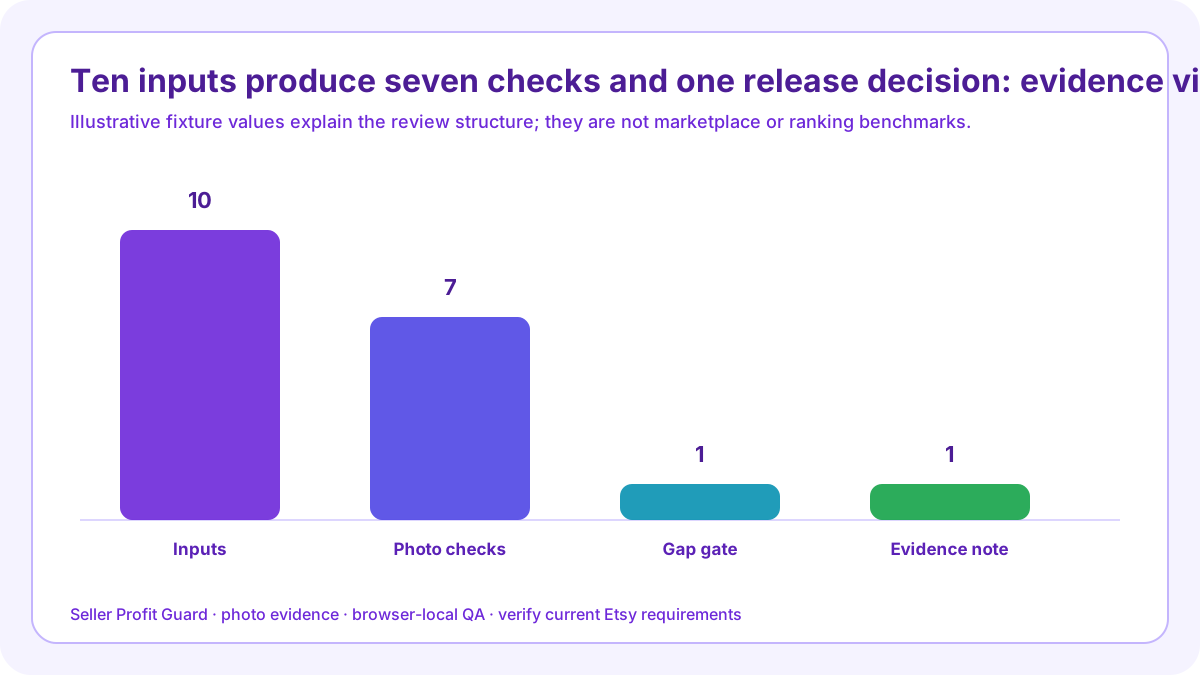
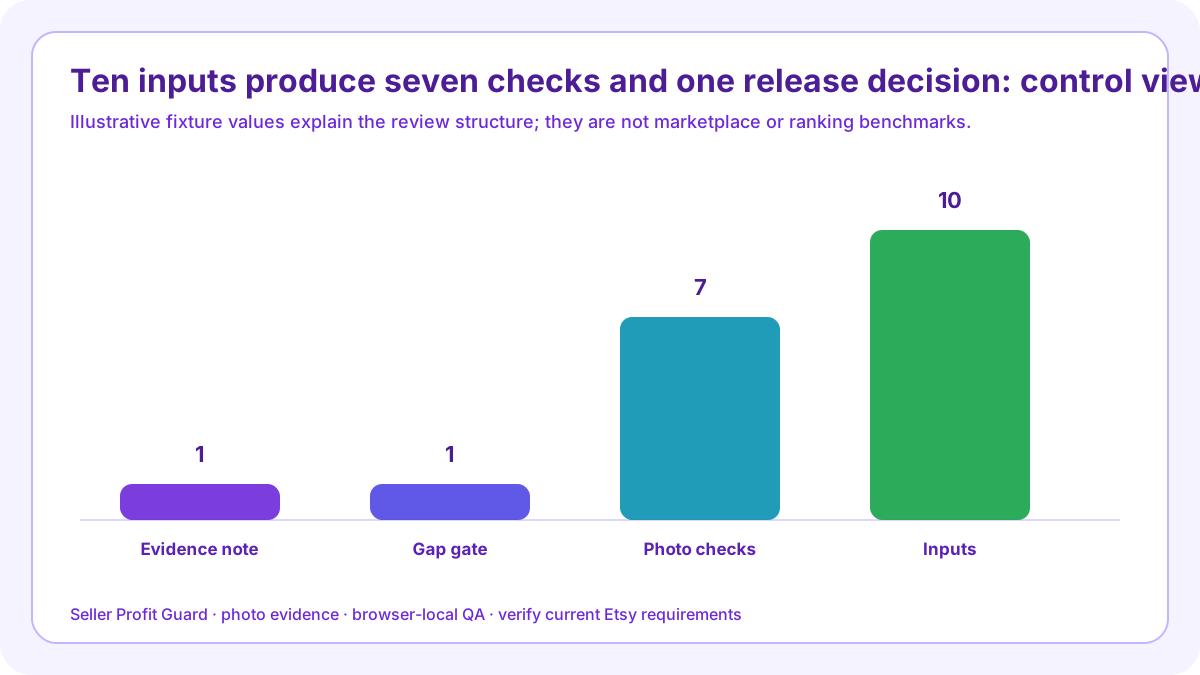
Record a labeled photo inventory plus requirements for the actual finished item, product detail, scale or fit, variations, use, package contents, and customization-image boundaries. Add every known missing or misleading photo and a dated evidence note. Review seven checks independently; any declared image gap blocks release.

What does this input contract page solve?
A photo audit starts with a denominator, not a gallery count. List the questions buyers must answer and the exact evidence available for each one. A repeated front angle does not become scale, detail, or variation proof simply because it occupies another slot.
Keep public-slot labels separate from product requirements. The gallery inventory describes what a buyer can see; the requirement fields describe what the product record says must be shown. This separation stops a desired result from being typed into the same evidence field it is meant to test.
Build the photo evidence register from current evidence
The ten inputs include seven evidence categories, the inventory itself, a known-gap register, and a dated source note. Known inaccurate, missing, stock, mockup, or unlabeled images receive non-compensating precedence. A beautiful gallery cannot average away an image the seller already knows may mislead.
Save a complete fixture and a deliberately broken fixture before using the checker. Record expected checks, decision, repair owner, public verification, and rollback state so later tool or policy changes can be tested against the same privacy-safe evidence packet.
Label every buyer-facing slot
Use one unique number and a plain-language purpose for each live image: actual item front, reverse angle, clasp detail, ruler scale, model fit, silver finish, gold finish, package contents, engraving example, or another specific role. A duplicate or missing number is a review defect. Preserve repeated crops as repeated crops instead of granting them fictional evidence value. This belongs in the input contract because it changes a reproducible seven-check decision, not merely the visual style of a listing.
Preserve required units, option labels, and policy boundaries when normalizing the register. Apply it first to variation-heavy necklace; preserve a separate exception when the second case has different product, scale, option, package, permission, or image authority.
Define actual-item proof separately
State which photo must show the finished product buyers will receive and whether a current policy exception applies. For personalized work, the main image needs a completed customized example. The checker tests the entered label, not originality, ownership, pixel content, or legal eligibility. This belongs in the input contract because it changes a reproducible seven-check decision, not merely the visual style of a listing.
Preserve required units, option labels, and policy boundaries when normalizing the register. Apply it first to generic mockup gallery; preserve a separate exception when the second case has different product, scale, option, package, permission, or image authority.
Name detail requirements precisely
List the construction, surface, condition, material, hardware, attachment, engraving, texture, or file-preview questions a wide photo cannot answer. Keep composition documents and measurements outside the photo score when an image can illustrate but cannot independently prove the underlying fact. This belongs in the input contract because it changes a reproducible seven-check decision, not merely the visual style of a listing.
Preserve required units, option labels, and policy boundaries when normalizing the register. Apply it first to variation-heavy necklace; preserve a separate exception when the second case has different product, scale, option, package, permission, or image authority.
Model scale and fit as decisions
Specify what a buyer needs to judge: pendant diameter, chain drop, bag size on a body, furniture footprint, art in a room, garment fit, or another measurable relationship. Retain units and reference context so a ruler crop or model view cannot imply unsupported universal fit. This belongs in the input contract because it changes a reproducible seven-check decision, not merely the visual style of a listing.
Preserve required units, option labels, and policy boundaries when normalizing the register. Apply it first to generic mockup gallery; preserve a separate exception when the second case has different product, scale, option, package, permission, or image authority.
Create a variation denominator
Record only appearance-changing options that need visual evidence, such as color, finish, pattern, configuration, or material. Size options may share a comparison image when it is accurate and labeled. Do not demand one slot per option without checking the live editor and product workflow. This belongs in the input contract because it changes a reproducible seven-check decision, not merely the visual style of a listing.
Preserve required units, option labels, and policy boundaries when normalizing the register. Apply it first to variation-heavy necklace; preserve a separate exception when the second case has different product, scale, option, package, permission, or image authority.

Separate use from decoration
A use image should demonstrate wear, opening, closure, installation, storage, texture, capacity, or another action. Decorative props and aspirational scenes are not functional proof. Label what is included and make sure context does not create a false package, scale, or performance claim. This belongs in the input contract because it changes a reproducible seven-check decision, not merely the visual style of a listing.
Preserve required units, option labels, and policy boundaries when normalizing the register. Apply it first to generic mockup gallery; preserve a separate exception when the second case has different product, scale, option, package, permission, or image authority.
Make contents and exceptions explicit
List quantity, components, hardware, care card, gift box, frame status, props, downloads, or other deliverables the buyer may infer visually. Record the customization or production-partner mockup boundary independently, because a permitted supporting example does not replace required real-item evidence. This belongs in the input contract because it changes a reproducible seven-check decision, not merely the visual style of a listing.
Preserve required units, option labels, and policy boundaries when normalizing the register. Apply it first to variation-heavy necklace; preserve a separate exception when the second case has different product, scale, option, package, permission, or image authority.
Give known gaps precedence
Any non-empty gap register produces Block. The next action is to remove, replace, relabel, or independently authorize the problematic image—not to add decorative coverage elsewhere. An empty field means no issue was declared; it does not certify the entire gallery. This belongs in the input contract because it changes a reproducible seven-check decision, not merely the visual style of a listing.
Preserve required units, option labels, and policy boundaries when normalizing the register. Apply it first to generic mockup gallery; preserve a separate exception when the second case has different product, scale, option, package, permission, or image authority.
Run the variation-heavy necklace and generic mockup gallery checks
Open the Etsy Photo Coverage Checklist with a privacy-safe variation-heavy necklace record. Enter the labeled buyer-facing gallery, seven evidence requirements, every known gap, and a dated source note. Save the expected output before running. Repeat with generic mockup gallery so the workflow proves it can expose a material image failure rather than reward occupied slots.
Compare each check, issue, evidence status, and decision with expectation. Seller Profit Guard runs in the browser and does not require image upload, buyer, order, payment, address, credential, or raw CSV data. Use aliases in durable reports and keep account access, permissions, and private assets outside public content.
Release boundary, limitations, and next step
Back up the gallery, captions, and variation links; confirm the correct account and listing; apply one approved image set; and inspect thumbnail, mobile crop, desktop gallery, selected options, contents, and copy alignment. Safe-stop on login or CAPTCHA ambiguity, platform warning, wrong profile, missing target context, private data, or unexpected product state. Restore saved values when the buyer view does not match approval.
The checklist cannot inspect pixels, retrieve Etsy, certify originality, ownership, permission, policy compliance, color accuracy, accessibility, buyer understanding, ranking, traffic, conversion, sales, returns, or AdSense approval. Verify current Etsy policy, actual files, product records, and live controls. Seller Profit Guard is unaffiliated with Etsy and provides operational listing QA, not legal, marketplace, photography, accessibility, or professional advice.
Sources and further reading
- Etsy Listing Image Requirements: Official original-photo, actual-finished-product, personalized-item, buyer-photo permission, and production-partner image requirements.
- Etsy Seller Policy effective July 9, 2026: Current official accuracy, original-content, intellectual-property, privacy, and listing-representation obligations.
- Etsy Seller Handbook: 7 Essential Types of Product Photos: Official studio, lifestyle, scale, detail, group, process, and packaging photo guidance.
- Etsy Seller Handbook: Product Photography Checklist: Official shoot planning, lighting, detail, scale, multiple-angle, editing, crop, and ratio guidance.
- Etsy Help: Image requirements and best practices: Current official file, size, orientation, thumbnail-crop, color-profile, and upload guidance.
- Etsy Help: How to create a listing: Current official listing form guidance, including up to 20 photos, up to two short videos, and buyer-facing photo editing controls.
- Etsy Help: How to edit listing photos: Current official photo order, crop, thumbnail, image-quality, and search-visibility workflow.
- Etsy Help: Add text alternatives to listing images: Current official manual alt-text workflow and concise description guidance for product detail, texture, and scale.
- Etsy Help: Add variations to listings: Current official variation-to-photo linking workflow; live editor capacity should be verified where Help surfaces expose different photo limits.
- Etsy Seller Handbook: Anatomy of a Well-Crafted Listing: Current official listing guidance for multiple views, detail, lifestyle, lighting, and image resolution.
- Seller Profit Guard methodology: Evidence hierarchy, privacy boundary, uncertainty labels, corrections, rollback, and verification controls.
Related Seller Profit Guard tools
- Open the Etsy Photo Coverage Checklist: Map buyer questions to actual-item, detail, scale, variation, use, package, and customization image evidence.
- Check Etsy description clarity: Keep image claims and buyer-facing copy aligned.
- Check Etsy attribute coverage: Reconcile structured product facts before photographing options.
- Review Etsy variation and SKU controls: Keep gallery options, buyer choices, inventory, and cost records synchronized.
- Read the local-first methodology: Build evidence without buyer, order, address, credential, or raw CSV data.
- Read the editorial policy: Review current sourcing, authorship, corrections, and publication controls.
- Etsy Photo Checklist: Variation-Heavy Example: Continue the photo evidence, buyer-question, decision, release, or audit workflow.
- Etsy Photo Checklist for Size-Sensitive Art: Continue the photo evidence, buyer-question, decision, release, or audit workflow.
- 12 Etsy Photo Coverage Mistakes to Fix: Continue the photo evidence, buyer-question, decision, release, or audit workflow.
- Evidence Sources for Etsy Listing Photos: Continue the photo evidence, buyer-question, decision, release, or audit workflow.
- Etsy Photo Coverage: Ready, Revise, Hold, Block: Continue the photo evidence, buyer-question, decision, release, or audit workflow.
Next step: Open the Etsy Photo Coverage Checklist.
This is operational planning help, not tax, accounting, legal, financial, or platform-policy advice. Review the Terms and disclaimer, and verify current platform rules and fee assumptions before changing prices.