How to interpret an Etsy photo coverage result responsibly
Last updated: 2026-07-30
Written and reviewed by Seller Profit Guard Editorial Team.
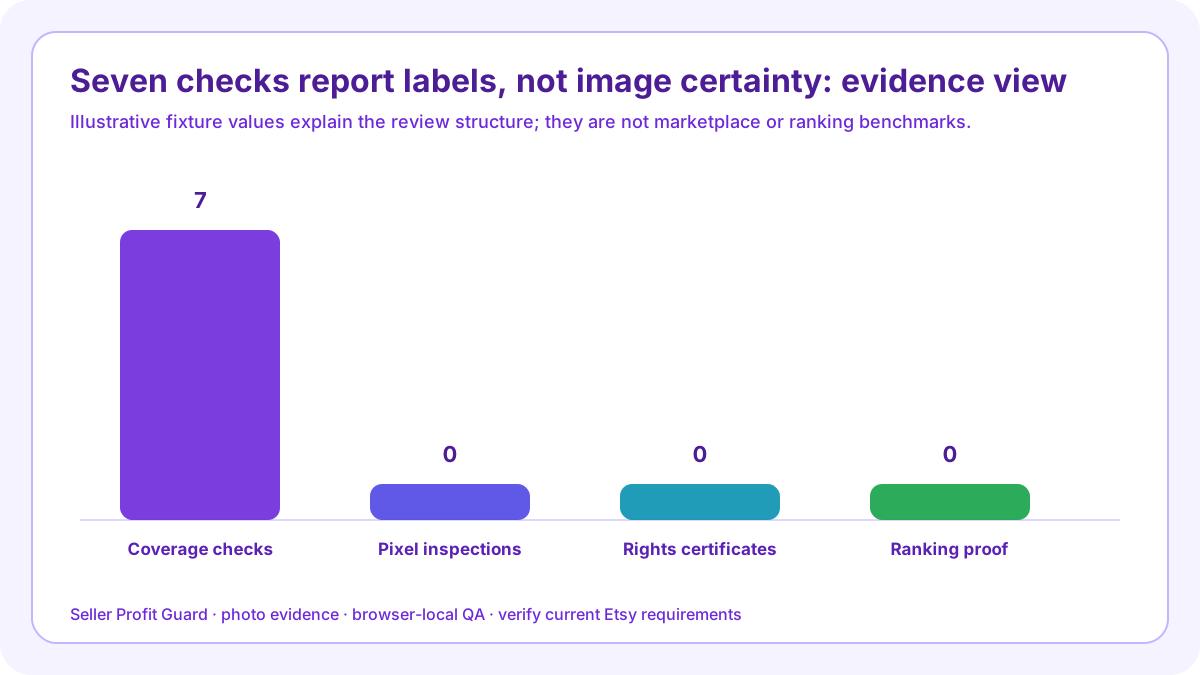
A seven-of-seven result means the labeled inventory covers the seller-entered requirements; it does not prove the images are accurate, original, accessible, policy-compliant, or effective. Read each check with its evidence note and known-gap register. Then verify pixels, rights, live variation links, crop, buyer view, and product records independently before release.

What does this result interpretation page solve?
The checker reports whether entered labels contain enough evidence language for seven declared requirements. It does not see the files. A high score can be wrong when labels are inaccurate; a lower score can reveal that a useful photo was labeled too vaguely. Treat the output as a structured review prompt.
Read the decision before the score. Block means a seller-declared image problem remains. Revise points to missing coverage. Hold points to incomplete provenance. Ready permits public QA only. None of these states certifies rights, policy, pixels, color, accessibility, ranking, or conversion.
Build the photo decision record from current evidence
Sensitivity comes from the denominator. If every minor option is declared separately, variation coverage may fall; if materially different options are omitted, it may pass falsely. Freeze the buyer decisions first, then compare the inventory without manipulating inputs to reach Ready.
Pair every output with an authority, independent check, owner, and next action. Preserve uncertainty instead of turning a text match into a marketplace claim.
Read the primary metric literally
Seven-of-seven means seven requirement strings matched the labeled inventory above their thresholds. It does not mean seven photos, perfect photography, or complete marketplace compliance. Inspect which terms produced each pass. This belongs in the result interpretation because it changes an action without false precision, not merely the visual style of a listing.
Pair each displayed metric with its literal meaning, exclusion, sensitivity, and next check. Apply it first to seven-of-seven result; preserve a separate exception when the second case has different product, scale, option, package, permission, or image authority.
Read labeled-slot count cautiously
The count comes from semicolon- or line-separated inventory entries, not commas inside a label and not image files. Every entry needs one unique numeric slot label. The count can expose an under-described register but cannot confirm live capacity, unique assets, order, crop, or successful upload. The buyer-facing gallery remains authoritative for observation. This belongs in the result interpretation because it changes an action without false precision, not merely the visual style of a listing.
Pair each displayed metric with its literal meaning, exclusion, sensitivity, and next check. Apply it first to one declared gap; preserve a separate exception when the second case has different product, scale, option, package, permission, or image authority.
Read each evidence layer
Actual item, detail, scale, variation, use, contents, and customization checks answer different questions. A Review result should lead to the relevant product authority and planned shot, not a general instruction to add more images. This belongs in the result interpretation because it changes an action without false precision, not merely the visual style of a listing.
Pair each displayed metric with its literal meaning, exclusion, sensitivity, and next check. Apply it first to seven-of-seven result; preserve a separate exception when the second case has different product, scale, option, package, permission, or image authority.
Read known gaps as a hard stop
Any declared missing, inaccurate, stock, mockup, unauthorized, or unlabeled issue triggers Block. Resolve the underlying asset or authority. Do not delete the gap text merely to change the displayed decision. This belongs in the result interpretation because it changes an action without false precision, not merely the visual style of a listing.
Pair each displayed metric with its literal meaning, exclusion, sensitivity, and next check. Apply it first to one declared gap; preserve a separate exception when the second case has different product, scale, option, package, permission, or image authority.
Read evidence status as provenance
Recorded and dated means the note has enough context and an explicit YYYY-MM-DD review date; it still does not prove its sources are current or valid. A human should confirm document versions, reviewer, and product identity. Missing or undated provenance is Hold even when labels look complete. This belongs in the result interpretation because it changes an action without false precision, not merely the visual style of a listing.
Pair each displayed metric with its literal meaning, exclusion, sensitivity, and next check. Apply it first to seven-of-seven result; preserve a separate exception when the second case has different product, scale, option, package, permission, or image authority.

Test sensitivity with realistic changes
Remove one appearance-changing option, change package quantity, alter a scale reference, or relabel a mockup. The affected check and decision should change predictably. If not, correct the requirement or matching logic. This belongs in the result interpretation because it changes an action without false precision, not merely the visual style of a listing.
Pair each displayed metric with its literal meaning, exclusion, sensitivity, and next check. Apply it first to one declared gap; preserve a separate exception when the second case has different product, scale, option, package, permission, or image authority.
Complete independent verification
Review actual pixels, originality or permission, current policy exception, color, crop, alternative text or captions, variation selection, mobile and desktop display, page loading, description agreement, and preserved recovery values. This belongs in the result interpretation because it changes an action without false precision, not merely the visual style of a listing.
Pair each displayed metric with its literal meaning, exclusion, sensitivity, and next check. Apply it first to seven-of-seven result; preserve a separate exception when the second case has different product, scale, option, package, permission, or image authority.
Choose one bounded next action
Add a specific missing shot, replace an inaccurate image, relabel a package exclusion, refresh provenance, or proceed to public QA. Do not expand the result into unsupported SEO, conversion, legal, or policy conclusions. This belongs in the result interpretation because it changes an action without false precision, not merely the visual style of a listing.
Pair each displayed metric with its literal meaning, exclusion, sensitivity, and next check. Apply it first to one declared gap; preserve a separate exception when the second case has different product, scale, option, package, permission, or image authority.
Run the seven-of-seven result and one declared gap checks
Open the Etsy Photo Coverage Checklist with a privacy-safe seven-of-seven result record. Enter the labeled buyer-facing gallery, seven evidence requirements, every known gap, and a dated source note. Save the expected output before running. Repeat with one declared gap so the workflow proves it can expose a material image failure rather than reward occupied slots.
Compare each check, issue, evidence status, and decision with expectation. Seller Profit Guard runs in the browser and does not require image upload, buyer, order, payment, address, credential, or raw CSV data. Use aliases in durable reports and keep account access, permissions, and private assets outside public content.
Release boundary, limitations, and next step
Back up the gallery, captions, and variation links; confirm the correct account and listing; apply one approved image set; and inspect thumbnail, mobile crop, desktop gallery, selected options, contents, and copy alignment. Safe-stop on login or CAPTCHA ambiguity, platform warning, wrong profile, missing target context, private data, or unexpected product state. Restore saved values when the buyer view does not match approval.
The checklist cannot inspect pixels, retrieve Etsy, certify originality, ownership, permission, policy compliance, color accuracy, accessibility, buyer understanding, ranking, traffic, conversion, sales, returns, or AdSense approval. Verify current Etsy policy, actual files, product records, and live controls. Seller Profit Guard is unaffiliated with Etsy and provides operational listing QA, not legal, marketplace, photography, accessibility, or professional advice.
Sources and further reading
- Etsy Listing Image Requirements: Official original-photo, actual-finished-product, personalized-item, buyer-photo permission, and production-partner image requirements.
- Etsy Seller Policy effective July 9, 2026: Current official accuracy, original-content, intellectual-property, privacy, and listing-representation obligations.
- Etsy Seller Handbook: 7 Essential Types of Product Photos: Official studio, lifestyle, scale, detail, group, process, and packaging photo guidance.
- Etsy Seller Handbook: Product Photography Checklist: Official shoot planning, lighting, detail, scale, multiple-angle, editing, crop, and ratio guidance.
- Etsy Help: Image requirements and best practices: Current official file, size, orientation, thumbnail-crop, color-profile, and upload guidance.
- Etsy Help: How to create a listing: Current official listing form guidance, including up to 20 photos, up to two short videos, and buyer-facing photo editing controls.
- Etsy Help: How to edit listing photos: Current official photo order, crop, thumbnail, image-quality, and search-visibility workflow.
- Etsy Help: Add text alternatives to listing images: Current official manual alt-text workflow and concise description guidance for product detail, texture, and scale.
- Etsy Help: Add variations to listings: Current official variation-to-photo linking workflow; live editor capacity should be verified where Help surfaces expose different photo limits.
- Etsy Seller Handbook: Anatomy of a Well-Crafted Listing: Current official listing guidance for multiple views, detail, lifestyle, lighting, and image resolution.
- Seller Profit Guard methodology: Evidence hierarchy, privacy boundary, uncertainty labels, corrections, rollback, and verification controls.
Related Seller Profit Guard tools
- Open the Etsy Photo Coverage Checklist: Map buyer questions to actual-item, detail, scale, variation, use, package, and customization image evidence.
- Check Etsy description clarity: Keep image claims and buyer-facing copy aligned.
- Check Etsy attribute coverage: Reconcile structured product facts before photographing options.
- Review Etsy variation and SKU controls: Keep gallery options, buyer choices, inventory, and cost records synchronized.
- Read the local-first methodology: Build evidence without buyer, order, address, credential, or raw CSV data.
- Read the editorial policy: Review current sourcing, authorship, corrections, and publication controls.
- Etsy Photo Coverage Formula: 10 Inputs: Continue the photo evidence, buyer-question, decision, release, or audit workflow.
- Etsy Photo Checklist: Variation-Heavy Example: Continue the photo evidence, buyer-question, decision, release, or audit workflow.
- Etsy Photo Checklist for Size-Sensitive Art: Continue the photo evidence, buyer-question, decision, release, or audit workflow.
- 12 Etsy Photo Coverage Mistakes to Fix: Continue the photo evidence, buyer-question, decision, release, or audit workflow.
- Evidence Sources for Etsy Listing Photos: Continue the photo evidence, buyer-question, decision, release, or audit workflow.
Next step: Open the Etsy Photo Coverage Checklist.
This is operational planning help, not tax, accounting, legal, financial, or platform-policy advice. Review the Terms and disclaimer, and verify current platform rules and fee assumptions before changing prices.