How to set a safe Etsy multi-quantity fee threshold
Last updated: 2026-07-30
Written and reviewed by Seller Profit Guard Editorial Team.
Use gates for ordered evidence dates and confirmations; Etsy.com scope; the USD 0.20 rule and per-family posting-time conversion; positive whole units and orders; a closed quantity equation; separate modeled rows reconciled to confirmed actual rows; and a seller-owned per-order maximum. Block conflicts, Reconcile differences, Review target breaches, and use Ready only when every gate passes.
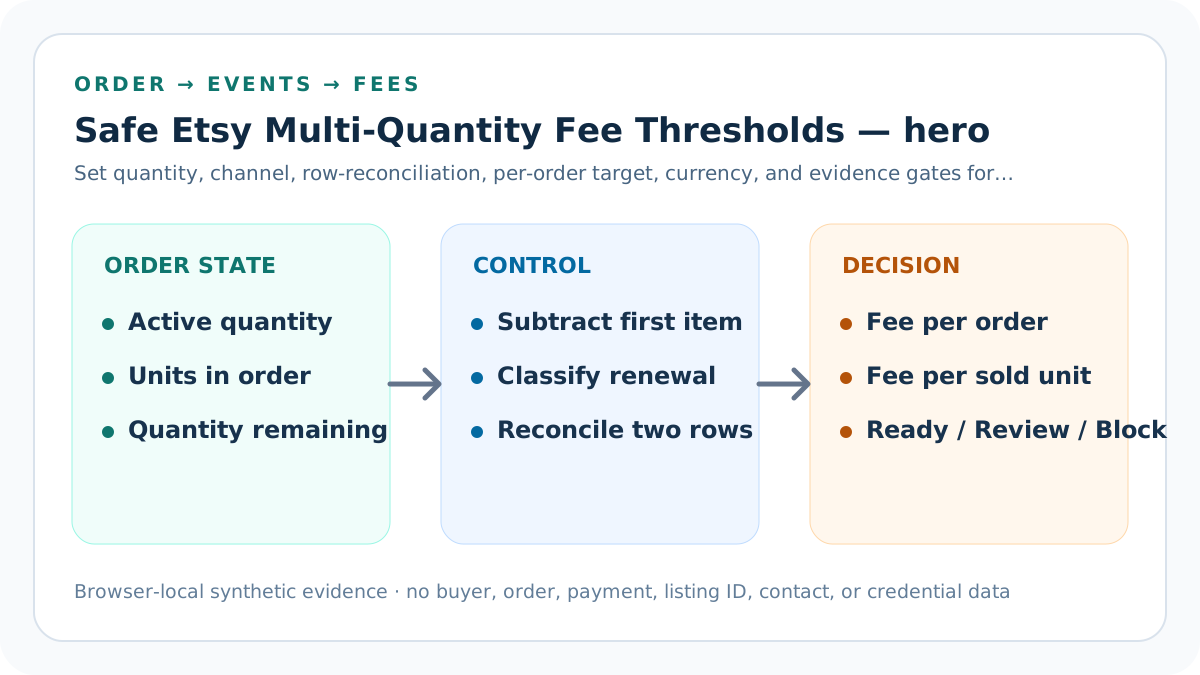
non-compensating order-fee thresholds: scope and decision
A target is not an Etsy rule. It is a seller-owned threshold applied only after quantity, channel, fee, currency, and actual row evidence pass.
Evaluate evidence before economics. Wrong quantity, channel, currency, tax, credit, or statement context remains Block even when the per-unit amount is attractive.
Build the Block-Reconcile-Review-Ready quantity card before acting
Reconcile describes expected-versus-actual row drift. Review describes valid rows above the chosen per-order target. Ready describes valid, reconciled rows at or below target.
The gates are non-compensating: high order revenue cannot authenticate a missing multi-quantity row, and low per-unit cost cannot repair an impossible remaining quantity.
Gate 1: whole-number order inputs
Require positive integer units, active quantity, and order count, plus nonnegative integer remaining quantity.
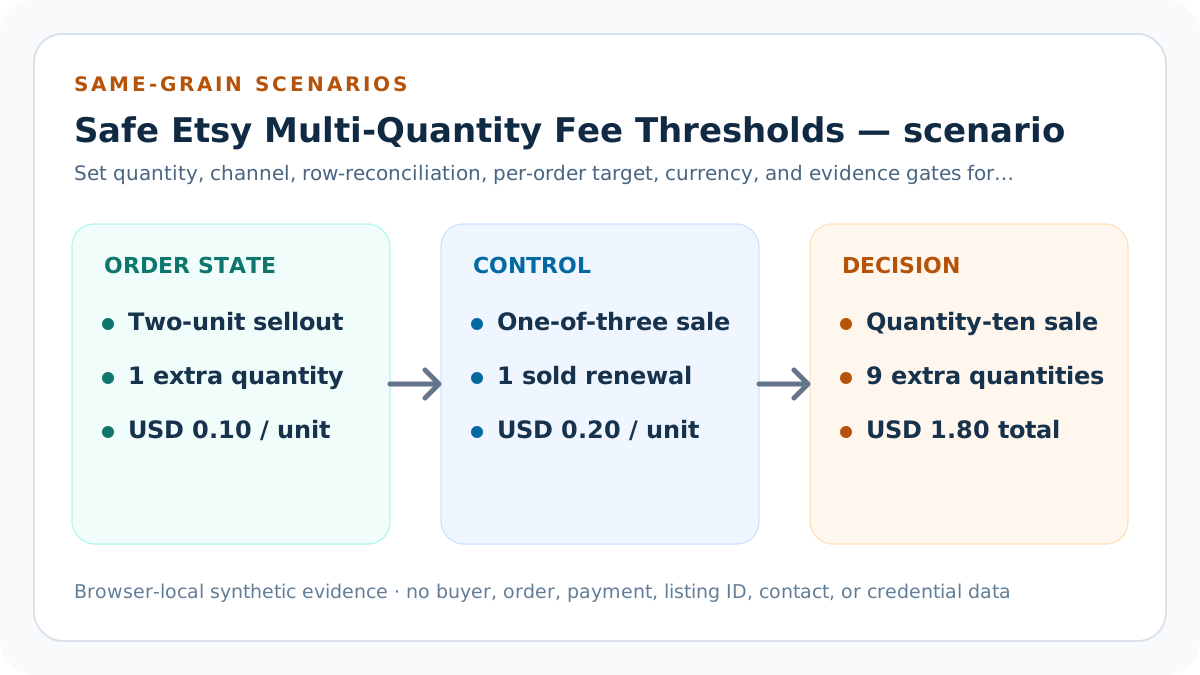
Apply “Gate 1: whole-number order inputs” before reading the per-order amount. The Block-Reconcile-Review-Ready quantity card treats quantity, channel, currency, statement, tolerance, and target gates independently: USD 0.20 on a two-unit sellout may advance only when both expected rows reconcile. USD 1.80 on a quantity-ten bulk order cannot compensate for missing evidence.
Stress “Gate 1: whole-number order inputs” with two-unit sellout, quantity-ten sellout, partial sale, repeated orders, a changed converted fee, a missing credit, an actual-row difference, wrong channel, and a broken quantity equation. Record which single change moves Ready to Review, Reconcile, or Block without loosening tolerance.
Gate 2: quantity equation
Require active quantity before the order minus sold units to equal remaining quantity. Block any mismatch.
Apply “Gate 2: quantity equation” before reading the per-order amount. The Block-Reconcile-Review-Ready quantity card treats quantity, channel, currency, statement, tolerance, and target gates independently: USD 0.20 on a two-unit sellout may advance only when both expected rows reconcile. USD 1.80 on a quantity-ten bulk order cannot compensate for missing evidence.
Stress “Gate 2: quantity equation” with two-unit sellout, quantity-ten sellout, partial sale, repeated orders, a changed converted fee, a missing credit, an actual-row difference, wrong channel, and a broken quantity equation. Record which single change moves Ready to Review, Reconcile, or Block without loosening tolerance.
Gate 3: current fee and currency
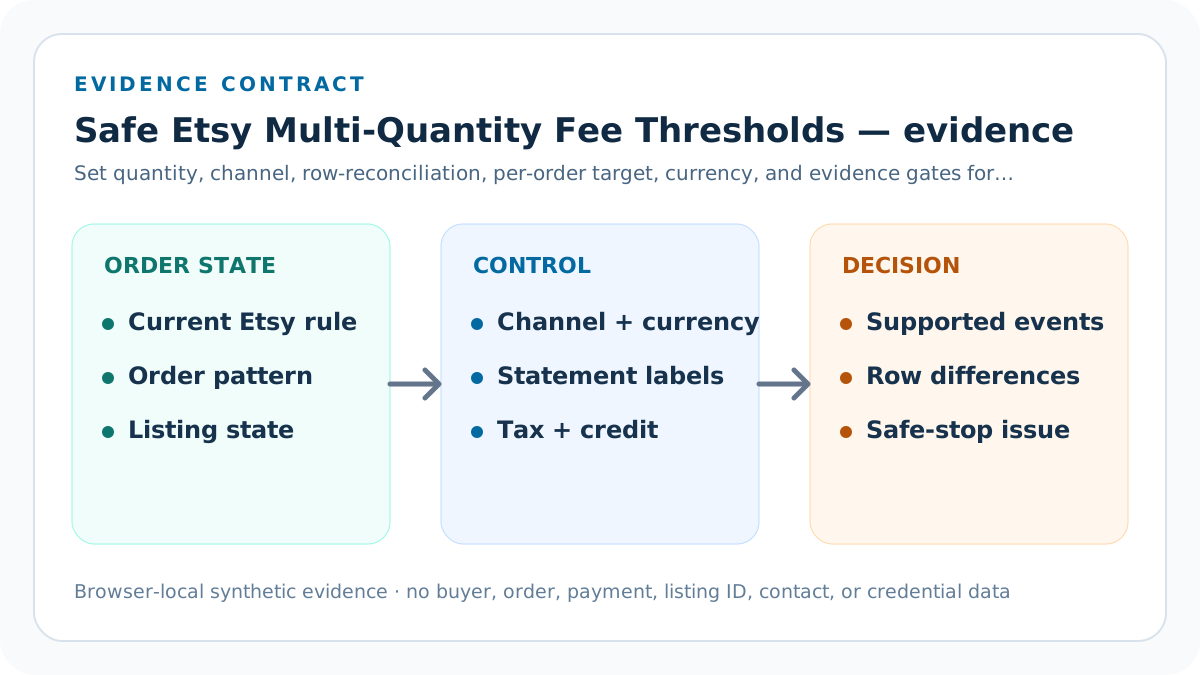
Require the current USD 0.20 rule, positive effective posting-time rates for both fee families, confirmed conversion evidence, USD parity when applicable, and one three-letter model currency.
Apply “Gate 3: current fee and currency” before reading the per-order amount. The Block-Reconcile-Review-Ready quantity card treats quantity, channel, currency, statement, tolerance, and target gates independently: USD 0.20 on a two-unit sellout may advance only when both expected rows reconcile. USD 1.80 on a quantity-ten bulk order cannot compensate for missing evidence.
Stress “Gate 3: current fee and currency” with two-unit sellout, quantity-ten sellout, partial sale, repeated orders, a changed converted fee, a missing credit, an actual-row difference, wrong channel, and a broken quantity equation. Record which single change moves Ready to Review, Reconcile, or Block without loosening tolerance.
Gate 4: dates, confirmations, and scope
Require valid source and order dates, exact Etsy.com scope, confirmed rule applicability, quantity pattern, Payment rows, repeated grain, and reviewed exceptions.
Apply “Gate 4: dates, confirmations, and scope” before reading the per-order amount. The Block-Reconcile-Review-Ready quantity card treats quantity, channel, currency, statement, tolerance, and target gates independently: USD 0.20 on a two-unit sellout may advance only when both expected rows reconcile. USD 1.80 on a quantity-ten bulk order cannot compensate for missing evidence.
Stress “Gate 4: dates, confirmations, and scope” with two-unit sellout, quantity-ten sellout, partial sale, repeated orders, a changed converted fee, a missing credit, an actual-row difference, wrong channel, and a broken quantity equation. Record which single change moves Ready to Review, Reconcile, or Block without loosening tolerance.
Gate 5: separate row reconciliation
Compare expected multi-quantity and auto-renew-sold subtotals to their own actual rows within one tolerance.
Apply “Gate 5: separate row reconciliation” before reading the per-order amount. The Block-Reconcile-Review-Ready quantity card treats quantity, channel, currency, statement, tolerance, and target gates independently: USD 0.20 on a two-unit sellout may advance only when both expected rows reconcile. USD 1.80 on a quantity-ten bulk order cannot compensate for missing evidence.
Stress “Gate 5: separate row reconciliation” with two-unit sellout, quantity-ten sellout, partial sale, repeated orders, a changed converted fee, a missing credit, an actual-row difference, wrong channel, and a broken quantity equation. Record which single change moves Ready to Review, Reconcile, or Block without loosening tolerance.
Gate 6: per-order target
Compare the reconciled incremental subtotal per reviewed order with a seller-owned threshold appropriate to its unit count.
Apply “Gate 6: per-order target” before reading the per-order amount. The Block-Reconcile-Review-Ready quantity card treats quantity, channel, currency, statement, tolerance, and target gates independently: USD 0.20 on a two-unit sellout may advance only when both expected rows reconcile. USD 1.80 on a quantity-ten bulk order cannot compensate for missing evidence.
Stress “Gate 6: per-order target” with two-unit sellout, quantity-ten sellout, partial sale, repeated orders, a changed converted fee, a missing credit, an actual-row difference, wrong channel, and a broken quantity equation. Record which single change moves Ready to Review, Reconcile, or Block without loosening tolerance.
Gate 7: declared conflicts
Block unresolved quantity, channel, currency, conversion, tax, credit, timing, refund, or statement questions.
Apply “Gate 7: declared conflicts” before reading the per-order amount. The Block-Reconcile-Review-Ready quantity card treats quantity, channel, currency, statement, tolerance, and target gates independently: USD 0.20 on a two-unit sellout may advance only when both expected rows reconcile. USD 1.80 on a quantity-ten bulk order cannot compensate for missing evidence.
Stress “Gate 7: declared conflicts” with two-unit sellout, quantity-ten sellout, partial sale, repeated orders, a changed converted fee, a missing credit, an actual-row difference, wrong channel, and a broken quantity equation. Record which single change moves Ready to Review, Reconcile, or Block without loosening tolerance.
Gate 8: bounded next action
Ready carries the rows forward, Review checks order economics, Reconcile repairs row mapping, and Block collects evidence.
Apply “Gate 8: bounded next action” before reading the per-order amount. The Block-Reconcile-Review-Ready quantity card treats quantity, channel, currency, statement, tolerance, and target gates independently: USD 0.20 on a two-unit sellout may advance only when both expected rows reconcile. USD 1.80 on a quantity-ten bulk order cannot compensate for missing evidence.
Stress “Gate 8: bounded next action” with two-unit sellout, quantity-ten sellout, partial sale, repeated orders, a changed converted fee, a missing credit, an actual-row difference, wrong channel, and a broken quantity equation. Record which single change moves Ready to Review, Reconcile, or Block without loosening tolerance.
Verification, release, and Payment account feedback
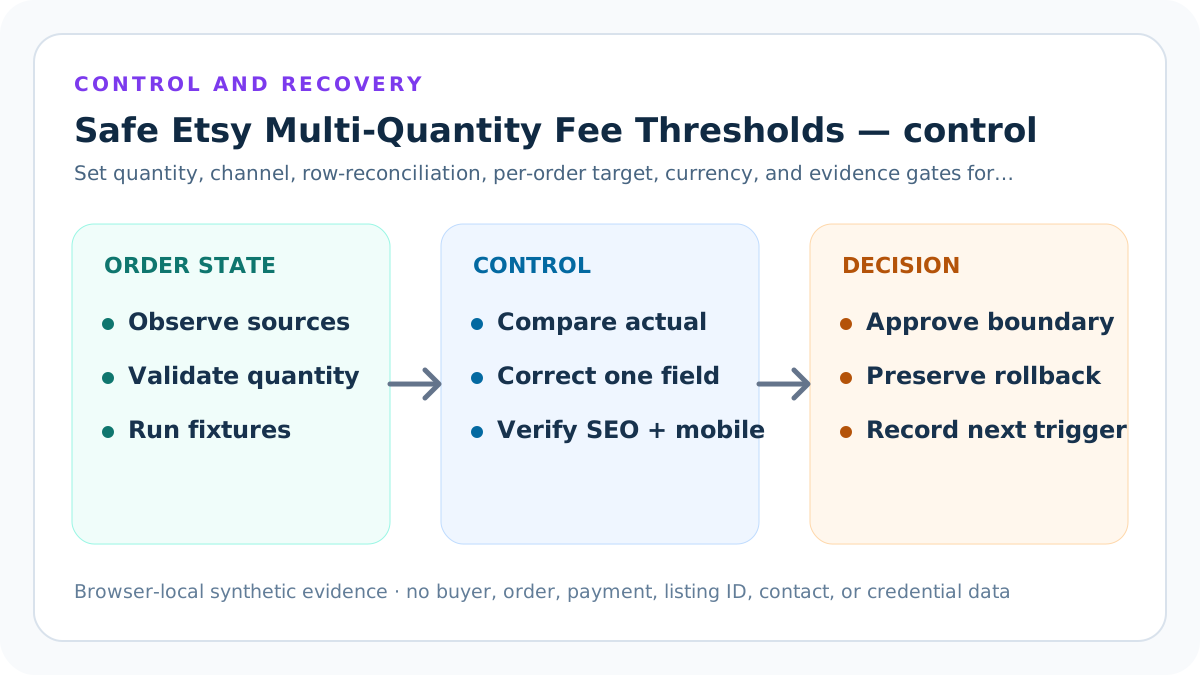
Before changing price, listing quantity, renewal state, or calculator defaults, preserve the Block-Reconcile-Review-Ready quantity card, official-source versions, private evidence pointer, current inputs, expected fixtures, tests, build, route state, and rollback identifier. Confirm the exact target environment and safe-stop on an unexpected account or production context.
After one bounded correction, rerun USD 0.20 on a two-unit sellout, USD 1.80 on a quantity-ten bulk order, the quantity-ten fixture, and a declared-conflict fixture. Inspect exact and displayed amounts, quantity equation, event totals, both statement differences, per-order and per-unit views, mobile results, canonical, sources, original visuals, internal links, and privacy-safe feedback. Restore the prior packet if a critical result cannot support a decision bounded by quantity evidence and owned economics.
Limits, privacy boundary, and next action
This guide and calculator use seller-entered summaries and synthetic fixtures. They do not retrieve Etsy data, authenticate listings, inventory, orders, or fee rows, decide taxes, reproduce every conversion or credit, change marketplace state, measure demand, include the initial listing fee or broader fee stack, or prove ranking, traffic, qualified intent, AdSense approval, income, or final profit.
Keep buyer names, emails, addresses, messages, order IDs, listing IDs, payment rows, bank details, tax identifiers, labels, tokens, OAuth material, credentials, and raw CSV outside the Block-Reconcile-Review-Ready quantity card. Verify current Etsy sources and the seller's actual account, reconcile an approved privacy-safe sample, and obtain qualified accounting, tax, or legal advice when material.
Sources and further reading
- Etsy Help: Fees and Listing Multiple Quantities: Current first-item, extra-quantity, remaining-quantity, auto-renew-sold, Payment account label, and conversion examples.
- Etsy Help: Fees and Taxes for Selling: Current listing, multi-quantity, auto-renew-sold, expiry, private-listing, and surrounding fee boundaries.
- Etsy Fees and Payments Policy: Controlling listing-fee, renewal, multiple-quantity, currency, deduction, Pattern, Square, and seller-responsibility terms.
- Etsy Help: Manage Your Payment Account: Payment account, monthly statement, fee, tax, credit, balance, and date-row reconciliation.
- Etsy Help: Create Pattern Listings: Pattern-only versus Etsy.com listing-fee and sale-trigger scope.
- Seller Profit Guard methodology: Evidence hierarchy, privacy-safe fixtures, deterministic calculations, bounded release, correction, and rollback.
Related Seller Profit Guard tools
- Open the multi-quantity fee calculator: Model extra-quantity and auto-renew-sold rows for one documented order pattern.
- Allocate all listing and renewal costs: Add initial, sold, expired, and manual events across a complete evidence period.
- Build the complete Etsy fee stack: Add transaction, processing, ads, conversion, regulatory, tax, operating cost, and contribution.
- Reconcile the Etsy Payment account: Compare expected event rows with actual statement fees, taxes, credits, and dates.
- Run Seller Profit Guard: Carry reconciled fees into SKU-level product, shipping, return, and target-profit analysis.
- Read the local-first methodology: Keep buyer, order, payment, contact, and credential data outside public pages.
- Etsy Multi-Quantity Fee Formula: Continue the formula, example, source, threshold, comparison, routine, interpretation, or audit workflow.
- Two-Unit Etsy Multi-Quantity Fee Example: Continue the formula, example, source, threshold, comparison, routine, interpretation, or audit workflow.
- Etsy Quantity-Ten Fee Worked Example: Continue the formula, example, source, threshold, comparison, routine, interpretation, or audit workflow.
- 12 Etsy Multi-Quantity Fee Mistakes: Continue the formula, example, source, threshold, comparison, routine, interpretation, or audit workflow.
- Etsy Multi-Quantity Fee Data Sources: Continue the formula, example, source, threshold, comparison, routine, interpretation, or audit workflow.
Next step: Open the Etsy Multi-Quantity Fee Calculator.
This is operational planning help, not tax, accounting, legal, financial, or platform-policy advice. Review the Terms and disclaimer, and verify current platform rules and fee assumptions before changing prices.