Material versus compatibility claim evidence on Etsy
Last updated: 2026-07-30
Written and reviewed by Seller Profit Guard Editorial Team.
Review both claims with the same five columns—buyer takeaway, public surface, evidence, qualification, and approval—but keep their methods separate. A mixed-metal necklace needs component records and precise wording; a laptop sleeve needs a three-dimensional fit method, tolerance, tested object, and exclusion of universal protection or compatibility promises.

matched claim comparison: scope and decision
A useful comparison keeps the review columns constant without pretending that unlike claims share evidence. Both cases need an exact public meaning, surface map, current authority, necessary qualification, visual reconciliation, reviewer, date, and rollback state.
The necklace case is component and provenance centered. The sleeve case is measurement and compatibility centered. A supplier receipt cannot establish device fit, and a fit test cannot establish metal composition. Their common “listing claim” label does not make the evidence interchangeable.
Build the material-versus-fit comparison grid before editing
Use one packet and verdict per case. The necklace can be Ready while the sleeve is on Hold for a missing tolerance, or the sleeve can pass while the chain material remains unresolved. Never inherit the stronger decision across products.
The comparison teaches evidence design, not a universal template. Each public page must answer its own user task with concrete records, examples, exceptions, visuals, and release controls rather than swapping product nouns.
Compare the buyer takeaway
The necklace claim tells buyers what each component is made from. The sleeve claim tells buyers which physical device envelope can fit. Write both meanings without marketing shorthand.
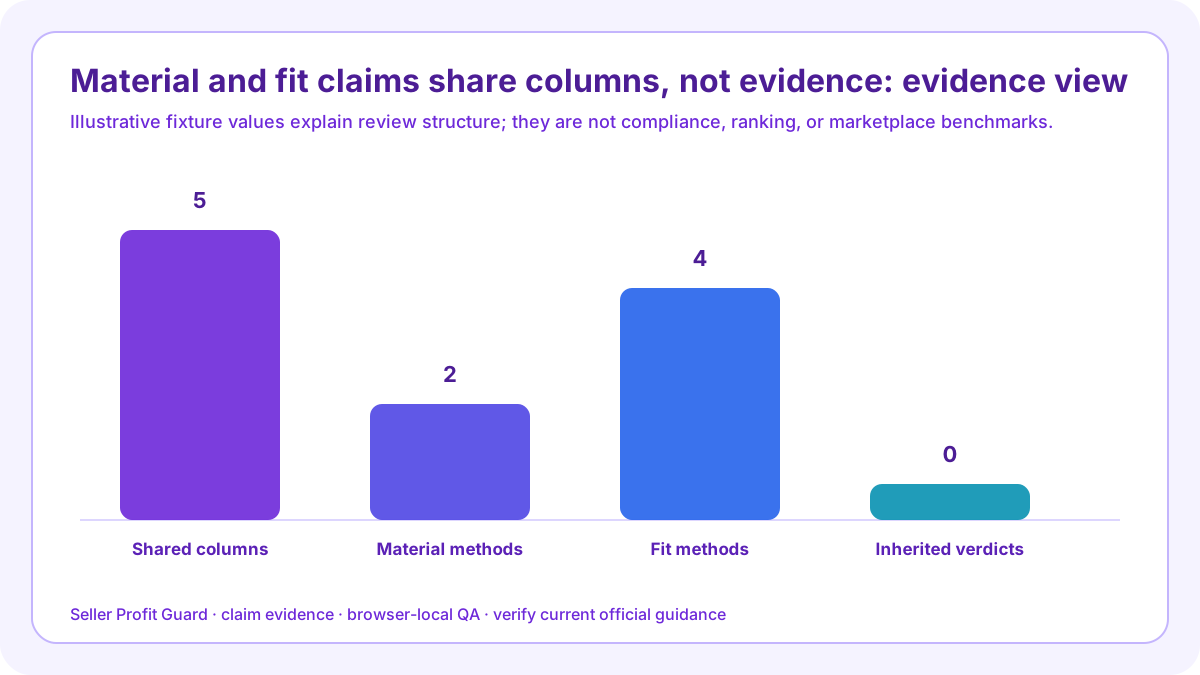
Compare “Compare the buyer takeaway” under two independently supported narrow claims and one inherited generic approval with identical columns for buyer takeaway, surface, source, method, limitation, visual context, reviewer, release observation, and recovery. Do not average material and compatibility evidence into one generic verdict. Their evidence owners, failure modes, and buyer consequences remain different even when the same checker stores both rows.
Compare the source owner
Component specifications, receipts, and maker records own material evidence. A dimensional measurement sheet, fixture, and closure test own the fit boundary.
Compare “Compare the source owner” under two independently supported narrow claims and one inherited generic approval with identical columns for buyer takeaway, surface, source, method, limitation, visual context, reviewer, release observation, and recovery. Do not average material and compatibility evidence into one generic verdict. Their evidence owners, failure modes, and buyer consequences remain different even when the same checker stores both rows.
Compare the method
The necklace uses component identification and a separate diameter measurement. The sleeve uses three dimensions, interior geometry, tolerance, insertion, closure, and observed seam condition.
Compare “Compare the method” under two independently supported narrow claims and one inherited generic approval with identical columns for buyer takeaway, surface, source, method, limitation, visual context, reviewer, release observation, and recovery. Do not average material and compatibility evidence into one generic verdict. Their evidence owners, failure modes, and buyer consequences remain different even when the same checker stores both rows.
Compare qualifications
The necklace names pendant and chain materials beside the statement. The sleeve names the measured maximum and instructs buyers to compare actual device dimensions.
Compare “Compare qualifications” under two independently supported narrow claims and one inherited generic approval with identical columns for buyer takeaway, surface, source, method, limitation, visual context, reviewer, release observation, and recovery. Do not average material and compatibility evidence into one generic verdict. Their evidence owners, failure modes, and buyer consequences remain different even when the same checker stores both rows.
Compare visual implications
The necklace image must not imply every component is silver or that props are included. The sleeve image must not imply universal models, included electronics, waterproofing, or shock protection.
Compare “Compare visual implications” under two independently supported narrow claims and one inherited generic approval with identical columns for buyer takeaway, surface, source, method, limitation, visual context, reviewer, release observation, and recovery. Do not average material and compatibility evidence into one generic verdict. Their evidence owners, failure modes, and buyer consequences remain different even when the same checker stores both rows.

Compare high-risk expansion
Hypoallergenic or healing language changes the necklace risk. Waterproof, impact-certified, or guaranteed protection changes the sleeve risk. Neither expansion inherits approval from the narrow claim.
Compare “Compare high-risk expansion” under two independently supported narrow claims and one inherited generic approval with identical columns for buyer takeaway, surface, source, method, limitation, visual context, reviewer, release observation, and recovery. Do not average material and compatibility evidence into one generic verdict. Their evidence owners, failure modes, and buyer consequences remain different even when the same checker stores both rows.
Compare crossed fixtures
Swap a chain record or remove the size qualifier in the first case; add a universal-fit badge or unrelated model in the second. Each failure should stop only its accountable packet.
Compare “Compare crossed fixtures” under two independently supported narrow claims and one inherited generic approval with identical columns for buyer takeaway, surface, source, method, limitation, visual context, reviewer, release observation, and recovery. Do not average material and compatibility evidence into one generic verdict. Their evidence owners, failure modes, and buyer consequences remain different even when the same checker stores both rows.
Compare release feedback
Inspect the exact public material and fit wording, images, captions, and attributes after release. Buyer clicks or sales can measure engagement but cannot validate composition or compatibility.
Compare “Compare release feedback” under two independently supported narrow claims and one inherited generic approval with identical columns for buyer takeaway, surface, source, method, limitation, visual context, reviewer, release observation, and recovery. Do not average material and compatibility evidence into one generic verdict. Their evidence owners, failure modes, and buyer consequences remain different even when the same checker stores both rows.
Verification, release, and rollback controls
Before changing public copy or media, preserve the material-versus-fit comparison grid, title, description, attributes, images, captions, badges, video, component records, measurements or tests, qualifications, approvals, and rollback identifier. Confirm the correct account and listing. Safe-stop on login or CAPTCHA ambiguity, a platform warning, wrong profile, missing target context, private data, or unexpected editor behavior.
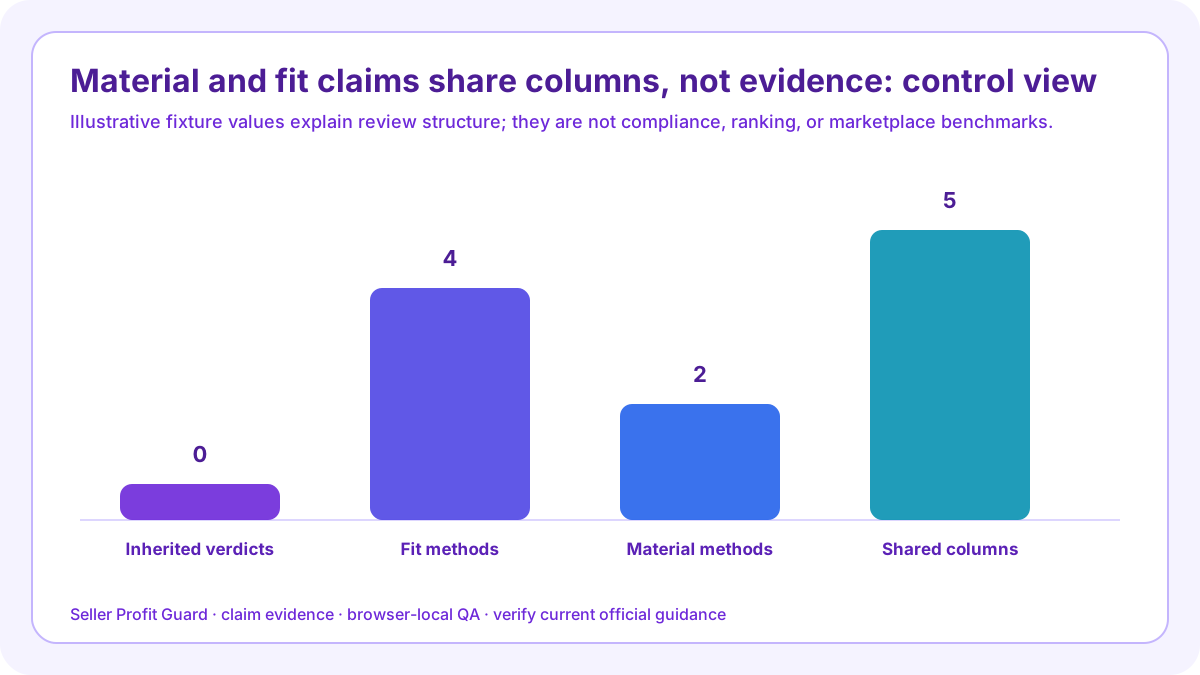
After one bounded change, verify two independently supported narrow claims on desktop and mobile and deliberately revisit one inherited generic approval. Inspect every declared surface, qualification, image implication, and evidence-dependent statement. Restore the approved previous packet when a critical public observation does not support two separate release decisions.
Limits, privacy boundary, and next action
This guide and checker use seller-entered summaries, aliases, manifests, and synthetic fixtures. They do not inspect products, authenticate records, assay materials, perform laboratory tests, analyze image pixels, determine origin, certify claims, decide applicable law, reproduce Etsy review, or predict ranking, clicks, conversion, sales, complaints, refunds, income, or AdSense approval.
Keep buyer identities, emails, addresses, messages, order IDs, receipts, payment data, supplier credentials, private certificates, unreleased designs, tokens, OAuth material, and raw CSV rows outside the material-versus-fit comparison grid. Repair the accountable source, rerun complete and broken fixtures, obtain required human review, release only the approved packet, inspect public surfaces, and record verified closure or rollback.
Sources and further reading
- Etsy Seller Policy: Current accuracy, origin, provenance, materials, components, disclosures, legal obligations, and misleading-content responsibilities.
- Etsy Creativity Standards: Current made, designed, handpicked, sourced, AI-disclosure, and human-contribution boundaries.
- Etsy Listing Image Requirements: Current original finished-product image expectations and specified exceptions.
- Etsy Prohibited Items Policy: Current prohibited-item policy in force through August 11, 2026; recheck the effective version before release.
- Etsy Medical Claims Policy: Current disease, treatment-substitute, sensitive-health, supplement-approval, testimonial, image, and disclaimer boundaries.
- FTC Advertising Substantiation Policy Statement: Official reasonable-basis framework for objective express and implied claims before dissemination.
- FTC Advertising FAQs for Small Business: Official explanation of objective evidence, reasonable basis, and the stronger support often expected for health and safety claims.
- FTC Environmental Claims: Green Guides Summary: Official summary for specific environmental claims and clear, prominent qualifications.
- Seller Profit Guard methodology: Evidence hierarchy, privacy-safe fixtures, deterministic decisions, uncertainty, verification, correction, and rollback.
Related Seller Profit Guard tools
- Open the Etsy Listing Claims Checker: Map public claims to evidence, qualifications, visuals, risk review, and approval.
- Check Etsy description clarity: Review buyer-question completeness separately from claim substantiation.
- Check Etsy photo coverage: Audit the image set separately while reconciling visual implications.
- Check Etsy attribute coverage: Keep structured product facts aligned with public claim wording.
- Check production-partner disclosure: Review outside-production roles, public identity, location, and dispatch origin.
- Read the local-first methodology: Use aliases, synthetic fixtures, dated evidence, public verification, and rollback.
- Etsy Listing Claims Checker: 9 Inputs: Continue the claim, evidence, scenario, decision, operating, interpretation, or audit workflow.
- Etsy Material Claim: A Component Example: Continue the claim, evidence, scenario, decision, operating, interpretation, or audit workflow.
- Etsy Compatibility Claim: A Sleeve Example: Continue the claim, evidence, scenario, decision, operating, interpretation, or audit workflow.
- 14 Etsy Listing Claim Mistakes to Block: Continue the claim, evidence, scenario, decision, operating, interpretation, or audit workflow.
- Etsy Claim Evidence: Source Hierarchy: Continue the claim, evidence, scenario, decision, operating, interpretation, or audit workflow.
Next step: Open the Etsy Listing Claims Checker.
This is operational planning help, not tax, accounting, legal, financial, or platform-policy advice. Review the Terms and disclaimer, and verify current platform rules and fee assumptions before changing prices.