A weekly operating routine for Etsy description clarity
Last updated: 2026-07-29
Written and reviewed by Seller Profit Guard Editorial Team.
Each week, sample descriptions affected by product, size, variation, processing, care, policy, personalization, or claim changes; refresh the relevant evidence; run complete and failure fixtures; resolve exceptions by severity; release one bounded copy set; inspect the buyer view; and retain rollback values. Stable descriptions need monitoring, not forced rewriting.

What does this operating control loop page solve?
A weekly routine follows material changes rather than rewriting every description on a calendar. The sample includes new SKUs, revised dimensions, material substitutions, new options, capacity changes, updated processing profiles, policy changes, new personalization fields, disputed claims, and inherited listings with weak provenance.
Stable listings belong on a lower-frequency watchlist. Repeated copy changes without new evidence create diagnostic noise, reset measurement windows, and can introduce contradictions. Maintenance should have a reason, owner, expected outcome, review date, and restoration state.
Build the weekly description control log from current evidence
The log records aliases and aggregate controls only. It does not store buyer names, private emails, messages, addresses, order IDs, payment details, uploaded personalization files, raw exports, credentials, tokens, or OAuth material. Synthetic complete and failure fixtures cover regression testing.
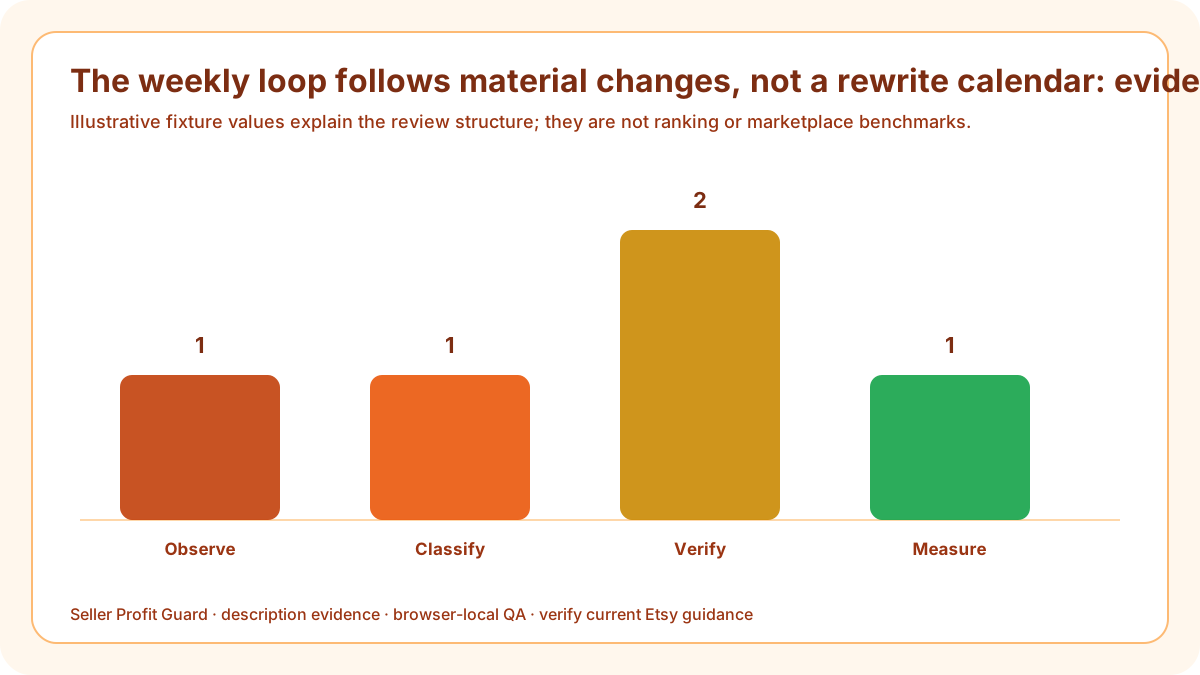
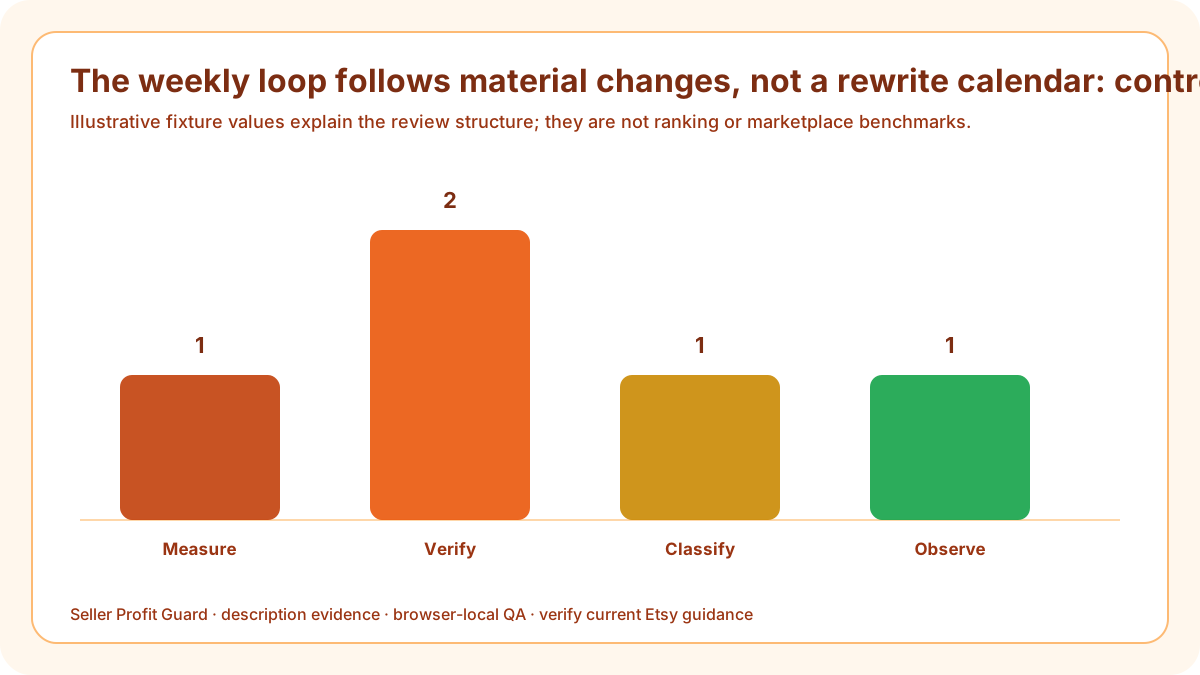
The loop is Observe, Classify, Select, Prepare, Verify, Release, Live Verify, and Measure. Search signals can inform later refinement, but the release decision depends on current product evidence, content independence, tests, backups, and public verification—not on waiting for impressions.
Build a risk-based sample
Select listings changed by product facts, measurements, processing, care, policy, customization, or claims. Add recent customer-question themes only as anonymized categories, not message excerpts. Prioritize contradictions and unsupported statements before stylistic opportunities. This section belongs in the operating control loop because it changes a repeatable evidence-to-release routine, not merely the tone of a sentence.
Write the sample, authority refresh, fixtures, exception owners, changed fields, public check, and recovery state in the control log. Apply it first to changed-listing sample; keep a separate exception when the second case has different product facts, buyer choices, or operating authority.
Refresh authorities before scoring
Open the current SKU record, measurement sheet, processing profile, capacity note, care guidance, personalization controls, policy version, and relevant official pages. Do not rerun yesterday's inputs and describe the repeated score as new evidence. This section belongs in the operating control loop because it changes a repeatable evidence-to-release routine, not merely the tone of a sentence.
Write the sample, authority refresh, fixtures, exception owners, changed fields, public check, and recovery state in the control log. Apply it first to stable-listing watchlist; keep a separate exception when the second case has different product facts, buyer choices, or operating authority.
Run complete and failure fixtures
The complete fixture should return six passes and Ready with evidence. The failure fixture should expose missing size, timing conflict, incomplete buyer input, and named unsupported claims. Unexpected output blocks the edit until code, input, or content drift is explained. This section belongs in the operating control loop because it changes a repeatable evidence-to-release routine, not merely the tone of a sentence.
Write the sample, authority refresh, fixtures, exception owners, changed fields, public check, and recovery state in the control log. Apply it first to changed-listing sample; keep a separate exception when the second case has different product facts, buyer choices, or operating authority.
Triage exceptions by consequence
Resolve unsupported claims and material contradictions first, then missing product facts, dimensions, ordering inputs, processing, care, and policy context. Assign an owner and deadline. Keep unknowns on Hold rather than filling fields to meet a production schedule. This section belongs in the operating control loop because it changes a repeatable evidence-to-release routine, not merely the tone of a sentence.
Write the sample, authority refresh, fixtures, exception owners, changed fields, public check, and recovery state in the control log. Apply it first to stable-listing watchlist; keep a separate exception when the second case has different product facts, buyer choices, or operating authority.
Prepare one bounded copy set
Back up the description and dependent controls, confirm the correct account and listing, and limit changes to the approved evidence repair. Do not change title, tags, category, price, ads, and imagery in the same untraceable experiment unless required for factual consistency. This section belongs in the operating control loop because it changes a repeatable evidence-to-release routine, not merely the tone of a sentence.
Write the sample, authority refresh, fixtures, exception owners, changed fields, public check, and recovery state in the control log. Apply it first to changed-listing sample; keep a separate exception when the second case has different product facts, buyer choices, or operating authority.

Verify the buyer-facing path
Inspect mobile and desktop for the opening answer, measurements, variants, personalization, processing, shipping distinction, care, policies, images, price, and links. A successful API or editor save does not prove the public listing is coherent. This section belongs in the operating control loop because it changes a repeatable evidence-to-release routine, not merely the tone of a sentence.
Write the sample, authority refresh, fixtures, exception owners, changed fields, public check, and recovery state in the control log. Apply it first to stable-listing watchlist; keep a separate exception when the second case has different product facts, buyer choices, or operating authority.
Close, hold, or restore
Record Ready, Revise, Hold, Block, retest, or rollback with evidence. If the wrong listing changes, a required control disappears, or the public page conflicts with approval, restore the saved state and verify recovery before continuing. This section belongs in the operating control loop because it changes a repeatable evidence-to-release routine, not merely the tone of a sentence.
Write the sample, authority refresh, fixtures, exception owners, changed fields, public check, and recovery state in the control log. Apply it first to changed-listing sample; keep a separate exception when the second case has different product facts, buyer choices, or operating authority.
Measure without forced attribution
Track aggregate impressions, landings, engagement, tool clicks, buyer-question categories, correction rate, exports, and qualified intent after a mature window. Do not claim that one description edit caused a one-day change or rewrite stable copy to manufacture activity. This section belongs in the operating control loop because it changes a repeatable evidence-to-release routine, not merely the tone of a sentence.
Write the sample, authority refresh, fixtures, exception owners, changed fields, public check, and recovery state in the control log. Apply it first to stable-listing watchlist; keep a separate exception when the second case has different product facts, buyer choices, or operating authority.
Run the changed-listing sample and stable-listing watchlist checks
Open the Etsy Description Clarity Checker with a privacy-safe changed-listing sample record. Enter the actual copy and six evidence groups, list every known unsupported claim, and save the expected outcome before running it. Repeat with stable-listing watchlist so the workflow demonstrates that it can expose a meaningful failure rather than rewarding form completion.
Compare each check, issue, evidence status, and decision with expectation. Investigate any drift before a live edit. Seller Profit Guard runs this QA in the browser and does not require buyer, order, payment, credential, or raw CSV data. Use aliases in durable reports and keep account access outside the public content system.
Release boundary, limitations, and next step
Back up the description and dependent controls, confirm the correct account and listing, apply one approved change set, and inspect the public page on mobile and desktop. Safe-stop on login or CAPTCHA ambiguity, platform warning, wrong profile, missing target context, or unexpected product state. Restore the saved values when the buyer view does not match approval.
The checker cannot verify product truth, Etsy policy compliance, intellectual-property rights, medical or safety claims, legal obligations, accessibility for every buyer, ranking, traffic, conversion, sales, refunds, or AdSense approval. Verify current Etsy guidance and appropriate evidence. Seller Profit Guard is unaffiliated with Etsy and provides operational listing QA, not professional advice.
Sources and further reading
- Etsy Seller Handbook: 5 tips for writing listing descriptions: Official inverted-pyramid, buyer-question, scannability, natural-language, and internal-link guidance.
- Etsy Seller Handbook: Handy item listing checklist: Official checklist for complete descriptions, exact dimensions, materials, process, and buyer-question review.
- Etsy Help: How to offer personalized listings: Official workflow for focused personalization fields and buyer-supplied information.
- Etsy Help: Processing times, profiles, and ship-by dates: Official definition of processing time, including creation time for custom items and variation-level profiles.
- Etsy Help: How to offer custom items: Official custom-request, deadline, private-listing, and maximum-processing-time context.
- Etsy Seller Policy: Current seller duties for honest and accurate item representation, marketplace eligibility, production-partner disclosure, privacy, and policy compliance.
- Etsy Medical Claims Policy: Current boundary for prohibited express or implied disease claims in listing titles, descriptions, images, tags, and other shop content.
- Seller Profit Guard methodology: Evidence hierarchy, privacy boundary, uncertainty labels, correction controls, and reversible release discipline.
Related Seller Profit Guard tools
- Open the Etsy Description Clarity Checker: Compare buyer-facing copy with product, size, processing, care, policy, personalization, and claim evidence.
- Check Etsy attribute coverage: Reconcile structured listing facts before writing prose around them.
- Check Etsy category fit: Confirm the product classification before description QA.
- Review Etsy variation and SKU controls: Keep buyer choices, inventory records, photos, price, and copy aligned.
- Read the local-first methodology: Use evidence without copying private customer, order, or credential data.
- Read the editorial policy: Review sourcing, authorship, corrections, and publication controls.
- Etsy Description Clarity Formula: 10 Inputs: Continue the description evidence, buyer-question, decision, release, or audit workflow.
- Etsy Description Checker: Personalized Example: Continue the description evidence, buyer-question, decision, release, or audit workflow.
- Etsy Description Checker for Made-to-Order Items: Continue the description evidence, buyer-question, decision, release, or audit workflow.
- 12 Etsy Description Mistakes That Create Risk: Continue the description evidence, buyer-question, decision, release, or audit workflow.
- Evidence Sources for Etsy Listing Descriptions: Continue the description evidence, buyer-question, decision, release, or audit workflow.
Next step: Open the Etsy Description Clarity Checker.
This is operational planning help, not tax, accounting, legal, financial, or platform-policy advice. Review the Terms and disclaimer, and verify current platform rules and fee assumptions before changing prices.