An Etsy description clarity scenario for a made-to-order item
Last updated: 2026-07-29
Written and reviewed by Seller Profit Guard Editorial Team.
For a made-to-order item, describe what will be created, the finished dimensions and materials, the buyer inputs required before work begins, any proof or approval boundary, the production window before shipping, care, and the applicable cancellation or return policy. Hold release when capacity, proof timing, or customization evidence remains unresolved.

What does this made-to-order workflow page solve?
A made-to-order description is not simply a standard product paragraph with “custom” inserted. The copy must explain which decisions the buyer controls, which production stages follow, when the processing clock can start, and which changes are no longer possible after approval or fabrication.
This scenario uses a personalized ceramic house sign so the information differs materially from the necklace example. It has width and height options, glaze choices, mounting details, text layout, a proof decision, kiln scheduling, fragile-item care, and a policy boundary tied to custom manufacture.
Build the custom production brief from current evidence
The evidence packet combines the current design specification, measured finished samples, glaze and mounting notes, personalization field configuration, proof workflow, capacity calendar, active processing profile, packaging method, care guidance, and shop policy. No private buyer conversation is copied into the public guide.
The correct result can be Hold even when the draft sounds clear. If kiln capacity or proof turnaround has not been reconciled with the active profile, the description lacks operational authority. Publication waits for the workflow to become true rather than using polished prose to conceal uncertainty.
Define the custom result
State that the buyer receives a fired ceramic house sign with selected dimensions, glaze, mounting configuration, and approved text layout. Distinguish it from a digital design proof, an unfinished blank, or a mass-produced sign. The deliverable definition controls every later instruction. This section belongs in the made-to-order workflow because it changes an operationally honest custom-order explanation, not merely the tone of a sentence.
Connect the copy to the custom production stage, buyer dependency, capacity record, and public expectation rather than a generic template. Apply it first to personalized ceramic house sign; keep a separate exception when the second case has different product facts, buyer choices, or operating authority.
Collect one decision per field
House number, street name, size, glaze, font, and mounting method are separate decisions. Use selectors for constrained choices and focused text fields for exact wording. The description should repeat the ordering sequence without asking buyers to compress all requirements into one difficult-to-audit message. This section belongs in the made-to-order workflow because it changes an operationally honest custom-order explanation, not merely the tone of a sentence.
Connect the copy to the custom production stage, buyer dependency, capacity record, and public expectation rather than a generic template. Apply it first to rush-event request; keep a separate exception when the second case has different product facts, buyer choices, or operating authority.
Explain proof scope and silence
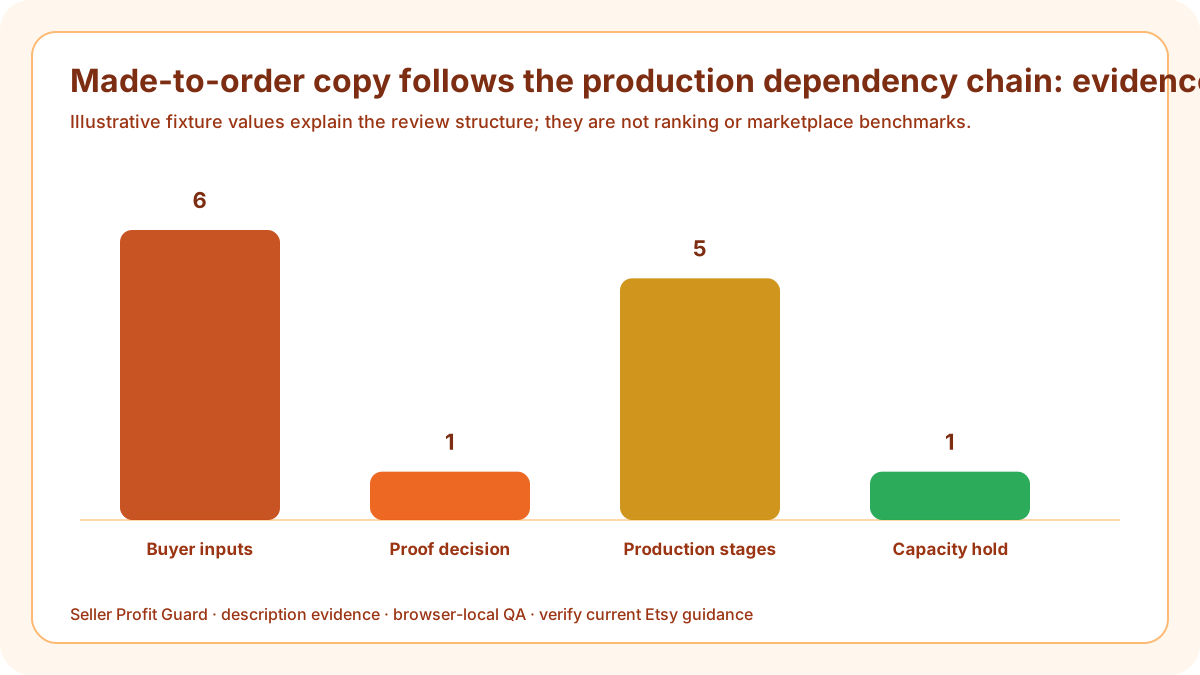
If the seller provides a digital proof, state what the proof covers, how many revisions are included, the response window, and what happens when the buyer does not respond. Do not imply that production begins immediately if approval is a required dependency. This section belongs in the made-to-order workflow because it changes an operationally honest custom-order explanation, not merely the tone of a sentence.
Connect the copy to the custom production stage, buyer dependency, capacity record, and public expectation rather than a generic template. Apply it first to personalized ceramic house sign; keep a separate exception when the second case has different product facts, buyer choices, or operating authority.
Calculate processing from real stages
The processing window includes layout, proof handling, forming or preparation, drying, glazing, firing, inspection, and packing before carrier handoff. A rush request is an exception requiring accepted capacity and updated records, not a phrase the buyer can unilaterally add at checkout. This section belongs in the made-to-order workflow because it changes an operationally honest custom-order explanation, not merely the tone of a sentence.
Connect the copy to the custom production stage, buyer dependency, capacity record, and public expectation rather than a generic template. Apply it first to rush-event request; keep a separate exception when the second case has different product facts, buyer choices, or operating authority.
Describe natural variation without evasion
Handmade glaze or firing variation can be explained with representative boundaries and photographs. “Each item is unique” cannot excuse the wrong dimensions, text, mounting hardware, color family, or visible defect. The description separates expected variation from nonconforming production. This section belongs in the made-to-order workflow because it changes an operationally honest custom-order explanation, not merely the tone of a sentence.
Connect the copy to the custom production stage, buyer dependency, capacity record, and public expectation rather than a generic template. Apply it first to personalized ceramic house sign; keep a separate exception when the second case has different product facts, buyer choices, or operating authority.

Add handling and installation care
The sign's weight, mounting system, surface requirements, weather exposure, cleaning method, and fragile handling may affect buyer use. Include only tested, product-specific guidance. Avoid structural, safety, or outdoor-durability guarantees the seller has not substantiated. This section belongs in the made-to-order workflow because it changes an operationally honest custom-order explanation, not merely the tone of a sentence.
Connect the copy to the custom production stage, buyer dependency, capacity record, and public expectation rather than a generic template. Apply it first to rush-event request; keep a separate exception when the second case has different product facts, buyer choices, or operating authority.
Set cancellation and change boundaries
The policy summary should identify when customization work begins and how approved proofs affect changes, cancellation, or returns, while remaining consistent with current shop policies and applicable platform requirements. The description cannot create a private exception that operations cannot honor. This section belongs in the made-to-order workflow because it changes an operationally honest custom-order explanation, not merely the tone of a sentence.
Connect the copy to the custom production stage, buyer dependency, capacity record, and public expectation rather than a generic template. Apply it first to personalized ceramic house sign; keep a separate exception when the second case has different product facts, buyer choices, or operating authority.
Hold on unresolved capacity
If the profile says ten business days but current production evidence supports three weeks, the result is Hold or Revise until the record and buyer promise agree. The next action is capacity reconciliation, not keyword editing. Recheck the public estimated-delivery context after the correction. This section belongs in the made-to-order workflow because it changes an operationally honest custom-order explanation, not merely the tone of a sentence.
Connect the copy to the custom production stage, buyer dependency, capacity record, and public expectation rather than a generic template. Apply it first to rush-event request; keep a separate exception when the second case has different product facts, buyer choices, or operating authority.
Run the personalized ceramic house sign and rush-event request checks
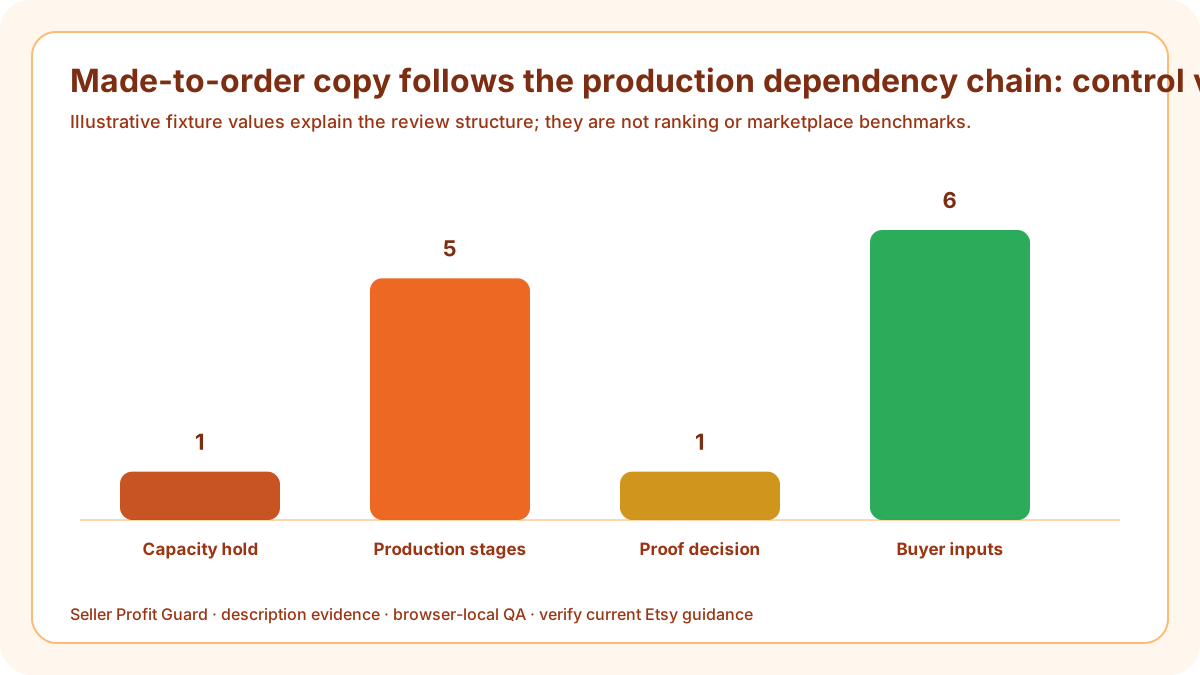
Open the Etsy Description Clarity Checker with a privacy-safe personalized ceramic house sign record. Enter the actual copy and six evidence groups, list every known unsupported claim, and save the expected outcome before running it. Repeat with rush-event request so the workflow demonstrates that it can expose a meaningful failure rather than rewarding form completion.
Compare each check, issue, evidence status, and decision with expectation. Investigate any drift before a live edit. Seller Profit Guard runs this QA in the browser and does not require buyer, order, payment, credential, or raw CSV data. Use aliases in durable reports and keep account access outside the public content system.
Release boundary, limitations, and next step
Back up the description and dependent controls, confirm the correct account and listing, apply one approved change set, and inspect the public page on mobile and desktop. Safe-stop on login or CAPTCHA ambiguity, platform warning, wrong profile, missing target context, or unexpected product state. Restore the saved values when the buyer view does not match approval.
The checker cannot verify product truth, Etsy policy compliance, intellectual-property rights, medical or safety claims, legal obligations, accessibility for every buyer, ranking, traffic, conversion, sales, refunds, or AdSense approval. Verify current Etsy guidance and appropriate evidence. Seller Profit Guard is unaffiliated with Etsy and provides operational listing QA, not professional advice.
Sources and further reading
- Etsy Seller Handbook: 5 tips for writing listing descriptions: Official inverted-pyramid, buyer-question, scannability, natural-language, and internal-link guidance.
- Etsy Seller Handbook: Handy item listing checklist: Official checklist for complete descriptions, exact dimensions, materials, process, and buyer-question review.
- Etsy Help: How to offer personalized listings: Official workflow for focused personalization fields and buyer-supplied information.
- Etsy Help: Processing times, profiles, and ship-by dates: Official definition of processing time, including creation time for custom items and variation-level profiles.
- Etsy Help: How to offer custom items: Official custom-request, deadline, private-listing, and maximum-processing-time context.
- Etsy Seller Policy: Current seller duties for honest and accurate item representation, marketplace eligibility, production-partner disclosure, privacy, and policy compliance.
- Etsy Medical Claims Policy: Current boundary for prohibited express or implied disease claims in listing titles, descriptions, images, tags, and other shop content.
- Seller Profit Guard methodology: Evidence hierarchy, privacy boundary, uncertainty labels, correction controls, and reversible release discipline.
Related Seller Profit Guard tools
- Open the Etsy Description Clarity Checker: Compare buyer-facing copy with product, size, processing, care, policy, personalization, and claim evidence.
- Check Etsy attribute coverage: Reconcile structured listing facts before writing prose around them.
- Check Etsy category fit: Confirm the product classification before description QA.
- Review Etsy variation and SKU controls: Keep buyer choices, inventory records, photos, price, and copy aligned.
- Read the local-first methodology: Use evidence without copying private customer, order, or credential data.
- Read the editorial policy: Review sourcing, authorship, corrections, and publication controls.
- Etsy Description Clarity Formula: 10 Inputs: Continue the description evidence, buyer-question, decision, release, or audit workflow.
- Etsy Description Checker: Personalized Example: Continue the description evidence, buyer-question, decision, release, or audit workflow.
- 12 Etsy Description Mistakes That Create Risk: Continue the description evidence, buyer-question, decision, release, or audit workflow.
- Evidence Sources for Etsy Listing Descriptions: Continue the description evidence, buyer-question, decision, release, or audit workflow.
- Etsy Description Ready, Revise, Hold, Block: Continue the description evidence, buyer-question, decision, release, or audit workflow.
Next step: Open the Etsy Description Clarity Checker.
This is operational planning help, not tax, accounting, legal, financial, or platform-policy advice. Review the Terms and disclaimer, and verify current platform rules and fee assumptions before changing prices.