A reusable Etsy description clarity audit template
Last updated: 2026-07-29
Written and reviewed by Seller Profit Guard Editorial Team.
Record the listing alias, before copy, product and measurement versions, processing promise and profile, care authority, policy version, personalization fields, unsupported claims, expected and actual fixtures, decision, approved changes, public mobile and desktop checks, feedback date, and rollback values. Exclude buyer, order, payment, credential, and private-message data.

What does this audit and change record page solve?
A reusable template turns an informal copy edit into a controlled change. It captures the before state, authorities, expected tool behavior, review decision, approved delta, public observation, and restoration values. A future reviewer should be able to reproduce what changed without opening private customer records.
Keep the form small enough to complete but strict enough to prevent hindsight. Required fields cannot be replaced by “looks good.” When a source is missing, record the authority request and Hold decision. When a claim lacks evidence, record the statement and Block decision rather than deleting the audit trail.
Build the description change log from current evidence
Use listing aliases, SKU families, source versions, public URLs, aggregate observations, and synthetic fixtures. Do not include buyer names, emails, addresses, messages, order numbers, payment data, personalization uploads, raw CSV rows, passwords, tokens, OAuth material, or screenshots containing those fields.
The template closes only when either the approved public state or the restored rollback state is independently verified. A saved draft, successful build, or editor confirmation is intermediate evidence. The buyer-facing copy and dependent controls must match the recorded decision.
Section 1: identity and before state
Record the listing alias, public path, current description hash or preserved copy, category, product definition, SKU or file version, variations, personalization controls, processing profile, policy reference, editor date, and owner. Do not rely on a title as the product specification. This section belongs in the audit and change record because it changes a complete, reviewable, and reversible record, not merely the tone of a sentence.
Complete the before state, evidence map, fixtures, approval, public observation, feedback date, and rollback proof before closing the audit. Apply it first to privacy-safe listing packet; keep a separate exception when the second case has different product facts, buyer choices, or operating authority.
Section 2: evidence map
Attach or reference the product facts, measurement sheet, capacity record, care guidance, policy version, customization workflow, official sources, review dates, scope, and known conflicts. Store pointers or privacy-safe summaries rather than duplicating credentials or private exports. This section belongs in the audit and change record because it changes a complete, reviewable, and reversible record, not merely the tone of a sentence.
Complete the before state, evidence map, fixtures, approval, public observation, feedback date, and rollback proof before closing the audit. Apply it first to rollback rehearsal; keep a separate exception when the second case has different product facts, buyer choices, or operating authority.
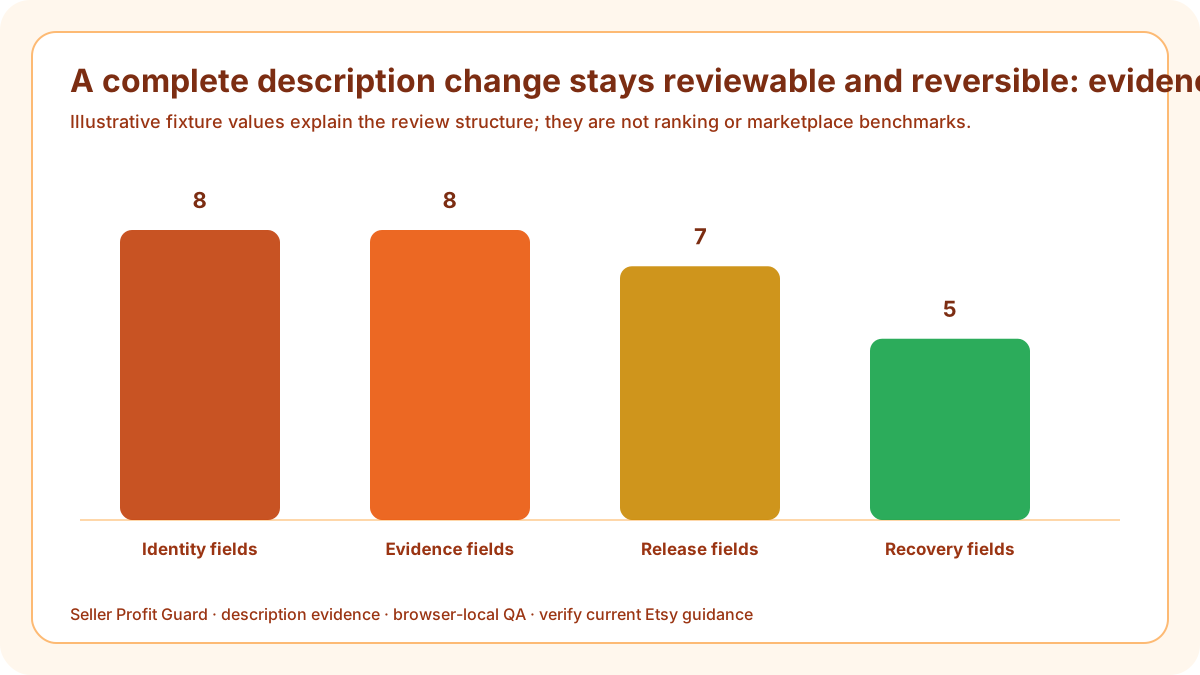
Section 3: expected fixtures
Write one complete fixture and one failure fixture with expected six flags, unsupported-claim count, evidence status, and decision. Keep inputs generic enough for durable reports while retaining the dimensions, timing, and wording necessary to reproduce the logic. This section belongs in the audit and change record because it changes a complete, reviewable, and reversible record, not merely the tone of a sentence.
Complete the before state, evidence map, fixtures, approval, public observation, feedback date, and rollback proof before closing the audit. Apply it first to privacy-safe listing packet; keep a separate exception when the second case has different product facts, buyer choices, or operating authority.
Section 4: actual output
Record score, six checks, Ready/Revise/Hold/Block decision, issues, next steps, and any discrepancy from expectation. Unexpected output pauses publication. Do not revise the expected result after seeing a surprising tool response without documenting why. This section belongs in the audit and change record because it changes a complete, reviewable, and reversible record, not merely the tone of a sentence.
Complete the before state, evidence map, fixtures, approval, public observation, feedback date, and rollback proof before closing the audit. Apply it first to rollback rehearsal; keep a separate exception when the second case has different product facts, buyer choices, or operating authority.
Section 5: approval and stop rules
Name the approved field changes, reviewer, release window, backup paths, target account and listing, safe-stop signals, rollback triggers, and restoration owner. Approval must exist before a production action, not be reconstructed from a successful save. This section belongs in the audit and change record because it changes a complete, reviewable, and reversible record, not merely the tone of a sentence.
Complete the before state, evidence map, fixtures, approval, public observation, feedback date, and rollback proof before closing the audit. Apply it first to privacy-safe listing packet; keep a separate exception when the second case has different product facts, buyer choices, or operating authority.

Section 6: public verification
Check mobile and desktop opening facts, dimensions, variants, personalization, processing, shipping distinction, care, policy, images, price, and links. Record time, observed state, broken assets, unexpected warnings, and whether the public result matches approval. This section belongs in the audit and change record because it changes a complete, reviewable, and reversible record, not merely the tone of a sentence.
Complete the before state, evidence map, fixtures, approval, public observation, feedback date, and rollback proof before closing the audit. Apply it first to rollback rehearsal; keep a separate exception when the second case has different product facts, buyer choices, or operating authority.
Section 7: rollback proof
Preserve old copy and dependent values, restoration instructions, verification method, and result. Rehearse the path locally when practical. After rollback, inspect the buyer page again; a restored database value is insufficient when caching or generated HTML still exposes the failed state. This section belongs in the audit and change record because it changes a complete, reviewable, and reversible record, not merely the tone of a sentence.
Complete the before state, evidence map, fixtures, approval, public observation, feedback date, and rollback proof before closing the audit. Apply it first to privacy-safe listing packet; keep a separate exception when the second case has different product facts, buyer choices, or operating authority.
Section 8: feedback and closure
Schedule aggregate measurement without promising causation. Record indexing, impressions, landings, engagement, tool clicks, anonymized question categories, correction rate, and qualified intent at appropriate windows. Close as verified, restored, or still on Hold with an owner. This section belongs in the audit and change record because it changes a complete, reviewable, and reversible record, not merely the tone of a sentence.
Complete the before state, evidence map, fixtures, approval, public observation, feedback date, and rollback proof before closing the audit. Apply it first to rollback rehearsal; keep a separate exception when the second case has different product facts, buyer choices, or operating authority.
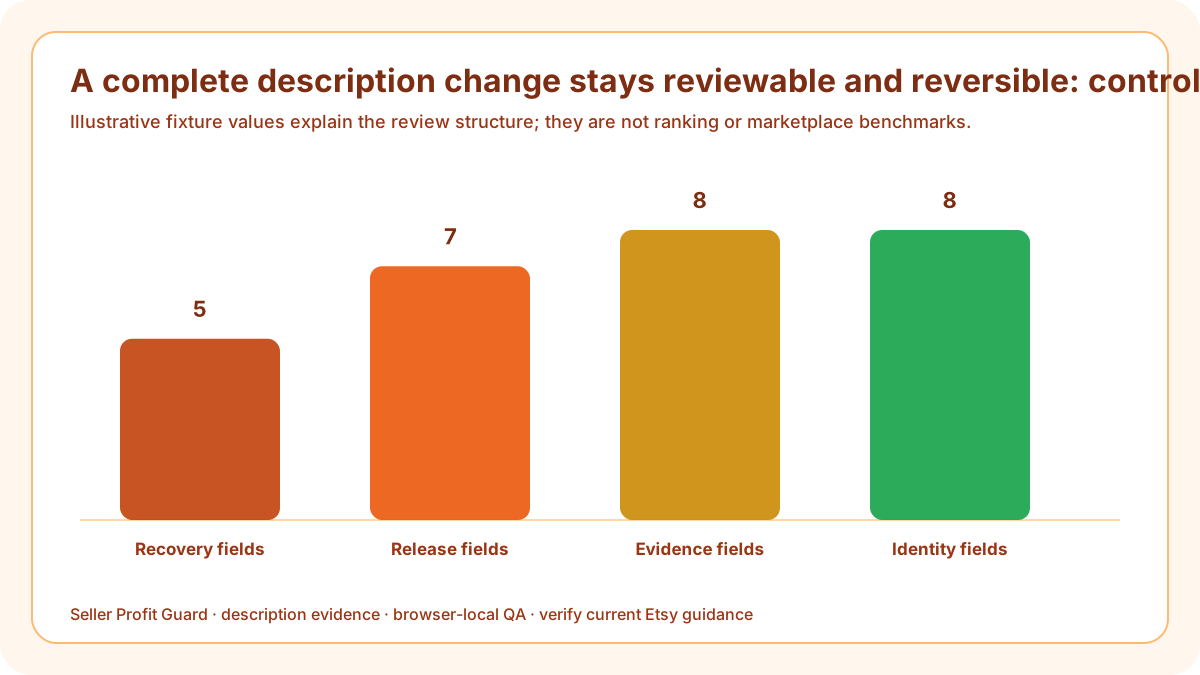
Run the privacy-safe listing packet and rollback rehearsal checks
Open the Etsy Description Clarity Checker with a privacy-safe privacy-safe listing packet record. Enter the actual copy and six evidence groups, list every known unsupported claim, and save the expected outcome before running it. Repeat with rollback rehearsal so the workflow demonstrates that it can expose a meaningful failure rather than rewarding form completion.
Compare each check, issue, evidence status, and decision with expectation. Investigate any drift before a live edit. Seller Profit Guard runs this QA in the browser and does not require buyer, order, payment, credential, or raw CSV data. Use aliases in durable reports and keep account access outside the public content system.
Release boundary, limitations, and next step
Back up the description and dependent controls, confirm the correct account and listing, apply one approved change set, and inspect the public page on mobile and desktop. Safe-stop on login or CAPTCHA ambiguity, platform warning, wrong profile, missing target context, or unexpected product state. Restore the saved values when the buyer view does not match approval.
The checker cannot verify product truth, Etsy policy compliance, intellectual-property rights, medical or safety claims, legal obligations, accessibility for every buyer, ranking, traffic, conversion, sales, refunds, or AdSense approval. Verify current Etsy guidance and appropriate evidence. Seller Profit Guard is unaffiliated with Etsy and provides operational listing QA, not professional advice.
Sources and further reading
- Etsy Seller Handbook: 5 tips for writing listing descriptions: Official inverted-pyramid, buyer-question, scannability, natural-language, and internal-link guidance.
- Etsy Seller Handbook: Handy item listing checklist: Official checklist for complete descriptions, exact dimensions, materials, process, and buyer-question review.
- Etsy Help: How to offer personalized listings: Official workflow for focused personalization fields and buyer-supplied information.
- Etsy Help: Processing times, profiles, and ship-by dates: Official definition of processing time, including creation time for custom items and variation-level profiles.
- Etsy Help: How to offer custom items: Official custom-request, deadline, private-listing, and maximum-processing-time context.
- Etsy Seller Policy: Current seller duties for honest and accurate item representation, marketplace eligibility, production-partner disclosure, privacy, and policy compliance.
- Etsy Medical Claims Policy: Current boundary for prohibited express or implied disease claims in listing titles, descriptions, images, tags, and other shop content.
- Seller Profit Guard methodology: Evidence hierarchy, privacy boundary, uncertainty labels, correction controls, and reversible release discipline.
Related Seller Profit Guard tools
- Open the Etsy Description Clarity Checker: Compare buyer-facing copy with product, size, processing, care, policy, personalization, and claim evidence.
- Check Etsy attribute coverage: Reconcile structured listing facts before writing prose around them.
- Check Etsy category fit: Confirm the product classification before description QA.
- Review Etsy variation and SKU controls: Keep buyer choices, inventory records, photos, price, and copy aligned.
- Read the local-first methodology: Use evidence without copying private customer, order, or credential data.
- Read the editorial policy: Review sourcing, authorship, corrections, and publication controls.
- Etsy Description Clarity Formula: 10 Inputs: Continue the description evidence, buyer-question, decision, release, or audit workflow.
- Etsy Description Checker: Personalized Example: Continue the description evidence, buyer-question, decision, release, or audit workflow.
- Etsy Description Checker for Made-to-Order Items: Continue the description evidence, buyer-question, decision, release, or audit workflow.
- 12 Etsy Description Mistakes That Create Risk: Continue the description evidence, buyer-question, decision, release, or audit workflow.
- Evidence Sources for Etsy Listing Descriptions: Continue the description evidence, buyer-question, decision, release, or audit workflow.
Next step: Open the Etsy Description Clarity Checker.
This is operational planning help, not tax, accounting, legal, financial, or platform-policy advice. Review the Terms and disclaimer, and verify current platform rules and fee assumptions before changing prices.