How to interpret BOGO contribution without false precision
Last updated: 2026-07-31
Written and reviewed by Seller Profit Guard Editorial Team.
Read BOGO results as conditional scenario math. Contribution, target headroom, reward units required, and inventory utilization describe the entered dated offer and evidence packet. Target-safe reward discount is a held-input boundary—not demand forecasting, platform approval, lawful price display, inventory reservation, or guaranteed incremental profit.
Read effective discount
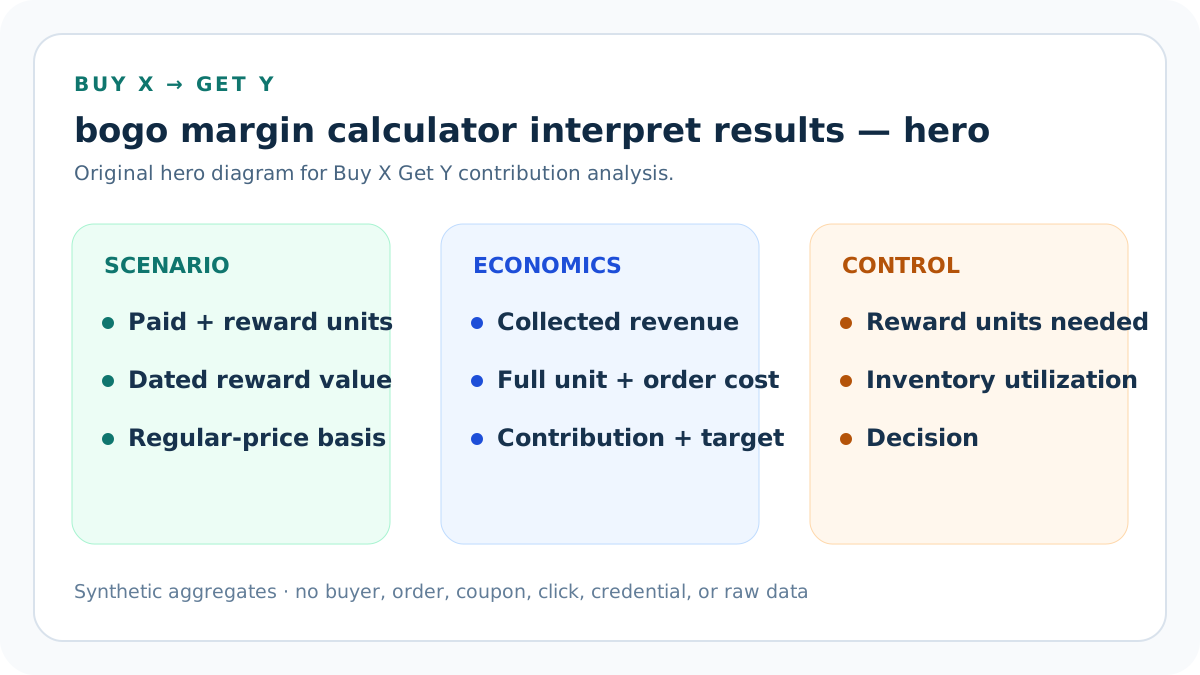
Compare reward discount value with regular merchandise value for all fulfilled units. In the BOGO result interpretation note, record the value, unit, denominator, source version, evidence date, maturity state, owner, reviewer, and uncertainty. Recalculate from a clean aggregate or synthetic packet before formatting any rate, amount, boundary, or decision.
Do not confuse reward percentage with order percentage. Topic 1 keeps one supported case, one defective case, the correction step, and the reason the conclusion belongs to a responsible conditional promotion decision rather than a platform promise, demand forecast, or universal promotion rule.
Read collected revenue
Separate merchandise and buyer-paid shipping at the retained-order grain. In the BOGO result interpretation note, record the value, unit, denominator, source version, evidence date, maturity state, owner, reviewer, and uncertainty. Recalculate from a clean aggregate or synthetic packet before formatting any rate, amount, boundary, or decision.
Do not treat tax or pass-through amounts as contribution. Topic 2 keeps one supported case, one defective case, the correction step, and the reason the conclusion belongs to a responsible conditional promotion decision rather than a platform promise, demand forecast, or universal promotion rule.
Read contribution
Subtract every declared product, order, fee, loss, and setup line. In the BOGO result interpretation note, record the value, unit, denominator, source version, evidence date, maturity state, owner, reviewer, and uncertainty. Recalculate from a clean aggregate or synthetic packet before formatting any rate, amount, boundary, or decision.
Contribution is not accounting net income. Topic 3 keeps one supported case, one defective case, the correction step, and the reason the conclusion belongs to a responsible conditional promotion decision rather than a platform promise, demand forecast, or universal promotion rule.
Read contribution per retained order
Use the same retained-order denominator across scenarios. In the BOGO result interpretation note, record the value, unit, denominator, source version, evidence date, maturity state, owner, reviewer, and uncertainty. Recalculate from a clean aggregate or synthetic packet before formatting any rate, amount, boundary, or decision.
Do not compare it with per-unit or per-customer metrics. Topic 4 keeps one supported case, one defective case, the correction step, and the reason the conclusion belongs to a responsible conditional promotion decision rather than a platform promise, demand forecast, or universal promotion rule.
Read target headroom
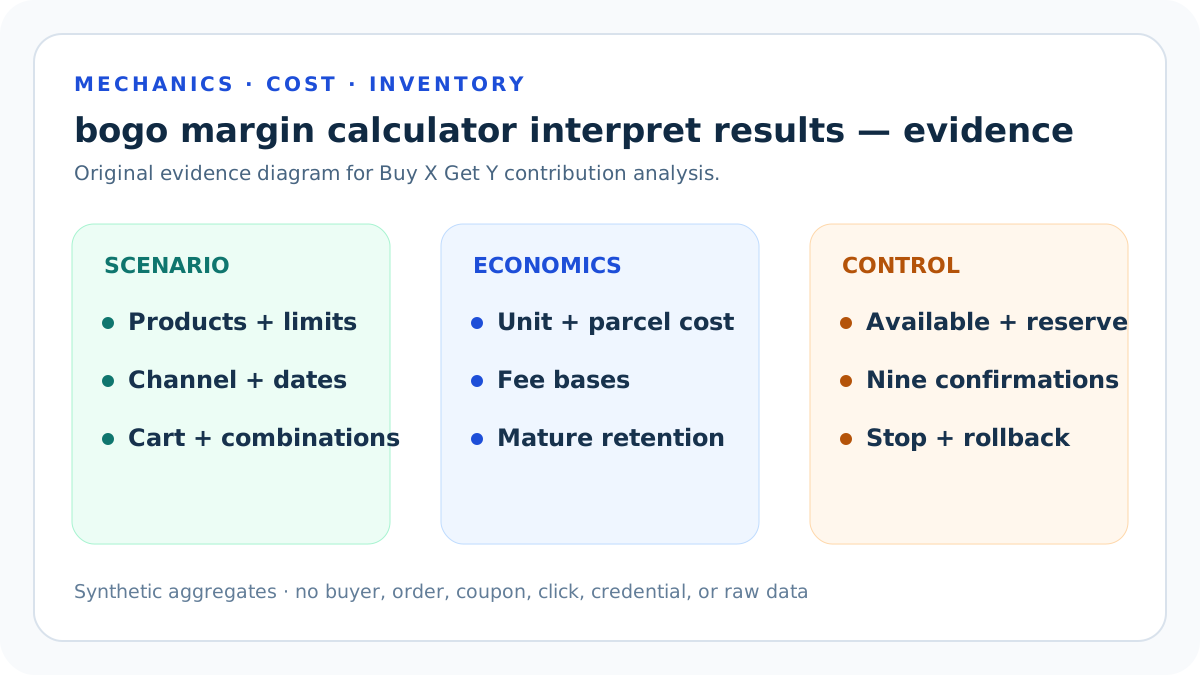
Explain how much conditional reserve remains after the seller target. In the BOGO result interpretation note, record the value, unit, denominator, source version, evidence date, maturity state, owner, reviewer, and uncertainty. Recalculate from a clean aggregate or synthetic packet before formatting any rate, amount, boundary, or decision.
Small positive headroom is fragile. Topic 5 keeps one supported case, one defective case, the correction step, and the reason the conclusion belongs to a responsible conditional promotion decision rather than a platform promise, demand forecast, or universal promotion rule.
Read the reward boundary
Confirm every held input before using the maximum target-safe discount. In the BOGO result interpretation note, record the value, unit, denominator, source version, evidence date, maturity state, owner, reviewer, and uncertainty. Recalculate from a clean aggregate or synthetic packet before formatting any rate, amount, boundary, or decision.
Any changed quantity, price, cost, or fee invalidates it. Topic 6 keeps one supported case, one defective case, the correction step, and the reason the conclusion belongs to a responsible conditional promotion decision rather than a platform promise, demand forecast, or universal promotion rule.
Read uncertainty
Name demand, redemption, mix, late returns, parcel, fee, inventory, platform, and measurement uncertainty. In the BOGO result interpretation note, record the value, unit, denominator, source version, evidence date, maturity state, owner, reviewer, and uncertainty. Recalculate from a clean aggregate or synthetic packet before formatting any rate, amount, boundary, or decision.
Choose reversible action when evidence is weak. Topic 7 keeps one supported case, one defective case, the correction step, and the reason the conclusion belongs to a responsible conditional promotion decision rather than a platform promise, demand forecast, or universal promotion rule.
Read inventory utilization
Compare required reward units with dated available inventory and the seller-owned maximum utilization threshold. In the BOGO result interpretation note, record the value, unit, denominator, source version, evidence date, maturity state, owner, reviewer, and uncertainty. Recalculate from a clean aggregate or synthetic packet before formatting any rate, amount, boundary, or decision.
A Ready result neither reserves stock nor proves every eligible shopper will redeem. Topic 8 keeps one supported case, one defective case, the correction step, and the reason the conclusion belongs to a responsible conditional promotion decision rather than a platform promise, demand forecast, or universal promotion rule.
Cost and outcome maturity control: how to interpret bogo margin without false precision
Close product, fulfillment, parcel, fee, refund, return, dispute, and recovery windows. Control 1 names the authority, owner, review frequency, exception code, threshold, expiry, correction trigger, and prior restorable offer packet.
Provisional evidence stays visibly provisional. Apply the control specifically to a responsible conditional promotion decision; distinguish official platform behavior, seller configuration, seller records, calculator formulas, estimates, and scenario assumptions.
Reward-inventory control: how to interpret bogo margin without false precision
Keep required reward units, available units, committed units, reserve floor, maximum utilization, replenishment, and fulfillment capacity visible. Control 2 names the authority, owner, review frequency, exception code, threshold, expiry, correction trigger, and prior restorable offer packet.
A scenario result never reserves inventory. Apply the control specifically to a responsible conditional promotion decision; distinguish official platform behavior, seller configuration, seller records, calculator formulas, estimates, and scenario assumptions.
Privacy and access control: how to interpret bogo margin without false precision
Use aggregates, synthetic fixtures, redacted pointers, access limits, retention rules, and deletion rules. Control 3 names the authority, owner, review frequency, exception code, threshold, expiry, correction trigger, and prior restorable offer packet.
Exclude buyer, order, payment, coupon, credential, token, and OAuth data. Apply the control specifically to a responsible conditional promotion decision; distinguish official platform behavior, seller configuration, seller records, calculator formulas, estimates, and scenario assumptions.
Offer-mechanics control: how to interpret bogo margin without false precision
Keep platform-defined Buy X Get Y behavior, seller configuration, and calculation assumptions in separate evidence columns. Control 4 names the authority, owner, review frequency, exception code, threshold, expiry, correction trigger, and prior restorable offer packet.
A tool result cannot prove that a marketplace supports the offer. Apply the control specifically to a responsible conditional promotion decision; distinguish official platform behavior, seller configuration, seller records, calculator formulas, estimates, and scenario assumptions.
Release and restoration control: how to interpret bogo margin without false precision
Require calculation, content, similarity, SEO, image, browser, mobile, privacy, live, and rollback evidence. Control 5 names the authority, owner, review frequency, exception code, threshold, expiry, correction trigger, and prior restorable offer packet.
Restore on formula, route, source, privacy, accessibility, or health regression. Apply the control specifically to a responsible conditional promotion decision; distinguish official platform behavior, seller configuration, seller records, calculator formulas, estimates, and scenario assumptions.
Read effective discount: BOGO scenario drill
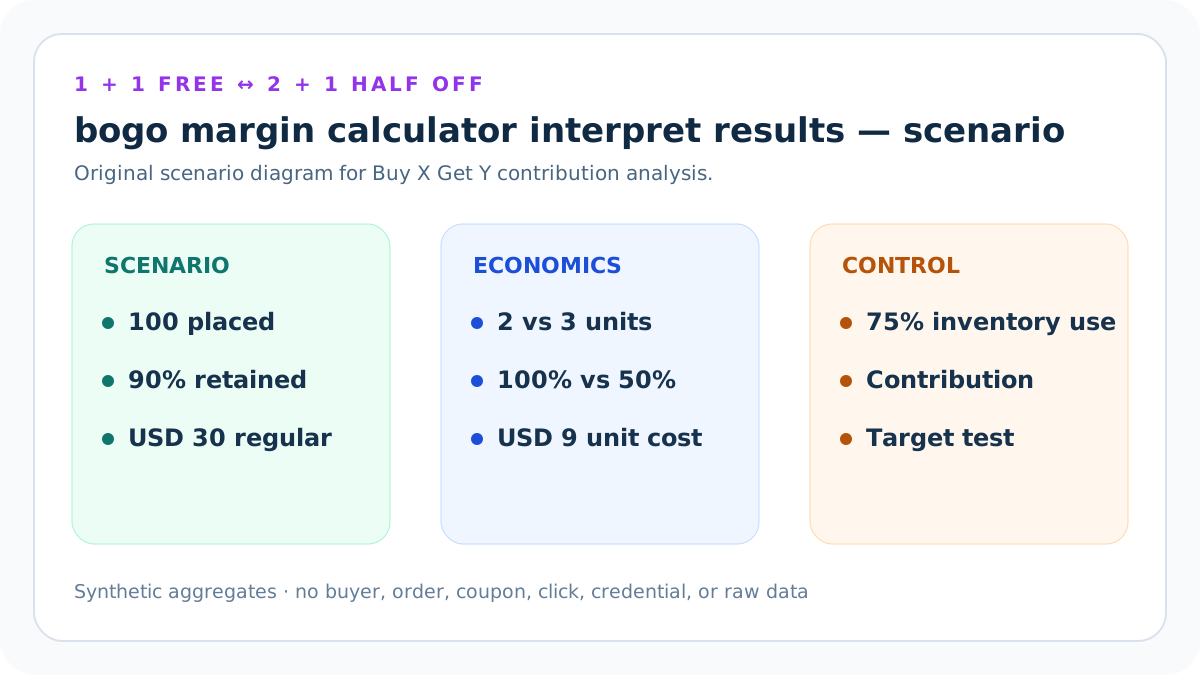
Recreate “Read effective discount” from the synthetic 1 + 1 free and 2 + 1 half-off fixtures. Compare reward discount value with regular merchandise value for all fulfilled units. Change one supported input, preserve the original packet, show the collected-revenue and fulfilled-cost bridge, and attach the expected Block, Review, or Ready state to the BOGO result interpretation note.
Do not confuse reward percentage with order percentage. Drill 1 includes a supported offer, below-target case, invalid case, corrected case, product-cost change, parcel-cost change, and reward-discount change. Explain what moved, what remained fixed, which threshold changed, and what evidence permits the next step.
Read collected revenue: BOGO scenario drill
Recreate “Read collected revenue” from the synthetic 1 + 1 free and 2 + 1 half-off fixtures. Separate merchandise and buyer-paid shipping at the retained-order grain. Change one supported input, preserve the original packet, show the collected-revenue and fulfilled-cost bridge, and attach the expected Block, Review, or Ready state to the BOGO result interpretation note.
Do not treat tax or pass-through amounts as contribution. Drill 2 includes a supported offer, below-target case, invalid case, corrected case, product-cost change, parcel-cost change, and reward-discount change. Explain what moved, what remained fixed, which threshold changed, and what evidence permits the next step.
Read contribution: BOGO scenario drill
Recreate “Read contribution” from the synthetic 1 + 1 free and 2 + 1 half-off fixtures. Subtract every declared product, order, fee, loss, and setup line. Change one supported input, preserve the original packet, show the collected-revenue and fulfilled-cost bridge, and attach the expected Block, Review, or Ready state to the BOGO result interpretation note.
Contribution is not accounting net income. Drill 3 includes a supported offer, below-target case, invalid case, corrected case, product-cost change, parcel-cost change, and reward-discount change. Explain what moved, what remained fixed, which threshold changed, and what evidence permits the next step.
Read contribution per retained order: BOGO scenario drill
Recreate “Read contribution per retained order” from the synthetic 1 + 1 free and 2 + 1 half-off fixtures. Use the same retained-order denominator across scenarios. Change one supported input, preserve the original packet, show the collected-revenue and fulfilled-cost bridge, and attach the expected Block, Review, or Ready state to the BOGO result interpretation note.
Do not compare it with per-unit or per-customer metrics. Drill 4 includes a supported offer, below-target case, invalid case, corrected case, product-cost change, parcel-cost change, and reward-discount change. Explain what moved, what remained fixed, which threshold changed, and what evidence permits the next step.
Read target headroom: BOGO scenario drill
Recreate “Read target headroom” from the synthetic 1 + 1 free and 2 + 1 half-off fixtures. Explain how much conditional reserve remains after the seller target. Change one supported input, preserve the original packet, show the collected-revenue and fulfilled-cost bridge, and attach the expected Block, Review, or Ready state to the BOGO result interpretation note.
Small positive headroom is fragile. Drill 5 includes a supported offer, below-target case, invalid case, corrected case, product-cost change, parcel-cost change, and reward-discount change. Explain what moved, what remained fixed, which threshold changed, and what evidence permits the next step.
Read the reward boundary: BOGO scenario drill
Recreate “Read the reward boundary” from the synthetic 1 + 1 free and 2 + 1 half-off fixtures. Confirm every held input before using the maximum target-safe discount. Change one supported input, preserve the original packet, show the collected-revenue and fulfilled-cost bridge, and attach the expected Block, Review, or Ready state to the BOGO result interpretation note.
Any changed quantity, price, cost, or fee invalidates it. Drill 6 includes a supported offer, below-target case, invalid case, corrected case, product-cost change, parcel-cost change, and reward-discount change. Explain what moved, what remained fixed, which threshold changed, and what evidence permits the next step.
Read uncertainty: BOGO scenario drill
Recreate “Read uncertainty” from the synthetic 1 + 1 free and 2 + 1 half-off fixtures. Name demand, redemption, mix, late returns, parcel, fee, inventory, platform, and measurement uncertainty. Change one supported input, preserve the original packet, show the collected-revenue and fulfilled-cost bridge, and attach the expected Block, Review, or Ready state to the BOGO result interpretation note.
Choose reversible action when evidence is weak. Drill 7 includes a supported offer, below-target case, invalid case, corrected case, product-cost change, parcel-cost change, and reward-discount change. Explain what moved, what remained fixed, which threshold changed, and what evidence permits the next step.
Read inventory utilization: BOGO scenario drill
Recreate “Read inventory utilization” from the synthetic 1 + 1 free and 2 + 1 half-off fixtures. Compare required reward units with dated available inventory and the seller-owned maximum utilization threshold. Change one supported input, preserve the original packet, show the collected-revenue and fulfilled-cost bridge, and attach the expected Block, Review, or Ready state to the BOGO result interpretation note.
A Ready result neither reserves stock nor proves every eligible shopper will redeem. Drill 8 includes a supported offer, below-target case, invalid case, corrected case, product-cost change, parcel-cost change, and reward-discount change. Explain what moved, what remained fixed, which threshold changed, and what evidence permits the next step.
What a responsible conditional promotion decision can and cannot prove
It can prove that entered aggregate assumptions follow the declared dated offer mechanics, distinct paid and reward quantities, order grain, regular-price basis, retained outcomes, fulfilled costs, fee bases, adverse loss, setup cost, reward inventory, thresholds, confirmations, formula version, and evidence scope.
It cannot prove platform eligibility, checkout behavior, lawful price display, live inventory reservation, demand, redemption, conversion, product mix, buyer behavior, incrementality, accounting profit, liquidity, tax treatment, or future campaign results.
Block, review, release, and restore the BOGO result interpretation note
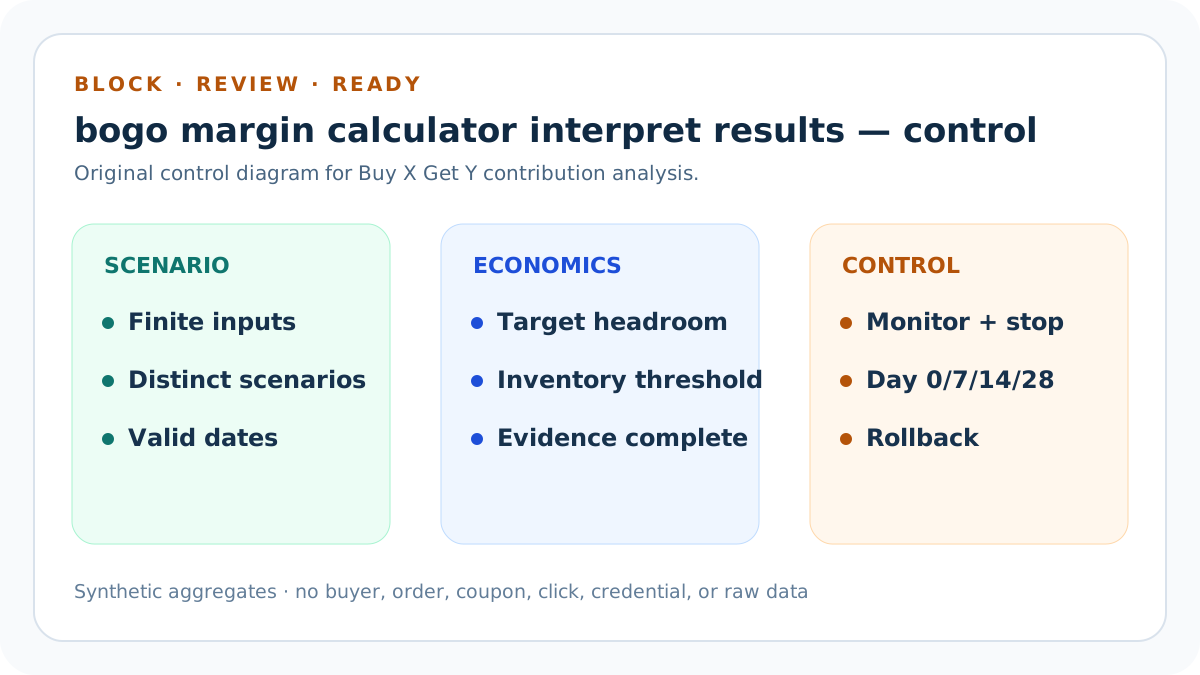
Block non-finite numbers, duplicate scenarios, invalid dates, missing confirmations, private exposure, missing mechanics, incompatible periods, stale scope, or declared conflicts. Review a valid scenario below target or above its reward-inventory threshold. Ready means both structures preserve the declared contribution and inventory controls.
Release only a reversible public model with synthetic defaults, first-party sources, original diagrams, accessible labels, self-canonical, Article and Breadcrumb schema, contextual links, strict 404 behavior, correction policy, and rollback evidence.
Sources and further reading
- Seller Profit Guard methodology: Evidence versions, formulas, privacy, correction, release, and rollback.
- Seller Profit Guard data privacy: Local-first boundaries for buyer, order, promotion, payment, credential, and raw-record data.
- Shopify Help: Buy X get Y discounts: Official qualifying quantity, reward quantity, discounted value, cart-addition, inventory, channel, uses, combination, and timing rules. Reviewed July 31, 2026.
- Shopify Help: Combining discounts: Official application order, best-discount selection, plan-specific same-item rules, and Buy X Get Y combination limits. Reviewed July 31, 2026.
- Etsy Help: Set up sales and discounts: Official sales, promo-code, discounted-bundle, highest-discount, and non-stacking context. Reviewed July 31, 2026.
- FTC: Unfair or Deceptive Fees FAQ: United States guidance says a BOGO-adjusted total price follows only after the transaction meets promotion requirements. Reviewed July 31, 2026.
Related Seller Profit Guard tools
- BOGO Margin Calculator: Compare two literal Buy X Get Y structures.
- Maximum Discount Calculator: Solve a single-order discount boundary.
- Bundle Margin Calculator: Model one fixed bundle price separately.
- Seasonal Promotion Margin Calculator: Stress a dated campaign across volume, mix, ads, and capacity.
- Coupon Stack Risk Checker: Review combination mechanics before calculating the offer.
- Methodology: Review evidence, formulas, privacy, correction, release, and rollback.
- Data Privacy: Protect buyer, order, promotion, payment, credential, and raw-record data.
- BOGO Margin Formula, Inputs, and Assumptions: Build a Buy X Get Y contribution formula from paid and reward units, reward discount, retained outcomes, costs, fees, and target headroom.
- BOGO Margin Example: Buy One Get One Free: Follow a 100-order synthetic buy-one-get-one-free offer through retained revenue, two-unit cost, fees, setup, contribution, and target headroom.
- BOGO Margin for Buy Two Get One 50% Off: Model a materially different buy-two-get-one-half-off offer with three fulfilled units, higher collected merchandise, cost, fees, and target headroom.
- BOGO Margin Mistakes That Hide Reward Cost: Correct paid-unit, reward-unit, discount-base, product-cost, postage, return, fee, denominator, platform, and false-precision errors.
- Reliable Data Sources for BOGO Margin: Map offer mechanics, quantities, prices, costs, shipping, fees, mature outcomes, setup expense, currency, period, and target to reliable evidence.
- BOGO Contribution Thresholds and Safe Reward Discounts: Separate break-even, target-safe, and stress thresholds for reward discount, contribution per retained order, and target headroom.
- BOGO Comparison: 1 + 1 Free vs 2 + 1 Half Off: Compare buy-one-get-one-free with buy-two-get-one-half-off at equal placed-order volume and expose revenue, fulfilled units, costs, and limits.
- A Weekly BOGO Margin Review Routine: Operate a repeatable BOGO review across configuration, price, cost, postage, retained outcomes, fees, contribution, thresholds, and rollback.
- BOGO Margin Audit Checklist and Change Log: Use a standalone checklist and dated change log for offer mechanics, formulas, sources, fixtures, thresholds, release evidence, and rollback.
Next step: Open Seller Profit Guard.
This is operational planning help, not tax, accounting, legal, financial, or platform-policy advice. Review the Terms and disclaimer, and verify current platform rules and fee assumptions before changing prices.