Where should Shopify refund loss inputs come from?
Last updated: 2026-07-29
Written and reviewed by Seller Profit Guard Editorial Team.
Use the finalized refund timeline, payment transaction, provider fee record, Shopify fee credit, purchased label or carrier invoice, return record, inspection grade, seller handling ledger, app bill or developer invoice, received recovery, and one dated scope note. Publish only invented aggregates; retain customer and order evidence in authorized systems.
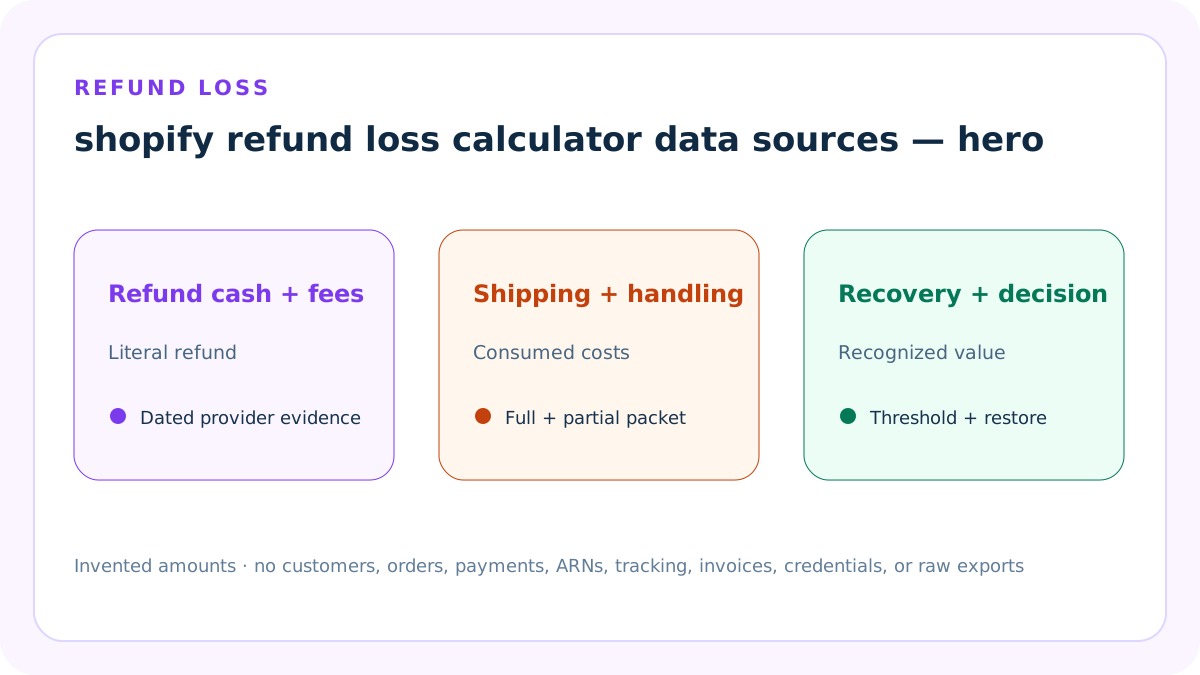
Fingerprint the refund authority set
Hash or version the order refund timeline, payment-provider fee record, posted transaction credit, fulfillment and return state, shipping invoice, handling ledger, app charge, inventory inspection, received recovery, market rule, owner approval, and restoration evidence.
Record acquisition and effective dates separately. A current web help page explains platform behavior but does not replace the protected account evidence for one transaction.
Track received and pending recovery independently
The source map assigns separate states to requested, pending, approved, received, denied, reversed, and corrected fee credits, carrier reimbursements, app credits, inventory value, supplier credits, and insurance payments.
Only received and accepted recovery enters the result. Pending amounts remain visible in the protected evidence packet and can drive Review without silently lowering loss.
Read the refund timeline
Use the finalized refund timeline, payment transaction, provider fee record, Shopify fee credit, purchased label or carrier invoice, return record, inspection grade, seller handling ledger, app bill or developer invoice, received recovery, and one dated scope note. Publish only invented aggregates; retain customer and order evidence in authorized systems. At checkpoint 1, the refund evidence lineage records the accepted amount or state, unit, source date, source owner, evidence maturity, rejected alternative, and whether the change affects refund cash, retained payment cost, consumed fulfillment, reverse logistics, handling, app allocation, inventory recovery, other recovery, net loss, threshold, or decision.
Bind read the refund timeline to one refund method, provider, fulfillment state, return state, currency, evidence period, owner, reviewer, and restoration packet. Keep requested, pending, approved, received, denied, and corrected states separate. If the scope changes, open a new packet rather than averaging unlike orders or silently replacing the earlier estimate.
Read the provider transaction
Use the finalized refund timeline, payment transaction, provider fee record, Shopify fee credit, purchased label or carrier invoice, return record, inspection grade, seller handling ledger, app bill or developer invoice, received recovery, and one dated scope note. Publish only invented aggregates; retain customer and order evidence in authorized systems. At checkpoint 2, the refund evidence lineage records the accepted amount or state, unit, source date, source owner, evidence maturity, rejected alternative, and whether the change affects refund cash, retained payment cost, consumed fulfillment, reverse logistics, handling, app allocation, inventory recovery, other recovery, net loss, threshold, or decision.
Bind read the provider transaction to one refund method, provider, fulfillment state, return state, currency, evidence period, owner, reviewer, and restoration packet. Keep requested, pending, approved, received, denied, and corrected states separate. If the scope changes, open a new packet rather than averaging unlike orders or silently replacing the earlier estimate.
Verify fee-credit evidence
Use the finalized refund timeline, payment transaction, provider fee record, Shopify fee credit, purchased label or carrier invoice, return record, inspection grade, seller handling ledger, app bill or developer invoice, received recovery, and one dated scope note. Publish only invented aggregates; retain customer and order evidence in authorized systems. At checkpoint 3, the refund evidence lineage records the accepted amount or state, unit, source date, source owner, evidence maturity, rejected alternative, and whether the change affects refund cash, retained payment cost, consumed fulfillment, reverse logistics, handling, app allocation, inventory recovery, other recovery, net loss, threshold, or decision.
Bind verify fee-credit evidence to one refund method, provider, fulfillment state, return state, currency, evidence period, owner, reviewer, and restoration packet. Keep requested, pending, approved, received, denied, and corrected states separate. If the scope changes, open a new packet rather than averaging unlike orders or silently replacing the earlier estimate.
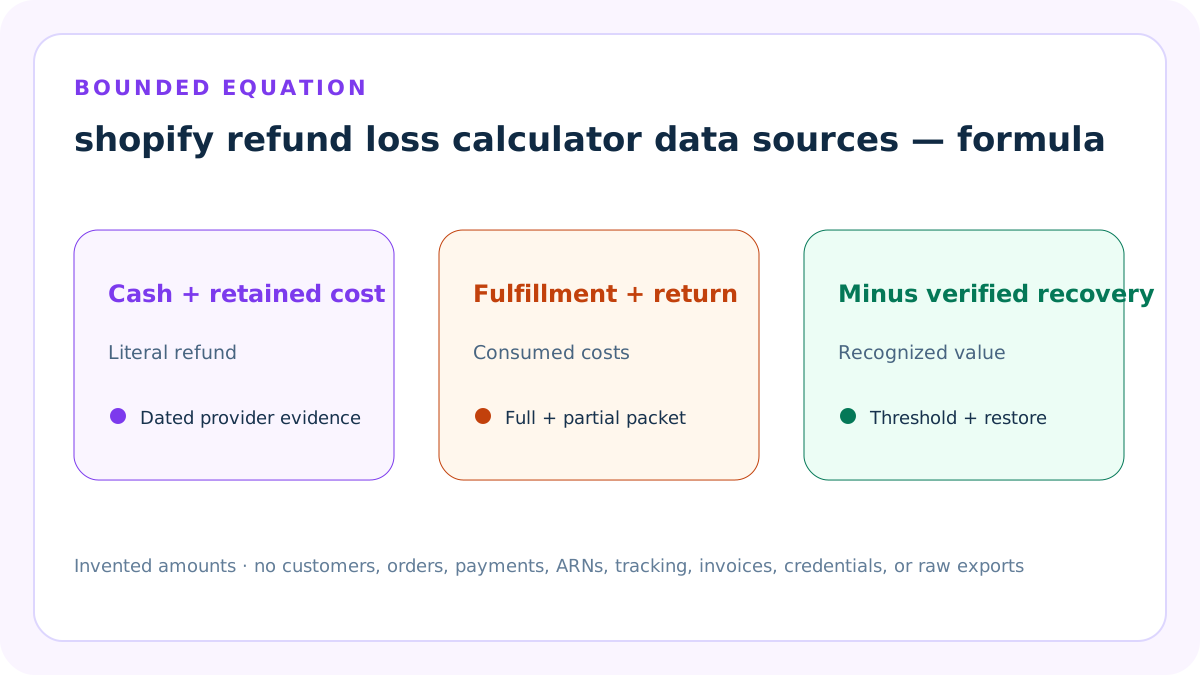
Verify outbound carrier cost
Use the finalized refund timeline, payment transaction, provider fee record, Shopify fee credit, purchased label or carrier invoice, return record, inspection grade, seller handling ledger, app bill or developer invoice, received recovery, and one dated scope note. Publish only invented aggregates; retain customer and order evidence in authorized systems. At checkpoint 4, the refund evidence lineage records the accepted amount or state, unit, source date, source owner, evidence maturity, rejected alternative, and whether the change affects refund cash, retained payment cost, consumed fulfillment, reverse logistics, handling, app allocation, inventory recovery, other recovery, net loss, threshold, or decision.
Bind verify outbound carrier cost to one refund method, provider, fulfillment state, return state, currency, evidence period, owner, reviewer, and restoration packet. Keep requested, pending, approved, received, denied, and corrected states separate. If the scope changes, open a new packet rather than averaging unlike orders or silently replacing the earlier estimate.
Verify return-label cost
Use the finalized refund timeline, payment transaction, provider fee record, Shopify fee credit, purchased label or carrier invoice, return record, inspection grade, seller handling ledger, app bill or developer invoice, received recovery, and one dated scope note. Publish only invented aggregates; retain customer and order evidence in authorized systems. At checkpoint 5, the refund evidence lineage records the accepted amount or state, unit, source date, source owner, evidence maturity, rejected alternative, and whether the change affects refund cash, retained payment cost, consumed fulfillment, reverse logistics, handling, app allocation, inventory recovery, other recovery, net loss, threshold, or decision.
Bind verify return-label cost to one refund method, provider, fulfillment state, return state, currency, evidence period, owner, reviewer, and restoration packet. Keep requested, pending, approved, received, denied, and corrected states separate. If the scope changes, open a new packet rather than averaging unlike orders or silently replacing the earlier estimate.
Document handling activity
Use the finalized refund timeline, payment transaction, provider fee record, Shopify fee credit, purchased label or carrier invoice, return record, inspection grade, seller handling ledger, app bill or developer invoice, received recovery, and one dated scope note. Publish only invented aggregates; retain customer and order evidence in authorized systems. At checkpoint 6, the refund evidence lineage records the accepted amount or state, unit, source date, source owner, evidence maturity, rejected alternative, and whether the change affects refund cash, retained payment cost, consumed fulfillment, reverse logistics, handling, app allocation, inventory recovery, other recovery, net loss, threshold, or decision.
Bind document handling activity to one refund method, provider, fulfillment state, return state, currency, evidence period, owner, reviewer, and restoration packet. Keep requested, pending, approved, received, denied, and corrected states separate. If the scope changes, open a new packet rather than averaging unlike orders or silently replacing the earlier estimate.
Trace the app charge
Use the finalized refund timeline, payment transaction, provider fee record, Shopify fee credit, purchased label or carrier invoice, return record, inspection grade, seller handling ledger, app bill or developer invoice, received recovery, and one dated scope note. Publish only invented aggregates; retain customer and order evidence in authorized systems. At checkpoint 7, the refund evidence lineage records the accepted amount or state, unit, source date, source owner, evidence maturity, rejected alternative, and whether the change affects refund cash, retained payment cost, consumed fulfillment, reverse logistics, handling, app allocation, inventory recovery, other recovery, net loss, threshold, or decision.
Bind trace the app charge to one refund method, provider, fulfillment state, return state, currency, evidence period, owner, reviewer, and restoration packet. Keep requested, pending, approved, received, denied, and corrected states separate. If the scope changes, open a new packet rather than averaging unlike orders or silently replacing the earlier estimate.
Grade returned inventory
Use the finalized refund timeline, payment transaction, provider fee record, Shopify fee credit, purchased label or carrier invoice, return record, inspection grade, seller handling ledger, app bill or developer invoice, received recovery, and one dated scope note. Publish only invented aggregates; retain customer and order evidence in authorized systems. At checkpoint 8, the refund evidence lineage records the accepted amount or state, unit, source date, source owner, evidence maturity, rejected alternative, and whether the change affects refund cash, retained payment cost, consumed fulfillment, reverse logistics, handling, app allocation, inventory recovery, other recovery, net loss, threshold, or decision.
Bind grade returned inventory to one refund method, provider, fulfillment state, return state, currency, evidence period, owner, reviewer, and restoration packet. Keep requested, pending, approved, received, denied, and corrected states separate. If the scope changes, open a new packet rather than averaging unlike orders or silently replacing the earlier estimate.
Recognize received recoveries
Use the finalized refund timeline, payment transaction, provider fee record, Shopify fee credit, purchased label or carrier invoice, return record, inspection grade, seller handling ledger, app bill or developer invoice, received recovery, and one dated scope note. Publish only invented aggregates; retain customer and order evidence in authorized systems. At checkpoint 9, the refund evidence lineage records the accepted amount or state, unit, source date, source owner, evidence maturity, rejected alternative, and whether the change affects refund cash, retained payment cost, consumed fulfillment, reverse logistics, handling, app allocation, inventory recovery, other recovery, net loss, threshold, or decision.
Bind recognize received recoveries to one refund method, provider, fulfillment state, return state, currency, evidence period, owner, reviewer, and restoration packet. Keep requested, pending, approved, received, denied, and corrected states separate. If the scope changes, open a new packet rather than averaging unlike orders or silently replacing the earlier estimate.
Publish only protected aggregates
Use the finalized refund timeline, payment transaction, provider fee record, Shopify fee credit, purchased label or carrier invoice, return record, inspection grade, seller handling ledger, app bill or developer invoice, received recovery, and one dated scope note. Publish only invented aggregates; retain customer and order evidence in authorized systems. At checkpoint 10, the refund evidence lineage records the accepted amount or state, unit, source date, source owner, evidence maturity, rejected alternative, and whether the change affects refund cash, retained payment cost, consumed fulfillment, reverse logistics, handling, app allocation, inventory recovery, other recovery, net loss, threshold, or decision.
Bind publish only protected aggregates to one refund method, provider, fulfillment state, return state, currency, evidence period, owner, reviewer, and restoration packet. Keep requested, pending, approved, received, denied, and corrected states separate. If the scope changes, open a new packet rather than averaging unlike orders or silently replacing the earlier estimate.
Read the refund timeline: control test 1
Change only the read the refund timeline input in a synthetic fixture. Hold currency, provider, refund method, fulfillment and return state, unrelated costs, recovery convention, maximum-loss threshold, ownership, and evidence period constant. Show whether the change creates Block, Review, Ready, a new scenario difference, or only an explanatory note.
Correct the source, preserve both versions, rerun full and partial fixtures, and reconcile the result after actual fee credit, shipping adjustment, inventory grade, app charge, or recovery arrives. The calculator cannot access Shopify, reverse a refund, restock an item, choose a remedy, credit an app, or expose customer data.
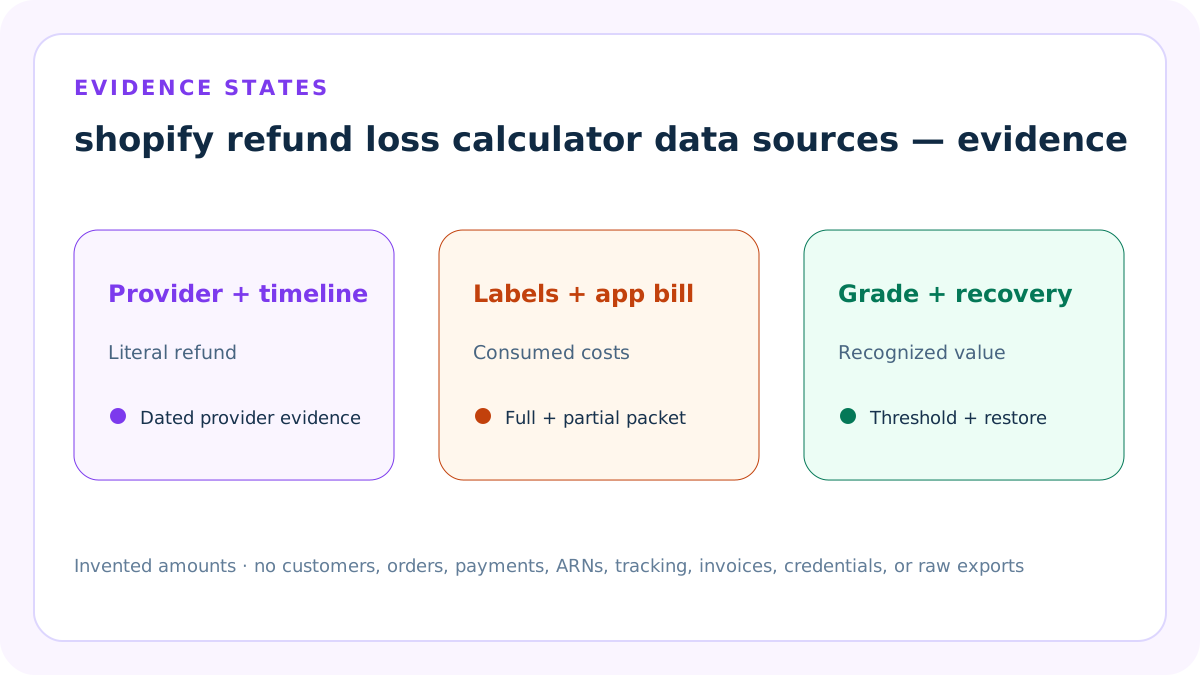
Read the provider transaction: control test 2
Change only the read the provider transaction input in a synthetic fixture. Hold currency, provider, refund method, fulfillment and return state, unrelated costs, recovery convention, maximum-loss threshold, ownership, and evidence period constant. Show whether the change creates Block, Review, Ready, a new scenario difference, or only an explanatory note.
Correct the source, preserve both versions, rerun full and partial fixtures, and reconcile the result after actual fee credit, shipping adjustment, inventory grade, app charge, or recovery arrives. The calculator cannot access Shopify, reverse a refund, restock an item, choose a remedy, credit an app, or expose customer data.
Verify fee-credit evidence: control test 3
Change only the verify fee-credit evidence input in a synthetic fixture. Hold currency, provider, refund method, fulfillment and return state, unrelated costs, recovery convention, maximum-loss threshold, ownership, and evidence period constant. Show whether the change creates Block, Review, Ready, a new scenario difference, or only an explanatory note.
Correct the source, preserve both versions, rerun full and partial fixtures, and reconcile the result after actual fee credit, shipping adjustment, inventory grade, app charge, or recovery arrives. The calculator cannot access Shopify, reverse a refund, restock an item, choose a remedy, credit an app, or expose customer data.
Verify outbound carrier cost: control test 4
Change only the verify outbound carrier cost input in a synthetic fixture. Hold currency, provider, refund method, fulfillment and return state, unrelated costs, recovery convention, maximum-loss threshold, ownership, and evidence period constant. Show whether the change creates Block, Review, Ready, a new scenario difference, or only an explanatory note.
Correct the source, preserve both versions, rerun full and partial fixtures, and reconcile the result after actual fee credit, shipping adjustment, inventory grade, app charge, or recovery arrives. The calculator cannot access Shopify, reverse a refund, restock an item, choose a remedy, credit an app, or expose customer data.
Verify return-label cost: control test 5
Change only the verify return-label cost input in a synthetic fixture. Hold currency, provider, refund method, fulfillment and return state, unrelated costs, recovery convention, maximum-loss threshold, ownership, and evidence period constant. Show whether the change creates Block, Review, Ready, a new scenario difference, or only an explanatory note.
Correct the source, preserve both versions, rerun full and partial fixtures, and reconcile the result after actual fee credit, shipping adjustment, inventory grade, app charge, or recovery arrives. The calculator cannot access Shopify, reverse a refund, restock an item, choose a remedy, credit an app, or expose customer data.
Document handling activity: control test 6
Change only the document handling activity input in a synthetic fixture. Hold currency, provider, refund method, fulfillment and return state, unrelated costs, recovery convention, maximum-loss threshold, ownership, and evidence period constant. Show whether the change creates Block, Review, Ready, a new scenario difference, or only an explanatory note.
Correct the source, preserve both versions, rerun full and partial fixtures, and reconcile the result after actual fee credit, shipping adjustment, inventory grade, app charge, or recovery arrives. The calculator cannot access Shopify, reverse a refund, restock an item, choose a remedy, credit an app, or expose customer data.
Trace the app charge: control test 7
Change only the trace the app charge input in a synthetic fixture. Hold currency, provider, refund method, fulfillment and return state, unrelated costs, recovery convention, maximum-loss threshold, ownership, and evidence period constant. Show whether the change creates Block, Review, Ready, a new scenario difference, or only an explanatory note.
Correct the source, preserve both versions, rerun full and partial fixtures, and reconcile the result after actual fee credit, shipping adjustment, inventory grade, app charge, or recovery arrives. The calculator cannot access Shopify, reverse a refund, restock an item, choose a remedy, credit an app, or expose customer data.
Grade returned inventory: control test 8
Change only the grade returned inventory input in a synthetic fixture. Hold currency, provider, refund method, fulfillment and return state, unrelated costs, recovery convention, maximum-loss threshold, ownership, and evidence period constant. Show whether the change creates Block, Review, Ready, a new scenario difference, or only an explanatory note.
Correct the source, preserve both versions, rerun full and partial fixtures, and reconcile the result after actual fee credit, shipping adjustment, inventory grade, app charge, or recovery arrives. The calculator cannot access Shopify, reverse a refund, restock an item, choose a remedy, credit an app, or expose customer data.
Recognize received recoveries: control test 9
Change only the recognize received recoveries input in a synthetic fixture. Hold currency, provider, refund method, fulfillment and return state, unrelated costs, recovery convention, maximum-loss threshold, ownership, and evidence period constant. Show whether the change creates Block, Review, Ready, a new scenario difference, or only an explanatory note.
Correct the source, preserve both versions, rerun full and partial fixtures, and reconcile the result after actual fee credit, shipping adjustment, inventory grade, app charge, or recovery arrives. The calculator cannot access Shopify, reverse a refund, restock an item, choose a remedy, credit an app, or expose customer data.
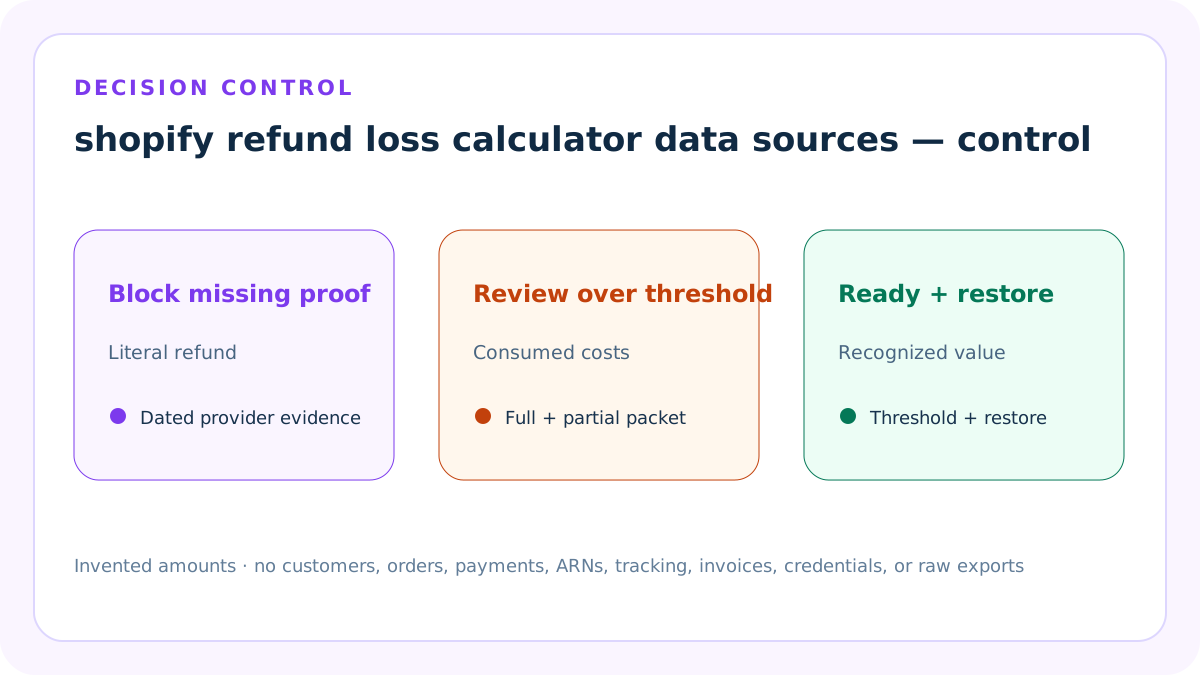
Publish only protected aggregates: control test 10
Change only the publish only protected aggregates input in a synthetic fixture. Hold currency, provider, refund method, fulfillment and return state, unrelated costs, recovery convention, maximum-loss threshold, ownership, and evidence period constant. Show whether the change creates Block, Review, Ready, a new scenario difference, or only an explanatory note.
Correct the source, preserve both versions, rerun full and partial fixtures, and reconcile the result after actual fee credit, shipping adjustment, inventory grade, app charge, or recovery arrives. The calculator cannot access Shopify, reverse a refund, restock an item, choose a remedy, credit an app, or expose customer data.
Shopify Refund Data: A Source Map: evidence lab 1
Reperform read the refund timeline for the USD 73.27 full-refund packet and USD 31.27 partial-refund packet. Display merchandise refund, shipping refund, original fee, verified fee credit, retained fee, outbound shipping, return shipping, handling, app cost, inventory recovery, other recovery, gross impact, net loss, difference, threshold, and status.
Stress one driver at a time: refund amount, provider, fee credit, fulfillment state, label cost, handling allocation, app charge, condition grade, recovery state, threshold, evidence period, owner, reviewer, conflict, backup, or restore result. Exact cents do not make unsupported recovery or customer authority valid.
Shopify Refund Data: A Source Map: evidence lab 2
Reperform read the provider transaction for the USD 73.27 full-refund packet and USD 31.27 partial-refund packet. Display merchandise refund, shipping refund, original fee, verified fee credit, retained fee, outbound shipping, return shipping, handling, app cost, inventory recovery, other recovery, gross impact, net loss, difference, threshold, and status.
Stress one driver at a time: refund amount, provider, fee credit, fulfillment state, label cost, handling allocation, app charge, condition grade, recovery state, threshold, evidence period, owner, reviewer, conflict, backup, or restore result. Exact cents do not make unsupported recovery or customer authority valid.
Shopify Refund Data: A Source Map: evidence lab 3
Reperform verify fee-credit evidence for the USD 73.27 full-refund packet and USD 31.27 partial-refund packet. Display merchandise refund, shipping refund, original fee, verified fee credit, retained fee, outbound shipping, return shipping, handling, app cost, inventory recovery, other recovery, gross impact, net loss, difference, threshold, and status.
Stress one driver at a time: refund amount, provider, fee credit, fulfillment state, label cost, handling allocation, app charge, condition grade, recovery state, threshold, evidence period, owner, reviewer, conflict, backup, or restore result. Exact cents do not make unsupported recovery or customer authority valid.
Shopify Refund Data: A Source Map: evidence lab 4
Reperform verify outbound carrier cost for the USD 73.27 full-refund packet and USD 31.27 partial-refund packet. Display merchandise refund, shipping refund, original fee, verified fee credit, retained fee, outbound shipping, return shipping, handling, app cost, inventory recovery, other recovery, gross impact, net loss, difference, threshold, and status.
Stress one driver at a time: refund amount, provider, fee credit, fulfillment state, label cost, handling allocation, app charge, condition grade, recovery state, threshold, evidence period, owner, reviewer, conflict, backup, or restore result. Exact cents do not make unsupported recovery or customer authority valid.
Shopify Refund Data: A Source Map: evidence lab 5
Reperform verify return-label cost for the USD 73.27 full-refund packet and USD 31.27 partial-refund packet. Display merchandise refund, shipping refund, original fee, verified fee credit, retained fee, outbound shipping, return shipping, handling, app cost, inventory recovery, other recovery, gross impact, net loss, difference, threshold, and status.
Stress one driver at a time: refund amount, provider, fee credit, fulfillment state, label cost, handling allocation, app charge, condition grade, recovery state, threshold, evidence period, owner, reviewer, conflict, backup, or restore result. Exact cents do not make unsupported recovery or customer authority valid.
Shopify Refund Data: A Source Map: evidence lab 6
Reperform document handling activity for the USD 73.27 full-refund packet and USD 31.27 partial-refund packet. Display merchandise refund, shipping refund, original fee, verified fee credit, retained fee, outbound shipping, return shipping, handling, app cost, inventory recovery, other recovery, gross impact, net loss, difference, threshold, and status.
Stress one driver at a time: refund amount, provider, fee credit, fulfillment state, label cost, handling allocation, app charge, condition grade, recovery state, threshold, evidence period, owner, reviewer, conflict, backup, or restore result. Exact cents do not make unsupported recovery or customer authority valid.
Official Shopify boundary for the refund evidence lineage
Shopify documents full and partial refunds, shipping refunds, payment methods, permissions, restocking choices, returns, exchanges, return labels, restocking fees, payout funding, provider-specific fee treatment, app charges, and credits. Capture current pages and account evidence because store eligibility, payment path, plan, market, and workflow can change.
This model excludes tax, duties, import fees, chargebacks, store-credit expiration, consumer law, policy drafting, replacement fulfillment, damaged-order claims, refund execution, accounting entries, payout forecasting, customer communication, and complete profit unless an authorized separate workflow reconciles them.
Privacy, release, and restoration for the refund evidence lineage
Use invented fixtures and aggregate evidence summaries only. Keep names, emails, addresses, messages, order identifiers, payment details, ARNs, tracking, labels, return photos, invoices, app bills, credentials, provider contracts, and raw exports out of public pages and analytics.
Before indexing, pass type, unit, integration, build, content, similarity, metadata, image, link, privacy, accessibility, mobile, backup, deployment, and live checks. Search signals are later measurements; failed refund, provider, fulfillment, ownership, or restoration evidence still stops release.
Sources and further reading
- Shopify Help: Refunding orders: Official full and partial refund, shipping refund, restock, permission, irreversible-action, Shopify Payments fee, and third-party transaction-credit context.
- Shopify Help: Shopify Payments refunds: Official payout timing, negative-balance, ARN, and original credit-card processing-fee treatment.
- Shopify Help: Returns and exchanges: Official distinction among refunds, returns, exchanges, requests, inspection, and labels.
- Shopify Help: Creating and processing returns: Official return shipping, restocking fee, partial processing, refund-later, and exchange workflow context.
- Shopify Help: Return and cancellation rules: Official fulfilled-item rules, markets, windows, return shipping, restocking fees, final-sale exceptions, and manual deduction boundaries.
- Shopify Help: App charges on Shopify bills: Official app cycle, usage charge, application credit, external charge, and pending-charge boundaries.
- Seller Profit Guard methodology: Deterministic evidence, privacy, testing, correction, release, monitoring, and restoration.
Related Seller Profit Guard tools
- Shopify Refund Loss Calculator: Run the browser-local full and partial refund packets.
- Refund vs Replacement Calculator: Compare remedies before freezing one refund packet.
- Return Shipping Cost Calculator: Build reverse-logistics evidence separately.
- Shopify Payment vs Transaction Fee Calculator: Separate payment processing from Shopify transaction fees.
- Methodology: Review evidence, privacy, validation, correction, monitoring, and restoration.
- Data Privacy: Keep customers, orders, payments, returns, invoices, credentials, and raw exports protected.
- Shopify Refund Loss Formula and Inputs: Define the bounded refund-loss equation, payment-cost recovery, fulfillment and return costs, recovered inventory, evidence states, and exclusions.
- Shopify Full Refund Loss: A Worked Example: Work a complete invented full-refund packet with cash, retained fee, shipping, handling, app cost, inventory recovery, result, and decision.
- Shopify Partial Refund Loss Example: Model a partial refund without disguising it as a scaled full refund, including retained fees, consumed fulfillment, handling, and no-return evidence.
- 9 Shopify Refund Loss Mistakes to Correct: Diagnose cash, fee-credit, fulfillment, return, inventory, app, scope, authority, and interpretation errors with corrected fixtures.
- Set a Shopify Refund Loss Review Threshold: Separate structural Block rules, seller-owned Review thresholds, recovery uncertainty, policy authority, and narrow Ready status.
- Shopify Full vs Partial Refund Loss: Compare full and partial packets at one evidence grain while explaining which cash, shipping, handling, app, and recovery variables drive the gap.
- A Weekly Shopify Refund Loss Routine: Turn refund-loss measurement into a repeatable exception log, source refresh, actual-versus-estimate review, owner sign-off, and restoration cycle.
- Read Shopify Refund Loss Without False Precision: Explain net refund loss, scenario difference, threshold headroom, recognized versus pending recovery, exclusions, and the next bounded action.
- Shopify Refund Loss Audit Checklist: Provide a standalone checklist and dated change log for refund, provider, fulfillment, return, fees, costs, recoveries, decisions, monitoring, and restoration.
Next step: Open Seller Profit Guard.
This is operational planning help, not tax, accounting, legal, financial, or platform-policy advice. Review the Terms and disclaimer, and verify current platform rules and fee assumptions before changing prices.