A weekly shipping zone margin operating routine
Last updated: 2026-07-31
Written and reviewed by Seller Profit Guard Editorial Team.
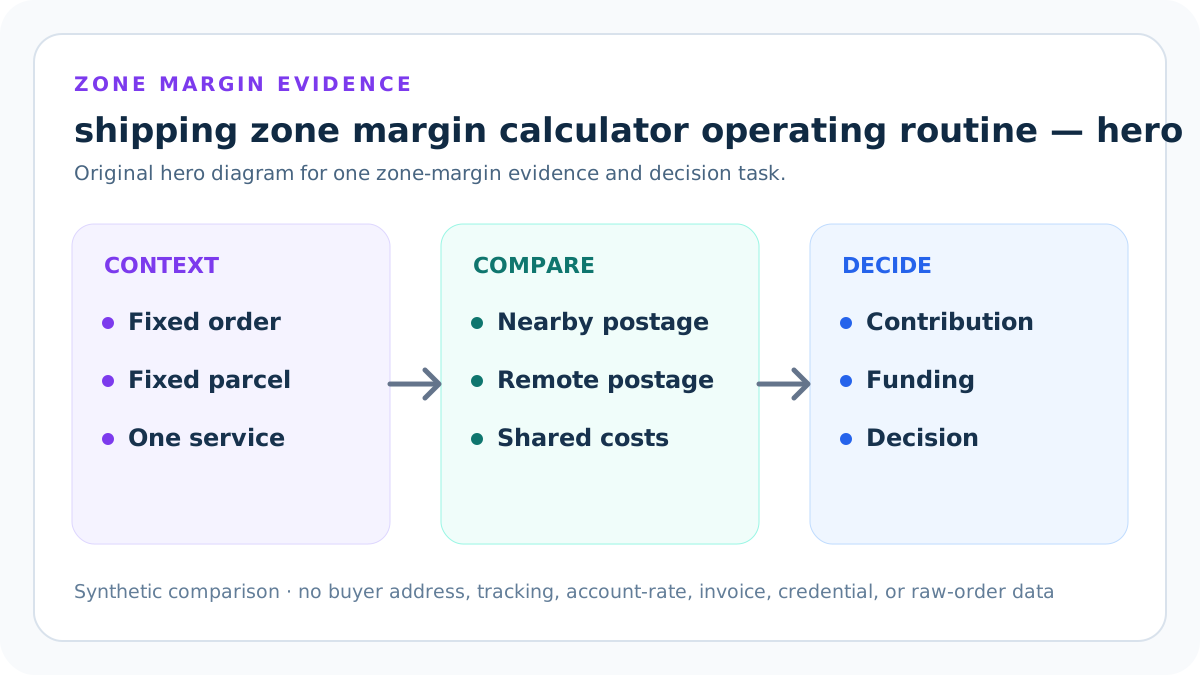
Each week, freeze current zone and rate sources, sample comparable parcels, reconcile quotes to labels and invoices, rerun contribution and funding boundaries, triage exceptions, approve bounded actions, preserve versions, and reopen any decision when service, package, rate, zone, or evidence changes.
Monday source intake
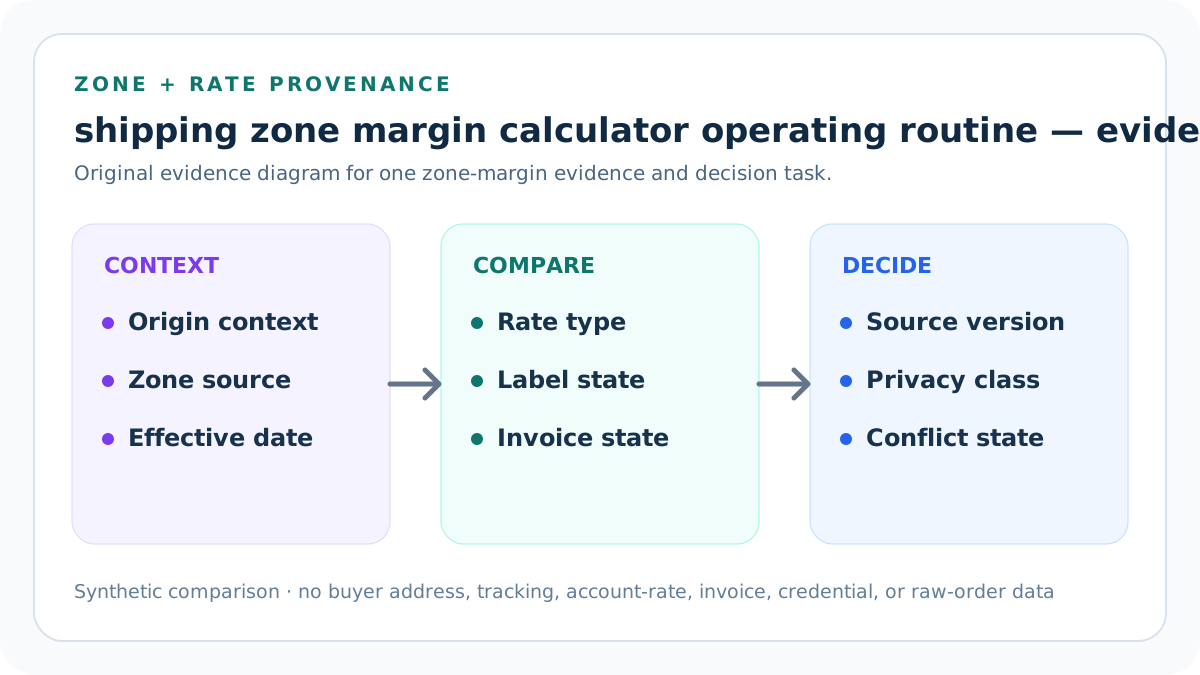
Operate control 1: Record current official zone, carrier rate, service, package, fee, target, and prior exception versions with retrieval and effective dates. This routine role assigns cadence, sample, exception clock, approval, reopen, and close. Record parcel alias, source state, full-precision value, display value, currency, unit, zone role, reviewer, and review date.
Test the nearest valid boundary and nearest counterexample. State how a mismatch changes a repeatable zone-margin control, which evidence resolves it, who owns correction, and whether the packet must be blocked, reviewed, limited, superseded, or restored.
Monday parcel sampling
Operate control 2: Choose nearby, remote, boundary, adjusted, returned, and high-exposure packets at one comparable grain using protected aliases. This routine role assigns cadence, sample, exception clock, approval, reopen, and close. Record parcel alias, source state, full-precision value, display value, currency, unit, zone role, reviewer, and review date.
Test the nearest valid boundary and nearest counterexample. State how a mismatch changes a repeatable zone-margin control, which evidence resolves it, who owns correction, and whether the packet must be blocked, reviewed, limited, superseded, or restored.
Tuesday calculation run
Operate control 3: Reproduce gross buyer, shared cost, both contributions, margins, funding, headroom, bridge, and decision from frozen evidence. This routine role assigns cadence, sample, exception clock, approval, reopen, and close. Record parcel alias, source state, full-precision value, display value, currency, unit, zone role, reviewer, and review date.
Test the nearest valid boundary and nearest counterexample. State how a mismatch changes a repeatable zone-margin control, which evidence resolves it, who owns correction, and whether the packet must be blocked, reviewed, limited, superseded, or restored.
Wednesday variance review
Operate control 4: Compare quote, label, adjustment, dispute, credit, and final invoice without overwriting earlier states. This routine role assigns cadence, sample, exception clock, approval, reopen, and close. Record parcel alias, source state, full-precision value, display value, currency, unit, zone role, reviewer, and review date.
Test the nearest valid boundary and nearest counterexample. State how a mismatch changes a repeatable zone-margin control, which evidence resolves it, who owns correction, and whether the packet must be blocked, reviewed, limited, superseded, or restored.
Thursday exception triage
Operate control 5: Separate package, zone assignment, rate, surcharge, fee, privacy, formula, and live-route defects; assign owner and clock. This routine role assigns cadence, sample, exception clock, approval, reopen, and close. Record parcel alias, source state, full-precision value, display value, currency, unit, zone role, reviewer, and review date.
Test the nearest valid boundary and nearest counterexample. State how a mismatch changes a repeatable zone-margin control, which evidence resolves it, who owns correction, and whether the packet must be blocked, reviewed, limited, superseded, or restored.
Friday approval
Operate control 6: Approve only source-backed, bounded, reversible actions with exposure, authority, expiry, and rollback. This routine role assigns cadence, sample, exception clock, approval, reopen, and close. Record parcel alias, source state, full-precision value, display value, currency, unit, zone role, reviewer, and review date.
Test the nearest valid boundary and nearest counterexample. State how a mismatch changes a repeatable zone-margin control, which evidence resolves it, who owns correction, and whether the packet must be blocked, reviewed, limited, superseded, or restored.
Month-end calibration
Operate control 7: Aggregate protected zone exposure and compare estimated versus final postage without publishing destinations or account rates. This routine role assigns cadence, sample, exception clock, approval, reopen, and close. Record parcel alias, source state, full-precision value, display value, currency, unit, zone role, reviewer, and review date.
Test the nearest valid boundary and nearest counterexample. State how a mismatch changes a repeatable zone-margin control, which evidence resolves it, who owns correction, and whether the packet must be blocked, reviewed, limited, superseded, or restored.
Reopen and close
Operate control 8: Reopen on source, rate, service, package, target, formula, privacy, or production change; close only with independent evidence. This routine role assigns cadence, sample, exception clock, approval, reopen, and close. Record parcel alias, source state, full-precision value, display value, currency, unit, zone role, reviewer, and review date.
Test the nearest valid boundary and nearest counterexample. State how a mismatch changes a repeatable zone-margin control, which evidence resolves it, who owns correction, and whether the packet must be blocked, reviewed, limited, superseded, or restored.
Run the threshold exception queue
Operate control 9: Sort postage-increase, contribution-drop, target, and funding Review packets by protected order count, contribution exposure, evidence state, and expiry instead of by zone label alone. This routine role assigns cadence, sample, exception clock, approval, reopen, and close. Record parcel alias, source state, full-precision value, display value, currency, unit, zone role, reviewer, and review date.
Test the nearest valid boundary and nearest counterexample. State how a mismatch changes a repeatable zone-margin control, which evidence resolves it, who owns correction, and whether the packet must be blocked, reviewed, limited, superseded, or restored.
Rotate confirmation spot checks
Operate control 10: Select a different order, parcel, nearby rate, remote rate, checkout, fee, allocation, carrier-context, and planning-boundary record each cycle. This routine role assigns cadence, sample, exception clock, approval, reopen, and close. Record parcel alias, source state, full-precision value, display value, currency, unit, zone role, reviewer, and review date.
Test the nearest valid boundary and nearest counterexample. State how a mismatch changes a repeatable zone-margin control, which evidence resolves it, who owns correction, and whether the packet must be blocked, reviewed, limited, superseded, or restored.
Schedule source-date expiry
Operate control 11: Create reminders from carrier-guide changes, account-rate amendments, service updates, package revisions, fee changes, and target governance rather than using one universal age limit. This routine role assigns cadence, sample, exception clock, approval, reopen, and close. Record parcel alias, source state, full-precision value, display value, currency, unit, zone role, reviewer, and review date.
Test the nearest valid boundary and nearest counterexample. State how a mismatch changes a repeatable zone-margin control, which evidence resolves it, who owns correction, and whether the packet must be blocked, reviewed, limited, superseded, or restored.
Use the weekly zone evidence log with one protected order-and-parcel packet
Open the calculator only after the weekly zone evidence log identifies order alias, parcel alias, quantity, price, direct cost, buyer shipping, package weight, both zone labels and postage states, packaging, handling, fee convention, contribution and exposure thresholds, source review date, nine evidence confirmations, currency, carrier and service context, month, complete scope, and unresolved issues.
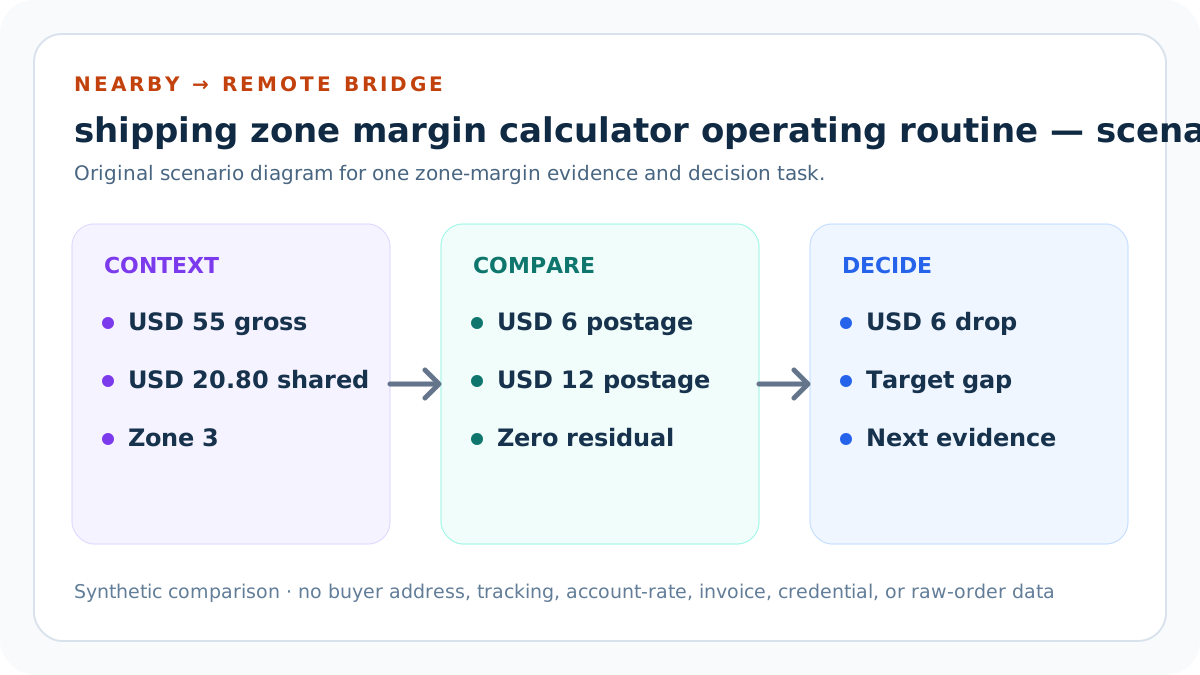
Save gross buyer amount, shared non-postage cost, nearby and remote contribution, margins, shipping funding, target headroom, postage increase and rate, contribution drop and rate, threshold comparison, decision, and issues at full precision beside display values. Preserve the prior packet whenever source or final invoice evidence changes.
Freeze shared fields before a repeatable zone-margin control
Keep quantity, price, direct cost, buyer shipping, finished parcel, packaging, handling, fee base, currency, carrier, service, origin, target, and evidence state fixed. Change only protected destination evidence, zone label, and qualified postage.
If package, service, discount, order mix, or rate type changes, create another scenario. A comparison that changes multiple drivers cannot attribute contribution movement to destination zone.
Separate zone assignment from qualified postage
Use a current official zone resource for the declared origin and destination context, then join it to an eligible public rate, account quote, label, or invoice for the exact carrier, service, package, currency, and effective period.
A zone chart is not automatically a rate table, and a rate table is not a purchased label. Unknown, disputed, expired, adjusted, or missing evidence is not zero and should retain its own version.
Protect buyer destinations and carrier account evidence
Public examples are synthetic. Keep buyer names, delivery addresses, personal ZIP codes, tracking, carrier accounts, negotiated rates, invoices, claims, credentials, messages, and raw orders outside the weekly zone evidence log.
Use aliases, aggregates, redacted pointers, access controls, and approved synthetic fixtures. An authorized reviewer should reproduce the comparison without public personal or contractual data.
Release, observe, correct, and restore the zone asset
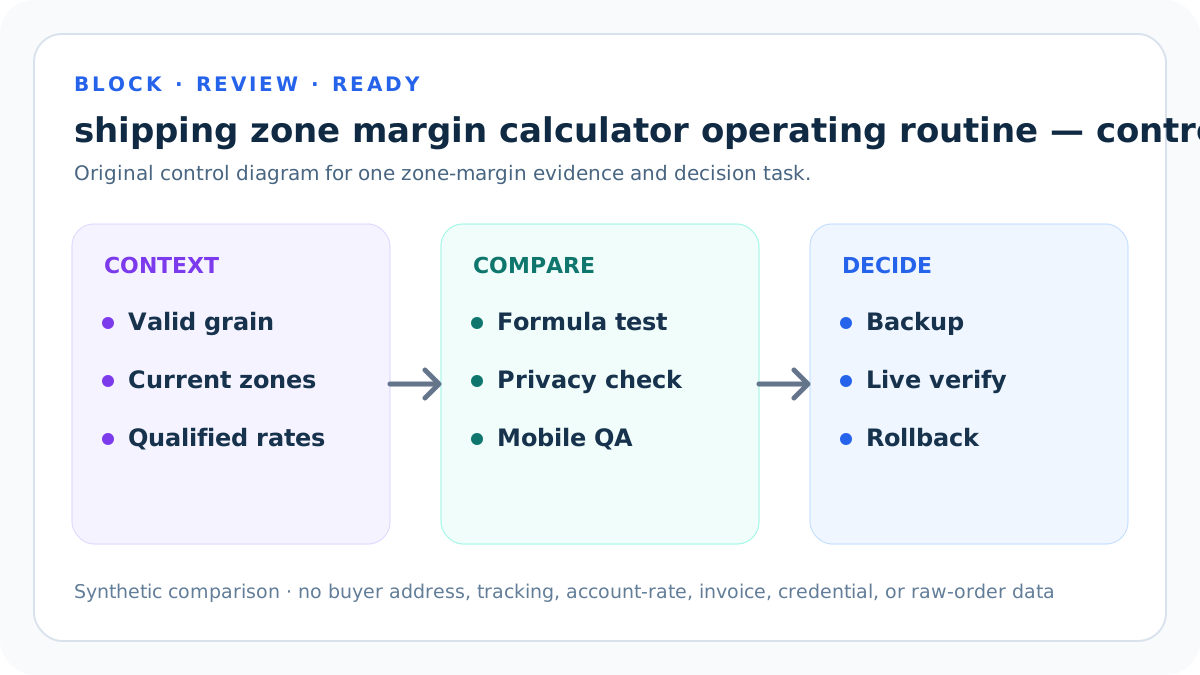
Before release, preserve narrow local and remote backups and a rollback identifier. Run typecheck, focused and full tests, integration, build, content and duplicate audits, SEO, static routes, sources, images, links, mobile, keyboard, privacy, and rollback checks.
After release, verify status, canonical, indexability, schema, answer blocks, images, hub discovery, strict 404, sitemap policy, events, and production scenarios. Record Day 0/7/14/28 evidence and restore on formula, privacy, source, accessibility, routing, content, or health regression.
Build an exception clock
Assign severity, containment deadline, correction due date, reviewer, escalation, and rollback implication.
A favorable later order does not close an unresolved formula or privacy exception.
Build a rotating sample
Rotate origin, package, service, product, nearby, remote, boundary, and adjustment families to avoid reviewing only easy orders.
Preserve selection logic so sampling bias is visible.
Build a close packet
Include source snapshots, calculation identity, tests, changed assets, release identifier, public checks, findings, and signoff.
A checklist tick without exact evidence is not closure.
Cadence
Assign daily, weekly, monthly, and change-triggered work. Deep check 1 stores order and parcel aliases, zone and rate versions, protected pointers, full-precision transformations, output, decision, reviewer, expiry, and correction route. Another reviewer must not guess origin, service, package, fee base, or formula sign.
Find the closest counterexample and state why it invalidates or narrows a repeatable zone-margin control. Preserve competing official, carrier, label, invoice, adjustment, fee, package, target, or scope evidence as named scenarios rather than blending uncertainty.
Ownership
Separate data, calculation, commercial, release, and rollback roles. Deep check 2 stores order and parcel aliases, zone and rate versions, protected pointers, full-precision transformations, output, decision, reviewer, expiry, and correction route. Another reviewer must not guess origin, service, package, fee base, or formula sign.
Find the closest counterexample and state why it invalidates or narrows a repeatable zone-margin control. Preserve competing official, carrier, label, invoice, adjustment, fee, package, target, or scope evidence as named scenarios rather than blending uncertainty.
Sampling
Cover ordinary, boundary, exceptional, and high-exposure cases. Deep check 3 stores order and parcel aliases, zone and rate versions, protected pointers, full-precision transformations, output, decision, reviewer, expiry, and correction route. Another reviewer must not guess origin, service, package, fee base, or formula sign.
Find the closest counterexample and state why it invalidates or narrows a repeatable zone-margin control. Preserve competing official, carrier, label, invoice, adjustment, fee, package, target, or scope evidence as named scenarios rather than blending uncertainty.
Escalation
Define time and severity triggers. Deep check 4 stores order and parcel aliases, zone and rate versions, protected pointers, full-precision transformations, output, decision, reviewer, expiry, and correction route. Another reviewer must not guess origin, service, package, fee base, or formula sign.
Find the closest counterexample and state why it invalidates or narrows a repeatable zone-margin control. Preserve competing official, carrier, label, invoice, adjustment, fee, package, target, or scope evidence as named scenarios rather than blending uncertainty.
Closure
Require independent retest and preserved evidence. Deep check 5 stores order and parcel aliases, zone and rate versions, protected pointers, full-precision transformations, output, decision, reviewer, expiry, and correction route. Another reviewer must not guess origin, service, package, fee base, or formula sign.
Find the closest counterexample and state why it invalidates or narrows a repeatable zone-margin control. Preserve competing official, carrier, label, invoice, adjustment, fee, package, target, or scope evidence as named scenarios rather than blending uncertainty.
Sources and further reading
- Seller Profit Guard methodology: Comparable-grain evidence, deterministic scenarios, validation, correction, release, and rollback.
- Seller Profit Guard data privacy: Local-first boundaries for buyer, destination, tracking, account-rate, invoice, credential, and raw order data.
- USPS PostalPro: Zone Charts: Official USPS shipping-zone resources for origin, destination, mailpiece weight, and applicable zone context; a zone assignment is not itself a shipping price.
- USPS: Domestic Zone Chart: Official dated origin-and-destination ZIP zone lookup; the current page states an effective date of July 1, 2026.
- UPS: Daily Rates and Zone Charts: Official UPS origin-postal-code zone chart and 2026 daily-rate guide access; account daily rates remain distinct from retail rates and individual package estimates.
- FedEx 2026 Service Guide: Official FedEx context for origin-destination zone lookup, rate scope, and changing zone alignments.
Related Seller Profit Guard tools
- Shipping Zone Margin Calculator: Run the browser-local two-zone contribution comparison.
- Dimensional Weight Calculator: Validate the finished parcel's billable-weight assumptions separately.
- Shipping Subsidy Calculator: Inspect buyer shipping and seller-funded postage without a zone bridge.
- Combined Shipping Margin Calculator: Model consolidation economics before changing destination scenarios.
- Methodology: Review evidence, calculation, privacy, testing, correction, and rollback.
- Data Privacy: Keep buyer, destination, tracking, account-rate, invoice, and raw-order data protected.
- Shipping Zone Margin Formula and Inputs: Continue with a distinct shipping-zone formula, example, remote exposure, source, threshold, bridge, routine, interpretation, or audit task.
- Shipping Zone Margin Worked Example: Continue with a distinct shipping-zone formula, example, remote exposure, source, threshold, bridge, routine, interpretation, or audit task.
- Shipping Zone Margin for a Remote Zone: Continue with a distinct shipping-zone formula, example, remote exposure, source, threshold, bridge, routine, interpretation, or audit task.
- Shipping Zone Margin Calculator Mistakes: Continue with a distinct shipping-zone formula, example, remote exposure, source, threshold, bridge, routine, interpretation, or audit task.
- Shipping Zone Margin Data Sources: Continue with a distinct shipping-zone formula, example, remote exposure, source, threshold, bridge, routine, interpretation, or audit task.
Next step: Open the Shipping Zone Margin Calculator.
This is operational planning help, not tax, accounting, legal, financial, or platform-policy advice. Review the Terms and disclaimer, and verify current platform rules and fee assumptions before changing prices.