Return shipping cost worked example for seller-paid returns
Last updated: 2026-07-31
Written and reviewed by Seller Profit Guard Editorial Team.
At a 10% return rate, a USD 6 used label, 12 handling minutes at USD 24 per hour, USD 1 packaging, and USD 0.50 other cost produce USD 12.30 per return. The seller-paid expected reverse-logistics cost is therefore USD 1.23 per comparable outbound order.
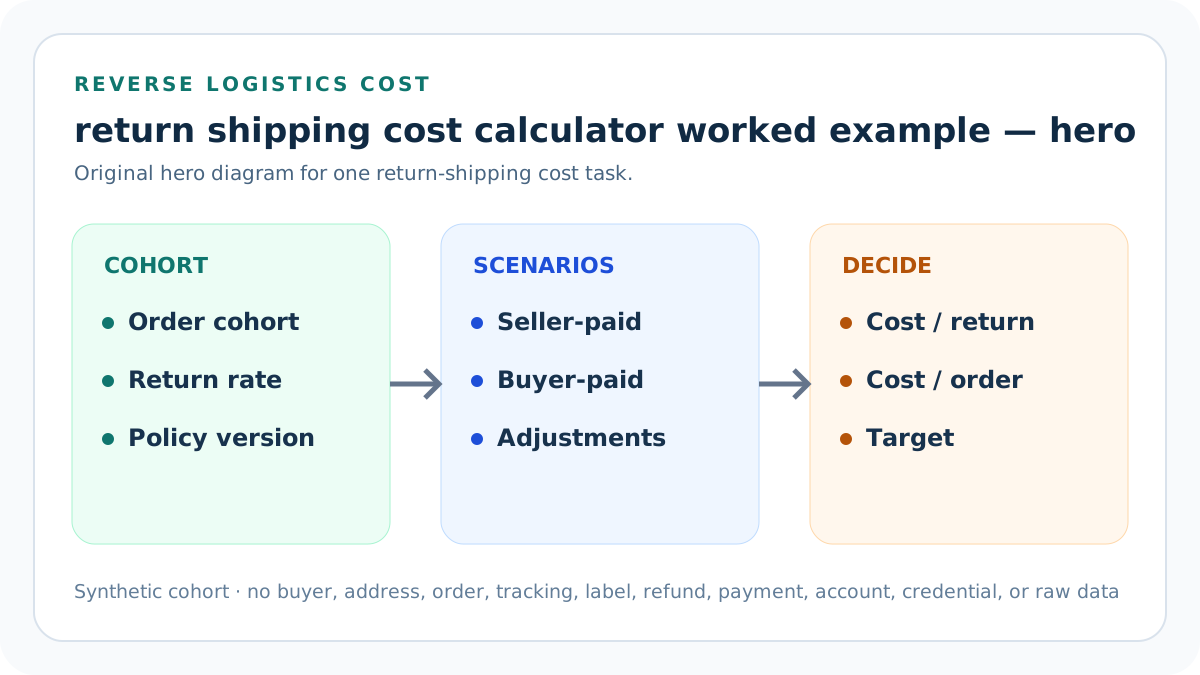
Verify 100-order cohort
Use one hundred comparable fulfilled outbound orders and ten returns at one consistent evidence state. The seller-paid return worksheet stores source, date, owner, product and package grain, market, currency, responsibility, evidence state, transformation, output, decision, and correction route so another reviewer can reproduce a complete seller-paid expected-cost calculation.
Control 2.1 keeps buyer, address, email, message, order, tracking, label, QR code, refund, payment, carrier account, credential, and raw-record content outside the public page. Use aggregate cohorts, aliases, and protected evidence pointers.
Confirm 10% return rate
Divide ten by one hundred before pricing any label or handling work. The seller-paid return worksheet stores source, date, owner, product and package grain, market, currency, responsibility, evidence state, transformation, output, decision, and correction route so another reviewer can reproduce a complete seller-paid expected-cost calculation.
Control 2.2 keeps buyer, address, email, message, order, tracking, label, QR code, refund, payment, carrier account, credential, and raw-record content outside the public page. Use aggregate cohorts, aliases, and protected evidence pointers.
Trace USD 6 used label
Use the final charge for a scanned comparable package rather than an unused-label estimate. The seller-paid return worksheet stores source, date, owner, product and package grain, market, currency, responsibility, evidence state, transformation, output, decision, and correction route so another reviewer can reproduce a complete seller-paid expected-cost calculation.
Control 2.3 keeps buyer, address, email, message, order, tracking, label, QR code, refund, payment, carrier account, credential, and raw-record content outside the public page. Use aggregate cohorts, aliases, and protected evidence pointers.
Derive USD 4.80 labor
Twelve minutes is 0.2 hours; multiply by USD 24 per hour. The seller-paid return worksheet stores source, date, owner, product and package grain, market, currency, responsibility, evidence state, transformation, output, decision, and correction route so another reviewer can reproduce a complete seller-paid expected-cost calculation.
Control 2.4 keeps buyer, address, email, message, order, tracking, label, QR code, refund, payment, carrier account, credential, and raw-record content outside the public page. Use aggregate cohorts, aliases, and protected evidence pointers.
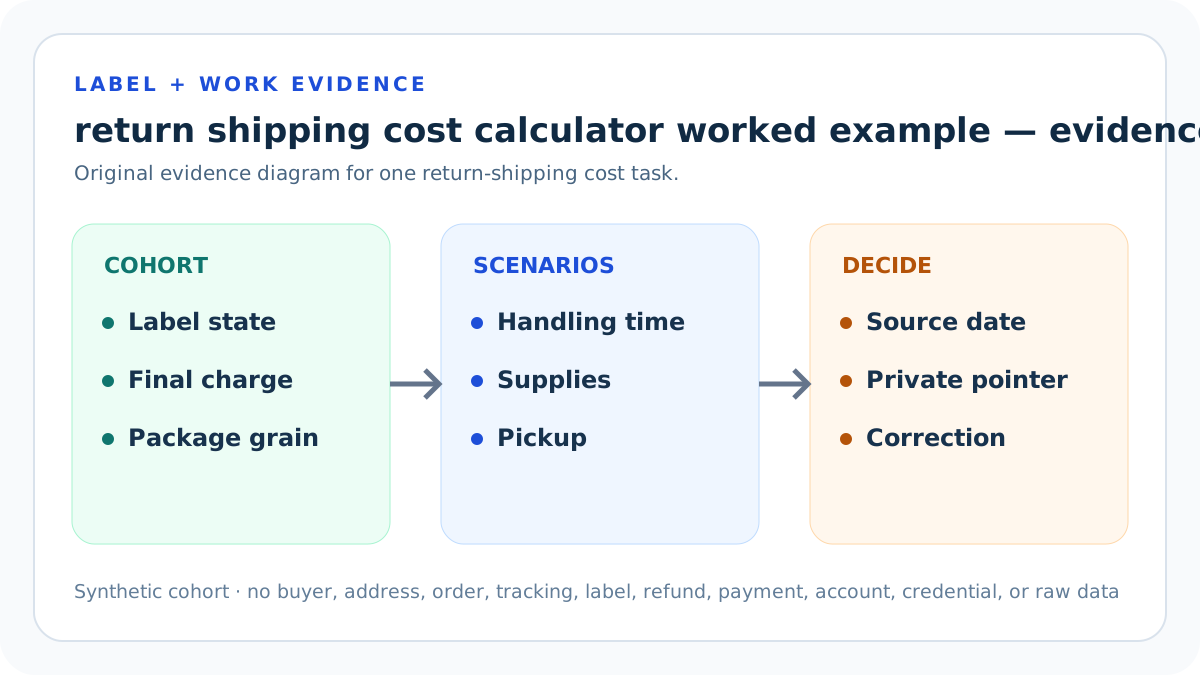
Add USD 1 packaging
Trace consumed return supplies without duplicating outbound packaging. The seller-paid return worksheet stores source, date, owner, product and package grain, market, currency, responsibility, evidence state, transformation, output, decision, and correction route so another reviewer can reproduce a complete seller-paid expected-cost calculation.
Control 2.5 keeps buyer, address, email, message, order, tracking, label, QR code, refund, payment, carrier account, credential, and raw-record content outside the public page. Use aggregate cohorts, aliases, and protected evidence pointers.
Add USD 0.50 other cost
Use a documented pickup, printing, or accessorial allocation. The seller-paid return worksheet stores source, date, owner, product and package grain, market, currency, responsibility, evidence state, transformation, output, decision, and correction route so another reviewer can reproduce a complete seller-paid expected-cost calculation.
Control 2.6 keeps buyer, address, email, message, order, tracking, label, QR code, refund, payment, carrier account, credential, and raw-record content outside the public page. Use aggregate cohorts, aliases, and protected evidence pointers.
Derive USD 12.30 per return
Add label, labor, packaging, and other seller-paid cost before recovery. The seller-paid return worksheet stores source, date, owner, product and package grain, market, currency, responsibility, evidence state, transformation, output, decision, and correction route so another reviewer can reproduce a complete seller-paid expected-cost calculation.
Control 2.7 keeps buyer, address, email, message, order, tracking, label, QR code, refund, payment, carrier account, credential, and raw-record content outside the public page. Use aggregate cohorts, aliases, and protected evidence pointers.
Derive USD 1.23 per order
Multiply USD 12.30 by the 10% cohort return rate. The seller-paid return worksheet stores source, date, owner, product and package grain, market, currency, responsibility, evidence state, transformation, output, decision, and correction route so another reviewer can reproduce a complete seller-paid expected-cost calculation.
Control 2.8 keeps buyer, address, email, message, order, tracking, label, QR code, refund, payment, carrier account, credential, and raw-record content outside the public page. Use aggregate cohorts, aliases, and protected evidence pointers.
Compare the USD 1.50 maximum
Seller-paid cost has USD 0.27 headroom but must still be compared with the buyer-paid scenario. The seller-paid return worksheet stores source, date, owner, product and package grain, market, currency, responsibility, evidence state, transformation, output, decision, and correction route so another reviewer can reproduce a complete seller-paid expected-cost calculation.
Control 2.9 keeps buyer, address, email, message, order, tracking, label, QR code, refund, payment, carrier account, credential, and raw-record content outside the public page. Use aggregate cohorts, aliases, and protected evidence pointers.
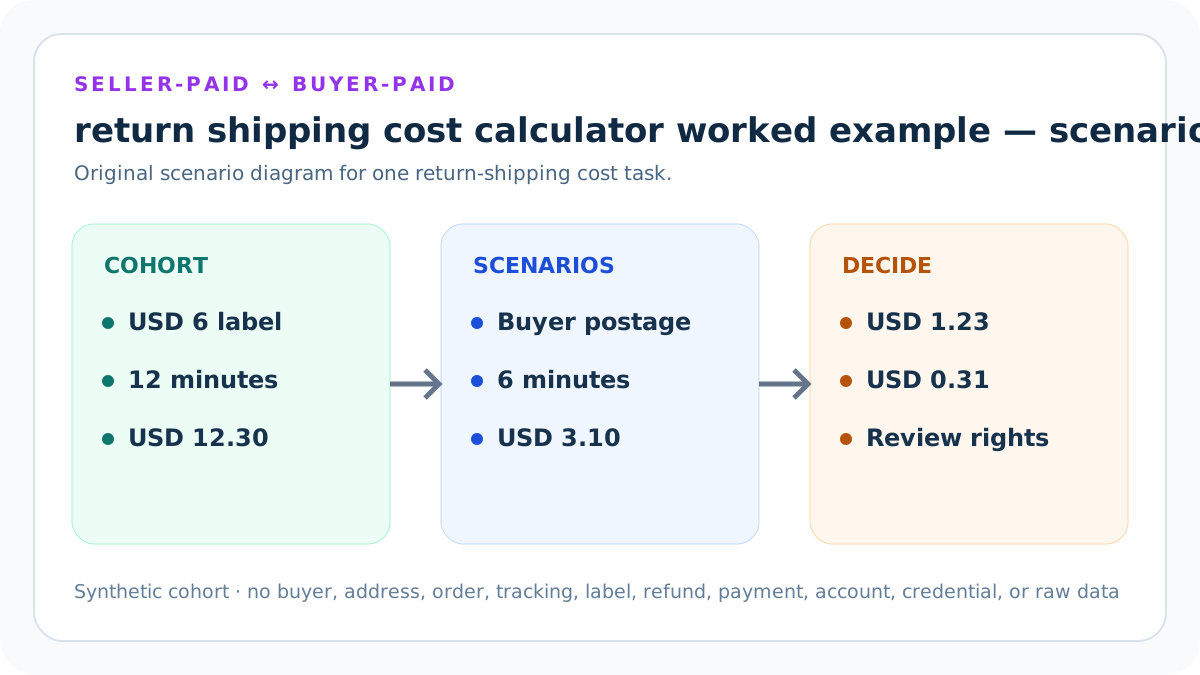
Validate the seller-paid return worksheet before calculation
Check finite values, return rate from 0% through 100%, positive labor rate and seller thresholds, nonnegative cost, customer recovery no greater than seller-paid gross cost, currency, context, evidence month, real source-review date, typed scope, nine confirmations, and declared conflicts. Invalid structure Blocks a complete seller-paid expected-cost calculation.
Unknown label, handling, packaging, recovery, responsibility, billing, market, or cohort evidence is not silent zero. Reconcile, create a named conservative scenario, or stop.
Apply differentiation and label-share gates to a complete seller-paid expected-cost calculation
Compare the absolute scenario difference with the larger absolute expected cost, and compare used-label cost with seller-paid gross return cost before customer recovery. Apply the seller-entered minimum difference and maximum label-share thresholds independently.
These are internal review controls, not customer-rights, legal-responsibility, refund-deduction, marketplace, carrier-pricing, tax, accounting, service, trust, or conversion rules. Version their owner and effective date.
Confirm the dated evidence packet for a complete seller-paid expected-cost calculation
Require explicit yes confirmations for cohort denominator and numerator, seller-paid label billing, seller-paid handling, buyer-paid responsibility, buyer-paid residual handling, adjustments and exceptions, recovery and refund state, source lineage, and planning boundaries.
Record a real YYYY-MM-DD source-review date. A plausible narrative without current owner confirmation is incomplete evidence and Blocks the result.
Keep customer rights and policy authority outside a complete seller-paid expected-cost calculation
The model compares seller-side expected reverse-logistics cost. It does not decide return eligibility, who pays, consumer rights, promises, legal requirements, marketplace compliance, refund deductions, carrier rates, tax, or accounting treatment.
Route operational changes to current authorized policy, platform, market, legal, customer-support, carrier, finance, and product owners.
Reconcile predicted and realized reverse-logistics cost
After cohort closure, record actual return state, label use, final charge, adjustment, handling, supplies, pickup, recovery, exception, and cost without exposing customer data.
Compare complete privacy-safe cohorts with predictions. Keep unused, delayed, disputed, waived, reversed, failed, and exception cases so selection bias does not understate cost.
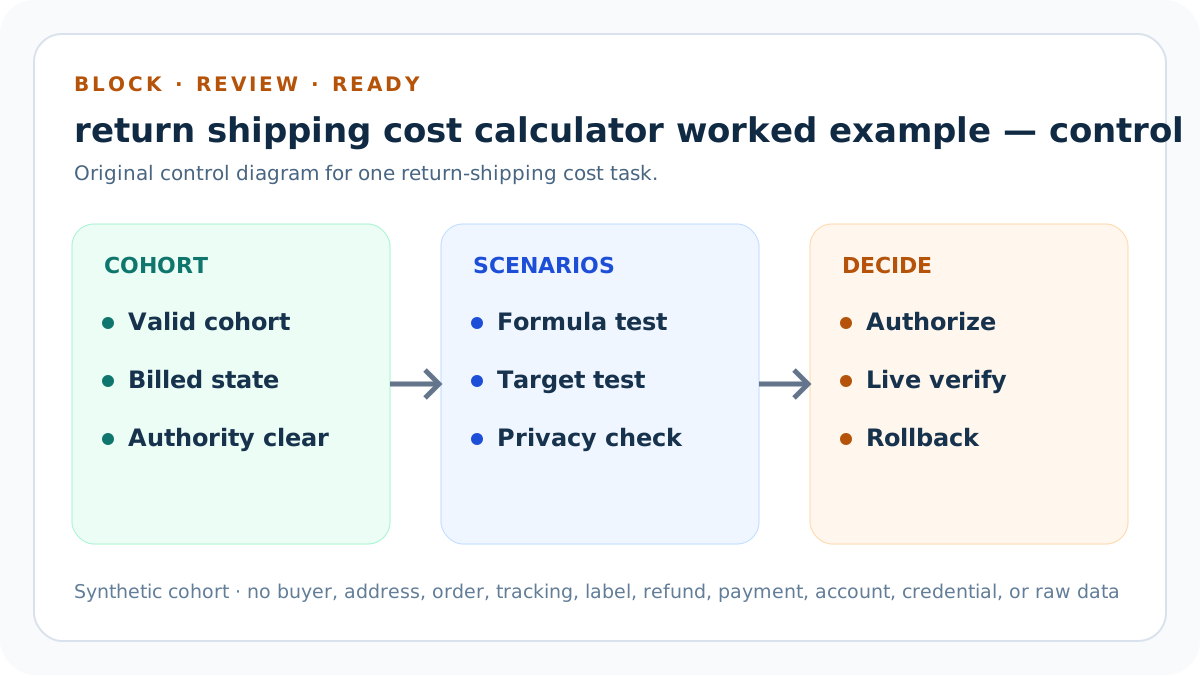
Protect buyer, label, refund, and carrier evidence
Public examples are synthetic. Keep names, addresses, emails, messages, orders, tracking, labels, QR codes, refunds, payments, carrier accounts, credentials, and raw exports outside the seller-paid return worksheet.
Apply authorized access, retention, correction, deletion, and incident-response controls. Public content may describe evidence classes without revealing evidence content.
Release, observe, correct, and restore the seller-paid return worksheet
Preserve narrow local and remote backups plus a rollback identifier. Run typecheck, focused and full tests, integration, build, content and duplicate audits, SEO, routes, images, links, mobile, keyboard, privacy, and restore checks.
After release, verify status, canonical, indexability, schema, answers, tool scenarios, assets, hub discovery, strict 404, sitemap policy, events, and Day 0/7/14/28 evidence. Restore on regression.
Re-run final charge variance
Carrier measurement or adjustment can change the USD 6 label input. Deep review 1 stores the counterexample, source version, full-precision inputs, expected and realized output, authority, reviewer, expiry, correction, and next action.
State what the evidence can and cannot prove about a complete seller-paid expected-cost calculation. Keep competing return-rate, label, package, handling, recovery, exception, responsibility, billing, market, currency, timing, or scope evidence as separate scenarios.
Re-run handling variance
Support escalation can make twelve minutes unrepresentative. Deep review 2 stores the counterexample, source version, full-precision inputs, expected and realized output, authority, reviewer, expiry, correction, and next action.
State what the evidence can and cannot prove about a complete seller-paid expected-cost calculation. Keep competing return-rate, label, package, handling, recovery, exception, responsibility, billing, market, currency, timing, or scope evidence as separate scenarios.
Re-run a higher return rate
Product, season, policy, and market shifts scale expected cost. Deep review 3 stores the counterexample, source version, full-precision inputs, expected and realized output, authority, reviewer, expiry, correction, and next action.
State what the evidence can and cannot prove about a complete seller-paid expected-cost calculation. Keep competing return-rate, label, package, handling, recovery, exception, responsibility, billing, market, currency, timing, or scope evidence as separate scenarios.
Reconcile billed timing
Delayed label charges belong to the originating cohort, not the invoice date alone. Deep review 4 stores the counterexample, source version, full-precision inputs, expected and realized output, authority, reviewer, expiry, correction, and next action.
State what the evidence can and cannot prove about a complete seller-paid expected-cost calculation. Keep competing return-rate, label, package, handling, recovery, exception, responsibility, billing, market, currency, timing, or scope evidence as separate scenarios.
Preserve customer-rights boundary
A cost under target does not authorize seller-paid or buyer-paid responsibility. Deep review 5 stores the counterexample, source version, full-precision inputs, expected and realized output, authority, reviewer, expiry, correction, and next action.
State what the evidence can and cannot prove about a complete seller-paid expected-cost calculation. Keep competing return-rate, label, package, handling, recovery, exception, responsibility, billing, market, currency, timing, or scope evidence as separate scenarios.
Sources and further reading
- Seller Profit Guard methodology: Cohort denominators, expected-cost calculation, evidence versions, privacy, correction, release, and rollback.
- Seller Profit Guard data privacy: Local-first boundaries for buyer, address, message, tracking, label, refund, payment, account, and raw-order data.
- Etsy Help: How to Ship Your Items on Etsy: Official guidance to communicate whether the seller or buyer pays return shipping.
- Shopify Help: Setting up return and cancellation rules: Official free, flat-fee, and customer-purchased return-shipping choices.
- Shopify Help: Buying return labels: Official pay-on-scan, carrier, final-charge, expiration, and billing context.
- Shopify Help: Billing for shipping labels: Official threshold billing, delayed adjustments, carrier measurement, credit, tax, and invoice context.
- USPS: Label Broker: Official QR-code and Post Office return-label printing context.
- UPS: Simplify Customer Returns: Official printed, emailed, barcode, drop-off, and pickup return-service context.
Related Seller Profit Guard tools
- Return Shipping Cost Calculator: Run the browser-local responsibility-scenario cost comparison.
- Restocking Decision Calculator: Compare inventory recovery after receipt and condition grading.
- Return Window Loss Estimator: Estimate wider expected contribution loss from returns.
- Shipping Subsidy Calculator: Model outbound seller-funded shipping separately.
- Methodology: Review evidence, privacy, calculation, correction, release, and rollback.
- Data Privacy: Protect buyer, address, order, tracking, label, refund, payment, account, and credential data.
- Return Shipping Cost Formula and Inputs: Continue with a distinct formula, scenario, error, source, threshold, comparison, routine, interpretation, or audit task.
- Buyer-Paid Return Shipping Scenario: Continue with a distinct formula, scenario, error, source, threshold, comparison, routine, interpretation, or audit task.
- Return Shipping Cost Calculation Mistakes: Continue with a distinct formula, scenario, error, source, threshold, comparison, routine, interpretation, or audit task.
- Return Shipping Cost Data Sources: Continue with a distinct formula, scenario, error, source, threshold, comparison, routine, interpretation, or audit task.
- Return Shipping Cost Decision Thresholds: Continue with a distinct formula, scenario, error, source, threshold, comparison, routine, interpretation, or audit task.
Next step: Open the Return Shipping Cost Calculator.
This is operational planning help, not tax, accounting, legal, financial, or platform-policy advice. Review the Terms and disclaimer, and verify current platform rules and fee assumptions before changing prices.