Restocking decision worked example for a like-new return
Last updated: 2026-07-31
Written and reviewed by Seller Profit Guard Editorial Team.
A USD 40 comparable price with 10% markdown yields USD 36 expected resale price. After fees and shipping, conditional proceeds are USD 28.10. At 80% resale probability, expected recovery before processing is USD 22.88; subtracting USD 8 process cost leaves USD 14.88.
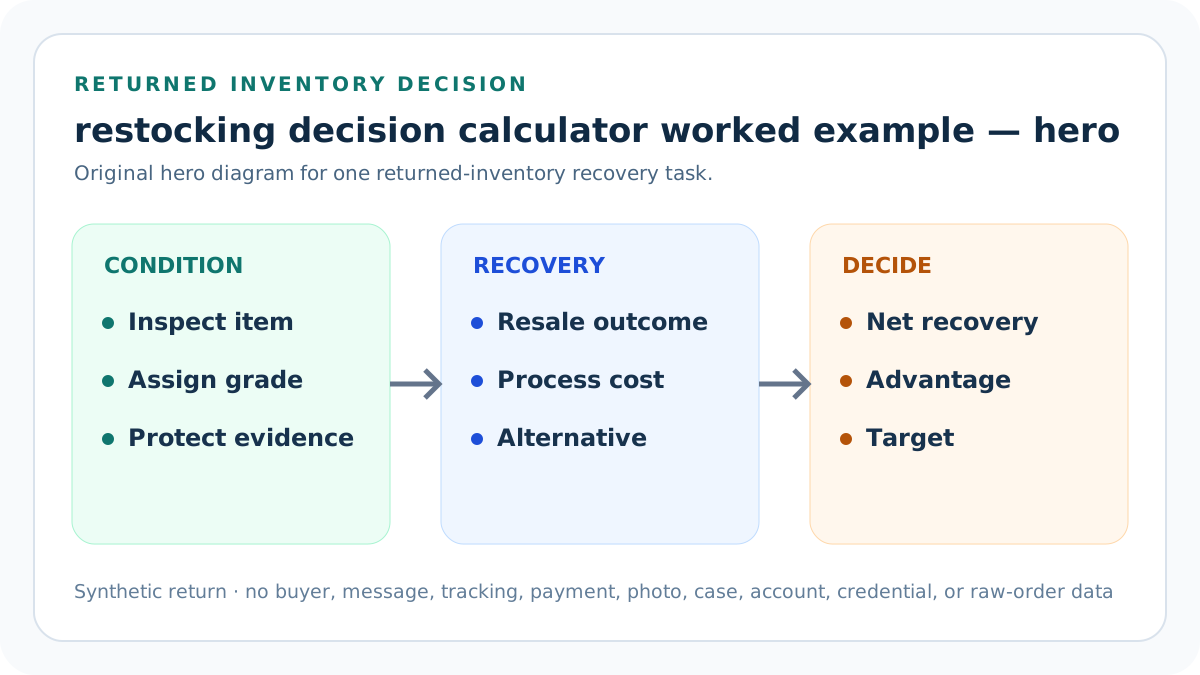
Verify like-new grade
Confirm identity, completeness, function, appearance, hygiene, packaging, safety, and channel eligibility before using the example. The like-new restocking worksheet stores source, date, owner, SKU and condition grain, currency, evidence state, transformation, output, decision, and correction route so another reviewer can reproduce a complete like-new expected recovery decision.
Control 2.1 keeps buyer, address, email, message, tracking, payment, photo, case, return label, account, credential, and raw-order content outside the public page. Use aliases and protected evidence pointers.
Derive USD 36 price
Apply 10% markdown to the USD 40 current comparable price. The like-new restocking worksheet stores source, date, owner, SKU and condition grain, currency, evidence state, transformation, output, decision, and correction route so another reviewer can reproduce a complete like-new expected recovery decision.
Control 2.2 keeps buyer, address, email, message, tracking, payment, photo, case, return label, account, credential, and raw-order content outside the public page. Use aliases and protected evidence pointers.
Derive USD 28.10 conditional proceeds
Subtract USD 3.60 variable fee, USD 0.30 fixed fee, and USD 4 shipping subsidy. The like-new restocking worksheet stores source, date, owner, SKU and condition grain, currency, evidence state, transformation, output, decision, and correction route so another reviewer can reproduce a complete like-new expected recovery decision.
Control 2.3 keeps buyer, address, email, message, tracking, payment, photo, case, return label, account, credential, and raw-order content outside the public page. Use aliases and protected evidence pointers.
Apply 80% resale probability
Weight USD 28.10 conditional proceeds by the declared 30-day success probability. The like-new restocking worksheet stores source, date, owner, SKU and condition grain, currency, evidence state, transformation, output, decision, and correction route so another reviewer can reproduce a complete like-new expected recovery decision.
Control 2.4 keeps buyer, address, email, message, tracking, payment, photo, case, return label, account, credential, and raw-order content outside the public page. Use aliases and protected evidence pointers.
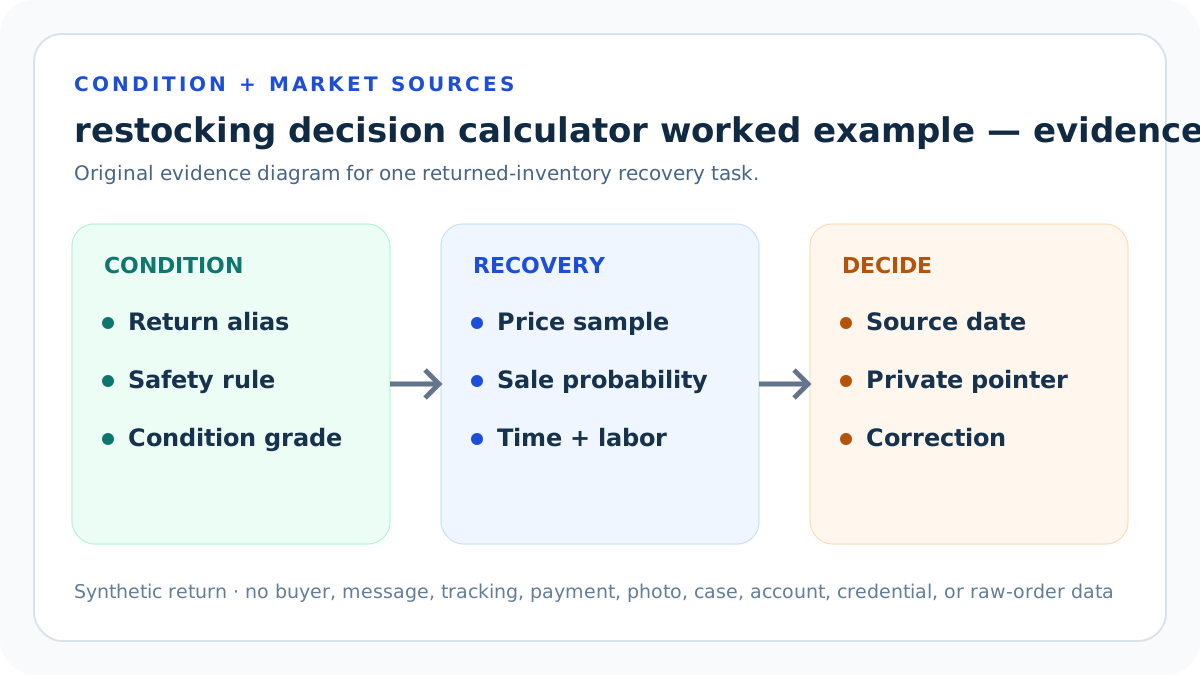
Apply USD 2 failure recovery
Weight the alternative exit if the restocked item misses the decision window. The like-new restocking worksheet stores source, date, owner, SKU and condition grain, currency, evidence state, transformation, output, decision, and correction route so another reviewer can reproduce a complete like-new expected recovery decision.
Control 2.5 keeps buyer, address, email, message, tracking, payment, photo, case, return label, account, credential, and raw-order content outside the public page. Use aliases and protected evidence pointers.
Derive USD 22.88 before processing
Add weighted successful and failed outcomes at full precision. The like-new restocking worksheet stores source, date, owner, SKU and condition grain, currency, evidence state, transformation, output, decision, and correction route so another reviewer can reproduce a complete like-new expected recovery decision.
Control 2.6 keeps buyer, address, email, message, tracking, payment, photo, case, return label, account, credential, and raw-order content outside the public page. Use aliases and protected evidence pointers.
Derive USD 8 process cost
Combine 15 labor minutes at USD 24 per hour, USD 1.50 supplies, and USD 0.50 storage. The like-new restocking worksheet stores source, date, owner, SKU and condition grain, currency, evidence state, transformation, output, decision, and correction route so another reviewer can reproduce a complete like-new expected recovery decision.
Control 2.7 keeps buyer, address, email, message, tracking, payment, photo, case, return label, account, credential, and raw-order content outside the public page. Use aliases and protected evidence pointers.
Derive USD 14.88 net recovery
Subtract process cost from expected pre-processing recovery. The like-new restocking worksheet stores source, date, owner, SKU and condition grain, currency, evidence state, transformation, output, decision, and correction route so another reviewer can reproduce a complete like-new expected recovery decision.
Control 2.8 keeps buyer, address, email, message, tracking, payment, photo, case, return label, account, credential, and raw-order content outside the public page. Use aliases and protected evidence pointers.
Compare USD 3 alternative
Restocking leads by USD 11.88 and clears the USD 10 minimum by USD 4.88. The like-new restocking worksheet stores source, date, owner, SKU and condition grain, currency, evidence state, transformation, output, decision, and correction route so another reviewer can reproduce a complete like-new expected recovery decision.
Control 2.9 keeps buyer, address, email, message, tracking, payment, photo, case, return label, account, credential, and raw-order content outside the public page. Use aliases and protected evidence pointers.
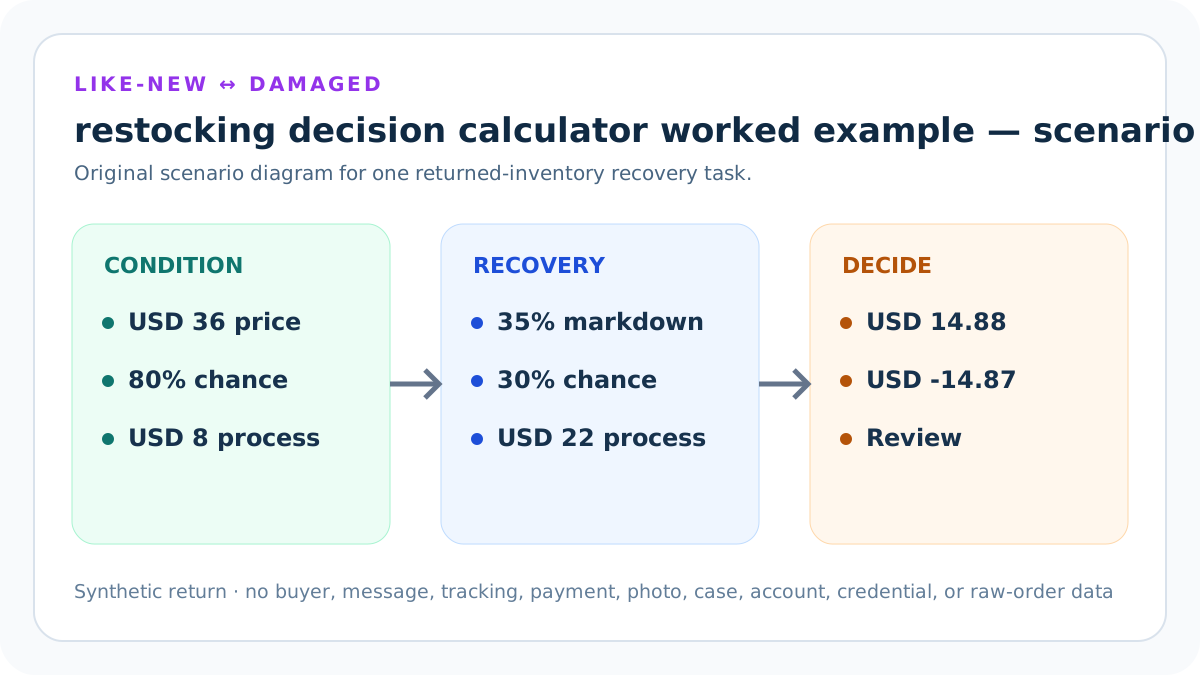
Validate the like-new restocking worksheet before calculation
Check finite values, whole returned quantity, markdown below 100%, probability no more than 100%, fee below 100%, material-advantage and process-cost thresholds, currency, context, evidence month, real source-review date, typed scope, confirmations, and declared conflicts. Invalid structure Blocks a complete like-new expected recovery decision.
Unknown condition, safety, price, probability, labor, storage, failure, or alternative evidence is not silent zero. Inspect, create a named conservative scenario, or stop.
Apply materiality and process-cost gates to a complete like-new expected recovery decision
Restocking must beat the alternative by the seller-entered percentage of the larger absolute recovery result. Labor, supplies, and storage must also remain within the entered share of expected recovery before processing.
These are seller-owned operating thresholds, not marketplace, legal, accounting, statistical-confidence, or product-safety rules. Version the owner, rationale, effective date, product class, and correction history.
Confirm the dated evidence packet for a complete like-new expected recovery decision
Require explicit yes confirmations for returned condition, safety and resale eligibility, comparable price and probability, fees and shipping, labor and supplies, storage window, alternative recovery, source lineage, and planning boundaries.
Record a real YYYY-MM-DD review date. A plausible narrative without owner confirmation is incomplete evidence and Blocks the result.
Keep safety, resale authority, and customer remedy outside a complete like-new expected recovery decision
The model compares expected seller recovery after return receipt. It does not decide buyer rights, refund timing, safety, hygiene, recall status, legal resale eligibility, platform inventory state, warranty, disclosure, tax, or accounting treatment.
Route each operational decision to the current authorized policy, professional, manufacturer, platform, legal, inventory, or finance owner.
Reconcile predicted and realized recovery
After sale or exit, record actual condition, price, fee, shipping, time, labor, supplies, storage, failure, alternative, and correction without exposing buyer data.
Compare complete privacy-safe cohorts with predictions. Keep unsold, delayed, disposed, donated, and reworked items so selection bias does not inflate probability.
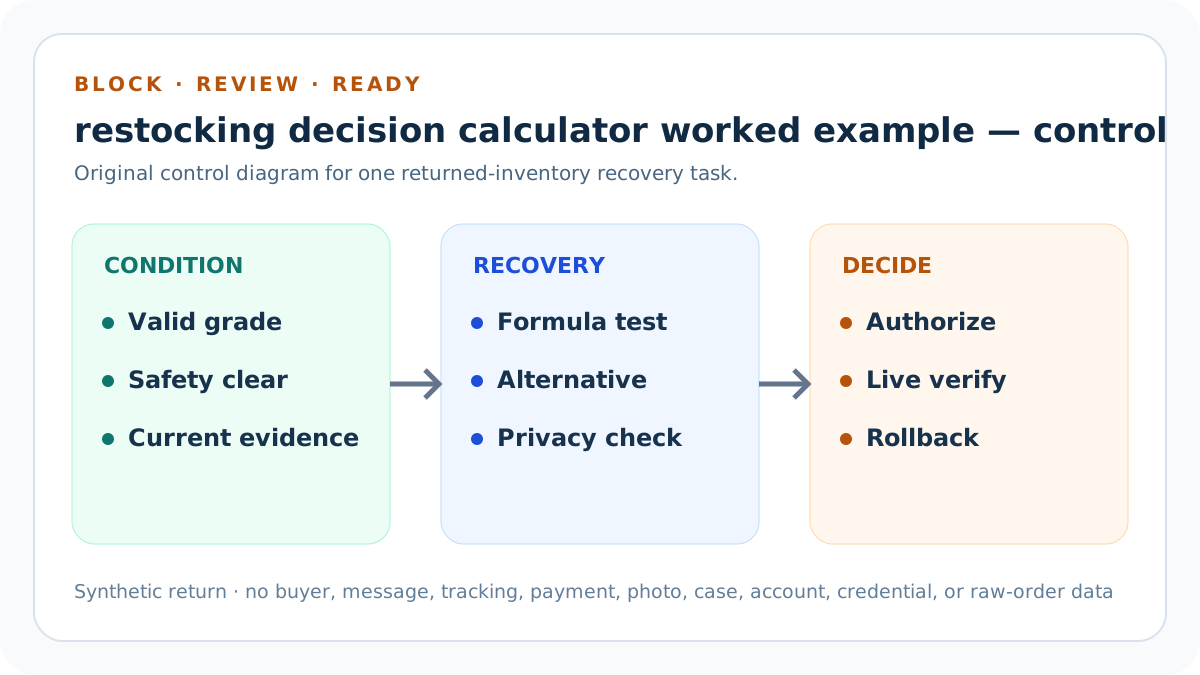
Protect return, buyer, and inventory evidence
Public examples are synthetic. Keep names, addresses, emails, messages, tracking, payments, photos, cases, return labels, receipts, inventory accounts, credentials, and raw orders outside the like-new restocking worksheet.
Apply authorized access, retention, correction, deletion, and incident-response controls. Public content may describe evidence classes without revealing evidence content.
Release, observe, correct, and restore the like-new restocking worksheet
Preserve narrow local and remote backups plus a rollback identifier. Run typecheck, focused and full tests, integration, build, content and duplicate audits, SEO, routes, images, links, mobile, keyboard, privacy, and restore checks.
After release, verify status, canonical, indexability, schema, answers, tool scenarios, assets, hub discovery, strict 404, sitemap policy, events, and Day 0/7/14/28 evidence. Restore on regression.
Re-run a lower price
A weaker comparable price flows through fees and expected recovery without changing condition evidence. Deep review 1 stores the counterexample, source version, full-precision inputs, expected and realized output, authority, reviewer, expiry, correction, and next action.
State what the evidence can and cannot prove about a complete like-new expected recovery decision. Keep competing condition, safety, price, probability, channel, fee, shipping, labor, storage, failure, alternative, currency, timing, or scope evidence as separate scenarios.
Re-run a slower sale
Longer storage and lower within-window probability can erase the like-new advantage. Deep review 2 stores the counterexample, source version, full-precision inputs, expected and realized output, authority, reviewer, expiry, correction, and next action.
State what the evidence can and cannot prove about a complete like-new expected recovery decision. Keep competing condition, safety, price, probability, channel, fee, shipping, labor, storage, failure, alternative, currency, timing, or scope evidence as separate scenarios.
Re-run higher labor
Actual inspection and repackaging time reveals whether owner labor was understated. Deep review 3 stores the counterexample, source version, full-precision inputs, expected and realized output, authority, reviewer, expiry, correction, and next action.
State what the evidence can and cannot prove about a complete like-new expected recovery decision. Keep competing condition, safety, price, probability, channel, fee, shipping, labor, storage, failure, alternative, currency, timing, or scope evidence as separate scenarios.
Reconcile realization
Record actual price, fees, shipping, days, labor, and exit outcome after closure. Deep review 4 stores the counterexample, source version, full-precision inputs, expected and realized output, authority, reviewer, expiry, correction, and next action.
State what the evidence can and cannot prove about a complete like-new expected recovery decision. Keep competing condition, safety, price, probability, channel, fee, shipping, labor, storage, failure, alternative, currency, timing, or scope evidence as separate scenarios.
Preserve the counterexample
A visually like-new item can still be unsafe, incomplete, restricted, or ineligible. Deep review 5 stores the counterexample, source version, full-precision inputs, expected and realized output, authority, reviewer, expiry, correction, and next action.
State what the evidence can and cannot prove about a complete like-new expected recovery decision. Keep competing condition, safety, price, probability, channel, fee, shipping, labor, storage, failure, alternative, currency, timing, or scope evidence as separate scenarios.
Sources and further reading
- Seller Profit Guard methodology: Evidence versions, expected-value calculation, validation, privacy, correction, release, and rollback.
- Seller Profit Guard data privacy: Local-first boundaries for buyer, return, message, tracking, payment, photo, account, and raw-order data.
- Etsy Help: Help a Buyer With a Return: Official return coordination, receipt, label, responsibility, and refund timing context.
- Etsy Help: Refunds, Returns, and Exchanges for Sellers: Official seller-policy, buyer-agreement, legal, and Purchase Protection context.
- Shopify Help: Returns and exchanges: Official return receipt, inspection, refund, exchange, and return-rule context.
- Shopify Help: Adjust inventory quantities: Official distinction between return restock for resellable items and damaged inventory adjustments.
- U.S. CPSC: Stopping the Online Sale of Recalled Products: Official recall-search and recalled-product resale boundary for U.S. consumer products.
Related Seller Profit Guard tools
- Restocking Decision Calculator: Run the browser-local expected recovery comparison.
- Damaged Order Loss Calculator: Measure damage and coverage recovery separately.
- Refund vs Replacement Calculator: Compare customer-remedy paths separately.
- Return Window Loss Estimator: Estimate expected return loss across a wider population.
- Methodology: Review evidence, privacy, calculation, correction, release, and rollback.
- Data Privacy: Protect buyer, return, message, tracking, photo, payment, account, and raw-order data.
- Restocking Decision Formula and Inputs: Continue with a distinct formula, example, condition scenario, error, source, threshold, comparison, routine, interpretation, or audit task.
- Damaged Return Restocking Scenario: Continue with a distinct formula, example, condition scenario, error, source, threshold, comparison, routine, interpretation, or audit task.
- Restocking Decision Calculation Mistakes: Continue with a distinct formula, example, condition scenario, error, source, threshold, comparison, routine, interpretation, or audit task.
- Restocking Decision Data Sources: Continue with a distinct formula, example, condition scenario, error, source, threshold, comparison, routine, interpretation, or audit task.
- Restocking Decision Thresholds: Continue with a distinct formula, example, condition scenario, error, source, threshold, comparison, routine, interpretation, or audit task.
Next step: Open the Restocking Decision Calculator.
This is operational planning help, not tax, accounting, legal, financial, or platform-policy advice. Review the Terms and disclaimer, and verify current platform rules and fee assumptions before changing prices.