Refund vs replacement: low-cost versus high-shipping case
Last updated: 2026-07-31
Written and reviewed by Seller Profit Guard Editorial Team.
In the default case, replacement loses USD 22 versus refund's USD 45. Raising replacement shipping by USD 12 increases replacement loss to USD 34. Replacement remains USD 11 lower, but target headroom moves from USD 3 to USD minus 9.
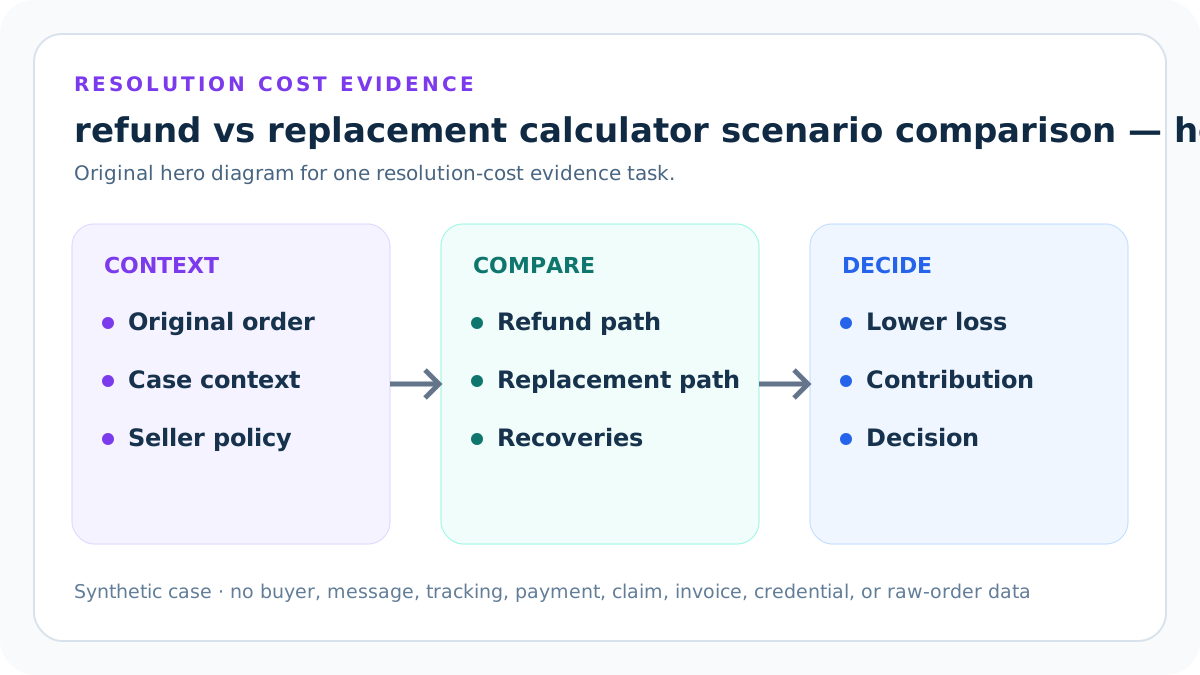
Freeze the low-cost baseline
Bridge control 1: Store case, order, refund, recovery, replacement, policy, target, and evidence versions. This comparison role freezes common fields and attributes each changed dollar. Record case alias, source state, full-precision value, display value, currency, responsibility, reviewer, and review date.
Test the nearest valid boundary and counterexample. State how a mismatch changes an attributed change in lower modeled loss, which evidence resolves it, who owns correction, and whether the packet must be blocked, reviewed, limited, superseded, or restored.
Bridge replacement shipping
Bridge control 2: Change USD 8 to USD 20 with qualified package, carrier, service, destination, and rate evidence. This comparison role freezes common fields and attributes each changed dollar. Record case alias, source state, full-precision value, display value, currency, responsibility, reviewer, and review date.
Test the nearest valid boundary and counterexample. State how a mismatch changes an attributed change in lower modeled loss, which evidence resolves it, who owns correction, and whether the packet must be blocked, reviewed, limited, superseded, or restored.
Bridge replacement loss
Bridge control 3: Move USD 22 to USD 34 through one USD 12 postage step and require zero residual. This comparison role freezes common fields and attributes each changed dollar. Record case alias, source state, full-precision value, display value, currency, responsibility, reviewer, and review date.
Test the nearest valid boundary and counterexample. State how a mismatch changes an attributed change in lower modeled loss, which evidence resolves it, who owns correction, and whether the packet must be blocked, reviewed, limited, superseded, or restored.
Bridge loss difference
Bridge control 4: Move the gap from USD 23 to USD 11 without changing refund loss. This comparison role freezes common fields and attributes each changed dollar. Record case alias, source state, full-precision value, display value, currency, responsibility, reviewer, and review date.
Test the nearest valid boundary and counterexample. State how a mismatch changes an attributed change in lower modeled loss, which evidence resolves it, who owns correction, and whether the packet must be blocked, reviewed, limited, superseded, or restored.
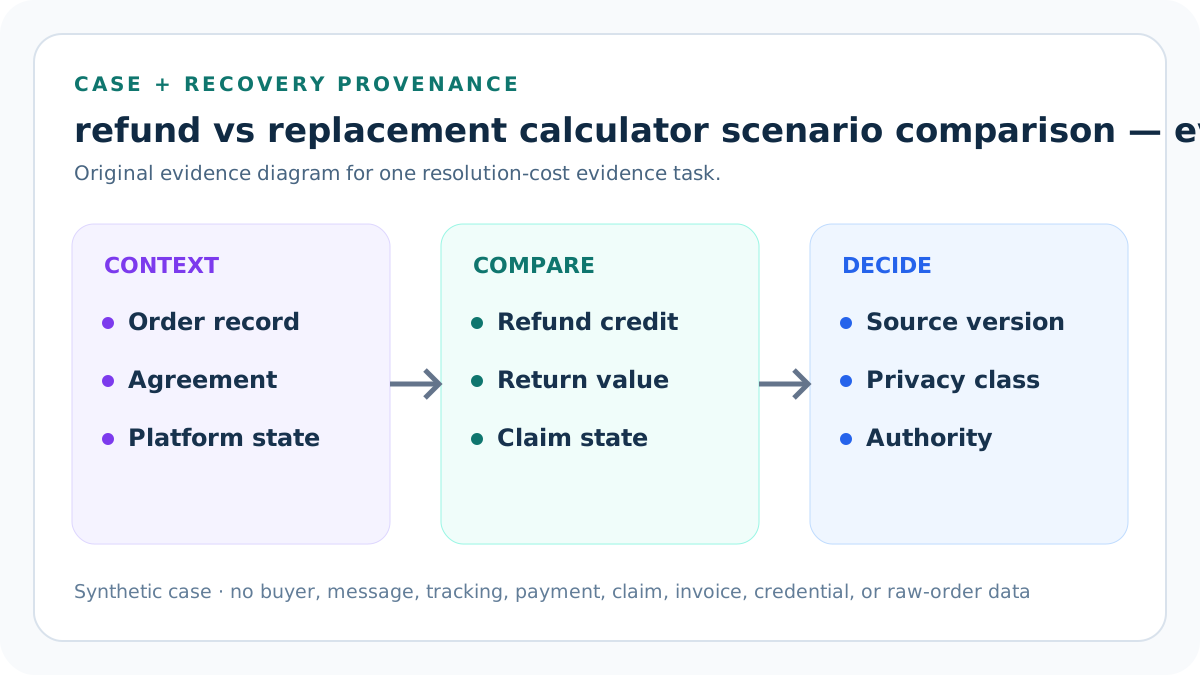
Bridge contribution
Bridge control 5: Move contribution after replacement from USD 1.70 to USD minus 10.30. This comparison role freezes common fields and attributes each changed dollar. Record case alias, source state, full-precision value, display value, currency, responsibility, reviewer, and review date.
Test the nearest valid boundary and counterexample. State how a mismatch changes an attributed change in lower modeled loss, which evidence resolves it, who owns correction, and whether the packet must be blocked, reviewed, limited, superseded, or restored.
Bridge target headroom
Bridge control 6: Move USD 3 to USD minus 9 against the same seller-owned maximum. This comparison role freezes common fields and attributes each changed dollar. Record case alias, source state, full-precision value, display value, currency, responsibility, reviewer, and review date.
Test the nearest valid boundary and counterexample. State how a mismatch changes an attributed change in lower modeled loss, which evidence resolves it, who owns correction, and whether the packet must be blocked, reviewed, limited, superseded, or restored.
Bridge status
Bridge control 7: Explain Ready to Review as a target change only, not a change in remedy authority. This comparison role freezes common fields and attributes each changed dollar. Record case alias, source state, full-precision value, display value, currency, responsibility, reviewer, and review date.
Test the nearest valid boundary and counterexample. State how a mismatch changes an attributed change in lower modeled loss, which evidence resolves it, who owns correction, and whether the packet must be blocked, reviewed, limited, superseded, or restored.
Bridge next action
Bridge control 8: Route the postage driver to package, service, coverage, timing, and exposure evidence separately. This comparison role freezes common fields and attributes each changed dollar. Record case alias, source state, full-precision value, display value, currency, responsibility, reviewer, and review date.
Test the nearest valid boundary and counterexample. State how a mismatch changes an attributed change in lower modeled loss, which evidence resolves it, who owns correction, and whether the packet must be blocked, reviewed, limited, superseded, or restored.
Use the resolution scenario bridge with one protected case packet
Open the calculator only after the resolution scenario bridge identifies order alias, original economics, refund cash, return cost, processing, credits, recovered inventory, replacement quantity and costs, recovery, buyer payment, absolute target, lower-loss-share maximum, scenario-difference minimum, source review date, nine evidence confirmations, currency, policy and case context, month, complete scope, and issues.
Save original contribution, both incremental losses, both remaining contributions, lower scenario, absolute difference, normalized difference rate, lower-loss share, threshold headroom, decision, and issues at full precision. Preserve every version when policy, posting, inspection, claim, or invoice evidence changes.
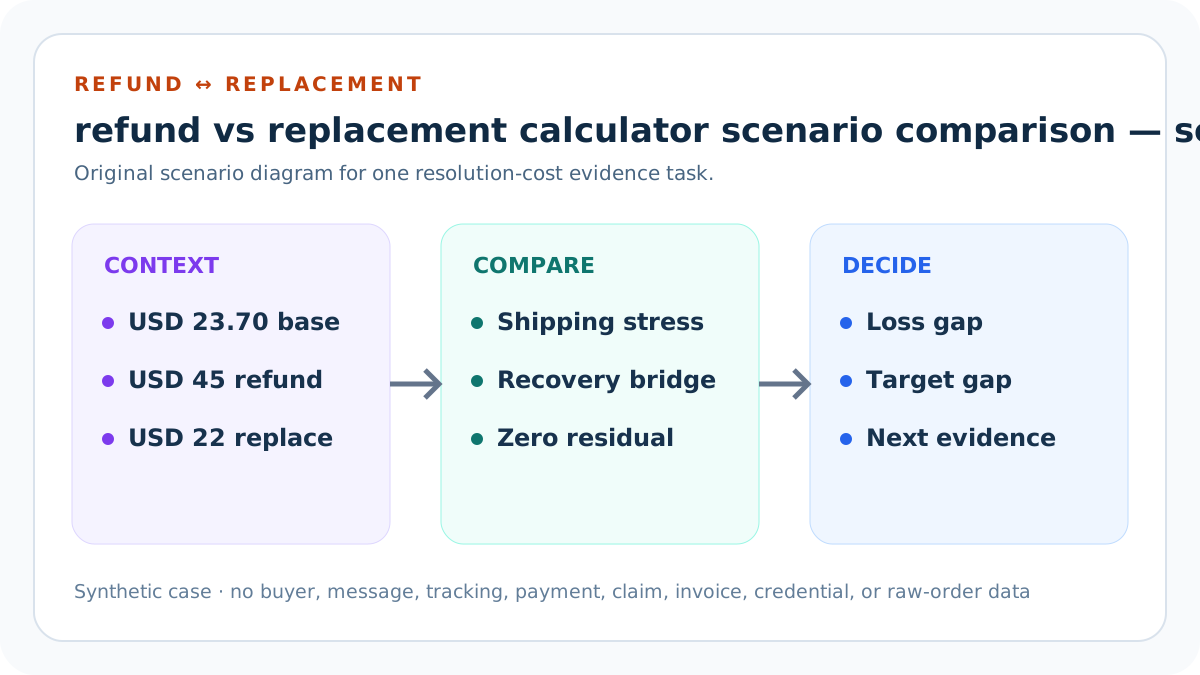
Separate cost review from remedy authority before an attributed change in lower modeled loss
Use the model to compare declared seller costs only. Route buyer rights, shop obligations, platform eligibility, case instructions, agreement, consumer law, coverage, timing, and actual remedy to the authorized evidence and decision process.
A lower modeled loss never permits an inaccurate refund, unsupported refusal, delayed obligation, unwanted replacement, or customer-facing promise.
Version expected, approved, and received recovery
Keep fee credits, inventory recovery, carrier claims, insurance, platform coverage, supplier credits, and buyer payments in separate evidence states with amount, currency, source, date, owner, and dispute status.
Expected recovery is not received cash. Unknown, denied, expired, disputed, or missing recovery is not zero and cannot silently retain Ready.
Protect buyer, message, payment, and case records
Public examples are synthetic. Keep names, addresses, emails, messages, tracking, case records, payment data, claims, accounts, invoices, credentials, photos, and raw orders outside the resolution scenario bridge.
Use aliases, aggregates, redacted pointers, access controls, and approved fixtures. An authorized reviewer should reproduce totals without public personal data.
Release, observe, correct, and restore the resolution asset
Before release, preserve narrow local and remote backups and a rollback identifier. Run typecheck, focused and full tests, integration, build, content and duplicate audits, SEO, routes, sources, images, links, mobile, keyboard, privacy, and restore checks.
After release, verify status, canonical, indexability, schema, answer blocks, images, hub discovery, strict 404, sitemap policy, events, and production scenarios. Record Day 0/7/14/28 evidence and restore on formula, privacy, source, accessibility, routing, content, or health regression.
Build a waterfall
Show baseline loss, shipping change, residual, final loss, gap, headroom, and status.
Require zero unexplained residual.
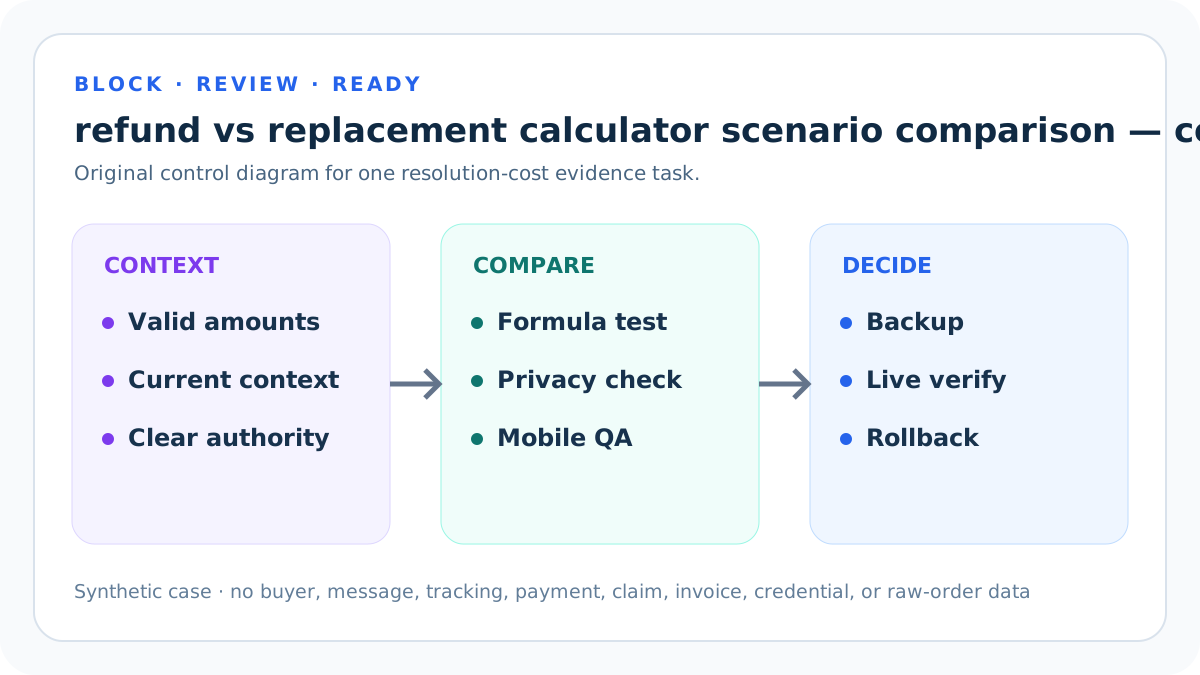
Build controlled counterfactuals
Change product cost, fee credit, inventory recovery, claim recovery, and buyer payment one at a time.
Do not blend them into the shipping bridge.
Compare evidence states
Use quote-to-quote, label-to-label, or final-to-final comparisons.
Label mixed states provisional.
Common grain
Prove frozen fields. Deep check 1 stores case and order aliases, source versions, protected pointers, full-precision transformations, output, decision, authority, reviewer, expiry, and correction route. Another reviewer must not guess refund scope, recovery state, replacement grain, or formula sign.
Find the closest counterexample and state why it invalidates or narrows an attributed change in lower modeled loss. Preserve competing policy, agreement, platform, payment, return, inventory, replacement, claim, fee, target, or scope evidence as named scenarios rather than blending uncertainty.
Attribution
Explain every changed dollar once. Deep check 2 stores case and order aliases, source versions, protected pointers, full-precision transformations, output, decision, authority, reviewer, expiry, and correction route. Another reviewer must not guess refund scope, recovery state, replacement grain, or formula sign.
Find the closest counterexample and state why it invalidates or narrows an attributed change in lower modeled loss. Preserve competing policy, agreement, platform, payment, return, inventory, replacement, claim, fee, target, or scope evidence as named scenarios rather than blending uncertainty.
Residual
Require zero unexplained difference. Deep check 3 stores case and order aliases, source versions, protected pointers, full-precision transformations, output, decision, authority, reviewer, expiry, and correction route. Another reviewer must not guess refund scope, recovery state, replacement grain, or formula sign.
Find the closest counterexample and state why it invalidates or narrows an attributed change in lower modeled loss. Preserve competing policy, agreement, platform, payment, return, inventory, replacement, claim, fee, target, or scope evidence as named scenarios rather than blending uncertainty.
Evidence state
Compare like with like. Deep check 4 stores case and order aliases, source versions, protected pointers, full-precision transformations, output, decision, authority, reviewer, expiry, and correction route. Another reviewer must not guess refund scope, recovery state, replacement grain, or formula sign.
Find the closest counterexample and state why it invalidates or narrows an attributed change in lower modeled loss. Preserve competing policy, agreement, platform, payment, return, inventory, replacement, claim, fee, target, or scope evidence as named scenarios rather than blending uncertainty.
Authority
Keep cost movement separate from remedy selection. Deep check 5 stores case and order aliases, source versions, protected pointers, full-precision transformations, output, decision, authority, reviewer, expiry, and correction route. Another reviewer must not guess refund scope, recovery state, replacement grain, or formula sign.
Find the closest counterexample and state why it invalidates or narrows an attributed change in lower modeled loss. Preserve competing policy, agreement, platform, payment, return, inventory, replacement, claim, fee, target, or scope evidence as named scenarios rather than blending uncertainty.
Sources and further reading
- Seller Profit Guard methodology: Comparable case evidence, deterministic scenarios, validation, correction, release, and rollback.
- Seller Profit Guard data privacy: Local-first boundaries for buyer, message, tracking, case, claim, payment, and raw order data.
- Etsy Help: Refunds, Returns, and Exchanges for Sellers: Official Etsy context for seller policies, agreements, replacement proof, and Purchase Protection boundaries.
- Etsy Help: Issue a Full or Partial Refund: Official Etsy refund workflow and fee-credit context.
- Etsy Help: Help a Buyer With a Return: Official Etsy return coordination, label responsibility, receipt, and refund timing.
- Shopify Help: Refunding Orders: Official Shopify full and partial refund, shipping-refund, payment-method, permission, restocking, fee-treatment, and irreversible-action considerations.
Related Seller Profit Guard tools
- Refund vs Replacement Calculator: Run the browser-local two-resolution cost comparison.
- Return Window Loss Estimator: Model expected return loss across an order population.
- Refund Fee Reconciliation Calculator: Reconcile actual refund and fee-credit records after processing.
- Shipping Zone Margin Calculator: Test replacement postage exposure separately.
- Methodology: Review evidence, calculation, privacy, testing, correction, and rollback.
- Data Privacy: Keep buyer, message, tracking, case, payment, and raw-order data protected.
- Refund vs Replacement Formula and Inputs: Continue with a distinct resolution formula, example, shipping stress, source, threshold, comparison, routine, interpretation, or audit task.
- Refund vs Replacement Worked Example: Continue with a distinct resolution formula, example, shipping stress, source, threshold, comparison, routine, interpretation, or audit task.
- Refund vs Replacement With High Shipping: Continue with a distinct resolution formula, example, shipping stress, source, threshold, comparison, routine, interpretation, or audit task.
- Refund vs Replacement Calculator Mistakes: Continue with a distinct resolution formula, example, shipping stress, source, threshold, comparison, routine, interpretation, or audit task.
- Refund vs Replacement Data Sources: Continue with a distinct resolution formula, example, shipping stress, source, threshold, comparison, routine, interpretation, or audit task.
Next step: Open the Refund vs Replacement Calculator.
This is operational planning help, not tax, accounting, legal, financial, or platform-policy advice. Review the Terms and disclaimer, and verify current platform rules and fee assumptions before changing prices.