Monthly versus seasonal purchase quantity
Last updated: 2026-07-31
Written and reviewed by Seller Profit Guard Editorial Team.
Normalize SKU, location, unit, forecast method, inventory timestamp, inbound eligibility, safety-stock policy, MOQ, and case pack before comparing. The monthly fixture orders 120 with no overage; the seasonal fixture orders 504 with four units of rounding overage. The comparison exposes why the order changes but does not prove either demand plan is correct.
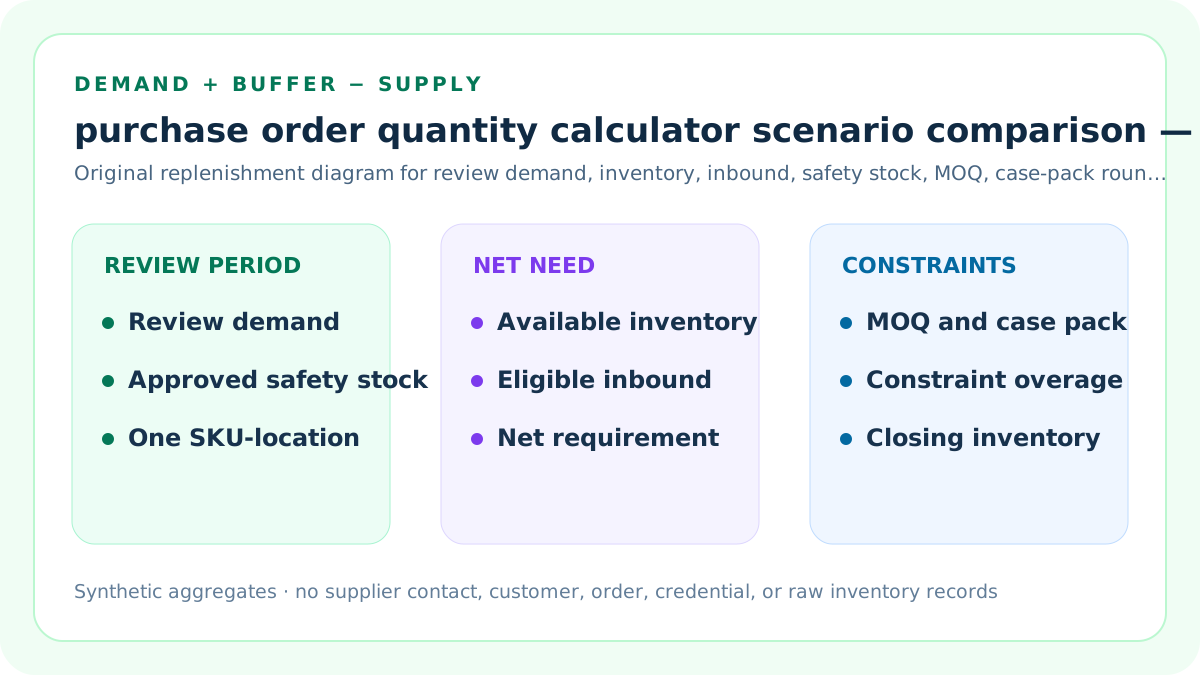
Normalize SKU and location
Compare one identical inventory grain. The two-period quantity matrix records horizon, SKU, location, unit, forecast version, inventory timestamp, inbound reference, constraint source, owner, reviewer, exception, and prior accepted value needed for a normalized replenishment comparison.
No mixed sites. At checkpoint 1, reperform both fixtures, identify the changed demand, inventory, inbound, safety-stock, MOQ, case-pack, threshold, or evidence term, and state which forecasting, sourcing, purchasing, accounting, tax, compliance, or privacy conclusion remains outside the calculator.
Normalize unit
Convert cases, packs, and pieces once. The two-period quantity matrix records horizon, SKU, location, unit, forecast version, inventory timestamp, inbound reference, constraint source, owner, reviewer, exception, and prior accepted value needed for a normalized replenishment comparison.
Avoid scale errors. At checkpoint 2, reperform both fixtures, identify the changed demand, inventory, inbound, safety-stock, MOQ, case-pack, threshold, or evidence term, and state which forecasting, sourcing, purchasing, accounting, tax, compliance, or privacy conclusion remains outside the calculator.
Normalize horizon logic
State monthly and seasonal relationship. The two-period quantity matrix records horizon, SKU, location, unit, forecast version, inventory timestamp, inbound reference, constraint source, owner, reviewer, exception, and prior accepted value needed for a normalized replenishment comparison.
Avoid double demand. At checkpoint 3, reperform both fixtures, identify the changed demand, inventory, inbound, safety-stock, MOQ, case-pack, threshold, or evidence term, and state which forecasting, sourcing, purchasing, accounting, tax, compliance, or privacy conclusion remains outside the calculator.
Normalize forecast method
Use comparable evidence quality and uncertainty. The two-period quantity matrix records horizon, SKU, location, unit, forecast version, inventory timestamp, inbound reference, constraint source, owner, reviewer, exception, and prior accepted value needed for a normalized replenishment comparison.
Do not compare labels only. At checkpoint 4, reperform both fixtures, identify the changed demand, inventory, inbound, safety-stock, MOQ, case-pack, threshold, or evidence term, and state which forecasting, sourcing, purchasing, accounting, tax, compliance, or privacy conclusion remains outside the calculator.
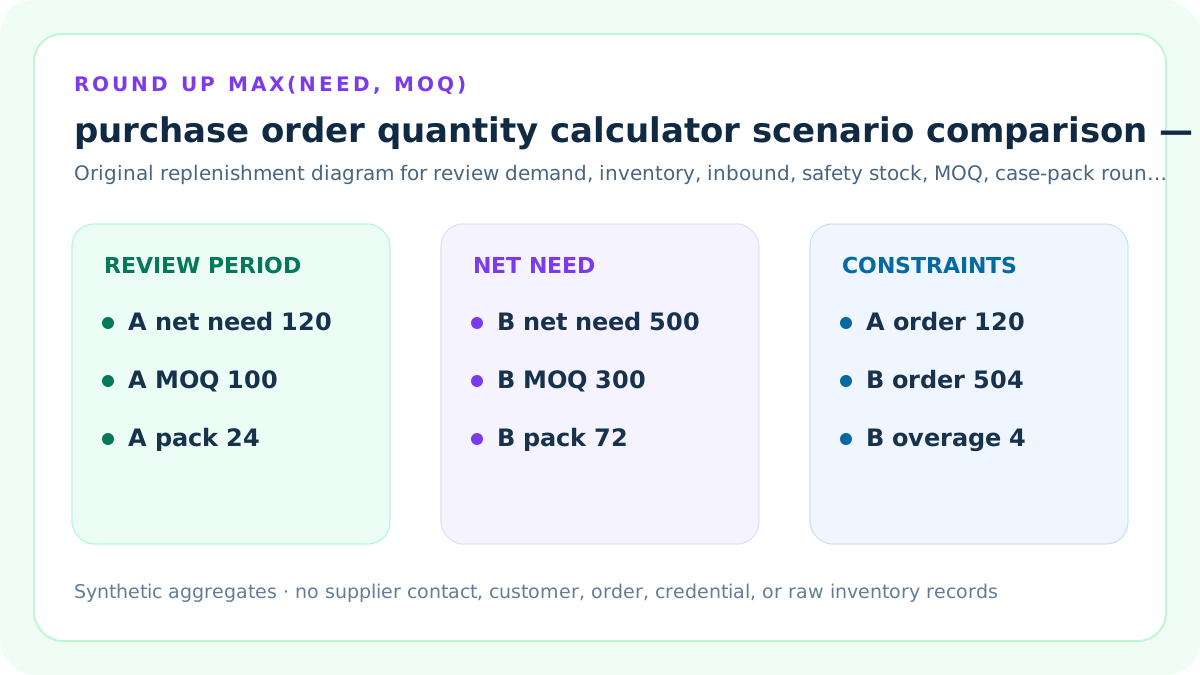
Normalize inventory state
Use Available at documented timestamps. The two-period quantity matrix records horizon, SKU, location, unit, forecast version, inventory timestamp, inbound reference, constraint source, owner, reviewer, exception, and prior accepted value needed for a normalized replenishment comparison.
Not On hand. At checkpoint 5, reperform both fixtures, identify the changed demand, inventory, inbound, safety-stock, MOQ, case-pack, threshold, or evidence term, and state which forecasting, sourcing, purchasing, accounting, tax, compliance, or privacy conclusion remains outside the calculator.
Normalize inbound eligibility
Apply the same arrival and uniqueness rules. The two-period quantity matrix records horizon, SKU, location, unit, forecast version, inventory timestamp, inbound reference, constraint source, owner, reviewer, exception, and prior accepted value needed for a normalized replenishment comparison.
Exclude late supply. At checkpoint 6, reperform both fixtures, identify the changed demand, inventory, inbound, safety-stock, MOQ, case-pack, threshold, or evidence term, and state which forecasting, sourcing, purchasing, accounting, tax, compliance, or privacy conclusion remains outside the calculator.
Compare net need
A is 120; B is 500. The two-period quantity matrix records horizon, SKU, location, unit, forecast version, inventory timestamp, inbound reference, constraint source, owner, reviewer, exception, and prior accepted value needed for a normalized replenishment comparison.
Demand drives scale. At checkpoint 7, reperform both fixtures, identify the changed demand, inventory, inbound, safety-stock, MOQ, case-pack, threshold, or evidence term, and state which forecasting, sourcing, purchasing, accounting, tax, compliance, or privacy conclusion remains outside the calculator.
Compare constraints
A stays 120; B rounds to 504. The two-period quantity matrix records horizon, SKU, location, unit, forecast version, inventory timestamp, inbound reference, constraint source, owner, reviewer, exception, and prior accepted value needed for a normalized replenishment comparison.
Pack drives overage. At checkpoint 8, reperform both fixtures, identify the changed demand, inventory, inbound, safety-stock, MOQ, case-pack, threshold, or evidence term, and state which forecasting, sourcing, purchasing, accounting, tax, compliance, or privacy conclusion remains outside the calculator.
Compare closing stock
A closes at 40; B at 84. The two-period quantity matrix records horizon, SKU, location, unit, forecast version, inventory timestamp, inbound reference, constraint source, owner, reviewer, exception, and prior accepted value needed for a normalized replenishment comparison.
Safety plus rounding. At checkpoint 9, reperform both fixtures, identify the changed demand, inventory, inbound, safety-stock, MOQ, case-pack, threshold, or evidence term, and state which forecasting, sourcing, purchasing, accounting, tax, compliance, or privacy conclusion remains outside the calculator.
Compare authority
Neither result creates or approves a PO. The two-period quantity matrix records horizon, SKU, location, unit, forecast version, inventory timestamp, inbound reference, constraint source, owner, reviewer, exception, and prior accepted value needed for a normalized replenishment comparison.
Route decisions. At checkpoint 10, reperform both fixtures, identify the changed demand, inventory, inbound, safety-stock, MOQ, case-pack, threshold, or evidence term, and state which forecasting, sourcing, purchasing, accounting, tax, compliance, or privacy conclusion remains outside the calculator.
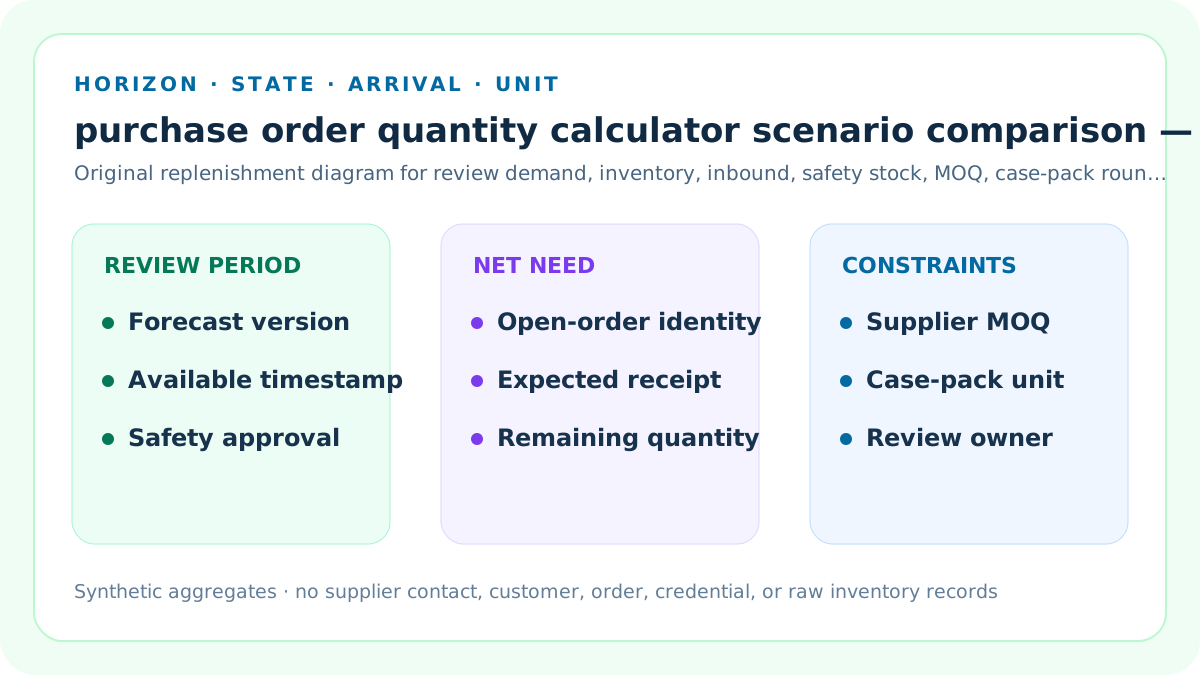
Monthly vs Seasonal Purchase Quantity: scope and forecast integrity control
Use one declared SKU-location review period and one approved demand-plan version. Control 1 defines a pass condition, evidence owner, independent reviewer, correction deadline, sensitivity range, monitoring signal, stop condition, and restoration trigger for a normalized replenishment comparison.
Mixed horizons block. Apply it while keeping horizon, demand plan, inventory state, eligible inbound, safety stock, MOQ, case pack, overage, threshold, and purchase authority separate.
Monthly vs Seasonal Purchase Quantity: inventory and inbound lineage control
Use reconciled Available inventory and unique eligible inbound expected inside the horizon. Control 2 defines a pass condition, evidence owner, independent reviewer, correction deadline, sensitivity range, monitoring signal, stop condition, and restoration trigger for a normalized replenishment comparison.
Unsupported supply reviews. Apply it while keeping horizon, demand plan, inventory state, eligible inbound, safety stock, MOQ, case pack, overage, threshold, and purchase authority separate.
Monthly vs Seasonal Purchase Quantity: constraint arithmetic control
Net demand and supply before applying MOQ and case-pack rounding, then expose every overage unit. Control 3 defines a pass condition, evidence owner, independent reviewer, correction deadline, sensitivity range, monitoring signal, stop condition, and restoration trigger for a normalized replenishment comparison.
Downward rounding blocks. Apply it while keeping horizon, demand plan, inventory state, eligible inbound, safety stock, MOQ, case pack, overage, threshold, and purchase authority separate.
Monthly vs Seasonal Purchase Quantity: decision authority control
Separate quantity planning from forecasting, reorder timing, safety-stock optimization, EOQ, supplier selection, PO creation, approval, and payment. Control 4 defines a pass condition, evidence owner, independent reviewer, correction deadline, sensitivity range, monitoring signal, stop condition, and restoration trigger for a normalized replenishment comparison.
Arithmetic cannot authorize. Apply it while keeping horizon, demand plan, inventory state, eligible inbound, safety stock, MOQ, case pack, overage, threshold, and purchase authority separate.
Monthly vs Seasonal Purchase Quantity: privacy and restoration control
Use aggregates, protect supplier and raw records, monitor actuals, retain the prior plan, and define rollback. Control 5 defines a pass condition, evidence owner, independent reviewer, correction deadline, sensitivity range, monitoring signal, stop condition, and restoration trigger for a normalized replenishment comparison.
Public private data is prohibited. Apply it while keeping horizon, demand plan, inventory state, eligible inbound, safety stock, MOQ, case pack, overage, threshold, and purchase authority separate.
Normalize SKU and location: quantity lab 1
Recalculate both replenishment fixtures. Compare one identical inventory grain. Change one input only, preserve the remaining scope and evidence, and record net requirement, constraint floor, recommended quantity, pack count, overage, projected closing inventory, threshold result, and unresolved authority.
No mixed sites. Test low, base, and high demand, Available, inbound, buffer, MOQ, case-pack, and threshold values. Explain the dominant change and protected evidence still required before any supplier, requisition, PO, approval, or payment action.
Normalize unit: quantity lab 2
Recalculate both replenishment fixtures. Convert cases, packs, and pieces once. Change one input only, preserve the remaining scope and evidence, and record net requirement, constraint floor, recommended quantity, pack count, overage, projected closing inventory, threshold result, and unresolved authority.
Avoid scale errors. Test low, base, and high demand, Available, inbound, buffer, MOQ, case-pack, and threshold values. Explain the dominant change and protected evidence still required before any supplier, requisition, PO, approval, or payment action.
Normalize horizon logic: quantity lab 3
Recalculate both replenishment fixtures. State monthly and seasonal relationship. Change one input only, preserve the remaining scope and evidence, and record net requirement, constraint floor, recommended quantity, pack count, overage, projected closing inventory, threshold result, and unresolved authority.
Avoid double demand. Test low, base, and high demand, Available, inbound, buffer, MOQ, case-pack, and threshold values. Explain the dominant change and protected evidence still required before any supplier, requisition, PO, approval, or payment action.
Normalize forecast method: quantity lab 4
Recalculate both replenishment fixtures. Use comparable evidence quality and uncertainty. Change one input only, preserve the remaining scope and evidence, and record net requirement, constraint floor, recommended quantity, pack count, overage, projected closing inventory, threshold result, and unresolved authority.
Do not compare labels only. Test low, base, and high demand, Available, inbound, buffer, MOQ, case-pack, and threshold values. Explain the dominant change and protected evidence still required before any supplier, requisition, PO, approval, or payment action.
Normalize inventory state: quantity lab 5
Recalculate both replenishment fixtures. Use Available at documented timestamps. Change one input only, preserve the remaining scope and evidence, and record net requirement, constraint floor, recommended quantity, pack count, overage, projected closing inventory, threshold result, and unresolved authority.
Not On hand. Test low, base, and high demand, Available, inbound, buffer, MOQ, case-pack, and threshold values. Explain the dominant change and protected evidence still required before any supplier, requisition, PO, approval, or payment action.
Normalize inbound eligibility: quantity lab 6
Recalculate both replenishment fixtures. Apply the same arrival and uniqueness rules. Change one input only, preserve the remaining scope and evidence, and record net requirement, constraint floor, recommended quantity, pack count, overage, projected closing inventory, threshold result, and unresolved authority.
Exclude late supply. Test low, base, and high demand, Available, inbound, buffer, MOQ, case-pack, and threshold values. Explain the dominant change and protected evidence still required before any supplier, requisition, PO, approval, or payment action.
Compare net need: quantity lab 7
Recalculate both replenishment fixtures. A is 120; B is 500. Change one input only, preserve the remaining scope and evidence, and record net requirement, constraint floor, recommended quantity, pack count, overage, projected closing inventory, threshold result, and unresolved authority.
Demand drives scale. Test low, base, and high demand, Available, inbound, buffer, MOQ, case-pack, and threshold values. Explain the dominant change and protected evidence still required before any supplier, requisition, PO, approval, or payment action.
Compare constraints: quantity lab 8
Recalculate both replenishment fixtures. A stays 120; B rounds to 504. Change one input only, preserve the remaining scope and evidence, and record net requirement, constraint floor, recommended quantity, pack count, overage, projected closing inventory, threshold result, and unresolved authority.
Pack drives overage. Test low, base, and high demand, Available, inbound, buffer, MOQ, case-pack, and threshold values. Explain the dominant change and protected evidence still required before any supplier, requisition, PO, approval, or payment action.
Compare closing stock: quantity lab 9
Recalculate both replenishment fixtures. A closes at 40; B at 84. Change one input only, preserve the remaining scope and evidence, and record net requirement, constraint floor, recommended quantity, pack count, overage, projected closing inventory, threshold result, and unresolved authority.
Safety plus rounding. Test low, base, and high demand, Available, inbound, buffer, MOQ, case-pack, and threshold values. Explain the dominant change and protected evidence still required before any supplier, requisition, PO, approval, or payment action.
Compare authority: quantity lab 10
Recalculate both replenishment fixtures. Neither result creates or approves a PO. Change one input only, preserve the remaining scope and evidence, and record net requirement, constraint floor, recommended quantity, pack count, overage, projected closing inventory, threshold result, and unresolved authority.
Route decisions. Test low, base, and high demand, Available, inbound, buffer, MOQ, case-pack, and threshold values. Explain the dominant change and protected evidence still required before any supplier, requisition, PO, approval, or payment action.
Monthly vs Seasonal Purchase Quantity: intent-specific implementation walkthrough
two-period quantity matrix checkpoint 1 addresses normalize sku and location for a normalized replenishment comparison. Compare one identical inventory grain. Record the source decision, formula effect, failed alternative, reviewer question, correction owner, monitoring signal, and restoration value. No mixed sites.
two-period quantity matrix checkpoint 2 addresses normalize unit for a normalized replenishment comparison. Convert cases, packs, and pieces once. Record the source decision, formula effect, failed alternative, reviewer question, correction owner, monitoring signal, and restoration value. Avoid scale errors.
two-period quantity matrix checkpoint 3 addresses normalize horizon logic for a normalized replenishment comparison. State monthly and seasonal relationship. Record the source decision, formula effect, failed alternative, reviewer question, correction owner, monitoring signal, and restoration value. Avoid double demand.
two-period quantity matrix checkpoint 4 addresses normalize forecast method for a normalized replenishment comparison. Use comparable evidence quality and uncertainty. Record the source decision, formula effect, failed alternative, reviewer question, correction owner, monitoring signal, and restoration value. Do not compare labels only.
two-period quantity matrix checkpoint 5 addresses normalize inventory state for a normalized replenishment comparison. Use Available at documented timestamps. Record the source decision, formula effect, failed alternative, reviewer question, correction owner, monitoring signal, and restoration value. Not On hand.
two-period quantity matrix checkpoint 6 addresses normalize inbound eligibility for a normalized replenishment comparison. Apply the same arrival and uniqueness rules. Record the source decision, formula effect, failed alternative, reviewer question, correction owner, monitoring signal, and restoration value. Exclude late supply.
two-period quantity matrix checkpoint 7 addresses compare net need for a normalized replenishment comparison. A is 120; B is 500. Record the source decision, formula effect, failed alternative, reviewer question, correction owner, monitoring signal, and restoration value. Demand drives scale.
two-period quantity matrix checkpoint 8 addresses compare constraints for a normalized replenishment comparison. A stays 120; B rounds to 504. Record the source decision, formula effect, failed alternative, reviewer question, correction owner, monitoring signal, and restoration value. Pack drives overage.
two-period quantity matrix checkpoint 9 addresses compare closing stock for a normalized replenishment comparison. A closes at 40; B at 84. Record the source decision, formula effect, failed alternative, reviewer question, correction owner, monitoring signal, and restoration value. Safety plus rounding.
two-period quantity matrix checkpoint 10 addresses compare authority for a normalized replenishment comparison. Neither result creates or approves a PO. Record the source decision, formula effect, failed alternative, reviewer question, correction owner, monitoring signal, and restoration value. Route decisions.
Evidence boundary for a normalized replenishment comparison
The monthly fixture declares 180 units of review-period demand, 70 existing Available units, 30 eligible inbound units, 40 approved safety-stock units, a 100-unit MOQ, and a 24-unit case pack. Net requirement is 120 units; the recommendation remains 120, constraint overage is zero, and projected closing inventory is 40. The seasonal fixture declares 600 demand units, 120 Available, 60 eligible inbound, 80 safety-stock units, a 300-unit MOQ, and a 72-unit case pack. Net requirement is 500 units; the recommendation rounds to 504, constraint overage is four, and projected closing inventory is 84.
The packet demonstrates entered review-period arithmetic and sensitivity. It cannot prove future demand, supplier performance, optimal order timing or economic lot size, financing capacity, correct accounting or tax treatment, delivery, availability, sell-through, or the correct business action.
Release, monitor, and restore the two-period quantity matrix
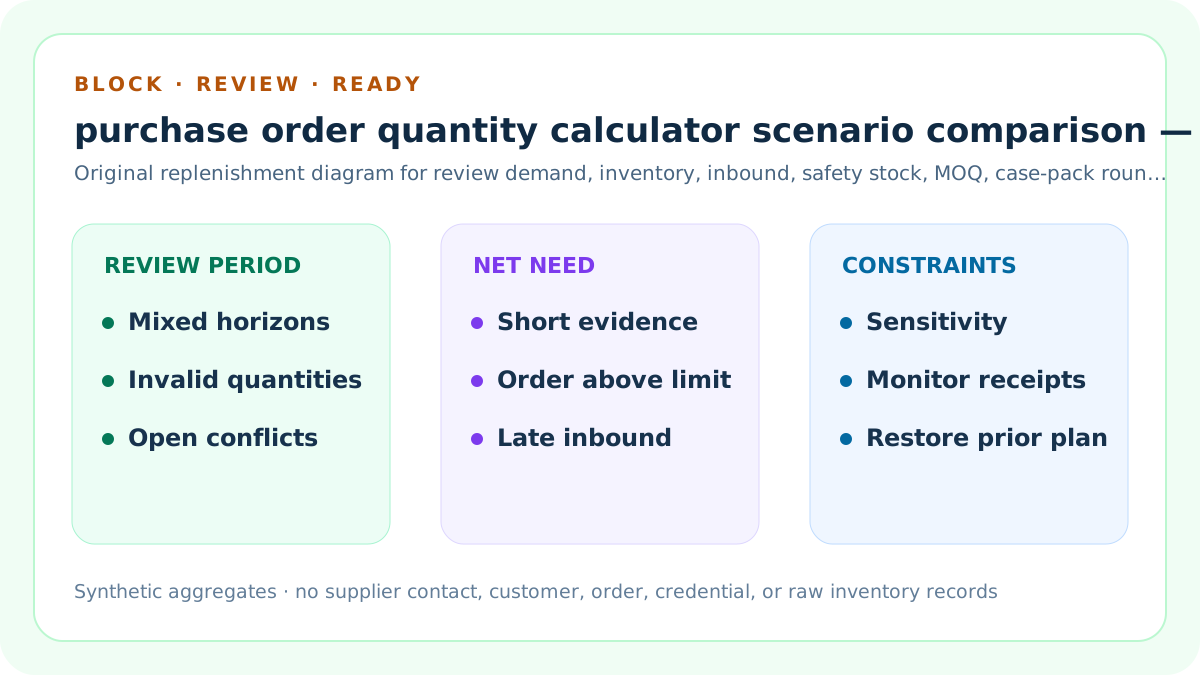
Block invalid demand, inventory, inbound, safety stock, MOQ, case pack, evidence, scope, privacy, or conflicts. Review short evidence or an order above the seller threshold. Ready clears only the entered worksheet.
Before indexing or operational use, preserve evidence and rollback artifacts; run typecheck, unit, integration, build, content, similarity, SEO, image, link, mobile, strict-route, deployment, and live checks; then compare actual demand, receipts, and closing stock without claiming causality.
Monthly vs Seasonal Purchase Quantity: concrete working record
Record the full two-period quantity matrix: review dates, SKU, location, unit, forecast method and version, Available timestamp, eligible inbound references and dates, safety-stock approval, MOQ, case pack, formulas, overage, thresholds, owners, approvals, monitoring, exceptions, stop rules, privacy controls, and restoration evidence for a normalized replenishment comparison.
Sources and further reading
- Microsoft Learn: Reordering policies: Official lot-for-lot, time-bucket, safety-stock, minimum-order, and order-multiple context.
- Shopify Help: Purchase orders: Official product, quantity, cost, terms, supplier, transfer, receipt, and adjustment fields.
- Shopify Help: Inventory states: Official Available, Committed, Unavailable, Incoming, and On hand definitions.
- Oracle NetSuite: Purchasing: Official purchase quantity, on-order, expected receipt, and replenishment context.
- Oracle NetSuite: Ordering items: Official suggested-order and open-supply review context.
- Oracle NetSuite: Demand planning: Official distinction between demand plans, supply plans, and generated orders.
- Seller Profit Guard methodology: Evidence, privacy, release, monitoring, correction, and rollback controls.
Related Seller Profit Guard tools
- Purchase Order Quantity Calculator: Net one review period and apply MOQ and case-pack constraints.
- Reorder Point Calculator: Evaluate replenishment timing separately.
- Safety Stock Calculator: Estimate the separately approved uncertainty buffer.
- Supplier MOQ Calculator: Evaluate supplier-offer cash and stock exposure separately.
- Methodology: Apply evidence and release controls.
- Data Privacy: Protect purchasing and inventory records.
- Purchase Quantity Formula and Inputs: Define one review period, demand plan, Available inventory, eligible inbound, safety stock, MOQ, case pack, evidence, and controls.
- Monthly Purchase Quantity Example: Reperform a monthly review from demand and inventory netting through MOQ, case-pack rounding, closing stock, and decision status.
- Seasonal Purchase Quantity Scenario: Reperform a seasonal buy with a larger demand plan, eligible inbound, safety stock, MOQ, case pack, overage, and review threshold.
- Purchase Quantity Planning Mistakes: Find horizon, forecast, inventory-state, inbound, safety-stock, MOQ, case-pack, rounding, threshold, authority, and privacy errors.
- Purchase Quantity Data and Evidence: Map period, forecast, inventory state, inbound supply, safety stock, MOQ, case pack, threshold, ownership, and privacy to controlled evidence.
- Purchase Quantity Review Thresholds: Set maximum-order, evidence, concentration, storage, cash, approval, monitoring, stop, and restoration controls without inventing universal limits.
- Weekly Purchase Quantity Review Routine: Run a weekly forecast, inventory, inbound, safety-stock, constraint, review, approval, exception, monitoring, and restoration cycle.
- Interpret Purchase Quantity Results: Interpret net need, constrained recommendation, overage, closing stock, threshold status, sensitivity, evidence quality, and remaining authority.
- Purchase Quantity Audit Checklist: Audit period, forecast, inventory, inbound, safety stock, MOQ, case pack, formula, threshold, approval, privacy, monitoring, and rollback.
Next step: Open Seller Profit Guard.
This is operational planning help, not tax, accounting, legal, financial, or platform-policy advice. Review the Terms and disclaimer, and verify current platform rules and fee assumptions before changing prices.