How to set a safe exchange loss decision threshold
Last updated: 2026-07-31
Written and reviewed by Seller Profit Guard Editorial Team.
Block invalid values, quantities, dates, confirmations, policy, payment, refund, inventory, or scope first. Then require exchange loss below a dated maximum, nonnegative contribution, contribution retention above a seller floor, and verified recovery below a concentration ceiling. Add authority, service, release, and rollback triggers.
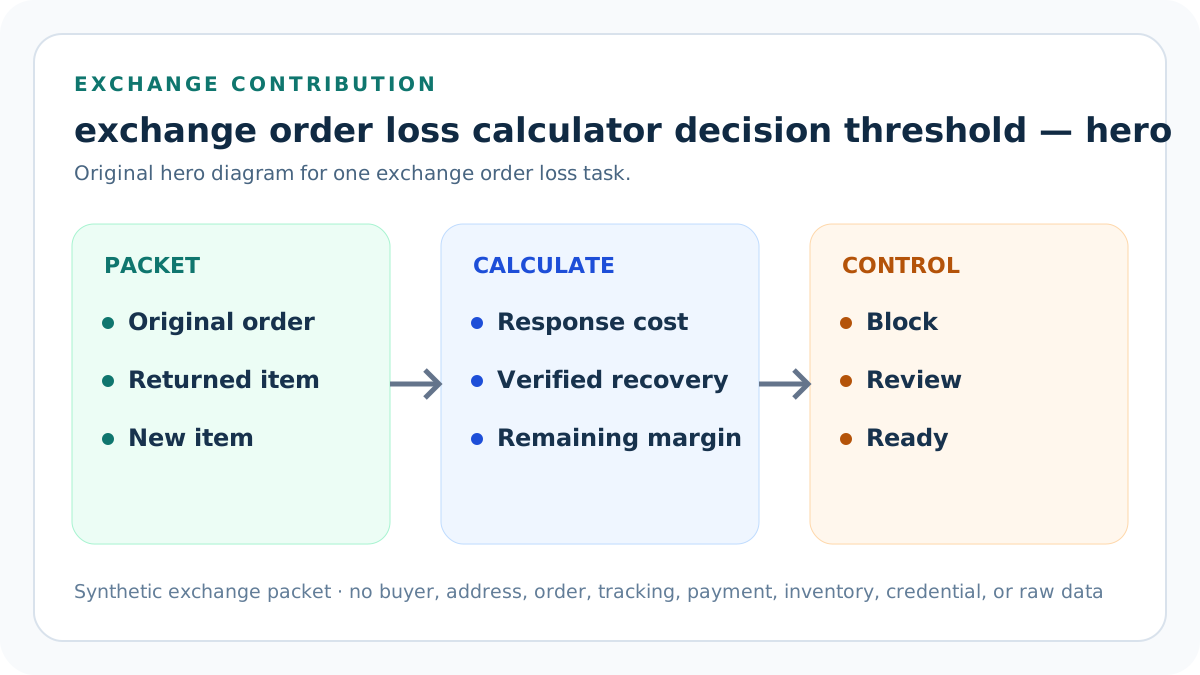
Set hard evidence blocks
Invalid quantities, negative costs, impossible credits, ambiguous mapping, mixed currency, short context, or unresolved conflicts prevent calculation. Add the result to the exchange threshold register with the packet alias, source version, evidence date, owner, currency, scope, and affected calculation field. This makes a controlled exchange-cost review reproducible instead of dependent on memory or an unversioned marketplace screen.
A Block result should name the missing owner and next evidence action. Review point 1 must state what is observed, what remains an assumption, which authority is outside the calculation, and what evidence would change the result. Keep returned-item, new-item, shipping, fee, payment, refund, inventory, policy, and fulfillment states separate.
Set maximum exchange loss
Choose the seller's acceptable incremental loss by product class, exchange type, service promise, reserve, and capacity. Add the result to the exchange threshold register with the packet alias, source version, evidence date, owner, currency, scope, and affected calculation field. This makes a controlled exchange-cost review reproducible instead of dependent on memory or an unversioned marketplace screen.
Version the target before running a preferred scenario. Review point 2 must state what is observed, what remains an assumption, which authority is outside the calculation, and what evidence would change the result. Keep returned-item, new-item, shipping, fee, payment, refund, inventory, policy, and fulfillment states separate.
Require remaining contribution
Review whenever contribution after exchange becomes negative even if the loss maximum is loose. Add the result to the exchange threshold register with the packet alias, source version, evidence date, owner, currency, scope, and affected calculation field. This makes a controlled exchange-cost review reproducible instead of dependent on memory or an unversioned marketplace screen.
This second control prevents target manipulation from hiding an underwater order. Review point 3 must state what is observed, what remains an assumption, which authority is outside the calculation, and what evidence would change the result. Keep returned-item, new-item, shipping, fee, payment, refund, inventory, policy, and fulfillment states separate.
Set payment and refund controls
Require settled collection or succeeded refund evidence at the modeled amount and currency. Add the result to the exchange threshold register with the packet alias, source version, evidence date, owner, currency, scope, and affected calculation field. This makes a controlled exchange-cost review reproducible instead of dependent on memory or an unversioned marketplace screen.
Do not release fulfillment on a calculator output alone. Review point 4 must state what is observed, what remains an assumption, which authority is outside the calculation, and what evidence would change the result. Keep returned-item, new-item, shipping, fee, payment, refund, inventory, policy, and fulfillment states separate.
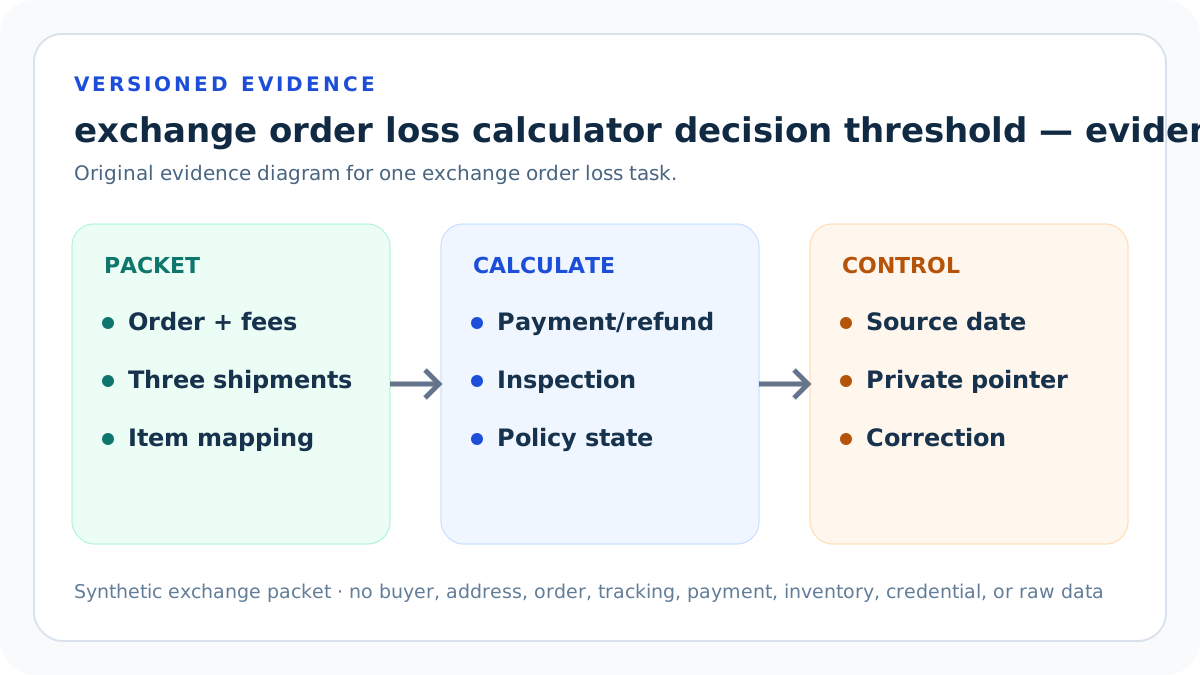
Set inventory controls
Require receipt and inspection before recognizing recovery or returning stock to available inventory. Add the result to the exchange threshold register with the packet alias, source version, evidence date, owner, currency, scope, and affected calculation field. This makes a controlled exchange-cost review reproducible instead of dependent on memory or an unversioned marketplace screen.
Safety and resale eligibility need separate authorized review. Review point 5 must state what is observed, what remains an assumption, which authority is outside the calculation, and what evidence would change the result. Keep returned-item, new-item, shipping, fee, payment, refund, inventory, policy, and fulfillment states separate.
Set uncertainty triggers
Stress new-item cost, both shipping legs, handling, fee debit, refund, payment, and recovery. Add the result to the exchange threshold register with the packet alias, source version, evidence date, owner, currency, scope, and affected calculation field. This makes a controlled exchange-cost review reproducible instead of dependent on memory or an unversioned marketplace screen.
A narrow headroom result needs wider review than a robust result. Review point 6 must state what is observed, what remains an assumption, which authority is outside the calculation, and what evidence would change the result. Keep returned-item, new-item, shipping, fee, payment, refund, inventory, policy, and fulfillment states separate.
Set release and rollback controls
Require backups, fixtures, content, routes, images, accessibility, privacy, live checks, and a tested restore path. Add the result to the exchange threshold register with the packet alias, source version, evidence date, owner, currency, scope, and affected calculation field. This makes a controlled exchange-cost review reproducible instead of dependent on memory or an unversioned marketplace screen.
Rollback on formula, source, routing, privacy, accessibility, or health regression. Review point 7 must state what is observed, what remains an assumption, which authority is outside the calculation, and what evidence would change the result. Keep returned-item, new-item, shipping, fee, payment, refund, inventory, policy, and fulfillment states separate.
Interpret retention and recovery concentration for a controlled exchange-cost review
Contribution retention divides remaining contribution by positive original contribution. Recovery concentration divides verified fee credit, collected customer payment, and returned-inventory recovery by gross exchange response cost. Apply the seller-entered floor and ceiling independently.
A low retention rate or high recovery share routes to Review rather than changing exchange authority. Preserve payment-reversal, fee-credit, inspection, condition, disposition, timing, and valuation uncertainty as separate evidence actions.
Protect customer and exchange data
Use packet aliases, synthetic examples, aggregate cost values, and redacted evidence pointers in the exchange threshold register. Keep buyer names, addresses, emails, messages, order IDs, tracking, labels, invoices, payment data, refunds, inventory accounts, credentials, and raw exports in authorized systems with access and retention controls.
Public content and analytics need only the declared model fields, validation state, calculation outcome, and non-sensitive event category. Do not place private evidence into URLs, screenshots, image metadata, schema, console output, issue reports, content generators, or downloadable examples.
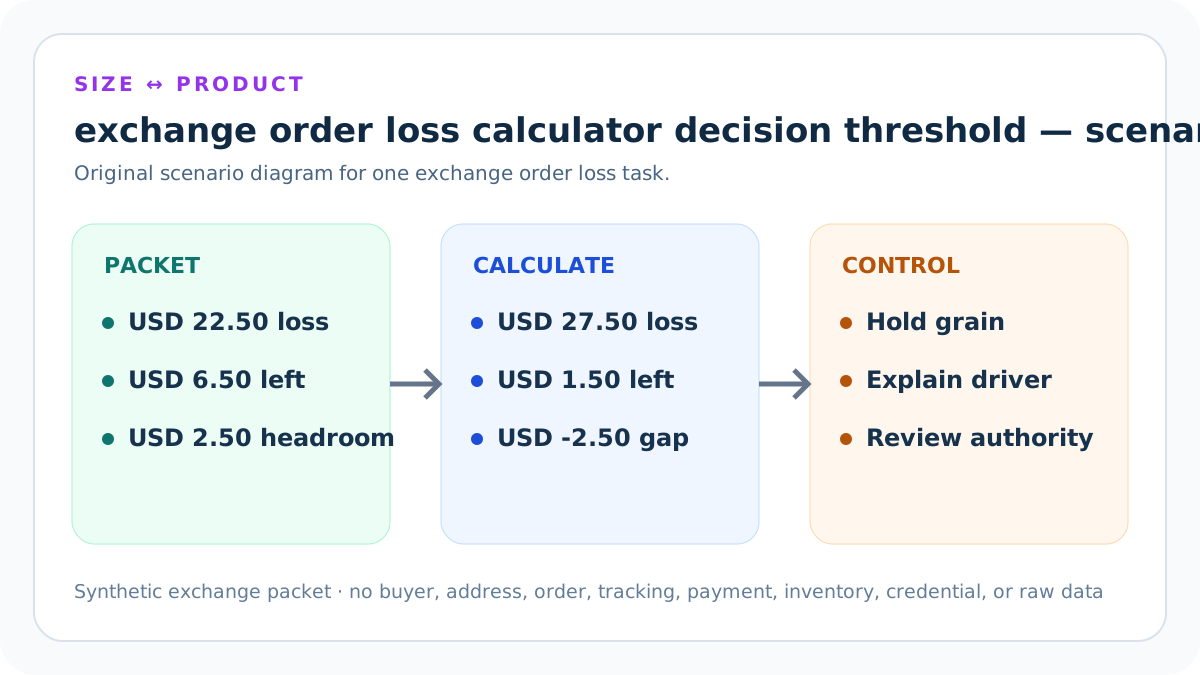
Set service-quality review
Response time, clarity, accessibility, satisfaction, and retention remain separate measures. Deep review 1 for exchange threshold register stores the tested input, source state, calculation delta, authority boundary, reviewer, expiry, correction condition, and operational next action. Keep the counterexample even when it does not support the preferred exchange outcome.
Compare the result with the declared a controlled exchange-cost review, not with a generic benchmark or another packet at a different grain. Explain which single driver moved, which fields stayed constant, what evidence remains unknown, and whether the correct response is collect, correct, review, release, close, or restore.
Set market and legal review
Rights and required responsibility can vary by location and product. Deep review 2 for exchange threshold register stores the tested input, source state, calculation delta, authority boundary, reviewer, expiry, correction condition, and operational next action. Keep the counterexample even when it does not support the preferred exchange outcome.
Compare the result with the declared a controlled exchange-cost review, not with a generic benchmark or another packet at a different grain. Explain which single driver moved, which fields stayed constant, what evidence remains unknown, and whether the correct response is collect, correct, review, release, close, or restore.
Set exception review
Defect, seller error, lost return, failed payment, and unavailable stock need explicit routes. Deep review 3 for exchange threshold register stores the tested input, source state, calculation delta, authority boundary, reviewer, expiry, correction condition, and operational next action. Keep the counterexample even when it does not support the preferred exchange outcome.
Compare the result with the declared a controlled exchange-cost review, not with a generic benchmark or another packet at a different grain. Explain which single driver moved, which fields stayed constant, what evidence remains unknown, and whether the correct response is collect, correct, review, release, close, or restore.
Set expiry dates
Targets and evidence must be retired when cost, policy, carrier, product, or market changes. Deep review 4 for exchange threshold register stores the tested input, source state, calculation delta, authority boundary, reviewer, expiry, correction condition, and operational next action. Keep the counterexample even when it does not support the preferred exchange outcome.
Compare the result with the declared a controlled exchange-cost review, not with a generic benchmark or another packet at a different grain. Explain which single driver moved, which fields stayed constant, what evidence remains unknown, and whether the correct response is collect, correct, review, release, close, or restore.
Set correction ownership
Assign detection, recalculation, customer correction, retest, and closure. Deep review 5 for exchange threshold register stores the tested input, source state, calculation delta, authority boundary, reviewer, expiry, correction condition, and operational next action. Keep the counterexample even when it does not support the preferred exchange outcome.
Compare the result with the declared a controlled exchange-cost review, not with a generic benchmark or another packet at a different grain. Explain which single driver moved, which fields stayed constant, what evidence remains unknown, and whether the correct response is collect, correct, review, release, close, or restore.
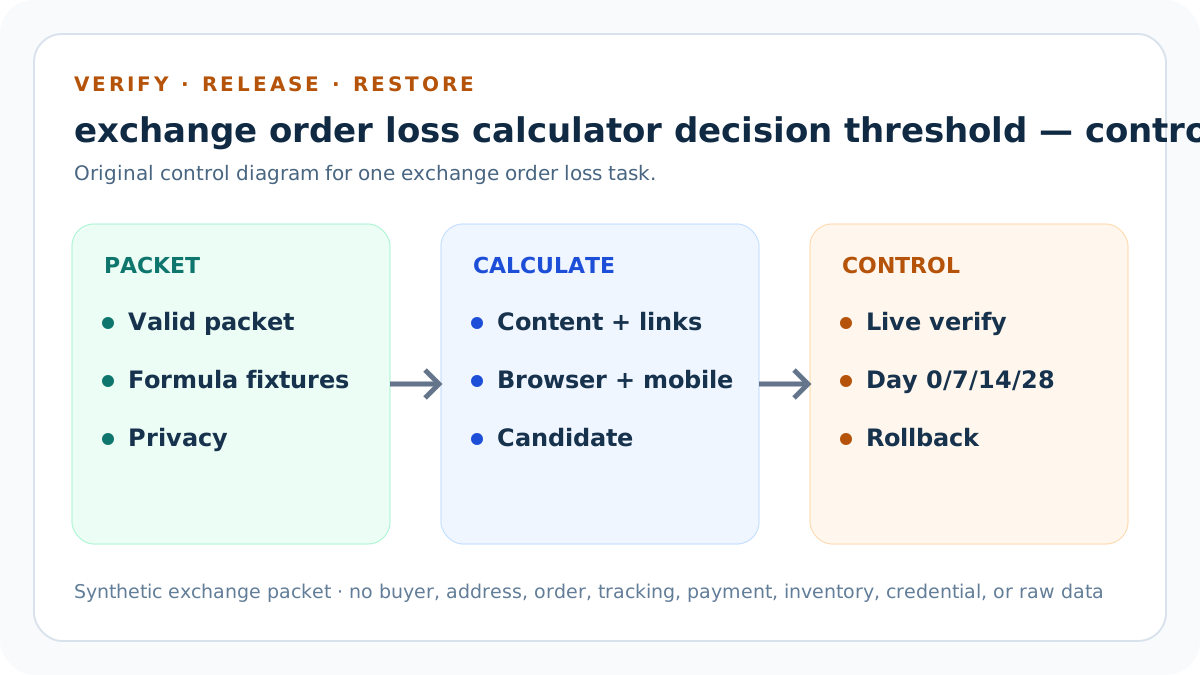
Set hard evidence blocks: verification drill
Recreate “Set hard evidence blocks” from a clean synthetic packet rather than copying the main example. Invalid quantities, negative costs, impossible credits, ambiguous mapping, mixed currency, short context, or unresolved conflicts prevent calculation. Change one driver, retain the other fields, calculate the before-and-after difference, and attach the source state and expected outcome to exchange threshold register.
A Block result should name the missing owner and next evidence action. Drill 1 must include a supported case, a broken case, a late-evidence case, and a correction case. Explain why each path produces Block, Review, Ready, no recognized recovery, or a revised result for this specific a controlled exchange-cost review.
Set maximum exchange loss: verification drill
Recreate “Set maximum exchange loss” from a clean synthetic packet rather than copying the main example. Choose the seller's acceptable incremental loss by product class, exchange type, service promise, reserve, and capacity. Change one driver, retain the other fields, calculate the before-and-after difference, and attach the source state and expected outcome to exchange threshold register.
Version the target before running a preferred scenario. Drill 2 must include a supported case, a broken case, a late-evidence case, and a correction case. Explain why each path produces Block, Review, Ready, no recognized recovery, or a revised result for this specific a controlled exchange-cost review.
Require remaining contribution: verification drill
Recreate “Require remaining contribution” from a clean synthetic packet rather than copying the main example. Review whenever contribution after exchange becomes negative even if the loss maximum is loose. Change one driver, retain the other fields, calculate the before-and-after difference, and attach the source state and expected outcome to exchange threshold register.
This second control prevents target manipulation from hiding an underwater order. Drill 3 must include a supported case, a broken case, a late-evidence case, and a correction case. Explain why each path produces Block, Review, Ready, no recognized recovery, or a revised result for this specific a controlled exchange-cost review.
Set payment and refund controls: verification drill
Recreate “Set payment and refund controls” from a clean synthetic packet rather than copying the main example. Require settled collection or succeeded refund evidence at the modeled amount and currency. Change one driver, retain the other fields, calculate the before-and-after difference, and attach the source state and expected outcome to exchange threshold register.
Do not release fulfillment on a calculator output alone. Drill 4 must include a supported case, a broken case, a late-evidence case, and a correction case. Explain why each path produces Block, Review, Ready, no recognized recovery, or a revised result for this specific a controlled exchange-cost review.
Sources and further reading
- Seller Profit Guard methodology: Exchange-packet grain, contribution calculation, evidence versions, privacy, correction, release, and rollback.
- Seller Profit Guard data privacy: Local-first boundaries for buyer, address, message, order, tracking, label, payment, refund, inventory, credential, and raw-record data.
- Etsy Help: Set Return Policies on Listings: Official physical-listing return and exchange policy context.
- Shopify Help: Creating and processing returns and exchanges: Official returned-item, exchange-item, partial-processing, balance, payment, refund, inventory, release, and fulfillment context.
- Shopify Help: Returns and exchanges: Official distinction between refunds, returns, and alternative-item exchanges.
- Shopify Help: Return and cancellation rules: Official return-window, fee, market, product, and policy-version context.
Related Seller Profit Guard tools
- Exchange Order Loss Calculator: Run the browser-local original-contribution, exchange-cost, recovery, and target calculation.
- Refund vs Replacement Calculator: Compare two remedy paths before a specific exchange packet is committed.
- Return Shipping Cost Calculator: Allocate reverse-logistics responsibility cost across comparable outbound orders.
- Restocking Decision Calculator: Evaluate returned-inventory recovery after receipt and condition review.
- Methodology: Review evidence, privacy, calculation, correction, release, and rollback.
- Data Privacy: Protect buyer, order, tracking, label, payment, refund, inventory, and credential data.
- Exchange Order Loss Formula and Inputs: Continue with a distinct formula, example, scenario, error, source, threshold, comparison, routine, interpretation, or audit task.
- Size Exchange Loss Worked Example: Continue with a distinct formula, example, scenario, error, source, threshold, comparison, routine, interpretation, or audit task.
- Product Exchange Cost Scenario: Continue with a distinct formula, example, scenario, error, source, threshold, comparison, routine, interpretation, or audit task.
- Exchange Order Loss Calculation Mistakes: Continue with a distinct formula, example, scenario, error, source, threshold, comparison, routine, interpretation, or audit task.
- Exchange Order Loss Data Sources: Continue with a distinct formula, example, scenario, error, source, threshold, comparison, routine, interpretation, or audit task.
Next step: Open the Exchange Order Loss Calculator.
This is operational planning help, not tax, accounting, legal, financial, or platform-policy advice. Review the Terms and disclaimer, and verify current platform rules and fee assumptions before changing prices.