Twelve mistakes that distort Etsy Regulatory fees
Last updated: 2026-07-30
Written and reviewed by Seller Profit Guard Editorial Team.
The largest errors are using buyer destination, applying an outdated country rate, omitting shipping, gift wrap, or paid personalization, adding Etsy-collected buyer tax, confusing seller-fee VAT with buyer tax, mixing currencies, rounding early, netting credits, ignoring refunds, combining fee rows, and calling one regional fee total Etsy cost.
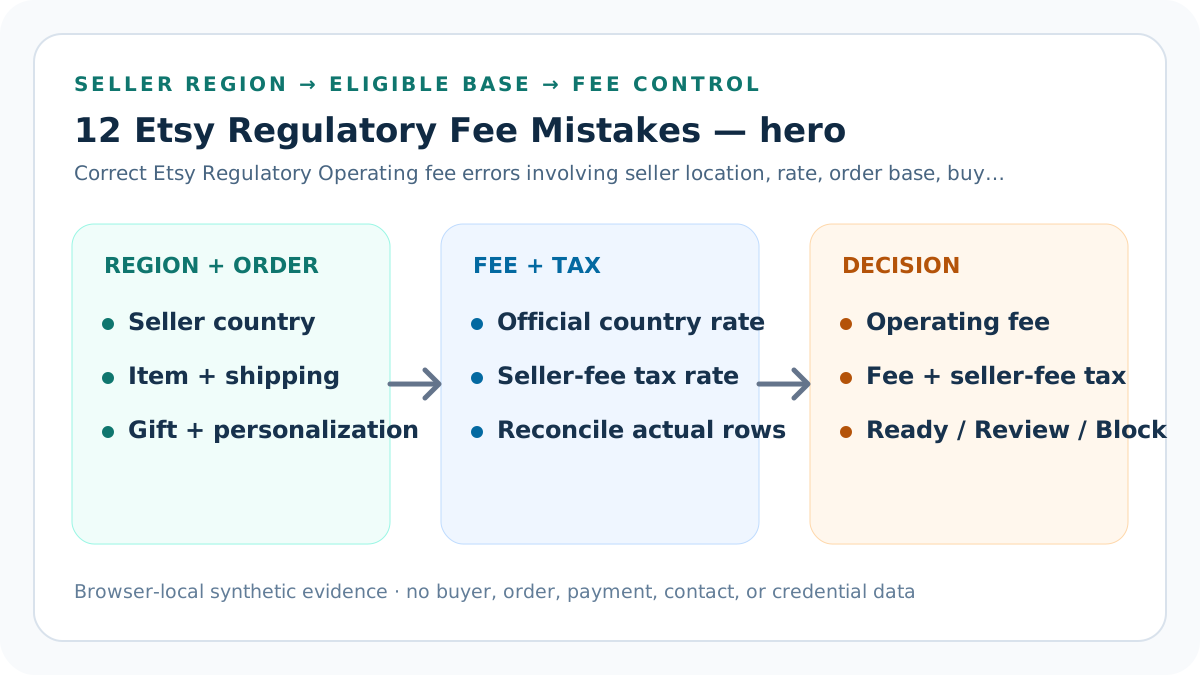
regional fee defect diagnosis: scope and decision
Small percentages create systematic errors when copied across every transaction. Diagnose the record before changing price or fee defaults.
Each defect belongs to a specific control: seller region, rate effective date, base component, buyer-tax exclusion, seller-fee tax, currency, row date, credit, refund, or scope.
Build the regulatory-fee correction register before acting
A plausible combined debit is not evidence when the region or fee base is wrong. Structural validation comes before threshold interpretation.
Declared conflicts have Block precedence. A low percentage cannot compensate for a missing VAT invoice or mixed Payment account period.
Mistake 1: using buyer location
The fee table follows seller location; buyer country, delivery country, language, and displayed currency do not select the rate.
Turn “Mistake 1: using buyer location” into a regression card with defect, seller region, affected base component, fee row, tax row, expected change, actual change, financial consequence, bounded correction, supported fixture, broken fixture, owner, and rollback. a Canada CAD 50 eligible base should reproduce correct region, base, fee, tax, and account-row ownership; a worksheet that chooses a UK rate because the buyer is in London remains independently classified.
A defect test for “Mistake 1: using buyer location” should name the failure: buyer country substituted, rate stale, shipping omitted, gift wrap omitted, personalization omitted, buyer tax added, fee tax confused, currency mixed, refund ignored, credit netted, rounding early, or regional fee called total Etsy cost.
Mistake 2: using a stale rate
Preserve the current Help table and access date instead of copying a historical percentage from an old spreadsheet.
Turn “Mistake 2: using a stale rate” into a regression card with defect, seller region, affected base component, fee row, tax row, expected change, actual change, financial consequence, bounded correction, supported fixture, broken fixture, owner, and rollback. a Canada CAD 50 eligible base should reproduce correct region, base, fee, tax, and account-row ownership; a worksheet that chooses a UK rate because the buyer is in London remains independently classified.
A defect test for “Mistake 2: using a stale rate” should name the failure: buyer country substituted, rate stale, shipping omitted, gift wrap omitted, personalization omitted, buyer tax added, fee tax confused, currency mixed, refund ignored, credit netted, rounding early, or regional fee called total Etsy cost.
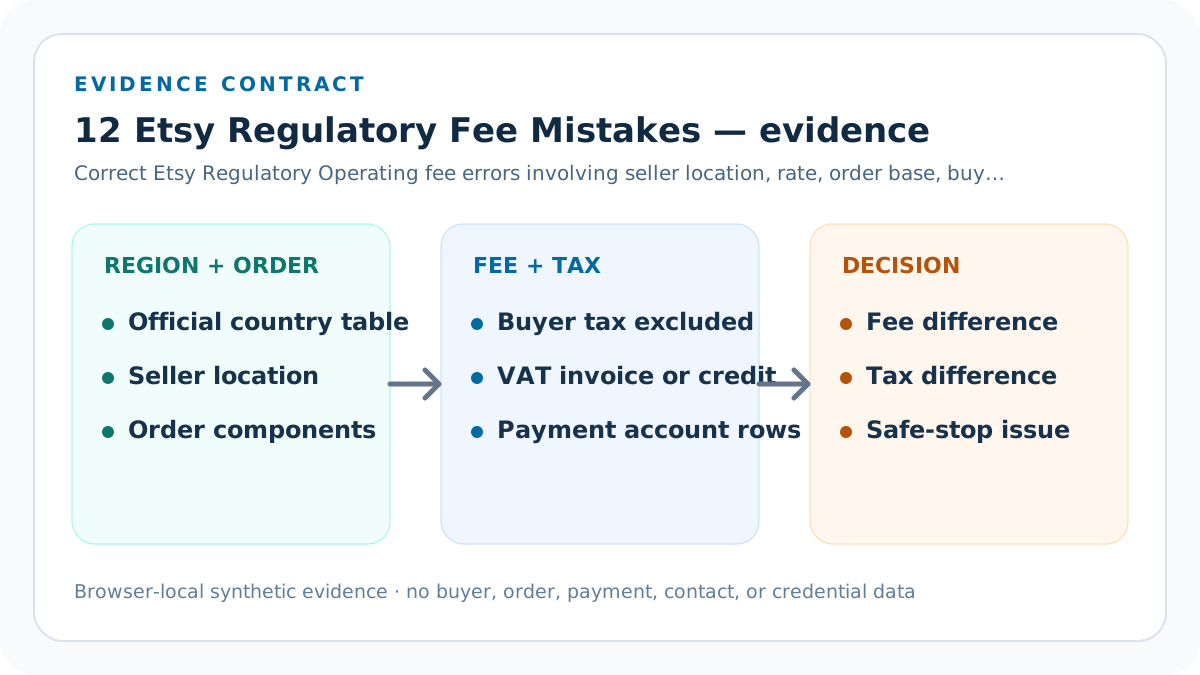
Mistakes 3–5: omitting base components
Include item price, buyer-paid shipping, gift wrap, and applicable paid personalization.
Turn “Mistakes 3–5: omitting base components” into a regression card with defect, seller region, affected base component, fee row, tax row, expected change, actual change, financial consequence, bounded correction, supported fixture, broken fixture, owner, and rollback. a Canada CAD 50 eligible base should reproduce correct region, base, fee, tax, and account-row ownership; a worksheet that chooses a UK rate because the buyer is in London remains independently classified.
A defect test for “Mistakes 3–5: omitting base components” should name the failure: buyer country substituted, rate stale, shipping omitted, gift wrap omitted, personalization omitted, buyer tax added, fee tax confused, currency mixed, refund ignored, credit netted, rounding early, or regional fee called total Etsy cost.
Mistake 6: adding buyer tax
Exclude tax Etsy collects from the buyer from the current Regulatory Operating fee base.
Turn “Mistake 6: adding buyer tax” into a regression card with defect, seller region, affected base component, fee row, tax row, expected change, actual change, financial consequence, bounded correction, supported fixture, broken fixture, owner, and rollback. a Canada CAD 50 eligible base should reproduce correct region, base, fee, tax, and account-row ownership; a worksheet that chooses a UK rate because the buyer is in London remains independently classified.
A defect test for “Mistake 6: adding buyer tax” should name the failure: buyer country substituted, rate stale, shipping omitted, gift wrap omitted, personalization omitted, buyer tax added, fee tax confused, currency mixed, refund ignored, credit netted, rounding early, or regional fee called total Etsy cost.
Mistake 7: confusing two taxes
Seller-fee VAT or similar tax is a separate expense row, not buyer tax added to order revenue.
Turn “Mistake 7: confusing two taxes” into a regression card with defect, seller region, affected base component, fee row, tax row, expected change, actual change, financial consequence, bounded correction, supported fixture, broken fixture, owner, and rollback. a Canada CAD 50 eligible base should reproduce correct region, base, fee, tax, and account-row ownership; a worksheet that chooses a UK rate because the buyer is in London remains independently classified.
A defect test for “Mistake 7: confusing two taxes” should name the failure: buyer country substituted, rate stale, shipping omitted, gift wrap omitted, personalization omitted, buyer tax added, fee tax confused, currency mixed, refund ignored, credit netted, rounding early, or regional fee called total Etsy cost.
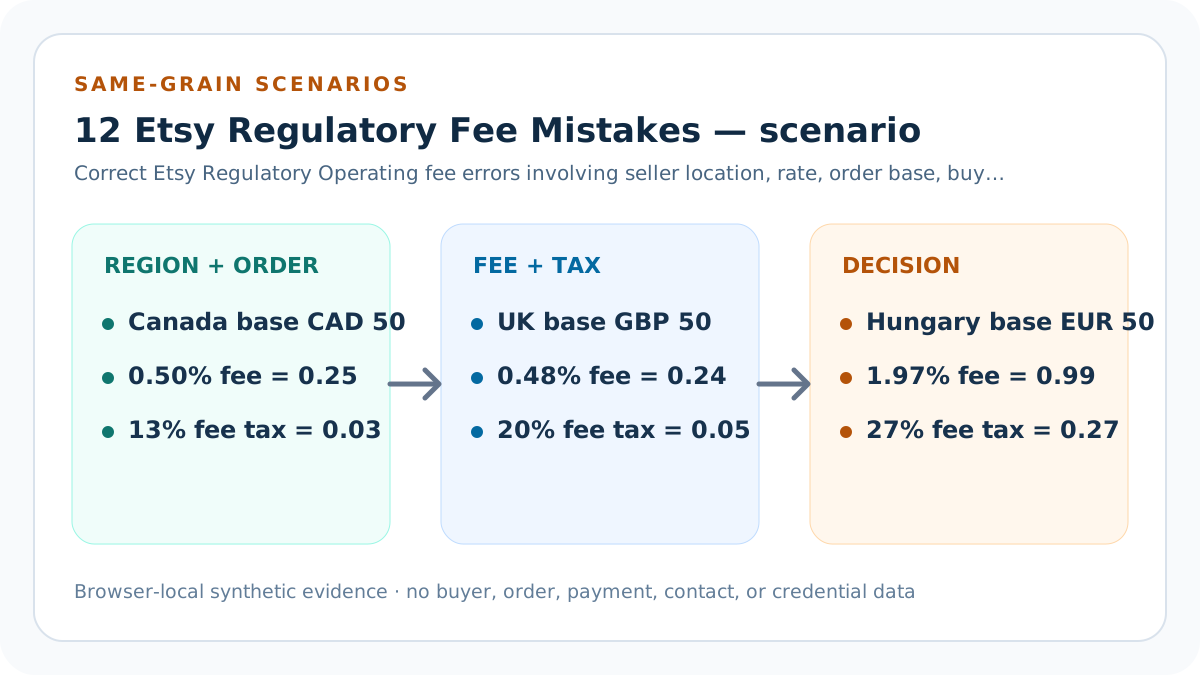
Mistakes 8–9: currency and rounding drift
Keep all comparable rows in one currency and retain full precision through reconciliation.
Turn “Mistakes 8–9: currency and rounding drift” into a regression card with defect, seller region, affected base component, fee row, tax row, expected change, actual change, financial consequence, bounded correction, supported fixture, broken fixture, owner, and rollback. a Canada CAD 50 eligible base should reproduce correct region, base, fee, tax, and account-row ownership; a worksheet that chooses a UK rate because the buyer is in London remains independently classified.
A defect test for “Mistakes 8–9: currency and rounding drift” should name the failure: buyer country substituted, rate stale, shipping omitted, gift wrap omitted, personalization omitted, buyer tax added, fee tax confused, currency mixed, refund ignored, credit netted, rounding early, or regional fee called total Etsy cost.
Mistakes 10–11: netting credits or refunds
Record the original fee, tax, later credit, and refund timing as accountable rows rather than one favorable net.
Turn “Mistakes 10–11: netting credits or refunds” into a regression card with defect, seller region, affected base component, fee row, tax row, expected change, actual change, financial consequence, bounded correction, supported fixture, broken fixture, owner, and rollback. a Canada CAD 50 eligible base should reproduce correct region, base, fee, tax, and account-row ownership; a worksheet that chooses a UK rate because the buyer is in London remains independently classified.
A defect test for “Mistakes 10–11: netting credits or refunds” should name the failure: buyer country substituted, rate stale, shipping omitted, gift wrap omitted, personalization omitted, buyer tax added, fee tax confused, currency mixed, refund ignored, credit netted, rounding early, or regional fee called total Etsy cost.
Mistake 12: scope inflation
This regional operating fee is not total Etsy fees, payout, tax liability, contribution, ranking, traffic, or income.
Turn “Mistake 12: scope inflation” into a regression card with defect, seller region, affected base component, fee row, tax row, expected change, actual change, financial consequence, bounded correction, supported fixture, broken fixture, owner, and rollback. a Canada CAD 50 eligible base should reproduce correct region, base, fee, tax, and account-row ownership; a worksheet that chooses a UK rate because the buyer is in London remains independently classified.
A defect test for “Mistake 12: scope inflation” should name the failure: buyer country substituted, rate stale, shipping omitted, gift wrap omitted, personalization omitted, buyer tax added, fee tax confused, currency mixed, refund ignored, credit netted, rounding early, or regional fee called total Etsy cost.
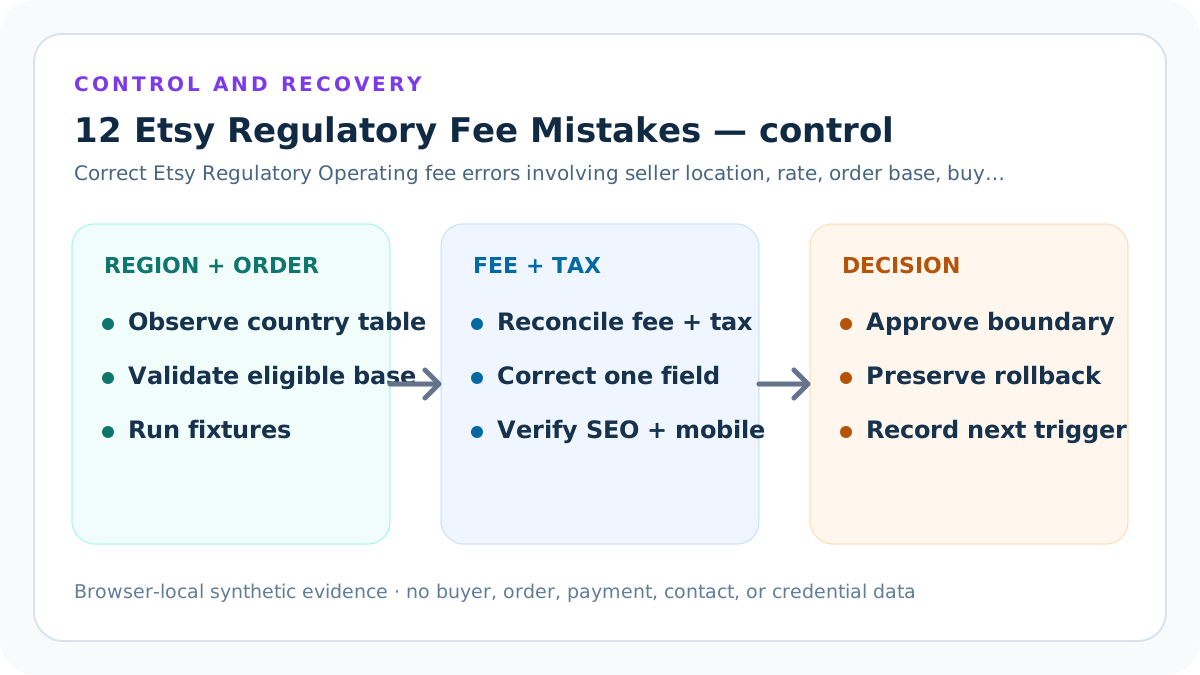
Verification, release, and Payment account feedback
Before changing price, regional assumptions, tax treatment, settlement worksheet, or calculator defaults, preserve the regulatory-fee correction register, official-source versions, private evidence pointer, current inputs, expected fixtures, tests, build, route state, and rollback identifier. Confirm the exact target environment and safe-stop on an unexpected account or production context.
After one bounded correction, rerun a Canada CAD 50 eligible base, a worksheet that chooses a UK rate because the buyer is in London, Hungary, unlisted-region, non-compensating row-difference, and invalid-evidence fixtures. Inspect exact and displayed amounts, dates, confirmations, seller region, base components, buyer-tax exclusion, fee and fee-tax differences, debit target, mobile results, canonical, sources, original visuals, internal links, and privacy-safe feedback. Restore the prior packet if a critical result cannot support correct region, base, fee, tax, and account-row ownership.
Limits, privacy boundary, and next action
This guide and calculator use seller-entered summaries and synthetic fixtures. They do not retrieve Etsy data, authenticate seller location, orders, Payment account rows, VAT invoices, payouts, or bank deposits, decide taxes, reproduce every refund, credit, or conversion, change marketplace state, include the broader fee stack, or prove ranking, traffic, qualified intent, AdSense approval, income, or final profit.
Keep buyer names, emails, addresses, messages, order IDs, listing IDs, payment rows, bank details, tax identifiers, labels, tokens, OAuth material, credentials, and raw CSV outside the regulatory-fee correction register. Verify current Etsy sources and the seller's actual account, reconcile an approved privacy-safe sample, and obtain qualified accounting, tax, or legal advice when material.
Sources and further reading
- Etsy Help: Regulatory Operating Fee: Current seller-region table, percentages, item, shipping, gift-wrap and personalization base, Payment account presentation, and VAT boundary.
- Etsy Help: Fees and Taxes for Selling: Current order-total boundary, applicable seller countries, Etsy-collected-tax exclusion, and surrounding fee distinctions.
- Etsy Fees and Payments Policy: Controlling per-transaction trigger, displayed item-price and shipping base, gift-wrap and personalization inclusion, country variation, and seller responsibility.
- Etsy Help: Manage Your Payment Account: Actual fee-type, seller-fee tax, credit, balance, and transaction-date reconciliation context.
- Etsy Help: VAT on Seller Fees: Seller-fee VAT evidence, invoice and account treatment, registration context, and professional-review boundary.
- Seller Profit Guard methodology: Evidence hierarchy, privacy-safe fixtures, deterministic calculations, bounded release, correction, and rollback.
Related Seller Profit Guard tools
- Open the Etsy regulatory operating fee calculator: Model one regional fee, seller-fee tax, total debit, and two Payment account differences.
- Build the complete Etsy fee stack: Add listing, transaction, processing, ads, conversion, regulatory, tax, operating cost, and contribution.
- Separate transaction and processing fees: Keep two order-fee bases separate from the regional operating fee.
- Reconcile the Etsy Payment account: Compare expected fee and tax rows with actual charges, credits, refunds, and dates.
- Run Seller Profit Guard: Carry the reconciled regional debit into product, shipping, return, and target-contribution analysis.
- Read the local-first methodology: Keep buyer, order, payment, contact, and credential data outside public pages.
- Etsy Regulatory Operating Fee Formula: Continue the formula, example, source, threshold, comparison, routine, interpretation, or audit workflow.
- Canada Etsy Regulatory Fee Example: Continue the formula, example, source, threshold, comparison, routine, interpretation, or audit workflow.
- UK Etsy Regulatory Fee Example: Continue the formula, example, source, threshold, comparison, routine, interpretation, or audit workflow.
- Etsy Regulatory Fee Data Sources: Continue the formula, example, source, threshold, comparison, routine, interpretation, or audit workflow.
- Safe Etsy Regulatory Fee Thresholds: Continue the formula, example, source, threshold, comparison, routine, interpretation, or audit workflow.
Next step: Open the Etsy Regulatory Operating Fee Calculator.
This is operational planning help, not tax, accounting, legal, financial, or platform-policy advice. Review the Terms and disclaimer, and verify current platform rules and fee assumptions before changing prices.