Twelve mistakes that distort Etsy currency conversion
Last updated: 2026-07-30
Written and reviewed by Seller Profit Guard Editorial Team.
Common errors include using buyer browsing currency, reversing the rate, applying 2.5% to the wrong base, substituting another fee, mixing bank charges into the row, treating matching currencies as a conversion, using today's rate for an old sale, omitting evidence dates, rounding early, dropping refunds or credits, and calling retained funds profit.
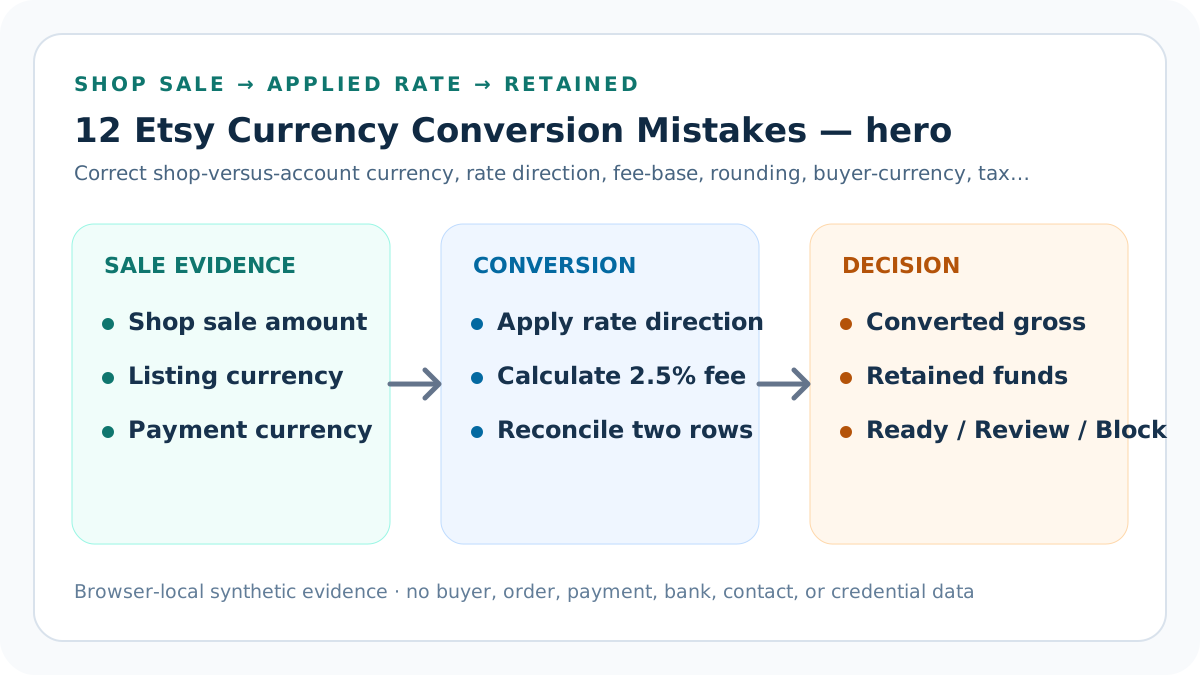
conversion defect diagnosis: scope and decision
A percentage calculation can look precise while using the wrong currencies or rate direction. Diagnose evidence identity before arithmetic.
The seller conversion trigger compares shop listing currency with Payment account currency. Buyer browsing currency and the bank's later deposit conversion belong to different scopes.
Build the currency correction register before acting
Record shop amount, pair, rate units, fee base, precision, actual rows, sale date, settlement date, refund or credit treatment, bank scope, and responsible source for every defect.
Declared conflicts have Block precedence. A favorable retained amount cannot compensate for a guessed rate, mixed bank fee, wrong statement period, or unsupported currency code.
Mistake 1: using buyer browsing currency
A buyer-facing converted price does not establish the seller's shop-to-Payment-account settlement rate.
Turn “Mistake 1: using buyer browsing currency” into a regression card with defect, currency pair, rate units, affected row, expected change, actual change, financial consequence, bounded correction, supported fixture, broken fixture, owner, and rollback. a supported EUR-to-USD settlement should reproduce correct currency identities, rate direction, fee base, and Payment account mapping; a spreadsheet using a buyer-facing price and bank deposit remains independently classified.
A defect test for “Mistake 1: using buyer browsing currency” should name the failure: currencies reversed, rate inverted, buyer display currency substituted, fee base guessed, percentage applied twice, statement date lost, bank fee merged, refund ignored, credit ignored, tax scope mixed, early rounding, or retained funds called profit.
Mistake 2: reversing the rate
USD per EUR is not EUR per USD. Label both numerator and denominator beside the numeric rate.
Turn “Mistake 2: reversing the rate” into a regression card with defect, currency pair, rate units, affected row, expected change, actual change, financial consequence, bounded correction, supported fixture, broken fixture, owner, and rollback. a supported EUR-to-USD settlement should reproduce correct currency identities, rate direction, fee base, and Payment account mapping; a spreadsheet using a buyer-facing price and bank deposit remains independently classified.
A defect test for “Mistake 2: reversing the rate” should name the failure: currencies reversed, rate inverted, buyer display currency substituted, fee base guessed, percentage applied twice, statement date lost, bank fee merged, refund ignored, credit ignored, tax scope mixed, early rounding, or retained funds called profit.
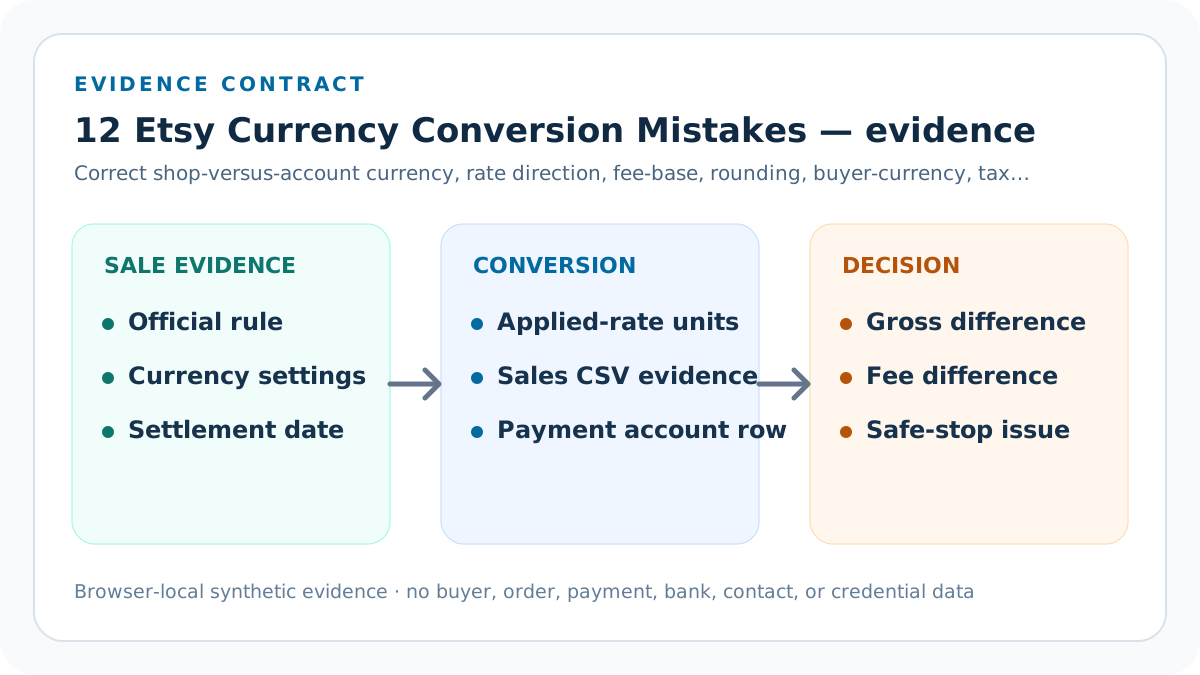
Mistakes 3–4: wrong base or order
Convert gross first in the model, then apply the seller fee to the comparable converted sale amount.
Turn “Mistakes 3–4: wrong base or order” into a regression card with defect, currency pair, rate units, affected row, expected change, actual change, financial consequence, bounded correction, supported fixture, broken fixture, owner, and rollback. a supported EUR-to-USD settlement should reproduce correct currency identities, rate direction, fee base, and Payment account mapping; a spreadsheet using a buyer-facing price and bank deposit remains independently classified.
A defect test for “Mistakes 3–4: wrong base or order” should name the failure: currencies reversed, rate inverted, buyer display currency substituted, fee base guessed, percentage applied twice, statement date lost, bank fee merged, refund ignored, credit ignored, tax scope mixed, early rounding, or retained funds called profit.
Mistake 5: mixing other Etsy fees
Transaction, processing, Offsite Ads, regulatory, tax, and listing rows belong in the complete fee stack.
Turn “Mistake 5: mixing other Etsy fees” into a regression card with defect, currency pair, rate units, affected row, expected change, actual change, financial consequence, bounded correction, supported fixture, broken fixture, owner, and rollback. a supported EUR-to-USD settlement should reproduce correct currency identities, rate direction, fee base, and Payment account mapping; a spreadsheet using a buyer-facing price and bank deposit remains independently classified.
A defect test for “Mistake 5: mixing other Etsy fees” should name the failure: currencies reversed, rate inverted, buyer display currency substituted, fee base guessed, percentage applied twice, statement date lost, bank fee merged, refund ignored, credit ignored, tax scope mixed, early rounding, or retained funds called profit.
Mistake 6: admitting matching currencies
When shop and Payment account currencies match, no seller conversion is required, so this dedicated calculator blocks the packet instead of treating it as a valid zero-fee conversion.
Turn “Mistake 6: admitting matching currencies” into a regression card with defect, currency pair, rate units, affected row, expected change, actual change, financial consequence, bounded correction, supported fixture, broken fixture, owner, and rollback. a supported EUR-to-USD settlement should reproduce correct currency identities, rate direction, fee base, and Payment account mapping; a spreadsheet using a buyer-facing price and bank deposit remains independently classified.
A defect test for “Mistake 6: admitting matching currencies” should name the failure: currencies reversed, rate inverted, buyer display currency substituted, fee base guessed, percentage applied twice, statement date lost, bank fee merged, refund ignored, credit ignored, tax scope mixed, early rounding, or retained funds called profit.
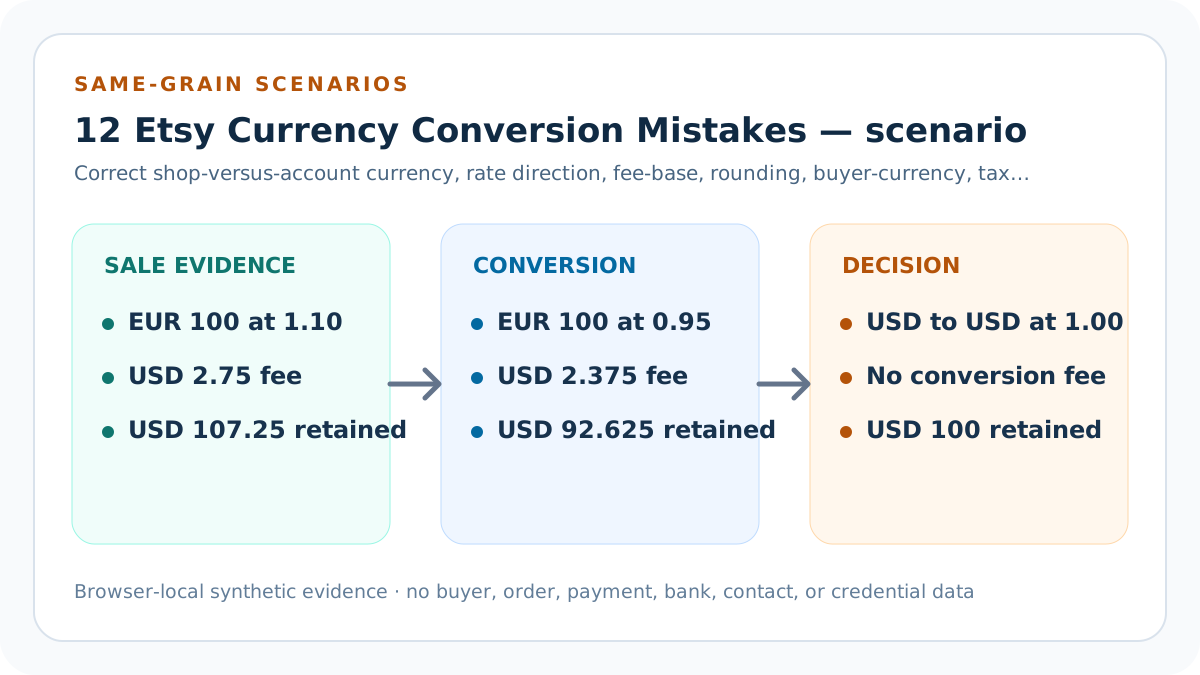
Mistakes 7–8: wrong date or early rounding
Use the applied sale evidence and retain full precision until displayed values.
Turn “Mistakes 7–8: wrong date or early rounding” into a regression card with defect, currency pair, rate units, affected row, expected change, actual change, financial consequence, bounded correction, supported fixture, broken fixture, owner, and rollback. a supported EUR-to-USD settlement should reproduce correct currency identities, rate direction, fee base, and Payment account mapping; a spreadsheet using a buyer-facing price and bank deposit remains independently classified.
A defect test for “Mistakes 7–8: wrong date or early rounding” should name the failure: currencies reversed, rate inverted, buyer display currency substituted, fee base guessed, percentage applied twice, statement date lost, bank fee merged, refund ignored, credit ignored, tax scope mixed, early rounding, or retained funds called profit.
Mistakes 9–11: refunds, credits, and bank charges
Classify reversals and later bank foreign-exchange costs instead of forcing them into Etsy's conversion fee.
Turn “Mistakes 9–11: refunds, credits, and bank charges” into a regression card with defect, currency pair, rate units, affected row, expected change, actual change, financial consequence, bounded correction, supported fixture, broken fixture, owner, and rollback. a supported EUR-to-USD settlement should reproduce correct currency identities, rate direction, fee base, and Payment account mapping; a spreadsheet using a buyer-facing price and bank deposit remains independently classified.
A defect test for “Mistakes 9–11: refunds, credits, and bank charges” should name the failure: currencies reversed, rate inverted, buyer display currency substituted, fee base guessed, percentage applied twice, statement date lost, bank fee merged, refund ignored, credit ignored, tax scope mixed, early rounding, or retained funds called profit.
Mistake 12: scope inflation
Retained after conversion is not payout, available deposit, accounting profit, target price, or guaranteed future value.
Turn “Mistake 12: scope inflation” into a regression card with defect, currency pair, rate units, affected row, expected change, actual change, financial consequence, bounded correction, supported fixture, broken fixture, owner, and rollback. a supported EUR-to-USD settlement should reproduce correct currency identities, rate direction, fee base, and Payment account mapping; a spreadsheet using a buyer-facing price and bank deposit remains independently classified.
A defect test for “Mistake 12: scope inflation” should name the failure: currencies reversed, rate inverted, buyer display currency substituted, fee base guessed, percentage applied twice, statement date lost, bank fee merged, refund ignored, credit ignored, tax scope mixed, early rounding, or retained funds called profit.
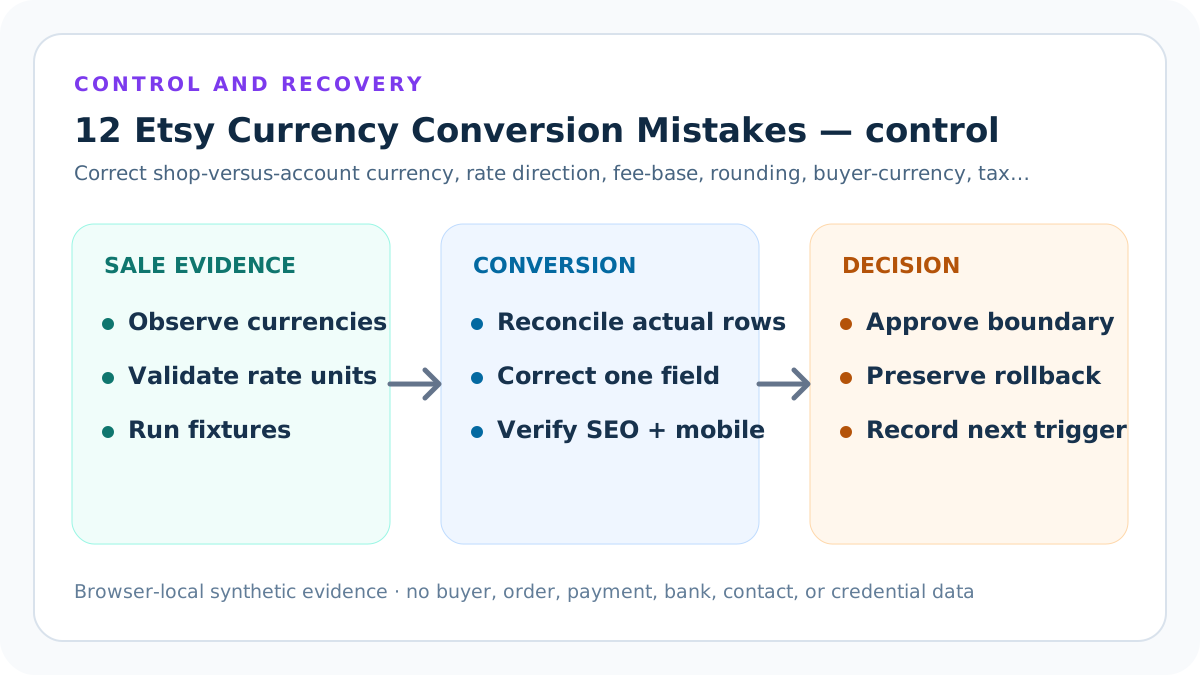
Verification, release, and Payment account feedback
Before changing a shop currency, price, settlement worksheet, or calculator default, preserve the currency correction register, official-source versions, private evidence pointer, current inputs, expected fixtures, tests, build, route state, and rollback identifier. Confirm the exact target environment and safe-stop on an unexpected account or production context.
After one bounded correction, rerun a supported EUR-to-USD settlement, a spreadsheet using a buyer-facing price and bank deposit, the blocking same-currency fixture, the non-compensating row-difference fixture, and an invalid-evidence fixture. Inspect exact and displayed amounts, currency identities, evidence dates, confirmations, rate units, gross and fee differences, retained target, mobile results, canonical, sources, original visuals, internal links, and privacy-safe feedback. Restore the prior packet if a critical result cannot support correct currency identities, rate direction, fee base, and Payment account mapping.
Limits, privacy boundary, and next action
This guide and calculator use seller-entered summaries and synthetic fixtures. They do not retrieve Etsy data, authenticate orders, rates, Payment account rows, payouts, or bank deposits, decide taxes, reproduce every refund, credit, or conversion, change marketplace state, forecast currency markets, include the broader fee stack, or prove ranking, traffic, qualified intent, AdSense approval, income, or final profit.
Keep buyer names, emails, addresses, messages, order IDs, listing IDs, payment rows, bank details, tax identifiers, labels, tokens, OAuth material, credentials, and raw CSV outside the currency correction register. Verify current Etsy sources and the seller's actual account, reconcile an approved privacy-safe sample, and obtain qualified accounting, tax, or legal advice when material.
Sources and further reading
- Etsy Help: Currency Conversion Fees: Current seller currency-mismatch trigger, 2.5% fee, sale-amount base, deduction timing, and Etsy Payments Sales CSV rate evidence.
- Etsy Help: List Items in Your Preferred Currency: Shop-currency settings, Payment account conversion behavior, 2.5% fee, applied-rate timing, rounding, and 14-day reversion boundaries.
- Etsy Fees and Payments Policy: Controlling seller currency-conversion trigger, sale-amount fee base, converted surrounding fees, and seller responsibility.
- Etsy Payments Policy: Settlement in the Payment account currency, additional 2.5% conversion fee, regularly updated rates, and buyer-currency separation.
- Etsy Help: Currencies Supported for Etsy Payments: Current supported seller and buyer currency context plus Payment account currency and bank foreign-exchange boundaries.
- Seller Profit Guard methodology: Evidence hierarchy, privacy-safe fixtures, deterministic calculations, bounded release, correction, and rollback.
Related Seller Profit Guard tools
- Open the Etsy currency conversion fee calculator: Model one shop-to-Payment-account conversion and reconcile gross and fee rows.
- Build the complete Etsy fee stack: Add transaction, processing, ads, regulatory, seller-fee tax, operating cost, and contribution.
- Separate transaction and processing fees: Keep currency conversion separate from the two order-fee bases.
- Reconcile the Etsy Payment account: Compare expected converted amounts with actual fees, taxes, credits, refunds, and dates.
- Run Seller Profit Guard: Carry reconciled retained funds into product, shipping, return, and target-contribution analysis.
- Read the local-first methodology: Keep buyer, order, payment, contact, and credential data outside public pages.
- Etsy Currency Conversion Fee Formula: Continue the formula, example, source, threshold, comparison, routine, interpretation, or audit workflow.
- Etsy Currency Conversion Fee Example: Continue the formula, example, source, threshold, comparison, routine, interpretation, or audit workflow.
- Etsy Adverse Exchange-Rate Scenario: Continue the formula, example, source, threshold, comparison, routine, interpretation, or audit workflow.
- Etsy Currency Conversion Data Sources: Continue the formula, example, source, threshold, comparison, routine, interpretation, or audit workflow.
- Safe Etsy Conversion Fee Thresholds: Continue the formula, example, source, threshold, comparison, routine, interpretation, or audit workflow.
Next step: Open the Etsy Currency Conversion Fee Calculator.
This is operational planning help, not tax, accounting, legal, financial, or platform-policy advice. Review the Terms and disclaimer, and verify current platform rules and fee assumptions before changing prices.