How do you normalize a mixed-locale export value?
Last updated: 2026-07-31
Written and reviewed by Seller Profit Guard Editorial Team.
Declare DD.MM.YYYY before parsing 15.07.2026 18:45:00, then subtract +02:00 to obtain 2026-07-15T16:45:00Z. Under the 1.234,56 convention, the amount is 1234.56 EUR. Multiplying by 1.16 USD per EUR produces 1432.0896, displayed as 1432.09 USD. Retain the localized original beside the canonical result for audit and reversal.
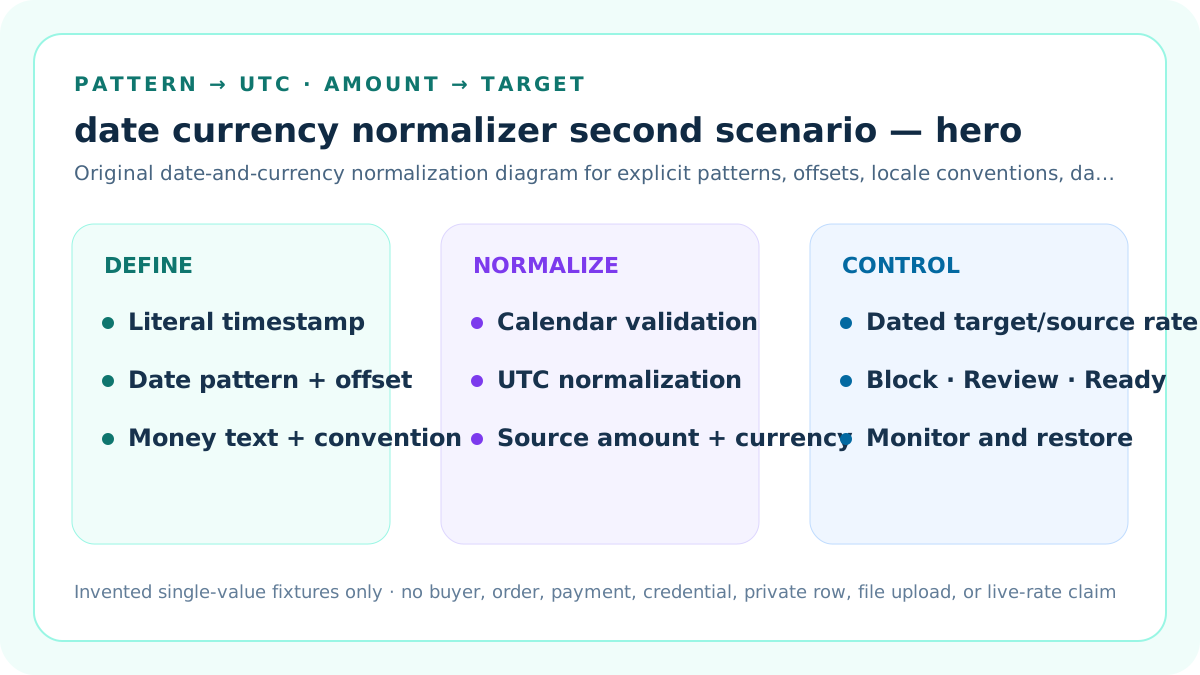
Refund event grain
Use one invented refund event. The mixed-locale ledger records event grain, source fingerprint, invented timestamp and amount, date pattern, numeric offset or versioned zone, decimal convention, source and target currency, rate direction, observation date, precision, owner, reviewer, exception, output hash, and prior accepted rule needed for a verified mixed-locale conversion.
At checkpoint 1, reperform the applicable timestamp parse, UTC shift, amount parse, currency multiplication, rate-age comparison, or evidence decision. State whether the packet supports Ready, Review, or Block and identify the conclusion that still requires protected source, platform, accounting, tax, legal, or settlement evidence.
Dot date syntax
Declare day before month. The mixed-locale ledger records event grain, source fingerprint, invented timestamp and amount, date pattern, numeric offset or versioned zone, decimal convention, source and target currency, rate direction, observation date, precision, owner, reviewer, exception, output hash, and prior accepted rule needed for a verified mixed-locale conversion.
At checkpoint 2, reperform the applicable timestamp parse, UTC shift, amount parse, currency multiplication, rate-age comparison, or evidence decision. State whether the packet supports Ready, Review, or Block and identify the conclusion that still requires protected source, platform, accounting, tax, legal, or settlement evidence.
Local clock
Record 18:45:00 exactly. The mixed-locale ledger records event grain, source fingerprint, invented timestamp and amount, date pattern, numeric offset or versioned zone, decimal convention, source and target currency, rate direction, observation date, precision, owner, reviewer, exception, output hash, and prior accepted rule needed for a verified mixed-locale conversion.
At checkpoint 3, reperform the applicable timestamp parse, UTC shift, amount parse, currency multiplication, rate-age comparison, or evidence decision. State whether the packet supports Ready, Review, or Block and identify the conclusion that still requires protected source, platform, accounting, tax, legal, or settlement evidence.
Positive offset
Subtract +02:00 correctly. The mixed-locale ledger records event grain, source fingerprint, invented timestamp and amount, date pattern, numeric offset or versioned zone, decimal convention, source and target currency, rate direction, observation date, precision, owner, reviewer, exception, output hash, and prior accepted rule needed for a verified mixed-locale conversion.
At checkpoint 4, reperform the applicable timestamp parse, UTC shift, amount parse, currency multiplication, rate-age comparison, or evidence decision. State whether the packet supports Ready, Review, or Block and identify the conclusion that still requires protected source, platform, accounting, tax, legal, or settlement evidence.
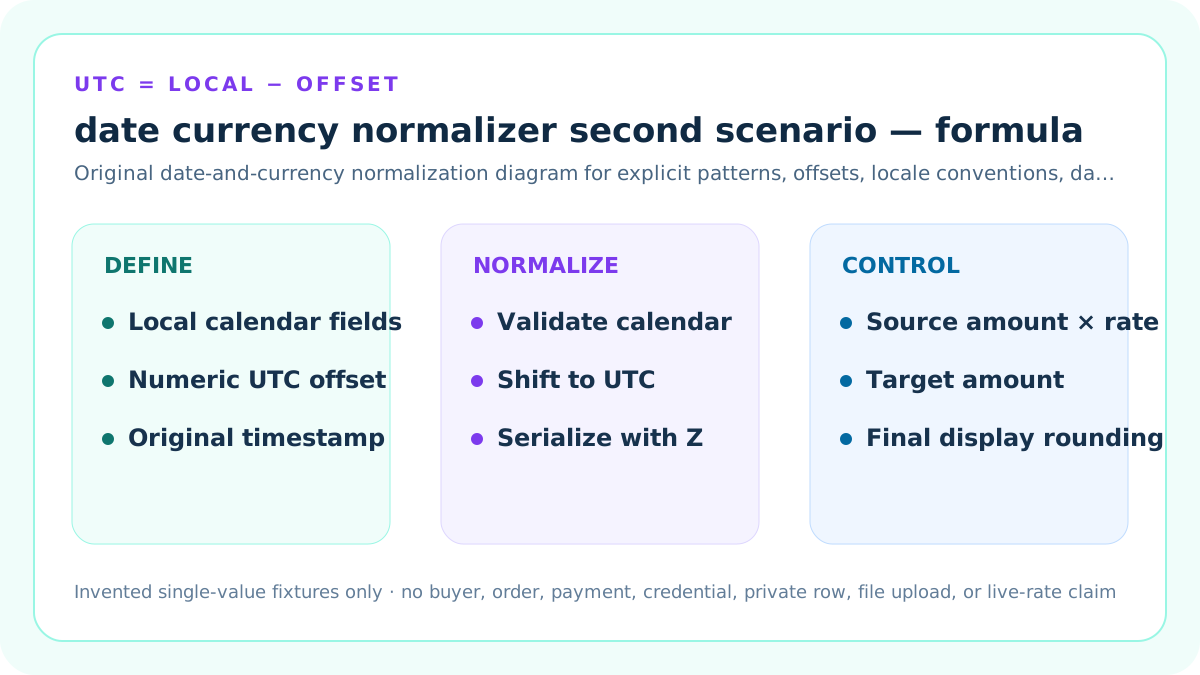
UTC result
Verify 16:45:00Z. The mixed-locale ledger records event grain, source fingerprint, invented timestamp and amount, date pattern, numeric offset or versioned zone, decimal convention, source and target currency, rate direction, observation date, precision, owner, reviewer, exception, output hash, and prior accepted rule needed for a verified mixed-locale conversion.
At checkpoint 5, reperform the applicable timestamp parse, UTC shift, amount parse, currency multiplication, rate-age comparison, or evidence decision. State whether the packet supports Ready, Review, or Block and identify the conclusion that still requires protected source, platform, accounting, tax, legal, or settlement evidence.
Period grouping
Remove declared thousands marks. The mixed-locale ledger records event grain, source fingerprint, invented timestamp and amount, date pattern, numeric offset or versioned zone, decimal convention, source and target currency, rate direction, observation date, precision, owner, reviewer, exception, output hash, and prior accepted rule needed for a verified mixed-locale conversion.
At checkpoint 6, reperform the applicable timestamp parse, UTC shift, amount parse, currency multiplication, rate-age comparison, or evidence decision. State whether the packet supports Ready, Review, or Block and identify the conclusion that still requires protected source, platform, accounting, tax, legal, or settlement evidence.
Decimal comma
Translate the fractional mark. The mixed-locale ledger records event grain, source fingerprint, invented timestamp and amount, date pattern, numeric offset or versioned zone, decimal convention, source and target currency, rate direction, observation date, precision, owner, reviewer, exception, output hash, and prior accepted rule needed for a verified mixed-locale conversion.
At checkpoint 7, reperform the applicable timestamp parse, UTC shift, amount parse, currency multiplication, rate-age comparison, or evidence decision. State whether the packet supports Ready, Review, or Block and identify the conclusion that still requires protected source, platform, accounting, tax, legal, or settlement evidence.
EUR source
Keep the original monetary unit. The mixed-locale ledger records event grain, source fingerprint, invented timestamp and amount, date pattern, numeric offset or versioned zone, decimal convention, source and target currency, rate direction, observation date, precision, owner, reviewer, exception, output hash, and prior accepted rule needed for a verified mixed-locale conversion.
At checkpoint 8, reperform the applicable timestamp parse, UTC shift, amount parse, currency multiplication, rate-age comparison, or evidence decision. State whether the packet supports Ready, Review, or Block and identify the conclusion that still requires protected source, platform, accounting, tax, legal, or settlement evidence.
USD target
Name the output unit. The mixed-locale ledger records event grain, source fingerprint, invented timestamp and amount, date pattern, numeric offset or versioned zone, decimal convention, source and target currency, rate direction, observation date, precision, owner, reviewer, exception, output hash, and prior accepted rule needed for a verified mixed-locale conversion.
At checkpoint 9, reperform the applicable timestamp parse, UTC shift, amount parse, currency multiplication, rate-age comparison, or evidence decision. State whether the packet supports Ready, Review, or Block and identify the conclusion that still requires protected source, platform, accounting, tax, legal, or settlement evidence.
Rate direction
Use USD per EUR. The mixed-locale ledger records event grain, source fingerprint, invented timestamp and amount, date pattern, numeric offset or versioned zone, decimal convention, source and target currency, rate direction, observation date, precision, owner, reviewer, exception, output hash, and prior accepted rule needed for a verified mixed-locale conversion.
At checkpoint 10, reperform the applicable timestamp parse, UTC shift, amount parse, currency multiplication, rate-age comparison, or evidence decision. State whether the packet supports Ready, Review, or Block and identify the conclusion that still requires protected source, platform, accounting, tax, legal, or settlement evidence.
Full precision
Preserve 1432.0896. The mixed-locale ledger records event grain, source fingerprint, invented timestamp and amount, date pattern, numeric offset or versioned zone, decimal convention, source and target currency, rate direction, observation date, precision, owner, reviewer, exception, output hash, and prior accepted rule needed for a verified mixed-locale conversion.
At checkpoint 11, reperform the applicable timestamp parse, UTC shift, amount parse, currency multiplication, rate-age comparison, or evidence decision. State whether the packet supports Ready, Review, or Block and identify the conclusion that still requires protected source, platform, accounting, tax, legal, or settlement evidence.
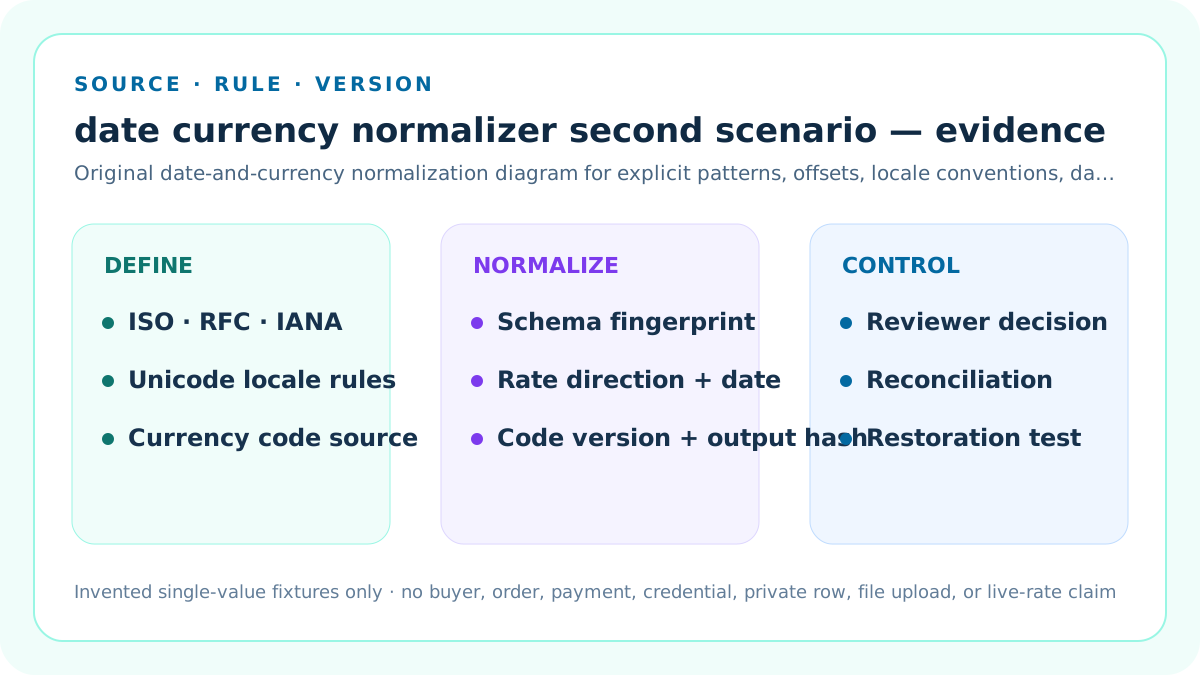
Display result
Round once to 1432.09. The mixed-locale ledger records event grain, source fingerprint, invented timestamp and amount, date pattern, numeric offset or versioned zone, decimal convention, source and target currency, rate direction, observation date, precision, owner, reviewer, exception, output hash, and prior accepted rule needed for a verified mixed-locale conversion.
At checkpoint 12, reperform the applicable timestamp parse, UTC shift, amount parse, currency multiplication, rate-age comparison, or evidence decision. State whether the packet supports Ready, Review, or Block and identify the conclusion that still requires protected source, platform, accounting, tax, legal, or settlement evidence.
Mixed-Locale Date and Currency Normalization: instant integrity control
Tie every normalized timestamp to the literal source, declared pattern, calendar validation, and explicit UTC relationship. Control 1 defines the pass condition, source pointer, reviewer question, rejected shortcut, correction deadline, monitoring signal, stop rule, and restoration trigger for a verified mixed-locale conversion.
A Z suffix cannot repair an invented offset. Keep date parsing separate from named-zone reconstruction, money parsing separate from currency conversion, and both separate from schema mapping, privacy minimization, platform settlement, accounting recognition, tax treatment, and production rewrite authority.
Mixed-Locale Date and Currency Normalization: monetary-unit integrity control
Tie every number to its source currency, target currency, rate direction, rate value, observation date, and rounding rule. Control 2 defines the pass condition, source pointer, reviewer question, rejected shortcut, correction deadline, monitoring signal, stop rule, and restoration trigger for a verified mixed-locale conversion.
A bare converted number is not evidence. Keep date parsing separate from named-zone reconstruction, money parsing separate from currency conversion, and both separate from schema mapping, privacy minimization, platform settlement, accounting recognition, tax treatment, and production rewrite authority.
Mixed-Locale Date and Currency Normalization: locale integrity control
Use an explicit date and number convention instead of browser locale guesses. Control 3 defines the pass condition, source pointer, reviewer question, rejected shortcut, correction deadline, monitoring signal, stop rule, and restoration trigger for a verified mixed-locale conversion.
Locale display and canonical storage serve different purposes. Keep date parsing separate from named-zone reconstruction, money parsing separate from currency conversion, and both separate from schema mapping, privacy minimization, platform settlement, accounting recognition, tax treatment, and production rewrite authority.
Mixed-Locale Date and Currency Normalization: privacy integrity control
Use invented single-value fixtures publicly while operational rows, identifiers, payments, credentials, and full exports remain protected. Control 4 defines the pass condition, source pointer, reviewer question, rejected shortcut, correction deadline, monitoring signal, stop rule, and restoration trigger for a verified mixed-locale conversion.
The worksheet is not a file processor. Keep date parsing separate from named-zone reconstruction, money parsing separate from currency conversion, and both separate from schema mapping, privacy minimization, platform settlement, accounting recognition, tax treatment, and production rewrite authority.
Mixed-Locale Date and Currency Normalization: human authority control
Assign source, format, zone, rate, review, stop, and restoration owners. Control 5 defines the pass condition, source pointer, reviewer question, rejected shortcut, correction deadline, monitoring signal, stop rule, and restoration trigger for a verified mixed-locale conversion.
Ready cannot authorize settlement or accounting treatment. Keep date parsing separate from named-zone reconstruction, money parsing separate from currency conversion, and both separate from schema mapping, privacy minimization, platform settlement, accounting recognition, tax treatment, and production rewrite authority.
Mixed-Locale Date and Currency Normalization: rollback integrity control
Preserve originals, rule versions, output hashes, exceptions, reconciliations, and tested restoration. Control 6 defines the pass condition, source pointer, reviewer question, rejected shortcut, correction deadline, monitoring signal, stop rule, and restoration trigger for a verified mixed-locale conversion.
Never overwrite the only source copy. Keep date parsing separate from named-zone reconstruction, money parsing separate from currency conversion, and both separate from schema mapping, privacy minimization, platform settlement, accounting recognition, tax treatment, and production rewrite authority.
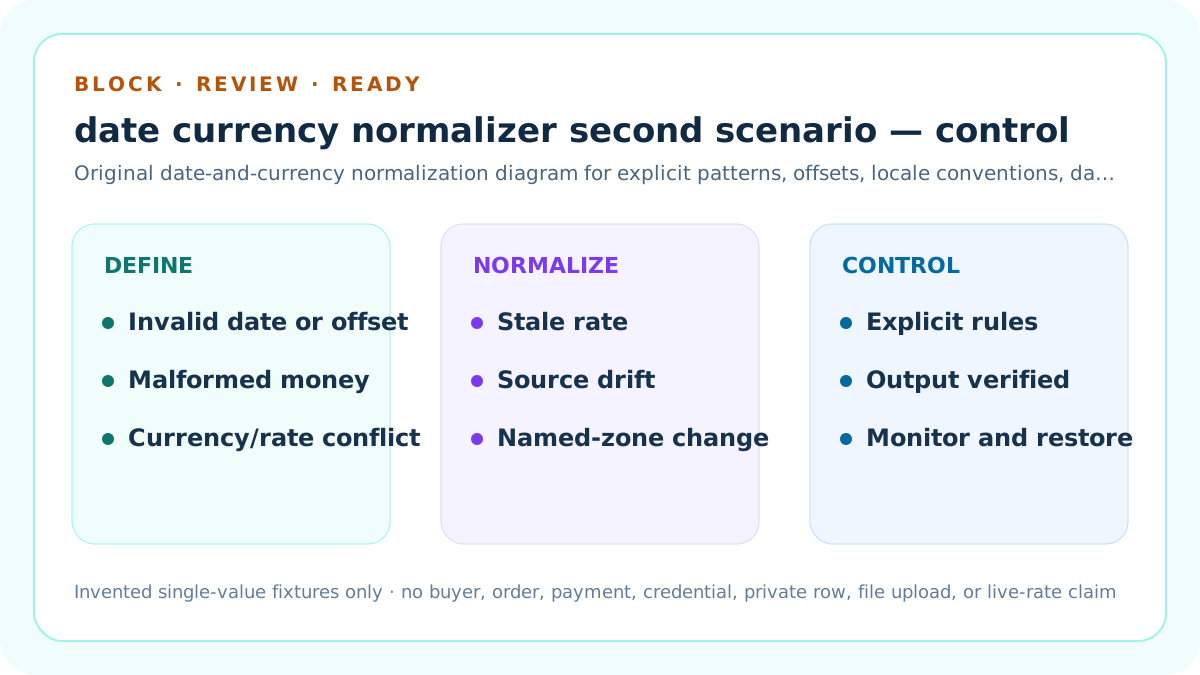
Mixed-Locale Date and Currency Normalization: versioned governance control
Require a known offset, real ordered source-review and policy dates, an evidence month containing every event and rate observation, a sufficient inclusive policy-to-review duration, explicit amount and rate maxima, and nine independent confirmations before interpreting normalized values. Control 7 defines the pass condition, source pointer, reviewer question, rejected shortcut, correction deadline, monitoring signal, stop rule, and restoration trigger for a verified mixed-locale conversion.
RFC 3339 -00:00 is unknown rather than UTC; invalid temporal governance masks every derived timestamp, amount, direction, and rate-age output. Keep date parsing separate from named-zone reconstruction, money parsing separate from currency conversion, and both separate from schema mapping, privacy minimization, platform settlement, accounting recognition, tax treatment, and production rewrite authority.
Mixed-Locale Date and Currency Normalization: blocked-output quarantine control
Treat all scenario outputs as unavailable whenever a structural, numeric, date, source, evidence, confirmation, privacy, or conflict gate Blocks. Control 8 defines the pass condition, source pointer, reviewer question, rejected shortcut, correction deadline, monitoring signal, stop rule, and restoration trigger for a verified mixed-locale conversion.
Never reuse a partial-looking blocked result in reconciliation or a protected transformation. Keep date parsing separate from named-zone reconstruction, money parsing separate from currency conversion, and both separate from schema mapping, privacy minimization, platform settlement, accounting recognition, tax treatment, and production rewrite authority.
Refund event grain: normalization lab 1
Reperform both invented fixtures. Use one invented refund event. Change one source value, pattern, offset, decimal convention, currency code, rate direction, rate value, observation date, age threshold, context, or conflict only; preserve every other assumption and record UTC, source amount, target amount, rate age, and decision.
Test clean, unsupported-pattern, impossible-date, ambiguous-zone, malformed-grouping, invalid-code, same-currency, zero-rate, invalid-rate-date, stale-rate, short-context, and open-conflict states. Record the protected source, rule version, named authority, reconciliation, monitoring signal, stop condition, and restoration action required before operational transformation.
Dot date syntax: normalization lab 2
Reperform both invented fixtures. Declare day before month. Change one source value, pattern, offset, decimal convention, currency code, rate direction, rate value, observation date, age threshold, context, or conflict only; preserve every other assumption and record UTC, source amount, target amount, rate age, and decision.
Test clean, unsupported-pattern, impossible-date, ambiguous-zone, malformed-grouping, invalid-code, same-currency, zero-rate, invalid-rate-date, stale-rate, short-context, and open-conflict states. Record the protected source, rule version, named authority, reconciliation, monitoring signal, stop condition, and restoration action required before operational transformation.
Local clock: normalization lab 3
Reperform both invented fixtures. Record 18:45:00 exactly. Change one source value, pattern, offset, decimal convention, currency code, rate direction, rate value, observation date, age threshold, context, or conflict only; preserve every other assumption and record UTC, source amount, target amount, rate age, and decision.
Test clean, unsupported-pattern, impossible-date, ambiguous-zone, malformed-grouping, invalid-code, same-currency, zero-rate, invalid-rate-date, stale-rate, short-context, and open-conflict states. Record the protected source, rule version, named authority, reconciliation, monitoring signal, stop condition, and restoration action required before operational transformation.
Positive offset: normalization lab 4
Reperform both invented fixtures. Subtract +02:00 correctly. Change one source value, pattern, offset, decimal convention, currency code, rate direction, rate value, observation date, age threshold, context, or conflict only; preserve every other assumption and record UTC, source amount, target amount, rate age, and decision.
Test clean, unsupported-pattern, impossible-date, ambiguous-zone, malformed-grouping, invalid-code, same-currency, zero-rate, invalid-rate-date, stale-rate, short-context, and open-conflict states. Record the protected source, rule version, named authority, reconciliation, monitoring signal, stop condition, and restoration action required before operational transformation.
UTC result: normalization lab 5
Reperform both invented fixtures. Verify 16:45:00Z. Change one source value, pattern, offset, decimal convention, currency code, rate direction, rate value, observation date, age threshold, context, or conflict only; preserve every other assumption and record UTC, source amount, target amount, rate age, and decision.
Test clean, unsupported-pattern, impossible-date, ambiguous-zone, malformed-grouping, invalid-code, same-currency, zero-rate, invalid-rate-date, stale-rate, short-context, and open-conflict states. Record the protected source, rule version, named authority, reconciliation, monitoring signal, stop condition, and restoration action required before operational transformation.
Period grouping: normalization lab 6
Reperform both invented fixtures. Remove declared thousands marks. Change one source value, pattern, offset, decimal convention, currency code, rate direction, rate value, observation date, age threshold, context, or conflict only; preserve every other assumption and record UTC, source amount, target amount, rate age, and decision.
Test clean, unsupported-pattern, impossible-date, ambiguous-zone, malformed-grouping, invalid-code, same-currency, zero-rate, invalid-rate-date, stale-rate, short-context, and open-conflict states. Record the protected source, rule version, named authority, reconciliation, monitoring signal, stop condition, and restoration action required before operational transformation.
Decimal comma: normalization lab 7
Reperform both invented fixtures. Translate the fractional mark. Change one source value, pattern, offset, decimal convention, currency code, rate direction, rate value, observation date, age threshold, context, or conflict only; preserve every other assumption and record UTC, source amount, target amount, rate age, and decision.
Test clean, unsupported-pattern, impossible-date, ambiguous-zone, malformed-grouping, invalid-code, same-currency, zero-rate, invalid-rate-date, stale-rate, short-context, and open-conflict states. Record the protected source, rule version, named authority, reconciliation, monitoring signal, stop condition, and restoration action required before operational transformation.
EUR source: normalization lab 8
Reperform both invented fixtures. Keep the original monetary unit. Change one source value, pattern, offset, decimal convention, currency code, rate direction, rate value, observation date, age threshold, context, or conflict only; preserve every other assumption and record UTC, source amount, target amount, rate age, and decision.
Test clean, unsupported-pattern, impossible-date, ambiguous-zone, malformed-grouping, invalid-code, same-currency, zero-rate, invalid-rate-date, stale-rate, short-context, and open-conflict states. Record the protected source, rule version, named authority, reconciliation, monitoring signal, stop condition, and restoration action required before operational transformation.
USD target: normalization lab 9
Reperform both invented fixtures. Name the output unit. Change one source value, pattern, offset, decimal convention, currency code, rate direction, rate value, observation date, age threshold, context, or conflict only; preserve every other assumption and record UTC, source amount, target amount, rate age, and decision.
Test clean, unsupported-pattern, impossible-date, ambiguous-zone, malformed-grouping, invalid-code, same-currency, zero-rate, invalid-rate-date, stale-rate, short-context, and open-conflict states. Record the protected source, rule version, named authority, reconciliation, monitoring signal, stop condition, and restoration action required before operational transformation.
Rate direction: normalization lab 10
Reperform both invented fixtures. Use USD per EUR. Change one source value, pattern, offset, decimal convention, currency code, rate direction, rate value, observation date, age threshold, context, or conflict only; preserve every other assumption and record UTC, source amount, target amount, rate age, and decision.
Test clean, unsupported-pattern, impossible-date, ambiguous-zone, malformed-grouping, invalid-code, same-currency, zero-rate, invalid-rate-date, stale-rate, short-context, and open-conflict states. Record the protected source, rule version, named authority, reconciliation, monitoring signal, stop condition, and restoration action required before operational transformation.
Full precision: normalization lab 11
Reperform both invented fixtures. Preserve 1432.0896. Change one source value, pattern, offset, decimal convention, currency code, rate direction, rate value, observation date, age threshold, context, or conflict only; preserve every other assumption and record UTC, source amount, target amount, rate age, and decision.
Test clean, unsupported-pattern, impossible-date, ambiguous-zone, malformed-grouping, invalid-code, same-currency, zero-rate, invalid-rate-date, stale-rate, short-context, and open-conflict states. Record the protected source, rule version, named authority, reconciliation, monitoring signal, stop condition, and restoration action required before operational transformation.
Display result: normalization lab 12
Reperform both invented fixtures. Round once to 1432.09. Change one source value, pattern, offset, decimal convention, currency code, rate direction, rate value, observation date, age threshold, context, or conflict only; preserve every other assumption and record UTC, source amount, target amount, rate age, and decision.
Test clean, unsupported-pattern, impossible-date, ambiguous-zone, malformed-grouping, invalid-code, same-currency, zero-rate, invalid-rate-date, stale-rate, short-context, and open-conflict states. Record the protected source, rule version, named authority, reconciliation, monitoring signal, stop condition, and restoration action required before operational transformation.
Separate storage form from regional display
A canonical UTC instant and machine-readable decimal are storage contracts, not instructions to erase regional presentation. Keep the original localized timestamp and amount beside the canonical values so a reviewer can reconstruct what the exporter showed. A customer-facing display may later use an approved locale formatter without changing the stored instant or monetary unit.
Document the display locale, numbering system, calendar, currency-display style, and formatter version separately from the import parser. That separation prevents a UI preference from silently changing source interpretation. It also makes rollback possible when a regional format update causes a visible regression.
Resolve day-month collisions explicitly
Values such as 03.04.2026 are structurally valid under both day-month and month-day readings. Never use plausibility, browser locale, operator location, or the current month to choose one. Bind the field to a versioned source-schema rule and test a deliberately asymmetric fixture such as 15.07.2026 before accepting the parser.
When the source contract is unavailable, quarantine the affected field or batch for human review. Do not average interpretations, coerce the value, or infer meaning from surrounding financial totals. Record the unresolved ambiguity as a data-quality defect with an owner and correction deadline.
Keep grouping and decimal marks as one rule
The text 1.234,56 uses a period as the grouping mark and a comma as the decimal mark in the declared fixture. Removing all punctuation first would create 123456 and destroy the fractional boundary. Parse the complete convention as one grammar, validate group widths, and then produce the numeric value 1234.56.
Reject mixed forms such as 1,234,56, inconsistent grouping such as 12.34,56, and unexplained spaces or apostrophes unless the source contract explicitly permits them. A permissive cleanup step may appear convenient but makes incorrect values look valid and weakens every later reconciliation.
Treat currency direction as dimensional analysis
The mixed-locale fixture begins with EUR and applies 1.16 USD per EUR. Multiplying EUR by USD/EUR cancels the source unit and leaves USD. Writing both numerator and denominator exposes an inverted rate before it reaches a payout, margin, or reporting workflow.
Do not assume a rate is reciprocal merely because two currencies are reversed elsewhere. Bid, ask, reference, settlement, card, platform, and seller-entered rates can differ by source, timestamp, spread, and fee treatment. Preserve the exact quotation convention and never relabel a number after calculation.
Version civil-time rules for named zones
The public fixture uses +02:00 because a numeric offset makes the transformation deterministic without external lookup. An operational source may instead identify a named region whose offset changes with legislation or daylight-saving transitions. Preserve the IANA zone name, database release, event-local fields, ambiguity policy, and resulting offset.
A zone abbreviation such as CET or CST is insufficient because abbreviations can be reused, historically variable, or interpreted differently by software. If the source supplies only an abbreviation, stop and obtain authoritative mapping evidence rather than silently substituting the machine's local zone.
Quarantine locale drift by source version
A marketplace, payment provider, spreadsheet export, or integration may change separators, date order, encoding, headers, or timezone metadata without changing the file name. Fingerprint the source schema and run sentinel fixtures before each accepted version. Route unexpected syntax to a quarantine queue instead of the production transformer.
Record the first observed date, source release, affected fields, sample-free structural evidence, reviewer, impact estimate, and restoration decision. Reprocess only after the new rule passes counterexamples and reconciles against protected aggregates. This makes schema drift observable rather than converting it into silent monetary error.
Reconcile counts and currency totals separately
Row counts can reconcile while currency interpretation is wrong, and money totals can appear plausible while timestamps shift into the wrong reporting day. Compare input and output record counts, rejected-value counts, totals by original currency, totals by target currency, event-date buckets, and exception categories as separate controls.
Do not sum unlike currencies before conversion and do not compare a rounded display total with full-precision row calculations without documenting the aggregation rule. Investigate every unexplained difference beyond the approved tolerance and retain the calculation order used to reproduce it.
Design a reversible mixed-locale migration
Before applying a new parser, preserve the prior rule set, original values, source fingerprint, code version, output hash, reconciliation baseline, exception list, and restoration command. Run the new version on a bounded protected copy, compare results, and obtain named approval before replacing downstream data.
Stop when the parser produces new invalid values, date-bucket movement, unexplained currency-total differences, excessive rate-age reviews, schema mismatches, or restoration failures. A successful migration is not merely one that finishes; it is one that can be independently re-performed and safely reversed.
Mixed-Locale Date and Currency Normalization: intent-specific implementation walkthrough
mixed-locale ledger checkpoint 1 addresses refund event grain for a verified mixed-locale conversion. Use one invented refund event. Record the accepted rule, rejected interpretation, source version, reviewer, precision, follow-up date, monitoring trigger, and rollback reference.
mixed-locale ledger checkpoint 2 addresses dot date syntax for a verified mixed-locale conversion. Declare day before month. Record the accepted rule, rejected interpretation, source version, reviewer, precision, follow-up date, monitoring trigger, and rollback reference.
mixed-locale ledger checkpoint 3 addresses local clock for a verified mixed-locale conversion. Record 18:45:00 exactly. Record the accepted rule, rejected interpretation, source version, reviewer, precision, follow-up date, monitoring trigger, and rollback reference.
mixed-locale ledger checkpoint 4 addresses positive offset for a verified mixed-locale conversion. Subtract +02:00 correctly. Record the accepted rule, rejected interpretation, source version, reviewer, precision, follow-up date, monitoring trigger, and rollback reference.
mixed-locale ledger checkpoint 5 addresses utc result for a verified mixed-locale conversion. Verify 16:45:00Z. Record the accepted rule, rejected interpretation, source version, reviewer, precision, follow-up date, monitoring trigger, and rollback reference.
mixed-locale ledger checkpoint 6 addresses period grouping for a verified mixed-locale conversion. Remove declared thousands marks. Record the accepted rule, rejected interpretation, source version, reviewer, precision, follow-up date, monitoring trigger, and rollback reference.
mixed-locale ledger checkpoint 7 addresses decimal comma for a verified mixed-locale conversion. Translate the fractional mark. Record the accepted rule, rejected interpretation, source version, reviewer, precision, follow-up date, monitoring trigger, and rollback reference.
mixed-locale ledger checkpoint 8 addresses eur source for a verified mixed-locale conversion. Keep the original monetary unit. Record the accepted rule, rejected interpretation, source version, reviewer, precision, follow-up date, monitoring trigger, and rollback reference.
mixed-locale ledger checkpoint 9 addresses usd target for a verified mixed-locale conversion. Name the output unit. Record the accepted rule, rejected interpretation, source version, reviewer, precision, follow-up date, monitoring trigger, and rollback reference.
mixed-locale ledger checkpoint 10 addresses rate direction for a verified mixed-locale conversion. Use USD per EUR. Record the accepted rule, rejected interpretation, source version, reviewer, precision, follow-up date, monitoring trigger, and rollback reference.
mixed-locale ledger checkpoint 11 addresses full precision for a verified mixed-locale conversion. Preserve 1432.0896. Record the accepted rule, rejected interpretation, source version, reviewer, precision, follow-up date, monitoring trigger, and rollback reference.
mixed-locale ledger checkpoint 12 addresses display result for a verified mixed-locale conversion. Round once to 1432.09. Record the accepted rule, rejected interpretation, source version, reviewer, precision, follow-up date, monitoring trigger, and rollback reference.
Evidence boundary for a verified mixed-locale conversion
The US fixture maps 07/15/2026 09:30:00 at -04:00 to 2026-07-15T13:30:00Z and parses 1,234.56 as 1234.56 USD before applying 0.86 EUR per USD. The mixed-locale fixture maps 15.07.2026 18:45:00 at +02:00 to 2026-07-15T16:45:00Z and parses 1.234,56 as 1234.56 EUR before applying 1.16 USD per EUR.
These invented values demonstrate deterministic contracts only. They cannot prove a live rate, historical named-zone rule, platform conversion, settlement amount, accounting recognition, tax basis, lawful processing, production-file correctness, or permission to overwrite a source.
Release, monitor, and restore the mixed-locale ledger
Block unsupported patterns, impossible dates, RFC 3339 -00:00 unknown offsets, invalid offsets, malformed amounts, currency contradictions, invalid rates or dates, event or rate dates outside the evidence month, policy dates after evidence, review dates before evidence, undersized closed windows, weak context, weak scope, and open conflicts. Review rate age above the declared threshold. Ready clears only the entered fixtures.
Before indexing or operational reuse, preserve backups and pass type, unit, integration, build, content, similarity, SEO, image, link, privacy, mobile, deployment, and live checks. Monitor source-schema, locale, zone, currency, rate, and code changes without claiming same-day traffic or financial causality.
Sources and further reading
- ISO 8601-1:2019: Current representations of Gregorian dates, 24-hour times, UTC, and time shifts for information interchange.
- RFC 3339: Internet timestamp profile in which -00:00 marks an unknown local offset rather than UTC.
- IANA Time Zone Database: Versioned civil-time, UTC-offset, and daylight-saving transition data.
- Unicode LDML dates: Locale date, clock, calendar, time-zone, and pattern-field semantics.
- Unicode LDML numbers: Locale decimal, grouping, currency-decimal, and currency-group semantics.
- ISO 4217 currency codes: Alphabetic and numeric identifiers for currencies and funds.
- ECB euro reference rates: Dated informational reference rates quoted against a declared euro base.
- Seller Profit Guard methodology: Deterministic fixtures, evidence, release, correction, monitoring, and rollback.
Related Seller Profit Guard tools
- CSV Date and Currency Normalizer: Normalize invented timestamp and amount fixtures under explicit contracts.
- Seller CSV Column Mapper: Map approved source columns to canonical fields first.
- Seller CSV Import Validator: Check synthetic structure and formula risks separately.
- Seller CSV Privacy Redactor: Minimize fields before a protected transformation.
- Marketplace Payout Anomaly Checker: Bridge normalized aggregate payout evidence separately.
- Methodology: Apply calculation, release, and rollback controls.
- Data Privacy: Keep operational rows outside public examples.
- Date and Currency Normalizer Formula Contract: Define source pattern, calendar validation, UTC offset, decimal convention, currencies, rate direction, observation date, rounding, and evidence.
- Date and Currency Normalizer US Worked Example: Reperform one MM/DD/YYYY event, negative UTC offset, comma-grouped decimal-point amount, USD source, EUR target, and dated rate.
- Date and Currency Normalization Mistakes: Diagnose ambiguous dates, alphabetic zones, rollover dates, mixed separators, unit loss, inverse rates, stale observations, and premature rounding.
- Reliable Date, Time Zone, and Currency Sources: Map every rule to ISO, IETF, IANA, Unicode, currency-code, rate-source, platform-schema, seller-record, and version evidence.
- Safe Rate-Age and Parsing Thresholds: Set zero-tolerance structural blocks, rate-age review, source freshness, precision, drift, exception, monitoring, stop, and restoration controls.
- US vs Mixed-Locale Normalization: Compare slash and dot date orders, negative and positive offsets, decimal-point and decimal-comma text, rate directions, and target outputs.
- Date and Currency Normalization Operating Routine: Build a repeatable date-and-currency workflow for schema checks, protected conversion, reconciliation, monitoring, exceptions, and rollback.
- Interpret Normalized Timestamps and Amounts: Explain what UTC output, normalized source amount, converted target amount, rate age, Ready, Review, and Block prove and cannot prove.
- Date and Currency Normalization Audit Template: Provide a standalone source-value, pattern, zone, decimal, currency, rate, precision, transformation, exception, monitoring, and restoration record.
Next step: Open Seller Profit Guard.
This is operational planning help, not tax, accounting, legal, financial, or platform-policy advice. Review the Terms and disclaimer, and verify current platform rules and fee assumptions before changing prices.