What breaks date and currency normalization?
Last updated: 2026-07-31
Written and reviewed by Seller Profit Guard Editorial Team.
Common failures guess whether 07/08 is July or August, treat EST as unique, accept February 30 through rollover, strip punctuation before identifying decimal meaning, discard currency units, invert the rate direction, use undated rates, apply current offsets historically, and round each intermediate result. Every shortcut weakens reproducibility.
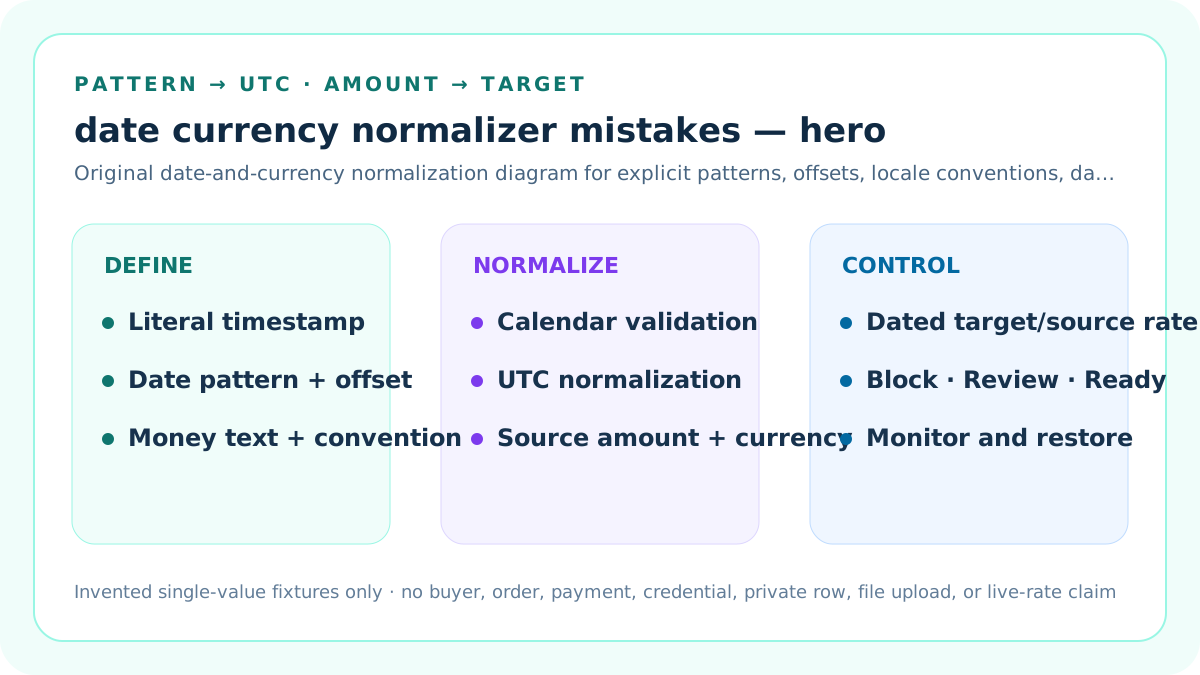
Guess date order
Never infer slash-date meaning. The correction register records event grain, source fingerprint, invented timestamp and amount, date pattern, numeric offset or versioned zone, decimal convention, source and target currency, rate direction, observation date, precision, owner, reviewer, exception, output hash, and prior accepted rule needed for a corrected normalization packet.
At checkpoint 1, reperform the applicable timestamp parse, UTC shift, amount parse, currency multiplication, rate-age comparison, or evidence decision. State whether the packet supports Ready, Review, or Block and identify the conclusion that still requires protected source, platform, accounting, tax, legal, or settlement evidence.
Use two-digit years
Require four digits. The correction register records event grain, source fingerprint, invented timestamp and amount, date pattern, numeric offset or versioned zone, decimal convention, source and target currency, rate direction, observation date, precision, owner, reviewer, exception, output hash, and prior accepted rule needed for a corrected normalization packet.
At checkpoint 2, reperform the applicable timestamp parse, UTC shift, amount parse, currency multiplication, rate-age comparison, or evidence decision. State whether the packet supports Ready, Review, or Block and identify the conclusion that still requires protected source, platform, accounting, tax, legal, or settlement evidence.
Trust rollover
Reject impossible calendar fields. The correction register records event grain, source fingerprint, invented timestamp and amount, date pattern, numeric offset or versioned zone, decimal convention, source and target currency, rate direction, observation date, precision, owner, reviewer, exception, output hash, and prior accepted rule needed for a corrected normalization packet.
At checkpoint 3, reperform the applicable timestamp parse, UTC shift, amount parse, currency multiplication, rate-age comparison, or evidence decision. State whether the packet supports Ready, Review, or Block and identify the conclusion that still requires protected source, platform, accounting, tax, legal, or settlement evidence.
Use zone abbreviations
Prefer offset or versioned IANA name. The correction register records event grain, source fingerprint, invented timestamp and amount, date pattern, numeric offset or versioned zone, decimal convention, source and target currency, rate direction, observation date, precision, owner, reviewer, exception, output hash, and prior accepted rule needed for a corrected normalization packet.
At checkpoint 4, reperform the applicable timestamp parse, UTC shift, amount parse, currency multiplication, rate-age comparison, or evidence decision. State whether the packet supports Ready, Review, or Block and identify the conclusion that still requires protected source, platform, accounting, tax, legal, or settlement evidence.
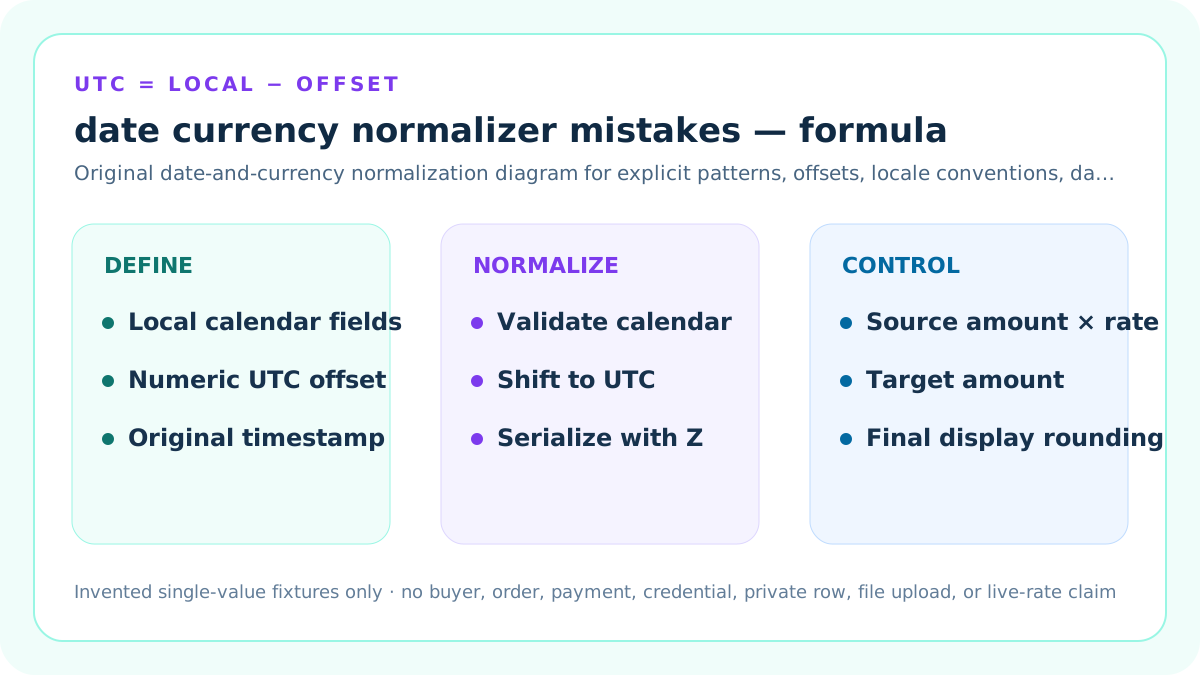
Apply current offset historically
Use event-time rules. The correction register records event grain, source fingerprint, invented timestamp and amount, date pattern, numeric offset or versioned zone, decimal convention, source and target currency, rate direction, observation date, precision, owner, reviewer, exception, output hash, and prior accepted rule needed for a corrected normalization packet.
At checkpoint 5, reperform the applicable timestamp parse, UTC shift, amount parse, currency multiplication, rate-age comparison, or evidence decision. State whether the packet supports Ready, Review, or Block and identify the conclusion that still requires protected source, platform, accounting, tax, legal, or settlement evidence.
Strip punctuation
Declare decimal semantics first. The correction register records event grain, source fingerprint, invented timestamp and amount, date pattern, numeric offset or versioned zone, decimal convention, source and target currency, rate direction, observation date, precision, owner, reviewer, exception, output hash, and prior accepted rule needed for a corrected normalization packet.
At checkpoint 6, reperform the applicable timestamp parse, UTC shift, amount parse, currency multiplication, rate-age comparison, or evidence decision. State whether the packet supports Ready, Review, or Block and identify the conclusion that still requires protected source, platform, accounting, tax, legal, or settlement evidence.
Drop currency code
Amounts require units. The correction register records event grain, source fingerprint, invented timestamp and amount, date pattern, numeric offset or versioned zone, decimal convention, source and target currency, rate direction, observation date, precision, owner, reviewer, exception, output hash, and prior accepted rule needed for a corrected normalization packet.
At checkpoint 7, reperform the applicable timestamp parse, UTC shift, amount parse, currency multiplication, rate-age comparison, or evidence decision. State whether the packet supports Ready, Review, or Block and identify the conclusion that still requires protected source, platform, accounting, tax, legal, or settlement evidence.
Invert rate
Label numerator and denominator. The correction register records event grain, source fingerprint, invented timestamp and amount, date pattern, numeric offset or versioned zone, decimal convention, source and target currency, rate direction, observation date, precision, owner, reviewer, exception, output hash, and prior accepted rule needed for a corrected normalization packet.
At checkpoint 8, reperform the applicable timestamp parse, UTC shift, amount parse, currency multiplication, rate-age comparison, or evidence decision. State whether the packet supports Ready, Review, or Block and identify the conclusion that still requires protected source, platform, accounting, tax, legal, or settlement evidence.
Use undated rate
Preserve observation date. The correction register records event grain, source fingerprint, invented timestamp and amount, date pattern, numeric offset or versioned zone, decimal convention, source and target currency, rate direction, observation date, precision, owner, reviewer, exception, output hash, and prior accepted rule needed for a corrected normalization packet.
At checkpoint 9, reperform the applicable timestamp parse, UTC shift, amount parse, currency multiplication, rate-age comparison, or evidence decision. State whether the packet supports Ready, Review, or Block and identify the conclusion that still requires protected source, platform, accounting, tax, legal, or settlement evidence.
Round early
Keep calculation precision. The correction register records event grain, source fingerprint, invented timestamp and amount, date pattern, numeric offset or versioned zone, decimal convention, source and target currency, rate direction, observation date, precision, owner, reviewer, exception, output hash, and prior accepted rule needed for a corrected normalization packet.
At checkpoint 10, reperform the applicable timestamp parse, UTC shift, amount parse, currency multiplication, rate-age comparison, or evidence decision. State whether the packet supports Ready, Review, or Block and identify the conclusion that still requires protected source, platform, accounting, tax, legal, or settlement evidence.
Overwrite source
Preserve originals. The correction register records event grain, source fingerprint, invented timestamp and amount, date pattern, numeric offset or versioned zone, decimal convention, source and target currency, rate direction, observation date, precision, owner, reviewer, exception, output hash, and prior accepted rule needed for a corrected normalization packet.
At checkpoint 11, reperform the applicable timestamp parse, UTC shift, amount parse, currency multiplication, rate-age comparison, or evidence decision. State whether the packet supports Ready, Review, or Block and identify the conclusion that still requires protected source, platform, accounting, tax, legal, or settlement evidence.
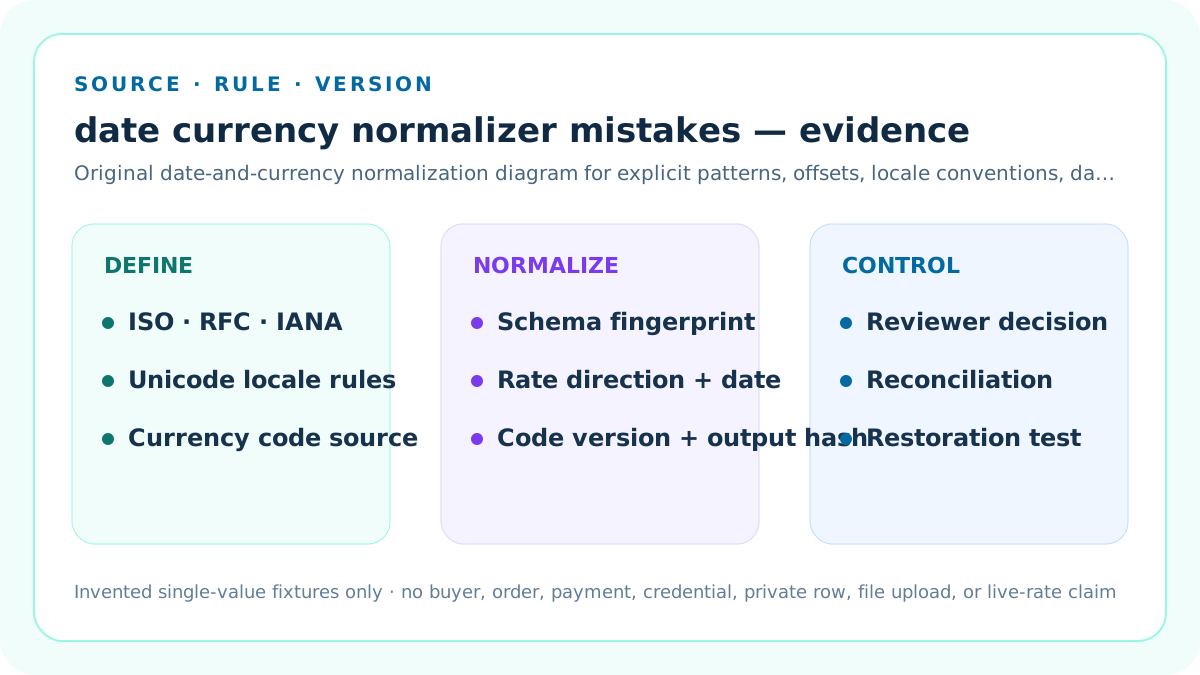
Call result settlement
Separate platform evidence. The correction register records event grain, source fingerprint, invented timestamp and amount, date pattern, numeric offset or versioned zone, decimal convention, source and target currency, rate direction, observation date, precision, owner, reviewer, exception, output hash, and prior accepted rule needed for a corrected normalization packet.
At checkpoint 12, reperform the applicable timestamp parse, UTC shift, amount parse, currency multiplication, rate-age comparison, or evidence decision. State whether the packet supports Ready, Review, or Block and identify the conclusion that still requires protected source, platform, accounting, tax, legal, or settlement evidence.
Date and Currency Normalization Mistakes: instant integrity control
Tie every normalized timestamp to the literal source, declared pattern, calendar validation, and explicit UTC relationship. Control 1 defines the pass condition, source pointer, reviewer question, rejected shortcut, correction deadline, monitoring signal, stop rule, and restoration trigger for a corrected normalization packet.
A Z suffix cannot repair an invented offset. Keep date parsing separate from named-zone reconstruction, money parsing separate from currency conversion, and both separate from schema mapping, privacy minimization, platform settlement, accounting recognition, tax treatment, and production rewrite authority.
Date and Currency Normalization Mistakes: monetary-unit integrity control
Tie every number to its source currency, target currency, rate direction, rate value, observation date, and rounding rule. Control 2 defines the pass condition, source pointer, reviewer question, rejected shortcut, correction deadline, monitoring signal, stop rule, and restoration trigger for a corrected normalization packet.
A bare converted number is not evidence. Keep date parsing separate from named-zone reconstruction, money parsing separate from currency conversion, and both separate from schema mapping, privacy minimization, platform settlement, accounting recognition, tax treatment, and production rewrite authority.
Date and Currency Normalization Mistakes: locale integrity control
Use an explicit date and number convention instead of browser locale guesses. Control 3 defines the pass condition, source pointer, reviewer question, rejected shortcut, correction deadline, monitoring signal, stop rule, and restoration trigger for a corrected normalization packet.
Locale display and canonical storage serve different purposes. Keep date parsing separate from named-zone reconstruction, money parsing separate from currency conversion, and both separate from schema mapping, privacy minimization, platform settlement, accounting recognition, tax treatment, and production rewrite authority.
Date and Currency Normalization Mistakes: privacy integrity control
Use invented single-value fixtures publicly while operational rows, identifiers, payments, credentials, and full exports remain protected. Control 4 defines the pass condition, source pointer, reviewer question, rejected shortcut, correction deadline, monitoring signal, stop rule, and restoration trigger for a corrected normalization packet.
The worksheet is not a file processor. Keep date parsing separate from named-zone reconstruction, money parsing separate from currency conversion, and both separate from schema mapping, privacy minimization, platform settlement, accounting recognition, tax treatment, and production rewrite authority.
Date and Currency Normalization Mistakes: human authority control
Assign source, format, zone, rate, review, stop, and restoration owners. Control 5 defines the pass condition, source pointer, reviewer question, rejected shortcut, correction deadline, monitoring signal, stop rule, and restoration trigger for a corrected normalization packet.
Ready cannot authorize settlement or accounting treatment. Keep date parsing separate from named-zone reconstruction, money parsing separate from currency conversion, and both separate from schema mapping, privacy minimization, platform settlement, accounting recognition, tax treatment, and production rewrite authority.
Date and Currency Normalization Mistakes: rollback integrity control
Preserve originals, rule versions, output hashes, exceptions, reconciliations, and tested restoration. Control 6 defines the pass condition, source pointer, reviewer question, rejected shortcut, correction deadline, monitoring signal, stop rule, and restoration trigger for a corrected normalization packet.
Never overwrite the only source copy. Keep date parsing separate from named-zone reconstruction, money parsing separate from currency conversion, and both separate from schema mapping, privacy minimization, platform settlement, accounting recognition, tax treatment, and production rewrite authority.
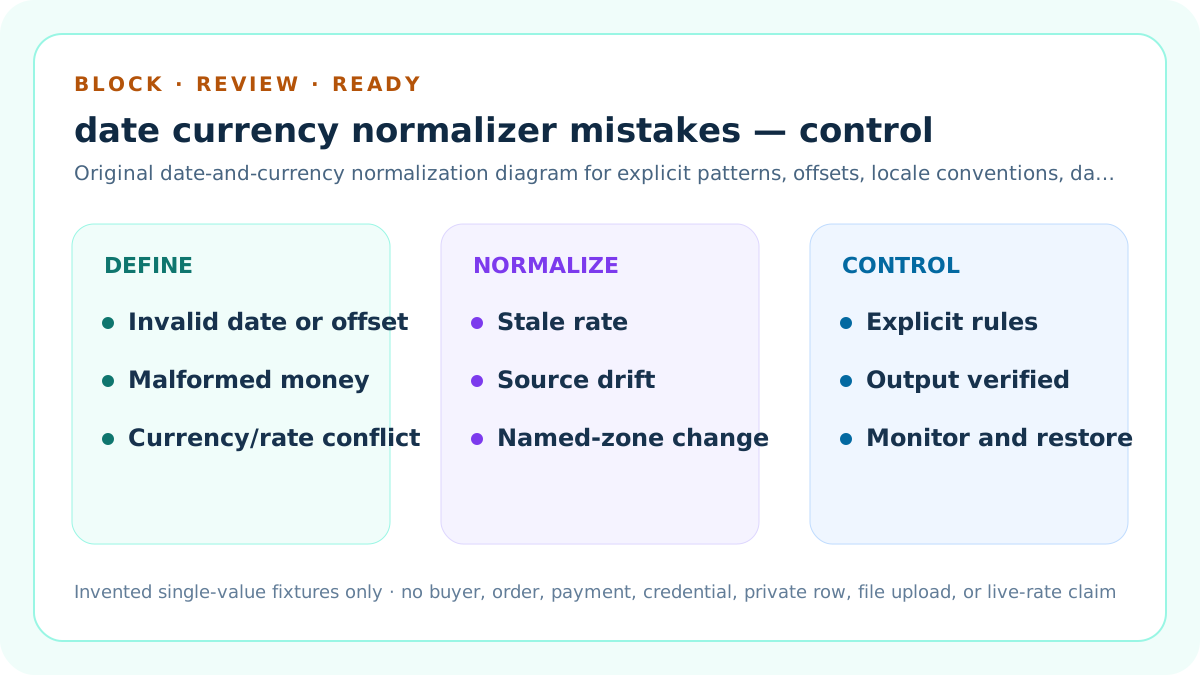
Date and Currency Normalization Mistakes: versioned governance control
Require a known offset, real ordered source-review and policy dates, an evidence month containing every event and rate observation, a sufficient inclusive policy-to-review duration, explicit amount and rate maxima, and nine independent confirmations before interpreting normalized values. Control 7 defines the pass condition, source pointer, reviewer question, rejected shortcut, correction deadline, monitoring signal, stop rule, and restoration trigger for a corrected normalization packet.
RFC 3339 -00:00 is unknown rather than UTC; invalid temporal governance masks every derived timestamp, amount, direction, and rate-age output. Keep date parsing separate from named-zone reconstruction, money parsing separate from currency conversion, and both separate from schema mapping, privacy minimization, platform settlement, accounting recognition, tax treatment, and production rewrite authority.
Date and Currency Normalization Mistakes: blocked-output quarantine control
Treat all scenario outputs as unavailable whenever a structural, numeric, date, source, evidence, confirmation, privacy, or conflict gate Blocks. Control 8 defines the pass condition, source pointer, reviewer question, rejected shortcut, correction deadline, monitoring signal, stop rule, and restoration trigger for a corrected normalization packet.
Never reuse a partial-looking blocked result in reconciliation or a protected transformation. Keep date parsing separate from named-zone reconstruction, money parsing separate from currency conversion, and both separate from schema mapping, privacy minimization, platform settlement, accounting recognition, tax treatment, and production rewrite authority.
Guess date order: normalization lab 1
Reperform both invented fixtures. Never infer slash-date meaning. Change one source value, pattern, offset, decimal convention, currency code, rate direction, rate value, observation date, age threshold, context, or conflict only; preserve every other assumption and record UTC, source amount, target amount, rate age, and decision.
Test clean, unsupported-pattern, impossible-date, ambiguous-zone, malformed-grouping, invalid-code, same-currency, zero-rate, invalid-rate-date, stale-rate, short-context, and open-conflict states. Record the protected source, rule version, named authority, reconciliation, monitoring signal, stop condition, and restoration action required before operational transformation.
Use two-digit years: normalization lab 2
Reperform both invented fixtures. Require four digits. Change one source value, pattern, offset, decimal convention, currency code, rate direction, rate value, observation date, age threshold, context, or conflict only; preserve every other assumption and record UTC, source amount, target amount, rate age, and decision.
Test clean, unsupported-pattern, impossible-date, ambiguous-zone, malformed-grouping, invalid-code, same-currency, zero-rate, invalid-rate-date, stale-rate, short-context, and open-conflict states. Record the protected source, rule version, named authority, reconciliation, monitoring signal, stop condition, and restoration action required before operational transformation.
Trust rollover: normalization lab 3
Reperform both invented fixtures. Reject impossible calendar fields. Change one source value, pattern, offset, decimal convention, currency code, rate direction, rate value, observation date, age threshold, context, or conflict only; preserve every other assumption and record UTC, source amount, target amount, rate age, and decision.
Test clean, unsupported-pattern, impossible-date, ambiguous-zone, malformed-grouping, invalid-code, same-currency, zero-rate, invalid-rate-date, stale-rate, short-context, and open-conflict states. Record the protected source, rule version, named authority, reconciliation, monitoring signal, stop condition, and restoration action required before operational transformation.
Use zone abbreviations: normalization lab 4
Reperform both invented fixtures. Prefer offset or versioned IANA name. Change one source value, pattern, offset, decimal convention, currency code, rate direction, rate value, observation date, age threshold, context, or conflict only; preserve every other assumption and record UTC, source amount, target amount, rate age, and decision.
Test clean, unsupported-pattern, impossible-date, ambiguous-zone, malformed-grouping, invalid-code, same-currency, zero-rate, invalid-rate-date, stale-rate, short-context, and open-conflict states. Record the protected source, rule version, named authority, reconciliation, monitoring signal, stop condition, and restoration action required before operational transformation.
Apply current offset historically: normalization lab 5
Reperform both invented fixtures. Use event-time rules. Change one source value, pattern, offset, decimal convention, currency code, rate direction, rate value, observation date, age threshold, context, or conflict only; preserve every other assumption and record UTC, source amount, target amount, rate age, and decision.
Test clean, unsupported-pattern, impossible-date, ambiguous-zone, malformed-grouping, invalid-code, same-currency, zero-rate, invalid-rate-date, stale-rate, short-context, and open-conflict states. Record the protected source, rule version, named authority, reconciliation, monitoring signal, stop condition, and restoration action required before operational transformation.
Strip punctuation: normalization lab 6
Reperform both invented fixtures. Declare decimal semantics first. Change one source value, pattern, offset, decimal convention, currency code, rate direction, rate value, observation date, age threshold, context, or conflict only; preserve every other assumption and record UTC, source amount, target amount, rate age, and decision.
Test clean, unsupported-pattern, impossible-date, ambiguous-zone, malformed-grouping, invalid-code, same-currency, zero-rate, invalid-rate-date, stale-rate, short-context, and open-conflict states. Record the protected source, rule version, named authority, reconciliation, monitoring signal, stop condition, and restoration action required before operational transformation.
Drop currency code: normalization lab 7
Reperform both invented fixtures. Amounts require units. Change one source value, pattern, offset, decimal convention, currency code, rate direction, rate value, observation date, age threshold, context, or conflict only; preserve every other assumption and record UTC, source amount, target amount, rate age, and decision.
Test clean, unsupported-pattern, impossible-date, ambiguous-zone, malformed-grouping, invalid-code, same-currency, zero-rate, invalid-rate-date, stale-rate, short-context, and open-conflict states. Record the protected source, rule version, named authority, reconciliation, monitoring signal, stop condition, and restoration action required before operational transformation.
Invert rate: normalization lab 8
Reperform both invented fixtures. Label numerator and denominator. Change one source value, pattern, offset, decimal convention, currency code, rate direction, rate value, observation date, age threshold, context, or conflict only; preserve every other assumption and record UTC, source amount, target amount, rate age, and decision.
Test clean, unsupported-pattern, impossible-date, ambiguous-zone, malformed-grouping, invalid-code, same-currency, zero-rate, invalid-rate-date, stale-rate, short-context, and open-conflict states. Record the protected source, rule version, named authority, reconciliation, monitoring signal, stop condition, and restoration action required before operational transformation.
Use undated rate: normalization lab 9
Reperform both invented fixtures. Preserve observation date. Change one source value, pattern, offset, decimal convention, currency code, rate direction, rate value, observation date, age threshold, context, or conflict only; preserve every other assumption and record UTC, source amount, target amount, rate age, and decision.
Test clean, unsupported-pattern, impossible-date, ambiguous-zone, malformed-grouping, invalid-code, same-currency, zero-rate, invalid-rate-date, stale-rate, short-context, and open-conflict states. Record the protected source, rule version, named authority, reconciliation, monitoring signal, stop condition, and restoration action required before operational transformation.
Round early: normalization lab 10
Reperform both invented fixtures. Keep calculation precision. Change one source value, pattern, offset, decimal convention, currency code, rate direction, rate value, observation date, age threshold, context, or conflict only; preserve every other assumption and record UTC, source amount, target amount, rate age, and decision.
Test clean, unsupported-pattern, impossible-date, ambiguous-zone, malformed-grouping, invalid-code, same-currency, zero-rate, invalid-rate-date, stale-rate, short-context, and open-conflict states. Record the protected source, rule version, named authority, reconciliation, monitoring signal, stop condition, and restoration action required before operational transformation.
Overwrite source: normalization lab 11
Reperform both invented fixtures. Preserve originals. Change one source value, pattern, offset, decimal convention, currency code, rate direction, rate value, observation date, age threshold, context, or conflict only; preserve every other assumption and record UTC, source amount, target amount, rate age, and decision.
Test clean, unsupported-pattern, impossible-date, ambiguous-zone, malformed-grouping, invalid-code, same-currency, zero-rate, invalid-rate-date, stale-rate, short-context, and open-conflict states. Record the protected source, rule version, named authority, reconciliation, monitoring signal, stop condition, and restoration action required before operational transformation.
Call result settlement: normalization lab 12
Reperform both invented fixtures. Separate platform evidence. Change one source value, pattern, offset, decimal convention, currency code, rate direction, rate value, observation date, age threshold, context, or conflict only; preserve every other assumption and record UTC, source amount, target amount, rate age, and decision.
Test clean, unsupported-pattern, impossible-date, ambiguous-zone, malformed-grouping, invalid-code, same-currency, zero-rate, invalid-rate-date, stale-rate, short-context, and open-conflict states. Record the protected source, rule version, named authority, reconciliation, monitoring signal, stop condition, and restoration action required before operational transformation.
Date and Currency Normalization Mistakes: intent-specific implementation walkthrough
correction register checkpoint 1 addresses guess date order for a corrected normalization packet. Never infer slash-date meaning. Record the accepted rule, rejected interpretation, source version, reviewer, precision, follow-up date, monitoring trigger, and rollback reference.
correction register checkpoint 2 addresses use two-digit years for a corrected normalization packet. Require four digits. Record the accepted rule, rejected interpretation, source version, reviewer, precision, follow-up date, monitoring trigger, and rollback reference.
correction register checkpoint 3 addresses trust rollover for a corrected normalization packet. Reject impossible calendar fields. Record the accepted rule, rejected interpretation, source version, reviewer, precision, follow-up date, monitoring trigger, and rollback reference.
correction register checkpoint 4 addresses use zone abbreviations for a corrected normalization packet. Prefer offset or versioned IANA name. Record the accepted rule, rejected interpretation, source version, reviewer, precision, follow-up date, monitoring trigger, and rollback reference.
correction register checkpoint 5 addresses apply current offset historically for a corrected normalization packet. Use event-time rules. Record the accepted rule, rejected interpretation, source version, reviewer, precision, follow-up date, monitoring trigger, and rollback reference.
correction register checkpoint 6 addresses strip punctuation for a corrected normalization packet. Declare decimal semantics first. Record the accepted rule, rejected interpretation, source version, reviewer, precision, follow-up date, monitoring trigger, and rollback reference.
correction register checkpoint 7 addresses drop currency code for a corrected normalization packet. Amounts require units. Record the accepted rule, rejected interpretation, source version, reviewer, precision, follow-up date, monitoring trigger, and rollback reference.
correction register checkpoint 8 addresses invert rate for a corrected normalization packet. Label numerator and denominator. Record the accepted rule, rejected interpretation, source version, reviewer, precision, follow-up date, monitoring trigger, and rollback reference.
correction register checkpoint 9 addresses use undated rate for a corrected normalization packet. Preserve observation date. Record the accepted rule, rejected interpretation, source version, reviewer, precision, follow-up date, monitoring trigger, and rollback reference.
correction register checkpoint 10 addresses round early for a corrected normalization packet. Keep calculation precision. Record the accepted rule, rejected interpretation, source version, reviewer, precision, follow-up date, monitoring trigger, and rollback reference.
correction register checkpoint 11 addresses overwrite source for a corrected normalization packet. Preserve originals. Record the accepted rule, rejected interpretation, source version, reviewer, precision, follow-up date, monitoring trigger, and rollback reference.
correction register checkpoint 12 addresses call result settlement for a corrected normalization packet. Separate platform evidence. Record the accepted rule, rejected interpretation, source version, reviewer, precision, follow-up date, monitoring trigger, and rollback reference.
Evidence boundary for a corrected normalization packet
The US fixture maps 07/15/2026 09:30:00 at -04:00 to 2026-07-15T13:30:00Z and parses 1,234.56 as 1234.56 USD before applying 0.86 EUR per USD. The mixed-locale fixture maps 15.07.2026 18:45:00 at +02:00 to 2026-07-15T16:45:00Z and parses 1.234,56 as 1234.56 EUR before applying 1.16 USD per EUR.
These invented values demonstrate deterministic contracts only. They cannot prove a live rate, historical named-zone rule, platform conversion, settlement amount, accounting recognition, tax basis, lawful processing, production-file correctness, or permission to overwrite a source.
Release, monitor, and restore the correction register
Block unsupported patterns, impossible dates, RFC 3339 -00:00 unknown offsets, invalid offsets, malformed amounts, currency contradictions, invalid rates or dates, event or rate dates outside the evidence month, policy dates after evidence, review dates before evidence, undersized closed windows, weak context, weak scope, and open conflicts. Review rate age above the declared threshold. Ready clears only the entered fixtures.
Before indexing or operational reuse, preserve backups and pass type, unit, integration, build, content, similarity, SEO, image, link, privacy, mobile, deployment, and live checks. Monitor source-schema, locale, zone, currency, rate, and code changes without claiming same-day traffic or financial causality.
Sources and further reading
- ISO 8601-1:2019: Current representations of Gregorian dates, 24-hour times, UTC, and time shifts for information interchange.
- RFC 3339: Internet timestamp profile in which -00:00 marks an unknown local offset rather than UTC.
- IANA Time Zone Database: Versioned civil-time, UTC-offset, and daylight-saving transition data.
- Unicode LDML dates: Locale date, clock, calendar, time-zone, and pattern-field semantics.
- Unicode LDML numbers: Locale decimal, grouping, currency-decimal, and currency-group semantics.
- ISO 4217 currency codes: Alphabetic and numeric identifiers for currencies and funds.
- ECB euro reference rates: Dated informational reference rates quoted against a declared euro base.
- Seller Profit Guard methodology: Deterministic fixtures, evidence, release, correction, monitoring, and rollback.
Related Seller Profit Guard tools
- CSV Date and Currency Normalizer: Normalize invented timestamp and amount fixtures under explicit contracts.
- Seller CSV Column Mapper: Map approved source columns to canonical fields first.
- Seller CSV Import Validator: Check synthetic structure and formula risks separately.
- Seller CSV Privacy Redactor: Minimize fields before a protected transformation.
- Marketplace Payout Anomaly Checker: Bridge normalized aggregate payout evidence separately.
- Methodology: Apply calculation, release, and rollback controls.
- Data Privacy: Keep operational rows outside public examples.
- Date and Currency Normalizer Formula Contract: Define source pattern, calendar validation, UTC offset, decimal convention, currencies, rate direction, observation date, rounding, and evidence.
- Date and Currency Normalizer US Worked Example: Reperform one MM/DD/YYYY event, negative UTC offset, comma-grouped decimal-point amount, USD source, EUR target, and dated rate.
- Mixed-Locale Date and Currency Normalization: Resolve a DD.MM.YYYY event, positive UTC offset, period-grouped decimal-comma amount, EUR source, USD target, and dated rate.
- Reliable Date, Time Zone, and Currency Sources: Map every rule to ISO, IETF, IANA, Unicode, currency-code, rate-source, platform-schema, seller-record, and version evidence.
- Safe Rate-Age and Parsing Thresholds: Set zero-tolerance structural blocks, rate-age review, source freshness, precision, drift, exception, monitoring, stop, and restoration controls.
- US vs Mixed-Locale Normalization: Compare slash and dot date orders, negative and positive offsets, decimal-point and decimal-comma text, rate directions, and target outputs.
- Date and Currency Normalization Operating Routine: Build a repeatable date-and-currency workflow for schema checks, protected conversion, reconciliation, monitoring, exceptions, and rollback.
- Interpret Normalized Timestamps and Amounts: Explain what UTC output, normalized source amount, converted target amount, rate age, Ready, Review, and Block prove and cannot prove.
- Date and Currency Normalization Audit Template: Provide a standalone source-value, pattern, zone, decimal, currency, rate, precision, transformation, exception, monitoring, and restoration record.
Next step: Open Seller Profit Guard.
This is operational planning help, not tax, accounting, legal, financial, or platform-policy advice. Review the Terms and disclaimer, and verify current platform rules and fee assumptions before changing prices.