Damaged order loss formula, inputs, and assumptions
Last updated: 2026-07-31
Written and reviewed by Seller Profit Guard Editorial Team.
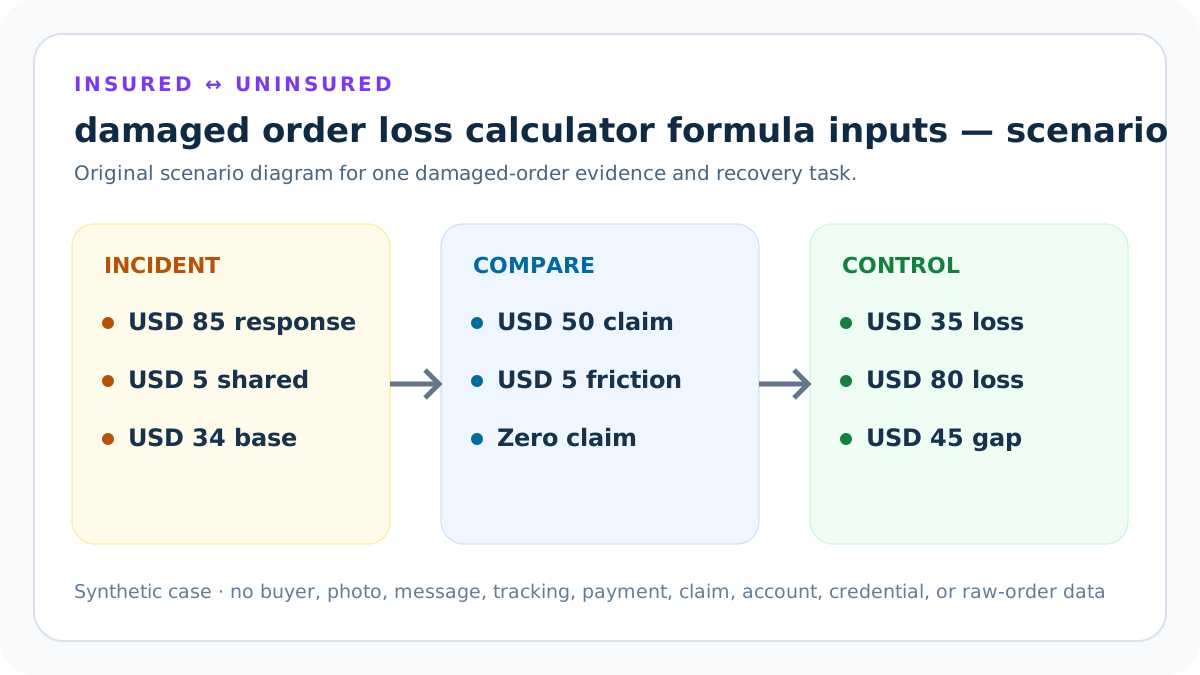
Freeze one damaged-order remedy packet. Calculate shared response cost, subtract verified fee credit, salvage, and other recovery, then compare insured loss with recognized claim recovery against uninsured loss. Keep pending recovery separate and report remaining contribution, loss difference, and seller-owned target headroom.
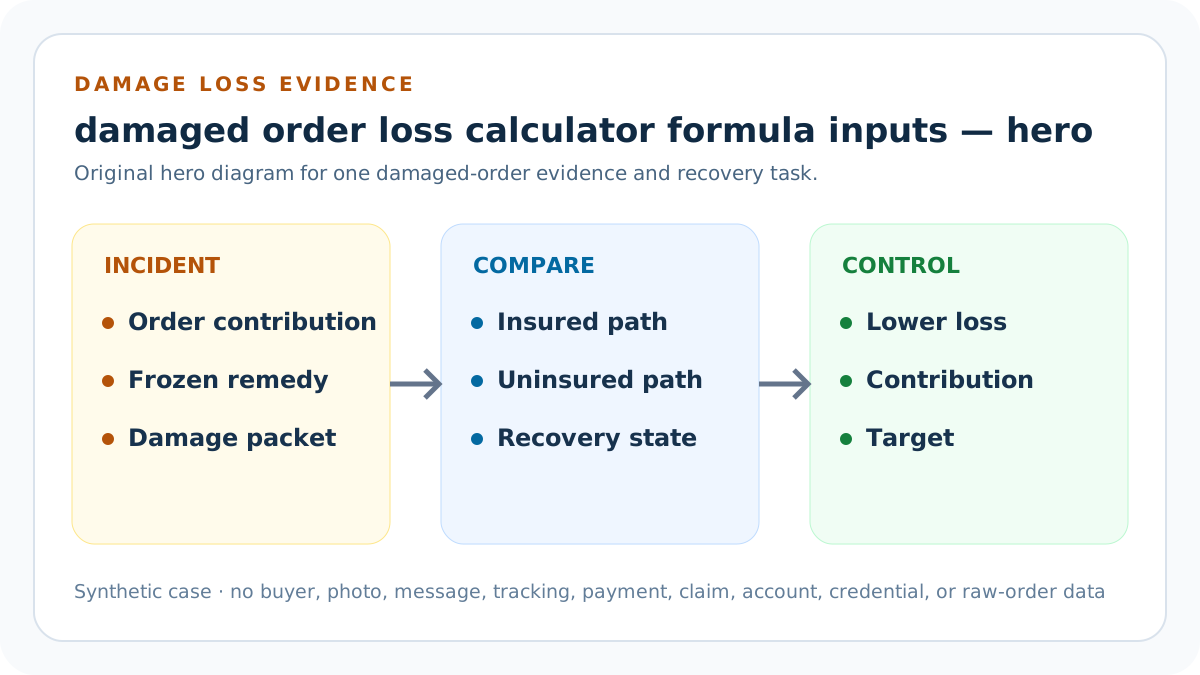
Freeze the incident grain
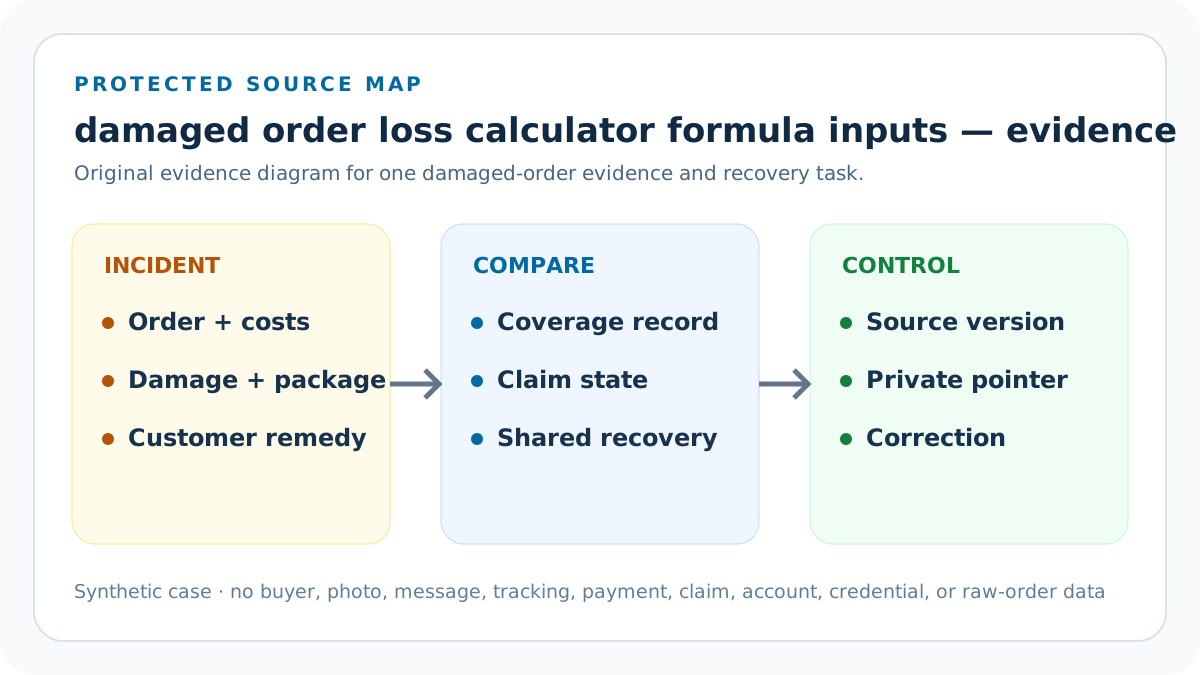
Store one order alias, item population, damage event, remedy packet, carrier service, packaging state, currency, and evidence month before entering amounts. The damage-loss formula specification records source, date, owner, currency, incident grain, evidence state, transformation, output, and correction route so another reviewer can reproduce a typed and reproducible insured-versus-uninsured loss comparison.
Control 1.1 keeps private buyer, message, photo, tracking, case, payment, invoice, claim, account, credential, and raw-order material outside the public page. Use protected aliases and redacted evidence pointers.
Type original order economics
Record literal merchandise, buyer shipping, direct product cost, original postage, and entered fees to reconstruct contribution before damage. The damage-loss formula specification records source, date, owner, currency, incident grain, evidence state, transformation, output, and correction route so another reviewer can reproduce a typed and reproducible insured-versus-uninsured loss comparison.
Control 2.1 keeps private buyer, message, photo, tracking, case, payment, invoice, claim, account, credential, and raw-order material outside the public page. Use protected aliases and redacted evidence pointers.
Type customer cash returned
Separate merchandise returned from shipping returned and cap each at its matching original order amount. The damage-loss formula specification records source, date, owner, currency, incident grain, evidence state, transformation, output, and correction route so another reviewer can reproduce a typed and reproducible insured-versus-uninsured loss comparison.
Control 3.1 keeps private buyer, message, photo, tracking, case, payment, invoice, claim, account, credential, and raw-order material outside the public page. Use protected aliases and redacted evidence pointers.
Type replacement fulfillment
Record replacement quantity, current direct unit cost, outbound shipping, and packaging without duplicating original fulfillment. The damage-loss formula specification records source, date, owner, currency, incident grain, evidence state, transformation, output, and correction route so another reviewer can reproduce a typed and reproducible insured-versus-uninsured loss comparison.
Control 4.1 keeps private buyer, message, photo, tracking, case, payment, invoice, claim, account, credential, and raw-order material outside the public page. Use protected aliases and redacted evidence pointers.
Type physical damage handling
Record return, inspection, repair, disposal, and support handling as explicit case-specific costs. The damage-loss formula specification records source, date, owner, currency, incident grain, evidence state, transformation, output, and correction route so another reviewer can reproduce a typed and reproducible insured-versus-uninsured loss comparison.
Control 5.1 keeps private buyer, message, photo, tracking, case, payment, invoice, claim, account, credential, and raw-order material outside the public page. Use protected aliases and redacted evidence pointers.
Type shared recovery
Separate fee credit, conservative salvage value, and verified platform, supplier, or other recovery. The damage-loss formula specification records source, date, owner, currency, incident grain, evidence state, transformation, output, and correction route so another reviewer can reproduce a typed and reproducible insured-versus-uninsured loss comparison.
Control 6.1 keeps private buyer, message, photo, tracking, case, payment, invoice, claim, account, credential, and raw-order material outside the public page. Use protected aliases and redacted evidence pointers.
Type coverage evidence
Record coverage limit, allocated premium, claim filing cost, claim recovery amount, and exact recovery state. The damage-loss formula specification records source, date, owner, currency, incident grain, evidence state, transformation, output, and correction route so another reviewer can reproduce a typed and reproducible insured-versus-uninsured loss comparison.
Control 7.1 keeps private buyer, message, photo, tracking, case, payment, invoice, claim, account, credential, and raw-order material outside the public page. Use protected aliases and redacted evidence pointers.
Type uninsured recovery
Record only recovery that exists without the insured claim and does not duplicate shared rows. The damage-loss formula specification records source, date, owner, currency, incident grain, evidence state, transformation, output, and correction route so another reviewer can reproduce a typed and reproducible insured-versus-uninsured loss comparison.
Control 8.1 keeps private buyer, message, photo, tracking, case, payment, invoice, claim, account, credential, and raw-order material outside the public page. Use protected aliases and redacted evidence pointers.
Type seller target and controls
Declare maximum damage loss, currency, damage and coverage context, month, scope, and known conflicts. The damage-loss formula specification records source, date, owner, currency, incident grain, evidence state, transformation, output, and correction route so another reviewer can reproduce a typed and reproducible insured-versus-uninsured loss comparison.
Control 9.1 keeps private buyer, message, photo, tracking, case, payment, invoice, claim, account, credential, and raw-order material outside the public page. Use protected aliases and redacted evidence pointers.
Type the lower-loss exposure ceiling
Divide the lower scenario loss by gross buyer amount and store the seller-entered maximum; permit more than 100% where the incident response can exceed order value. The damage-loss formula specification records source, date, owner, currency, incident grain, evidence state, transformation, output, and correction route so another reviewer can reproduce a typed and reproducible insured-versus-uninsured loss comparison.
Control 10.1 keeps private buyer, message, photo, tracking, case, payment, invoice, claim, account, credential, and raw-order material outside the public page. Use protected aliases and redacted evidence pointers.
Type the scenario materiality floor
Divide the absolute loss difference by the larger absolute scenario loss and store the minimum difference needed before cost clearly distinguishes coverage states. The damage-loss formula specification records source, date, owner, currency, incident grain, evidence state, transformation, output, and correction route so another reviewer can reproduce a typed and reproducible insured-versus-uninsured loss comparison.
Control 11.1 keeps private buyer, message, photo, tracking, case, payment, invoice, claim, account, credential, and raw-order material outside the public page. Use protected aliases and redacted evidence pointers.
Type the source review date
Use a real calendar date for the order, remedy, damage, recovery, coverage, claim, carrier, and platform evidence review. The damage-loss formula specification records source, date, owner, currency, incident grain, evidence state, transformation, output, and correction route so another reviewer can reproduce a typed and reproducible insured-versus-uninsured loss comparison.
Control 12.1 keeps private buyer, message, photo, tracking, case, payment, invoice, claim, account, credential, and raw-order material outside the public page. Use protected aliases and redacted evidence pointers.
Type nine evidence confirmations
Require explicit confirmation of order, remedy, damage, shared recovery, coverage, insured claim, uninsured recovery, lineage, and planning boundary. The damage-loss formula specification records source, date, owner, currency, incident grain, evidence state, transformation, output, and correction route so another reviewer can reproduce a typed and reproducible insured-versus-uninsured loss comparison.
Control 13.1 keeps private buyer, message, photo, tracking, case, payment, invoice, claim, account, credential, and raw-order material outside the public page. Use protected aliases and redacted evidence pointers.
Validate the damage-loss formula specification before calculating
Check finite positive and nonnegative amounts, whole order and replacement quantities, refund and fee-credit caps, coverage limit, recovery state, seller exposure thresholds, real source-review date, nine confirmations, currency code, damage and coverage context, evidence month, complete comparable scope, and declared conflicts. Invalid structure produces Block before a typed and reproducible insured-versus-uninsured loss comparison.
Unknown evidence is not automatically zero. Save a named conservative scenario or stop until the authorized record resolves the uncertainty.
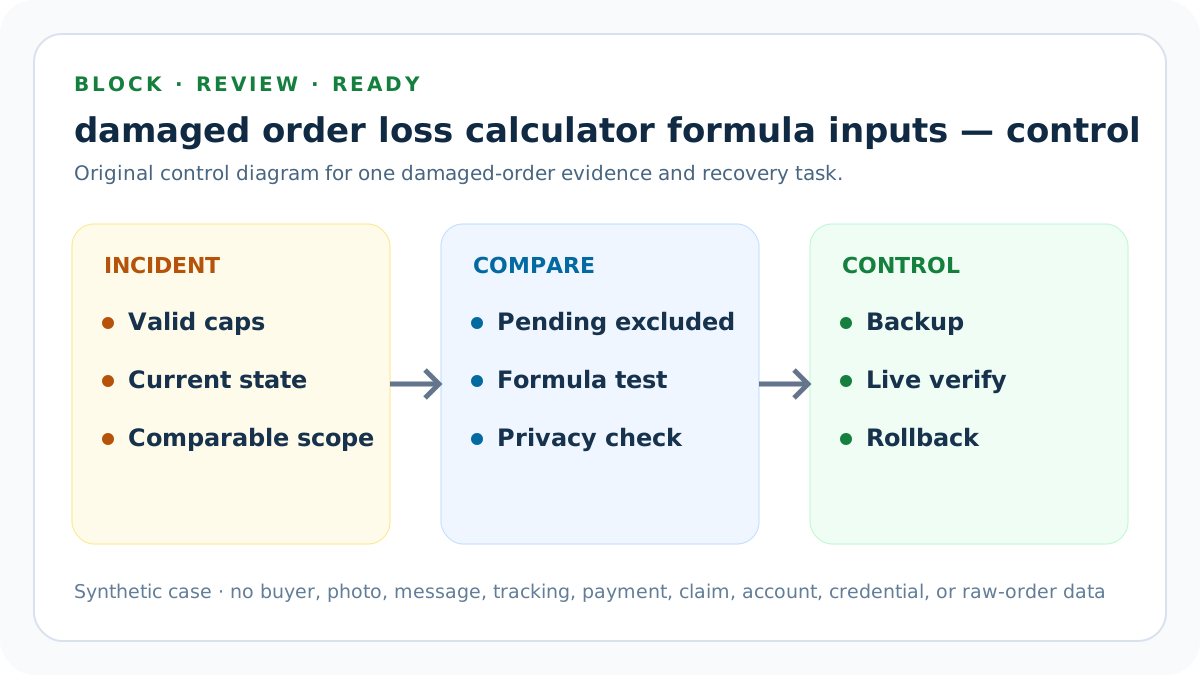
Keep customer remedy and claim authority outside a typed and reproducible insured-versus-uninsured loss comparison
The calculator compares seller-entered cost after a remedy packet is frozen. It does not decide buyer rights, shop obligations, platform protection, carrier liability, packaging compliance, filing eligibility, legal duties, accounting treatment, or reimbursement.
Route actual case, claim, policy, agreement, consumer-law, platform, carrier, and customer communication decisions to the current authorized source and owner.
Version approved, pending, received, denied, and reversed recovery
Store amount, currency, source, state, requested date, decision date, received date, deductions, owner, and dispute or appeal status. Approved and received can be recognized under the model contract; pending remains excluded.
When a state or amount changes, preserve the previous run and recalculate. Never edit history merely to keep a preferred scenario below target.
Protect damage, packaging, buyer, and claim artifacts
Public examples are synthetic. Keep photos, names, addresses, emails, messages, tracking, case logs, invoices, payment details, carrier accounts, credentials, claims, labels, receipts, and raw orders outside the damage-loss formula specification.
Apply access, retention, correction, deletion, and incident-response controls in authorized systems. Public content may describe evidence classes without exposing evidence content.
Release, observe, correct, and restore the damage-loss formula specification
Preserve narrow local and remote backups plus a rollback identifier. Run typecheck, focused and full tests, integration, build, content and duplicate audits, SEO, routes, sources, images, links, mobile, keyboard, privacy, and restore checks.
After release, verify status, canonical, indexability, schema, answer blocks, tool scenarios, assets, hub discovery, strict 404, sitemap policy, events, and Day 0/7/14/28 evidence. Restore on formula, privacy, content, accessibility, routing, or health regression.
Prove formula signs
Refund, replacement, inspection, handling, premium, and filing increase loss; verified credits, salvage, and recovery reduce loss. Deep review 1 stores the counterexample, evidence version, full-precision inputs, calculation, decision, owner, expiry, correction, and next authorized action.
State what this evidence can and cannot prove about a typed and reproducible insured-versus-uninsured loss comparison. Preserve competing order, remedy, damage, packaging, carrier, coverage, claim, recovery, absolute target, lower-loss share, scenario-difference minimum, currency, timing, or scope evidence as separate scenarios rather than blended certainty.
Prove recovery recognition
Only approved or received claim recovery enters recognized recovery; pending remains visible but excluded. Deep review 2 stores the counterexample, evidence version, full-precision inputs, calculation, decision, owner, expiry, correction, and next authorized action.
State what this evidence can and cannot prove about a typed and reproducible insured-versus-uninsured loss comparison. Preserve competing order, remedy, damage, packaging, carrier, coverage, claim, recovery, absolute target, lower-loss share, scenario-difference minimum, currency, timing, or scope evidence as separate scenarios rather than blended certainty.
Prove scenario comparability
The customer remedy and shared evidence remain constant so the difference reflects the coverage layer. Deep review 3 stores the counterexample, evidence version, full-precision inputs, calculation, decision, owner, expiry, correction, and next authorized action.
State what this evidence can and cannot prove about a typed and reproducible insured-versus-uninsured loss comparison. Preserve competing order, remedy, damage, packaging, carrier, coverage, claim, recovery, absolute target, lower-loss share, scenario-difference minimum, currency, timing, or scope evidence as separate scenarios rather than blended certainty.
Prove authority separation
Carrier liability, platform protection, buyer rights, legal obligations, and reimbursement approval stay outside the formula. Deep review 4 stores the counterexample, evidence version, full-precision inputs, calculation, decision, owner, expiry, correction, and next authorized action.
State what this evidence can and cannot prove about a typed and reproducible insured-versus-uninsured loss comparison. Preserve competing order, remedy, damage, packaging, carrier, coverage, claim, recovery, absolute target, lower-loss share, scenario-difference minimum, currency, timing, or scope evidence as separate scenarios rather than blended certainty.
Prove correction behavior
A changed claim state, remedy, invoice, damage finding, or recovery creates a new dated version rather than overwriting evidence. Deep review 5 stores the counterexample, evidence version, full-precision inputs, calculation, decision, owner, expiry, correction, and next authorized action.
State what this evidence can and cannot prove about a typed and reproducible insured-versus-uninsured loss comparison. Preserve competing order, remedy, damage, packaging, carrier, coverage, claim, recovery, absolute target, lower-loss share, scenario-difference minimum, currency, timing, or scope evidence as separate scenarios rather than blended certainty.
Sources and further reading
- Seller Profit Guard methodology: Evidence versions, deterministic calculation, validation, privacy, correction, release, and rollback.
- Seller Profit Guard data privacy: Local-first boundaries for buyer, message, photo, tracking, case, payment, claim, account, and raw-order data.
- Etsy Help: Purchase Protection for Sellers: Official current eligibility, damaged-item, primary-coverage, value-limit, and seller-responsibility context.
- Etsy Help: Refunds, Returns, and Exchanges for Sellers: Official seller-policy, buyer-agreement, replacement-proof, and Purchase Protection context.
- Etsy Help: Resolve a Case from a Buyer: Official damaged-item case, evidence-request, communication, and resolution context.
- USPS: File a Claim: Official domestic insurance, filing-window, proof-of-value, proof-of-insurance, and proof-of-damage context.
- UPS: File a Claim: Official claim timing, tracking, invoice, packaging, contents, photo, review, and payment-document context.
- UPS: Supporting Documents for Claims: Official supporting-document, merchandise-description, photo, package-dimension, inspection, delay, and denial context.
Related Seller Profit Guard tools
- Damaged Order Loss Calculator: Run the browser-local insured and uninsured damage-loss comparison.
- Refund vs Replacement Calculator: Choose the customer-remedy packet before freezing a damage comparison.
- Return Window Loss Estimator: Estimate population-level expected return loss separately.
- Refund Fee Reconciliation Calculator: Reconcile actual posted refunds and fee credits.
- Methodology: Review evidence, privacy, validation, correction, release, and rollback.
- Data Privacy: Protect buyer, message, photo, tracking, case, payment, claim, account, and raw-order data.
- Insured Damaged Order Worked Example: Continue with a distinct formula, insured example, denied scenario, error, source, threshold, comparison, routine, interpretation, or audit task.
- Uninsured and Denied Damage Scenario: Continue with a distinct formula, insured example, denied scenario, error, source, threshold, comparison, routine, interpretation, or audit task.
- Damaged Order Loss Calculation Mistakes: Continue with a distinct formula, insured example, denied scenario, error, source, threshold, comparison, routine, interpretation, or audit task.
- Damaged Order Loss Data Sources: Continue with a distinct formula, insured example, denied scenario, error, source, threshold, comparison, routine, interpretation, or audit task.
- Damaged Order Loss Decision Thresholds: Continue with a distinct formula, insured example, denied scenario, error, source, threshold, comparison, routine, interpretation, or audit task.
Next step: Open the Damaged Order Loss Calculator.
This is operational planning help, not tax, accounting, legal, financial, or platform-policy advice. Review the Terms and disclaimer, and verify current platform rules and fee assumptions before changing prices.