Which order-export fields are needed for profit analysis?
Last updated: 2026-07-29
Written and reviewed by Seller Profit Guard Editorial Team.
A bounded item-level model may need created date, currency, line-item SKU, quantity, price, discount, shipping, tax, and refunded amount. Customer names, email, phone, street addresses, order notes, payment references, and device IDs are normally outside that purpose and belong in the remove schema.
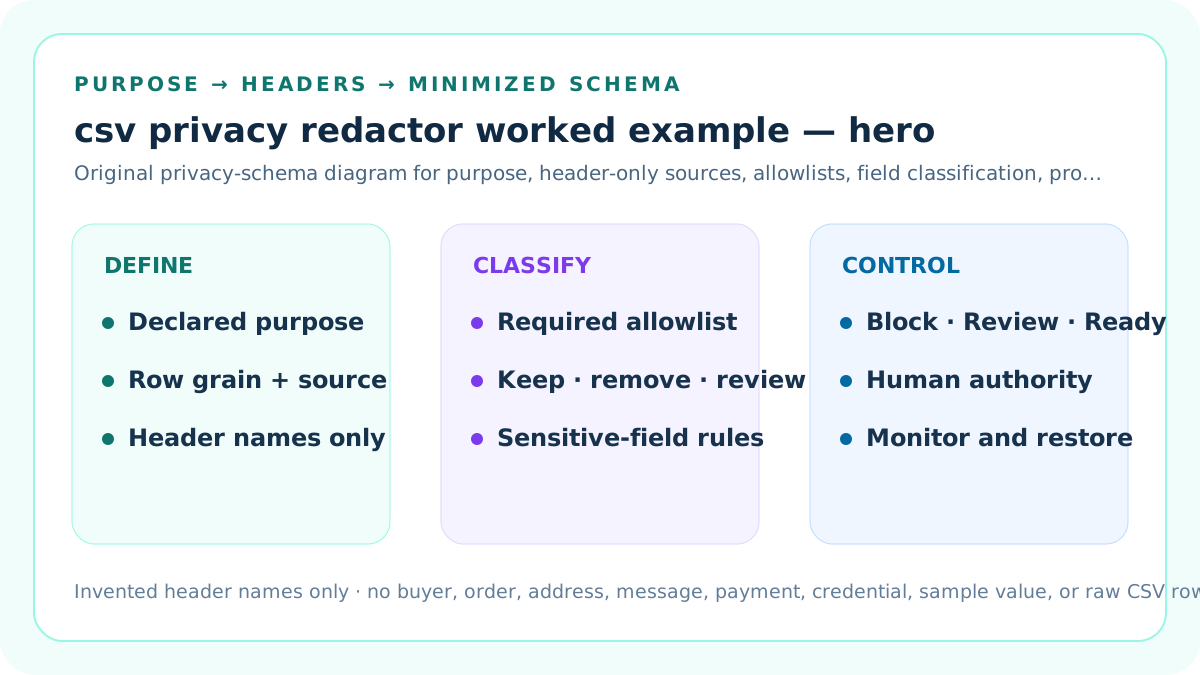
Trace the order-item calculation dependency
Begin with the exact item-profit equation rather than the export itself. Trace created date, currency, SKU, quantity, line price, discount, shipping allocation, tax treatment, and refunded amount into named calculation steps. A column is retained only when a step consumes it at the declared sold-item grain; contact details, address lines, notes, payment references, and device fields do not become necessary merely because the platform exports them.
Challenge allocation columns separately. Shipping, tax, order discounts, and refunds may arrive at order grain while the derivative is item grain. Record the protected allocation rule and required grouping key inside the authorized transformation, but do not expose a real order key in the public planner. If a field exists only to join a temporary allocation table, document its protected pseudonymous replacement and removal point.
Build the protected order derivative
Inside the authorized environment, fingerprint the exact order-export header sequence before any change. Apply the approved allowlist, reject unexpected columns, encode formula-like cells safely, validate row grain, write the minimized derivative to a separate controlled location, and compare its schema and aggregate totals with the accepted fixture. The public checker contributes only the header classification contract; it never receives the file or executes this transformation.
Reconcile aggregate quantity, gross line amount, discounts, shipping, taxes, refunds, and row counts before accepting the derivative. These totals detect accidental removal, duplication, or grain change without exposing buyer-level records. Preserve the transformation version, output fingerprint, reviewer sign-off, retention interval, and restoration test alongside the protected job log.
Retest an order-export schema drift event
When the commerce platform adds or renames an order column, stop the derivative job and compare the new protected fingerprint with the prior accepted schema. Determine whether the field changes the item-profit equation, allocation logic, source grain, or privacy exposure. A renamed financial field may need a versioned mapping; a new contact or device attribute normally remains excluded; an unfamiliar derived field stays quarantined.
Rerun the clean order fixture, a missing-required-field fixture, a duplicate normalized header, a sensitive-required-field challenge, and the new-column counterexample. Accept the revision only when aggregate calculations reconcile, the privacy owner approves the classification, the prior schema remains restorable, and no production row or value was copied into public evidence.
Freeze order grain
Use invented item-level headers. The order allowlist records declared purpose, row grain, platform export version, header-only boundary, required allowlist, keep, remove and review decisions, sensitive-field rule, privacy owner, independent reviewer, retention interval, exception, output evidence, and prior accepted schema needed for a minimized order-analysis schema.
At checkpoint 1, reperform the clean header packet and one intent-specific failure. Explain whether the evidence supports Ready, Review, or Block and identify the purpose, source, field, privacy, obligation, transformation, retention, monitoring, or restoration conclusion still outside the public worksheet.
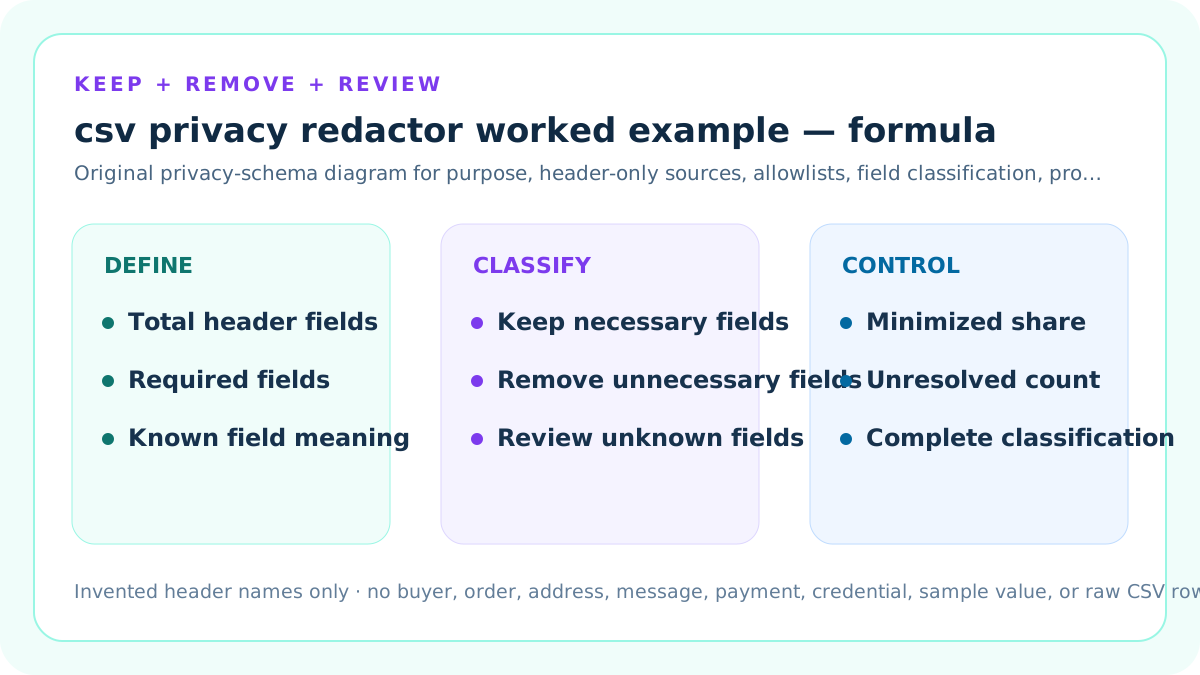
Keep created date
Align costs and refunds. The order allowlist records declared purpose, row grain, platform export version, header-only boundary, required allowlist, keep, remove and review decisions, sensitive-field rule, privacy owner, independent reviewer, retention interval, exception, output evidence, and prior accepted schema needed for a minimized order-analysis schema.
At checkpoint 2, reperform the clean header packet and one intent-specific failure. Explain whether the evidence supports Ready, Review, or Block and identify the purpose, source, field, privacy, obligation, transformation, retention, monitoring, or restoration conclusion still outside the public worksheet.
Keep currency
Preserve monetary units. The order allowlist records declared purpose, row grain, platform export version, header-only boundary, required allowlist, keep, remove and review decisions, sensitive-field rule, privacy owner, independent reviewer, retention interval, exception, output evidence, and prior accepted schema needed for a minimized order-analysis schema.
At checkpoint 3, reperform the clean header packet and one intent-specific failure. Explain whether the evidence supports Ready, Review, or Block and identify the purpose, source, field, privacy, obligation, transformation, retention, monitoring, or restoration conclusion still outside the public worksheet.
Keep SKU
Join item costs. The order allowlist records declared purpose, row grain, platform export version, header-only boundary, required allowlist, keep, remove and review decisions, sensitive-field rule, privacy owner, independent reviewer, retention interval, exception, output evidence, and prior accepted schema needed for a minimized order-analysis schema.
At checkpoint 4, reperform the clean header packet and one intent-specific failure. Explain whether the evidence supports Ready, Review, or Block and identify the purpose, source, field, privacy, obligation, transformation, retention, monitoring, or restoration conclusion still outside the public worksheet.
Keep quantity and price
Reperform gross item value. The order allowlist records declared purpose, row grain, platform export version, header-only boundary, required allowlist, keep, remove and review decisions, sensitive-field rule, privacy owner, independent reviewer, retention interval, exception, output evidence, and prior accepted schema needed for a minimized order-analysis schema.
At checkpoint 5, reperform the clean header packet and one intent-specific failure. Explain whether the evidence supports Ready, Review, or Block and identify the purpose, source, field, privacy, obligation, transformation, retention, monitoring, or restoration conclusion still outside the public worksheet.
Keep discounts
Reperform net selling value. The order allowlist records declared purpose, row grain, platform export version, header-only boundary, required allowlist, keep, remove and review decisions, sensitive-field rule, privacy owner, independent reviewer, retention interval, exception, output evidence, and prior accepted schema needed for a minimized order-analysis schema.
At checkpoint 6, reperform the clean header packet and one intent-specific failure. Explain whether the evidence supports Ready, Review, or Block and identify the purpose, source, field, privacy, obligation, transformation, retention, monitoring, or restoration conclusion still outside the public worksheet.
Keep shipping and tax
Preserve declared calculation boundaries. The order allowlist records declared purpose, row grain, platform export version, header-only boundary, required allowlist, keep, remove and review decisions, sensitive-field rule, privacy owner, independent reviewer, retention interval, exception, output evidence, and prior accepted schema needed for a minimized order-analysis schema.
At checkpoint 7, reperform the clean header packet and one intent-specific failure. Explain whether the evidence supports Ready, Review, or Block and identify the purpose, source, field, privacy, obligation, transformation, retention, monitoring, or restoration conclusion still outside the public worksheet.
Keep refunded amount
Model completed refund effects. The order allowlist records declared purpose, row grain, platform export version, header-only boundary, required allowlist, keep, remove and review decisions, sensitive-field rule, privacy owner, independent reviewer, retention interval, exception, output evidence, and prior accepted schema needed for a minimized order-analysis schema.
At checkpoint 8, reperform the clean header packet and one intent-specific failure. Explain whether the evidence supports Ready, Review, or Block and identify the purpose, source, field, privacy, obligation, transformation, retention, monitoring, or restoration conclusion still outside the public worksheet.
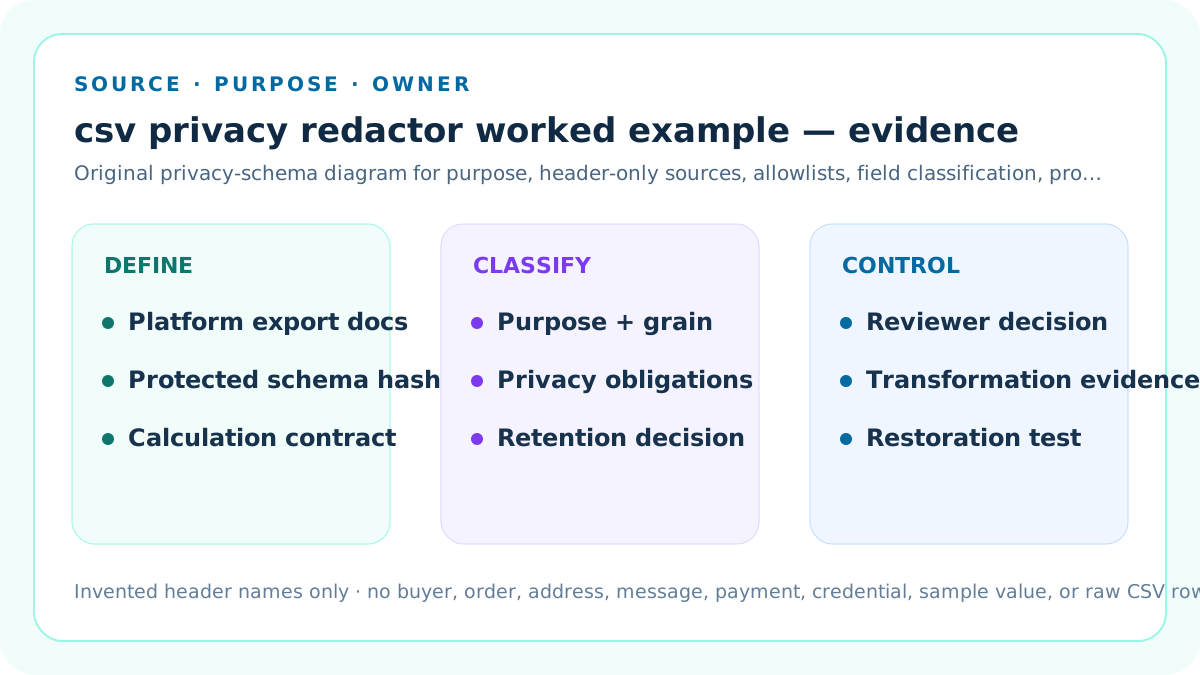
Remove contacts
Exclude names, email, and phone. The order allowlist records declared purpose, row grain, platform export version, header-only boundary, required allowlist, keep, remove and review decisions, sensitive-field rule, privacy owner, independent reviewer, retention interval, exception, output evidence, and prior accepted schema needed for a minimized order-analysis schema.
At checkpoint 9, reperform the clean header packet and one intent-specific failure. Explain whether the evidence supports Ready, Review, or Block and identify the purpose, source, field, privacy, obligation, transformation, retention, monitoring, or restoration conclusion still outside the public worksheet.
Remove addresses
Exclude billing and shipping details. The order allowlist records declared purpose, row grain, platform export version, header-only boundary, required allowlist, keep, remove and review decisions, sensitive-field rule, privacy owner, independent reviewer, retention interval, exception, output evidence, and prior accepted schema needed for a minimized order-analysis schema.
At checkpoint 10, reperform the clean header packet and one intent-specific failure. Explain whether the evidence supports Ready, Review, or Block and identify the purpose, source, field, privacy, obligation, transformation, retention, monitoring, or restoration conclusion still outside the public worksheet.
Remove free text
Exclude notes and attributes. The order allowlist records declared purpose, row grain, platform export version, header-only boundary, required allowlist, keep, remove and review decisions, sensitive-field rule, privacy owner, independent reviewer, retention interval, exception, output evidence, and prior accepted schema needed for a minimized order-analysis schema.
At checkpoint 11, reperform the clean header packet and one intent-specific failure. Explain whether the evidence supports Ready, Review, or Block and identify the purpose, source, field, privacy, obligation, transformation, retention, monitoring, or restoration conclusion still outside the public worksheet.
Remove references
Exclude payment and device identifiers. The order allowlist records declared purpose, row grain, platform export version, header-only boundary, required allowlist, keep, remove and review decisions, sensitive-field rule, privacy owner, independent reviewer, retention interval, exception, output evidence, and prior accepted schema needed for a minimized order-analysis schema.
At checkpoint 12, reperform the clean header packet and one intent-specific failure. Explain whether the evidence supports Ready, Review, or Block and identify the purpose, source, field, privacy, obligation, transformation, retention, monitoring, or restoration conclusion still outside the public worksheet.
CSV Privacy Redactor Worked Example: Order Export: purpose and grain integrity control
Keep every retained field tied to one declared analysis and row grain. Control 1 defines a pass condition, protected evidence pointer, reviewer question, rejected shortcut, correction deadline, retention decision, monitoring signal, stop condition, and restoration trigger for a minimized order-analysis schema.
Purpose creep Blocks a reusable derivative. Keep minimization separate from CSV syntax validation, column mapping, anonymization, pseudonymization, access control, encryption, secure deletion, accounting, tax, legal analysis, and compliance authority.
CSV Privacy Redactor Worked Example: Order Export: allowlist integrity control
Require explicit non-sensitive fields and fail unknown columns closed into Review. Control 2 defines a pass condition, protected evidence pointer, reviewer question, rejected shortcut, correction deadline, retention decision, monitoring signal, stop condition, and restoration trigger for a minimized order-analysis schema.
A denylist alone cannot cover schema drift. Keep minimization separate from CSV syntax validation, column mapping, anonymization, pseudonymization, access control, encryption, secure deletion, accounting, tax, legal analysis, and compliance authority.
CSV Privacy Redactor Worked Example: Order Export: sensitive-field integrity control
Remove or separately control contacts, addresses, free text, credentials, payment references, and linkable identifiers. Control 3 defines a pass condition, protected evidence pointer, reviewer question, rejected shortcut, correction deadline, retention decision, monitoring signal, stop condition, and restoration trigger for a minimized order-analysis schema.
Labels cannot prove a field is anonymous. Keep minimization separate from CSV syntax validation, column mapping, anonymization, pseudonymization, access control, encryption, secure deletion, accounting, tax, legal analysis, and compliance authority.
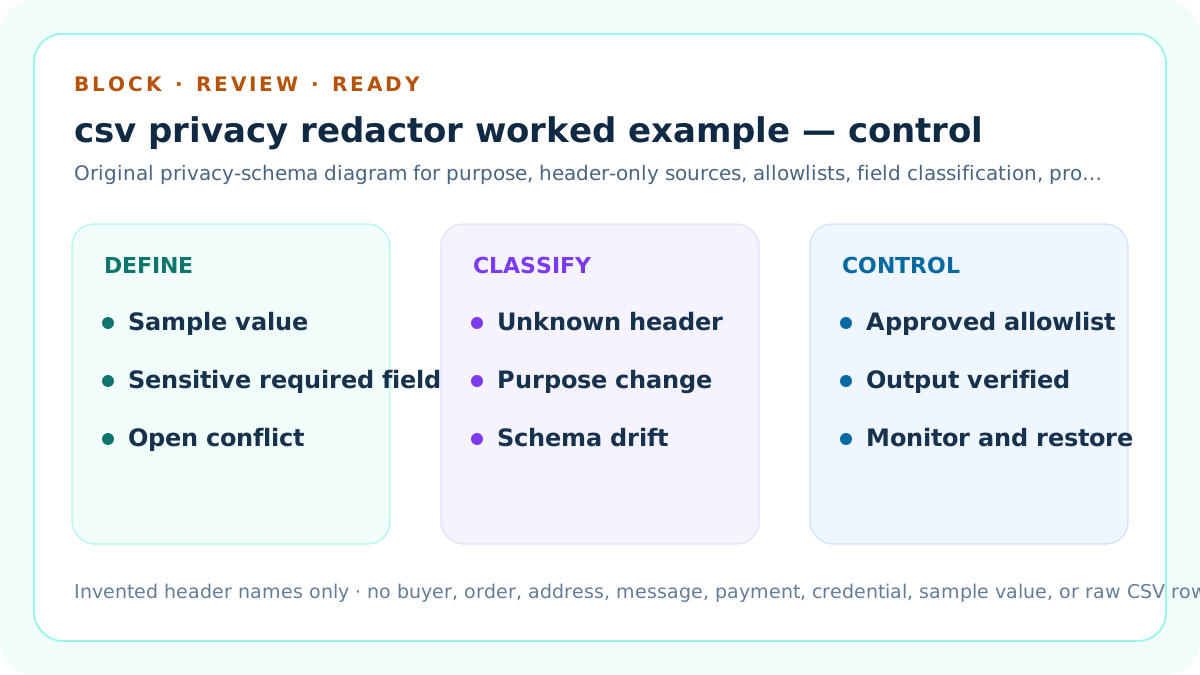
CSV Privacy Redactor Worked Example: Order Export: privacy and minimization control
Use invented header names publicly while operational rows, buyers, messages, payments, addresses, credentials, and raw files stay protected. Control 4 defines a pass condition, protected evidence pointer, reviewer question, rejected shortcut, correction deadline, retention decision, monitoring signal, stop condition, and restoration trigger for a minimized order-analysis schema.
Never paste sample values. Keep minimization separate from CSV syntax validation, column mapping, anonymization, pseudonymization, access control, encryption, secure deletion, accounting, tax, legal analysis, and compliance authority.
CSV Privacy Redactor Worked Example: Order Export: human authority control
Require business-purpose owner, privacy owner, schema owner, independent reviewer, retention approver, stop authority, and restoration owner. Control 5 defines a pass condition, protected evidence pointer, reviewer question, rejected shortcut, correction deadline, retention decision, monitoring signal, stop condition, and restoration trigger for a minimized order-analysis schema.
Ready cannot determine legal basis or deletion. Keep minimization separate from CSV syntax validation, column mapping, anonymization, pseudonymization, access control, encryption, secure deletion, accounting, tax, legal analysis, and compliance authority.
CSV Privacy Redactor Worked Example: Order Export: backup and restoration control
Preserve source fingerprints, rules, prior schemas, transformation versions, output hashes, exceptions, retention decisions, and tested recovery. Control 6 defines a pass condition, protected evidence pointer, reviewer question, rejected shortcut, correction deadline, retention decision, monitoring signal, stop condition, and restoration trigger for a minimized order-analysis schema.
Rollback evidence is mandatory. Keep minimization separate from CSV syntax validation, column mapping, anonymization, pseudonymization, access control, encryption, secure deletion, accounting, tax, legal analysis, and compliance authority.
CSV Privacy Redactor Worked Example: Order Export: versioned governance control
Require real ordered source-review and policy dates, a closed evidence duration, a bounded header maximum, and nine explicit confirmations before interpreting a classification. Control 7 defines a pass condition, protected evidence pointer, reviewer question, rejected shortcut, correction deadline, retention decision, monitoring signal, stop condition, and restoration trigger for a minimized order-analysis schema.
Invalid governance masks all derived field lists and counts. Keep minimization separate from CSV syntax validation, column mapping, anonymization, pseudonymization, access control, encryption, secure deletion, accounting, tax, legal analysis, and compliance authority.
CSV Privacy Redactor Worked Example: Order Export: blocked-output quarantine control
Treat keep, remove, review, and minimized-share outputs as unavailable whenever a structural, privacy, evidence, confirmation, date, threshold, or conflict gate Blocks. Control 8 defines a pass condition, protected evidence pointer, reviewer question, rejected shortcut, correction deadline, retention decision, monitoring signal, stop condition, and restoration trigger for a minimized order-analysis schema.
Never reuse a partial-looking blocked classification in a protected transformation. Keep minimization separate from CSV syntax validation, column mapping, anonymization, pseudonymization, access control, encryption, secure deletion, accounting, tax, legal analysis, and compliance authority.
Freeze order grain: privacy schema lab 1
Reperform both synthetic header packets. Use invented item-level headers. Change one purpose, grain, source version, header, required field, classification rule, review threshold, retention interval, context, or conflict only; preserve all other values and record keep, remove, review, minimized-share, and decision outputs.
Use invented header names only. Test clean, unknown, missing-required, sensitive-required, duplicate, email-shaped, URL-shaped, token-shaped, overlong, short-context, and open-conflict states, then state the protected evidence, named authority, transformation control, disposal evidence, monitoring signal, and restoration action required before processing rows.
Keep created date: privacy schema lab 2
Reperform both synthetic header packets. Align costs and refunds. Change one purpose, grain, source version, header, required field, classification rule, review threshold, retention interval, context, or conflict only; preserve all other values and record keep, remove, review, minimized-share, and decision outputs.
Use invented header names only. Test clean, unknown, missing-required, sensitive-required, duplicate, email-shaped, URL-shaped, token-shaped, overlong, short-context, and open-conflict states, then state the protected evidence, named authority, transformation control, disposal evidence, monitoring signal, and restoration action required before processing rows.
Keep currency: privacy schema lab 3
Reperform both synthetic header packets. Preserve monetary units. Change one purpose, grain, source version, header, required field, classification rule, review threshold, retention interval, context, or conflict only; preserve all other values and record keep, remove, review, minimized-share, and decision outputs.
Use invented header names only. Test clean, unknown, missing-required, sensitive-required, duplicate, email-shaped, URL-shaped, token-shaped, overlong, short-context, and open-conflict states, then state the protected evidence, named authority, transformation control, disposal evidence, monitoring signal, and restoration action required before processing rows.
Keep SKU: privacy schema lab 4
Reperform both synthetic header packets. Join item costs. Change one purpose, grain, source version, header, required field, classification rule, review threshold, retention interval, context, or conflict only; preserve all other values and record keep, remove, review, minimized-share, and decision outputs.
Use invented header names only. Test clean, unknown, missing-required, sensitive-required, duplicate, email-shaped, URL-shaped, token-shaped, overlong, short-context, and open-conflict states, then state the protected evidence, named authority, transformation control, disposal evidence, monitoring signal, and restoration action required before processing rows.
Keep quantity and price: privacy schema lab 5
Reperform both synthetic header packets. Reperform gross item value. Change one purpose, grain, source version, header, required field, classification rule, review threshold, retention interval, context, or conflict only; preserve all other values and record keep, remove, review, minimized-share, and decision outputs.
Use invented header names only. Test clean, unknown, missing-required, sensitive-required, duplicate, email-shaped, URL-shaped, token-shaped, overlong, short-context, and open-conflict states, then state the protected evidence, named authority, transformation control, disposal evidence, monitoring signal, and restoration action required before processing rows.
Keep discounts: privacy schema lab 6
Reperform both synthetic header packets. Reperform net selling value. Change one purpose, grain, source version, header, required field, classification rule, review threshold, retention interval, context, or conflict only; preserve all other values and record keep, remove, review, minimized-share, and decision outputs.
Use invented header names only. Test clean, unknown, missing-required, sensitive-required, duplicate, email-shaped, URL-shaped, token-shaped, overlong, short-context, and open-conflict states, then state the protected evidence, named authority, transformation control, disposal evidence, monitoring signal, and restoration action required before processing rows.
Keep shipping and tax: privacy schema lab 7
Reperform both synthetic header packets. Preserve declared calculation boundaries. Change one purpose, grain, source version, header, required field, classification rule, review threshold, retention interval, context, or conflict only; preserve all other values and record keep, remove, review, minimized-share, and decision outputs.
Use invented header names only. Test clean, unknown, missing-required, sensitive-required, duplicate, email-shaped, URL-shaped, token-shaped, overlong, short-context, and open-conflict states, then state the protected evidence, named authority, transformation control, disposal evidence, monitoring signal, and restoration action required before processing rows.
Keep refunded amount: privacy schema lab 8
Reperform both synthetic header packets. Model completed refund effects. Change one purpose, grain, source version, header, required field, classification rule, review threshold, retention interval, context, or conflict only; preserve all other values and record keep, remove, review, minimized-share, and decision outputs.
Use invented header names only. Test clean, unknown, missing-required, sensitive-required, duplicate, email-shaped, URL-shaped, token-shaped, overlong, short-context, and open-conflict states, then state the protected evidence, named authority, transformation control, disposal evidence, monitoring signal, and restoration action required before processing rows.
Remove contacts: privacy schema lab 9
Reperform both synthetic header packets. Exclude names, email, and phone. Change one purpose, grain, source version, header, required field, classification rule, review threshold, retention interval, context, or conflict only; preserve all other values and record keep, remove, review, minimized-share, and decision outputs.
Use invented header names only. Test clean, unknown, missing-required, sensitive-required, duplicate, email-shaped, URL-shaped, token-shaped, overlong, short-context, and open-conflict states, then state the protected evidence, named authority, transformation control, disposal evidence, monitoring signal, and restoration action required before processing rows.
Remove addresses: privacy schema lab 10
Reperform both synthetic header packets. Exclude billing and shipping details. Change one purpose, grain, source version, header, required field, classification rule, review threshold, retention interval, context, or conflict only; preserve all other values and record keep, remove, review, minimized-share, and decision outputs.
Use invented header names only. Test clean, unknown, missing-required, sensitive-required, duplicate, email-shaped, URL-shaped, token-shaped, overlong, short-context, and open-conflict states, then state the protected evidence, named authority, transformation control, disposal evidence, monitoring signal, and restoration action required before processing rows.
Remove free text: privacy schema lab 11
Reperform both synthetic header packets. Exclude notes and attributes. Change one purpose, grain, source version, header, required field, classification rule, review threshold, retention interval, context, or conflict only; preserve all other values and record keep, remove, review, minimized-share, and decision outputs.
Use invented header names only. Test clean, unknown, missing-required, sensitive-required, duplicate, email-shaped, URL-shaped, token-shaped, overlong, short-context, and open-conflict states, then state the protected evidence, named authority, transformation control, disposal evidence, monitoring signal, and restoration action required before processing rows.
Remove references: privacy schema lab 12
Reperform both synthetic header packets. Exclude payment and device identifiers. Change one purpose, grain, source version, header, required field, classification rule, review threshold, retention interval, context, or conflict only; preserve all other values and record keep, remove, review, minimized-share, and decision outputs.
Use invented header names only. Test clean, unknown, missing-required, sensitive-required, duplicate, email-shaped, URL-shaped, token-shaped, overlong, short-context, and open-conflict states, then state the protected evidence, named authority, transformation control, disposal evidence, monitoring signal, and restoration action required before processing rows.
CSV Privacy Redactor Worked Example: Order Export: intent-specific implementation walkthrough
order allowlist checkpoint 1 addresses freeze order grain for a minimized order-analysis schema. Use invented item-level headers. Record the accepted classification, rejected shortcut, field owner, privacy review, obligation boundary, transformation version, follow-up date, retention trigger, monitoring signal, and rollback reference.
order allowlist checkpoint 2 addresses keep created date for a minimized order-analysis schema. Align costs and refunds. Record the accepted classification, rejected shortcut, field owner, privacy review, obligation boundary, transformation version, follow-up date, retention trigger, monitoring signal, and rollback reference.
order allowlist checkpoint 3 addresses keep currency for a minimized order-analysis schema. Preserve monetary units. Record the accepted classification, rejected shortcut, field owner, privacy review, obligation boundary, transformation version, follow-up date, retention trigger, monitoring signal, and rollback reference.
order allowlist checkpoint 4 addresses keep sku for a minimized order-analysis schema. Join item costs. Record the accepted classification, rejected shortcut, field owner, privacy review, obligation boundary, transformation version, follow-up date, retention trigger, monitoring signal, and rollback reference.
order allowlist checkpoint 5 addresses keep quantity and price for a minimized order-analysis schema. Reperform gross item value. Record the accepted classification, rejected shortcut, field owner, privacy review, obligation boundary, transformation version, follow-up date, retention trigger, monitoring signal, and rollback reference.
order allowlist checkpoint 6 addresses keep discounts for a minimized order-analysis schema. Reperform net selling value. Record the accepted classification, rejected shortcut, field owner, privacy review, obligation boundary, transformation version, follow-up date, retention trigger, monitoring signal, and rollback reference.
order allowlist checkpoint 7 addresses keep shipping and tax for a minimized order-analysis schema. Preserve declared calculation boundaries. Record the accepted classification, rejected shortcut, field owner, privacy review, obligation boundary, transformation version, follow-up date, retention trigger, monitoring signal, and rollback reference.
order allowlist checkpoint 8 addresses keep refunded amount for a minimized order-analysis schema. Model completed refund effects. Record the accepted classification, rejected shortcut, field owner, privacy review, obligation boundary, transformation version, follow-up date, retention trigger, monitoring signal, and rollback reference.
order allowlist checkpoint 9 addresses remove contacts for a minimized order-analysis schema. Exclude names, email, and phone. Record the accepted classification, rejected shortcut, field owner, privacy review, obligation boundary, transformation version, follow-up date, retention trigger, monitoring signal, and rollback reference.
order allowlist checkpoint 10 addresses remove addresses for a minimized order-analysis schema. Exclude billing and shipping details. Record the accepted classification, rejected shortcut, field owner, privacy review, obligation boundary, transformation version, follow-up date, retention trigger, monitoring signal, and rollback reference.
order allowlist checkpoint 11 addresses remove free text for a minimized order-analysis schema. Exclude notes and attributes. Record the accepted classification, rejected shortcut, field owner, privacy review, obligation boundary, transformation version, follow-up date, retention trigger, monitoring signal, and rollback reference.
order allowlist checkpoint 12 addresses remove references for a minimized order-analysis schema. Exclude payment and device identifiers. Record the accepted classification, rejected shortcut, field owner, privacy review, obligation boundary, transformation version, follow-up date, retention trigger, monitoring signal, and rollback reference.
Evidence boundary for a minimized order-analysis schema
The order fixture uses invented Shopify-like header names and retains only created date, currency, line-item SKU, quantity, price, discount, shipping, tax, and refunded amount. The support fixture retains created date, channel, reason, status, and refund amount while removing buyer contact, address, message, attachment, and token fields.
These invented names demonstrate schema classification only. They cannot prove a real export contains no sensitive values, a derivative is anonymous, processing is lawful, retention is correct, transformation is secure, deletion occurred, or production records are complete.
Release, monitor, and restore the order allowlist
Block non-header values, duplicates, missing or sensitive required fields, weak context, invalid thresholds, unconfirmed header-only input, weak scope, or open conflicts. Review unfamiliar fields above threshold. Ready clears only the entered synthetic header plan.
Before indexing or operational use, preserve backups and run type, unit, integration, build, content, similarity, SEO, image, link, privacy, mobile, deployment, and live checks; then monitor schema drift without claiming search, privacy, or compliance causality.
Sources and further reading
- Shopify Help: Exporting orders: Official order-export schema, including contact, address, notes, payment reference, device, amount, SKU, status, and date fields.
- Etsy Help: Download sold transactions: Official seller export types and order, payment, price, title, and optional SKU boundaries.
- EU GDPR Article 5: Official purpose limitation, data minimisation, storage limitation, integrity, confidentiality, and accountability principles.
- NIST Privacy Framework 1.0: Risk-based privacy functions and data-processing controls.
- W3C CSVW: Tabular Data Model: Standards-based schema, column, key, and reference concepts.
- OWASP CSV Injection: Spreadsheet formula-injection risk that remains separate from header minimization.
- Seller Profit Guard methodology: Evidence, correction, release, monitoring, and rollback controls.
- Seller Profit Guard data privacy: Local-first public-example and protected operational-data boundaries.
Related Seller Profit Guard tools
- Seller CSV Privacy Redactor: Classify invented header names into keep, remove, and review.
- Seller CSV Import Validator: Check synthetic syntax and formula-injection controls separately.
- Seller CSV Column Mapper: Map approved minimized fields into a canonical schema.
- Duplicate Order Checker: Review identifiers needed for duplicate analysis.
- Missing SKU Cost Checker: Measure cost coverage after minimization.
- Methodology: Apply evidence and rollback controls.
- Data Privacy: Protect operational exports and private values.
- CSV Privacy Redactor Formula and Input Contract: Define purpose, source, grain, header-only input, required allowlist, keep, remove, review, retention, ownership, and restoration.
- CSV Privacy Redactor for a Support-Ticket Export: Build an aggregate refund-reason schema without carrying buyer contacts, messages, attachment links, or secrets into profit analysis.
- CSV Privacy Redactor Mistakes and Corrections: Diagnose sample-value exposure, purpose creep, sensitive fields, unknown-column auto-keep, identifiers, free text, and false deletion claims.
- Reliable Sources for CSV Privacy Minimization: Map purpose, platform schema, column meaning, private source, field owner, obligation, retention, transformation, and restoration evidence.
- Safe Decision Thresholds for CSV Privacy Review: Set zero-unresolved, temporary review, schema-age, drift, recurrence, source-confidence, transformation, disposal, and stop controls.
- Order Export vs Support-Ticket Privacy Schemas: Compare a structured financial order export with a free-text-heavy support export at the same field-classification grain and privacy boundary.
- Weekly Seller CSV Privacy Review Routine: Run a repeatable schema-control cycle for purpose, allowlist, field triage, protected transformation, validation, retention, monitoring, and restoration.
- Interpret a Minimized CSV Schema Responsibly: Explain what keep, remove, review, minimized share, Ready, Review, and Block can prove, cannot prove, and require as the next protected action.
- CSV Privacy Redactor Audit Checklist and Change Log: Provide a standalone purpose, source, allowlist, classification, exception, transformation, validation, retention, disposal, monitoring, and restoration record.
Next step: Open Seller Profit Guard.
This is operational planning help, not tax, accounting, legal, financial, or platform-policy advice. Review the Terms and disclaimer, and verify current platform rules and fee assumptions before changing prices.