What belongs in a CSV privacy audit trail?
Last updated: 2026-07-29
Written and reviewed by Seller Profit Guard Editorial Team.
Record purpose, grain, source schema and fingerprint, required allowlist, keep, remove and review decisions, sensitive-field rules, derived-field review, privacy owner, independent reviewer, obligations, transformation version, output hash, retention interval, disposal evidence, monitoring trigger, backup, restoration test, superseded schema, and closure date.
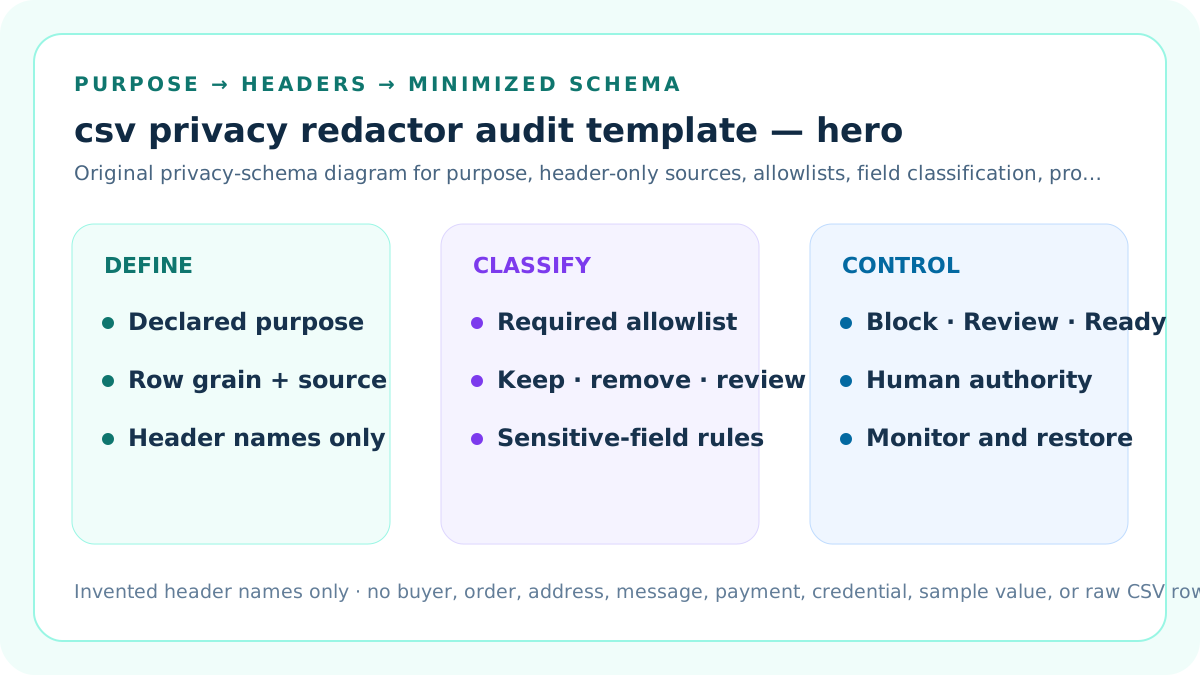
Purpose register
Use, audience, output, and owner. The audit workbook records declared purpose, row grain, platform export version, header-only boundary, required allowlist, keep, remove and review decisions, sensitive-field rule, privacy owner, independent reviewer, retention interval, exception, output evidence, and prior accepted schema needed for a reviewable privacy change trail.
At checkpoint 1, reperform the clean header packet and one intent-specific failure. Explain whether the evidence supports Ready, Review, or Block and identify the purpose, source, field, privacy, obligation, transformation, retention, monitoring, or restoration conclusion still outside the public worksheet.
Scope register
Platform, export, period, and grain. The audit workbook records declared purpose, row grain, platform export version, header-only boundary, required allowlist, keep, remove and review decisions, sensitive-field rule, privacy owner, independent reviewer, retention interval, exception, output evidence, and prior accepted schema needed for a reviewable privacy change trail.
At checkpoint 2, reperform the clean header packet and one intent-specific failure. Explain whether the evidence supports Ready, Review, or Block and identify the purpose, source, field, privacy, obligation, transformation, retention, monitoring, or restoration conclusion still outside the public worksheet.
Source register
Schema, version, filters, and fingerprint. The audit workbook records declared purpose, row grain, platform export version, header-only boundary, required allowlist, keep, remove and review decisions, sensitive-field rule, privacy owner, independent reviewer, retention interval, exception, output evidence, and prior accepted schema needed for a reviewable privacy change trail.
At checkpoint 3, reperform the clean header packet and one intent-specific failure. Explain whether the evidence supports Ready, Review, or Block and identify the purpose, source, field, privacy, obligation, transformation, retention, monitoring, or restoration conclusion still outside the public worksheet.
Allowlist register
Required field and justification. The audit workbook records declared purpose, row grain, platform export version, header-only boundary, required allowlist, keep, remove and review decisions, sensitive-field rule, privacy owner, independent reviewer, retention interval, exception, output evidence, and prior accepted schema needed for a reviewable privacy change trail.
At checkpoint 4, reperform the clean header packet and one intent-specific failure. Explain whether the evidence supports Ready, Review, or Block and identify the purpose, source, field, privacy, obligation, transformation, retention, monitoring, or restoration conclusion still outside the public worksheet.
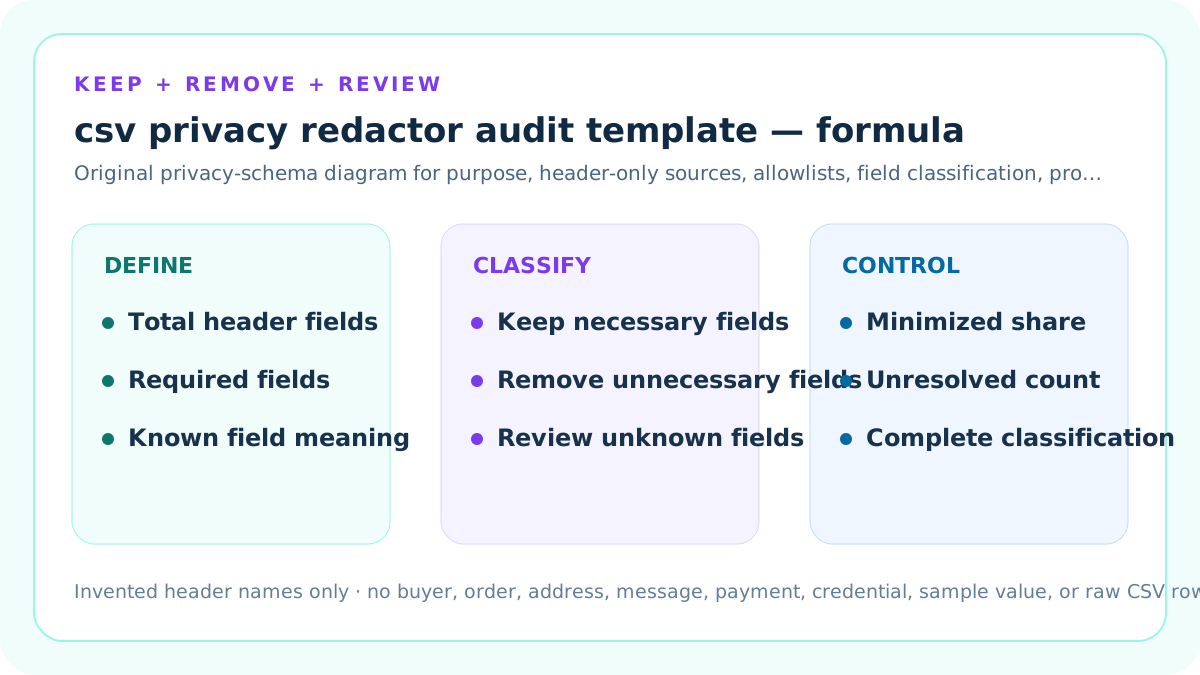
Classification register
Keep, remove, review, and reason. The audit workbook records declared purpose, row grain, platform export version, header-only boundary, required allowlist, keep, remove and review decisions, sensitive-field rule, privacy owner, independent reviewer, retention interval, exception, output evidence, and prior accepted schema needed for a reviewable privacy change trail.
At checkpoint 5, reperform the clean header packet and one intent-specific failure. Explain whether the evidence supports Ready, Review, or Block and identify the purpose, source, field, privacy, obligation, transformation, retention, monitoring, or restoration conclusion still outside the public worksheet.
Sensitive register
Contacts, addresses, free text, secrets, and identifiers. The audit workbook records declared purpose, row grain, platform export version, header-only boundary, required allowlist, keep, remove and review decisions, sensitive-field rule, privacy owner, independent reviewer, retention interval, exception, output evidence, and prior accepted schema needed for a reviewable privacy change trail.
At checkpoint 6, reperform the clean header packet and one intent-specific failure. Explain whether the evidence supports Ready, Review, or Block and identify the purpose, source, field, privacy, obligation, transformation, retention, monitoring, or restoration conclusion still outside the public worksheet.
Obligation register
Legal, contract, accounting, tax, fraud, and support. The audit workbook records declared purpose, row grain, platform export version, header-only boundary, required allowlist, keep, remove and review decisions, sensitive-field rule, privacy owner, independent reviewer, retention interval, exception, output evidence, and prior accepted schema needed for a reviewable privacy change trail.
At checkpoint 7, reperform the clean header packet and one intent-specific failure. Explain whether the evidence supports Ready, Review, or Block and identify the purpose, source, field, privacy, obligation, transformation, retention, monitoring, or restoration conclusion still outside the public worksheet.
Transformation register
Version, environment, and output hash. The audit workbook records declared purpose, row grain, platform export version, header-only boundary, required allowlist, keep, remove and review decisions, sensitive-field rule, privacy owner, independent reviewer, retention interval, exception, output evidence, and prior accepted schema needed for a reviewable privacy change trail.
At checkpoint 8, reperform the clean header packet and one intent-specific failure. Explain whether the evidence supports Ready, Review, or Block and identify the purpose, source, field, privacy, obligation, transformation, retention, monitoring, or restoration conclusion still outside the public worksheet.
Exception register
Conflict, owner, deadline, and decision. The audit workbook records declared purpose, row grain, platform export version, header-only boundary, required allowlist, keep, remove and review decisions, sensitive-field rule, privacy owner, independent reviewer, retention interval, exception, output evidence, and prior accepted schema needed for a reviewable privacy change trail.
At checkpoint 9, reperform the clean header packet and one intent-specific failure. Explain whether the evidence supports Ready, Review, or Block and identify the purpose, source, field, privacy, obligation, transformation, retention, monitoring, or restoration conclusion still outside the public worksheet.
Retention register
Review, disposal, and evidence. The audit workbook records declared purpose, row grain, platform export version, header-only boundary, required allowlist, keep, remove and review decisions, sensitive-field rule, privacy owner, independent reviewer, retention interval, exception, output evidence, and prior accepted schema needed for a reviewable privacy change trail.
At checkpoint 10, reperform the clean header packet and one intent-specific failure. Explain whether the evidence supports Ready, Review, or Block and identify the purpose, source, field, privacy, obligation, transformation, retention, monitoring, or restoration conclusion still outside the public worksheet.
Monitoring register
Schema drift and stop triggers. The audit workbook records declared purpose, row grain, platform export version, header-only boundary, required allowlist, keep, remove and review decisions, sensitive-field rule, privacy owner, independent reviewer, retention interval, exception, output evidence, and prior accepted schema needed for a reviewable privacy change trail.
At checkpoint 11, reperform the clean header packet and one intent-specific failure. Explain whether the evidence supports Ready, Review, or Block and identify the purpose, source, field, privacy, obligation, transformation, retention, monitoring, or restoration conclusion still outside the public worksheet.
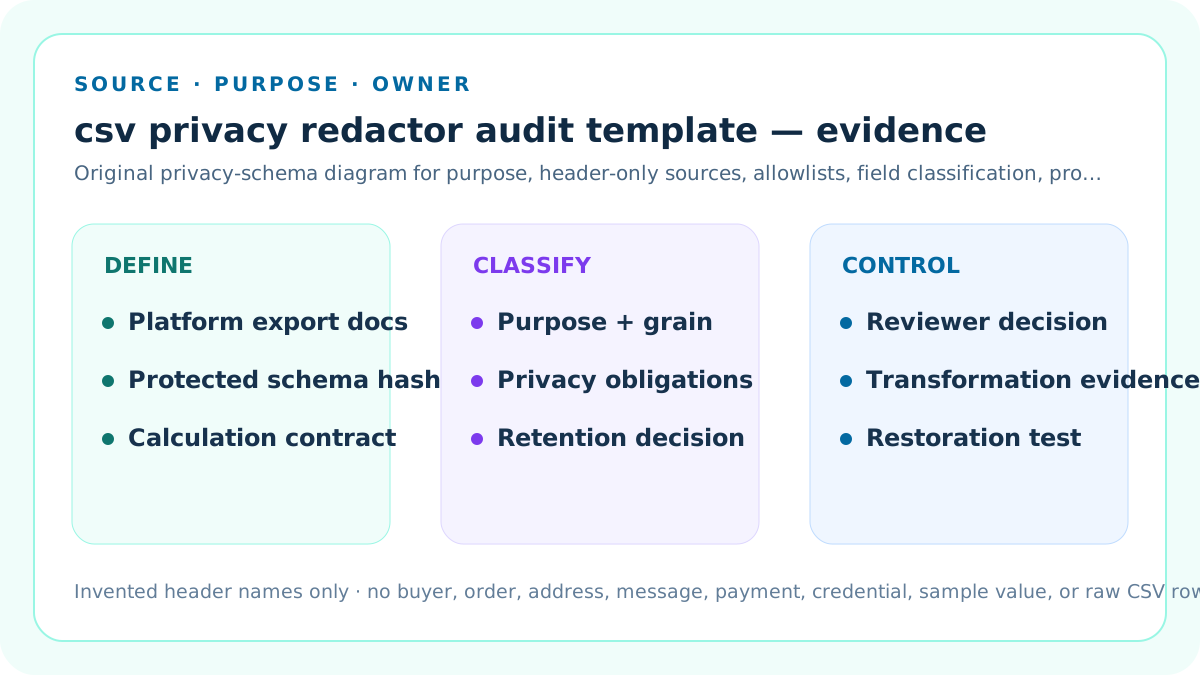
Restoration register
Backup, test, authority, and closure. The audit workbook records declared purpose, row grain, platform export version, header-only boundary, required allowlist, keep, remove and review decisions, sensitive-field rule, privacy owner, independent reviewer, retention interval, exception, output evidence, and prior accepted schema needed for a reviewable privacy change trail.
At checkpoint 12, reperform the clean header packet and one intent-specific failure. Explain whether the evidence supports Ready, Review, or Block and identify the purpose, source, field, privacy, obligation, transformation, retention, monitoring, or restoration conclusion still outside the public worksheet.
CSV Privacy Redactor Audit Checklist and Change Log: purpose and grain integrity control
Keep every retained field tied to one declared analysis and row grain. Control 1 defines a pass condition, protected evidence pointer, reviewer question, rejected shortcut, correction deadline, retention decision, monitoring signal, stop condition, and restoration trigger for a reviewable privacy change trail.
Purpose creep Blocks a reusable derivative. Keep minimization separate from CSV syntax validation, column mapping, anonymization, pseudonymization, access control, encryption, secure deletion, accounting, tax, legal analysis, and compliance authority.
CSV Privacy Redactor Audit Checklist and Change Log: allowlist integrity control
Require explicit non-sensitive fields and fail unknown columns closed into Review. Control 2 defines a pass condition, protected evidence pointer, reviewer question, rejected shortcut, correction deadline, retention decision, monitoring signal, stop condition, and restoration trigger for a reviewable privacy change trail.
A denylist alone cannot cover schema drift. Keep minimization separate from CSV syntax validation, column mapping, anonymization, pseudonymization, access control, encryption, secure deletion, accounting, tax, legal analysis, and compliance authority.
CSV Privacy Redactor Audit Checklist and Change Log: sensitive-field integrity control
Remove or separately control contacts, addresses, free text, credentials, payment references, and linkable identifiers. Control 3 defines a pass condition, protected evidence pointer, reviewer question, rejected shortcut, correction deadline, retention decision, monitoring signal, stop condition, and restoration trigger for a reviewable privacy change trail.
Labels cannot prove a field is anonymous. Keep minimization separate from CSV syntax validation, column mapping, anonymization, pseudonymization, access control, encryption, secure deletion, accounting, tax, legal analysis, and compliance authority.
CSV Privacy Redactor Audit Checklist and Change Log: privacy and minimization control
Use invented header names publicly while operational rows, buyers, messages, payments, addresses, credentials, and raw files stay protected. Control 4 defines a pass condition, protected evidence pointer, reviewer question, rejected shortcut, correction deadline, retention decision, monitoring signal, stop condition, and restoration trigger for a reviewable privacy change trail.
Never paste sample values. Keep minimization separate from CSV syntax validation, column mapping, anonymization, pseudonymization, access control, encryption, secure deletion, accounting, tax, legal analysis, and compliance authority.
CSV Privacy Redactor Audit Checklist and Change Log: human authority control
Require business-purpose owner, privacy owner, schema owner, independent reviewer, retention approver, stop authority, and restoration owner. Control 5 defines a pass condition, protected evidence pointer, reviewer question, rejected shortcut, correction deadline, retention decision, monitoring signal, stop condition, and restoration trigger for a reviewable privacy change trail.
Ready cannot determine legal basis or deletion. Keep minimization separate from CSV syntax validation, column mapping, anonymization, pseudonymization, access control, encryption, secure deletion, accounting, tax, legal analysis, and compliance authority.
CSV Privacy Redactor Audit Checklist and Change Log: backup and restoration control
Preserve source fingerprints, rules, prior schemas, transformation versions, output hashes, exceptions, retention decisions, and tested recovery. Control 6 defines a pass condition, protected evidence pointer, reviewer question, rejected shortcut, correction deadline, retention decision, monitoring signal, stop condition, and restoration trigger for a reviewable privacy change trail.
Rollback evidence is mandatory. Keep minimization separate from CSV syntax validation, column mapping, anonymization, pseudonymization, access control, encryption, secure deletion, accounting, tax, legal analysis, and compliance authority.
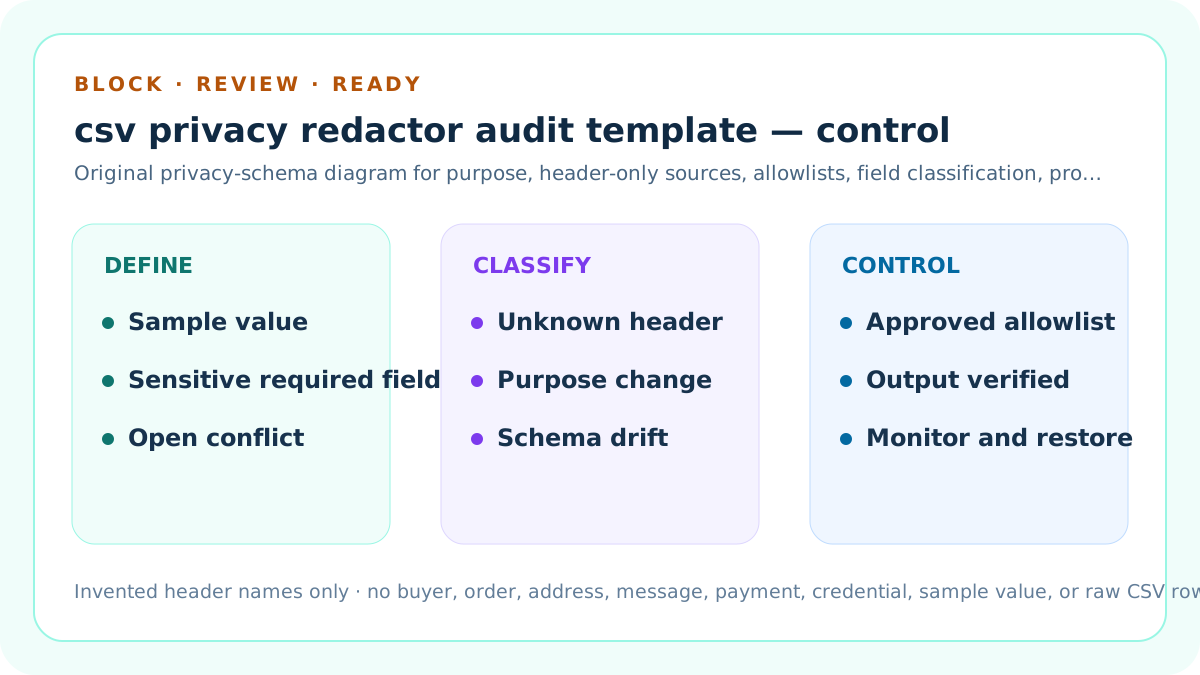
CSV Privacy Redactor Audit Checklist and Change Log: versioned governance control
Require real ordered source-review and policy dates, a closed evidence duration, a bounded header maximum, and nine explicit confirmations before interpreting a classification. Control 7 defines a pass condition, protected evidence pointer, reviewer question, rejected shortcut, correction deadline, retention decision, monitoring signal, stop condition, and restoration trigger for a reviewable privacy change trail.
Invalid governance masks all derived field lists and counts. Keep minimization separate from CSV syntax validation, column mapping, anonymization, pseudonymization, access control, encryption, secure deletion, accounting, tax, legal analysis, and compliance authority.
CSV Privacy Redactor Audit Checklist and Change Log: blocked-output quarantine control
Treat keep, remove, review, and minimized-share outputs as unavailable whenever a structural, privacy, evidence, confirmation, date, threshold, or conflict gate Blocks. Control 8 defines a pass condition, protected evidence pointer, reviewer question, rejected shortcut, correction deadline, retention decision, monitoring signal, stop condition, and restoration trigger for a reviewable privacy change trail.
Never reuse a partial-looking blocked classification in a protected transformation. Keep minimization separate from CSV syntax validation, column mapping, anonymization, pseudonymization, access control, encryption, secure deletion, accounting, tax, legal analysis, and compliance authority.
Purpose register: privacy schema lab 1
Reperform both synthetic header packets. Use, audience, output, and owner. Change one purpose, grain, source version, header, required field, classification rule, review threshold, retention interval, context, or conflict only; preserve all other values and record keep, remove, review, minimized-share, and decision outputs.
Use invented header names only. Test clean, unknown, missing-required, sensitive-required, duplicate, email-shaped, URL-shaped, token-shaped, overlong, short-context, and open-conflict states, then state the protected evidence, named authority, transformation control, disposal evidence, monitoring signal, and restoration action required before processing rows.
Scope register: privacy schema lab 2
Reperform both synthetic header packets. Platform, export, period, and grain. Change one purpose, grain, source version, header, required field, classification rule, review threshold, retention interval, context, or conflict only; preserve all other values and record keep, remove, review, minimized-share, and decision outputs.
Use invented header names only. Test clean, unknown, missing-required, sensitive-required, duplicate, email-shaped, URL-shaped, token-shaped, overlong, short-context, and open-conflict states, then state the protected evidence, named authority, transformation control, disposal evidence, monitoring signal, and restoration action required before processing rows.
Source register: privacy schema lab 3
Reperform both synthetic header packets. Schema, version, filters, and fingerprint. Change one purpose, grain, source version, header, required field, classification rule, review threshold, retention interval, context, or conflict only; preserve all other values and record keep, remove, review, minimized-share, and decision outputs.
Use invented header names only. Test clean, unknown, missing-required, sensitive-required, duplicate, email-shaped, URL-shaped, token-shaped, overlong, short-context, and open-conflict states, then state the protected evidence, named authority, transformation control, disposal evidence, monitoring signal, and restoration action required before processing rows.
Allowlist register: privacy schema lab 4
Reperform both synthetic header packets. Required field and justification. Change one purpose, grain, source version, header, required field, classification rule, review threshold, retention interval, context, or conflict only; preserve all other values and record keep, remove, review, minimized-share, and decision outputs.
Use invented header names only. Test clean, unknown, missing-required, sensitive-required, duplicate, email-shaped, URL-shaped, token-shaped, overlong, short-context, and open-conflict states, then state the protected evidence, named authority, transformation control, disposal evidence, monitoring signal, and restoration action required before processing rows.
Classification register: privacy schema lab 5
Reperform both synthetic header packets. Keep, remove, review, and reason. Change one purpose, grain, source version, header, required field, classification rule, review threshold, retention interval, context, or conflict only; preserve all other values and record keep, remove, review, minimized-share, and decision outputs.
Use invented header names only. Test clean, unknown, missing-required, sensitive-required, duplicate, email-shaped, URL-shaped, token-shaped, overlong, short-context, and open-conflict states, then state the protected evidence, named authority, transformation control, disposal evidence, monitoring signal, and restoration action required before processing rows.
Sensitive register: privacy schema lab 6
Reperform both synthetic header packets. Contacts, addresses, free text, secrets, and identifiers. Change one purpose, grain, source version, header, required field, classification rule, review threshold, retention interval, context, or conflict only; preserve all other values and record keep, remove, review, minimized-share, and decision outputs.
Use invented header names only. Test clean, unknown, missing-required, sensitive-required, duplicate, email-shaped, URL-shaped, token-shaped, overlong, short-context, and open-conflict states, then state the protected evidence, named authority, transformation control, disposal evidence, monitoring signal, and restoration action required before processing rows.
Obligation register: privacy schema lab 7
Reperform both synthetic header packets. Legal, contract, accounting, tax, fraud, and support. Change one purpose, grain, source version, header, required field, classification rule, review threshold, retention interval, context, or conflict only; preserve all other values and record keep, remove, review, minimized-share, and decision outputs.
Use invented header names only. Test clean, unknown, missing-required, sensitive-required, duplicate, email-shaped, URL-shaped, token-shaped, overlong, short-context, and open-conflict states, then state the protected evidence, named authority, transformation control, disposal evidence, monitoring signal, and restoration action required before processing rows.
Transformation register: privacy schema lab 8
Reperform both synthetic header packets. Version, environment, and output hash. Change one purpose, grain, source version, header, required field, classification rule, review threshold, retention interval, context, or conflict only; preserve all other values and record keep, remove, review, minimized-share, and decision outputs.
Use invented header names only. Test clean, unknown, missing-required, sensitive-required, duplicate, email-shaped, URL-shaped, token-shaped, overlong, short-context, and open-conflict states, then state the protected evidence, named authority, transformation control, disposal evidence, monitoring signal, and restoration action required before processing rows.
Exception register: privacy schema lab 9
Reperform both synthetic header packets. Conflict, owner, deadline, and decision. Change one purpose, grain, source version, header, required field, classification rule, review threshold, retention interval, context, or conflict only; preserve all other values and record keep, remove, review, minimized-share, and decision outputs.
Use invented header names only. Test clean, unknown, missing-required, sensitive-required, duplicate, email-shaped, URL-shaped, token-shaped, overlong, short-context, and open-conflict states, then state the protected evidence, named authority, transformation control, disposal evidence, monitoring signal, and restoration action required before processing rows.
Retention register: privacy schema lab 10
Reperform both synthetic header packets. Review, disposal, and evidence. Change one purpose, grain, source version, header, required field, classification rule, review threshold, retention interval, context, or conflict only; preserve all other values and record keep, remove, review, minimized-share, and decision outputs.
Use invented header names only. Test clean, unknown, missing-required, sensitive-required, duplicate, email-shaped, URL-shaped, token-shaped, overlong, short-context, and open-conflict states, then state the protected evidence, named authority, transformation control, disposal evidence, monitoring signal, and restoration action required before processing rows.
Monitoring register: privacy schema lab 11
Reperform both synthetic header packets. Schema drift and stop triggers. Change one purpose, grain, source version, header, required field, classification rule, review threshold, retention interval, context, or conflict only; preserve all other values and record keep, remove, review, minimized-share, and decision outputs.
Use invented header names only. Test clean, unknown, missing-required, sensitive-required, duplicate, email-shaped, URL-shaped, token-shaped, overlong, short-context, and open-conflict states, then state the protected evidence, named authority, transformation control, disposal evidence, monitoring signal, and restoration action required before processing rows.
Restoration register: privacy schema lab 12
Reperform both synthetic header packets. Backup, test, authority, and closure. Change one purpose, grain, source version, header, required field, classification rule, review threshold, retention interval, context, or conflict only; preserve all other values and record keep, remove, review, minimized-share, and decision outputs.
Use invented header names only. Test clean, unknown, missing-required, sensitive-required, duplicate, email-shaped, URL-shaped, token-shaped, overlong, short-context, and open-conflict states, then state the protected evidence, named authority, transformation control, disposal evidence, monitoring signal, and restoration action required before processing rows.
CSV Privacy Redactor Audit Checklist and Change Log: intent-specific implementation walkthrough
audit workbook checkpoint 1 addresses purpose register for a reviewable privacy change trail. Use, audience, output, and owner. Record the accepted classification, rejected shortcut, field owner, privacy review, obligation boundary, transformation version, follow-up date, retention trigger, monitoring signal, and rollback reference.
audit workbook checkpoint 2 addresses scope register for a reviewable privacy change trail. Platform, export, period, and grain. Record the accepted classification, rejected shortcut, field owner, privacy review, obligation boundary, transformation version, follow-up date, retention trigger, monitoring signal, and rollback reference.
audit workbook checkpoint 3 addresses source register for a reviewable privacy change trail. Schema, version, filters, and fingerprint. Record the accepted classification, rejected shortcut, field owner, privacy review, obligation boundary, transformation version, follow-up date, retention trigger, monitoring signal, and rollback reference.
audit workbook checkpoint 4 addresses allowlist register for a reviewable privacy change trail. Required field and justification. Record the accepted classification, rejected shortcut, field owner, privacy review, obligation boundary, transformation version, follow-up date, retention trigger, monitoring signal, and rollback reference.
audit workbook checkpoint 5 addresses classification register for a reviewable privacy change trail. Keep, remove, review, and reason. Record the accepted classification, rejected shortcut, field owner, privacy review, obligation boundary, transformation version, follow-up date, retention trigger, monitoring signal, and rollback reference.
audit workbook checkpoint 6 addresses sensitive register for a reviewable privacy change trail. Contacts, addresses, free text, secrets, and identifiers. Record the accepted classification, rejected shortcut, field owner, privacy review, obligation boundary, transformation version, follow-up date, retention trigger, monitoring signal, and rollback reference.
audit workbook checkpoint 7 addresses obligation register for a reviewable privacy change trail. Legal, contract, accounting, tax, fraud, and support. Record the accepted classification, rejected shortcut, field owner, privacy review, obligation boundary, transformation version, follow-up date, retention trigger, monitoring signal, and rollback reference.
audit workbook checkpoint 8 addresses transformation register for a reviewable privacy change trail. Version, environment, and output hash. Record the accepted classification, rejected shortcut, field owner, privacy review, obligation boundary, transformation version, follow-up date, retention trigger, monitoring signal, and rollback reference.
audit workbook checkpoint 9 addresses exception register for a reviewable privacy change trail. Conflict, owner, deadline, and decision. Record the accepted classification, rejected shortcut, field owner, privacy review, obligation boundary, transformation version, follow-up date, retention trigger, monitoring signal, and rollback reference.
audit workbook checkpoint 10 addresses retention register for a reviewable privacy change trail. Review, disposal, and evidence. Record the accepted classification, rejected shortcut, field owner, privacy review, obligation boundary, transformation version, follow-up date, retention trigger, monitoring signal, and rollback reference.
audit workbook checkpoint 11 addresses monitoring register for a reviewable privacy change trail. Schema drift and stop triggers. Record the accepted classification, rejected shortcut, field owner, privacy review, obligation boundary, transformation version, follow-up date, retention trigger, monitoring signal, and rollback reference.
audit workbook checkpoint 12 addresses restoration register for a reviewable privacy change trail. Backup, test, authority, and closure. Record the accepted classification, rejected shortcut, field owner, privacy review, obligation boundary, transformation version, follow-up date, retention trigger, monitoring signal, and rollback reference.
Evidence boundary for a reviewable privacy change trail
The order fixture uses invented Shopify-like header names and retains only created date, currency, line-item SKU, quantity, price, discount, shipping, tax, and refunded amount. The support fixture retains created date, channel, reason, status, and refund amount while removing buyer contact, address, message, attachment, and token fields.
These invented names demonstrate schema classification only. They cannot prove a real export contains no sensitive values, a derivative is anonymous, processing is lawful, retention is correct, transformation is secure, deletion occurred, or production records are complete.
Release, monitor, and restore the audit workbook
Block non-header values, duplicates, missing or sensitive required fields, weak context, invalid thresholds, unconfirmed header-only input, weak scope, or open conflicts. Review unfamiliar fields above threshold. Ready clears only the entered synthetic header plan.
Before indexing or operational use, preserve backups and run type, unit, integration, build, content, similarity, SEO, image, link, privacy, mobile, deployment, and live checks; then monitor schema drift without claiming search, privacy, or compliance causality.
Sources and further reading
- Shopify Help: Exporting orders: Official order-export schema, including contact, address, notes, payment reference, device, amount, SKU, status, and date fields.
- Etsy Help: Download sold transactions: Official seller export types and order, payment, price, title, and optional SKU boundaries.
- EU GDPR Article 5: Official purpose limitation, data minimisation, storage limitation, integrity, confidentiality, and accountability principles.
- NIST Privacy Framework 1.0: Risk-based privacy functions and data-processing controls.
- W3C CSVW: Tabular Data Model: Standards-based schema, column, key, and reference concepts.
- OWASP CSV Injection: Spreadsheet formula-injection risk that remains separate from header minimization.
- Seller Profit Guard methodology: Evidence, correction, release, monitoring, and rollback controls.
- Seller Profit Guard data privacy: Local-first public-example and protected operational-data boundaries.
Related Seller Profit Guard tools
- Seller CSV Privacy Redactor: Classify invented header names into keep, remove, and review.
- Seller CSV Import Validator: Check synthetic syntax and formula-injection controls separately.
- Seller CSV Column Mapper: Map approved minimized fields into a canonical schema.
- Duplicate Order Checker: Review identifiers needed for duplicate analysis.
- Missing SKU Cost Checker: Measure cost coverage after minimization.
- Methodology: Apply evidence and rollback controls.
- Data Privacy: Protect operational exports and private values.
- CSV Privacy Redactor Formula and Input Contract: Define purpose, source, grain, header-only input, required allowlist, keep, remove, review, retention, ownership, and restoration.
- CSV Privacy Redactor Worked Example: Order Export: Reduce an invented Shopify-like order schema to item-level profit fields while removing contact, address, notes, payment-reference, and device columns.
- CSV Privacy Redactor for a Support-Ticket Export: Build an aggregate refund-reason schema without carrying buyer contacts, messages, attachment links, or secrets into profit analysis.
- CSV Privacy Redactor Mistakes and Corrections: Diagnose sample-value exposure, purpose creep, sensitive fields, unknown-column auto-keep, identifiers, free text, and false deletion claims.
- Reliable Sources for CSV Privacy Minimization: Map purpose, platform schema, column meaning, private source, field owner, obligation, retention, transformation, and restoration evidence.
- Safe Decision Thresholds for CSV Privacy Review: Set zero-unresolved, temporary review, schema-age, drift, recurrence, source-confidence, transformation, disposal, and stop controls.
- Order Export vs Support-Ticket Privacy Schemas: Compare a structured financial order export with a free-text-heavy support export at the same field-classification grain and privacy boundary.
- Weekly Seller CSV Privacy Review Routine: Run a repeatable schema-control cycle for purpose, allowlist, field triage, protected transformation, validation, retention, monitoring, and restoration.
- Interpret a Minimized CSV Schema Responsibly: Explain what keep, remove, review, minimized share, Ready, Review, and Block can prove, cannot prove, and require as the next protected action.
Next step: Open Seller Profit Guard.
This is operational planning help, not tax, accounting, legal, financial, or platform-policy advice. Review the Terms and disclaimer, and verify current platform rules and fee assumptions before changing prices.