Bundle component inventory audit checklist
Last updated: 2026-07-31
Written and reviewed by Seller Profit Guard Editorial Team.
Audit a bundle-capacity result from source inventory states through actual consumption. Reconcile identifiers, locations, units, variants, compatibility, Available definitions, additional reservations, unreflected commitments, recipe versions, integer division, tied bottlenecks, competing allocation, thresholds, approvals, privacy, and restoration evidence. Preserve a dated exception and restoration record.
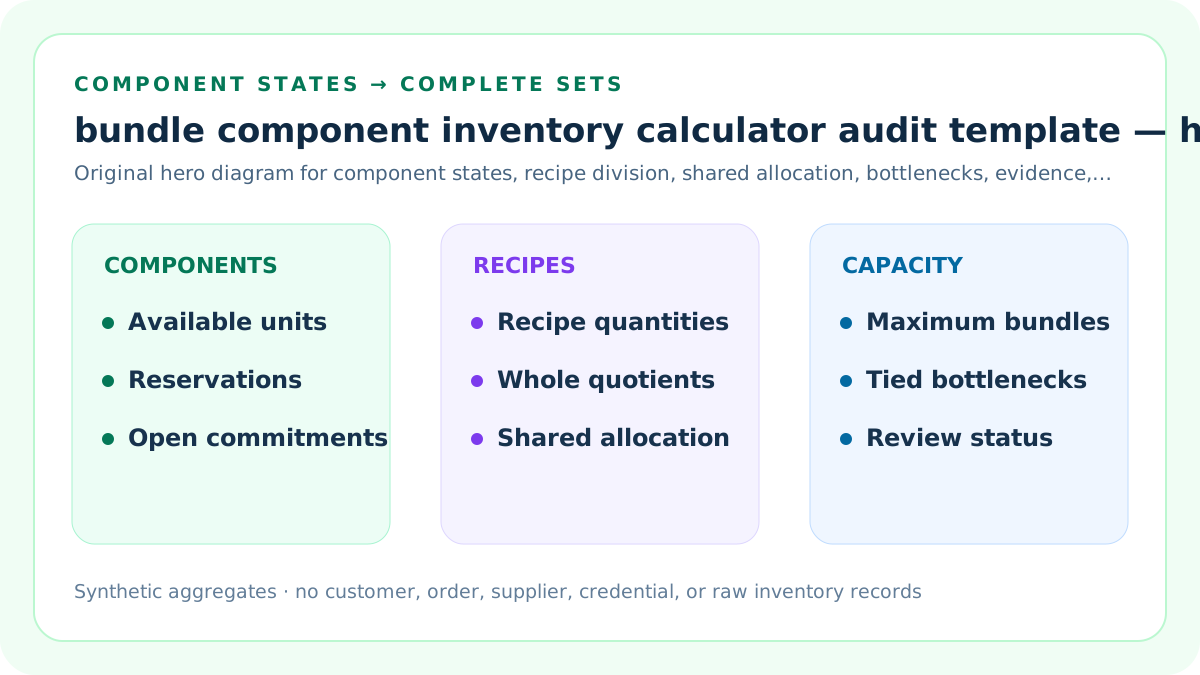
Audit identifiers
Verify parent, component, variant, location, and unit keys. The bundle-capacity audit file records item and variant identifiers, location, inventory state, timestamp, unit, reservation and commitment convention, recipe version, transformation, owner, reviewer, exception, and prior accepted value needed for an independently reviewable capacity trail.
Resolve ambiguity. At checkpoint 1, reperform both fixtures, identify the changed quotient or allocation term, list every tied bottleneck, and state which demand, pricing, purchasing, assembly, fulfillment, or privacy conclusion remains outside the calculator.
Audit inventory states
Reconcile Available, Committed, Unavailable, Incoming, and On hand. The bundle-capacity audit file records item and variant identifiers, location, inventory state, timestamp, unit, reservation and commitment convention, recipe version, transformation, owner, reviewer, exception, and prior accepted value needed for an independently reviewable capacity trail.
Document field. At checkpoint 2, reperform both fixtures, identify the changed quotient or allocation term, list every tied bottleneck, and state which demand, pricing, purchasing, assembly, fulfillment, or privacy conclusion remains outside the calculator.
Audit reservations
Trace only additional holds and exclusions. The bundle-capacity audit file records item and variant identifiers, location, inventory state, timestamp, unit, reservation and commitment convention, recipe version, transformation, owner, reviewer, exception, and prior accepted value needed for an independently reviewable capacity trail.
Prevent duplicates. At checkpoint 3, reperform both fixtures, identify the changed quotient or allocation term, list every tied bottleneck, and state which demand, pricing, purchasing, assembly, fulfillment, or privacy conclusion remains outside the calculator.
Audit commitments
Expand open bundle demand once and verify cutoff. The bundle-capacity audit file records item and variant identifiers, location, inventory state, timestamp, unit, reservation and commitment convention, recipe version, transformation, owner, reviewer, exception, and prior accepted value needed for an independently reviewable capacity trail.
Use report filters. At checkpoint 4, reperform both fixtures, identify the changed quotient or allocation term, list every tied bottleneck, and state which demand, pricing, purchasing, assembly, fulfillment, or privacy conclusion remains outside the calculator.
Audit recipes
Verify version, effective date, quantities, and conversions. The bundle-capacity audit file records item and variant identifiers, location, inventory state, timestamp, unit, reservation and commitment convention, recipe version, transformation, owner, reviewer, exception, and prior accepted value needed for an independently reviewable capacity trail.
Test parent variant. At checkpoint 5, reperform both fixtures, identify the changed quotient or allocation term, list every tied bottleneck, and state which demand, pricing, purchasing, assembly, fulfillment, or privacy conclusion remains outside the calculator.
Audit compatibility
Check lot, serial, expiry, condition, color, size, and channel. The bundle-capacity audit file records item and variant identifiers, location, inventory state, timestamp, unit, reservation and commitment convention, recipe version, transformation, owner, reviewer, exception, and prior accepted value needed for an independently reviewable capacity trail.
Split pools. At checkpoint 6, reperform both fixtures, identify the changed quotient or allocation term, list every tied bottleneck, and state which demand, pricing, purchasing, assembly, fulfillment, or privacy conclusion remains outside the calculator.
Audit formula
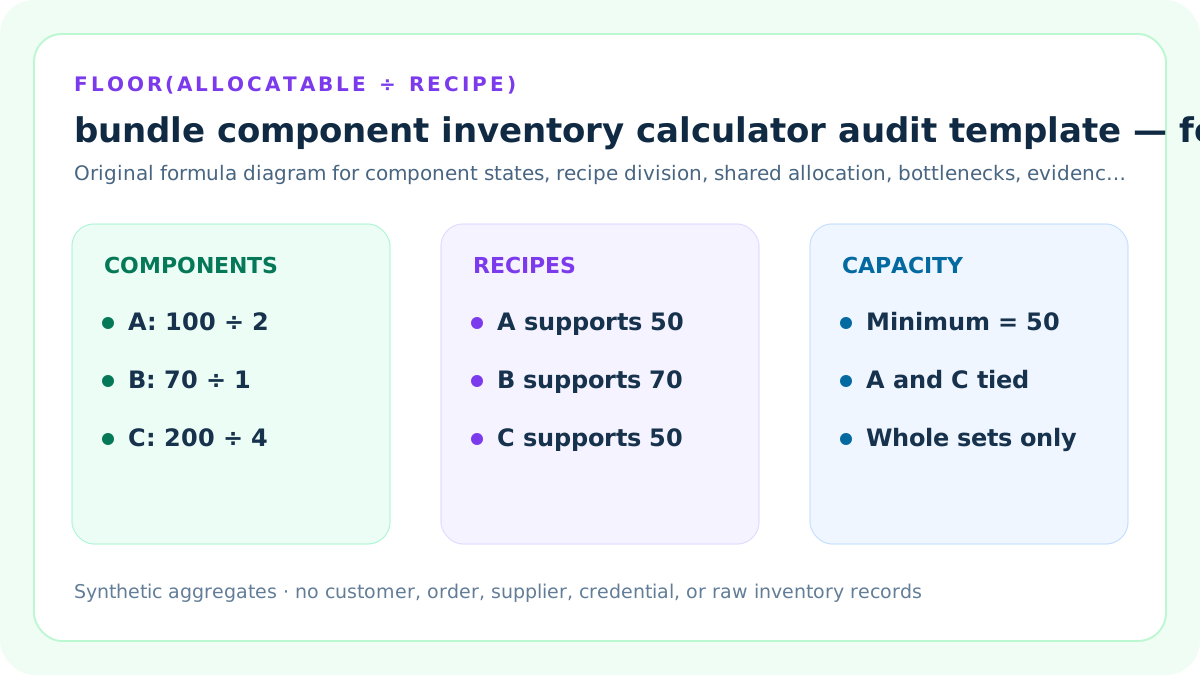
Reperform allocatable, quotient, floor, minimum, and ties. The bundle-capacity audit file records item and variant identifiers, location, inventory state, timestamp, unit, reservation and commitment convention, recipe version, transformation, owner, reviewer, exception, and prior accepted value needed for an independently reviewable capacity trail.
Preserve integers. At checkpoint 7, reperform both fixtures, identify the changed quotient or allocation term, list every tied bottleneck, and state which demand, pricing, purchasing, assembly, fulfillment, or privacy conclusion remains outside the calculator.
Audit allocation
Reperform priority X use, remaining shared, and Y limits. The bundle-capacity audit file records item and variant identifiers, location, inventory state, timestamp, unit, reservation and commitment convention, recipe version, transformation, owner, reviewer, exception, and prior accepted value needed for an independently reviewable capacity trail.
Label scenario. At checkpoint 8, reperform both fixtures, identify the changed quotient or allocation term, list every tied bottleneck, and state which demand, pricing, purchasing, assembly, fulfillment, or privacy conclusion remains outside the calculator.
Audit decision
Verify threshold, owner, approval, monitoring, and stop rules. The bundle-capacity audit file records item and variant identifiers, location, inventory state, timestamp, unit, reservation and commitment convention, recipe version, transformation, owner, reviewer, exception, and prior accepted value needed for an independently reviewable capacity trail.
Arithmetic cannot authorize. At checkpoint 9, reperform both fixtures, identify the changed quotient or allocation term, list every tied bottleneck, and state which demand, pricing, purchasing, assembly, fulfillment, or privacy conclusion remains outside the calculator.
Audit privacy and rollback
Confirm aggregates, protected pointers, no raw rows, and restoration evidence. The bundle-capacity audit file records item and variant identifiers, location, inventory state, timestamp, unit, reservation and commitment convention, recipe version, transformation, owner, reviewer, exception, and prior accepted value needed for an independently reviewable capacity trail.
Close exceptions. At checkpoint 10, reperform both fixtures, identify the changed quotient or allocation term, list every tied bottleneck, and state which demand, pricing, purchasing, assembly, fulfillment, or privacy conclusion remains outside the calculator.
Bundle Component Capacity Audit: inventory-state integrity control
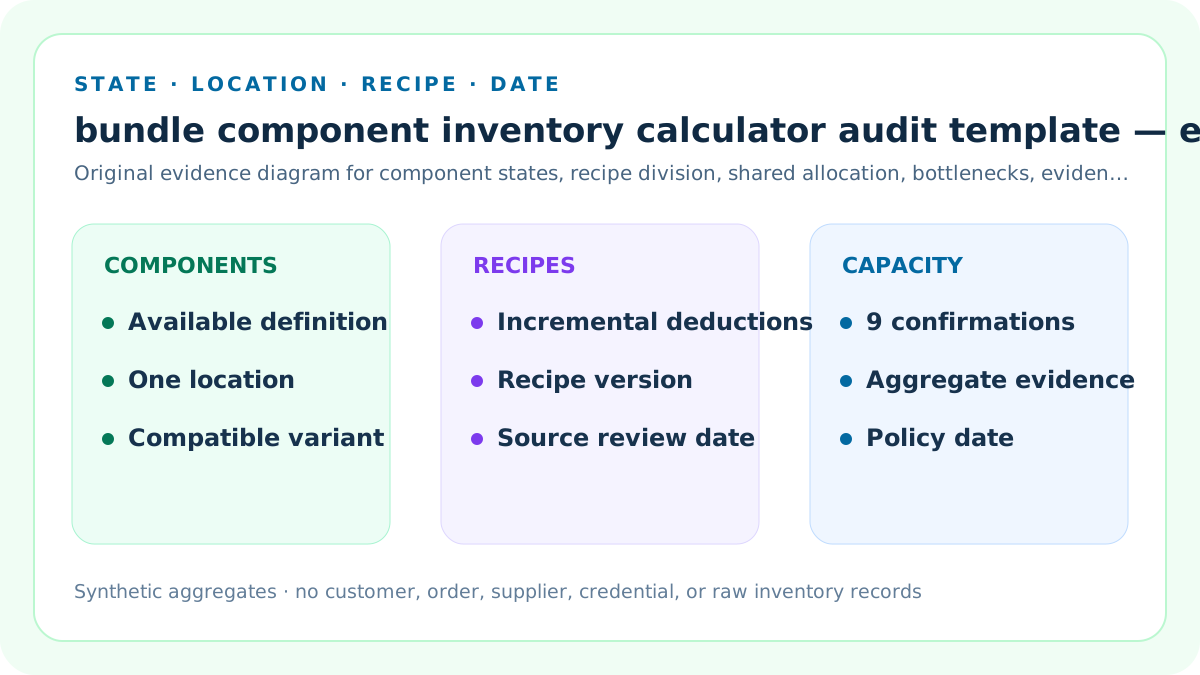
Use one documented field and subtract only incremental exclusions. Control 1 defines a pass condition, evidence owner, independent reviewer, correction deadline, sensitivity range, monitoring signal, stop condition, and restoration trigger for an independently reviewable capacity trail.
Double counting blocks. Apply it while keeping Available, additional reservations, unreflected commitments, recipes, fixed capacity, competing allocation, thresholds, and operational authority separate.
Bundle Component Capacity Audit: recipe and compatibility control
Bind current parent variants to compatible component quantities and units. Control 2 defines a pass condition, evidence owner, independent reviewer, correction deadline, sensitivity range, monitoring signal, stop condition, and restoration trigger for an independently reviewable capacity trail.
Stale or mixed recipes block. Apply it while keeping Available, additional reservations, unreflected commitments, recipes, fixed capacity, competing allocation, thresholds, and operational authority separate.
Bundle Component Capacity Audit: allocation boundary control
Separate fixed minimum-quotient capacity from declared competing-bundle priority. Control 3 defines a pass condition, evidence owner, independent reviewer, correction deadline, sensitivity range, monitoring signal, stop condition, and restoration trigger for an independently reviewable capacity trail.
One sequence is not optimal. Apply it while keeping Available, additional reservations, unreflected commitments, recipes, fixed capacity, competing allocation, thresholds, and operational authority separate.
Bundle Component Capacity Audit: dated policy boundary control
Record a real source-review date and a seller policy-effective date no later than that review. Control 4 defines a pass condition, evidence owner, independent reviewer, correction deadline, sensitivity range, monitoring signal, stop condition, and restoration trigger for an independently reviewable capacity trail.
A month label alone cannot govern the packet. Apply it while keeping Available, additional reservations, unreflected commitments, recipes, fixed capacity, competing allocation, thresholds, and operational authority separate.
Bundle Component Capacity Audit: three-threshold decision gate control
Evaluate the capacity floor, priority shared-component utilization ceiling, and minimum evidence days independently. Control 5 defines a pass condition, evidence owner, independent reviewer, correction deadline, sensitivity range, monitoring signal, stop condition, and restoration trigger for an independently reviewable capacity trail.
One passing control cannot offset another failure. Apply it while keeping Available, additional reservations, unreflected commitments, recipes, fixed capacity, competing allocation, thresholds, and operational authority separate.
Bundle Component Capacity Audit: nine-confirmation gate control
Require yes for identity, availability, incremental deductions, recipes, compatibility, allocation ownership, reconciliation, privacy, and planning boundaries. Control 6 defines a pass condition, evidence owner, independent reviewer, correction deadline, sensitivity range, monitoring signal, stop condition, and restoration trigger for an independently reviewable capacity trail.
Missing confirmation blocks every derived output. Apply it while keeping Available, additional reservations, unreflected commitments, recipes, fixed capacity, competing allocation, thresholds, and operational authority separate.
Bundle Component Capacity Audit: blocked-output masking control
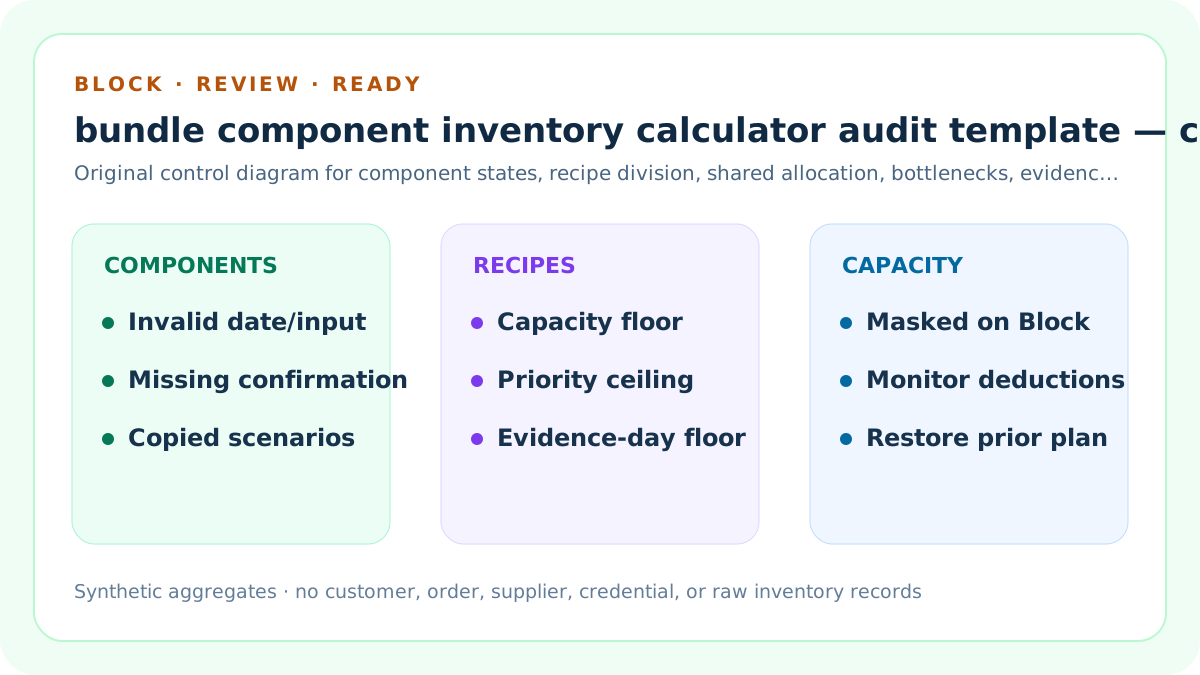
Hide allocatable units, capacities, bottlenecks, utilization, and headroom whenever structural evidence is invalid. Control 7 defines a pass condition, evidence owner, independent reviewer, correction deadline, sensitivity range, monitoring signal, stop condition, and restoration trigger for an independently reviewable capacity trail.
Do not interpret arithmetic produced from a blocked packet. Apply it while keeping Available, additional reservations, unreflected commitments, recipes, fixed capacity, competing allocation, thresholds, and operational authority separate.
Bundle Component Capacity Audit: decision authority control
Separate capacity from demand, pricing, safety stock, purchasing, assembly, allocation, and fulfillment. Control 8 defines a pass condition, evidence owner, independent reviewer, correction deadline, sensitivity range, monitoring signal, stop condition, and restoration trigger for an independently reviewable capacity trail.
Arithmetic cannot authorize. Apply it while keeping Available, additional reservations, unreflected commitments, recipes, fixed capacity, competing allocation, thresholds, and operational authority separate.
Bundle Component Capacity Audit: privacy and restoration control
Use aggregates, protect source rows, monitor deductions, retain prior settings, and define rollback. Control 9 defines a pass condition, evidence owner, independent reviewer, correction deadline, sensitivity range, monitoring signal, stop condition, and restoration trigger for an independently reviewable capacity trail.
Public private data is prohibited. Apply it while keeping Available, additional reservations, unreflected commitments, recipes, fixed capacity, competing allocation, thresholds, and operational authority separate.
Audit identifiers: component lab 1
Recalculate the relevant outputs from both fixtures. Verify parent, component, variant, location, and unit keys. Change one input only, preserve the remaining inventory-state and recipe assumptions, and record allocatable units, component quotients, maximum bundles, tied bottlenecks, shared consumption, remaining capacity, and status.
Resolve ambiguity. Test low, base, and high availability, reservation, commitment, recipe, and priority values. Explain the dominant constraint and protected evidence still required before any operational action.
Audit inventory states: component lab 2
Recalculate the relevant outputs from both fixtures. Reconcile Available, Committed, Unavailable, Incoming, and On hand. Change one input only, preserve the remaining inventory-state and recipe assumptions, and record allocatable units, component quotients, maximum bundles, tied bottlenecks, shared consumption, remaining capacity, and status.
Document field. Test low, base, and high availability, reservation, commitment, recipe, and priority values. Explain the dominant constraint and protected evidence still required before any operational action.
Audit reservations: component lab 3
Recalculate the relevant outputs from both fixtures. Trace only additional holds and exclusions. Change one input only, preserve the remaining inventory-state and recipe assumptions, and record allocatable units, component quotients, maximum bundles, tied bottlenecks, shared consumption, remaining capacity, and status.
Prevent duplicates. Test low, base, and high availability, reservation, commitment, recipe, and priority values. Explain the dominant constraint and protected evidence still required before any operational action.
Audit commitments: component lab 4
Recalculate the relevant outputs from both fixtures. Expand open bundle demand once and verify cutoff. Change one input only, preserve the remaining inventory-state and recipe assumptions, and record allocatable units, component quotients, maximum bundles, tied bottlenecks, shared consumption, remaining capacity, and status.
Use report filters. Test low, base, and high availability, reservation, commitment, recipe, and priority values. Explain the dominant constraint and protected evidence still required before any operational action.
Audit recipes: component lab 5
Recalculate the relevant outputs from both fixtures. Verify version, effective date, quantities, and conversions. Change one input only, preserve the remaining inventory-state and recipe assumptions, and record allocatable units, component quotients, maximum bundles, tied bottlenecks, shared consumption, remaining capacity, and status.
Test parent variant. Test low, base, and high availability, reservation, commitment, recipe, and priority values. Explain the dominant constraint and protected evidence still required before any operational action.
Audit compatibility: component lab 6
Recalculate the relevant outputs from both fixtures. Check lot, serial, expiry, condition, color, size, and channel. Change one input only, preserve the remaining inventory-state and recipe assumptions, and record allocatable units, component quotients, maximum bundles, tied bottlenecks, shared consumption, remaining capacity, and status.
Split pools. Test low, base, and high availability, reservation, commitment, recipe, and priority values. Explain the dominant constraint and protected evidence still required before any operational action.
Audit formula: component lab 7
Recalculate the relevant outputs from both fixtures. Reperform allocatable, quotient, floor, minimum, and ties. Change one input only, preserve the remaining inventory-state and recipe assumptions, and record allocatable units, component quotients, maximum bundles, tied bottlenecks, shared consumption, remaining capacity, and status.
Preserve integers. Test low, base, and high availability, reservation, commitment, recipe, and priority values. Explain the dominant constraint and protected evidence still required before any operational action.
Audit allocation: component lab 8
Recalculate the relevant outputs from both fixtures. Reperform priority X use, remaining shared, and Y limits. Change one input only, preserve the remaining inventory-state and recipe assumptions, and record allocatable units, component quotients, maximum bundles, tied bottlenecks, shared consumption, remaining capacity, and status.
Label scenario. Test low, base, and high availability, reservation, commitment, recipe, and priority values. Explain the dominant constraint and protected evidence still required before any operational action.
Audit decision: component lab 9
Recalculate the relevant outputs from both fixtures. Verify threshold, owner, approval, monitoring, and stop rules. Change one input only, preserve the remaining inventory-state and recipe assumptions, and record allocatable units, component quotients, maximum bundles, tied bottlenecks, shared consumption, remaining capacity, and status.
Arithmetic cannot authorize. Test low, base, and high availability, reservation, commitment, recipe, and priority values. Explain the dominant constraint and protected evidence still required before any operational action.
Audit privacy and rollback: component lab 10
Recalculate the relevant outputs from both fixtures. Confirm aggregates, protected pointers, no raw rows, and restoration evidence. Change one input only, preserve the remaining inventory-state and recipe assumptions, and record allocatable units, component quotients, maximum bundles, tied bottlenecks, shared consumption, remaining capacity, and status.
Close exceptions. Test low, base, and high availability, reservation, commitment, recipe, and priority values. Explain the dominant constraint and protected evidence still required before any operational action.
Bundle Component Capacity Audit: intent-specific implementation walkthrough
bundle-capacity audit file checkpoint 1 addresses audit identifiers for an independently reviewable capacity trail. Verify parent, component, variant, location, and unit keys. Record the source decision, formula effect, failed alternative, reviewer question, correction owner, monitoring signal, and restoration value. Resolve ambiguity.
bundle-capacity audit file checkpoint 2 addresses audit inventory states for an independently reviewable capacity trail. Reconcile Available, Committed, Unavailable, Incoming, and On hand. Record the source decision, formula effect, failed alternative, reviewer question, correction owner, monitoring signal, and restoration value. Document field.
bundle-capacity audit file checkpoint 3 addresses audit reservations for an independently reviewable capacity trail. Trace only additional holds and exclusions. Record the source decision, formula effect, failed alternative, reviewer question, correction owner, monitoring signal, and restoration value. Prevent duplicates.
bundle-capacity audit file checkpoint 4 addresses audit commitments for an independently reviewable capacity trail. Expand open bundle demand once and verify cutoff. Record the source decision, formula effect, failed alternative, reviewer question, correction owner, monitoring signal, and restoration value. Use report filters.
bundle-capacity audit file checkpoint 5 addresses audit recipes for an independently reviewable capacity trail. Verify version, effective date, quantities, and conversions. Record the source decision, formula effect, failed alternative, reviewer question, correction owner, monitoring signal, and restoration value. Test parent variant.
bundle-capacity audit file checkpoint 6 addresses audit compatibility for an independently reviewable capacity trail. Check lot, serial, expiry, condition, color, size, and channel. Record the source decision, formula effect, failed alternative, reviewer question, correction owner, monitoring signal, and restoration value. Split pools.
bundle-capacity audit file checkpoint 7 addresses audit formula for an independently reviewable capacity trail. Reperform allocatable, quotient, floor, minimum, and ties. Record the source decision, formula effect, failed alternative, reviewer question, correction owner, monitoring signal, and restoration value. Preserve integers.
bundle-capacity audit file checkpoint 8 addresses audit allocation for an independently reviewable capacity trail. Reperform priority X use, remaining shared, and Y limits. Record the source decision, formula effect, failed alternative, reviewer question, correction owner, monitoring signal, and restoration value. Label scenario.
bundle-capacity audit file checkpoint 9 addresses audit decision for an independently reviewable capacity trail. Verify threshold, owner, approval, monitoring, and stop rules. Record the source decision, formula effect, failed alternative, reviewer question, correction owner, monitoring signal, and restoration value. Arithmetic cannot authorize.
bundle-capacity audit file checkpoint 10 addresses audit privacy and rollback for an independently reviewable capacity trail. Confirm aggregates, protected pointers, no raw rows, and restoration evidence. Record the source decision, formula effect, failed alternative, reviewer question, correction owner, monitoring signal, and restoration value. Close exceptions.
Evidence boundary for an independently reviewable capacity trail
The fixed-bundle fixture uses three compatible components at one location. After additional reservations and commitments, A has 100 allocatable units and requires two, B has 70 and requires one, and C has 200 and requires four. Capacities are 50, 70, and 50, so maximum complete bundles equal 50 and A plus C are tied bottlenecks. The result is 10 bundles above the default 40-bundle control. The competing-bundle fixture starts with 140 allocatable shared units. Thirty priority Bundle X units consume 60 shared units because X requires two each, or 42.86 percent of the shared pool. The remaining 80 shared units and 80 allocatable unique-Y units each support 80 Bundle Y units, creating a tied bottleneck. The allocation stays 17.14 percentage points below the default 60 percent priority-utilization ceiling, and both 60-day evidence windows are 15 days above the default 45-day evidence floor.
The packet demonstrates entered complete-set arithmetic and one priority allocation under a dated policy. It cannot prove demand, optimal mix, compatible future receipts, correct safety stock, purchase quantity, fulfillment eligibility, accounting treatment, customer outcome, or the correct business action.
Release, monitor, and restore the bundle-capacity audit file
Block non-finite or invalid quantities, recipes, dates, confirmations, scope, compatibility, privacy, copied scenarios, or conflicts, and mask every derived output. Review insufficient evidence, overcommitment, infeasible priority, excessive shared-component utilization, or capacity below threshold. Ready clears only the entered worksheet.
Before indexing or operational use, preserve evidence and rollback artifacts; run typecheck, unit, integration, build, content, similarity, SEO, image, link, mobile, strict-route, deployment, and live checks; then compare actual component consumption without claiming same-period causality.
Bundle Component Capacity Audit: concrete working record
Record the full bundle-capacity audit file: component and parent identifiers, variants, locations, states, timestamps, units, reservations, commitments, recipes, conversions, compatible pools, allocation sequence, quotients, ties, the 40-bundle capacity floor, 60 percent priority-utilization ceiling, 45-day evidence floor, source-review and policy dates, all nine confirmations, owners, approvals, monitoring, exceptions, stop rules, privacy controls, and restoration evidence for an independently reviewable capacity trail.
Sources and further reading
- Shopify Help: Bundle eligibility and considerations: Official fixed-bundle availability formula and tracked-inventory boundaries.
- Shopify Help: Inventory states: Official Available, Committed, Unavailable, Incoming, and On hand definitions.
- Shopify Help: Shopify Bundles: Official component, variant, channel, order, inventory, and bundle limitations.
- Microsoft Learn: Assembly reports: Official assembly BOM, raw-material, and Item - Able to Make availability reporting context.
- Oracle NetSuite: Kit/Package Items: Official component-member inventory treatment for kits.
- Oracle NetSuite: Kit quantities in reports: Official committed-component double-counting warning and report-filter context.
- Oracle NetSuite: Available to Build glossary: Official Available, on-hand, units, top-level, and all-level build terminology.
- Seller Profit Guard methodology: Formula, evidence, privacy, release, monitoring, correction, and rollback controls.
Related Seller Profit Guard tools
- Bundle Component Inventory Calculator: Calculate fixed and competing bundle capacity from component evidence.
- Bundle Margin Calculator: Evaluate contribution separately from physical capacity.
- Safety Stock Calculator: Estimate an uncertainty buffer separately.
- Stockout Cost Calculator: Estimate availability consequences separately.
- Methodology: Apply Seller Profit Guard evidence and release controls.
- Data Privacy: Protect source inventory, supplier, order, and customer data.
- Bundle Component Capacity Formula: Define Available, additional reservations, commitments, recipe quantities, locations, variants, bottlenecks, and competing allocation.
- Bundle Component Worked Example: Reperform a three-component fixed bundle from inventory states through tied bottlenecks, maximum complete sets, and ties.
- Competing Bundle Component Scenario: Allocate a shared component to priority Bundle X, then calculate Bundle Y capacity from shared and unique constraints and controls.
- Bundle Component Inventory Mistakes: Find inventory-state, duplicate-commitment, recipe, location, variant, unit, allocation, report, and privacy errors with fixes.
- Bundle Component Inventory Data Sources: Map Available, reservations, commitments, recipes, variants, locations, compatibility, and order demand to controlled evidence.
- Bundle Capacity Decision Threshold: Set a minimum complete-set threshold with evidence, compatibility, allocation, approval, monitoring, stop, and restoration controls.
- Fixed vs Competing Bundle Capacity: Compare a single recipe with a priority allocation across shared and unique components without collapsing their assumptions.
- Weekly Bundle Component Review: Run a weekly inventory-state, recipe, commitment, capacity, exception, monitoring, and restoration cycle for shared components and competing bundles.
- Interpret Bundle Capacity Results: Read maximum bundles, component quotients, ties, allocation dependence, threshold status, and uncertainty without false precision.
Next step: Open Seller Profit Guard.
This is operational planning help, not tax, accounting, legal, financial, or platform-policy advice. Review the Terms and disclaimer, and verify current platform rules and fee assumptions before changing prices.