What belongs in a Shopify payment-fee audit?
Last updated: 2026-07-29
Written and reviewed by Seller Profit Guard Editorial Team.
Record the invented comparison base, currency, plan, market, card and payment method, Shopify Payments rate source, provider contract version, processing percentages and fixed amounts, Shopify transaction rates and bases, exemptions, refund terms, formulas, component results, threshold, exceptions, reviewer, observed aggregate check, downstream changes, deployment identifier, backups, and restoration test.
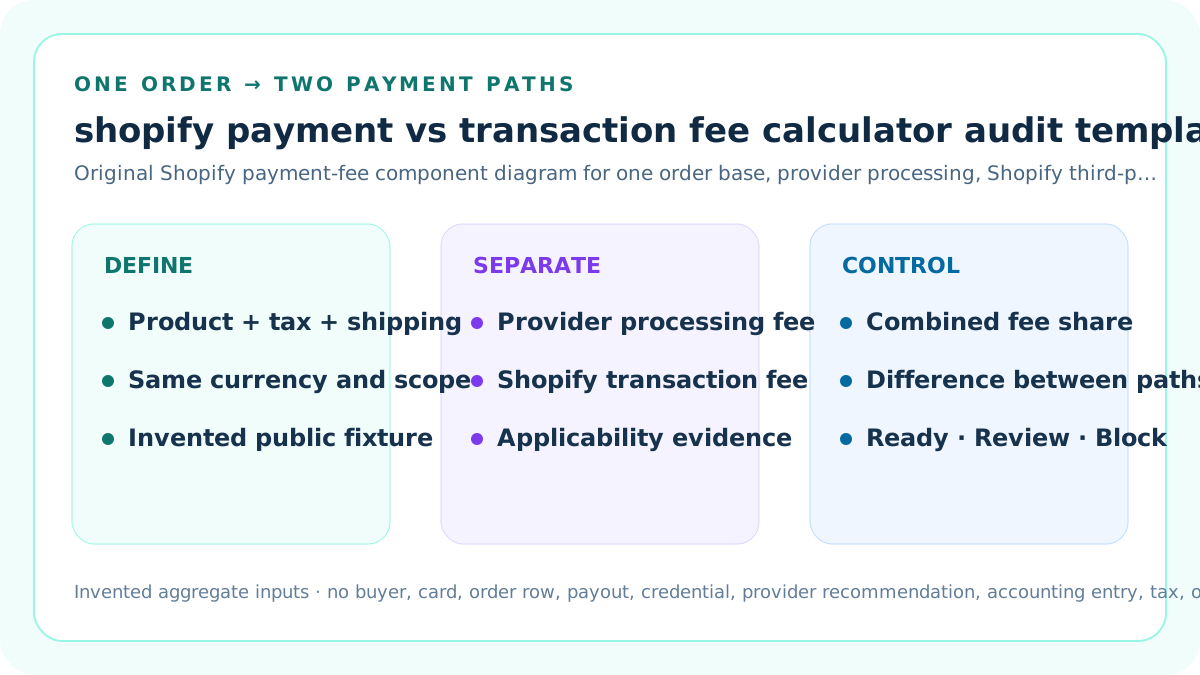
Order-base block
Record invented product-after-discount, tax, shipping, charged amount, currency, and exclusions. The payment fee audit packet records the invented order base, plan, market, card, provider path, processing percentage, fixed amount, Shopify transaction rate, source date, threshold, reviewer, and prior result needed for a reviewable rate change and rollback record.
At checkpoint 1, state the exact fee base, formula, applicability rule, accepted source, excluded charges, observed-check pointer, exception owner, downstream consumer, stop condition, and restoration reference. Keep payment components separate from plan cost, apps, product cost, profit, payouts, accounting, tax, provider approval, and operational switching.
Shopify Payments block
Record sole-provider state, plan, market, card class, percentage, fixed amount, admin path, source date, owner, and reviewer. The payment fee audit packet records the invented order base, plan, market, card, provider path, processing percentage, fixed amount, Shopify transaction rate, source date, threshold, reviewer, and prior result needed for a reviewable rate change and rollback record.
At checkpoint 2, state the exact fee base, formula, applicability rule, accepted source, excluded charges, observed-check pointer, exception owner, downstream consumer, stop condition, and restoration reference. Keep payment components separate from plan cost, apps, product cost, profit, payouts, accounting, tax, provider approval, and operational switching.
Third-party provider block
Record direct or external type, contract, processing percentage, fixed amount, surcharges, refunds, currency, and effective date. The payment fee audit packet records the invented order base, plan, market, card, provider path, processing percentage, fixed amount, Shopify transaction rate, source date, threshold, reviewer, and prior result needed for a reviewable rate change and rollback record.
At checkpoint 3, state the exact fee base, formula, applicability rule, accepted source, excluded charges, observed-check pointer, exception owner, downstream consumer, stop condition, and restoration reference. Keep payment components separate from plan cost, apps, product cost, profit, payouts, accounting, tax, provider approval, and operational switching.
Shopify transaction block
Record applicability, plan rate, formula base, exemptions, refund treatment, bill evidence, and source version. The payment fee audit packet records the invented order base, plan, market, card, provider path, processing percentage, fixed amount, Shopify transaction rate, source date, threshold, reviewer, and prior result needed for a reviewable rate change and rollback record.
At checkpoint 4, state the exact fee base, formula, applicability rule, accepted source, excluded charges, observed-check pointer, exception owner, downstream consumer, stop condition, and restoration reference. Keep payment components separate from plan cost, apps, product cost, profit, payouts, accounting, tax, provider approval, and operational switching.
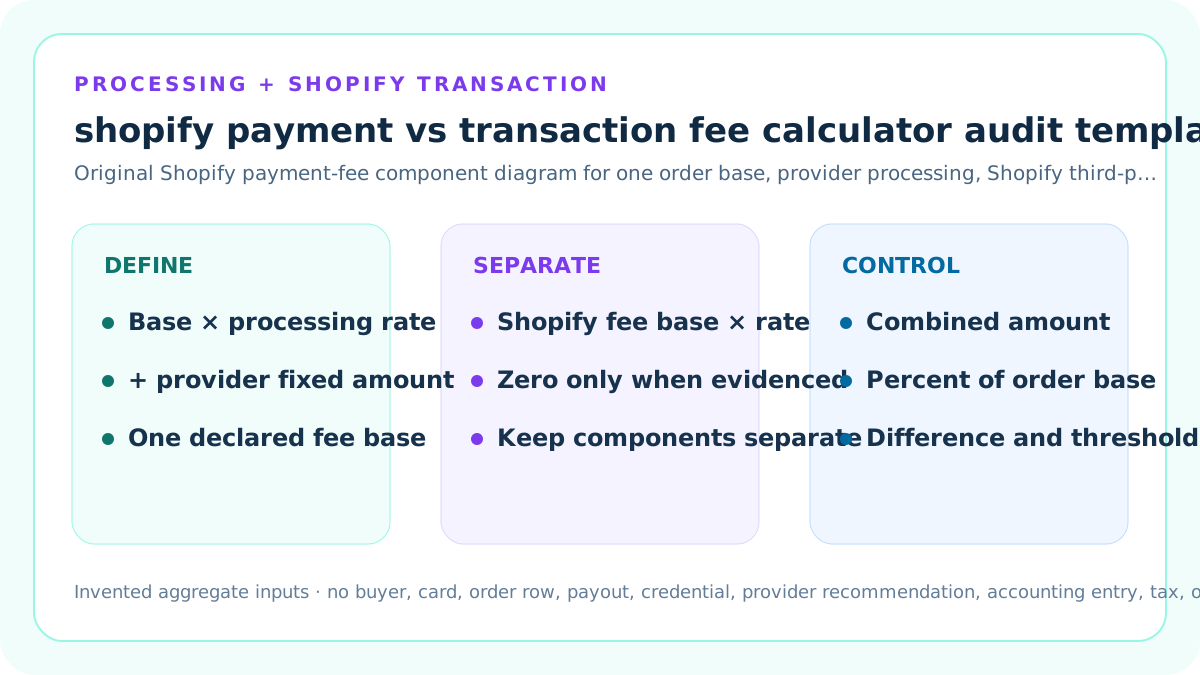
Calculation block
Record processing, Shopify transaction, combined amount, share, signed difference, precision, and counterexample results. The payment fee audit packet records the invented order base, plan, market, card, provider path, processing percentage, fixed amount, Shopify transaction rate, source date, threshold, reviewer, and prior result needed for a reviewable rate change and rollback record.
At checkpoint 5, state the exact fee base, formula, applicability rule, accepted source, excluded charges, observed-check pointer, exception owner, downstream consumer, stop condition, and restoration reference. Keep payment components separate from plan cost, apps, product cost, profit, payouts, accounting, tax, provider approval, and operational switching.
Decision block
Record seller threshold, Ready or Review state, Block defects, rationale, approver, and expiry. The payment fee audit packet records the invented order base, plan, market, card, provider path, processing percentage, fixed amount, Shopify transaction rate, source date, threshold, reviewer, and prior result needed for a reviewable rate change and rollback record.
At checkpoint 6, state the exact fee base, formula, applicability rule, accepted source, excluded charges, observed-check pointer, exception owner, downstream consumer, stop condition, and restoration reference. Keep payment components separate from plan cost, apps, product cost, profit, payouts, accounting, tax, provider approval, and operational switching.
Observed and downstream block
Record aggregate statement reconciliation, exceptions, affected models, deployment identifier, and monitoring. The payment fee audit packet records the invented order base, plan, market, card, provider path, processing percentage, fixed amount, Shopify transaction rate, source date, threshold, reviewer, and prior result needed for a reviewable rate change and rollback record.
At checkpoint 7, state the exact fee base, formula, applicability rule, accepted source, excluded charges, observed-check pointer, exception owner, downstream consumer, stop condition, and restoration reference. Keep payment components separate from plan cost, apps, product cost, profit, payouts, accounting, tax, provider approval, and operational switching.
Restoration block
Record prior rate table, backups, restore instructions, stop authority, last exercise, reconciled outputs, and closure. The payment fee audit packet records the invented order base, plan, market, card, provider path, processing percentage, fixed amount, Shopify transaction rate, source date, threshold, reviewer, and prior result needed for a reviewable rate change and rollback record.
At checkpoint 8, state the exact fee base, formula, applicability rule, accepted source, excluded charges, observed-check pointer, exception owner, downstream consumer, stop condition, and restoration reference. Keep payment components separate from plan cost, apps, product cost, profit, payouts, accounting, tax, provider approval, and operational switching.
Shopify Payment Fee Audit Checklist and Change Log: applicability integrity control
Tie each Shopify transaction-rate value to the declared provider path, active plan, market, payment method, exclusions, and effective date. Control 1 names the invariant, protected evidence pointer, reviewer question, pass condition, exception state, correction deadline, monitoring signal, and rollback proof for a reviewable rate change and rollback record.
A zero or remembered percentage is not self-validating. Public fixtures remain invented and aggregate. Exclude buyer, customer, card, order, address, payment reference, payout, dispute, credential, bank, private statement, and raw transaction data from the site and screenshots.
Shopify Payment Fee Audit Checklist and Change Log: provider integrity control
Tie processing percentage, fixed amount, currency, card class, surcharges, refund terms, and source version to one provider contract. Control 2 names the invariant, protected evidence pointer, reviewer question, pass condition, exception state, correction deadline, monitoring signal, and rollback proof for a reviewable rate change and rollback record.
A marketing headline is not the complete processing schedule. Public fixtures remain invented and aggregate. Exclude buyer, customer, card, order, address, payment reference, payout, dispute, credential, bank, private statement, and raw transaction data from the site and screenshots.
Shopify Payment Fee Audit Checklist and Change Log: base integrity control
Tie provider processing and Shopify transaction calculations to explicit product-after-discount, tax, shipping, charged amount, and exclusions. Control 3 names the invariant, protected evidence pointer, reviewer question, pass condition, exception state, correction deadline, monitoring signal, and rollback proof for a reviewable rate change and rollback record.
Do not compare different orders or hidden fee bases. Public fixtures remain invented and aggregate. Exclude buyer, customer, card, order, address, payment reference, payout, dispute, credential, bank, private statement, and raw transaction data from the site and screenshots.
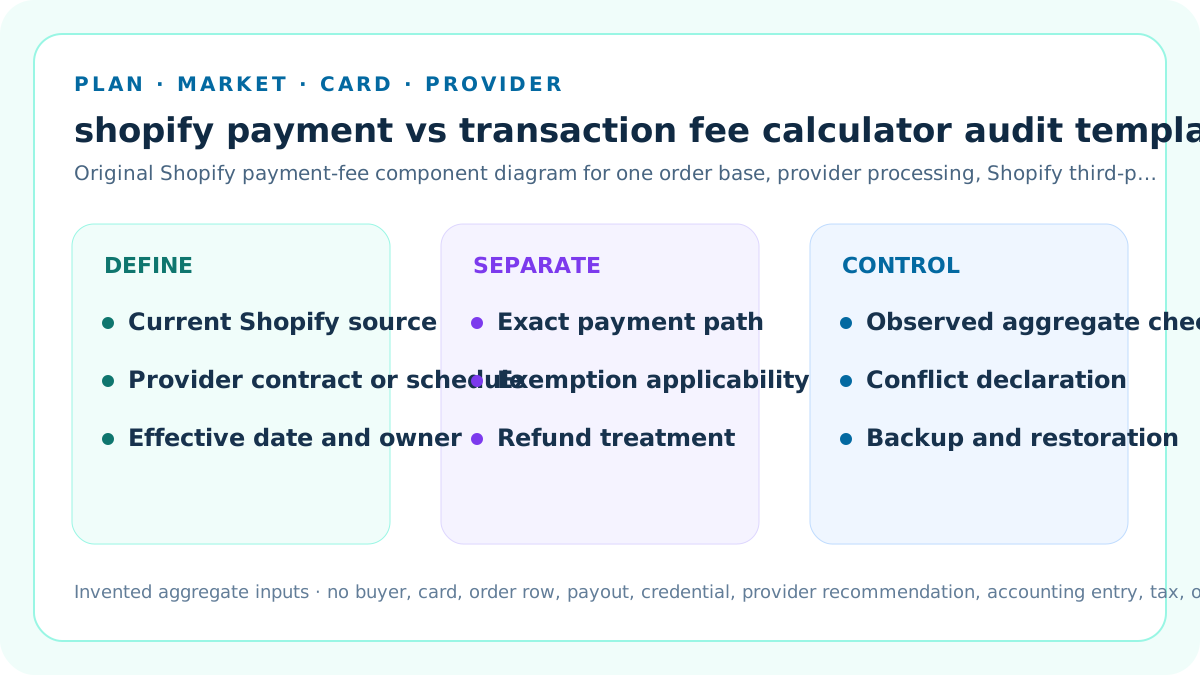
Shopify Payment Fee Audit Checklist and Change Log: privacy integrity control
Use invented aggregates publicly while transaction, payout, customer, card, dispute, credential, and bank evidence stays protected. Control 4 names the invariant, protected evidence pointer, reviewer question, pass condition, exception state, correction deadline, monitoring signal, and rollback proof for a reviewable rate change and rollback record.
Fee arithmetic never needs buyer identity. Public fixtures remain invented and aggregate. Exclude buyer, customer, card, order, address, payment reference, payout, dispute, credential, bank, private statement, and raw transaction data from the site and screenshots.
Shopify Payment Fee Audit Checklist and Change Log: human authority control
Assign Shopify admin, provider contract, finance review, payment operations, stop, downstream, and restoration owners. Control 5 names the invariant, protected evidence pointer, reviewer question, pass condition, exception state, correction deadline, monitoring signal, and rollback proof for a reviewable rate change and rollback record.
Ready cannot activate, deactivate, switch, dispute, or approve a provider. Public fixtures remain invented and aggregate. Exclude buyer, customer, card, order, address, payment reference, payout, dispute, credential, bank, private statement, and raw transaction data from the site and screenshots.
Shopify Payment Fee Audit Checklist and Change Log: rollback integrity control
Preserve prior rates, sources, fixtures, outputs, observed checks, consumers, backups, and tested restoration. Control 6 names the invariant, protected evidence pointer, reviewer question, pass condition, exception state, correction deadline, monitoring signal, and rollback proof for a reviewable rate change and rollback record.
Never overwrite the only accepted component table. Public fixtures remain invented and aggregate. Exclude buyer, customer, card, order, address, payment reference, payout, dispute, credential, bank, private statement, and raw transaction data from the site and screenshots.
Order-base block: counterexample lab 1
Reperform the invented USD 60 comparison. Record invented product-after-discount, tax, shipping, charged amount, currency, and exclusions. Change only one product, discount, tax, shipping, plan, market, card, provider, processing percentage, fixed amount, Shopify transaction percentage, applicability, currency, threshold, source, or conflict input; preserve every other assumption and record both components, combined share, difference, decision, owner, and rollback.
Test sole Shopify Payments, direct and external providers, missing fixed fees, wrong plans, domestic and international cards, exemptions, mixed tender, refund assumptions, threshold breaches, invalid rates, short context, weak scope, and declared conflicts. A favorable arithmetic result cannot substitute for current rate and applicability evidence.
Shopify Payments block: counterexample lab 2
Reperform the invented USD 60 comparison. Record sole-provider state, plan, market, card class, percentage, fixed amount, admin path, source date, owner, and reviewer. Change only one product, discount, tax, shipping, plan, market, card, provider, processing percentage, fixed amount, Shopify transaction percentage, applicability, currency, threshold, source, or conflict input; preserve every other assumption and record both components, combined share, difference, decision, owner, and rollback.
Test sole Shopify Payments, direct and external providers, missing fixed fees, wrong plans, domestic and international cards, exemptions, mixed tender, refund assumptions, threshold breaches, invalid rates, short context, weak scope, and declared conflicts. A favorable arithmetic result cannot substitute for current rate and applicability evidence.
Third-party provider block: counterexample lab 3
Reperform the invented USD 60 comparison. Record direct or external type, contract, processing percentage, fixed amount, surcharges, refunds, currency, and effective date. Change only one product, discount, tax, shipping, plan, market, card, provider, processing percentage, fixed amount, Shopify transaction percentage, applicability, currency, threshold, source, or conflict input; preserve every other assumption and record both components, combined share, difference, decision, owner, and rollback.
Test sole Shopify Payments, direct and external providers, missing fixed fees, wrong plans, domestic and international cards, exemptions, mixed tender, refund assumptions, threshold breaches, invalid rates, short context, weak scope, and declared conflicts. A favorable arithmetic result cannot substitute for current rate and applicability evidence.
Shopify transaction block: counterexample lab 4
Reperform the invented USD 60 comparison. Record applicability, plan rate, formula base, exemptions, refund treatment, bill evidence, and source version. Change only one product, discount, tax, shipping, plan, market, card, provider, processing percentage, fixed amount, Shopify transaction percentage, applicability, currency, threshold, source, or conflict input; preserve every other assumption and record both components, combined share, difference, decision, owner, and rollback.
Test sole Shopify Payments, direct and external providers, missing fixed fees, wrong plans, domestic and international cards, exemptions, mixed tender, refund assumptions, threshold breaches, invalid rates, short context, weak scope, and declared conflicts. A favorable arithmetic result cannot substitute for current rate and applicability evidence.
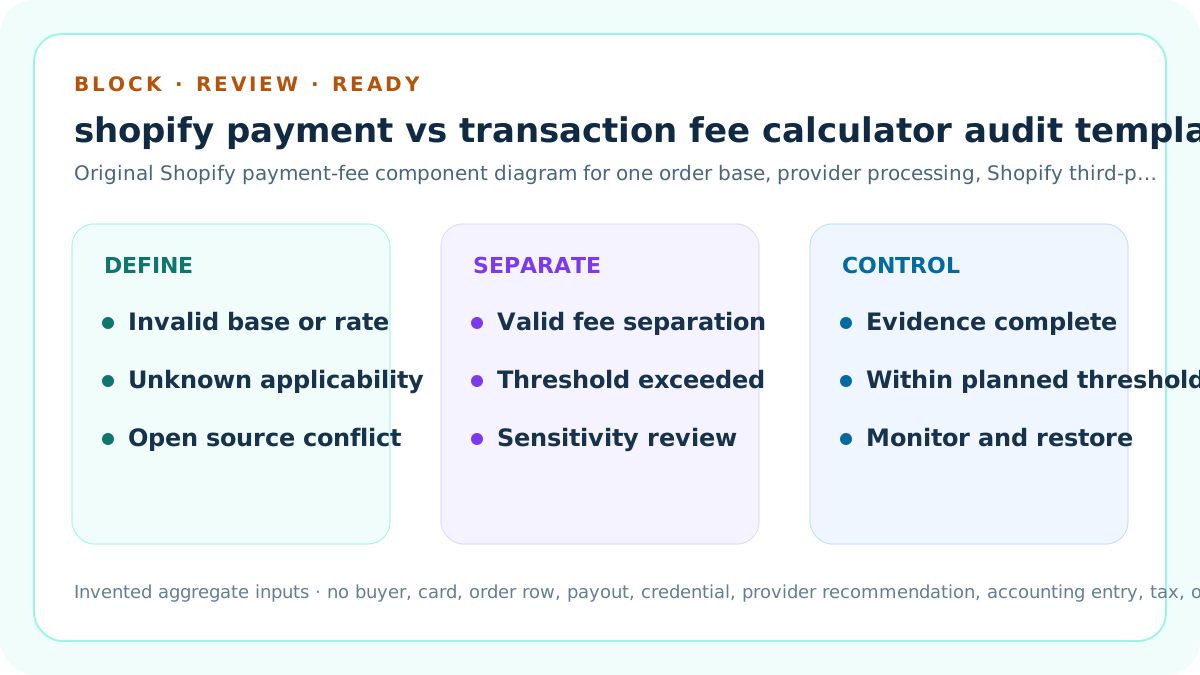
Calculation block: counterexample lab 5
Reperform the invented USD 60 comparison. Record processing, Shopify transaction, combined amount, share, signed difference, precision, and counterexample results. Change only one product, discount, tax, shipping, plan, market, card, provider, processing percentage, fixed amount, Shopify transaction percentage, applicability, currency, threshold, source, or conflict input; preserve every other assumption and record both components, combined share, difference, decision, owner, and rollback.
Test sole Shopify Payments, direct and external providers, missing fixed fees, wrong plans, domestic and international cards, exemptions, mixed tender, refund assumptions, threshold breaches, invalid rates, short context, weak scope, and declared conflicts. A favorable arithmetic result cannot substitute for current rate and applicability evidence.
Decision block: counterexample lab 6
Reperform the invented USD 60 comparison. Record seller threshold, Ready or Review state, Block defects, rationale, approver, and expiry. Change only one product, discount, tax, shipping, plan, market, card, provider, processing percentage, fixed amount, Shopify transaction percentage, applicability, currency, threshold, source, or conflict input; preserve every other assumption and record both components, combined share, difference, decision, owner, and rollback.
Test sole Shopify Payments, direct and external providers, missing fixed fees, wrong plans, domestic and international cards, exemptions, mixed tender, refund assumptions, threshold breaches, invalid rates, short context, weak scope, and declared conflicts. A favorable arithmetic result cannot substitute for current rate and applicability evidence.
Observed and downstream block: counterexample lab 7
Reperform the invented USD 60 comparison. Record aggregate statement reconciliation, exceptions, affected models, deployment identifier, and monitoring. Change only one product, discount, tax, shipping, plan, market, card, provider, processing percentage, fixed amount, Shopify transaction percentage, applicability, currency, threshold, source, or conflict input; preserve every other assumption and record both components, combined share, difference, decision, owner, and rollback.
Test sole Shopify Payments, direct and external providers, missing fixed fees, wrong plans, domestic and international cards, exemptions, mixed tender, refund assumptions, threshold breaches, invalid rates, short context, weak scope, and declared conflicts. A favorable arithmetic result cannot substitute for current rate and applicability evidence.
Restoration block: counterexample lab 8
Reperform the invented USD 60 comparison. Record prior rate table, backups, restore instructions, stop authority, last exercise, reconciled outputs, and closure. Change only one product, discount, tax, shipping, plan, market, card, provider, processing percentage, fixed amount, Shopify transaction percentage, applicability, currency, threshold, source, or conflict input; preserve every other assumption and record both components, combined share, difference, decision, owner, and rollback.
Test sole Shopify Payments, direct and external providers, missing fixed fees, wrong plans, domestic and international cards, exemptions, mixed tender, refund assumptions, threshold breaches, invalid rates, short context, weak scope, and declared conflicts. A favorable arithmetic result cannot substitute for current rate and applicability evidence.
Shopify Payment Fee Audit Checklist and Change Log: intent-specific implementation walkthrough
payment fee audit packet checkpoint 1 addresses order-base block for a reviewable rate change and rollback record. Record invented product-after-discount, tax, shipping, charged amount, currency, and exclusions. Record the accepted rate, rejected alternative, plan, market, card, provider source, effective date, reviewer, next review, affected consumer, monitoring trigger, and restoration reference.
payment fee audit packet checkpoint 2 addresses shopify payments block for a reviewable rate change and rollback record. Record sole-provider state, plan, market, card class, percentage, fixed amount, admin path, source date, owner, and reviewer. Record the accepted rate, rejected alternative, plan, market, card, provider source, effective date, reviewer, next review, affected consumer, monitoring trigger, and restoration reference.
payment fee audit packet checkpoint 3 addresses third-party provider block for a reviewable rate change and rollback record. Record direct or external type, contract, processing percentage, fixed amount, surcharges, refunds, currency, and effective date. Record the accepted rate, rejected alternative, plan, market, card, provider source, effective date, reviewer, next review, affected consumer, monitoring trigger, and restoration reference.
payment fee audit packet checkpoint 4 addresses shopify transaction block for a reviewable rate change and rollback record. Record applicability, plan rate, formula base, exemptions, refund treatment, bill evidence, and source version. Record the accepted rate, rejected alternative, plan, market, card, provider source, effective date, reviewer, next review, affected consumer, monitoring trigger, and restoration reference.
payment fee audit packet checkpoint 5 addresses calculation block for a reviewable rate change and rollback record. Record processing, Shopify transaction, combined amount, share, signed difference, precision, and counterexample results. Record the accepted rate, rejected alternative, plan, market, card, provider source, effective date, reviewer, next review, affected consumer, monitoring trigger, and restoration reference.
payment fee audit packet checkpoint 6 addresses decision block for a reviewable rate change and rollback record. Record seller threshold, Ready or Review state, Block defects, rationale, approver, and expiry. Record the accepted rate, rejected alternative, plan, market, card, provider source, effective date, reviewer, next review, affected consumer, monitoring trigger, and restoration reference.
payment fee audit packet checkpoint 7 addresses observed and downstream block for a reviewable rate change and rollback record. Record aggregate statement reconciliation, exceptions, affected models, deployment identifier, and monitoring. Record the accepted rate, rejected alternative, plan, market, card, provider source, effective date, reviewer, next review, affected consumer, monitoring trigger, and restoration reference.
payment fee audit packet checkpoint 8 addresses restoration block for a reviewable rate change and rollback record. Record prior rate table, backups, restore instructions, stop authority, last exercise, reconciled outputs, and closure. Record the accepted rate, rejected alternative, plan, market, card, provider source, effective date, reviewer, next review, affected consumer, monitoring trigger, and restoration reference.
For a reviewable rate change and rollback record, require strict decimal inputs, seller-declared order and rate bounds, real source-review and policy dates, a minimum closed evidence duration, and all nine release confirmations. When this payment fee audit packet Blocks, quarantine the charged amount, Shopify transaction-fee base, both paths' processing, transaction, combined, and share results, and the signed difference as Unavailable until the governing evidence is repaired and independently reviewed.
Payment-fee audit packet record layout
Structure the protected packet as linked order-base, Shopify Payments, third-party provider, Shopify transaction-fee, calculation, decision, observed-check, downstream, and restoration records. Give every record a stable identifier, evidence pointer, captured-at time, effective date, currency, owner, independent reviewer, exception state, next review, and superseded-version reference. Link records by identifiers rather than pasting transaction exports, customer details, card data, payout identifiers, credentials, or provider-contract text into the public site.
The calculation record stores the exact product amount after discounts, tax, shipping, charged amount, processing bases, processing percentages, fixed amounts, Shopify transaction-fee base and rate, unrounded component fees, combined totals, shares, signed difference, threshold, precision rule, and calculator version. A reviewer must be able to trace each result backward to its rate and applicability evidence and forward to every margin model, budget, or report that consumed it.
Applicability matrix and fee-base lineage
Create one matrix row for each modeled payment path and each materially different payment method. Record provider type, Shopify Payments active or inactive state, sole or mixed-provider configuration, plan, store location, card class, payment method, order or POS context, store-credit or gift-card treatment, exemption, refund treatment, provider processing base, Shopify transaction-fee base, rate source, and effective date. Mark every cell verified, not applicable, unresolved, or excluded; do not infer a zero rate from a familiar method name.
Keep fee-base lineage separate from rate lineage. The provider contract may define a processing base or surcharge differently from Shopify's documented transaction-fee formula. The audit therefore reconciles product-after-discount, tax, shipping, mixed tender, manual payment, POS, refund, and excluded amounts before multiplying either rate. If the two scenarios do not describe the same invented order and currency, the comparison Blocks instead of normalizing silently.
Immutable change events and exception closure
Append one event for initial creation, Shopify Help or admin source refresh, provider-contract change, plan or market change, payment-method change, rate correction, approval, downstream staging, monitoring alert, stop, restoration exercise, and closure. Each event names the proposer and reviewer, reason, fields changed, invariants preserved, prior version, affected consumers, test results, and rollback reference. Never overwrite an accepted rate table because silent history changes make the signed fee difference impossible to reproduce.
Each exception records detection time, affected path and component, evidence gap, severity, temporary stop, accountable owner, correction deadline, required retest, closure evidence, and independent approval. A valid threshold breach remains Review, not an exception that can be cleared by lowering the Shopify rate or changing the order base after seeing the answer. A structural or applicability defect keeps all eleven derived values Unavailable until the complete packet passes again.
Provider-model restoration drill
Run the restoration drill in an isolated browser-local workspace using the protected backup named by the accepted packet. Restore the prior order base, scenario labels, rates, bounds, dates, confirmations, evidence scope, calculator version, and downstream component table. Recalculate both processing fees, both Shopify transaction fees, combined amounts and shares, the signed difference, threshold state, and all governance outputs. Compare every value with the stored accepted result at full retained precision.
Record drill environment, operator, reviewer, start and finish times, backup fingerprint, restored version, comparison result, discrepancies, remediation, and final approval. A screenshot or the existence of an archive is not restoration proof. If the prior values cannot be reproduced, or the rollback steps would change live payment settings, mark the packet Block and establish a new reviewed baseline without activating, deactivating, switching, approving, or disputing a provider.
Evidence boundary for a reviewable rate change and rollback record
The public fixture uses one invented USD 60 order: USD 50 product amount after discounts, USD 4 tax, and USD 6 shipping. Sole Shopify Payments at an invented 2.9% plus USD 0.30 produces USD 2.04 processing and zero Shopify third-party fee. A third-party path at invented 2.7% plus USD 0.25 and 1% Shopify transaction rate produces USD 1.87 plus USD 0.60, or USD 2.47 combined.
These values demonstrate component separation only. They cannot prove current rates, provider availability, approval, checkout conversion, authorization success, fraud performance, payouts, reserves, disputes, refund recovery, complete margin, accounting presentation, tax treatment, legal compliance, or permission to change a payment setting, provider, plan, price, or record.
Release, monitor, and restore the payment fee audit packet
Block invalid order bases, rates, provider declarations, applicability, currency, period, contexts, scope, or open conflicts. Review a structurally valid path above the seller-planned combined-fee threshold. Ready clears only the entered component comparison and threshold.
Before indexing or downstream reuse, preserve backups and pass type, unit, integration, build, content, similarity, SEO, image, link, privacy, mobile, deployment, and live checks. Monitor plan, market, card, provider, processing schedule, Shopify transaction rules, exemptions, refunds, observed aggregates, downstream consumers, and restoration without claiming same-day traffic or revenue causality.
Sources and further reading
- Shopify Help: Shopify Payments fees: Official Shopify Payments credit-card rate and third-party transaction-fee distinction.
- Shopify Help: third-party transaction fees: Official applicability, exclusions, refund treatment, bill evidence, and fee-base formula.
- Shopify Help: third-party payment providers: Official direct and external provider types and mixed-provider context.
- Shopify Help: viewing Shopify Payments fees: Official admin path for current Shopify Payments rates and payout-fee evidence.
- Seller Profit Guard methodology: Deterministic fixtures, evidence precedence, privacy, release, correction, monitoring, and rollback.
Related Seller Profit Guard tools
- Shopify Payment vs Transaction Fee Calculator: Compare provider processing and Shopify third-party transaction components.
- Shopify Plan and Fee Reference: Use the broader plan, app, payment, and gateway screen separately.
- Shopify Plan Fee Allocator: Allocate the fixed plan subscription charge across cost centers.
- Marketplace Fee Anomaly Checker: Reconcile aggregate observed fee lines against dated rules in a separate gate.
- Methodology: Review evidence, correction, release, monitoring, and rollback.
- Data Privacy: Keep payments, payouts, transactions, customers, and credentials out of public fixtures.
- Shopify Payment and Transaction Fee Formula: Define the shared order base, two payment paths, provider processing rates, Shopify transaction rates, source context, thresholds, and limitations.
- Shopify Payments Fee Example Without a Third-Party Fee: Calculate processing and Shopify transaction components for a sole-Shopify-Payments path using one editable same-order fixture.
- Third-Party Shopify Payment Fee Example: Calculate a direct provider's processing fee and the additional Shopify third-party transaction component on the same invented order.
- Shopify Payment Fee Comparison Mistakes: Diagnose provider, plan, market, card, fee-base, exemption, refund, currency, source, privacy, and authority errors before choosing a payment path.
- Reliable Sources for Shopify Payment Fees: Map Shopify Payments rates, plan transaction rates, provider processing terms, order bases, exemptions, and observed checks to current primary records.
- Decision Thresholds for Shopify Payment Fees: Separate structural validity, combined-fee review, scenario choice, downstream contribution, and unsupported-provider conditions.
- Shopify Payments vs Third-Party Provider Fees: Compare both paths at the same order base, plan, market, currency, card context, source date, threshold, and component definitions.
- A Shopify Payment Fee Review Routine: Turn the calculator into a dated payment-rate review with source capture, exceptions, observed reconciliation, downstream staging, monitoring, and restoration.
- How to Interpret Shopify Payment Fee Results: Explain processing, Shopify transaction, combined amount, effective share, and difference without turning arithmetic into a provider recommendation.
Next step: Open Seller Profit Guard.
This is operational planning help, not tax, accounting, legal, financial, or platform-policy advice. Review the Terms and disclaimer, and verify current platform rules and fee assumptions before changing prices.