How to calculate Shopify multi-currency margin
Last updated: 2026-08-09
Written and reviewed by Seller Profit Guard Editorial Team.
Shopify multi-currency margin equals captured customer revenue translated to the declared store currency minus translated payment cost, current-method currency-conversion fee, product cost, fulfillment, seller-absorbed duties, refund reserve, and other attributable variable cost. Keep customer pricing and capture-time settlement rates strictly separate.
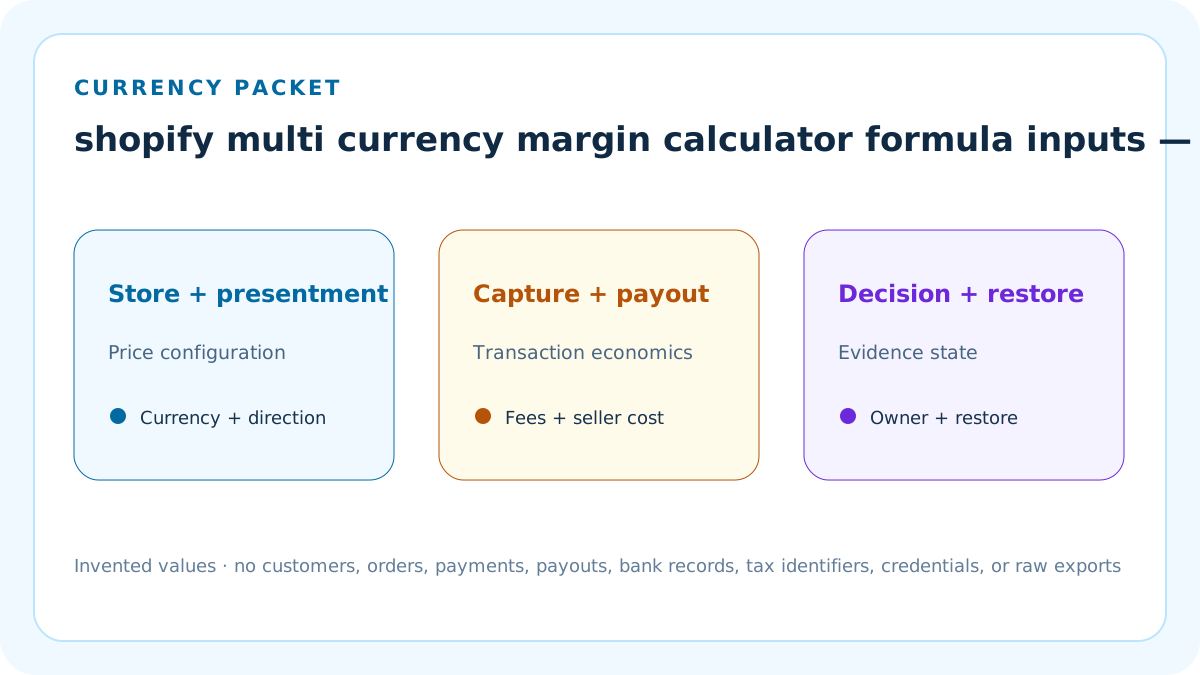
Dimension every exchange-rate field
Write pricing rate as presentment units per one store-currency unit and settlement rate as store-currency units per one presentment unit. The unit labels are part of the input contract, not optional prose.
Before calculating, multiply an invented one-unit example by each rate and state the expected currency. A reciprocal-rate error must Block the packet even when the resulting number looks commercially plausible.
Apply the current gross-order fee contract
For capture dates on or after April 6, 2026, this calculator applies the seller-entered Shopify Payments conversion-fee percentage to gross captured revenue in store currency.
Record the capture date, source-review date, pricing method, and fee version together. Historical transactions need a separate versioned contract instead of silently reusing current arithmetic.
Choose one order grain
Shopify multi-currency margin equals captured customer revenue translated to the declared store currency minus translated payment cost, current-method currency-conversion fee, product cost, fulfillment, seller-absorbed duties, refund reserve, and other attributable variable cost. Keep customer pricing and capture-time settlement rates strictly separate. Use dimensioned currency units and dated events; never let an unlabeled rate enter the formula. Checkpoint 1 in the multi-currency input ledger records amount, currency, rate direction, transaction event, source date, owner, and accepted version before any output is interpreted.
For choose one order grain, keep store, presentment, and payout currencies; base and local price; pricing and settlement rates; adjustment; rounding; payment and conversion fee; product and fulfillment cost; duty responsibility; refund exposure; market configuration; transaction date; owner; reviewer; and restoration evidence as distinct fields.
Declare the currency trio
Shopify multi-currency margin equals captured customer revenue translated to the declared store currency minus translated payment cost, current-method currency-conversion fee, product cost, fulfillment, seller-absorbed duties, refund reserve, and other attributable variable cost. Keep customer pricing and capture-time settlement rates strictly separate. Use dimensioned currency units and dated events; never let an unlabeled rate enter the formula. Checkpoint 2 in the multi-currency input ledger records amount, currency, rate direction, transaction event, source date, owner, and accepted version before any output is interpreted.
For declare the currency trio, keep store, presentment, and payout currencies; base and local price; pricing and settlement rates; adjustment; rounding; payment and conversion fee; product and fulfillment cost; duty responsibility; refund exposure; market configuration; transaction date; owner; reviewer; and restoration evidence as distinct fields.
Define rate directions
Shopify multi-currency margin equals captured customer revenue translated to the declared store currency minus translated payment cost, current-method currency-conversion fee, product cost, fulfillment, seller-absorbed duties, refund reserve, and other attributable variable cost. Keep customer pricing and capture-time settlement rates strictly separate. Use dimensioned currency units and dated events; never let an unlabeled rate enter the formula. Checkpoint 3 in the multi-currency input ledger records amount, currency, rate direction, transaction event, source date, owner, and accepted version before any output is interpreted.
For define rate directions, keep store, presentment, and payout currencies; base and local price; pricing and settlement rates; adjustment; rounding; payment and conversion fee; product and fulfillment cost; duty responsibility; refund exposure; market configuration; transaction date; owner; reviewer; and restoration evidence as distinct fields.
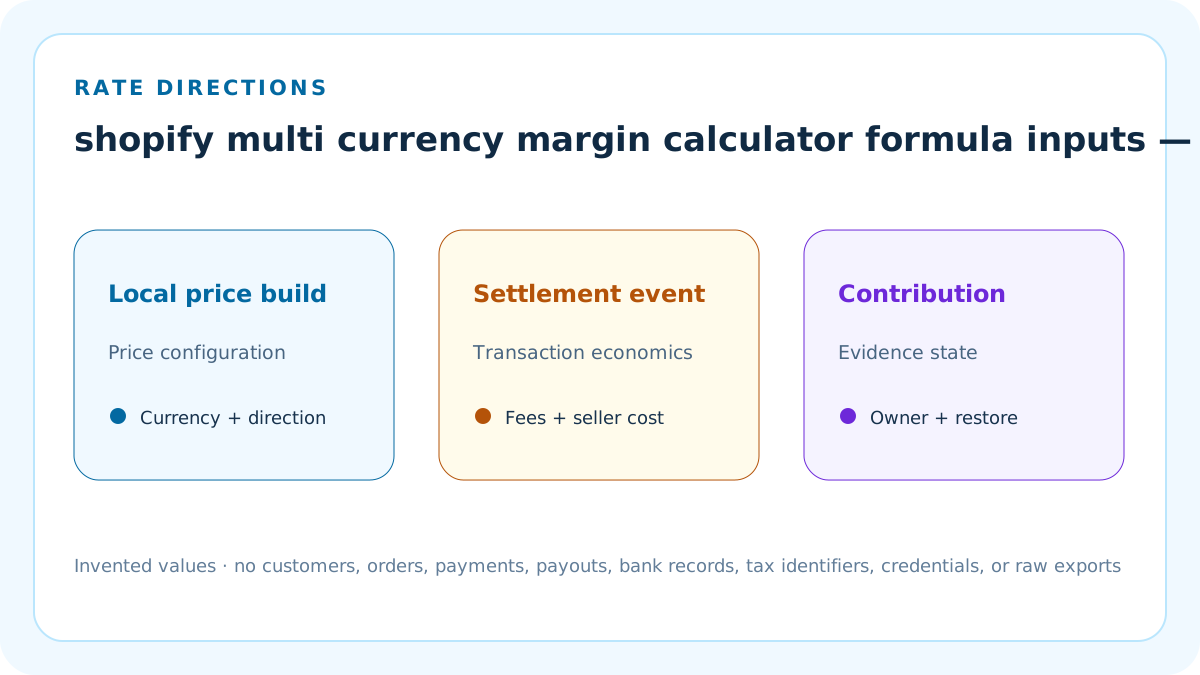
Build the local price
Shopify multi-currency margin equals captured customer revenue translated to the declared store currency minus translated payment cost, current-method currency-conversion fee, product cost, fulfillment, seller-absorbed duties, refund reserve, and other attributable variable cost. Keep customer pricing and capture-time settlement rates strictly separate. Use dimensioned currency units and dated events; never let an unlabeled rate enter the formula. Checkpoint 4 in the multi-currency input ledger records amount, currency, rate direction, transaction event, source date, owner, and accepted version before any output is interpreted.
For build the local price, keep store, presentment, and payout currencies; base and local price; pricing and settlement rates; adjustment; rounding; payment and conversion fee; product and fulfillment cost; duty responsibility; refund exposure; market configuration; transaction date; owner; reviewer; and restoration evidence as distinct fields.
Apply market rounding
Shopify multi-currency margin equals captured customer revenue translated to the declared store currency minus translated payment cost, current-method currency-conversion fee, product cost, fulfillment, seller-absorbed duties, refund reserve, and other attributable variable cost. Keep customer pricing and capture-time settlement rates strictly separate. Use dimensioned currency units and dated events; never let an unlabeled rate enter the formula. Checkpoint 5 in the multi-currency input ledger records amount, currency, rate direction, transaction event, source date, owner, and accepted version before any output is interpreted.
For apply market rounding, keep store, presentment, and payout currencies; base and local price; pricing and settlement rates; adjustment; rounding; payment and conversion fee; product and fulfillment cost; duty responsibility; refund exposure; market configuration; transaction date; owner; reviewer; and restoration evidence as distinct fields.
Translate captured revenue
Shopify multi-currency margin equals captured customer revenue translated to the declared store currency minus translated payment cost, current-method currency-conversion fee, product cost, fulfillment, seller-absorbed duties, refund reserve, and other attributable variable cost. Keep customer pricing and capture-time settlement rates strictly separate. Use dimensioned currency units and dated events; never let an unlabeled rate enter the formula. Checkpoint 6 in the multi-currency input ledger records amount, currency, rate direction, transaction event, source date, owner, and accepted version before any output is interpreted.
For translate captured revenue, keep store, presentment, and payout currencies; base and local price; pricing and settlement rates; adjustment; rounding; payment and conversion fee; product and fulfillment cost; duty responsibility; refund exposure; market configuration; transaction date; owner; reviewer; and restoration evidence as distinct fields.
Apply current conversion fees
Shopify multi-currency margin equals captured customer revenue translated to the declared store currency minus translated payment cost, current-method currency-conversion fee, product cost, fulfillment, seller-absorbed duties, refund reserve, and other attributable variable cost. Keep customer pricing and capture-time settlement rates strictly separate. Use dimensioned currency units and dated events; never let an unlabeled rate enter the formula. Checkpoint 7 in the multi-currency input ledger records amount, currency, rate direction, transaction event, source date, owner, and accepted version before any output is interpreted.
For apply current conversion fees, keep store, presentment, and payout currencies; base and local price; pricing and settlement rates; adjustment; rounding; payment and conversion fee; product and fulfillment cost; duty responsibility; refund exposure; market configuration; transaction date; owner; reviewer; and restoration evidence as distinct fields.
Attach seller costs
Shopify multi-currency margin equals captured customer revenue translated to the declared store currency minus translated payment cost, current-method currency-conversion fee, product cost, fulfillment, seller-absorbed duties, refund reserve, and other attributable variable cost. Keep customer pricing and capture-time settlement rates strictly separate. Use dimensioned currency units and dated events; never let an unlabeled rate enter the formula. Checkpoint 8 in the multi-currency input ledger records amount, currency, rate direction, transaction event, source date, owner, and accepted version before any output is interpreted.
For attach seller costs, keep store, presentment, and payout currencies; base and local price; pricing and settlement rates; adjustment; rounding; payment and conversion fee; product and fulfillment cost; duty responsibility; refund exposure; market configuration; transaction date; owner; reviewer; and restoration evidence as distinct fields.
Separate duties and taxes
Shopify multi-currency margin equals captured customer revenue translated to the declared store currency minus translated payment cost, current-method currency-conversion fee, product cost, fulfillment, seller-absorbed duties, refund reserve, and other attributable variable cost. Keep customer pricing and capture-time settlement rates strictly separate. Use dimensioned currency units and dated events; never let an unlabeled rate enter the formula. Checkpoint 9 in the multi-currency input ledger records amount, currency, rate direction, transaction event, source date, owner, and accepted version before any output is interpreted.
For separate duties and taxes, keep store, presentment, and payout currencies; base and local price; pricing and settlement rates; adjustment; rounding; payment and conversion fee; product and fulfillment cost; duty responsibility; refund exposure; market configuration; transaction date; owner; reviewer; and restoration evidence as distinct fields.
Version the evidence packet
Shopify multi-currency margin equals captured customer revenue translated to the declared store currency minus translated payment cost, current-method currency-conversion fee, product cost, fulfillment, seller-absorbed duties, refund reserve, and other attributable variable cost. Keep customer pricing and capture-time settlement rates strictly separate. Use dimensioned currency units and dated events; never let an unlabeled rate enter the formula. Checkpoint 10 in the multi-currency input ledger records amount, currency, rate direction, transaction event, source date, owner, and accepted version before any output is interpreted.
For version the evidence packet, keep store, presentment, and payout currencies; base and local price; pricing and settlement rates; adjustment; rounding; payment and conversion fee; product and fulfillment cost; duty responsibility; refund exposure; market configuration; transaction date; owner; reviewer; and restoration evidence as distinct fields.
Choose one order grain: verification test 1
Create a synthetic counterexample for choose one order grain. Change one field only, retain the prior packet, and show local price, translated gross, payment cost, conversion fee, seller cost, contribution, margin, and Block, Review, or Ready state.
Then reconcile the counterexample against current Markets, price breakdown, capture, payout, fee-method, cost, incoterm, duty, refund, owner, reviewer, backup, stop-rule, and restoration evidence. Do not expose any customer, order, payment, payout, bank, customs, or tax record.
Declare the currency trio: verification test 2
Create a synthetic counterexample for declare the currency trio. Change one field only, retain the prior packet, and show local price, translated gross, payment cost, conversion fee, seller cost, contribution, margin, and Block, Review, or Ready state.
Then reconcile the counterexample against current Markets, price breakdown, capture, payout, fee-method, cost, incoterm, duty, refund, owner, reviewer, backup, stop-rule, and restoration evidence. Do not expose any customer, order, payment, payout, bank, customs, or tax record.
Define rate directions: verification test 3
Create a synthetic counterexample for define rate directions. Change one field only, retain the prior packet, and show local price, translated gross, payment cost, conversion fee, seller cost, contribution, margin, and Block, Review, or Ready state.
Then reconcile the counterexample against current Markets, price breakdown, capture, payout, fee-method, cost, incoterm, duty, refund, owner, reviewer, backup, stop-rule, and restoration evidence. Do not expose any customer, order, payment, payout, bank, customs, or tax record.
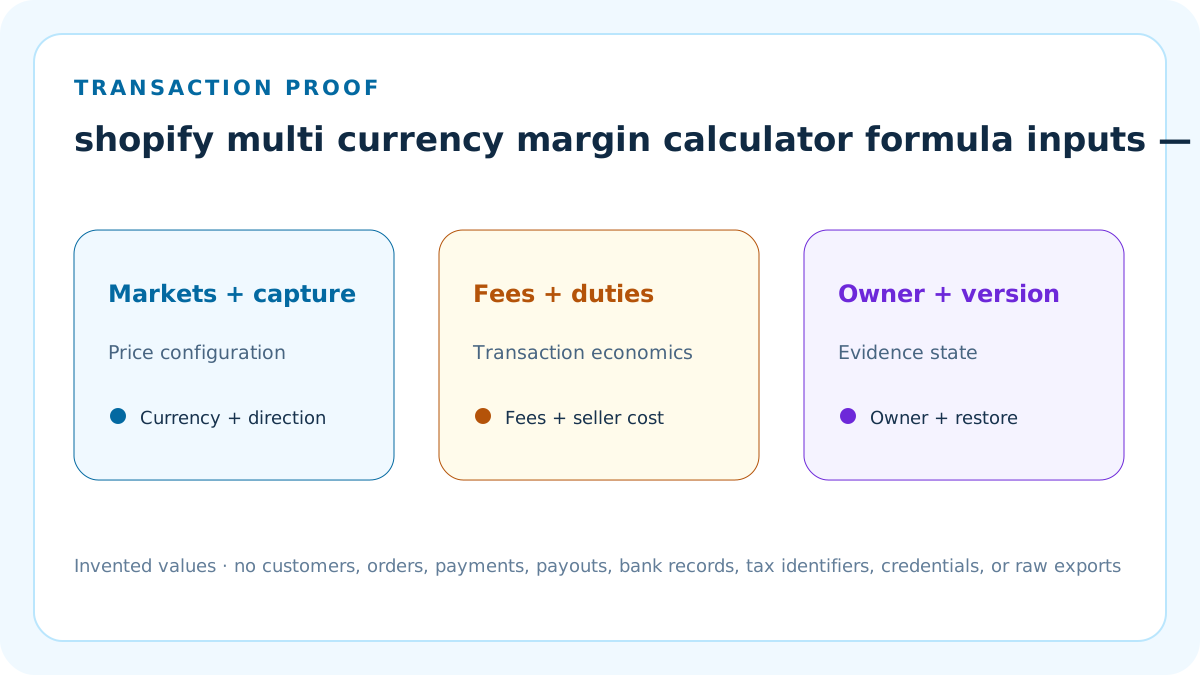
Build the local price: verification test 4
Create a synthetic counterexample for build the local price. Change one field only, retain the prior packet, and show local price, translated gross, payment cost, conversion fee, seller cost, contribution, margin, and Block, Review, or Ready state.
Then reconcile the counterexample against current Markets, price breakdown, capture, payout, fee-method, cost, incoterm, duty, refund, owner, reviewer, backup, stop-rule, and restoration evidence. Do not expose any customer, order, payment, payout, bank, customs, or tax record.
Apply market rounding: verification test 5
Create a synthetic counterexample for apply market rounding. Change one field only, retain the prior packet, and show local price, translated gross, payment cost, conversion fee, seller cost, contribution, margin, and Block, Review, or Ready state.
Then reconcile the counterexample against current Markets, price breakdown, capture, payout, fee-method, cost, incoterm, duty, refund, owner, reviewer, backup, stop-rule, and restoration evidence. Do not expose any customer, order, payment, payout, bank, customs, or tax record.
Translate captured revenue: verification test 6
Create a synthetic counterexample for translate captured revenue. Change one field only, retain the prior packet, and show local price, translated gross, payment cost, conversion fee, seller cost, contribution, margin, and Block, Review, or Ready state.
Then reconcile the counterexample against current Markets, price breakdown, capture, payout, fee-method, cost, incoterm, duty, refund, owner, reviewer, backup, stop-rule, and restoration evidence. Do not expose any customer, order, payment, payout, bank, customs, or tax record.
Apply current conversion fees: verification test 7
Create a synthetic counterexample for apply current conversion fees. Change one field only, retain the prior packet, and show local price, translated gross, payment cost, conversion fee, seller cost, contribution, margin, and Block, Review, or Ready state.
Then reconcile the counterexample against current Markets, price breakdown, capture, payout, fee-method, cost, incoterm, duty, refund, owner, reviewer, backup, stop-rule, and restoration evidence. Do not expose any customer, order, payment, payout, bank, customs, or tax record.
Attach seller costs: verification test 8
Create a synthetic counterexample for attach seller costs. Change one field only, retain the prior packet, and show local price, translated gross, payment cost, conversion fee, seller cost, contribution, margin, and Block, Review, or Ready state.
Then reconcile the counterexample against current Markets, price breakdown, capture, payout, fee-method, cost, incoterm, duty, refund, owner, reviewer, backup, stop-rule, and restoration evidence. Do not expose any customer, order, payment, payout, bank, customs, or tax record.
Separate duties and taxes: verification test 9
Create a synthetic counterexample for separate duties and taxes. Change one field only, retain the prior packet, and show local price, translated gross, payment cost, conversion fee, seller cost, contribution, margin, and Block, Review, or Ready state.
Then reconcile the counterexample against current Markets, price breakdown, capture, payout, fee-method, cost, incoterm, duty, refund, owner, reviewer, backup, stop-rule, and restoration evidence. Do not expose any customer, order, payment, payout, bank, customs, or tax record.
Version the evidence packet: verification test 10
Create a synthetic counterexample for version the evidence packet. Change one field only, retain the prior packet, and show local price, translated gross, payment cost, conversion fee, seller cost, contribution, margin, and Block, Review, or Ready state.
Then reconcile the counterexample against current Markets, price breakdown, capture, payout, fee-method, cost, incoterm, duty, refund, owner, reviewer, backup, stop-rule, and restoration evidence. Do not expose any customer, order, payment, payout, bank, customs, or tax record.
Shopify Multi-Currency Margin Formula and Inputs: evidence exercise 1
Reperform choose one order grain using the invented USD 100 base price, EUR presentment packet, 0.92 EUR-per-USD pricing rate, 2% adjustment, EUR 0.01 rounding, and the declared stable or adverse USD-per-EUR settlement rate.
Stress pricing rate, adjustment, rounding, capture rate, payment fee, conversion fee, product cost, fulfillment, absorbed duty, refund reserve, margin target, market evidence, owner, conflict, or restoration one at a time. Exact cents do not turn an estimate into a live payout, tax result, duty recovery, or hedge.
Shopify Multi-Currency Margin Formula and Inputs: evidence exercise 2
Reperform declare the currency trio using the invented USD 100 base price, EUR presentment packet, 0.92 EUR-per-USD pricing rate, 2% adjustment, EUR 0.01 rounding, and the declared stable or adverse USD-per-EUR settlement rate.
Stress pricing rate, adjustment, rounding, capture rate, payment fee, conversion fee, product cost, fulfillment, absorbed duty, refund reserve, margin target, market evidence, owner, conflict, or restoration one at a time. Exact cents do not turn an estimate into a live payout, tax result, duty recovery, or hedge.
Shopify Multi-Currency Margin Formula and Inputs: evidence exercise 3
Reperform define rate directions using the invented USD 100 base price, EUR presentment packet, 0.92 EUR-per-USD pricing rate, 2% adjustment, EUR 0.01 rounding, and the declared stable or adverse USD-per-EUR settlement rate.
Stress pricing rate, adjustment, rounding, capture rate, payment fee, conversion fee, product cost, fulfillment, absorbed duty, refund reserve, margin target, market evidence, owner, conflict, or restoration one at a time. Exact cents do not turn an estimate into a live payout, tax result, duty recovery, or hedge.
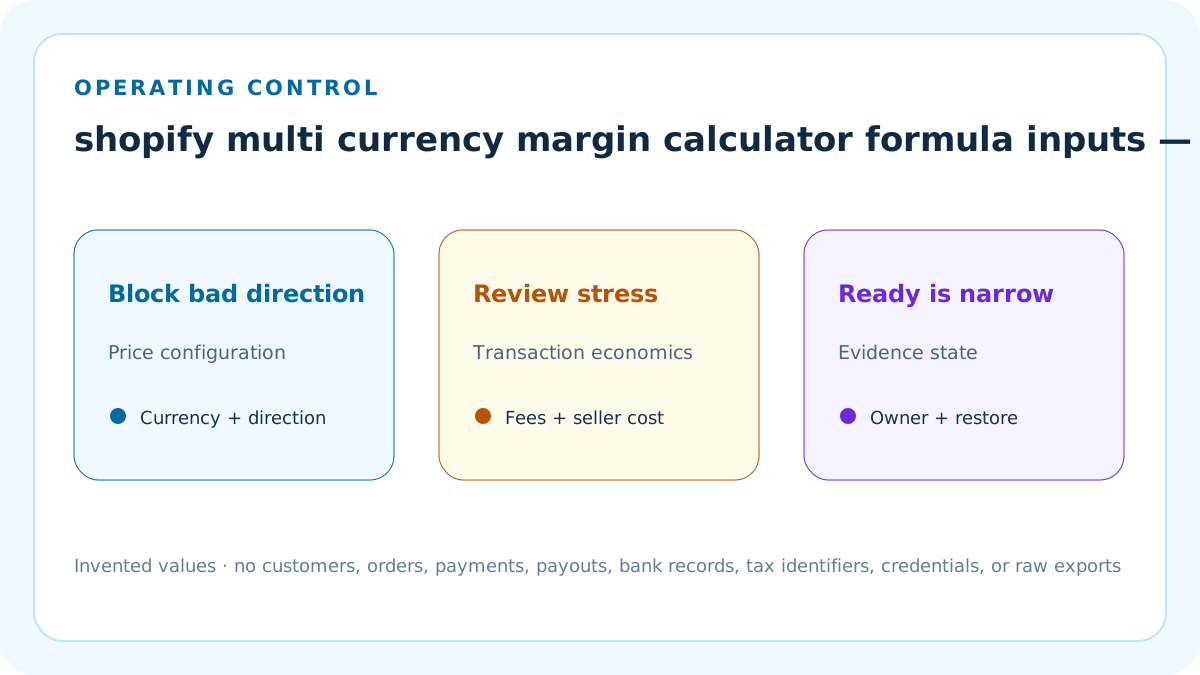
Shopify Multi-Currency Margin Formula and Inputs: evidence exercise 4
Reperform build the local price using the invented USD 100 base price, EUR presentment packet, 0.92 EUR-per-USD pricing rate, 2% adjustment, EUR 0.01 rounding, and the declared stable or adverse USD-per-EUR settlement rate.
Stress pricing rate, adjustment, rounding, capture rate, payment fee, conversion fee, product cost, fulfillment, absorbed duty, refund reserve, margin target, market evidence, owner, conflict, or restoration one at a time. Exact cents do not turn an estimate into a live payout, tax result, duty recovery, or hedge.
Shopify Multi-Currency Margin Formula and Inputs: evidence exercise 5
Reperform apply market rounding using the invented USD 100 base price, EUR presentment packet, 0.92 EUR-per-USD pricing rate, 2% adjustment, EUR 0.01 rounding, and the declared stable or adverse USD-per-EUR settlement rate.
Stress pricing rate, adjustment, rounding, capture rate, payment fee, conversion fee, product cost, fulfillment, absorbed duty, refund reserve, margin target, market evidence, owner, conflict, or restoration one at a time. Exact cents do not turn an estimate into a live payout, tax result, duty recovery, or hedge.
Shopify Multi-Currency Margin Formula and Inputs: evidence exercise 6
Reperform translate captured revenue using the invented USD 100 base price, EUR presentment packet, 0.92 EUR-per-USD pricing rate, 2% adjustment, EUR 0.01 rounding, and the declared stable or adverse USD-per-EUR settlement rate.
Stress pricing rate, adjustment, rounding, capture rate, payment fee, conversion fee, product cost, fulfillment, absorbed duty, refund reserve, margin target, market evidence, owner, conflict, or restoration one at a time. Exact cents do not turn an estimate into a live payout, tax result, duty recovery, or hedge.
Shopify Multi-Currency Margin Formula and Inputs: evidence exercise 7
Reperform apply current conversion fees using the invented USD 100 base price, EUR presentment packet, 0.92 EUR-per-USD pricing rate, 2% adjustment, EUR 0.01 rounding, and the declared stable or adverse USD-per-EUR settlement rate.
Stress pricing rate, adjustment, rounding, capture rate, payment fee, conversion fee, product cost, fulfillment, absorbed duty, refund reserve, margin target, market evidence, owner, conflict, or restoration one at a time. Exact cents do not turn an estimate into a live payout, tax result, duty recovery, or hedge.
Shopify Multi-Currency Margin Formula and Inputs: evidence exercise 8
Reperform attach seller costs using the invented USD 100 base price, EUR presentment packet, 0.92 EUR-per-USD pricing rate, 2% adjustment, EUR 0.01 rounding, and the declared stable or adverse USD-per-EUR settlement rate.
Stress pricing rate, adjustment, rounding, capture rate, payment fee, conversion fee, product cost, fulfillment, absorbed duty, refund reserve, margin target, market evidence, owner, conflict, or restoration one at a time. Exact cents do not turn an estimate into a live payout, tax result, duty recovery, or hedge.
Shopify Multi-Currency Margin Formula and Inputs: evidence exercise 9
Reperform separate duties and taxes using the invented USD 100 base price, EUR presentment packet, 0.92 EUR-per-USD pricing rate, 2% adjustment, EUR 0.01 rounding, and the declared stable or adverse USD-per-EUR settlement rate.
Stress pricing rate, adjustment, rounding, capture rate, payment fee, conversion fee, product cost, fulfillment, absorbed duty, refund reserve, margin target, market evidence, owner, conflict, or restoration one at a time. Exact cents do not turn an estimate into a live payout, tax result, duty recovery, or hedge.
Shopify Multi-Currency Margin Formula and Inputs: evidence exercise 10
Reperform version the evidence packet using the invented USD 100 base price, EUR presentment packet, 0.92 EUR-per-USD pricing rate, 2% adjustment, EUR 0.01 rounding, and the declared stable or adverse USD-per-EUR settlement rate.
Stress pricing rate, adjustment, rounding, capture rate, payment fee, conversion fee, product cost, fulfillment, absorbed duty, refund reserve, margin target, market evidence, owner, conflict, or restoration one at a time. Exact cents do not turn an estimate into a live payout, tax result, duty recovery, or hedge.
Sources and further reading
- Shopify Help: Local currencies: Official automatic and manual conversion, fee placement, rounding, transaction-time rates, refunds, and currency-risk guidance.
- Shopify Help: Currency conversion fee calculation: Official gross-order currency-conversion fee method effective April 6, 2026.
- Shopify Help: Store and payout currencies: Official store, payout, bank-account, market, and fee implications.
- Shopify Help: Payment capture: Official authorization and capture workflow, including exchange-rate changes before manual capture.
- Shopify Help: Refunds in local currencies: Official customer-currency refunds, refund-time rates, and retained fee boundaries.
- Shopify Help: Duties and import taxes: Official DDP, DAP, customs, HS code, origin, carrier fee, and refund-recovery boundaries.
- Shopify Help: Market duties and taxes: Official duties and import-tax estimation, inheritance, and checkout configuration boundaries.
- Shopify Help: Multi-currency payouts: Official payout-account, fee, refund, and chargeback deduction behavior.
- Seller Profit Guard methodology: Evidence, privacy, validation, correction, release, monitoring, and restoration controls.
Related Seller Profit Guard tools
- Shopify Multi-Currency Margin Calculator: Run the browser-local stable versus adverse currency model.
- Date and Currency Normalizer: Normalize event timestamps and currencies before building a packet.
- International Landed Cost Calculator: Inspect cross-border seller costs separately.
- Shopify Refund Loss Calculator: Model refund timing and retained costs separately.
- Methodology: Review evidence, privacy, validation, correction, monitoring, and restoration.
- Data Privacy: Protect customers, payments, orders, payouts, tax data, and raw exports.
- Shopify Multi-Currency Margin: Stable Pair Example: Reperform a complete stable USD-to-EUR packet from local display price through contribution, threshold testing, and a documented evidence decision.
- Shopify Multi-Currency Margin Under an Adverse Move: Stress the settlement rate and seller-absorbed duty packet without pretending that a fixed customer price protects contribution.
- Shopify Multi-Currency Margin Mistakes: Diagnose reversed rates, mixed events, duplicated conversion costs, wrong fee methods, hidden duties, false refund recovery, and privacy failures.
- Shopify Multi-Currency Margin Data Sources: Map each calculator input to a first-party Shopify view, payout transaction, seller cost record, customs packet, or explicit versioned assumption.
- Safe Multi-Currency Margin Decision Thresholds: Separate structural blocks, contribution break-even, target margin, and stress tolerance before changing a market price.
- Stable vs Adverse Shopify Currency Margin: Compare two packets at the same order grain and isolate whether pricing, settlement, fee, duty, or refund assumptions drive the difference.
- Weekly Shopify Multi-Currency Margin Review: Turn Markets, capture, payout, fee, duty, refund, owner, exception, and restoration evidence into a repeatable weekly operating review.
- Interpret Shopify Currency Margin Without False Precision: Explain what the calculated margin proves, what remains an assumption, what it cannot establish, and which evidence-backed operational action should follow.
- Shopify Multi-Currency Margin Audit Template: Provide a reusable checklist and change log for currencies, markets, rates, events, fees, costs, duties, refunds, decisions, and rollback.
Next step: Open Seller Profit Guard.
This is operational planning help, not tax, accounting, legal, financial, or platform-policy advice. Review the Terms and disclaimer, and verify current platform rules and fee assumptions before changing prices.