What mistakes distort Shopify app cost per order?
Last updated: 2026-07-29
Written and reviewed by Seller Profit Guard Editorial Team.
Common errors include using the Shopify invoice date as every app cycle, omitting direct developer bills, counting plan or payment fees as apps, double-counting proration, treating expected refunds as credits, spreading one-time charges without a policy, changing retained-order definitions, mixing currencies, exposing bills, and calling cost per order proof of app value.
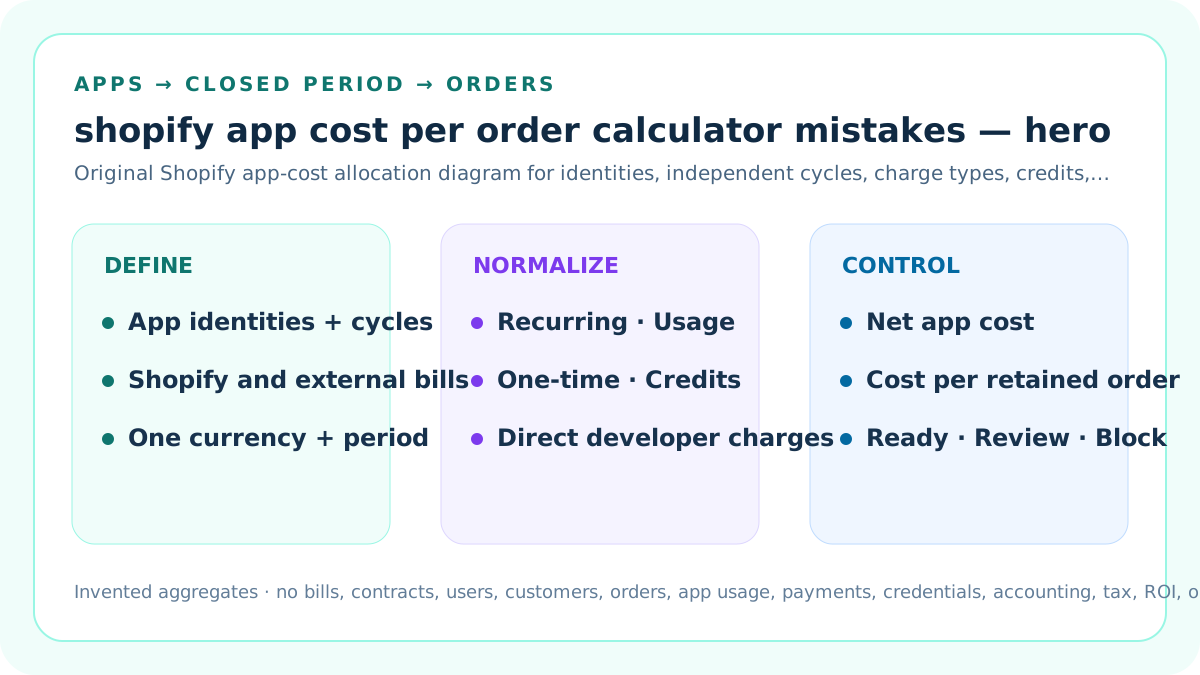
Treating invoice dates as app cycles
Build a cycle bridge because app billing can differ from the Shopify subscription invoice period. The app-cost exception log records app identity, active dates, cycle, recurring, usage, one-time, benefit period, credit, external billing, retained orders, currency, source, threshold, reviewer, and prior result needed for a corrected component-and-denominator packet.
At checkpoint 1, state the exact protected source, period mapping, included charge type, excluded category, denominator rule, accepted value, rejected alternative, owner, exception, downstream consumer, stop condition, and restoration reference. Keep app cost separate from Shopify plan, payment, transaction, shipping, tax, domain, theme, complete profit, accounting, and operational authority.
Omitting external developer bills
Add protected directly billed app costs even though they do not appear in Shopify billing. The app-cost exception log records app identity, active dates, cycle, recurring, usage, one-time, benefit period, credit, external billing, retained orders, currency, source, threshold, reviewer, and prior result needed for a corrected component-and-denominator packet.
At checkpoint 2, state the exact protected source, period mapping, included charge type, excluded category, denominator rule, accepted value, rejected alternative, owner, exception, downstream consumer, stop condition, and restoration reference. Keep app cost separate from Shopify plan, payment, transaction, shipping, tax, domain, theme, complete profit, accounting, and operational authority.
Mixing non-app charges
Remove plan, payment, transaction, shipping, tax, domain, theme, financing, and unrelated services. The app-cost exception log records app identity, active dates, cycle, recurring, usage, one-time, benefit period, credit, external billing, retained orders, currency, source, threshold, reviewer, and prior result needed for a corrected component-and-denominator packet.
At checkpoint 3, state the exact protected source, period mapping, included charge type, excluded category, denominator rule, accepted value, rejected alternative, owner, exception, downstream consumer, stop condition, and restoration reference. Keep app cost separate from Shopify plan, payment, transaction, shipping, tax, domain, theme, complete profit, accounting, and operational authority.
Double-counting plan changes
Reconcile replaced recurring plans, proration, downgrades, and credits by effective date. The app-cost exception log records app identity, active dates, cycle, recurring, usage, one-time, benefit period, credit, external billing, retained orders, currency, source, threshold, reviewer, and prior result needed for a corrected component-and-denominator packet.
At checkpoint 4, state the exact protected source, period mapping, included charge type, excluded category, denominator rule, accepted value, rejected alternative, owner, exception, downstream consumer, stop condition, and restoration reference. Keep app cost separate from Shopify plan, payment, transaction, shipping, tax, domain, theme, complete profit, accounting, and operational authority.
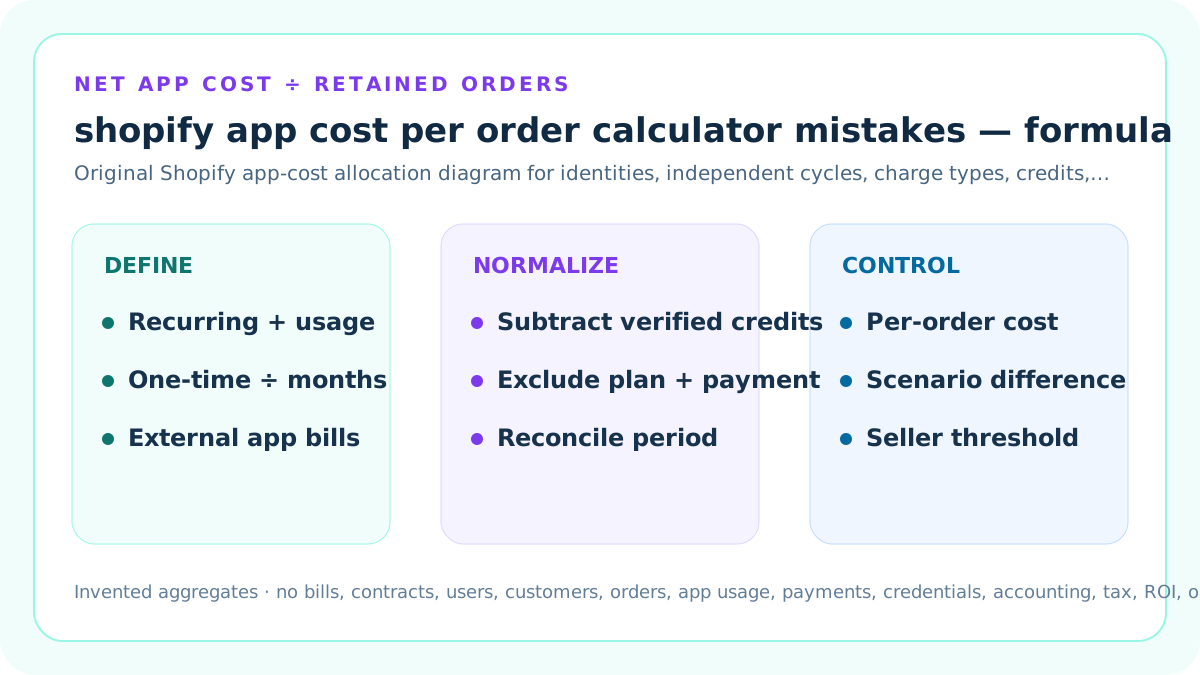
Using expected credits
Enter only a verified application credit assigned to the modeled packet. The app-cost exception log records app identity, active dates, cycle, recurring, usage, one-time, benefit period, credit, external billing, retained orders, currency, source, threshold, reviewer, and prior result needed for a corrected component-and-denominator packet.
At checkpoint 5, state the exact protected source, period mapping, included charge type, excluded category, denominator rule, accepted value, rejected alternative, owner, exception, downstream consumer, stop condition, and restoration reference. Keep app cost separate from Shopify plan, payment, transaction, shipping, tax, domain, theme, complete profit, accounting, and operational authority.
Choosing an arbitrary benefit period
Document the one-time allocation policy, reviewer, downstream consumer, and revision trigger. The app-cost exception log records app identity, active dates, cycle, recurring, usage, one-time, benefit period, credit, external billing, retained orders, currency, source, threshold, reviewer, and prior result needed for a corrected component-and-denominator packet.
At checkpoint 6, state the exact protected source, period mapping, included charge type, excluded category, denominator rule, accepted value, rejected alternative, owner, exception, downstream consumer, stop condition, and restoration reference. Keep app cost separate from Shopify plan, payment, transaction, shipping, tax, domain, theme, complete profit, accounting, and operational authority.
Changing retained-order definitions
Use one closed-period denominator across both scenarios and later comparisons. The app-cost exception log records app identity, active dates, cycle, recurring, usage, one-time, benefit period, credit, external billing, retained orders, currency, source, threshold, reviewer, and prior result needed for a corrected component-and-denominator packet.
At checkpoint 7, state the exact protected source, period mapping, included charge type, excluded category, denominator rule, accepted value, rejected alternative, owner, exception, downstream consumer, stop condition, and restoration reference. Keep app cost separate from Shopify plan, payment, transaction, shipping, tax, domain, theme, complete profit, accounting, and operational authority.
Calling low cost proof of value
Keep attribution, incremental revenue, conversion, retention, and app necessity in a separate evaluation. The app-cost exception log records app identity, active dates, cycle, recurring, usage, one-time, benefit period, credit, external billing, retained orders, currency, source, threshold, reviewer, and prior result needed for a corrected component-and-denominator packet.
At checkpoint 8, state the exact protected source, period mapping, included charge type, excluded category, denominator rule, accepted value, rejected alternative, owner, exception, downstream consumer, stop condition, and restoration reference. Keep app cost separate from Shopify plan, payment, transaction, shipping, tax, domain, theme, complete profit, accounting, and operational authority.
Shopify App Cost per Order Mistakes: app identity control
Tie every amount to a named app, billing path, active dates, cycle, owner, and protected evidence. Control 1 names the invariant, source fingerprint, reviewer question, pass condition, exception state, correction deadline, monitoring signal, and rollback proof for a corrected component-and-denominator packet.
An unidentified Apps subtotal is not a reviewable cost packet. Public fixtures remain invented and aggregate. Exclude app contracts, bills, users, staff, customer, buyer, order, usage-event, payment, credential, bank, private statement, and raw export data from the site and screenshots.
Shopify App Cost per Order Mistakes: cycle bridge control
Normalize independent recurring and usage cycles to the same closed period. Control 2 names the invariant, source fingerprint, reviewer question, pass condition, exception state, correction deadline, monitoring signal, and rollback proof for a corrected component-and-denominator packet.
Do not equate invoice issue date with app service period. Public fixtures remain invented and aggregate. Exclude app contracts, bills, users, staff, customer, buyer, order, usage-event, payment, credential, bank, private statement, and raw export data from the site and screenshots.
Shopify App Cost per Order Mistakes: charge taxonomy control
Keep recurring, usage, one-time, credit, external, and excluded components separate. Control 3 names the invariant, source fingerprint, reviewer question, pass condition, exception state, correction deadline, monitoring signal, and rollback proof for a corrected component-and-denominator packet.
Do not hide direct developer bills or mix plan and payment charges. Public fixtures remain invented and aggregate. Exclude app contracts, bills, users, staff, customer, buyer, order, usage-event, payment, credential, bank, private statement, and raw export data from the site and screenshots.
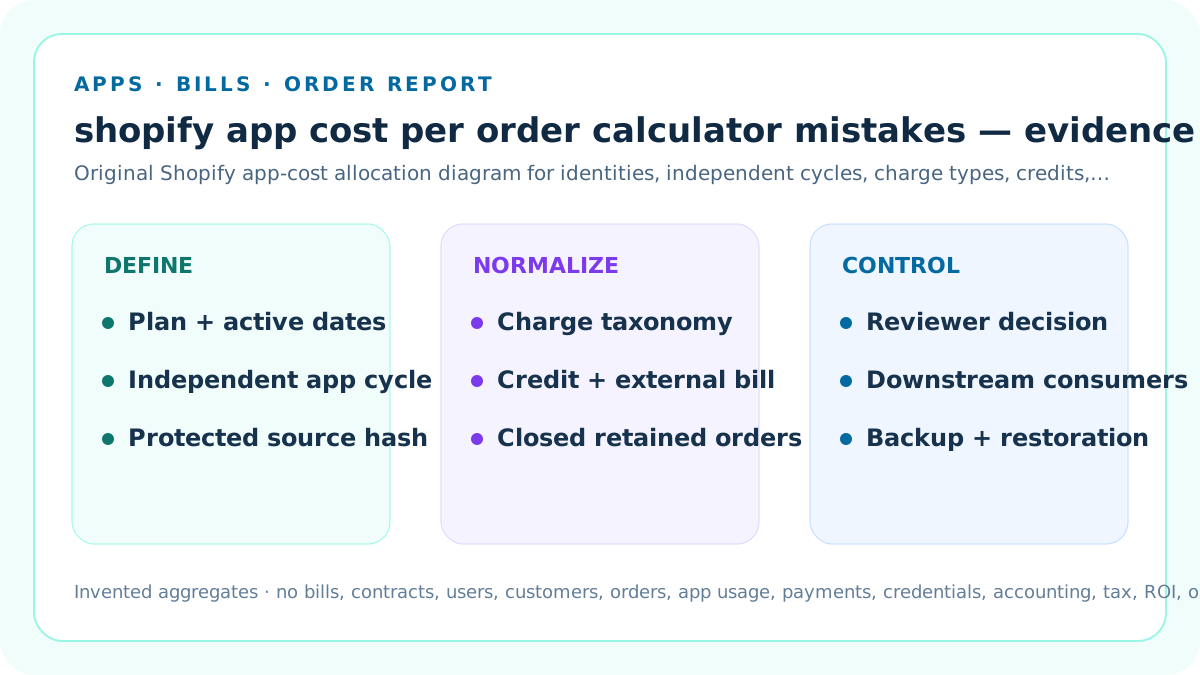
Shopify App Cost per Order Mistakes: retained-order denominator control
Use a positive whole count under one explicit report and reversal policy. Control 4 names the invariant, source fingerprint, reviewer question, pass condition, exception state, correction deadline, monitoring signal, and rollback proof for a corrected component-and-denominator packet.
Do not use CSV row count or change order definitions between scenarios. Public fixtures remain invented and aggregate. Exclude app contracts, bills, users, staff, customer, buyer, order, usage-event, payment, credential, bank, private statement, and raw export data from the site and screenshots.
Shopify App Cost per Order Mistakes: decision authority control
Separate arithmetic, threshold review, economic evaluation, and operational authorization. Control 5 names the invariant, source fingerprint, reviewer question, pass condition, exception state, correction deadline, monitoring signal, and rollback proof for a corrected component-and-denominator packet.
Ready cannot install, cancel, dispute, refund, or change an app. Public fixtures remain invented and aggregate. Exclude app contracts, bills, users, staff, customer, buyer, order, usage-event, payment, credential, bank, private statement, and raw export data from the site and screenshots.
Shopify App Cost per Order Mistakes: privacy and restoration control
Use invented public fixtures while preserving protected sources, backups, consumers, stop rules, and rollback tests. Control 6 names the invariant, source fingerprint, reviewer question, pass condition, exception state, correction deadline, monitoring signal, and rollback proof for a corrected component-and-denominator packet.
Never publish bills, contracts, users, customers, orders, usage events, payments, credentials, or raw exports. Public fixtures remain invented and aggregate. Exclude app contracts, bills, users, staff, customer, buyer, order, usage-event, payment, credential, bank, private statement, and raw export data from the site and screenshots.
Treating invoice dates as app cycles: counterexample lab 1
Reperform the small and expanded invented app-stack calculations. Build a cycle bridge because app billing can differ from the Shopify subscription invoice period. Change only one app identity, active date, billing path, cycle, recurring amount, usage amount, one-time charge, benefit period, credit, external bill, retained-order count, currency, source, threshold, conflict, or restoration input; preserve everything else and record gross, net, per-order, difference, decision, owner, and rollback.
Test free trials, scheduled pricing changes, upgrades, downgrades, proration, application credits, pending charges, uninstalls, direct developer billing, usage limits, mismatched cycles, invoice thresholds, duplicate lines, canceled orders, edits, reversals, mixed currencies, missing sources, weak scopes, and declared conflicts. A favorable cost cannot substitute for current evidence or app-value proof.
Omitting external developer bills: counterexample lab 2
Reperform the small and expanded invented app-stack calculations. Add protected directly billed app costs even though they do not appear in Shopify billing. Change only one app identity, active date, billing path, cycle, recurring amount, usage amount, one-time charge, benefit period, credit, external bill, retained-order count, currency, source, threshold, conflict, or restoration input; preserve everything else and record gross, net, per-order, difference, decision, owner, and rollback.
Test free trials, scheduled pricing changes, upgrades, downgrades, proration, application credits, pending charges, uninstalls, direct developer billing, usage limits, mismatched cycles, invoice thresholds, duplicate lines, canceled orders, edits, reversals, mixed currencies, missing sources, weak scopes, and declared conflicts. A favorable cost cannot substitute for current evidence or app-value proof.
Mixing non-app charges: counterexample lab 3
Reperform the small and expanded invented app-stack calculations. Remove plan, payment, transaction, shipping, tax, domain, theme, financing, and unrelated services. Change only one app identity, active date, billing path, cycle, recurring amount, usage amount, one-time charge, benefit period, credit, external bill, retained-order count, currency, source, threshold, conflict, or restoration input; preserve everything else and record gross, net, per-order, difference, decision, owner, and rollback.
Test free trials, scheduled pricing changes, upgrades, downgrades, proration, application credits, pending charges, uninstalls, direct developer billing, usage limits, mismatched cycles, invoice thresholds, duplicate lines, canceled orders, edits, reversals, mixed currencies, missing sources, weak scopes, and declared conflicts. A favorable cost cannot substitute for current evidence or app-value proof.
Double-counting plan changes: counterexample lab 4
Reperform the small and expanded invented app-stack calculations. Reconcile replaced recurring plans, proration, downgrades, and credits by effective date. Change only one app identity, active date, billing path, cycle, recurring amount, usage amount, one-time charge, benefit period, credit, external bill, retained-order count, currency, source, threshold, conflict, or restoration input; preserve everything else and record gross, net, per-order, difference, decision, owner, and rollback.
Test free trials, scheduled pricing changes, upgrades, downgrades, proration, application credits, pending charges, uninstalls, direct developer billing, usage limits, mismatched cycles, invoice thresholds, duplicate lines, canceled orders, edits, reversals, mixed currencies, missing sources, weak scopes, and declared conflicts. A favorable cost cannot substitute for current evidence or app-value proof.
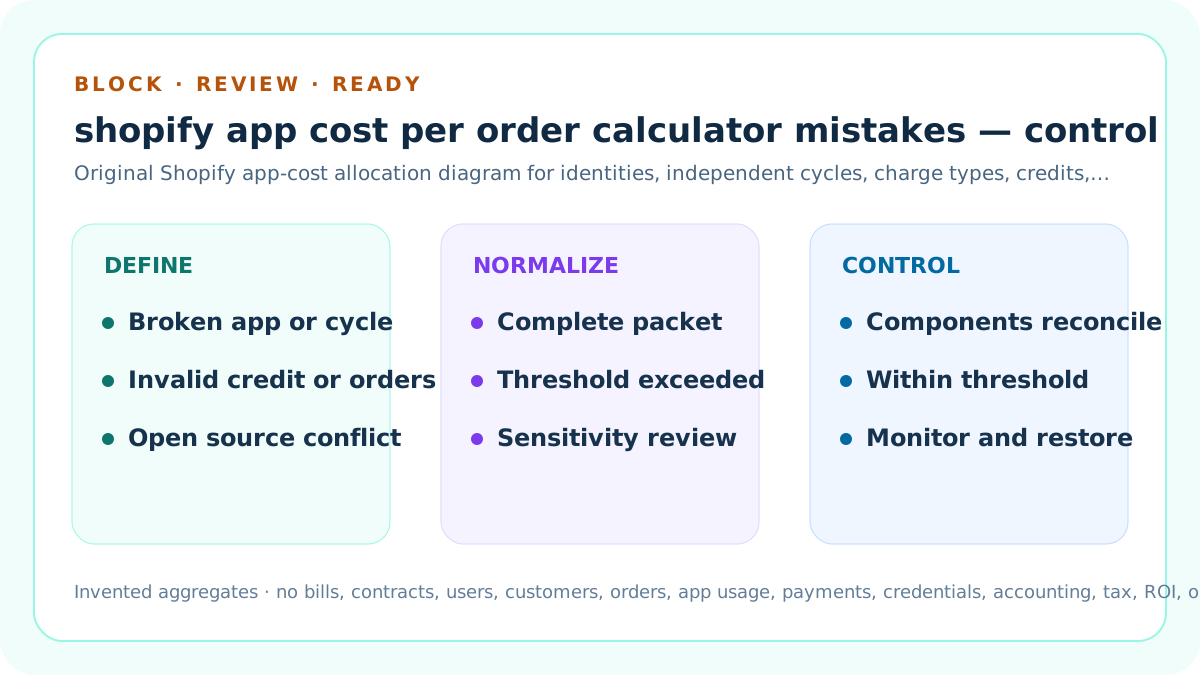
Using expected credits: counterexample lab 5
Reperform the small and expanded invented app-stack calculations. Enter only a verified application credit assigned to the modeled packet. Change only one app identity, active date, billing path, cycle, recurring amount, usage amount, one-time charge, benefit period, credit, external bill, retained-order count, currency, source, threshold, conflict, or restoration input; preserve everything else and record gross, net, per-order, difference, decision, owner, and rollback.
Test free trials, scheduled pricing changes, upgrades, downgrades, proration, application credits, pending charges, uninstalls, direct developer billing, usage limits, mismatched cycles, invoice thresholds, duplicate lines, canceled orders, edits, reversals, mixed currencies, missing sources, weak scopes, and declared conflicts. A favorable cost cannot substitute for current evidence or app-value proof.
Choosing an arbitrary benefit period: counterexample lab 6
Reperform the small and expanded invented app-stack calculations. Document the one-time allocation policy, reviewer, downstream consumer, and revision trigger. Change only one app identity, active date, billing path, cycle, recurring amount, usage amount, one-time charge, benefit period, credit, external bill, retained-order count, currency, source, threshold, conflict, or restoration input; preserve everything else and record gross, net, per-order, difference, decision, owner, and rollback.
Test free trials, scheduled pricing changes, upgrades, downgrades, proration, application credits, pending charges, uninstalls, direct developer billing, usage limits, mismatched cycles, invoice thresholds, duplicate lines, canceled orders, edits, reversals, mixed currencies, missing sources, weak scopes, and declared conflicts. A favorable cost cannot substitute for current evidence or app-value proof.
Changing retained-order definitions: counterexample lab 7
Reperform the small and expanded invented app-stack calculations. Use one closed-period denominator across both scenarios and later comparisons. Change only one app identity, active date, billing path, cycle, recurring amount, usage amount, one-time charge, benefit period, credit, external bill, retained-order count, currency, source, threshold, conflict, or restoration input; preserve everything else and record gross, net, per-order, difference, decision, owner, and rollback.
Test free trials, scheduled pricing changes, upgrades, downgrades, proration, application credits, pending charges, uninstalls, direct developer billing, usage limits, mismatched cycles, invoice thresholds, duplicate lines, canceled orders, edits, reversals, mixed currencies, missing sources, weak scopes, and declared conflicts. A favorable cost cannot substitute for current evidence or app-value proof.
Calling low cost proof of value: counterexample lab 8
Reperform the small and expanded invented app-stack calculations. Keep attribution, incremental revenue, conversion, retention, and app necessity in a separate evaluation. Change only one app identity, active date, billing path, cycle, recurring amount, usage amount, one-time charge, benefit period, credit, external bill, retained-order count, currency, source, threshold, conflict, or restoration input; preserve everything else and record gross, net, per-order, difference, decision, owner, and rollback.
Test free trials, scheduled pricing changes, upgrades, downgrades, proration, application credits, pending charges, uninstalls, direct developer billing, usage limits, mismatched cycles, invoice thresholds, duplicate lines, canceled orders, edits, reversals, mixed currencies, missing sources, weak scopes, and declared conflicts. A favorable cost cannot substitute for current evidence or app-value proof.
Shopify App Cost per Order Mistakes: intent-specific implementation walkthrough
app-cost exception log checkpoint 1 addresses treating invoice dates as app cycles for a corrected component-and-denominator packet. Build a cycle bridge because app billing can differ from the Shopify subscription invoice period. Record the accepted amount or rule, rejected alternative, app, cycle, dates, bill path, source version, reviewer, next review, affected consumer, monitoring trigger, and restoration reference.
app-cost exception log checkpoint 2 addresses omitting external developer bills for a corrected component-and-denominator packet. Add protected directly billed app costs even though they do not appear in Shopify billing. Record the accepted amount or rule, rejected alternative, app, cycle, dates, bill path, source version, reviewer, next review, affected consumer, monitoring trigger, and restoration reference.
app-cost exception log checkpoint 3 addresses mixing non-app charges for a corrected component-and-denominator packet. Remove plan, payment, transaction, shipping, tax, domain, theme, financing, and unrelated services. Record the accepted amount or rule, rejected alternative, app, cycle, dates, bill path, source version, reviewer, next review, affected consumer, monitoring trigger, and restoration reference.
app-cost exception log checkpoint 4 addresses double-counting plan changes for a corrected component-and-denominator packet. Reconcile replaced recurring plans, proration, downgrades, and credits by effective date. Record the accepted amount or rule, rejected alternative, app, cycle, dates, bill path, source version, reviewer, next review, affected consumer, monitoring trigger, and restoration reference.
app-cost exception log checkpoint 5 addresses using expected credits for a corrected component-and-denominator packet. Enter only a verified application credit assigned to the modeled packet. Record the accepted amount or rule, rejected alternative, app, cycle, dates, bill path, source version, reviewer, next review, affected consumer, monitoring trigger, and restoration reference.
app-cost exception log checkpoint 6 addresses choosing an arbitrary benefit period for a corrected component-and-denominator packet. Document the one-time allocation policy, reviewer, downstream consumer, and revision trigger. Record the accepted amount or rule, rejected alternative, app, cycle, dates, bill path, source version, reviewer, next review, affected consumer, monitoring trigger, and restoration reference.
app-cost exception log checkpoint 7 addresses changing retained-order definitions for a corrected component-and-denominator packet. Use one closed-period denominator across both scenarios and later comparisons. Record the accepted amount or rule, rejected alternative, app, cycle, dates, bill path, source version, reviewer, next review, affected consumer, monitoring trigger, and restoration reference.
app-cost exception log checkpoint 8 addresses calling low cost proof of value for a corrected component-and-denominator packet. Keep attribution, incremental revenue, conversion, retention, and app necessity in a separate evaluation. Record the accepted amount or rule, rejected alternative, app, cycle, dates, bill path, source version, reviewer, next review, affected consumer, monitoring trigger, and restoration reference.
Evidence boundary for a corrected component-and-denominator packet
The public fixture uses two invented USD app stacks. The small stack contains USD 29 recurring, USD 10 usage, USD 120 one-time over 12 months, USD 5 credit, no external cost, and 100 retained orders, producing USD 44 net and USD 0.44 per order. The expanded stack contains USD 149 recurring, USD 80 usage, USD 600 over 12 months, USD 10 credit, USD 50 external, and 500 retained orders, producing USD 319 net and USD 0.64 displayed per order.
These values demonstrate component and denominator control only. They cannot prove current app prices, app ROI, attribution, incremental revenue, conversion, retention, reliability, support, privacy, permissions, cancellation, refund recovery, future charges, complete margin, accounting presentation, tax treatment, legal compliance, or permission to install, upgrade, downgrade, uninstall, dispute, contact, change, or expose anything.
Release, monitor, and restore the app-cost exception log
Block invalid app identities, dates, cycles, amounts, benefit periods, credits, external bills, retained orders, currency, period, contexts, scope, or open conflicts. Review a structurally valid stack above the seller-planned per-order threshold. Ready clears only the entered allocation and threshold.
Before indexing or downstream reuse, preserve backups and pass type, unit, integration, build, content, similarity, SEO, image, link, privacy, mobile, deployment, and live checks. Monitor apps, plans, trials, cycles, usage, limits, credits, external bills, denominator rules, sources, consumers, and restoration without claiming same-day traffic or revenue causality.
Sources and further reading
- Shopify Help: App charges on Shopify bills: Official recurring, usage, one-time, credit, external-billing, cycle, proration, and uninstall guidance.
- Shopify Help: Managing apps: Official paths for plans, billing cycles, usage charges, limits, pricing changes, history, privacy, and permissions.
- Shopify Help: Types of bill charges: Official separation of app charges from plan, shipping, transaction, and other bill categories.
- Shopify Help: Order reports: Official order-count definitions and report caveats for denominator control.
- Seller Profit Guard methodology: Deterministic fixtures, evidence precedence, privacy, correction, release, monitoring, and rollback.
Related Seller Profit Guard tools
- Shopify App Cost per Order Calculator: Normalize app-charge components and divide net period cost by retained orders.
- Seller Tool Subscription Audit: Inventory a broader tool stack before creating a Shopify-specific packet.
- Shopify Plan Fee Allocator: Allocate fixed Shopify subscription-plan cost separately.
- Contribution Margin Calculator: Use an accepted app cost per order as a downstream assumption.
- Methodology: Review evidence, correction, release, monitoring, and rollback.
- Data Privacy: Keep apps, bills, customers, orders, contracts, credentials, and raw exports private.
- Shopify App Cost per Order Formula: Define app identities, independent cycles, recurring, usage, one-time, credit, external-charge, retained-order, threshold, and evidence inputs.
- Shopify App Cost per Order Worked Example: Calculate a small app stack from recurring, usage, normalized one-time, credit, external, retained-order, and review inputs.
- Expanded Shopify App Stack Cost Example: Model a larger stack with separate recurring, usage, one-time, credit, external, and retained-order evidence under the same period.
- Reliable Sources for Shopify App Costs: Map app identity, plan, cycle, recurring, usage, one-time, credit, external bill, and retained-order inputs to protected primary records.
- Decision Thresholds for Shopify App Cost per Order: Separate structural validity, seller threshold review, downstream contribution, unsupported ROI, and operational authority.
- Small vs Expanded Shopify App Stack Costs: Compare two app stacks at the same closed period, currency, charge taxonomy, one-time policy, retained-order definition, and evidence standard.
- A Shopify App Cost Review Routine: Turn app-cost allocation into a dated review of cycles, charges, credits, external bills, orders, exceptions, consumers, monitoring, and restoration.
- How to Interpret Shopify App Cost per Order: Explain component totals, credits, denominator sensitivity, threshold state, and limitations without making app-value or cancellation claims.
- Shopify App Cost Audit Checklist and Change Log: Provide a standalone app, cycle, bill, charge, credit, external, order, result, approval, monitoring, and restoration record.
Next step: Open Seller Profit Guard.
This is operational planning help, not tax, accounting, legal, financial, or platform-policy advice. Review the Terms and disclaimer, and verify current platform rules and fee assumptions before changing prices.