Is an added column safer than a renamed required column?
Last updated: 2026-07-31
Written and reviewed by Seller Profit Guard Editorial Team.
Usually, if a name-based parser safely ignores unknown positions and the addition is reviewed. A renamed required field changes the lookup key and needs an explicit one-to-one alias plus consumer tests. Compare both at one export family, row grain, type vocabulary, version window, owner, and rollback standard.
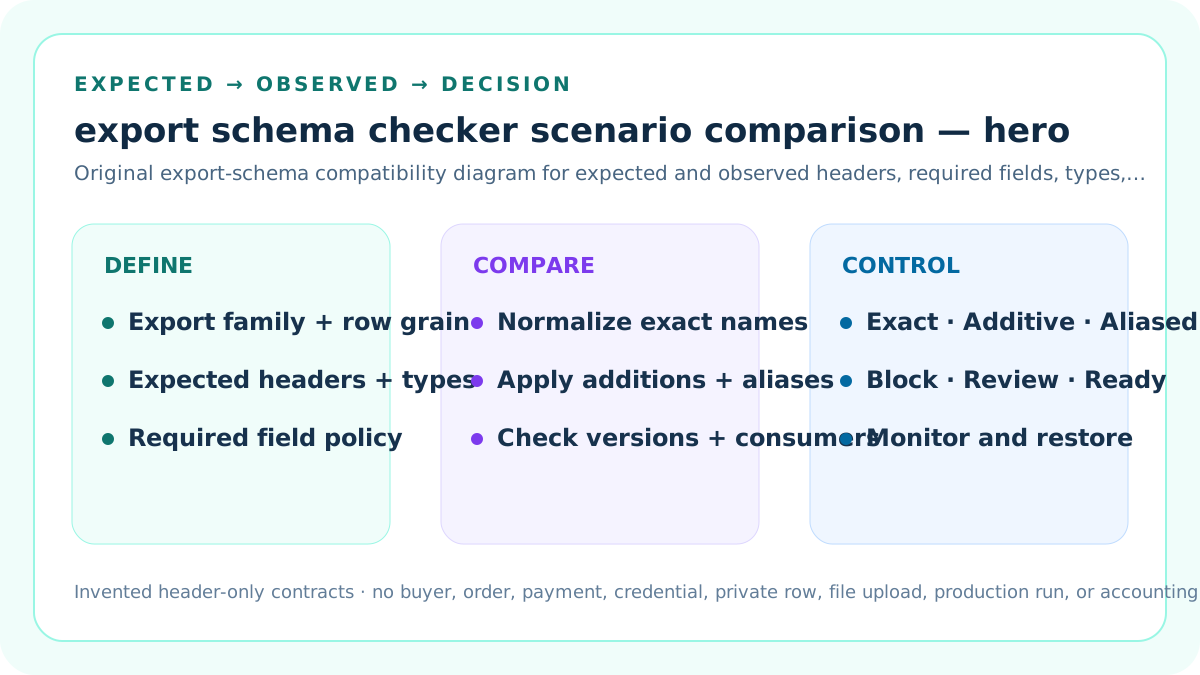
Hold the export family constant
Compare both changes against the same invented order-export contract and row grain. The drift comparison board records the export family, row grain, expected and observed labels, semantic types, required status, additions, aliases, dates, source fingerprint, consumer, owner, reviewer, output hash, stop rule, and prior accepted contract needed for a comparable risk decision.
At checkpoint 1, state the exact pass condition, rejected shortcut, affected automation, protected evidence pointer, correction deadline, monitoring signal, and restoration trigger. Keep header compatibility separate from row values, counts, totals, privacy, accounting, tax, and production authority.
Compare lookup impact
An addition preserves original keys; a rename removes one key and introduces another. The drift comparison board records the export family, row grain, expected and observed labels, semantic types, required status, additions, aliases, dates, source fingerprint, consumer, owner, reviewer, output hash, stop rule, and prior accepted contract needed for a comparable risk decision.
At checkpoint 2, state the exact pass condition, rejected shortcut, affected automation, protected evidence pointer, correction deadline, monitoring signal, and restoration trigger. Keep header compatibility separate from row values, counts, totals, privacy, accounting, tax, and production authority.
Compare type evidence
Both need explicit types, but the rename must prove the replacement preserves required semantics. The drift comparison board records the export family, row grain, expected and observed labels, semantic types, required status, additions, aliases, dates, source fingerprint, consumer, owner, reviewer, output hash, stop rule, and prior accepted contract needed for a comparable risk decision.
At checkpoint 3, state the exact pass condition, rejected shortcut, affected automation, protected evidence pointer, correction deadline, monitoring signal, and restoration trigger. Keep header compatibility separate from row values, counts, totals, privacy, accounting, tax, and production authority.
Compare parser assumptions
Position-based consumers may fail on additions while name-based consumers fail on unaliased renames. The drift comparison board records the export family, row grain, expected and observed labels, semantic types, required status, additions, aliases, dates, source fingerprint, consumer, owner, reviewer, output hash, stop rule, and prior accepted contract needed for a comparable risk decision.
At checkpoint 4, state the exact pass condition, rejected shortcut, affected automation, protected evidence pointer, correction deadline, monitoring signal, and restoration trigger. Keep header compatibility separate from row values, counts, totals, privacy, accounting, tax, and production authority.
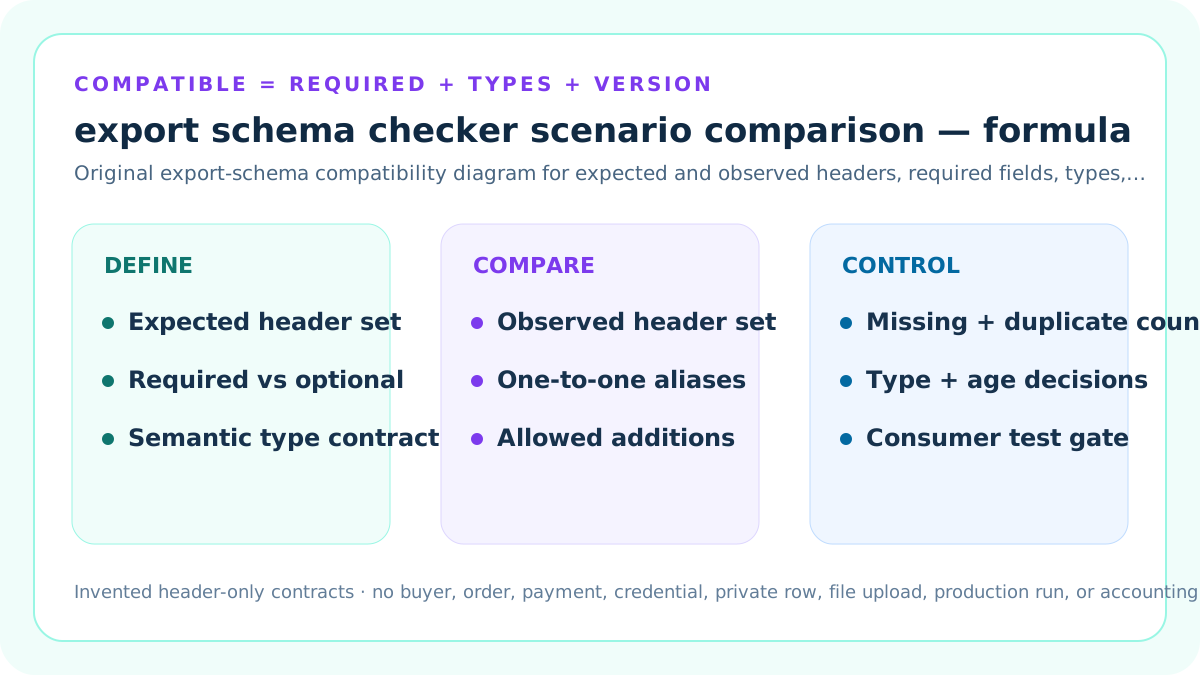
Compare privacy risk
A new column may expose sensitive data; a rename may redirect an approved purpose to the wrong field. The drift comparison board records the export family, row grain, expected and observed labels, semantic types, required status, additions, aliases, dates, source fingerprint, consumer, owner, reviewer, output hash, stop rule, and prior accepted contract needed for a comparable risk decision.
At checkpoint 5, state the exact pass condition, rejected shortcut, affected automation, protected evidence pointer, correction deadline, monitoring signal, and restoration trigger. Keep header compatibility separate from row values, counts, totals, privacy, accounting, tax, and production authority.
Compare test scope
The addition tests unknown-field handling; the rename tests aliases and every required-field consumer. The drift comparison board records the export family, row grain, expected and observed labels, semantic types, required status, additions, aliases, dates, source fingerprint, consumer, owner, reviewer, output hash, stop rule, and prior accepted contract needed for a comparable risk decision.
At checkpoint 6, state the exact pass condition, rejected shortcut, affected automation, protected evidence pointer, correction deadline, monitoring signal, and restoration trigger. Keep header compatibility separate from row values, counts, totals, privacy, accounting, tax, and production authority.
Compare rollback design
Both preserve prior contracts, but the rename also needs alias retirement and migration history. The drift comparison board records the export family, row grain, expected and observed labels, semantic types, required status, additions, aliases, dates, source fingerprint, consumer, owner, reviewer, output hash, stop rule, and prior accepted contract needed for a comparable risk decision.
At checkpoint 7, state the exact pass condition, rejected shortcut, affected automation, protected evidence pointer, correction deadline, monitoring signal, and restoration trigger. Keep header compatibility separate from row values, counts, totals, privacy, accounting, tax, and production authority.
Choose by evidence, not labels
Neither change is safe solely because a platform calls it optional, improved, or deprecated. The drift comparison board records the export family, row grain, expected and observed labels, semantic types, required status, additions, aliases, dates, source fingerprint, consumer, owner, reviewer, output hash, stop rule, and prior accepted contract needed for a comparable risk decision.
At checkpoint 8, state the exact pass condition, rejected shortcut, affected automation, protected evidence pointer, correction deadline, monitoring signal, and restoration trigger. Keep header compatibility separate from row values, counts, totals, privacy, accounting, tax, and production authority.
Added Column vs Renamed Required Column: identity integrity control
Tie the contract to one exact export family, acquisition path, row grain, delimiter, encoding, and fingerprint. Control 1 defines the source, invariant, reviewer question, accepted evidence, exception state, stop authority, and restoration proof for a comparable risk decision.
A .csv extension is not source identity. Keep schema checking separate from file upload, row validation, column mapping, date normalization, order matching, monetary reconciliation, privacy approval, platform correction, and unattended execution.
Added Column vs Renamed Required Column: lookup integrity control
Tie every required field to one unique expected or approved aliased observed name. Control 2 defines the source, invariant, reviewer question, accepted evidence, exception state, stop authority, and restoration proof for a comparable risk decision.
A nearest label or column position is not a reviewed mapping. Keep schema checking separate from file upload, row validation, column mapping, date normalization, order matching, monetary reconciliation, privacy approval, platform correction, and unattended execution.
Added Column vs Renamed Required Column: type integrity control
Tie every consumer to declared expected and observed semantic types plus explicit normalization rules. Control 3 defines the source, invariant, reviewer question, accepted evidence, exception state, stop authority, and restoration proof for a comparable risk decision.
A spreadsheet display is not protected value validation. Keep schema checking separate from file upload, row validation, column mapping, date normalization, order matching, monetary reconciliation, privacy approval, platform correction, and unattended execution.
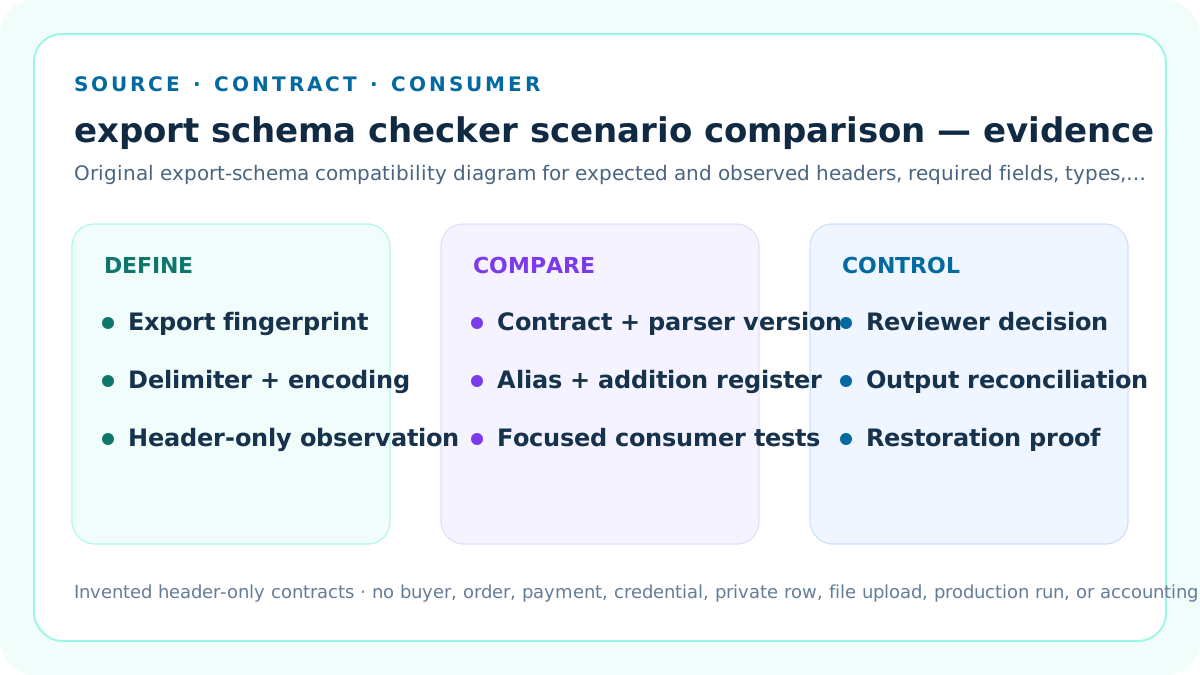
Added Column vs Renamed Required Column: privacy integrity control
Keep public fixtures header-only and invented while operational rows remain protected and minimized. Control 4 defines the source, invariant, reviewer question, accepted evidence, exception state, stop authority, and restoration proof for a comparable risk decision.
Compatibility is not privacy certification. Keep schema checking separate from file upload, row validation, column mapping, date normalization, order matching, monetary reconciliation, privacy approval, platform correction, and unattended execution.
Added Column vs Renamed Required Column: human authority control
Assign export, contract, privacy, automation, review, stop, and restoration owners. Control 5 defines the source, invariant, reviewer question, accepted evidence, exception state, stop authority, and restoration proof for a comparable risk decision.
Ready cannot run or rewrite production data. Keep schema checking separate from file upload, row validation, column mapping, date normalization, order matching, monetary reconciliation, privacy approval, platform correction, and unattended execution.
Added Column vs Renamed Required Column: rollback integrity control
Preserve prior contracts, parsers, aliases, fixtures, outputs, exceptions, backups, and tested restoration. Control 6 defines the source, invariant, reviewer question, accepted evidence, exception state, stop authority, and restoration proof for a comparable risk decision.
Never overwrite the only accepted schema history. Keep schema checking separate from file upload, row validation, column mapping, date normalization, order matching, monetary reconciliation, privacy approval, platform correction, and unattended execution.
Hold the export family constant: counterexample lab 1
Reperform both invented contracts. Compare both changes against the same invented order-export contract and row grain. Change one header, type, required flag, allowed addition, alias, version date, grain, delimiter, encoding, context, or declared conflict only; preserve every other assumption and record compatibility, counts, decision, issue, owner, and rollback.
Test exact, allowed-additive, approved-alias, optional-missing, unreviewed-addition, required-missing, optional-type, required-type, duplicate, alias-collision, stale-version, impossible-date, short-context, weak-scope, and open-conflict states. Every example remains header-only and invented.
Compare lookup impact: counterexample lab 2
Reperform both invented contracts. An addition preserves original keys; a rename removes one key and introduces another. Change one header, type, required flag, allowed addition, alias, version date, grain, delimiter, encoding, context, or declared conflict only; preserve every other assumption and record compatibility, counts, decision, issue, owner, and rollback.
Test exact, allowed-additive, approved-alias, optional-missing, unreviewed-addition, required-missing, optional-type, required-type, duplicate, alias-collision, stale-version, impossible-date, short-context, weak-scope, and open-conflict states. Every example remains header-only and invented.
Compare type evidence: counterexample lab 3
Reperform both invented contracts. Both need explicit types, but the rename must prove the replacement preserves required semantics. Change one header, type, required flag, allowed addition, alias, version date, grain, delimiter, encoding, context, or declared conflict only; preserve every other assumption and record compatibility, counts, decision, issue, owner, and rollback.
Test exact, allowed-additive, approved-alias, optional-missing, unreviewed-addition, required-missing, optional-type, required-type, duplicate, alias-collision, stale-version, impossible-date, short-context, weak-scope, and open-conflict states. Every example remains header-only and invented.
Compare parser assumptions: counterexample lab 4
Reperform both invented contracts. Position-based consumers may fail on additions while name-based consumers fail on unaliased renames. Change one header, type, required flag, allowed addition, alias, version date, grain, delimiter, encoding, context, or declared conflict only; preserve every other assumption and record compatibility, counts, decision, issue, owner, and rollback.
Test exact, allowed-additive, approved-alias, optional-missing, unreviewed-addition, required-missing, optional-type, required-type, duplicate, alias-collision, stale-version, impossible-date, short-context, weak-scope, and open-conflict states. Every example remains header-only and invented.
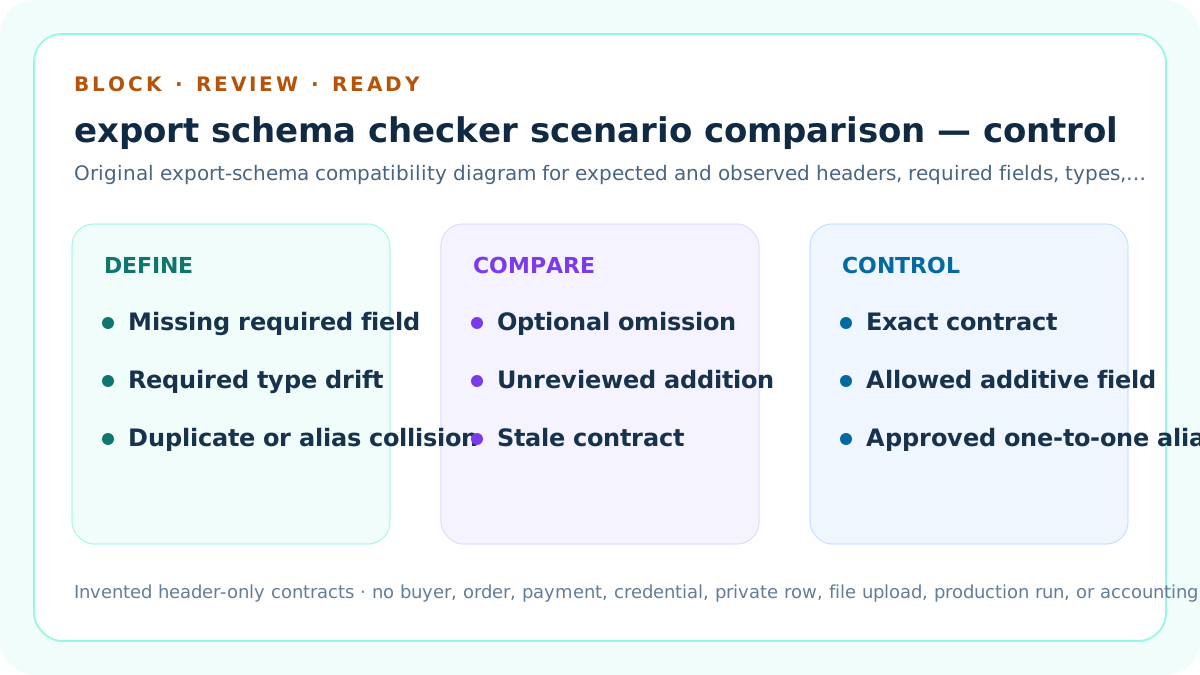
Compare privacy risk: counterexample lab 5
Reperform both invented contracts. A new column may expose sensitive data; a rename may redirect an approved purpose to the wrong field. Change one header, type, required flag, allowed addition, alias, version date, grain, delimiter, encoding, context, or declared conflict only; preserve every other assumption and record compatibility, counts, decision, issue, owner, and rollback.
Test exact, allowed-additive, approved-alias, optional-missing, unreviewed-addition, required-missing, optional-type, required-type, duplicate, alias-collision, stale-version, impossible-date, short-context, weak-scope, and open-conflict states. Every example remains header-only and invented.
Compare test scope: counterexample lab 6
Reperform both invented contracts. The addition tests unknown-field handling; the rename tests aliases and every required-field consumer. Change one header, type, required flag, allowed addition, alias, version date, grain, delimiter, encoding, context, or declared conflict only; preserve every other assumption and record compatibility, counts, decision, issue, owner, and rollback.
Test exact, allowed-additive, approved-alias, optional-missing, unreviewed-addition, required-missing, optional-type, required-type, duplicate, alias-collision, stale-version, impossible-date, short-context, weak-scope, and open-conflict states. Every example remains header-only and invented.
Compare rollback design: counterexample lab 7
Reperform both invented contracts. Both preserve prior contracts, but the rename also needs alias retirement and migration history. Change one header, type, required flag, allowed addition, alias, version date, grain, delimiter, encoding, context, or declared conflict only; preserve every other assumption and record compatibility, counts, decision, issue, owner, and rollback.
Test exact, allowed-additive, approved-alias, optional-missing, unreviewed-addition, required-missing, optional-type, required-type, duplicate, alias-collision, stale-version, impossible-date, short-context, weak-scope, and open-conflict states. Every example remains header-only and invented.
Choose by evidence, not labels: counterexample lab 8
Reperform both invented contracts. Neither change is safe solely because a platform calls it optional, improved, or deprecated. Change one header, type, required flag, allowed addition, alias, version date, grain, delimiter, encoding, context, or declared conflict only; preserve every other assumption and record compatibility, counts, decision, issue, owner, and rollback.
Test exact, allowed-additive, approved-alias, optional-missing, unreviewed-addition, required-missing, optional-type, required-type, duplicate, alias-collision, stale-version, impossible-date, short-context, weak-scope, and open-conflict states. Every example remains header-only and invented.
Added Column vs Renamed Required Column: intent-specific implementation walkthrough
drift comparison board checkpoint 1 addresses hold the export family constant for a comparable risk decision. Compare both changes against the same invented order-export contract and row grain. Record the accepted contract, rejected alternative, source version, affected consumer, reviewer, follow-up date, monitoring trigger, and rollback reference.
drift comparison board checkpoint 2 addresses compare lookup impact for a comparable risk decision. An addition preserves original keys; a rename removes one key and introduces another. Record the accepted contract, rejected alternative, source version, affected consumer, reviewer, follow-up date, monitoring trigger, and rollback reference.
drift comparison board checkpoint 3 addresses compare type evidence for a comparable risk decision. Both need explicit types, but the rename must prove the replacement preserves required semantics. Record the accepted contract, rejected alternative, source version, affected consumer, reviewer, follow-up date, monitoring trigger, and rollback reference.
drift comparison board checkpoint 4 addresses compare parser assumptions for a comparable risk decision. Position-based consumers may fail on additions while name-based consumers fail on unaliased renames. Record the accepted contract, rejected alternative, source version, affected consumer, reviewer, follow-up date, monitoring trigger, and rollback reference.
drift comparison board checkpoint 5 addresses compare privacy risk for a comparable risk decision. A new column may expose sensitive data; a rename may redirect an approved purpose to the wrong field. Record the accepted contract, rejected alternative, source version, affected consumer, reviewer, follow-up date, monitoring trigger, and rollback reference.
drift comparison board checkpoint 6 addresses compare test scope for a comparable risk decision. The addition tests unknown-field handling; the rename tests aliases and every required-field consumer. Record the accepted contract, rejected alternative, source version, affected consumer, reviewer, follow-up date, monitoring trigger, and rollback reference.
drift comparison board checkpoint 7 addresses compare rollback design for a comparable risk decision. Both preserve prior contracts, but the rename also needs alias retirement and migration history. Record the accepted contract, rejected alternative, source version, affected consumer, reviewer, follow-up date, monitoring trigger, and rollback reference.
drift comparison board checkpoint 8 addresses choose by evidence, not labels for a comparable risk decision. Neither change is safe solely because a platform calls it optional, improved, or deprecated. Record the accepted contract, rejected alternative, source version, affected consumer, reviewer, follow-up date, monitoring trigger, and rollback reference.
For a comparable risk decision, require exact type coverage for every present header, strict whole-number age, header-count and evidence-duration thresholds, real source-review and policy dates, and all nine release confirmations. The evidence month must contain every observed export, the review must cover the latest observation, the policy must predate or equal the earliest expected contract, and the inclusive contract-to-observation span must meet the stated minimum. When this drift comparison board Blocks, quarantine every compatibility class, count, alias, addition, omission, type mismatch, and age output as Unavailable until the contract is repaired and independently reviewed.
Evidence boundary for a comparable risk decision
The additive fixture expects five headers and observes six after Risk Level is added as an allowed text field. The rename fixture resolves Created at to Order created at through one reviewed alias. Both preserve required coverage, declared types, valid 19-day contract age, owners, review, backup, and restoration evidence.
These invented header contracts demonstrate deterministic compatibility rules only. They cannot prove row values, order counts, amounts, unique keys, completeness, buyer privacy, accounting treatment, tax treatment, platform correctness, or permission to run, import, export, retain, transform, or overwrite operational data.
Release, monitor, and restore the drift comparison board
Block required omissions, required type drift, duplicate normalized names, malformed pair declarations, ambiguous aliases, impossible version order, weak governance, or open conflicts. Review optional drift, unreviewed additions, optional omissions, or contract age beyond the declared limit. Ready clears only exact, allowed-additive, or approved-alias compatibility.
Before indexing or operational reuse, preserve backups and pass type, unit, integration, build, content, similarity, SEO, image, link, privacy, mobile, deployment, and live checks. Monitor source fingerprints, headers, types, grain, counts, consumer exceptions, and restoration readiness without claiming same-day traffic or business causality.
Sources and further reading
- Etsy Help: download sold transactions: Official Etsy seller CSV export families and example fields.
- Etsy Help: download Etsy data: Official distinction between privacy downloads, order exports, shop settings, and reviews.
- Shopify Help: exporting orders: Official order-export and transaction-history structures, multi-line rows, documented headers, and deprecated fields.
- Seller Profit Guard methodology: Deterministic fixtures, source precedence, release, correction, monitoring, and rollback.
Related Seller Profit Guard tools
- Marketplace Export Schema Checker: Run the browser-local invented-header compatibility worksheet.
- CSV Import Validator: Use a separate import-readiness gate after schema compatibility.
- Seller CSV Column Mapper: Map only fields cleared by the schema contract.
- Seller CSV Privacy Redactor: Minimize the approved schema before protected processing.
- Methodology: Review evidence, correction, release, monitoring, and rollback.
- Data Privacy: Keep operational rows and buyer data out of public fixtures.
- Export Schema Contract: 9 Inputs Before Automation: Define expected and observed headers, types, required fields, aliases, additions, version dates, row grain, and rollback before automating an export.
- Export Schema Checker Example: One Added Column: Work a complete export schema example where an optional field is added without breaking a name-based parser or exposing seller rows.
- Required Column Renamed: Controlled Alias Example: Handle a renamed required export column with an explicit one-to-one alias, affected-consumer tests, version evidence, and rollback.
- 11 Export Schema Checks That Fail Quietly: Diagnose schema-check mistakes involving normalization, duplicates, aliases, types, row grain, versions, privacy, and false compatibility.
- Export Schema Evidence Without Sharing Private Rows: Build a reliable source register for expected contracts, observed header fingerprints, types, versions, consumers, privacy, and restoration.
- Ready, Review, or Block for Schema Drift: Define decision thresholds for additive fields, optional omissions, type changes, required fields, aliases, version age, and governance gaps.
- Weekly Export Schema Drift Routine: Turn schema compatibility into a recurring header-fingerprint, consumer-test, exception, monitoring, and restoration workflow.
- Read a Schema Compatibility Report Correctly: Interpret field counts, missing required fields, aliases, additions, type drift, version age, and decision state without claiming row correctness.
- Export Schema Audit Checklist and Change Log: Provide a reusable audit checklist and dated change log for source fingerprints, contracts, aliases, consumers, exceptions, approvals, and rollback.
Next step: Open Seller Profit Guard.
This is operational planning help, not tax, accounting, legal, financial, or platform-policy advice. Review the Terms and disclaimer, and verify current platform rules and fee assumptions before changing prices.