Where to get reliable Etsy listing renewal cost data
Last updated: 2026-07-30
Written and reviewed by Seller Profit Guard Editorial Team.
Use Etsy’s Fees and Payments Policy and listing-fee Help pages for current amounts and trigger rules, Listings Manager for renewal settings and listing state, Orders or privacy-safe sales aggregates for units sold, and the Payment account or monthly statement for actual listing, auto-renew, multi-quantity, tax, credit, conversion, and period rows.
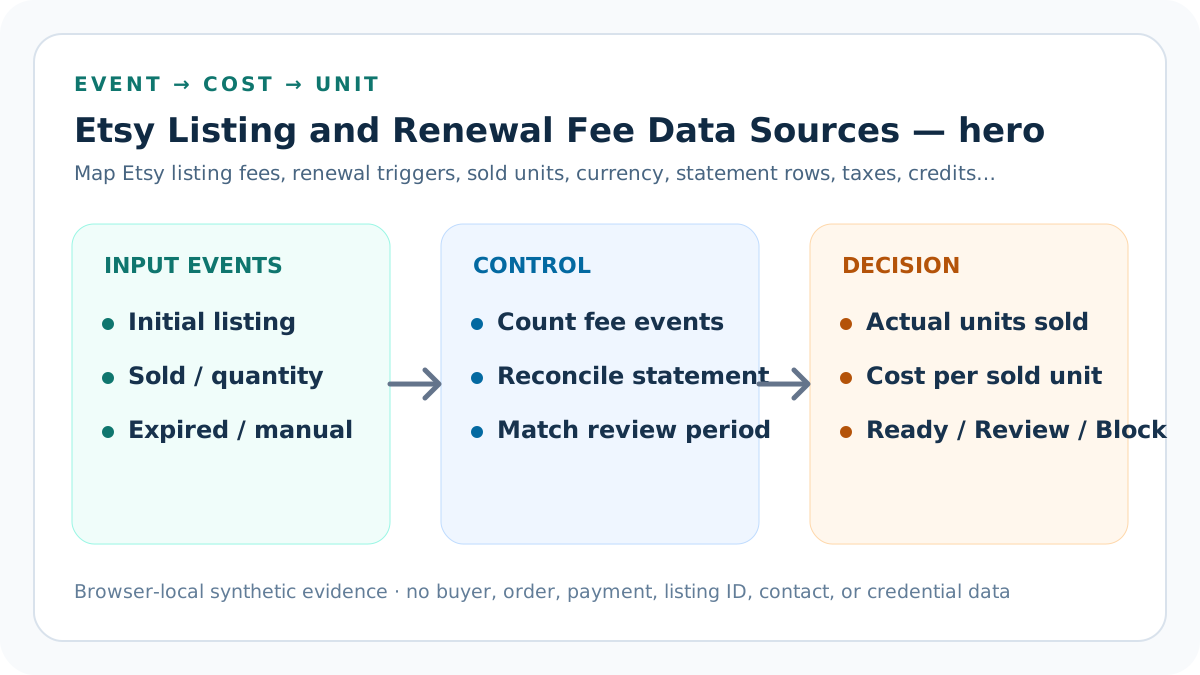
listing-fee evidence provenance: scope and decision
No single source proves the allocation. Public policy defines fee identities; Listings Manager records operating settings; sales evidence supports the denominator; Payment account rows show what posted.
Every field needs an owner, source, access date, effective period, currency, privacy class, reviewer, conflict rule, and refresh trigger. Current policy cannot silently rewrite an older statement.
Build the event-source evidence map before acting
Preserve fee-row names such as listing, auto-renew sold, multi-quantity, and auto-renew expired when available. Their shared amount does not make them interchangeable.
Use synthetic examples in public content and approved pointers for private records. Do not copy buyer, order, payment, bank, tax, contact, credential, or raw CSV data into active pages.
Source the current fee amount
Use the controlling Etsy policy and Help overview, record USD 0.20 or the current replacement, effective context, access date, and reviewer.
Assign “Source the current fee amount” an authority, access date, effective period, event owner, currency, privacy class, reviewer, conflict rule, and refresh trigger in the event-source evidence map. If one privacy-safe listing-period packet and a remembered USD 0.20 rate without actual event rows disagree, preserve both records and resolve the accountable source before claiming an auditable fee subtotal and sold-unit allocation.
Give “Source the current fee amount” both rule evidence and actual evidence. Official Etsy pages define event identities; account-owned sources show what posted and sold. Record private-system pointers instead of raw records. A public rate cannot authenticate one seller's period, and one statement cannot establish a future rule.
Source multiple-quantity rules
Use Etsy's current multiple-quantity examples to distinguish the initial fee, additional sold quantities, and remaining-inventory auto-renew behavior.
Assign “Source multiple-quantity rules” an authority, access date, effective period, event owner, currency, privacy class, reviewer, conflict rule, and refresh trigger in the event-source evidence map. If one privacy-safe listing-period packet and a remembered USD 0.20 rate without actual event rows disagree, preserve both records and resolve the accountable source before claiming an auditable fee subtotal and sold-unit allocation.
Give “Source multiple-quantity rules” both rule evidence and actual evidence. Official Etsy pages define event identities; account-owned sources show what posted and sold. Record private-system pointers instead of raw records. A public rate cannot authenticate one seller's period, and one statement cannot establish a future rule.
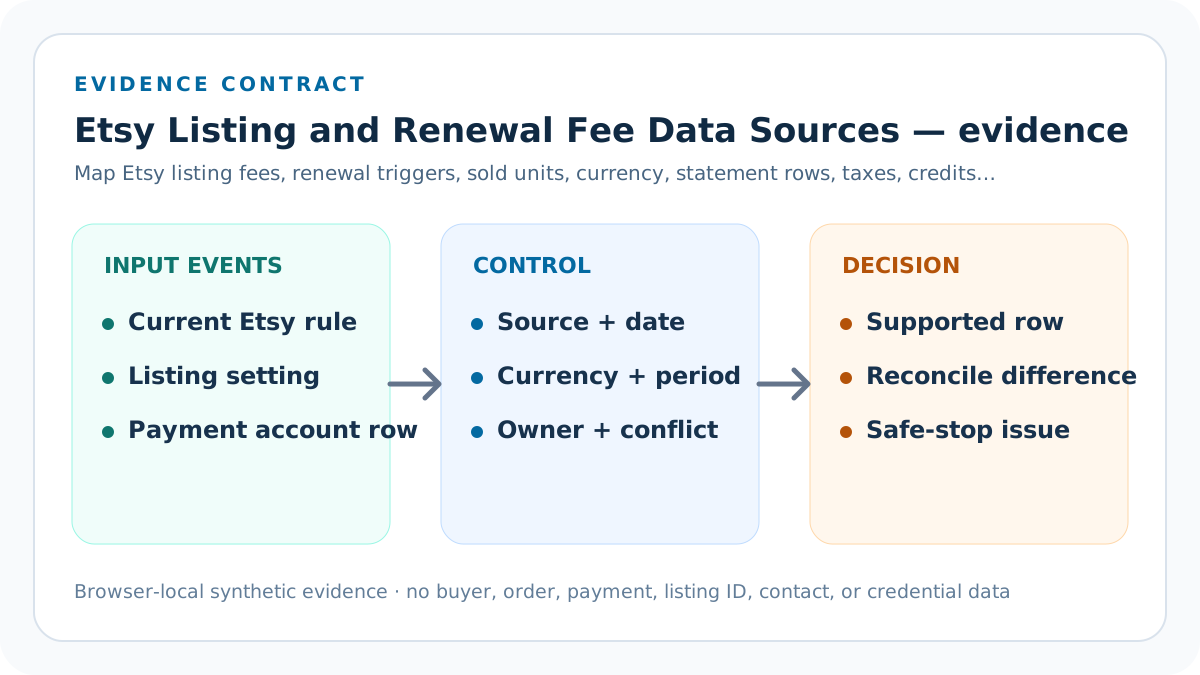
Source expiry and renewal rules
Use current renewal Help for four-month timing, automatic or manual status, date reset, and the fee charged on renewal.
Assign “Source expiry and renewal rules” an authority, access date, effective period, event owner, currency, privacy class, reviewer, conflict rule, and refresh trigger in the event-source evidence map. If one privacy-safe listing-period packet and a remembered USD 0.20 rate without actual event rows disagree, preserve both records and resolve the accountable source before claiming an auditable fee subtotal and sold-unit allocation.
Give “Source expiry and renewal rules” both rule evidence and actual evidence. Official Etsy pages define event identities; account-owned sources show what posted and sold. Record private-system pointers instead of raw records. A public rate cannot authenticate one seller's period, and one statement cannot establish a future rule.
Source event settings
Use Listings Manager for automatic or manual renewal state and relevant listing status without exporting private listing identifiers into public files.
Assign “Source event settings” an authority, access date, effective period, event owner, currency, privacy class, reviewer, conflict rule, and refresh trigger in the event-source evidence map. If one privacy-safe listing-period packet and a remembered USD 0.20 rate without actual event rows disagree, preserve both records and resolve the accountable source before claiming an auditable fee subtotal and sold-unit allocation.
Give “Source event settings” both rule evidence and actual evidence. Official Etsy pages define event identities; account-owned sources show what posted and sold. Record private-system pointers instead of raw records. A public rate cannot authenticate one seller's period, and one statement cannot establish a future rule.
Source actual sold units
Use a privacy-safe aggregate of completed unit quantities inside the exact fee evidence period; distinguish units from orders.
Assign “Source actual sold units” an authority, access date, effective period, event owner, currency, privacy class, reviewer, conflict rule, and refresh trigger in the event-source evidence map. If one privacy-safe listing-period packet and a remembered USD 0.20 rate without actual event rows disagree, preserve both records and resolve the accountable source before claiming an auditable fee subtotal and sold-unit allocation.
Give “Source actual sold units” both rule evidence and actual evidence. Official Etsy pages define event identities; account-owned sources show what posted and sold. Record private-system pointers instead of raw records. A public rate cannot authenticate one seller's period, and one statement cannot establish a future rule.
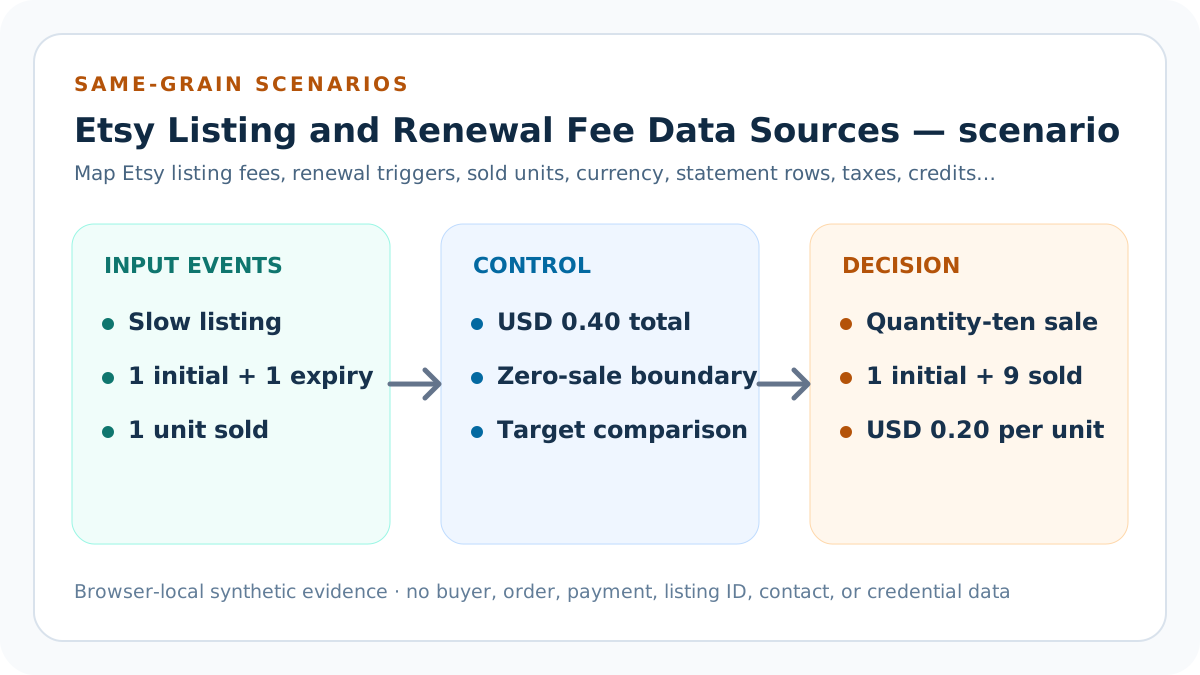
Source actual fee rows
Use Payment account and monthly statements for listing, sold renewal, multi-quantity, expired renewal, taxes, conversion, credits, and timing.
Assign “Source actual fee rows” an authority, access date, effective period, event owner, currency, privacy class, reviewer, conflict rule, and refresh trigger in the event-source evidence map. If one privacy-safe listing-period packet and a remembered USD 0.20 rate without actual event rows disagree, preserve both records and resolve the accountable source before claiming an auditable fee subtotal and sold-unit allocation.
Give “Source actual fee rows” both rule evidence and actual evidence. Official Etsy pages define event identities; account-owned sources show what posted and sold. Record private-system pointers instead of raw records. A public rate cannot authenticate one seller's period, and one statement cannot establish a future rule.
Source target and tolerance
Use seller-owned operating policies that define maximum per-unit exposure, expected sales scenario, precision, review owner, escalation, and correction.
Assign “Source target and tolerance” an authority, access date, effective period, event owner, currency, privacy class, reviewer, conflict rule, and refresh trigger in the event-source evidence map. If one privacy-safe listing-period packet and a remembered USD 0.20 rate without actual event rows disagree, preserve both records and resolve the accountable source before claiming an auditable fee subtotal and sold-unit allocation.
Give “Source target and tolerance” both rule evidence and actual evidence. Official Etsy pages define event identities; account-owned sources show what posted and sold. Record private-system pointers instead of raw records. A public rate cannot authenticate one seller's period, and one statement cannot establish a future rule.
Resolve conflicts by authority
Preserve public rule and private actual records separately; escalate inconsistencies instead of overwriting one source with the other.
Assign “Resolve conflicts by authority” an authority, access date, effective period, event owner, currency, privacy class, reviewer, conflict rule, and refresh trigger in the event-source evidence map. If one privacy-safe listing-period packet and a remembered USD 0.20 rate without actual event rows disagree, preserve both records and resolve the accountable source before claiming an auditable fee subtotal and sold-unit allocation.
Give “Resolve conflicts by authority” both rule evidence and actual evidence. Official Etsy pages define event identities; account-owned sources show what posted and sold. Record private-system pointers instead of raw records. A public rate cannot authenticate one seller's period, and one statement cannot establish a future rule.
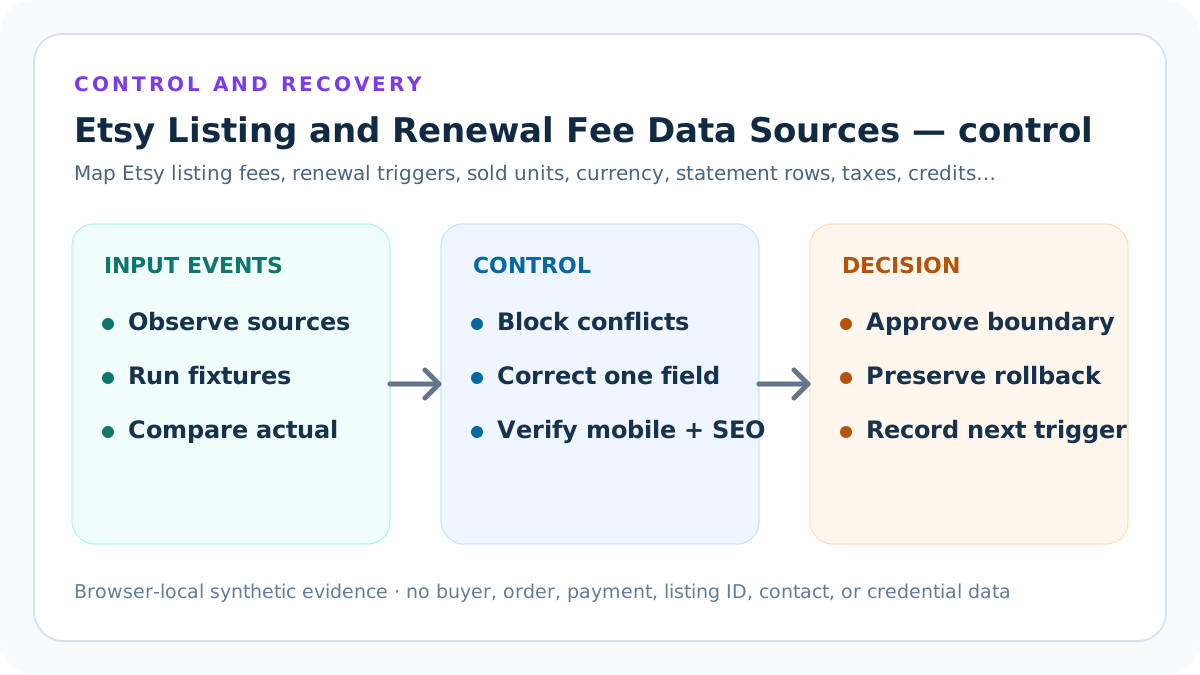
Verification, release, and Payment account feedback
Before changing price, renewal settings, listing state, or calculator defaults, preserve the event-source evidence map, official-source versions, private evidence pointer, current inputs, expected fixtures, tests, build, route state, and rollback identifier. Confirm the exact target environment and safe-stop on an unexpected account or production context.
After one bounded correction, rerun one privacy-safe listing-period packet, a remembered USD 0.20 rate without actual event rows, the zero-sale fixture, and a declared-conflict fixture. Inspect exact and displayed amounts, event totals, statement difference, actual and planned denominators, mobile results, canonical, sources, original visuals, internal links, and privacy-safe feedback. Restore the prior packet if a critical result cannot support an auditable fee subtotal and sold-unit allocation.
Limits, privacy boundary, and next action
This guide and calculator use seller-entered summaries and synthetic fixtures. They do not retrieve Etsy data, authenticate listings or events, decide taxes, reproduce every conversion or credit, change renewal settings, measure demand, include every Etsy fee, or prove ranking, traffic, qualified intent, AdSense approval, income, or final profit.
Keep buyer names, emails, addresses, messages, order IDs, listing IDs, payment rows, bank details, tax identifiers, labels, tokens, OAuth material, credentials, and raw CSV outside the event-source evidence map. Verify current Etsy sources and the seller's actual account, reconcile an approved privacy-safe sample, and obtain qualified accounting, tax, or legal advice when material.
Sources and further reading
- Etsy Help: Fees and Listing Multiple Quantities: Current initial listing, multiple-quantity, auto-renew-sold, remaining-quantity, Payment account label, and conversion examples.
- Etsy Help: Fees and Taxes for Selling: Current listing, auto-renew-expired, auto-renew-sold, private-listing, four-month, and surrounding fee boundaries.
- Etsy Help: Renew or Hide Listings: Current renewal charge, four-month date reset, automatic or manual renewal choice, and sold-out listing handling.
- Etsy Help: Fee Basics: Current plain-language listing, auto-renew-sold, multi-quantity, private listing, and Payment account distinctions.
- Etsy Fees and Payments Policy: Controlling listing-fee definitions, expiry, renewal, multiple quantity, currency, tax, deduction, and seller responsibility.
- Etsy Help: Manage Your Payment Account: Payment account, monthly statement, fee, tax, credit, balance, and payout-period reconciliation.
- Seller Profit Guard methodology: Evidence hierarchy, privacy-safe fixtures, deterministic allocation, bounded release, correction, and rollback.
Related Seller Profit Guard tools
- Open the listing renewal cost calculator: Allocate listing and renewal event costs across actual and expected sold units.
- Build the complete Etsy fee stack: Add transaction, processing, ads, conversion, regulatory, tax, operating cost, and contribution.
- Reconcile the Etsy Payment account: Compare modeled listing events with actual statement fee rows and credits.
- Run Seller Profit Guard: Carry reconciled listing costs into SKU-level product, shipping, return, and target-profit analysis.
- Use the Etsy fee reference: Review current fee names, boundaries, and source dates.
- Read the local-first methodology: Keep buyer, order, payment, contact, and credential data outside public pages.
- Etsy Listing Renewal Cost Formula: Continue the event, example, source, threshold, comparison, routine, interpretation, or audit workflow.
- Slow-Moving Etsy Listing Renewal Example: Continue the event, example, source, threshold, comparison, routine, interpretation, or audit workflow.
- Multi-Quantity Etsy Listing Fee Example: Continue the event, example, source, threshold, comparison, routine, interpretation, or audit workflow.
- 12 Etsy Listing Renewal Cost Mistakes: Continue the event, example, source, threshold, comparison, routine, interpretation, or audit workflow.
- Safe Etsy Listing Renewal Cost Thresholds: Continue the event, example, source, threshold, comparison, routine, interpretation, or audit workflow.
Next step: Open the Etsy Listing Renewal Cost Calculator.
This is operational planning help, not tax, accounting, legal, financial, or platform-policy advice. Review the Terms and disclaimer, and verify current platform rules and fee assumptions before changing prices.