What is an Etsy SKU? A 7-part system that scales
Last updated: 2026-07-12
Written and reviewed by Seller Profit Guard Editorial Team.
An Etsy SKU is a seller-created stock keeping unit used to identify and organize a product or variation. It is not a search keyword or buyer-facing ranking factor; its value is connecting listings, inventory, fulfillment, and cost records with one consistent code.
What does SKU mean on Etsy?
SKU means stock keeping unit. Etsy's official inventory guidance describes SKUs as seller-created numbers, letters, or combinations that help track inventory and quickly identify items in a shop, studio, storage area, or multiple sales channels. Etsy recommends a system that reflects useful product details and notes that SKUs can help locate listings in Shop Manager.
A SKU is for internal operations. Buyers do not need it to understand the listing, and stuffing search phrases into a SKU does not replace a clear title, attributes, tags, photos, or description. The code should help the seller and team answer practical questions: which product sold, which variation was chosen, where it is stored, what it costs, and which record should be updated.
- Seller-defined: you choose the structure.
- Operational: it connects inventory, fulfillment, and cost records.
- Variation-aware: size, color, material, or bundle can use different SKUs.
- Cross-channel capable: the same stable code can connect Etsy with a website or inventory file.
- Not SEO metadata: do not treat the SKU as a substitute for listing optimization.
A seven-part Etsy SKU naming system
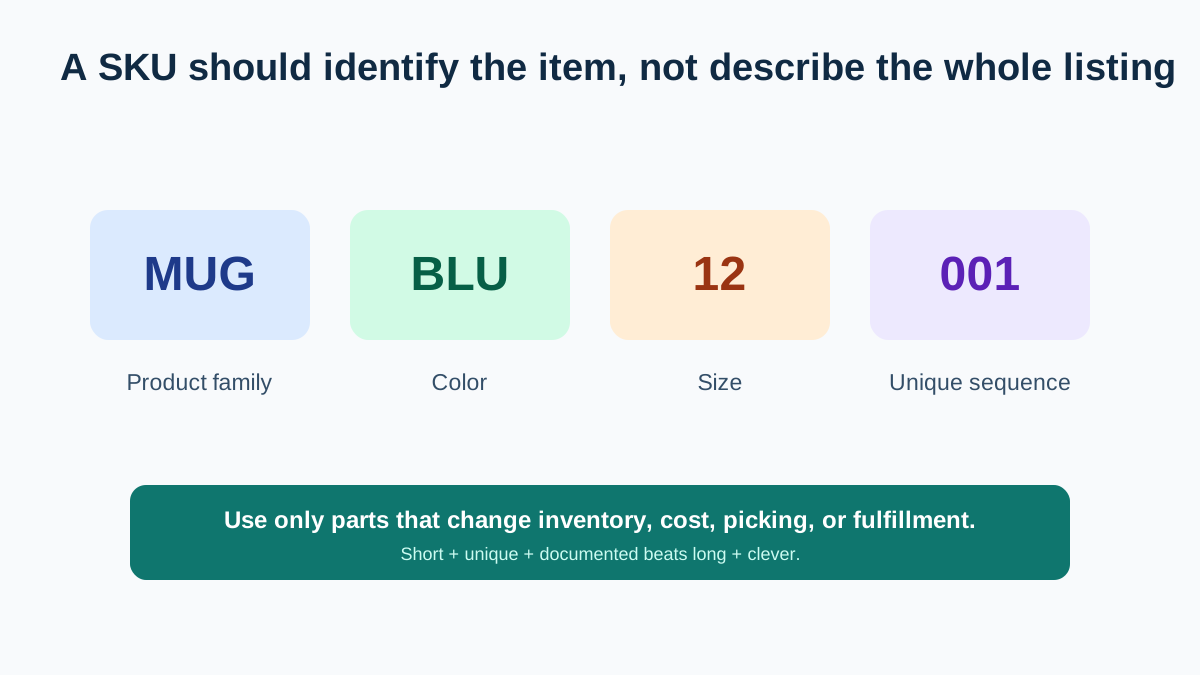
Use only the parts that help someone identify or fulfill the product. A practical pattern is channel or brand, product family, material, color, size, variation, and sequence. For example, ETS-MUG-CER-BLU-12OZ-STD-001 is readable, but it may be longer than a small shop needs. The shorter MUG-BLU-12-001 can work if the same code remains unique and documented.
Etsy recommends keeping SKUs short and manageable, using letters to distinguish codes, avoiding duplicates, and avoiding characters that can be confused or cause spreadsheet problems. Its current help page recommends four to eight characters for many inventory systems, while real multi-channel operations may need a slightly longer documented pattern. The correct length is the shortest code that remains unique and useful.
| Part | Example | Use it when |
|---|---|---|
| Product family | MUG | The team needs to recognize the base product. |
| Material | CER | Material changes cost, handling, or supplier. |
| Color | BLU | Color is stocked or fulfilled separately. |
| Size | 12 | Size changes inventory, cost, weight, or packaging. |
| Variation | STD | A finish, personalization, bundle, or option needs a distinct record. |
| Location | A2 | Storage location materially speeds picking. |
| Sequence | 001 | A stable suffix is needed to keep codes unique. |
Should every Etsy variation have its own SKU?
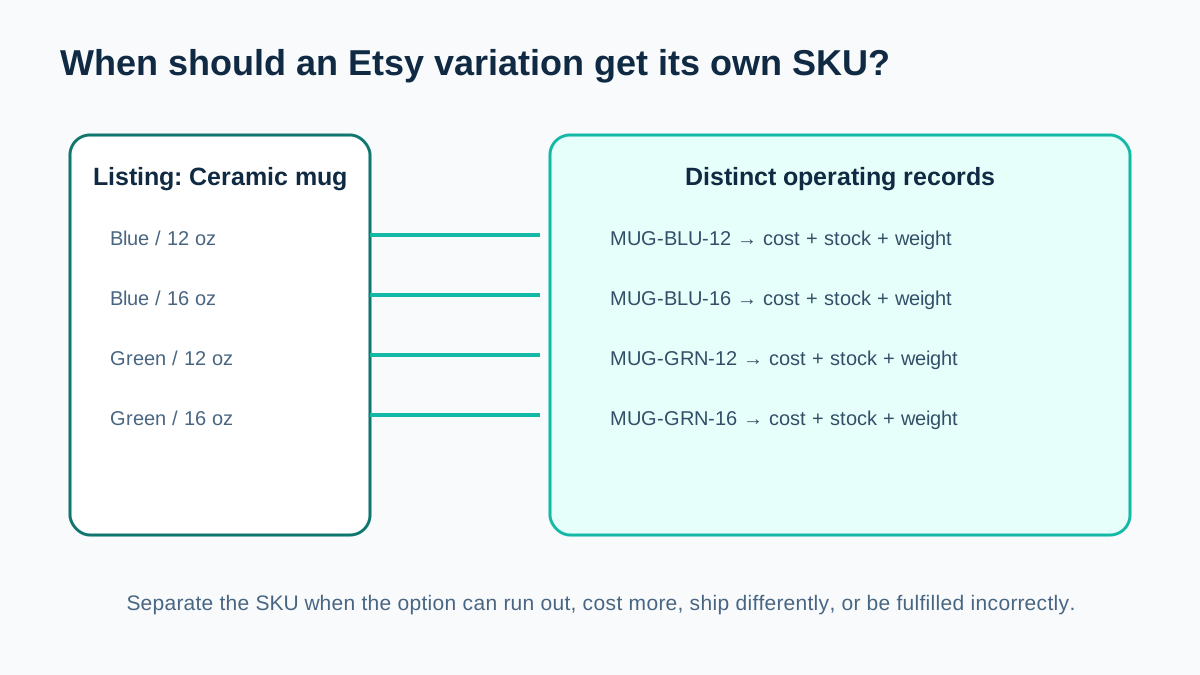
Give a variation its own SKU when it changes inventory, cost, supplier, weight, packaging, labor, fulfillment, or the record needed to replace it. Etsy's variation documentation allows sellers to vary SKU numbers along with price, quantity, and processing profile. A blue small item and a blue large item should not share a code if they consume different stock or have different costs.
Do not create separate SKUs only because the buyer-facing wording changes while the stocked item remains identical. Over-fragmenting creates maintenance work and increases duplicate or missing records. The operational test is simple: if the option can run out, cost more, ship differently, require different work, or be fulfilled incorrectly when confused, it deserves a distinct code.
| Variation change | Separate SKU? | Reason |
|---|---|---|
| Different size with different material use | Usually yes | Cost and inventory differ. |
| Different color stocked separately | Usually yes | Inventory and picking differ. |
| Personalized text only | Often no | The base stocked product may be identical; use the order personalization record. |
| Gift wrap add-on | Depends | Use a separate code if stock/cost must be tracked independently. |
| Digital variation | Check current Etsy capability | Etsy states listing variations are not currently supported for digital listings. |
How Etsy SKUs connect to profit and reorder decisions
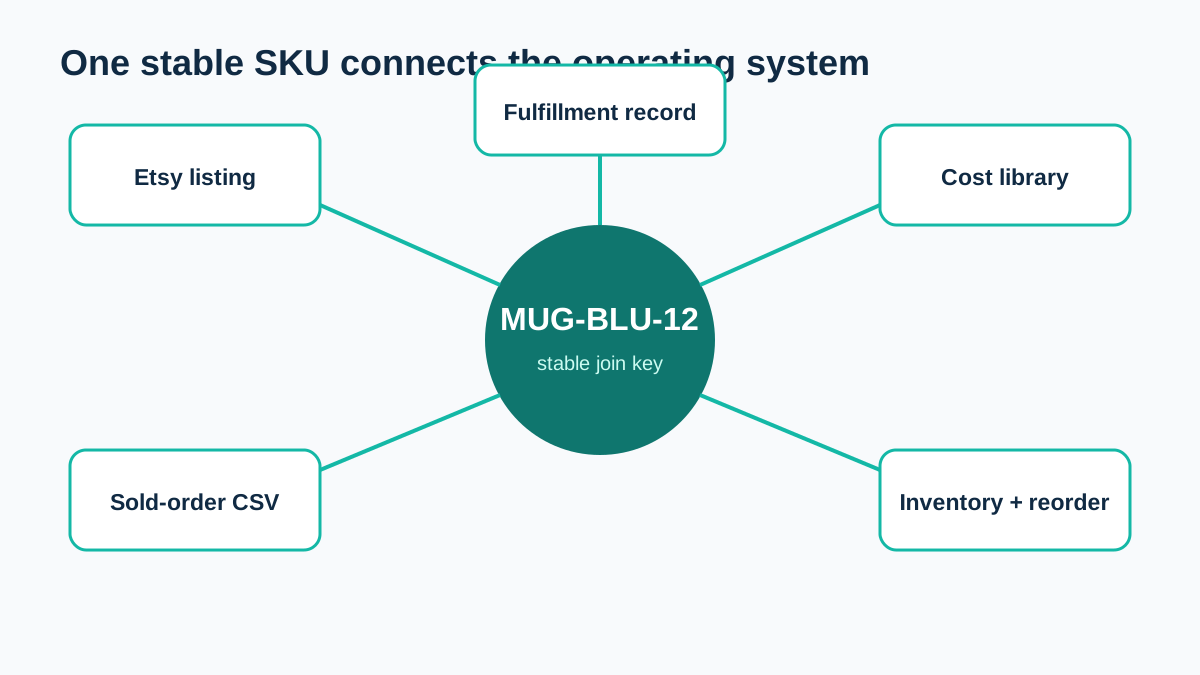
A consistent SKU turns a sales export into an operational dataset. When each sold row can join to one cost record, the seller can assign material, packaging, labor, shipping, transaction extras, target margin, and supplier information without guessing from a title. Missing or duplicated SKUs break that join and can make a profitable-looking report treat cost as zero.
The same key can connect sales quantity to reorder points. Record lead time, current stock, safety stock, and recent unit sales by SKU. Do not use a listing-level average when one size or color sells faster. A product can be in stock at the listing level while the best-selling variation is unavailable.
For multi-channel selling, decide whether one physical item keeps the same SKU across Etsy and a personal website. Reusing a stable code makes inventory and cost reconciliation easier, but only if each channel maps to the same physical product. Channel-specific prefixes can help when listings bundle or fulfill differently.
Etsy SKU mistakes that create bad data
The most damaging mistake is silent reuse: one code points to two materially different products. The second is blank variation SKUs, which pushes cost matching back to titles and option text. The third is encoding unstable information such as price in the code. When price changes, the SKU should normally remain stable because it identifies the item, not the offer at one moment.
Avoid ambiguous characters, spaces and spreadsheet-hostile punctuation. Etsy specifically warns that O and I can be confused with numbers and that commas or slashes may confuse programs such as Excel. Keep a short dictionary for product, material, color, and size abbreviations so two team members do not create BLU, BLUE, and B for the same attribute.
- Duplicate codes across different products.
- Blank SKUs on cost-changing variations.
- Price, date, or temporary campaign details embedded in the code.
- Inconsistent abbreviations for the same attribute.
- Codes that are too cryptic for fulfillment.
- Codes so long that staff stop using the system.
- Changing old SKUs without preserving a mapping table.
How to clean an existing Etsy SKU system
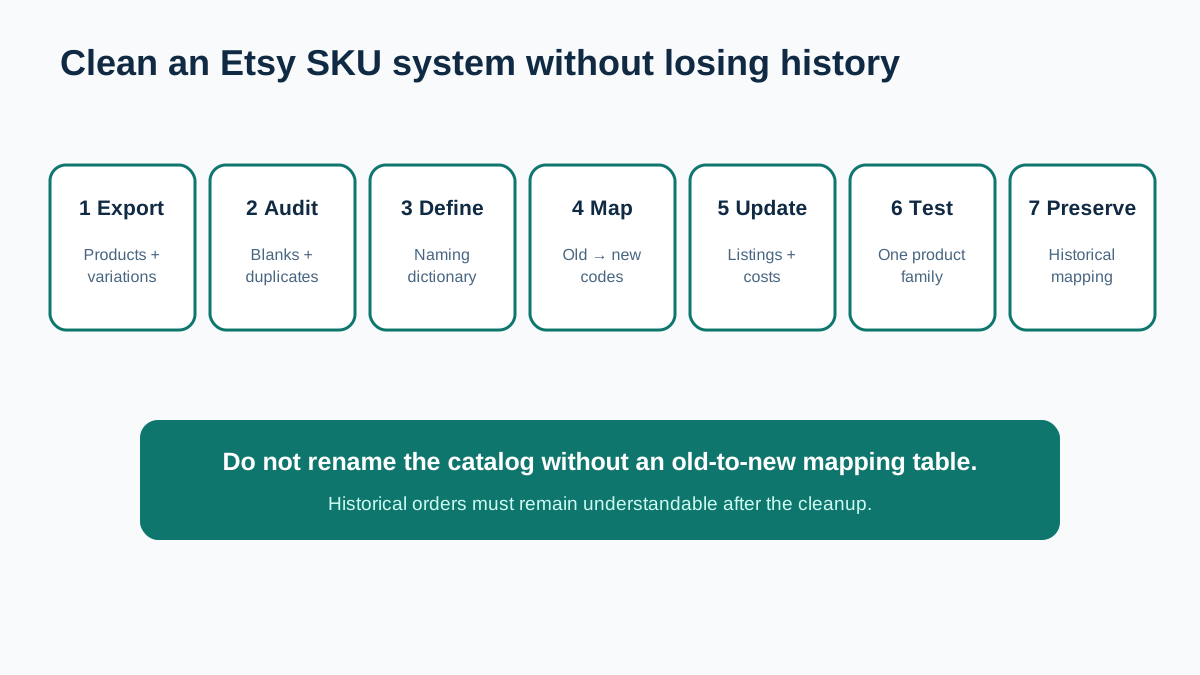
Export listing and sold-order data, then build a unique list of current SKUs and variation text. Flag blanks, duplicates, one SKU attached to different options, multiple SKUs attached to the same physical option, and sold SKUs without cost records. Choose one naming dictionary and assign replacement codes only after the mapping is reviewed.
Preserve an old-to-new mapping table so historical orders remain understandable. Update the listing, cost library, inventory sheet, supplier references, fulfillment instructions, and connected channels together. Test a small product family before changing the full catalog. The goal is not cosmetic consistency; it is reliable joins between listings, orders, stock, cost, and fulfillment.
- Export or list current product and variation SKUs.
- Flag blanks, duplicates, mismatches, and missing cost records.
- Define a short abbreviation dictionary and uniqueness rule.
- Create an old-to-new mapping table.
- Update one product family across listings, costs, inventory, and fulfillment.
- Test new orders and exports before scaling the cleanup.
- Keep the mapping table with historical operating records.
Etsy SKU FAQ
Can buyers see an Etsy SKU? Treat the SKU as an internal operations field rather than buyer-facing listing copy. Its purpose is inventory, identification, fulfillment, and record matching.
Does an Etsy SKU improve search ranking? A SKU is not a substitute for search-facing listing details. Use it to improve operations and data quality; use accurate titles, categories, attributes, tags, descriptions, and images for buyer discovery.
Can two Etsy listings use the same SKU? Reuse is only safe when both listings truly point to the same physical inventory record and the connected systems are designed for that mapping. Otherwise duplicates make cost, stock, and fulfillment ambiguous.
How long should an Etsy SKU be? Etsy recommends keeping codes short and notes that four to eight characters work for many inventory systems. Use the shortest code that stays unique and understandable for your operation.
Should personalized orders get unique SKUs? Usually the stocked base item keeps its SKU, while personalization belongs in the order workflow. Use a separate SKU when personalization changes the stocked component, material, labor class, or fulfillment record enough to require distinct tracking.
Sources and further reading
- Etsy Help: How to Use SKU for Your Inventory: Official SKU purpose, setup, naming examples, cross-channel use, and formatting tips.
- Etsy Help: How to Add Variations for Your Listings: Official variation SKU, price, quantity, processing, photo, and digital-listing notes.
- Etsy Help: How to Create a Listing: Official price, inventory, SKU, and variation field reference.
- Etsy Help: Download Sold Transaction CSV: Official export workflow and SKU availability in sold-order data.
Related Seller Profit Guard tools
- Calculate SKU-level Etsy profit: Connect each stable SKU to material, labor, packaging, shipping, and fees.
- Etsy variation SKU checklist: Audit blanks, duplicates, inconsistent options, and missing cost records.
- SKU cost library: Create and export a local cost record for each sellable SKU.
- Variant risk checker: Find sold variants that cannot be matched cleanly to a SKU and cost record.
Next step: Build a local SKU cost library.
This is operational planning help, not tax, accounting, legal, financial, or platform-policy advice. Review the Terms and disclaimer, and verify current platform rules and fee assumptions before changing prices.