What belongs in a TikTok Shop listing audit?
Last updated: 2026-08-09
Written and reviewed by Seller Profit Guard Editorial Team.
Record market, policy version, product identity, authorization, category and qualification, title, description, image manifest, required and category-specific attributes, variation matrix, seller SKUs, price and inventory consistency, packaged weight and dimensions, box contents, claims, creator consistency, owner, reviewer, decision, backup, stop rule, and restoration test.
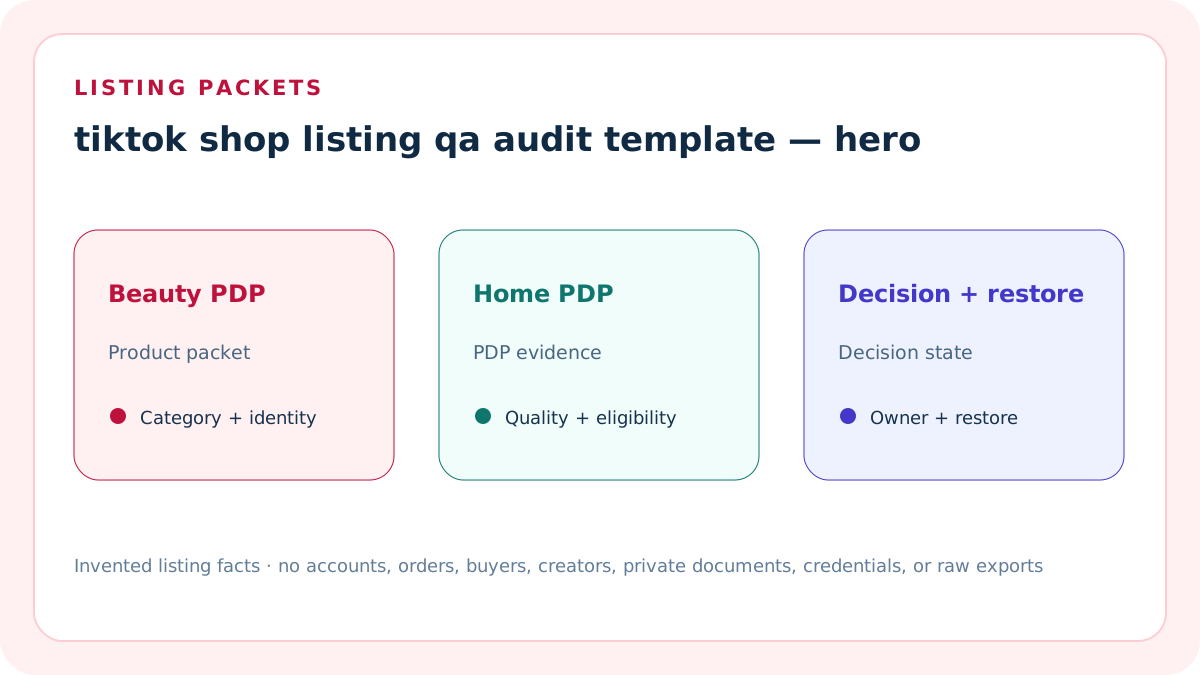
Add an eighteen-output masking registry
List the nine derived fields for each fixture and assert that every value becomes Unavailable on structural Block: score, title and description lengths, image coverage, two attribute coverages, SKU coverage, package/contents, and claims/match/approval.
Keep unit, integration, browser, and release checks aligned with this registry so a later interface change cannot leak partial scores from an invalid packet.
Record human authority and restoration
Name the owner, independent reviewer, source fingerprint, accepted packet, protected backup, stop rule, restoration result, and human role permitted to consider a downstream listing change.
State that the checker has no Seller Center credentials and cannot submit documents, create, edit, publish, synchronize, promote, advertise, or appeal a product.
Record product identity
Record market, policy version, product identity, authorization, category and qualification, title, description, image manifest, required and category-specific attributes, variation matrix, seller SKUs, price and inventory consistency, packaged weight and dimensions, box contents, claims, creator consistency, owner, reviewer, decision, backup, stop rule, and restoration test. Preserve prior value, new value, reason, source, approver, expected effect, actual effect, and rollback result. Checkpoint 1 in the listing audit packet records the product fact, category, field, source date, owner, reviewer, and accepted version before a result is interpreted.
For record product identity, keep product identity, authorization, category, title, description, media, attributes, category facts, variations, SKUs, package, contents, claims, qualification, market, policy version, ownership, stop rule, and restoration as separate evidence fields.
Record category and approval
Record market, policy version, product identity, authorization, category and qualification, title, description, image manifest, required and category-specific attributes, variation matrix, seller SKUs, price and inventory consistency, packaged weight and dimensions, box contents, claims, creator consistency, owner, reviewer, decision, backup, stop rule, and restoration test. Preserve prior value, new value, reason, source, approver, expected effect, actual effect, and rollback result. Checkpoint 2 in the listing audit packet records the product fact, category, field, source date, owner, reviewer, and accepted version before a result is interpreted.
For record category and approval, keep product identity, authorization, category, title, description, media, attributes, category facts, variations, SKUs, package, contents, claims, qualification, market, policy version, ownership, stop rule, and restoration as separate evidence fields.
Record title and description
Record market, policy version, product identity, authorization, category and qualification, title, description, image manifest, required and category-specific attributes, variation matrix, seller SKUs, price and inventory consistency, packaged weight and dimensions, box contents, claims, creator consistency, owner, reviewer, decision, backup, stop rule, and restoration test. Preserve prior value, new value, reason, source, approver, expected effect, actual effect, and rollback result. Checkpoint 3 in the listing audit packet records the product fact, category, field, source date, owner, reviewer, and accepted version before a result is interpreted.
For record title and description, keep product identity, authorization, category, title, description, media, attributes, category facts, variations, SKUs, package, contents, claims, qualification, market, policy version, ownership, stop rule, and restoration as separate evidence fields.
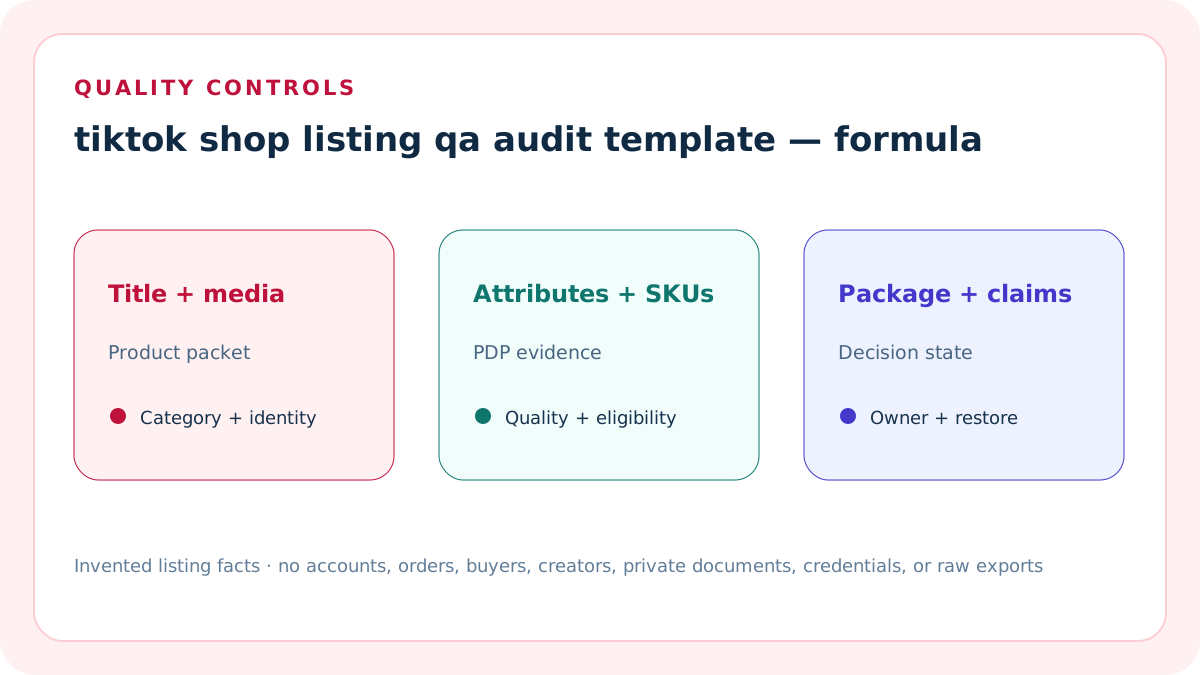
Record media manifest
Record market, policy version, product identity, authorization, category and qualification, title, description, image manifest, required and category-specific attributes, variation matrix, seller SKUs, price and inventory consistency, packaged weight and dimensions, box contents, claims, creator consistency, owner, reviewer, decision, backup, stop rule, and restoration test. Preserve prior value, new value, reason, source, approver, expected effect, actual effect, and rollback result. Checkpoint 4 in the listing audit packet records the product fact, category, field, source date, owner, reviewer, and accepted version before a result is interpreted.
For record media manifest, keep product identity, authorization, category, title, description, media, attributes, category facts, variations, SKUs, package, contents, claims, qualification, market, policy version, ownership, stop rule, and restoration as separate evidence fields.
Record attributes
Record market, policy version, product identity, authorization, category and qualification, title, description, image manifest, required and category-specific attributes, variation matrix, seller SKUs, price and inventory consistency, packaged weight and dimensions, box contents, claims, creator consistency, owner, reviewer, decision, backup, stop rule, and restoration test. Preserve prior value, new value, reason, source, approver, expected effect, actual effect, and rollback result. Checkpoint 5 in the listing audit packet records the product fact, category, field, source date, owner, reviewer, and accepted version before a result is interpreted.
For record attributes, keep product identity, authorization, category, title, description, media, attributes, category facts, variations, SKUs, package, contents, claims, qualification, market, policy version, ownership, stop rule, and restoration as separate evidence fields.
Record category facts
Record market, policy version, product identity, authorization, category and qualification, title, description, image manifest, required and category-specific attributes, variation matrix, seller SKUs, price and inventory consistency, packaged weight and dimensions, box contents, claims, creator consistency, owner, reviewer, decision, backup, stop rule, and restoration test. Preserve prior value, new value, reason, source, approver, expected effect, actual effect, and rollback result. Checkpoint 6 in the listing audit packet records the product fact, category, field, source date, owner, reviewer, and accepted version before a result is interpreted.
For record category facts, keep product identity, authorization, category, title, description, media, attributes, category facts, variations, SKUs, package, contents, claims, qualification, market, policy version, ownership, stop rule, and restoration as separate evidence fields.
Record variation SKUs
Record market, policy version, product identity, authorization, category and qualification, title, description, image manifest, required and category-specific attributes, variation matrix, seller SKUs, price and inventory consistency, packaged weight and dimensions, box contents, claims, creator consistency, owner, reviewer, decision, backup, stop rule, and restoration test. Preserve prior value, new value, reason, source, approver, expected effect, actual effect, and rollback result. Checkpoint 7 in the listing audit packet records the product fact, category, field, source date, owner, reviewer, and accepted version before a result is interpreted.
For record variation skus, keep product identity, authorization, category, title, description, media, attributes, category facts, variations, SKUs, package, contents, claims, qualification, market, policy version, ownership, stop rule, and restoration as separate evidence fields.
Record package and contents
Record market, policy version, product identity, authorization, category and qualification, title, description, image manifest, required and category-specific attributes, variation matrix, seller SKUs, price and inventory consistency, packaged weight and dimensions, box contents, claims, creator consistency, owner, reviewer, decision, backup, stop rule, and restoration test. Preserve prior value, new value, reason, source, approver, expected effect, actual effect, and rollback result. Checkpoint 8 in the listing audit packet records the product fact, category, field, source date, owner, reviewer, and accepted version before a result is interpreted.
For record package and contents, keep product identity, authorization, category, title, description, media, attributes, category facts, variations, SKUs, package, contents, claims, qualification, market, policy version, ownership, stop rule, and restoration as separate evidence fields.
Record claims and creator consistency
Record market, policy version, product identity, authorization, category and qualification, title, description, image manifest, required and category-specific attributes, variation matrix, seller SKUs, price and inventory consistency, packaged weight and dimensions, box contents, claims, creator consistency, owner, reviewer, decision, backup, stop rule, and restoration test. Preserve prior value, new value, reason, source, approver, expected effect, actual effect, and rollback result. Checkpoint 9 in the listing audit packet records the product fact, category, field, source date, owner, reviewer, and accepted version before a result is interpreted.
For record claims and creator consistency, keep product identity, authorization, category, title, description, media, attributes, category facts, variations, SKUs, package, contents, claims, qualification, market, policy version, ownership, stop rule, and restoration as separate evidence fields.
Record decision and restoration
Record market, policy version, product identity, authorization, category and qualification, title, description, image manifest, required and category-specific attributes, variation matrix, seller SKUs, price and inventory consistency, packaged weight and dimensions, box contents, claims, creator consistency, owner, reviewer, decision, backup, stop rule, and restoration test. Preserve prior value, new value, reason, source, approver, expected effect, actual effect, and rollback result. Checkpoint 10 in the listing audit packet records the product fact, category, field, source date, owner, reviewer, and accepted version before a result is interpreted.
For record decision and restoration, keep product identity, authorization, category, title, description, media, attributes, category facts, variations, SKUs, package, contents, claims, qualification, market, policy version, ownership, stop rule, and restoration as separate evidence fields.
Record product identity: verification test 1
Create a synthetic counterexample for record product identity. Change one field only, retain the prior packet, and show title, description, image, resolution, attribute, category-fact, SKU, package, contents, claim, approval, score, and Block, Review, or Ready effects.
Then reconcile the counterexample against current policy, Seller Center fields, product specification, authorization, media manifest, variation matrix, package measurement, claim substantiation, owner, reviewer, backup, stop-rule, and restoration evidence. Do not expose any account, listing, order, buyer, creator, document, or enforcement record.
Record category and approval: verification test 2
Create a synthetic counterexample for record category and approval. Change one field only, retain the prior packet, and show title, description, image, resolution, attribute, category-fact, SKU, package, contents, claim, approval, score, and Block, Review, or Ready effects.
Then reconcile the counterexample against current policy, Seller Center fields, product specification, authorization, media manifest, variation matrix, package measurement, claim substantiation, owner, reviewer, backup, stop-rule, and restoration evidence. Do not expose any account, listing, order, buyer, creator, document, or enforcement record.
Record title and description: verification test 3
Create a synthetic counterexample for record title and description. Change one field only, retain the prior packet, and show title, description, image, resolution, attribute, category-fact, SKU, package, contents, claim, approval, score, and Block, Review, or Ready effects.
Then reconcile the counterexample against current policy, Seller Center fields, product specification, authorization, media manifest, variation matrix, package measurement, claim substantiation, owner, reviewer, backup, stop-rule, and restoration evidence. Do not expose any account, listing, order, buyer, creator, document, or enforcement record.
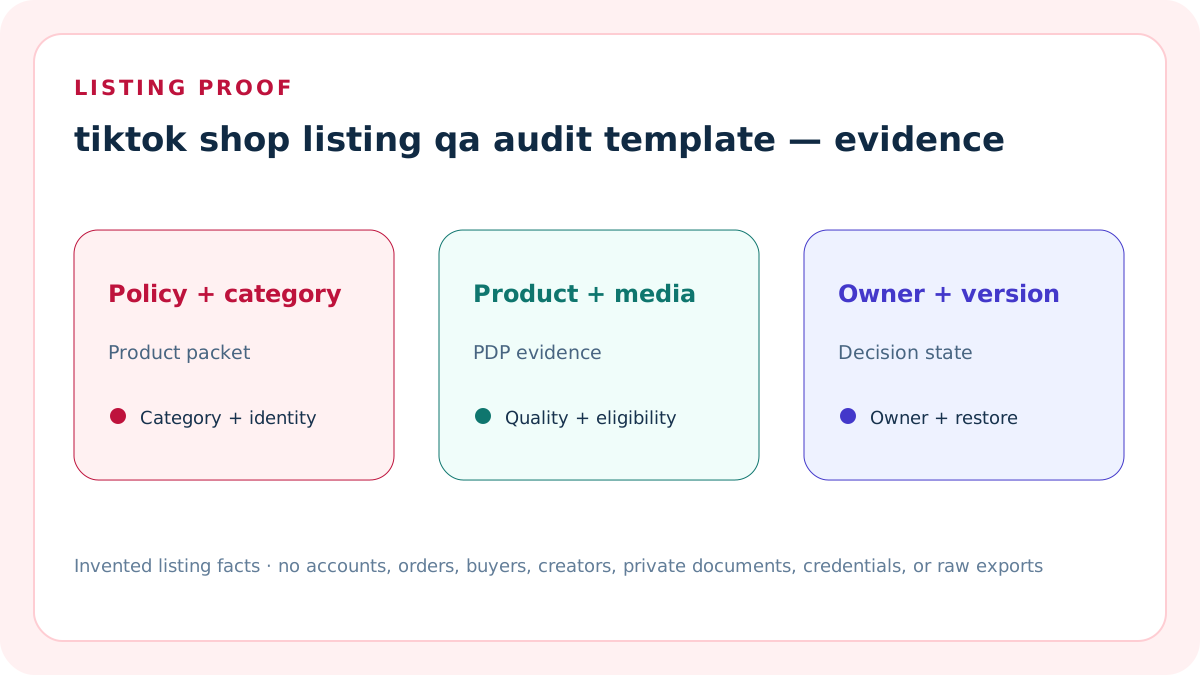
Record media manifest: verification test 4
Create a synthetic counterexample for record media manifest. Change one field only, retain the prior packet, and show title, description, image, resolution, attribute, category-fact, SKU, package, contents, claim, approval, score, and Block, Review, or Ready effects.
Then reconcile the counterexample against current policy, Seller Center fields, product specification, authorization, media manifest, variation matrix, package measurement, claim substantiation, owner, reviewer, backup, stop-rule, and restoration evidence. Do not expose any account, listing, order, buyer, creator, document, or enforcement record.
Record attributes: verification test 5
Create a synthetic counterexample for record attributes. Change one field only, retain the prior packet, and show title, description, image, resolution, attribute, category-fact, SKU, package, contents, claim, approval, score, and Block, Review, or Ready effects.
Then reconcile the counterexample against current policy, Seller Center fields, product specification, authorization, media manifest, variation matrix, package measurement, claim substantiation, owner, reviewer, backup, stop-rule, and restoration evidence. Do not expose any account, listing, order, buyer, creator, document, or enforcement record.
Record category facts: verification test 6
Create a synthetic counterexample for record category facts. Change one field only, retain the prior packet, and show title, description, image, resolution, attribute, category-fact, SKU, package, contents, claim, approval, score, and Block, Review, or Ready effects.
Then reconcile the counterexample against current policy, Seller Center fields, product specification, authorization, media manifest, variation matrix, package measurement, claim substantiation, owner, reviewer, backup, stop-rule, and restoration evidence. Do not expose any account, listing, order, buyer, creator, document, or enforcement record.
Record variation SKUs: verification test 7
Create a synthetic counterexample for record variation skus. Change one field only, retain the prior packet, and show title, description, image, resolution, attribute, category-fact, SKU, package, contents, claim, approval, score, and Block, Review, or Ready effects.
Then reconcile the counterexample against current policy, Seller Center fields, product specification, authorization, media manifest, variation matrix, package measurement, claim substantiation, owner, reviewer, backup, stop-rule, and restoration evidence. Do not expose any account, listing, order, buyer, creator, document, or enforcement record.
Record package and contents: verification test 8
Create a synthetic counterexample for record package and contents. Change one field only, retain the prior packet, and show title, description, image, resolution, attribute, category-fact, SKU, package, contents, claim, approval, score, and Block, Review, or Ready effects.
Then reconcile the counterexample against current policy, Seller Center fields, product specification, authorization, media manifest, variation matrix, package measurement, claim substantiation, owner, reviewer, backup, stop-rule, and restoration evidence. Do not expose any account, listing, order, buyer, creator, document, or enforcement record.
Record claims and creator consistency: verification test 9
Create a synthetic counterexample for record claims and creator consistency. Change one field only, retain the prior packet, and show title, description, image, resolution, attribute, category-fact, SKU, package, contents, claim, approval, score, and Block, Review, or Ready effects.
Then reconcile the counterexample against current policy, Seller Center fields, product specification, authorization, media manifest, variation matrix, package measurement, claim substantiation, owner, reviewer, backup, stop-rule, and restoration evidence. Do not expose any account, listing, order, buyer, creator, document, or enforcement record.
Record decision and restoration: verification test 10
Create a synthetic counterexample for record decision and restoration. Change one field only, retain the prior packet, and show title, description, image, resolution, attribute, category-fact, SKU, package, contents, claim, approval, score, and Block, Review, or Ready effects.
Then reconcile the counterexample against current policy, Seller Center fields, product specification, authorization, media manifest, variation matrix, package measurement, claim substantiation, owner, reviewer, backup, stop-rule, and restoration evidence. Do not expose any account, listing, order, buyer, creator, document, or enforcement record.
TikTok Shop Listing QA Audit Template: evidence exercise 1
Reperform record product identity using the invented beauty and home packets. Keep the same control families but use category-specific evidence: ingredient, quantity, and shade for beauty; material, dimensions, capacity, hardware, and use environment for home.
Stress title length, description length, image count, resolution, main-image quality, required attributes, category facts, variation SKU coverage, package evidence, contents, claims, approval, owner, conflict, or restoration one at a time. A high score cannot certify the product or predict platform approval.
TikTok Shop Listing QA Audit Template: evidence exercise 2
Reperform record category and approval using the invented beauty and home packets. Keep the same control families but use category-specific evidence: ingredient, quantity, and shade for beauty; material, dimensions, capacity, hardware, and use environment for home.
Stress title length, description length, image count, resolution, main-image quality, required attributes, category facts, variation SKU coverage, package evidence, contents, claims, approval, owner, conflict, or restoration one at a time. A high score cannot certify the product or predict platform approval.
TikTok Shop Listing QA Audit Template: evidence exercise 3
Reperform record title and description using the invented beauty and home packets. Keep the same control families but use category-specific evidence: ingredient, quantity, and shade for beauty; material, dimensions, capacity, hardware, and use environment for home.
Stress title length, description length, image count, resolution, main-image quality, required attributes, category facts, variation SKU coverage, package evidence, contents, claims, approval, owner, conflict, or restoration one at a time. A high score cannot certify the product or predict platform approval.
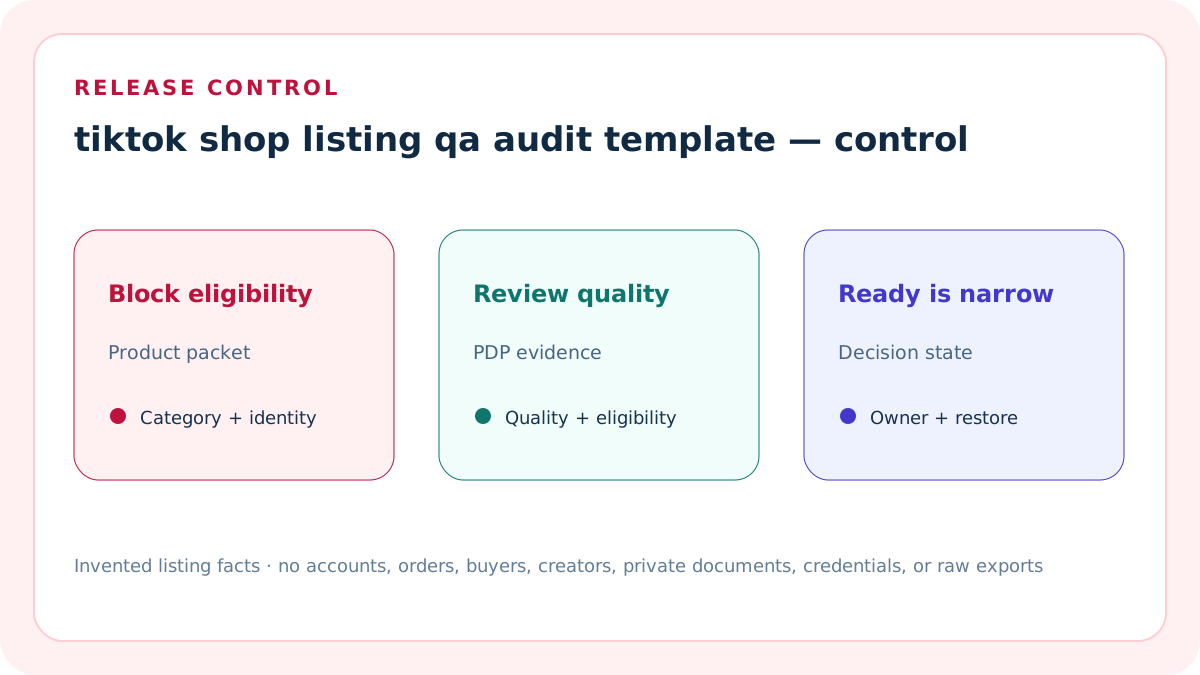
TikTok Shop Listing QA Audit Template: evidence exercise 4
Reperform record media manifest using the invented beauty and home packets. Keep the same control families but use category-specific evidence: ingredient, quantity, and shade for beauty; material, dimensions, capacity, hardware, and use environment for home.
Stress title length, description length, image count, resolution, main-image quality, required attributes, category facts, variation SKU coverage, package evidence, contents, claims, approval, owner, conflict, or restoration one at a time. A high score cannot certify the product or predict platform approval.
TikTok Shop Listing QA Audit Template: evidence exercise 5
Reperform record attributes using the invented beauty and home packets. Keep the same control families but use category-specific evidence: ingredient, quantity, and shade for beauty; material, dimensions, capacity, hardware, and use environment for home.
Stress title length, description length, image count, resolution, main-image quality, required attributes, category facts, variation SKU coverage, package evidence, contents, claims, approval, owner, conflict, or restoration one at a time. A high score cannot certify the product or predict platform approval.
TikTok Shop Listing QA Audit Template: evidence exercise 6
Reperform record category facts using the invented beauty and home packets. Keep the same control families but use category-specific evidence: ingredient, quantity, and shade for beauty; material, dimensions, capacity, hardware, and use environment for home.
Stress title length, description length, image count, resolution, main-image quality, required attributes, category facts, variation SKU coverage, package evidence, contents, claims, approval, owner, conflict, or restoration one at a time. A high score cannot certify the product or predict platform approval.
TikTok Shop Listing QA Audit Template: evidence exercise 7
Reperform record variation skus using the invented beauty and home packets. Keep the same control families but use category-specific evidence: ingredient, quantity, and shade for beauty; material, dimensions, capacity, hardware, and use environment for home.
Stress title length, description length, image count, resolution, main-image quality, required attributes, category facts, variation SKU coverage, package evidence, contents, claims, approval, owner, conflict, or restoration one at a time. A high score cannot certify the product or predict platform approval.
TikTok Shop Listing QA Audit Template: evidence exercise 8
Reperform record package and contents using the invented beauty and home packets. Keep the same control families but use category-specific evidence: ingredient, quantity, and shade for beauty; material, dimensions, capacity, hardware, and use environment for home.
Stress title length, description length, image count, resolution, main-image quality, required attributes, category facts, variation SKU coverage, package evidence, contents, claims, approval, owner, conflict, or restoration one at a time. A high score cannot certify the product or predict platform approval.
TikTok Shop Listing QA Audit Template: evidence exercise 9
Reperform record claims and creator consistency using the invented beauty and home packets. Keep the same control families but use category-specific evidence: ingredient, quantity, and shade for beauty; material, dimensions, capacity, hardware, and use environment for home.
Stress title length, description length, image count, resolution, main-image quality, required attributes, category facts, variation SKU coverage, package evidence, contents, claims, approval, owner, conflict, or restoration one at a time. A high score cannot certify the product or predict platform approval.
TikTok Shop Listing QA Audit Template: evidence exercise 10
Reperform record decision and restoration using the invented beauty and home packets. Keep the same control families but use category-specific evidence: ingredient, quantity, and shade for beauty; material, dimensions, capacity, hardware, and use environment for home.
Stress title length, description length, image count, resolution, main-image quality, required attributes, category facts, variation SKU coverage, package evidence, contents, claims, approval, owner, conflict, or restoration one at a time. A high score cannot certify the product or predict platform approval.
Sources and further reading
- TikTok Shop Academy: Product Detail Pages and Listing Quality Guidelines: Official Poor, Fair, and Good listing-quality tiers and PDP guidance.
- TikTok Shop Academy: Product Listing Policy: Current official title, description, category, brand, media, box contents, package, price, language, bundle, and unique variation requirements.
- TikTok Shop Academy: Select the right product category: Official category accuracy, attributes, and qualification guidance.
- TikTok Shop Academy: Product Quality Policy: Current official physical-product, label, listing-match, safety, inspection, and corrective-action requirements.
- TikTok Shop Academy: Restricted Products Policy: Current official category-level, product-level, and invite-only qualification boundaries.
- TikTok Shop Academy: Prohibited Products Policy: Current official US prohibited-product boundary.
- TikTok Shop Academy: Beauty and Personal Care Requirements: Current official beauty qualification, label, shelf-life, safety-substantiation, and prohibited-product boundaries.
- TikTok Shop Academy: Beauty Listing Guidelines: Current official beauty title, attribute, ingredient, use, warning, image, and claim guidance.
- Seller Profit Guard methodology: Evidence, privacy, validation, correction, release, monitoring, and restoration controls.
Related Seller Profit Guard tools
- TikTok Shop Listing QA Checker: Run the browser-local beauty versus home listing packet audit.
- TikTok Shop Listing QA Checklist: Use the legacy lightweight listing preflight.
- Image Specification Checklist: Review media dimensions and formats separately.
- Variation SKU Generator: Build a synthetic variation matrix separately.
- Methodology: Review evidence, privacy, validation, correction, monitoring, and restoration.
- Data Privacy: Protect accounts, listings, orders, buyers, creators, documents, and raw exports.
- TikTok Shop Listing QA Formula and Inputs: Define the PDP, category, title, description, image, attribute, variation, package, contents, claim, approval, and evidence checks.
- TikTok Shop Listing QA: Beauty Example: Reperform a complete invented beauty-product packet with ingredient, quantity, shade, media, package, contents, and claim controls.
- TikTok Shop Listing QA: Home Product Example: Audit a distinct home-product packet emphasizing material, dimensions, capacity, assembly, use environment, package, hardware, and claims.
- TikTok Shop Listing QA Mistakes: Diagnose title stuffing, wrong category, repeated images, thin descriptions, missing attributes, merged products, package errors, and unsupported claims.
- TikTok Shop Listing QA Data Sources: Map every QA field to Seller Center, policy, product specification, media manifest, SKU matrix, package test, claim file, or explicit assumption.
- Safe TikTok Shop Listing QA Thresholds: Separate prohibited and approval Blocks, completeness Review items, and narrowly defined Ready evidence before a product packet moves forward.
- Beauty vs Home TikTok Shop Listing QA: Compare category-specific evidence at one PDP grain while preserving the distinct facts, claims, package data, and qualification needs of each product.
- Weekly TikTok Shop Listing QA Review: Turn listing edits, policy versions, category changes, media, attributes, SKU, package, claims, exceptions, and restoration into a recurring control loop.
- Interpret TikTok Shop Listing QA Without False Approval: Explain what Ready, Review, Block, and completeness scores establish, which claims remain unverified, and when a seller must escalate the evidence.
Next step: Open Seller Profit Guard.
This is operational planning help, not tax, accounting, legal, financial, or platform-policy advice. Review the Terms and disclaimer, and verify current platform rules and fee assumptions before changing prices.