How does Shopify plan allocation change for a high-volume group?
Last updated: 2026-07-31
Written and reviewed by Seller Profit Guard Editorial Team.
Keep the bill, dates, currency, report definitions, and basis unchanged. A group with USD 8,400 of USD 10,000 net sales receives 84% of the normalized USD 105 charge, or USD 88.20. Across 180 retained orders, plan cost is USD 0.49 per order, subject to the seller's threshold and evidence policy.
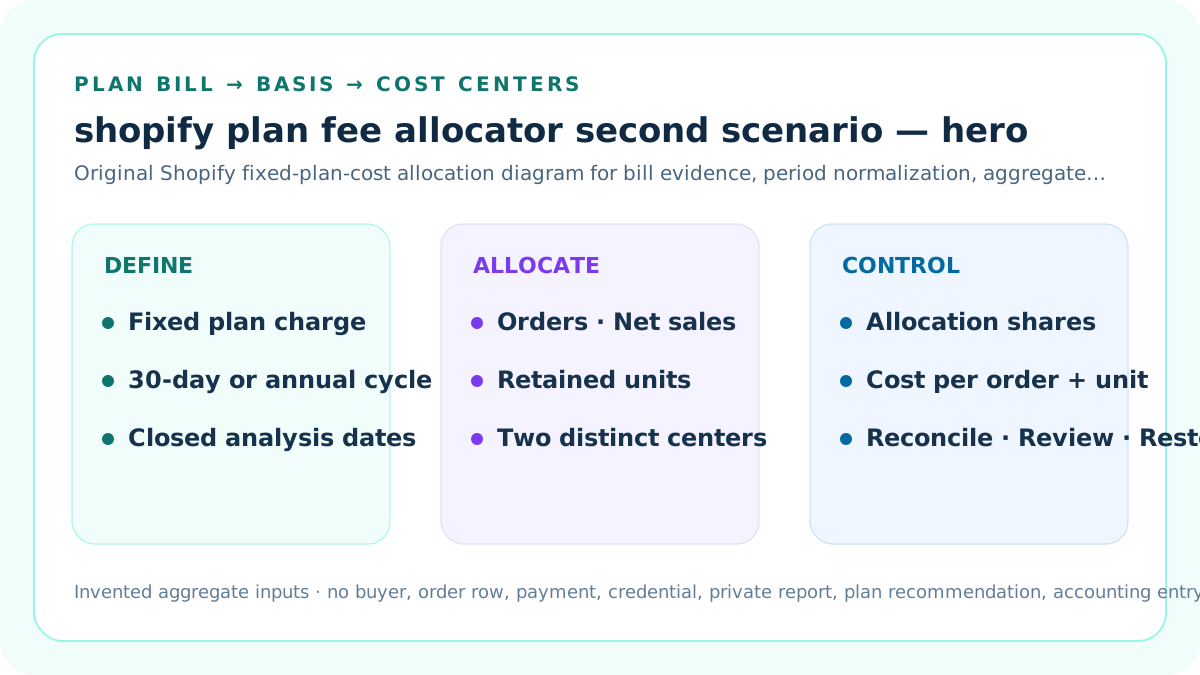
Hold the source contract constant
Reuse the verified charge, dates, currency, report definitions, reversal treatment, and allocation method from the low-volume example. The high-volume allocation ledger records the fixed charge, billing cycle, closed dates, cost-center boundary, aggregate basis, currency, threshold, source, reviewer, exception, and prior accepted result needed for a comparable large-group allocation.
At checkpoint 1, state the exact formula, denominator definition, accepted source, excluded bill items, report filters, reversal policy, evidence owner, downstream consumer, stop condition, monitoring signal, and restoration reference. Keep fixed-cost allocation separate from payment fees, app charges, plan selection, complete profit, accounting, and tax.
Measure high-volume activity
Use 180 retained orders, USD 8,400 net sales, and 270 retained units for the second non-overlapping cost center. The high-volume allocation ledger records the fixed charge, billing cycle, closed dates, cost-center boundary, aggregate basis, currency, threshold, source, reviewer, exception, and prior accepted result needed for a comparable large-group allocation.
At checkpoint 2, state the exact formula, denominator definition, accepted source, excluded bill items, report filters, reversal policy, evidence owner, downstream consumer, stop condition, monitoring signal, and restoration reference. Keep fixed-cost allocation separate from payment fees, app charges, plan selection, complete profit, accounting, and tax.
Calculate the 84 percent share
Divide USD 8,400 by the combined USD 10,000 net-sales basis. The high-volume allocation ledger records the fixed charge, billing cycle, closed dates, cost-center boundary, aggregate basis, currency, threshold, source, reviewer, exception, and prior accepted result needed for a comparable large-group allocation.
At checkpoint 3, state the exact formula, denominator definition, accepted source, excluded bill items, report filters, reversal policy, evidence owner, downstream consumer, stop condition, monitoring signal, and restoration reference. Keep fixed-cost allocation separate from payment fees, app charges, plan selection, complete profit, accounting, and tax.
Allocate USD 88.20
Multiply the normalized USD 105 charge by 84% and reconcile it with the first center's USD 16.80. The high-volume allocation ledger records the fixed charge, billing cycle, closed dates, cost-center boundary, aggregate basis, currency, threshold, source, reviewer, exception, and prior accepted result needed for a comparable large-group allocation.
At checkpoint 4, state the exact formula, denominator definition, accepted source, excluded bill items, report filters, reversal policy, evidence owner, downstream consumer, stop condition, monitoring signal, and restoration reference. Keep fixed-cost allocation separate from payment fees, app charges, plan selection, complete profit, accounting, and tax.
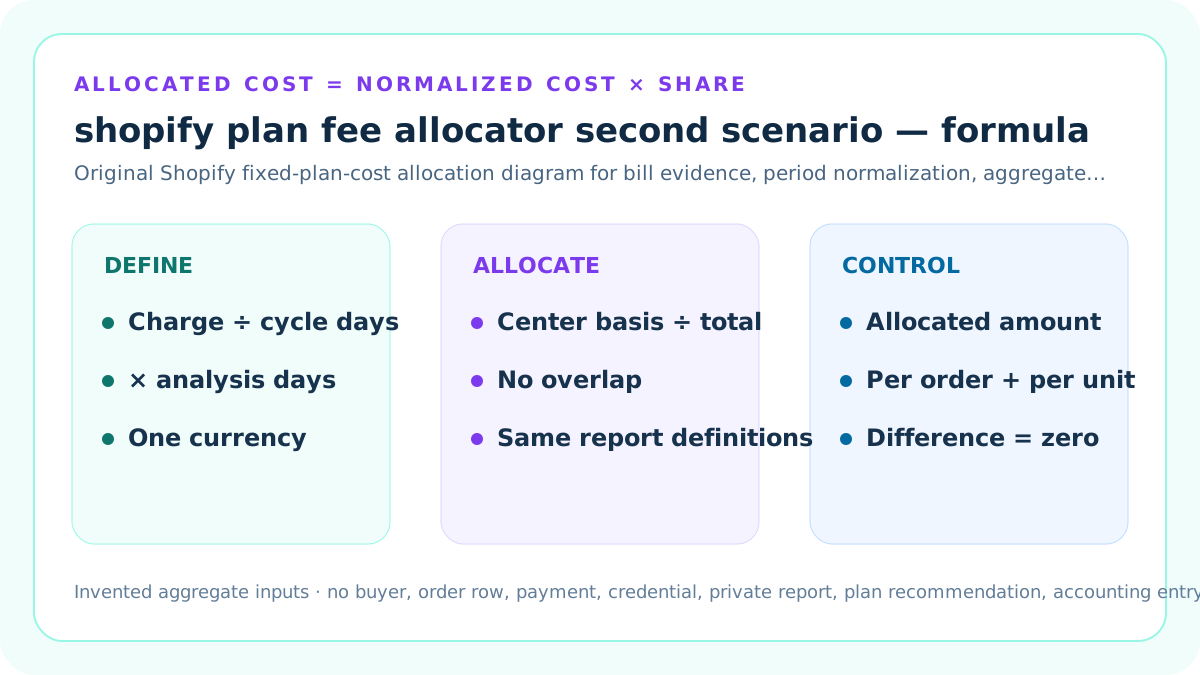
Read the order result
Divide USD 88.20 by 180 retained orders to obtain USD 0.49 per order at displayed precision. The high-volume allocation ledger records the fixed charge, billing cycle, closed dates, cost-center boundary, aggregate basis, currency, threshold, source, reviewer, exception, and prior accepted result needed for a comparable large-group allocation.
At checkpoint 5, state the exact formula, denominator definition, accepted source, excluded bill items, report filters, reversal policy, evidence owner, downstream consumer, stop condition, monitoring signal, and restoration reference. Keep fixed-cost allocation separate from payment fees, app charges, plan selection, complete profit, accounting, and tax.
Read the unit result
Divide the same allocation by 270 retained units to obtain approximately USD 0.33 per retained unit. The high-volume allocation ledger records the fixed charge, billing cycle, closed dates, cost-center boundary, aggregate basis, currency, threshold, source, reviewer, exception, and prior accepted result needed for a comparable large-group allocation.
At checkpoint 6, state the exact formula, denominator definition, accepted source, excluded bill items, report filters, reversal policy, evidence owner, downstream consumer, stop condition, monitoring signal, and restoration reference. Keep fixed-cost allocation separate from payment fees, app charges, plan selection, complete profit, accounting, and tax.
Inspect basket effects
Recognize that net-sales weighting and different sales per order create a different per-order cost from the low-volume center. The high-volume allocation ledger records the fixed charge, billing cycle, closed dates, cost-center boundary, aggregate basis, currency, threshold, source, reviewer, exception, and prior accepted result needed for a comparable large-group allocation.
At checkpoint 7, state the exact formula, denominator definition, accepted source, excluded bill items, report filters, reversal policy, evidence owner, downstream consumer, stop condition, monitoring signal, and restoration reference. Keep fixed-cost allocation separate from payment fees, app charges, plan selection, complete profit, accounting, and tax.
Keep scale from becoming causation
Do not claim the larger allocation proves proportional infrastructure use or a removable cost saving. The high-volume allocation ledger records the fixed charge, billing cycle, closed dates, cost-center boundary, aggregate basis, currency, threshold, source, reviewer, exception, and prior accepted result needed for a comparable large-group allocation.
At checkpoint 8, state the exact formula, denominator definition, accepted source, excluded bill items, report filters, reversal policy, evidence owner, downstream consumer, stop condition, monitoring signal, and restoration reference. Keep fixed-cost allocation separate from payment fees, app charges, plan selection, complete profit, accounting, and tax.
Shopify Plan Fee Allocation for a High-Volume Group: billing integrity control
Tie the fixed plan charge to one authorized Settings > Plan or bill record, actual cycle, currency, credits, and plan-change history. Control 1 names the invariant, protected evidence pointer, reviewer question, pass condition, exception owner, correction deadline, and restoration proof for a comparable large-group allocation.
A pricing page or remembered amount is not the store's bill. Preserve aggregate-only public fixtures and prohibit buyer, customer, order, address, payment, staff, credential, bank, private report, or raw CSV data from examples and screenshots.
Shopify Plan Fee Allocation for a High-Volume Group: period integrity control
Tie both cost centers to identical closed dates, time zone, report versions, reversal maturity, and analysis days. Control 2 names the invariant, protected evidence pointer, reviewer question, pass condition, exception owner, correction deadline, and restoration proof for a comparable large-group allocation.
Invoice date, calendar month, and rolling dashboard are not interchangeable. Preserve aggregate-only public fixtures and prohibit buyer, customer, order, address, payment, staff, credential, bank, private report, or raw CSV data from examples and screenshots.
Shopify Plan Fee Allocation for a High-Volume Group: cost-center integrity control
Tie each aggregate to a distinct, non-overlapping channel, product family, or SKU group with an explicit coverage population. Control 3 names the invariant, protected evidence pointer, reviewer question, pass condition, exception owner, correction deadline, and restoration proof for a comparable large-group allocation.
A nested product subset cannot be paired with its containing channel. Preserve aggregate-only public fixtures and prohibit buyer, customer, order, address, payment, staff, credential, bank, private report, or raw CSV data from examples and screenshots.
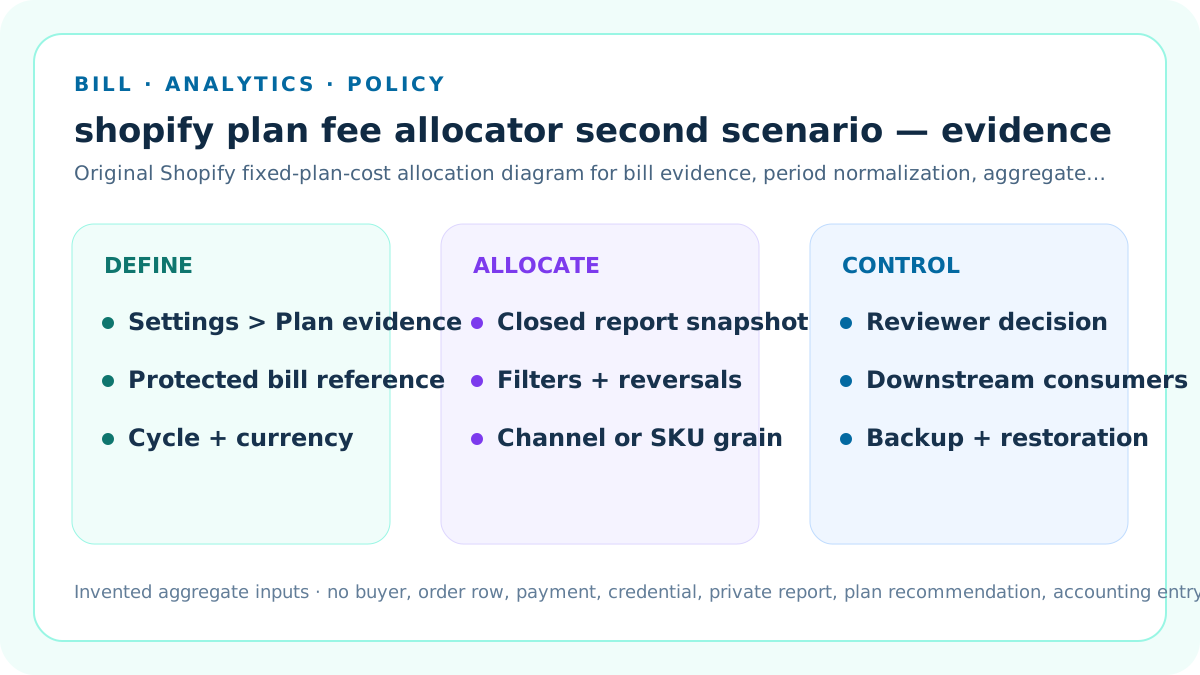
Shopify Plan Fee Allocation for a High-Volume Group: denominator integrity control
Tie orders, net sales, and retained units to current report definitions, filters, exclusions, and source fingerprints. Control 4 names the invariant, protected evidence pointer, reviewer question, pass condition, exception owner, correction deadline, and restoration proof for a comparable large-group allocation.
Row count and gross sales are not silent substitutes. Preserve aggregate-only public fixtures and prohibit buyer, customer, order, address, payment, staff, credential, bank, private report, or raw CSV data from examples and screenshots.
Shopify Plan Fee Allocation for a High-Volume Group: human authority control
Assign bill, analytics, allocation, review, stop, downstream, and restoration owners. Control 5 names the invariant, protected evidence pointer, reviewer question, pass condition, exception owner, correction deadline, and restoration proof for a comparable large-group allocation.
Ready cannot change a plan, price, budget, cost record, or accounting entry. Preserve aggregate-only public fixtures and prohibit buyer, customer, order, address, payment, staff, credential, bank, private report, or raw CSV data from examples and screenshots.
Shopify Plan Fee Allocation for a High-Volume Group: rollback integrity control
Preserve prior inputs, policy, outputs, consumers, backups, reconciliation, and tested restoration. Control 6 names the invariant, protected evidence pointer, reviewer question, pass condition, exception owner, correction deadline, and restoration proof for a comparable large-group allocation.
Never overwrite the only accepted allocation history. Preserve aggregate-only public fixtures and prohibit buyer, customer, order, address, payment, staff, credential, bank, private report, or raw CSV data from examples and screenshots.
Hold the source contract constant: sensitivity lab 1
Reperform the invented USD 105 allocation. Reuse the verified charge, dates, currency, report definitions, reversal treatment, and allocation method from the low-volume example. Change only one billing-cycle, period, cost-center, order, net-sales, retained-unit, currency, threshold, reversal, source, or policy assumption; preserve every other input and record shares, allocated amounts, unit costs, decision, owner, and rollback.
Test 30-day and annual normalization, order, net-sales, and retained-unit drivers, low and high volume, threshold breaches, overlapping groups, row-grain errors, late reversals, invalid periods, currency mismatch, short context, weak scope, and declared conflicts. An apparently favorable answer cannot replace complete evidence.
Measure high-volume activity: sensitivity lab 2
Reperform the invented USD 105 allocation. Use 180 retained orders, USD 8,400 net sales, and 270 retained units for the second non-overlapping cost center. Change only one billing-cycle, period, cost-center, order, net-sales, retained-unit, currency, threshold, reversal, source, or policy assumption; preserve every other input and record shares, allocated amounts, unit costs, decision, owner, and rollback.
Test 30-day and annual normalization, order, net-sales, and retained-unit drivers, low and high volume, threshold breaches, overlapping groups, row-grain errors, late reversals, invalid periods, currency mismatch, short context, weak scope, and declared conflicts. An apparently favorable answer cannot replace complete evidence.
Calculate the 84 percent share: sensitivity lab 3
Reperform the invented USD 105 allocation. Divide USD 8,400 by the combined USD 10,000 net-sales basis. Change only one billing-cycle, period, cost-center, order, net-sales, retained-unit, currency, threshold, reversal, source, or policy assumption; preserve every other input and record shares, allocated amounts, unit costs, decision, owner, and rollback.
Test 30-day and annual normalization, order, net-sales, and retained-unit drivers, low and high volume, threshold breaches, overlapping groups, row-grain errors, late reversals, invalid periods, currency mismatch, short context, weak scope, and declared conflicts. An apparently favorable answer cannot replace complete evidence.
Allocate USD 88.20: sensitivity lab 4
Reperform the invented USD 105 allocation. Multiply the normalized USD 105 charge by 84% and reconcile it with the first center's USD 16.80. Change only one billing-cycle, period, cost-center, order, net-sales, retained-unit, currency, threshold, reversal, source, or policy assumption; preserve every other input and record shares, allocated amounts, unit costs, decision, owner, and rollback.
Test 30-day and annual normalization, order, net-sales, and retained-unit drivers, low and high volume, threshold breaches, overlapping groups, row-grain errors, late reversals, invalid periods, currency mismatch, short context, weak scope, and declared conflicts. An apparently favorable answer cannot replace complete evidence.
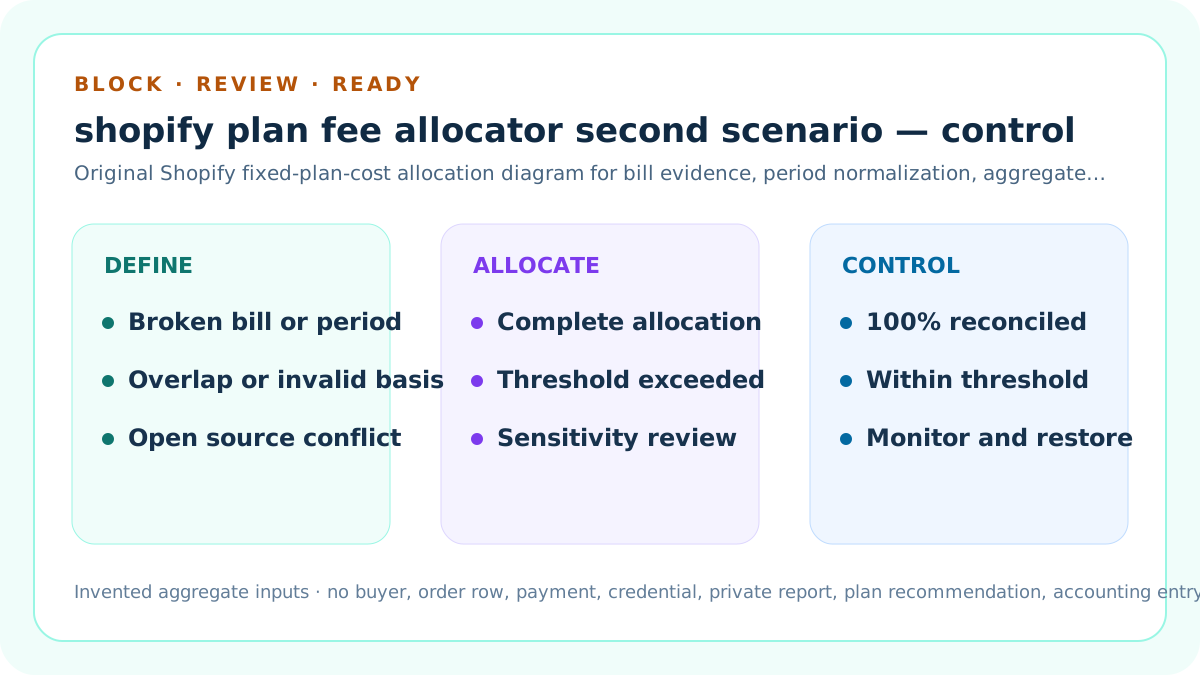
Read the order result: sensitivity lab 5
Reperform the invented USD 105 allocation. Divide USD 88.20 by 180 retained orders to obtain USD 0.49 per order at displayed precision. Change only one billing-cycle, period, cost-center, order, net-sales, retained-unit, currency, threshold, reversal, source, or policy assumption; preserve every other input and record shares, allocated amounts, unit costs, decision, owner, and rollback.
Test 30-day and annual normalization, order, net-sales, and retained-unit drivers, low and high volume, threshold breaches, overlapping groups, row-grain errors, late reversals, invalid periods, currency mismatch, short context, weak scope, and declared conflicts. An apparently favorable answer cannot replace complete evidence.
Read the unit result: sensitivity lab 6
Reperform the invented USD 105 allocation. Divide the same allocation by 270 retained units to obtain approximately USD 0.33 per retained unit. Change only one billing-cycle, period, cost-center, order, net-sales, retained-unit, currency, threshold, reversal, source, or policy assumption; preserve every other input and record shares, allocated amounts, unit costs, decision, owner, and rollback.
Test 30-day and annual normalization, order, net-sales, and retained-unit drivers, low and high volume, threshold breaches, overlapping groups, row-grain errors, late reversals, invalid periods, currency mismatch, short context, weak scope, and declared conflicts. An apparently favorable answer cannot replace complete evidence.
Inspect basket effects: sensitivity lab 7
Reperform the invented USD 105 allocation. Recognize that net-sales weighting and different sales per order create a different per-order cost from the low-volume center. Change only one billing-cycle, period, cost-center, order, net-sales, retained-unit, currency, threshold, reversal, source, or policy assumption; preserve every other input and record shares, allocated amounts, unit costs, decision, owner, and rollback.
Test 30-day and annual normalization, order, net-sales, and retained-unit drivers, low and high volume, threshold breaches, overlapping groups, row-grain errors, late reversals, invalid periods, currency mismatch, short context, weak scope, and declared conflicts. An apparently favorable answer cannot replace complete evidence.
Keep scale from becoming causation: sensitivity lab 8
Reperform the invented USD 105 allocation. Do not claim the larger allocation proves proportional infrastructure use or a removable cost saving. Change only one billing-cycle, period, cost-center, order, net-sales, retained-unit, currency, threshold, reversal, source, or policy assumption; preserve every other input and record shares, allocated amounts, unit costs, decision, owner, and rollback.
Test 30-day and annual normalization, order, net-sales, and retained-unit drivers, low and high volume, threshold breaches, overlapping groups, row-grain errors, late reversals, invalid periods, currency mismatch, short context, weak scope, and declared conflicts. An apparently favorable answer cannot replace complete evidence.
Shopify Plan Fee Allocation for a High-Volume Group: intent-specific implementation walkthrough
high-volume allocation ledger checkpoint 1 addresses hold the source contract constant for a comparable large-group allocation. Reuse the verified charge, dates, currency, report definitions, reversal treatment, and allocation method from the low-volume example. Record the accepted value, rejected alternative, official or protected source, report definition, reviewer, next review date, monitoring trigger, affected consumer, and restoration reference.
high-volume allocation ledger checkpoint 2 addresses measure high-volume activity for a comparable large-group allocation. Use 180 retained orders, USD 8,400 net sales, and 270 retained units for the second non-overlapping cost center. Record the accepted value, rejected alternative, official or protected source, report definition, reviewer, next review date, monitoring trigger, affected consumer, and restoration reference.
high-volume allocation ledger checkpoint 3 addresses calculate the 84 percent share for a comparable large-group allocation. Divide USD 8,400 by the combined USD 10,000 net-sales basis. Record the accepted value, rejected alternative, official or protected source, report definition, reviewer, next review date, monitoring trigger, affected consumer, and restoration reference.
high-volume allocation ledger checkpoint 4 addresses allocate usd 88.20 for a comparable large-group allocation. Multiply the normalized USD 105 charge by 84% and reconcile it with the first center's USD 16.80. Record the accepted value, rejected alternative, official or protected source, report definition, reviewer, next review date, monitoring trigger, affected consumer, and restoration reference.
high-volume allocation ledger checkpoint 5 addresses read the order result for a comparable large-group allocation. Divide USD 88.20 by 180 retained orders to obtain USD 0.49 per order at displayed precision. Record the accepted value, rejected alternative, official or protected source, report definition, reviewer, next review date, monitoring trigger, affected consumer, and restoration reference.
high-volume allocation ledger checkpoint 6 addresses read the unit result for a comparable large-group allocation. Divide the same allocation by 270 retained units to obtain approximately USD 0.33 per retained unit. Record the accepted value, rejected alternative, official or protected source, report definition, reviewer, next review date, monitoring trigger, affected consumer, and restoration reference.
high-volume allocation ledger checkpoint 7 addresses inspect basket effects for a comparable large-group allocation. Recognize that net-sales weighting and different sales per order create a different per-order cost from the low-volume center. Record the accepted value, rejected alternative, official or protected source, report definition, reviewer, next review date, monitoring trigger, affected consumer, and restoration reference.
high-volume allocation ledger checkpoint 8 addresses keep scale from becoming causation for a comparable large-group allocation. Do not claim the larger allocation proves proportional infrastructure use or a removable cost saving. Record the accepted value, rejected alternative, official or protected source, report definition, reviewer, next review date, monitoring trigger, affected consumer, and restoration reference.
For a comparable large-group allocation, require strict decimal and safe-integer literals, declared charge and activity bounds, real source-review and policy dates, a minimum closed evidence duration, and all nine release confirmations. The analysis days must meet the entered minimum, the source review must cover the final day of the declared evidence month, and the governing policy must be effective no later than the month's first day. When this high-volume allocation ledger Blocks, quarantine the normalized plan cost, both allocation shares, allocated amounts, per-order, per-unit, per-sales results, and reconciliation difference as Unavailable until the governing evidence is repaired and independently reviewed.
Second scenario: retained-order allocation
Keep the same USD 105 normalized plan charge and the same two closed cost centers, but select retained orders as the declared driver. A has 20 of 200 retained orders and therefore receives 10%, or USD 10.50. B has 180 of 200 and receives 90%, or USD 94.50. Dividing each allocation by its own retained orders yields the same unrounded USD 0.525 plan cost per order for both centers.
This scenario isolates the policy effect of the denominator. It does not replace the net-sales result or imply that order weighting is inherently better. Preserve both runs, the reason the driver changed, the reviewer, and the affected downstream consumers so a later analyst can distinguish policy sensitivity from source drift.
Second-scenario stress and reversal tests
Stress the order-weighted scenario by moving one late reversal from pending to fully reversed only after the seller's maturity rule closes. Recompute both retained-order counts under the same dates and filters; do not alter net sales or retained units silently. If the cost-center population overlaps, if one center uses a rolling window, or if the source review predates month end, the result Blocks rather than producing a new share.
Next compare retained-unit weighting: 30 of 300 units again gives A 10%, while B receives 90%. The matching shares are a property of this invented fixture, not a universal relationship. A real seller must retain report fingerprints, exclusions, reversal treatment, evidence-month chronology, prior accepted output, and restoration proof for every scenario.
Evidence boundary for a comparable large-group allocation
The public fixture uses an invented USD 105 fixed plan charge over 30 days. Cost center A contains 20 retained orders, USD 1,600 net sales, and 30 retained units; B contains 180 orders, USD 8,400 net sales, and 270 units. Net-sales weighting allocates USD 16.80 and USD 88.20, which reconcile to USD 105.
These aggregates demonstrate deterministic allocation only. They cannot prove Shopify prices, causal infrastructure use, a preferable plan, product profitability, payment or app fees, savings from closing a channel, accounting presentation, tax treatment, legal compliance, or authorization to change a subscription, report, cost record, price, or budget.
Release, monitor, and restore the high-volume allocation ledger
Block invalid bill, cycle, period, method, currency, cost-center, aggregate, source, scope, ownership, or open-conflict evidence. Review a complete allocation above the seller-planned plan-cost-per-order threshold. Ready clears only the entered fixed-cost allocation and threshold.
Before indexing or downstream reuse, preserve backups and pass type, unit, integration, build, content, similarity, SEO, image, link, privacy, mobile, deployment, and live checks. Monitor new bills, plan changes, aggregate definitions, reversals, cost-center coverage, unit costs, threshold state, consumers, and restoration readiness without claiming same-day traffic or revenue causality.
Sources and further reading
- Shopify Help: billing cycles and thresholds: Official 30-day and annual subscription-cycle, effective monthly price, bill-date, and threshold-bill context.
- Shopify Help: Shopify charges on bills: Official plan-subscription charge and Settings > Plan evidence location.
- Shopify Help: sales reports: Official order, net-sales, sales-channel, product, line-item, and reversal definitions.
- Shopify Help: order reports: Official order-volume and product-order report context.
- Seller Profit Guard methodology: Deterministic assumptions, evidence precedence, privacy, release, correction, monitoring, and rollback.
Related Seller Profit Guard tools
- Shopify Plan Fee Allocator: Allocate one verified fixed plan charge across two aggregate cost centers.
- Shopify Plan and Fee Reference: Keep plan, app, payment, and gateway reference assumptions in a separate order-level model.
- Overhead Allocation Calculator: Allocate broader shared overhead under a separate cost-driver policy.
- Seller Tool Subscription Audit: Inventory recurring software charges before allocating them.
- Methodology: Review evidence, calculation, correction, release, monitoring, and rollback.
- Data Privacy: Keep bills, reports, order rows, and buyer data outside public fixtures.
- Shopify Plan Fee Allocation Formula and Inputs: Define the fixed plan charge, billing cycle, closed period, two cost centers, allocation basis, aggregates, thresholds, and evidence before assigning cost.
- Shopify Plan Fee Allocation Example for a Low-Volume Group: Calculate a low-volume cost center's share, allocated charge, per-order amount, per-unit amount, threshold state, and reconciliation.
- Shopify Plan Fee Allocation Mistakes and Corrections: Diagnose billing-cycle, denominator, overlap, row-grain, reversal, currency, fee-stack, precision, authority, and history errors.
- Reliable Data Sources for Shopify Plan Fee Allocation: Map the plan charge, cycle, dates, orders, net sales, units, channel or product grain, currency, reversals, and ownership to primary evidence.
- Decision Thresholds for Shopify Plan Cost per Order: Separate complete reconciliation, seller-planned target, stress, review, and block conditions without inventing a Shopify threshold.
- Shopify Plan Fee Allocation: Low Volume vs High Volume: Compare both cost centers at the same grain under order, net-sales, and retained-unit methods and identify the variable that changes the result.
- A Repeatable Shopify Plan Fee Allocation Routine: Turn the allocator into a dated close process with evidence capture, exception aging, review, downstream staging, monitoring, and restoration.
- How to Interpret Shopify Plan Cost Allocation: Explain what allocation shares and cost-per-order results mean, what they cannot prove, and how sensitivity and uncertainty affect the next action.
- Shopify Plan Fee Allocation Audit Checklist and Change Log: Provide a standalone bill, period, cost-center, aggregate, formula, decision, approval, deployment, monitoring, and restoration checklist.
Next step: Open Seller Profit Guard.
This is operational planning help, not tax, accounting, legal, financial, or platform-policy advice. Review the Terms and disclaimer, and verify current platform rules and fee assumptions before changing prices.