What is a reliable refund matching routine?
Last updated: 2026-07-31
Written and reviewed by Seller Profit Guard Editorial Team.
Fingerprint order and refund sources, confirm grain, normalize timestamps and currencies, match direct references, rebuild original and refund components, add prior matches, test cumulative limits and line coverage, quarantine exceptions, reconcile counts and currency totals, obtain review, monitor schema drift and duplicate events, and retain a tested rollback path.
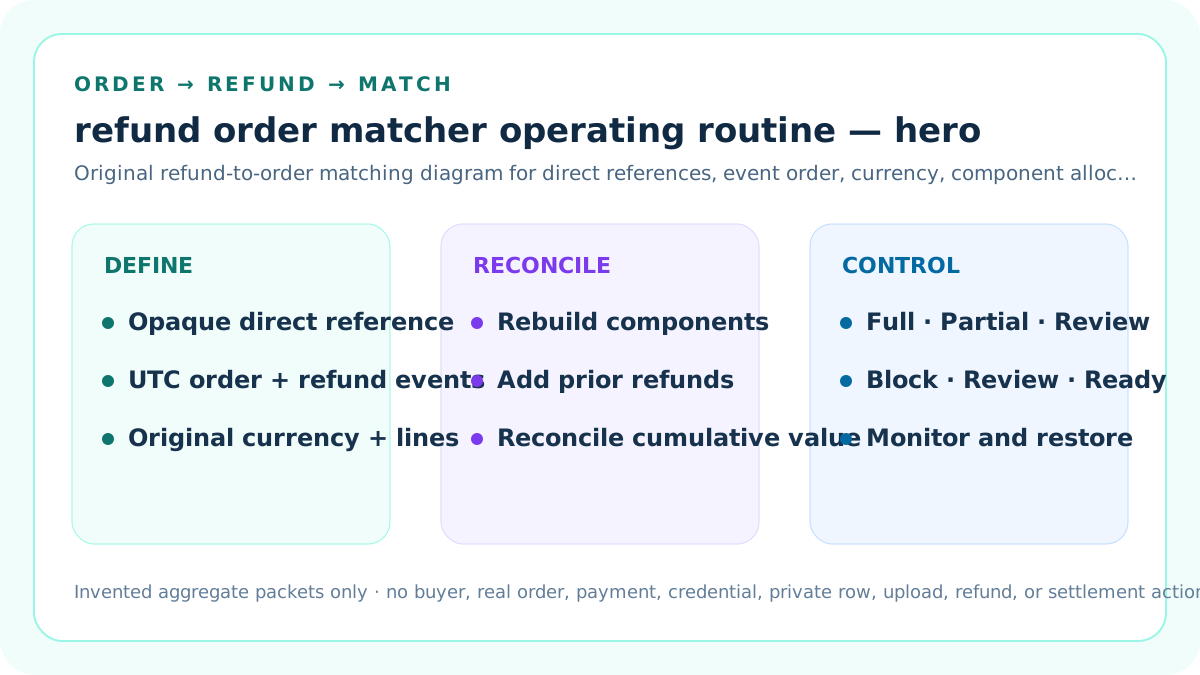
Fingerprint inputs
Detect order and refund drift. The matching runbook records event grain, protected source fingerprints, invented opaque references, UTC order and refund events, currencies, original and refund components, prior matched refunds, cumulative amount, remainder, line coverage, tolerance, window, owner, reviewer, output hash, and prior accepted rule needed for a repeatable refund reconciliation cycle.
At checkpoint 1, reperform the applicable relationship, timing, currency, component, cumulative, coverage, or evidence decision. State whether the packet supports Ready, Review, or Block and identify what still requires protected platform, payment, return, cancellation, settlement, accounting, tax, legal, or privacy evidence.
Confirm grain
Prevent mixed event levels. The matching runbook records event grain, protected source fingerprints, invented opaque references, UTC order and refund events, currencies, original and refund components, prior matched refunds, cumulative amount, remainder, line coverage, tolerance, window, owner, reviewer, output hash, and prior accepted rule needed for a repeatable refund reconciliation cycle.
At checkpoint 2, reperform the applicable relationship, timing, currency, component, cumulative, coverage, or evidence decision. State whether the packet supports Ready, Review, or Block and identify what still requires protected platform, payment, return, cancellation, settlement, accounting, tax, legal, or privacy evidence.
Normalize events
Use canonical UTC. The matching runbook records event grain, protected source fingerprints, invented opaque references, UTC order and refund events, currencies, original and refund components, prior matched refunds, cumulative amount, remainder, line coverage, tolerance, window, owner, reviewer, output hash, and prior accepted rule needed for a repeatable refund reconciliation cycle.
At checkpoint 3, reperform the applicable relationship, timing, currency, component, cumulative, coverage, or evidence decision. State whether the packet supports Ready, Review, or Block and identify what still requires protected platform, payment, return, cancellation, settlement, accounting, tax, legal, or privacy evidence.
Confirm currencies
Keep units explicit. The matching runbook records event grain, protected source fingerprints, invented opaque references, UTC order and refund events, currencies, original and refund components, prior matched refunds, cumulative amount, remainder, line coverage, tolerance, window, owner, reviewer, output hash, and prior accepted rule needed for a repeatable refund reconciliation cycle.
At checkpoint 4, reperform the applicable relationship, timing, currency, component, cumulative, coverage, or evidence decision. State whether the packet supports Ready, Review, or Block and identify what still requires protected platform, payment, return, cancellation, settlement, accounting, tax, legal, or privacy evidence.
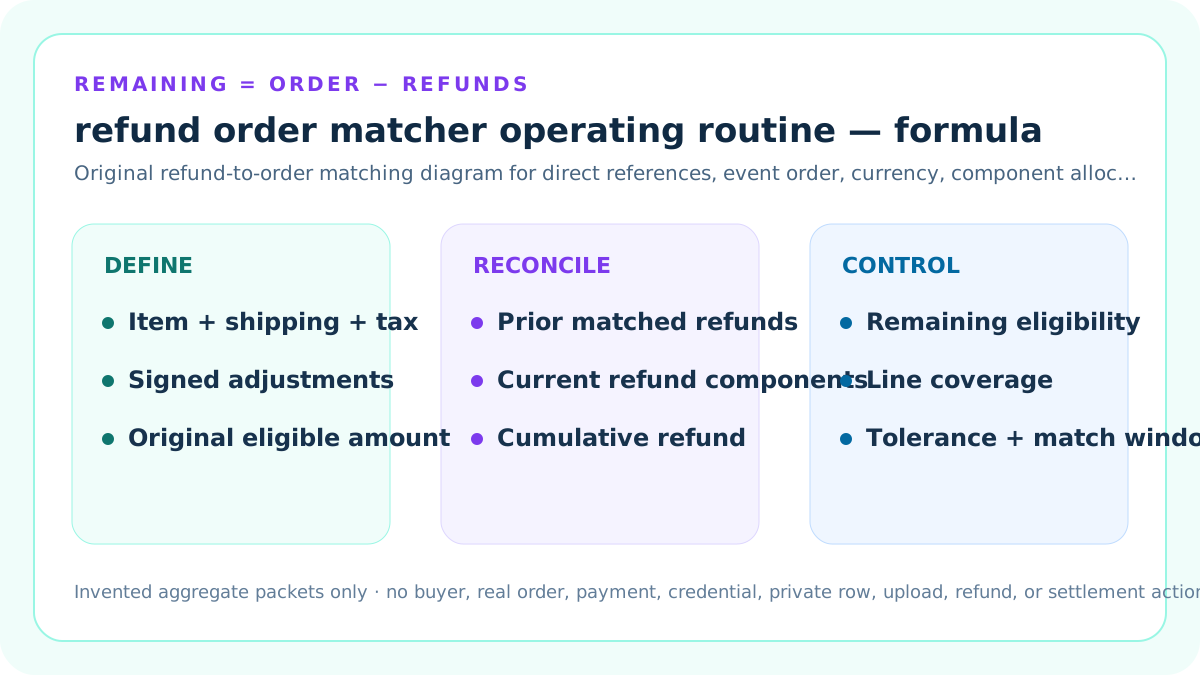
Match references
Prefer direct relationships. The matching runbook records event grain, protected source fingerprints, invented opaque references, UTC order and refund events, currencies, original and refund components, prior matched refunds, cumulative amount, remainder, line coverage, tolerance, window, owner, reviewer, output hash, and prior accepted rule needed for a repeatable refund reconciliation cycle.
At checkpoint 5, reperform the applicable relationship, timing, currency, component, cumulative, coverage, or evidence decision. State whether the packet supports Ready, Review, or Block and identify what still requires protected platform, payment, return, cancellation, settlement, accounting, tax, legal, or privacy evidence.
Rebuild components
Explain every total. The matching runbook records event grain, protected source fingerprints, invented opaque references, UTC order and refund events, currencies, original and refund components, prior matched refunds, cumulative amount, remainder, line coverage, tolerance, window, owner, reviewer, output hash, and prior accepted rule needed for a repeatable refund reconciliation cycle.
At checkpoint 6, reperform the applicable relationship, timing, currency, component, cumulative, coverage, or evidence decision. State whether the packet supports Ready, Review, or Block and identify what still requires protected platform, payment, return, cancellation, settlement, accounting, tax, legal, or privacy evidence.
Load prior matches
Reconstruct cumulative allocation. The matching runbook records event grain, protected source fingerprints, invented opaque references, UTC order and refund events, currencies, original and refund components, prior matched refunds, cumulative amount, remainder, line coverage, tolerance, window, owner, reviewer, output hash, and prior accepted rule needed for a repeatable refund reconciliation cycle.
At checkpoint 7, reperform the applicable relationship, timing, currency, component, cumulative, coverage, or evidence decision. State whether the packet supports Ready, Review, or Block and identify what still requires protected platform, payment, return, cancellation, settlement, accounting, tax, legal, or privacy evidence.
Test thresholds
Exercise Block and Review. The matching runbook records event grain, protected source fingerprints, invented opaque references, UTC order and refund events, currencies, original and refund components, prior matched refunds, cumulative amount, remainder, line coverage, tolerance, window, owner, reviewer, output hash, and prior accepted rule needed for a repeatable refund reconciliation cycle.
At checkpoint 8, reperform the applicable relationship, timing, currency, component, cumulative, coverage, or evidence decision. State whether the packet supports Ready, Review, or Block and identify what still requires protected platform, payment, return, cancellation, settlement, accounting, tax, legal, or privacy evidence.
Quarantine exceptions
Keep uncertain events separate. The matching runbook records event grain, protected source fingerprints, invented opaque references, UTC order and refund events, currencies, original and refund components, prior matched refunds, cumulative amount, remainder, line coverage, tolerance, window, owner, reviewer, output hash, and prior accepted rule needed for a repeatable refund reconciliation cycle.
At checkpoint 9, reperform the applicable relationship, timing, currency, component, cumulative, coverage, or evidence decision. State whether the packet supports Ready, Review, or Block and identify what still requires protected platform, payment, return, cancellation, settlement, accounting, tax, legal, or privacy evidence.
Reconcile batch
Compare counts and currency totals. The matching runbook records event grain, protected source fingerprints, invented opaque references, UTC order and refund events, currencies, original and refund components, prior matched refunds, cumulative amount, remainder, line coverage, tolerance, window, owner, reviewer, output hash, and prior accepted rule needed for a repeatable refund reconciliation cycle.
At checkpoint 10, reperform the applicable relationship, timing, currency, component, cumulative, coverage, or evidence decision. State whether the packet supports Ready, Review, or Block and identify what still requires protected platform, payment, return, cancellation, settlement, accounting, tax, legal, or privacy evidence.
Monitor changes
Track duplicates and schema drift. The matching runbook records event grain, protected source fingerprints, invented opaque references, UTC order and refund events, currencies, original and refund components, prior matched refunds, cumulative amount, remainder, line coverage, tolerance, window, owner, reviewer, output hash, and prior accepted rule needed for a repeatable refund reconciliation cycle.
At checkpoint 11, reperform the applicable relationship, timing, currency, component, cumulative, coverage, or evidence decision. State whether the packet supports Ready, Review, or Block and identify what still requires protected platform, payment, return, cancellation, settlement, accounting, tax, legal, or privacy evidence.
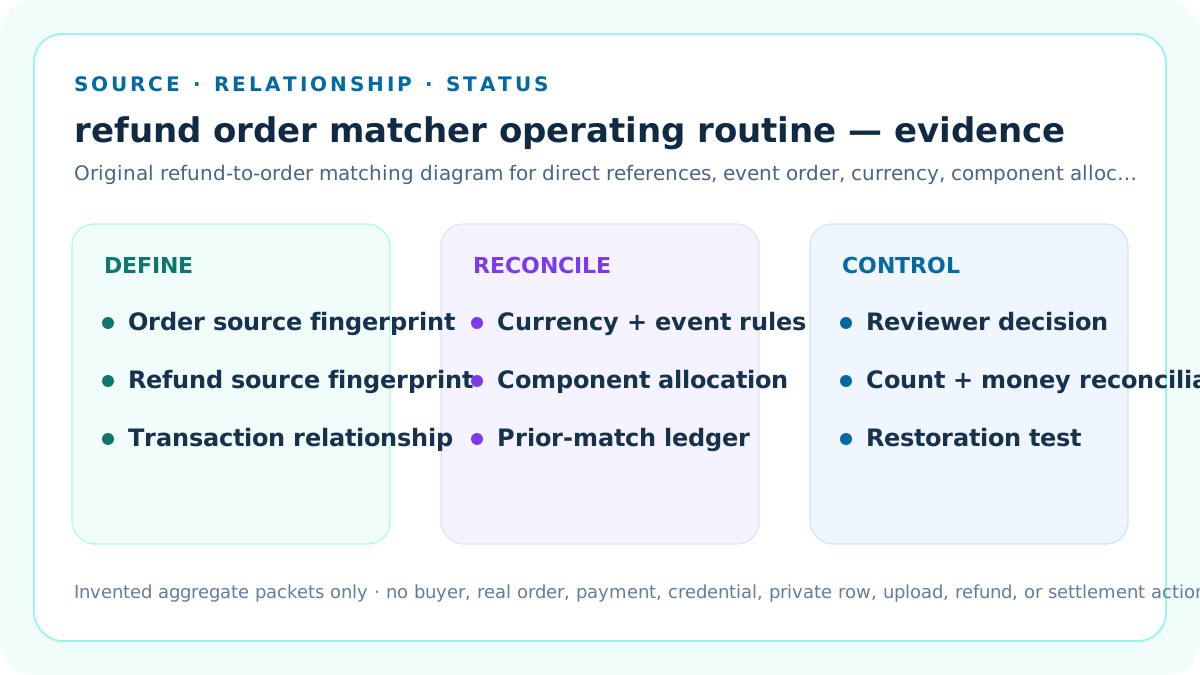
Restore prior run
Keep rollback executable. The matching runbook records event grain, protected source fingerprints, invented opaque references, UTC order and refund events, currencies, original and refund components, prior matched refunds, cumulative amount, remainder, line coverage, tolerance, window, owner, reviewer, output hash, and prior accepted rule needed for a repeatable refund reconciliation cycle.
At checkpoint 12, reperform the applicable relationship, timing, currency, component, cumulative, coverage, or evidence decision. State whether the packet supports Ready, Review, or Block and identify what still requires protected platform, payment, return, cancellation, settlement, accounting, tax, legal, or privacy evidence.
Refund Matching Operating Routine: relationship integrity control
Tie every refund event to a direct reference or a documented protected review path. Control 1 defines the pass condition, source pointer, reviewer question, rejected shortcut, correction deadline, monitoring signal, stop rule, and restoration trigger for a repeatable refund reconciliation cycle.
A nearby amount is not a relationship. Keep refund matching separate from duplicate detection, return receipt, cancellation, chargeback, fee credit, payout bridge, accounting recognition, tax treatment, customer communication, and production rewrite authority.
Refund Matching Operating Routine: monetary integrity control
Tie every total to currency, components, signs, prior refunds, tolerance, and reporting cutoff. Control 2 defines the pass condition, source pointer, reviewer question, rejected shortcut, correction deadline, monitoring signal, stop rule, and restoration trigger for a repeatable refund reconciliation cycle.
A balanced bare number is not evidence. Keep refund matching separate from duplicate detection, return receipt, cancellation, chargeback, fee credit, payout bridge, accounting recognition, tax treatment, customer communication, and production rewrite authority.
Refund Matching Operating Routine: event integrity control
Preserve canonical order and refund events plus source status and extraction time. Control 3 defines the pass condition, source pointer, reviewer question, rejected shortcut, correction deadline, monitoring signal, stop rule, and restoration trigger for a repeatable refund reconciliation cycle.
A valid timestamp cannot prove settlement. Keep refund matching separate from duplicate detection, return receipt, cancellation, chargeback, fee credit, payout bridge, accounting recognition, tax treatment, customer communication, and production rewrite authority.
Refund Matching Operating Routine: privacy integrity control
Use invented aggregates publicly while operational references, rows, payments, and buyer data remain protected. Control 4 defines the pass condition, source pointer, reviewer question, rejected shortcut, correction deadline, monitoring signal, stop rule, and restoration trigger for a repeatable refund reconciliation cycle.
The worksheet is not a file processor. Keep refund matching separate from duplicate detection, return receipt, cancellation, chargeback, fee credit, payout bridge, accounting recognition, tax treatment, customer communication, and production rewrite authority.
Refund Matching Operating Routine: human authority control
Assign source, matching, privacy, exception, stop, and restoration owners. Control 5 defines the pass condition, source pointer, reviewer question, rejected shortcut, correction deadline, monitoring signal, stop rule, and restoration trigger for a repeatable refund reconciliation cycle.
Ready cannot issue or reverse a refund. Keep refund matching separate from duplicate detection, return receipt, cancellation, chargeback, fee credit, payout bridge, accounting recognition, tax treatment, customer communication, and production rewrite authority.
Refund Matching Operating Routine: rollback integrity control
Preserve sources, rules, prior matches, output hashes, exceptions, reconciliations, and tested restoration. Control 6 defines the pass condition, source pointer, reviewer question, rejected shortcut, correction deadline, monitoring signal, stop rule, and restoration trigger for a repeatable refund reconciliation cycle.
Never overwrite the only event history. Keep refund matching separate from duplicate detection, return receipt, cancellation, chargeback, fee credit, payout bridge, accounting recognition, tax treatment, customer communication, and production rewrite authority.
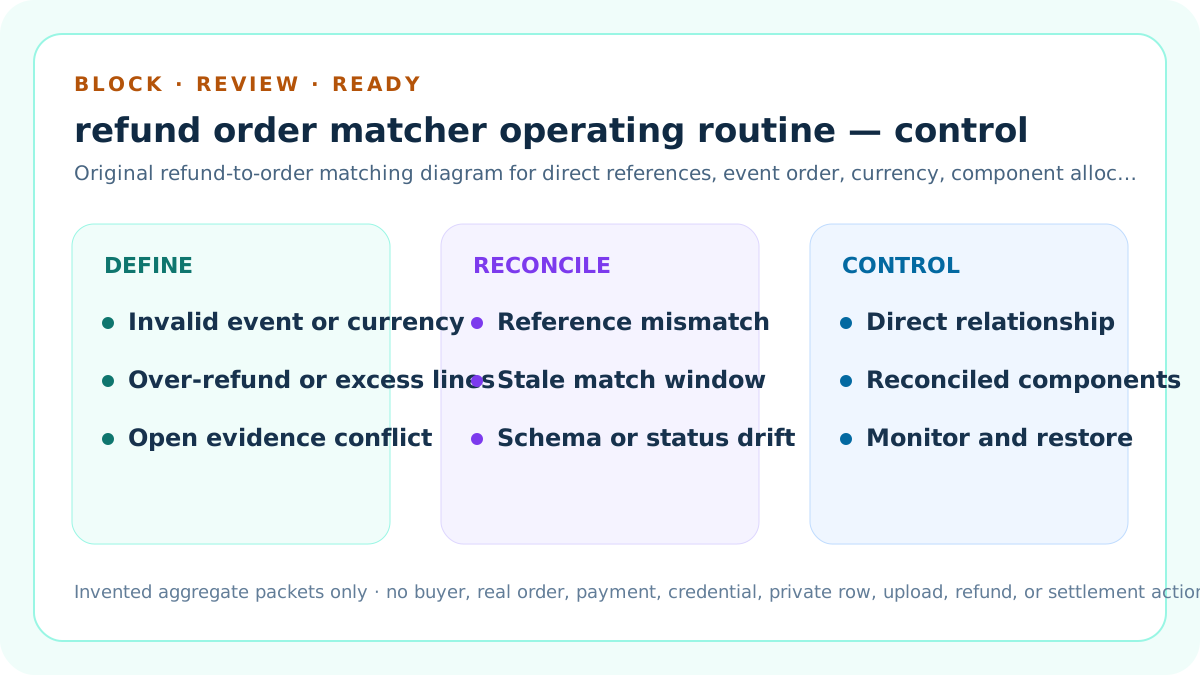
Fingerprint inputs: match lab 1
Reperform both invented packets. Detect order and refund drift. Change one reference, event, currency, component, prior refund, line count, tolerance, match window, context, or conflict only; preserve every other assumption and record original total, current refund, cumulative refund, remainder, gap, coverage, classification, and decision.
Test clean full, clean partial, malformed-reference, invalid-event, currency-mismatch, nonpositive-total, excess-line, refund-before-order, over-refund, reference-mismatch, stale-window, short-context, weak-scope, and open-conflict states. Record source version, authority, reconciliation, stop condition, and restoration action.
Confirm grain: match lab 2
Reperform both invented packets. Prevent mixed event levels. Change one reference, event, currency, component, prior refund, line count, tolerance, match window, context, or conflict only; preserve every other assumption and record original total, current refund, cumulative refund, remainder, gap, coverage, classification, and decision.
Test clean full, clean partial, malformed-reference, invalid-event, currency-mismatch, nonpositive-total, excess-line, refund-before-order, over-refund, reference-mismatch, stale-window, short-context, weak-scope, and open-conflict states. Record source version, authority, reconciliation, stop condition, and restoration action.
Normalize events: match lab 3
Reperform both invented packets. Use canonical UTC. Change one reference, event, currency, component, prior refund, line count, tolerance, match window, context, or conflict only; preserve every other assumption and record original total, current refund, cumulative refund, remainder, gap, coverage, classification, and decision.
Test clean full, clean partial, malformed-reference, invalid-event, currency-mismatch, nonpositive-total, excess-line, refund-before-order, over-refund, reference-mismatch, stale-window, short-context, weak-scope, and open-conflict states. Record source version, authority, reconciliation, stop condition, and restoration action.
Confirm currencies: match lab 4
Reperform both invented packets. Keep units explicit. Change one reference, event, currency, component, prior refund, line count, tolerance, match window, context, or conflict only; preserve every other assumption and record original total, current refund, cumulative refund, remainder, gap, coverage, classification, and decision.
Test clean full, clean partial, malformed-reference, invalid-event, currency-mismatch, nonpositive-total, excess-line, refund-before-order, over-refund, reference-mismatch, stale-window, short-context, weak-scope, and open-conflict states. Record source version, authority, reconciliation, stop condition, and restoration action.
Match references: match lab 5
Reperform both invented packets. Prefer direct relationships. Change one reference, event, currency, component, prior refund, line count, tolerance, match window, context, or conflict only; preserve every other assumption and record original total, current refund, cumulative refund, remainder, gap, coverage, classification, and decision.
Test clean full, clean partial, malformed-reference, invalid-event, currency-mismatch, nonpositive-total, excess-line, refund-before-order, over-refund, reference-mismatch, stale-window, short-context, weak-scope, and open-conflict states. Record source version, authority, reconciliation, stop condition, and restoration action.
Rebuild components: match lab 6
Reperform both invented packets. Explain every total. Change one reference, event, currency, component, prior refund, line count, tolerance, match window, context, or conflict only; preserve every other assumption and record original total, current refund, cumulative refund, remainder, gap, coverage, classification, and decision.
Test clean full, clean partial, malformed-reference, invalid-event, currency-mismatch, nonpositive-total, excess-line, refund-before-order, over-refund, reference-mismatch, stale-window, short-context, weak-scope, and open-conflict states. Record source version, authority, reconciliation, stop condition, and restoration action.
Load prior matches: match lab 7
Reperform both invented packets. Reconstruct cumulative allocation. Change one reference, event, currency, component, prior refund, line count, tolerance, match window, context, or conflict only; preserve every other assumption and record original total, current refund, cumulative refund, remainder, gap, coverage, classification, and decision.
Test clean full, clean partial, malformed-reference, invalid-event, currency-mismatch, nonpositive-total, excess-line, refund-before-order, over-refund, reference-mismatch, stale-window, short-context, weak-scope, and open-conflict states. Record source version, authority, reconciliation, stop condition, and restoration action.
Test thresholds: match lab 8
Reperform both invented packets. Exercise Block and Review. Change one reference, event, currency, component, prior refund, line count, tolerance, match window, context, or conflict only; preserve every other assumption and record original total, current refund, cumulative refund, remainder, gap, coverage, classification, and decision.
Test clean full, clean partial, malformed-reference, invalid-event, currency-mismatch, nonpositive-total, excess-line, refund-before-order, over-refund, reference-mismatch, stale-window, short-context, weak-scope, and open-conflict states. Record source version, authority, reconciliation, stop condition, and restoration action.
Quarantine exceptions: match lab 9
Reperform both invented packets. Keep uncertain events separate. Change one reference, event, currency, component, prior refund, line count, tolerance, match window, context, or conflict only; preserve every other assumption and record original total, current refund, cumulative refund, remainder, gap, coverage, classification, and decision.
Test clean full, clean partial, malformed-reference, invalid-event, currency-mismatch, nonpositive-total, excess-line, refund-before-order, over-refund, reference-mismatch, stale-window, short-context, weak-scope, and open-conflict states. Record source version, authority, reconciliation, stop condition, and restoration action.
Reconcile batch: match lab 10
Reperform both invented packets. Compare counts and currency totals. Change one reference, event, currency, component, prior refund, line count, tolerance, match window, context, or conflict only; preserve every other assumption and record original total, current refund, cumulative refund, remainder, gap, coverage, classification, and decision.
Test clean full, clean partial, malformed-reference, invalid-event, currency-mismatch, nonpositive-total, excess-line, refund-before-order, over-refund, reference-mismatch, stale-window, short-context, weak-scope, and open-conflict states. Record source version, authority, reconciliation, stop condition, and restoration action.
Monitor changes: match lab 11
Reperform both invented packets. Track duplicates and schema drift. Change one reference, event, currency, component, prior refund, line count, tolerance, match window, context, or conflict only; preserve every other assumption and record original total, current refund, cumulative refund, remainder, gap, coverage, classification, and decision.
Test clean full, clean partial, malformed-reference, invalid-event, currency-mismatch, nonpositive-total, excess-line, refund-before-order, over-refund, reference-mismatch, stale-window, short-context, weak-scope, and open-conflict states. Record source version, authority, reconciliation, stop condition, and restoration action.
Restore prior run: match lab 12
Reperform both invented packets. Keep rollback executable. Change one reference, event, currency, component, prior refund, line count, tolerance, match window, context, or conflict only; preserve every other assumption and record original total, current refund, cumulative refund, remainder, gap, coverage, classification, and decision.
Test clean full, clean partial, malformed-reference, invalid-event, currency-mismatch, nonpositive-total, excess-line, refund-before-order, over-refund, reference-mismatch, stale-window, short-context, weak-scope, and open-conflict states. Record source version, authority, reconciliation, stop condition, and restoration action.
Refund Matching Operating Routine: intent-specific implementation walkthrough
matching runbook checkpoint 1 addresses fingerprint inputs for a repeatable refund reconciliation cycle. Detect order and refund drift. Record the accepted relationship, rejected alternative, source version, reviewer, follow-up date, monitoring trigger, and rollback reference.
matching runbook checkpoint 2 addresses confirm grain for a repeatable refund reconciliation cycle. Prevent mixed event levels. Record the accepted relationship, rejected alternative, source version, reviewer, follow-up date, monitoring trigger, and rollback reference.
matching runbook checkpoint 3 addresses normalize events for a repeatable refund reconciliation cycle. Use canonical UTC. Record the accepted relationship, rejected alternative, source version, reviewer, follow-up date, monitoring trigger, and rollback reference.
matching runbook checkpoint 4 addresses confirm currencies for a repeatable refund reconciliation cycle. Keep units explicit. Record the accepted relationship, rejected alternative, source version, reviewer, follow-up date, monitoring trigger, and rollback reference.
matching runbook checkpoint 5 addresses match references for a repeatable refund reconciliation cycle. Prefer direct relationships. Record the accepted relationship, rejected alternative, source version, reviewer, follow-up date, monitoring trigger, and rollback reference.
matching runbook checkpoint 6 addresses rebuild components for a repeatable refund reconciliation cycle. Explain every total. Record the accepted relationship, rejected alternative, source version, reviewer, follow-up date, monitoring trigger, and rollback reference.
matching runbook checkpoint 7 addresses load prior matches for a repeatable refund reconciliation cycle. Reconstruct cumulative allocation. Record the accepted relationship, rejected alternative, source version, reviewer, follow-up date, monitoring trigger, and rollback reference.
matching runbook checkpoint 8 addresses test thresholds for a repeatable refund reconciliation cycle. Exercise Block and Review. Record the accepted relationship, rejected alternative, source version, reviewer, follow-up date, monitoring trigger, and rollback reference.
matching runbook checkpoint 9 addresses quarantine exceptions for a repeatable refund reconciliation cycle. Keep uncertain events separate. Record the accepted relationship, rejected alternative, source version, reviewer, follow-up date, monitoring trigger, and rollback reference.
matching runbook checkpoint 10 addresses reconcile batch for a repeatable refund reconciliation cycle. Compare counts and currency totals. Record the accepted relationship, rejected alternative, source version, reviewer, follow-up date, monitoring trigger, and rollback reference.
matching runbook checkpoint 11 addresses monitor changes for a repeatable refund reconciliation cycle. Track duplicates and schema drift. Record the accepted relationship, rejected alternative, source version, reviewer, follow-up date, monitoring trigger, and rollback reference.
matching runbook checkpoint 12 addresses restore prior run for a repeatable refund reconciliation cycle. Keep rollback executable. Record the accepted relationship, rejected alternative, source version, reviewer, follow-up date, monitoring trigger, and rollback reference.
For a repeatable refund reconciliation cycle, require all nine release confirmations, real source-review and policy-effective dates, strict decimal and whole-number literals, a bounded component amount, a bounded order-line count, and a minimum closed evidence duration. The evidence month must contain every event, the policy must predate or equal the earliest event, the review must cover the latest event, and the inclusive event span must meet the stated minimum. When this matching runbook Blocks, quarantine its classification, totals, remainder, event gap, and coverage as Unavailable until the governing packet is repaired and independently reviewed.
Evidence boundary for a repeatable refund reconciliation cycle
The full fixture rebuilds 94.00 USD from 82.00 items, 7.00 shipping, and 5.00 tax, then matches the same components and two-of-two lines 5.1 days later. The partial fixture rebuilds 89.00 EUR, matches a 32.40 EUR current refund to one of three lines, and preserves 56.60 EUR remaining eligibility.
These invented aggregates demonstrate deterministic contracts only. They cannot prove platform issuance, buyer receipt, processor settlement, cancellation, return, restock, fee credit, chargeback outcome, accounting recognition, tax treatment, lawful processing, file correctness, or permission to alter a source.
Release, monitor, and restore the matching runbook
Block invalid references, events, currencies, amounts, cumulative totals, lines, context, scope, tolerance, or conflicts. Review reference mismatch or an event gap above the declared window. Ready clears only the entered aggregate fixtures.
Before indexing or operational reuse, preserve backups and pass type, unit, integration, build, content, similarity, SEO, image, link, privacy, mobile, deployment, and live checks. Monitor schema, reference, event, currency, refund, line, duplicate, and platform-status changes without claiming same-day traffic or financial causality.
Sources and further reading
- Etsy Help: issue a full or partial refund: Official seller workflow for full and partial refunds, Payment account effects, fee credits, timing, and separate cancellation.
- Etsy Help: refunds, returns, and exchanges: Official seller-policy, agreement, return, and Purchase Protection context.
- Etsy Help: download sold transactions: Official order-item, order, Etsy Payments sale, and deposit CSV export types.
- Etsy Help: Payment account: Official statement, fee, credit, shipping, reserve, and deposit context.
- Etsy Help: chargebacks: Official distinction between a chargeback-related debit and an order refund.
- Shopify Help: exporting orders: Official transaction-history CSV fields for order, kind, time, status, amount, currency, and gateway.
- Shopify Help: refunding orders: Official full, partial, multi-transaction, store-credit, shipping, fee, return, and restock considerations.
- Seller Profit Guard methodology: Deterministic fixtures, evidence precedence, release, correction, monitoring, and rollback.
Related Seller Profit Guard tools
- Refund to Order Matcher: Classify invented full and partial refund packets.
- CSV Date and Currency Normalizer: Normalize invented event times and monetary values first.
- Seller CSV Column Mapper: Map approved refund and order fields to stable canonical names.
- Duplicate Order Checker: Detect repeated source events separately from refund matching.
- Marketplace Payout Anomaly Checker: Bridge aggregate refund effects to payout evidence separately.
- Methodology: Apply calculation, release, correction, and rollback controls.
- Data Privacy: Keep operational orders, refunds, and buyer data protected.
- Refund to Order Matcher Formula Contract: Define direct references, UTC events, currency, original and refund components, prior refunds, line coverage, tolerance, match window, and evidence.
- Refund to Order Matcher Full-Refund Example: Reperform a 94.00 USD original order and full refund using direct reference, UTC events, components, zero prior refunds, and complete line coverage.
- Partial Multi-Item Refund Matching: Match a 32.40 EUR partial refund to an 89.00 EUR three-line order while preserving allocation, remaining eligibility, and future events.
- Refund Matching Mistakes That Create False Links: Diagnose nearest-amount guesses, omitted prior refunds, mixed grain or currency, reversed signs, duplicate events, and chargeback confusion.
- Reliable Refund and Order Matching Sources: Map each field to first-party order, refund, transaction, statement, line, status, currency, and schema evidence without exposing private records.
- Safe Refund Matching Thresholds: Set structural blocks, amount tolerance, match-window review, cumulative-refund limits, line coverage, exceptions, monitoring, and rollback.
- Full vs Partial Refund Matching: Compare closure, component allocation, line coverage, remaining eligibility, later-event risk, match class, monitoring, and restoration.
- Interpret Refund Matcher Results: Explain what full, partial, review-candidate, unresolved, remaining amount, event gap, line coverage, Ready, Review, and Block prove and cannot prove.
- Refund to Order Match Audit Template: Provide a standalone order, refund, reference, time, currency, component, cumulative, line, source, exception, monitoring, and restoration record.
Next step: Open Seller Profit Guard.
This is operational planning help, not tax, accounting, legal, financial, or platform-policy advice. Review the Terms and disclaimer, and verify current platform rules and fee assumptions before changing prices.